What Was The Capital Of Greece Through History And Its Evolution
Table of Contents
- Historical Evolution of Greek Capitals from Mycenaean Settlements to the Byzantine Era
- Mycenaean Palatial Centers: The Foundations of Early Greek Power
- City-States and the Absence of a Unified Capital: Athens, Sparta, and Thebes
- Delphi and Olympia: Religious and Political Hubs Without Centralized Rule
- Transitions in Capital Selection: From Athens to Constantinople
- Athens as the Cultural and Political Capital of Classical Greece
- Political Reforms and the Democratic Foundation of Athenian Hegemony
- Pericles’ Building Programs and the Symbolic Reinforcement of Athenian Power
- From Delian League to Athenian Empire: The Evolution of Naval and Economic Dominance
- Athens as the Cultural Epicenter: Art, Theater, and the Sophistic Tradition
- Transition to Constantinople: The Byzantine Empire’s Capital Shift
- Strategic and Symbolic Foundations of Constantinople
- Key Byzantine Emperors and Constantinople’s Infrastructure Development
- Multiculturalism and Linguistic Evolution in Constantinople
- Modern Greece: Athens’ Revival as the Capital (1833–Present)
- Political Negotiations and the Role of European Powers
- Key Events Leading to Athens’ Selection as Capital
- Architectural and Urban Renewal in 19th-Century Athens
- Challenges of Athens as a Modern Capital
- Athens’ Identity Shaped by 20th-Century Conflicts and Contemporary Issues
- FAQ
- What was the capital of Greece before Athens?
- What was the capital of Greece before Nafplio?
- What was the capital of ancient Greece?
- What was the first capital of Greece as an independent modern nation?
- What was the original capital of Greece in antiquity?
- What was the old capital of Greece before Athens became permanent?
The question What was the capital of Greece? traverses millennia of political transformation, from Mycenaean strongholds to the Byzantine grandeur of Constantinople and the modern revival of Athens. Ancient Greece, far from a unified state, operated as a patchwork of city-states where power shifted between Athens, Sparta, and Thebes, each vying for dominance through military prowess, cultural influence, and strategic alliances. The selection of a capital was rarely static; it reflected the ebb and flow of warfare, religious devotion, and imperial ambition. Delphi and Olympia, though not political capitals, wielded unparalleled spiritual authority, while Athens’ Golden Age cemented its status as the intellectual and democratic heart of the Hellenic world. This evolution underscores how geography, warfare, and cultural identity dictated the rise and fall of Greece’s administrative centers, culminating in the deliberate relocation of power to Constantinople—a city that bridged East and West as the capital of Byzantium.
By examining the strategic, cultural, and infrastructural factors behind each capital’s ascendance, we uncover how Greece’s political identity was repeatedly redefined. From the fortified citadels of Mycenae to the neoclassical monuments of modern Athens, the story of Greece’s capitals is one of resilience, adaptation, and the enduring quest to balance tradition with progress. The transition from Athens to Constantinople in 330 CE, for instance, marked not just a shift in governance but a cultural and religious pivot that shaped the Mediterranean for centuries. Meanwhile, the 19th-century resurrection of Athens as an independent nation’s capital required meticulous negotiation with European powers and a deliberate architectural revival to reclaim its ancient legacy. Each phase reveals how capitals are not merely administrative hubs but symbols of national identity and ambition.
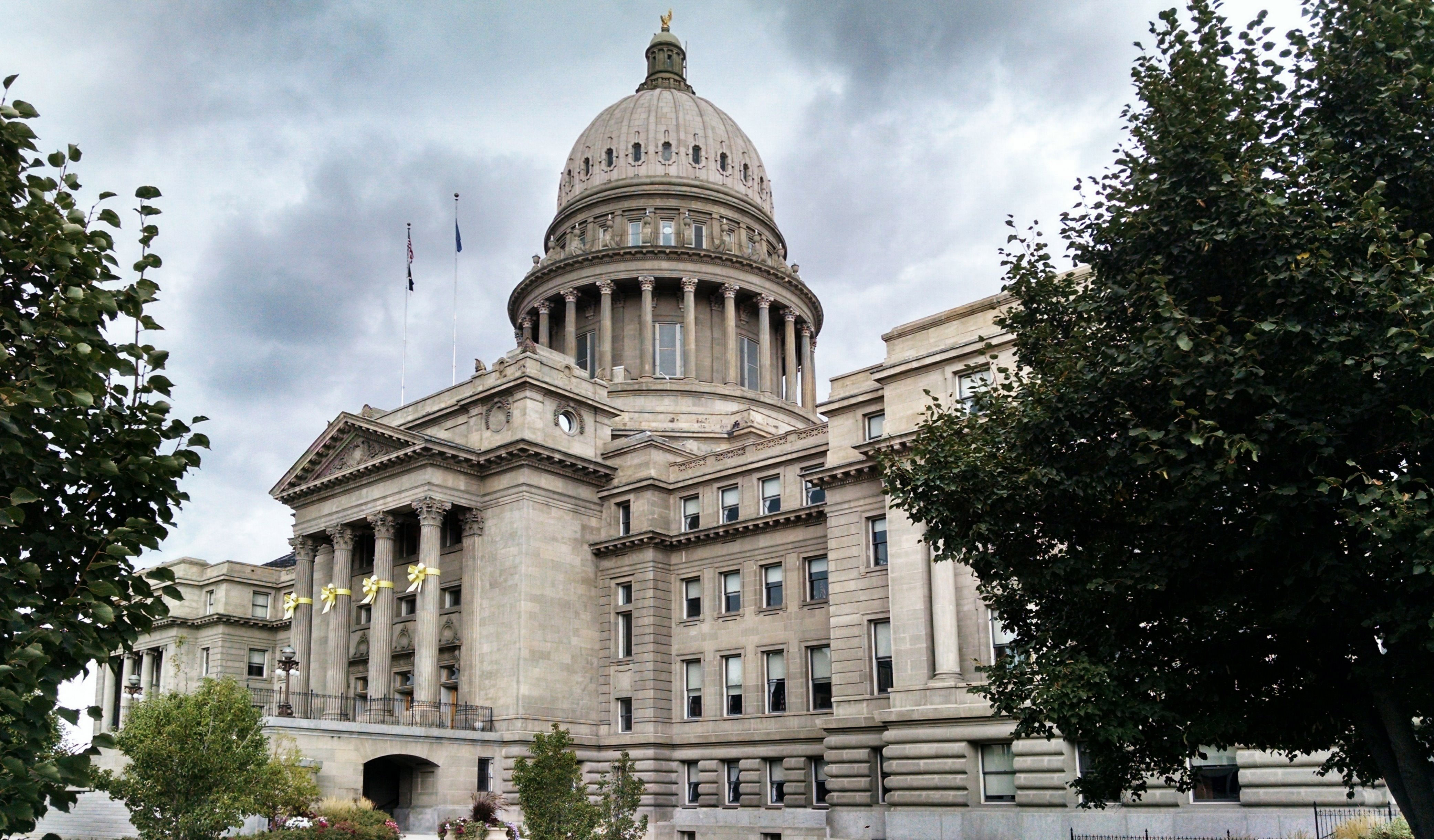
Historical Evolution of Greek Capitals from Mycenaean Settlements to the Byzantine Era
The concept of a unified capital in ancient Greece did not exist until the late Roman and Byzantine periods, as the political landscape was dominated by competing city-states (poleis) with distinct cultural, military, and religious roles. The selection of administrative centers shifted based on strategic, economic, and ideological factors, including military dominance, religious significance, and external invasions. Early capitals such as Mycenae and Tiryns reflected the power of the Mycenaean civilization, while later shifts—such as Athens’ rise during the Classical period and Constantinople’s establishment under the Byzantines—marked transitions in governance, identity, and imperial ambition.The evolution of Greek capitals can be divided into three broad phases: the Bronze Age (Mycenaean palatial centers), the Archaic and Classical periods (rival city-states), and the Hellenistic and Byzantine eras (centralized rule). Each phase introduced new criteria for capital selection, from fortified citadels to cosmopolitan urban hubs. Below, the political and cultural dynamics behind these shifts are examined, alongside a comparative analysis of key cities and their infrastructure.
Mycenaean Palatial Centers: The Foundations of Early Greek Power
The Mycenaean civilization (c. 1600–1100 BCE) established the first recognizable "capitals" in the form of fortified palatial complexes, which served as political, economic, and religious hubs for the broader Aegean world. Unlike later city-states, these centers—such as Mycenae, Pylos, and Tiryns—functioned as administrative nodes for a network of dependent settlements rather than independent political entities. The palaces were designed with megarons (central audience halls), cyclopean walls (massive stone fortifications), and linear B tablets (early Greek script for record-keeping), demonstrating their role in managing trade, warfare, and cultic activities.The decline of Mycenaean palatial centers during the Greek Dark Ages (1100–800 BCE) coincided with the collapse of the Bronze Age economy and the loss of writing systems. This period saw the fragmentation of power into smaller, independent communities, laying the groundwork for the rise of the polis system. The shift from centralized palatial rule to decentralized city-states marked a fundamental change in Greek governance, where no single capital emerged until the unification efforts of later empires.
City-States and the Absence of a Unified Capital: Athens, Sparta, and Thebes
The Archaic and Classical periods (800–323 BCE) were defined by the dominance of independent poleis, each with its own political system, military traditions, and cultural identity. Unlike later empires, these city-states did not designate a single capital, as their power structures were based on autonomy, rivalry, and alliances. Three cities—Athens, Sparta, and Thebes—emerged as the most influential, each serving as a model for governance and military strategy.The following table compares their roles as administrative and cultural centers, highlighting the factors that contributed to their prominence:
| City-State | Period of Dominance | Government Structure | Key Contributions | Military/Cultural Influence |
|---|---|---|---|---|
| Athens | 6th–4th centuries BCE (Classical Athens) | Democracy (after 508 BCE under Cleisthenes) |
|
|
| Sparta | 8th–4th centuries BCE (Peloponnesian League) | Oligarchy (dual kingship, Ephors, Gerousia) |
|
|
| Thebes | 4th century BCE (Boeotian League) | Oligarchy (later democratic reforms under Epaminondas) |
|
|
Delphi and Olympia: Religious and Political Hubs Without Centralized Rule
Unlike the administrative capitals of later empires, Delphi and Olympia held unique significance as panhellenic sanctuaries, where Greek city-states converged for religious rituals, athletic competitions, and political deliberations. Their influence stemmed from their association with Apollo (Delphi) and Zeus (Olympia), making them symbolic centers of Greek unity despite the absence of a unified state.Delphi, home to the Oracle of Apollo, functioned as a neutral arbitrator in disputes between city-states. The Delphic Amphictyonic Council, an assembly of representatives from various poleis, oversaw the maintenance of the sanctuary and mediated conflicts. The Treasury of the Athenians and other votive offerings reflected the city-states’ competition for prestige, while the Sibylline Prophecies influenced major political decisions, such as the Sack of Delphi by the Gauls (279 BCE). Delphi’s decline began with the rise of Christianity, as its pagan traditions became incompatible with the new religious order.
Olympia, the site of the Olympic Games (founded c. 776 BCE), served as a cultural and athletic unifier for Greeks. The games, held every four years, created a shared identity among participants and spectators. Unlike Delphi, Olympia lacked a permanent political role but reinforced Greek unity through panhellenic ideals. The Heraion (sanctuary of Hera) and the Altis (sacred precinct) housed treasures from across the Greek world, symbolizing collective heritage. The games’ interruption during the Roman period (1st century CE) marked their transition from Greek to imperial Roman control.
Delphi and Olympia were not capitals in the administrative sense but acted as moral and symbolic centers, where the ideals of Greek civilization—arete (excellence), unity in diversity, and religious piety—were perpetuated despite political fragmentation.
Transitions in Capital Selection: From Athens to Constantinople
The establishment of Athens as a cultural and political leader during the 5
Athens as the Cultural and Political Capital of Classical Greece
Athens emerged as the preeminent capital of Classical Greece during the 5th century BCE, a period now referred to as its Golden Age. This era was defined by unparalleled political innovation, military expansion, and cultural flourishing, which collectively cemented Athens’ status as the intellectual and administrative heart of the Greek world. Unlike earlier centers of power such as Mycenae or Thebes, Athens’ dominance was not merely military but rooted in a democratic governance model, a hegemonic naval alliance, and an unprecedented cultural output that shaped Hellenic identity for centuries. Its influence extended beyond Greece, leaving a lasting imprint on Mediterranean civilization through philosophy, architecture, and democratic ideals.The transformation of Athens into Greece’s capital was not instantaneous but the result of deliberate political maneuvering, economic consolidation, and cultural propaganda. While earlier Greek city-states like Sparta or Corinth excelled in military discipline or trade, Athens’ unique combination of democratic participation, imperial ambition, and artistic patronage distinguished it as the undisputed cultural and political leader. Its governance structure, particularly the Assembly (Ekklesia) and the Council of 500 (Boule), became models for later democratic systems, while its naval power, exemplified by the Delian League, transformed economic resources into political leverage. Simultaneously, Athenian art, theater, and education—embodied by figures like Pericles, Sophocles, and the Sophists—served as tools to reinforce its cultural supremacy, ensuring that its achievements were immortalized in marble, verse, and philosophy.
Political Reforms and the Democratic Foundation of Athenian Hegemony
The consolidation of Athens’ capital status was directly tied to its radical democratic reforms, which expanded civic participation and centralized authority in ways unmatched by contemporary Greek states. Under the leadership of Cleisthenes (508/7 BCE) and later Pericles (461–429 BCE), Athens transitioned from an oligarchic system to a direct democracy, where male citizens (excluding women, slaves, and metics) held unprecedented political agency. This system was structured around two key institutions: the Ekklesia (Assembly), which met monthly to debate and vote on laws, war, and foreign policy, and the Boule (Council of 500), a rotating body of 500 citizens tasked with drafting legislation and managing daily governance.In contrast, Sparta’s governance relied on a dual kingship and oligarchic Gerousia, while Corinth’s power was concentrated in the hands of a wealthy aristocracy. Athens’ democratic model, however, fostered loyalty to the polis by ensuring that even the poorest citizens could influence decisions, thereby legitimizing its imperial ambitions. The ostracism mechanism further prevented the rise of tyrannical figures, maintaining stability while allowing for meritocratic leadership. This political innovation was not merely ideological but pragmatic: by distributing power broadly, Athens mitigated internal rebellions and positioned itself as the guardian of Hellenic freedom, a narrative it later used to justify its dominance over allied city-states.
Pericles’ Building Programs and the Symbolic Reinforcement of Athenian Power
The role of Pericles in solidifying Athens’ capital status cannot be overstated. His tenure (461–429 BCE) marked the apex of Athenian power, during which he orchestrated aggressive building programs, military expansion, and cultural propaganda to project Athens as the unrivaled center of Greece. His policies were encapsulated in a famous oration attributed to Thucydides, which outlined three pillars of Athenian strategy:>
> "To make our city feared by its enemies while it is admired by its friends; to leave as our memorial among our descendants not only wealth, but also, and more importantly, the reputation of having achieved great and glorious deeds." >Pericles’ building projects, funded by the Delian League’s tribute, included the Acropolis reconstruction, featuring the Parthenon, the Propylaea, and the Erechtheion, which were not merely architectural marvels but monuments to Athenian divine favor and political supremacy. The Parthenon, dedicated to Athena Parthenos, symbolized the city’s cultural and religious preeminence, while the Panathenaic Festival—a grand procession and athletic competition—reinforced Athenian identity through spectacle. Additionally, Pericles’ Long Walls connected Athens to its ports, ensuring uninterrupted supply lines and economic resilience, even during sieges.
Politically, Pericles centralized power by suppressing dissent (e.g., the ostracism of Cimon in 461 BCE) and exploiting the Delian League’s resources to fund his agenda. His funeral oration, recorded by Thucydides, framed Athens as the beacon of democracy and civilization, contrasting its openness with the closed, militaristic nature of Sparta. This narrative was disseminated through public speeches, theater, and art, ensuring that Athens’ achievements were perpetuated as universal ideals.
From Delian League to Athenian Empire: The Evolution of Naval and Economic Dominance
The Delian League, initially formed in 478 BCE as an anti-Persian alliance, underwent a transformation into an Athenian empire under Pericles’ leadership. This evolution was driven by three interrelated factors: naval superiority, economic exploitation, and political coercion. The following steps outline how Athens consolidated its hegemony:-
Naval Supremacy and Tribute Collection
The Delian League’s treasury, originally housed on the island of Delos, was transferred to Athens in 454 BCE, symbolizing the shift from alliance to empire. Athens controlled the league’s tribute system, where member city-states contributed ships or silver based on their wealth. This funding financed Athens’ building programs, military, and cultural initiatives, creating a feedback loop of power: the more Athens spent, the more it needed tribute, and the more it needed tribute, the more it demanded loyalty. -
Military Enforcement and Imperial Policies
By the 440s BCE, Athens imposed its authority on reluctant allies through military force (e.g., the Samosian War, 441–439 BCE) and economic pressure. Cities that resisted were blockaded, fined, or forcibly integrated into the empire. The tribute lists (e.g., the Fourth Athenian Tribute List, 454/3 BCE) reveal a hierarchy of submission, with former allies now treated as vassals. -
Economic Exploitation and Infrastructure Control
Athens monopolized trade routes in the Aegean, particularly through its ports of Piraeus and Phaleron, which were fortified and expanded. The Long Walls ensured that even if Athens was besieged, its grain supply and naval resources remained secure. Additionally, Athens devalued local currencies of allied states to inflationary advantage, further centralizing wealth in Attica. -
Cultural and Political Integration
To legitimize its empire, Athens promoted Hellenic unity while marginalizing local identities. The Panhellenic festivals, such as the Dionysia and Panathenaia, were used to celebrate Athenian achievements and integrate subject populations into a broader Greek identity. Meanwhile, the Athenian citizenship laws (e.g., requiring two Athenian parents for citizenship) excluded non-Athenians from full political participation, reinforcing cultural superiority.
Athens as the Cultural Epicenter: Art, Theater, and the Sophistic Tradition
Athens’ cultural dominance was as deliberate as its political and military strategies. The city systematically cultivated an image of itself as the intellectual and artistic heart of Greece, using public monuments, theater, and education to reinforce its prestige. Three key domains—architecture and sculpture, theater, and philosophy and rhetoric—demonstrate how Athens exported its cultural hegemony alongside its political control.-
Architecture and Sculpture: Monumentalizing Divine and Civic Glory
The Acropolis was not merely a religious site but a propaganda tool, designed to awe visitors and allies alike. The Parthenon, with its optical refinements
Transition to Constantinople: The Byzantine Empire’s Capital Shift
The relocation of the Roman Empire’s capital from Rome to Constantinople in 330 CE marked a pivotal transformation in the political, military, and cultural trajectory of the Mediterranean world. Emperor Constantine I’s decision was driven by a convergence of strategic, economic, and symbolic factors, solidifying Constantinople’s role as the linchpin of the Eastern Roman (Byzantine) Empire for over a millennium. Beyond its geographic advantages—straddling Europe and Asia at the Bosphorus Strait—the city embodied Constantine’s vision of a "New Rome," blending Roman imperial grandeur with Christian theological aspirations. This shift not only redefined the empire’s defensive posture but also fostered a unique urban identity, where multiculturalism and linguistic evolution mirrored the empire’s global reach.Constantinople’s foundation reflected a deliberate break from the past while preserving Roman continuity. Its strategic location, equidistant from the Persian and Germanic threats, allowed the empire to project power across Eurasia. The city’s walls, religious monuments, and administrative innovations became symbols of Byzantine resilience, ensuring its survival through successive crises, from the Avars to the Arabs. Unlike Athens or Rome, Constantinople’s urban design prioritized imperial authority over civic participation, with forums and public spaces serving as stages for divine and imperial legitimacy.
Strategic and Symbolic Foundations of Constantinople
Constantine I selected the site of Byzantium (modern-day Istanbul) for its unparalleled geographic advantages. The city’s position at the narrowest point of the Bosphorus Strait—controlling maritime trade between the Black Sea and the Mediterranean—made it a natural choke point for defense and commerce. Additionally, its elevated terrain on the European side of the strait provided natural fortifications, reducing the need for extensive artificial walls upon initial construction. The emperor’s decision also carried profound religious symbolism: by founding a "New Rome" on the eastern frontier, Constantine positioned the empire as the heir to both Rome’s political legacy and Christianity’s apostolic traditions. The city’s layout mirrored Rome’s urban planning, with forums, baths, and a circus, but its orientation toward the East reflected the empire’s shifting center of gravity.
"Constantinople was not merely a city but a living testament to the fusion of Roman power and Christian faith, designed to endure as the eternal capital of a universal empire." — Procopius, De Aedificiis (6th century)
The city’s symbolic significance was further reinforced by its dedication to the Holy Trinity and its association with the apostle Andrew, whose relics were allegedly discovered there. Constantine’s vision aligned with the growing influence of the Christian Church, ensuring that Constantinople would become a spiritual as well as a political capital. This dual role distinguished it from earlier Greek capitals like Athens, which lacked the imperial infrastructure to sustain a global empire.
Key Byzantine Emperors and Constantinople’s Infrastructure Development
The transformation of Constantinople from a Roman colony into a fortified metropolis was achieved through the efforts of successive Byzantine emperors, each contributing to its military, administrative, and cultural infrastructure. Below is a table summarizing the most significant rulers and their contributions:
These emperors ensured Constantinople’s survival through a combination of defensive innovation and urban planning. The Theodosian Walls, for instance, remained unbreached for nearly 1,000 years, while Greek fire—developed under Justinian—became a legendary weapon that deterred Arab fleets. The city’s infrastructure reflected a deliberate strategy to concentrate power, resources, and symbolism in a single, impregnable capital.Emperor Reign Key Contributions to Constantinople Military/Defensive Innovations Constantine I 306–337 CE - Founded Constantinople as the "New Rome" in 330 CE.
- Constructed the first walls (later expanded by Theodosius II).
- Built the Great Palace, Hagia Irene (predecessor to Hagia Sophia), and the Hippodrome.
- Established the city as the imperial residence, relocating government institutions from Rome.
Strategic placement at the Bosphorus; initial fortifications leveraged natural terrain. Theodosius II 408–450 CE - Commissioned the massive Theodosian Walls (completed 447 CE), doubling the city’s perimeter to 6 km.
- Expanded the city’s aqueduct system, ensuring water supply during sieges.
- Reorganized the urban grid, reinforcing the city’s administrative divisions.
Theodosian Walls withstood sieges for centuries, including those by the Avars (582 CE) and Arabs (674–678 CE). Justinian I 527–565 CE - Rebuilt the Hagia Sophia (537 CE), symbolizing the empire’s theological and architectural prowess.
- Constructed the Mese Odos (Middle Road), the grand imperial processional route.
- Expanded the Forum of Theodosius and the Church of the Holy Apostles.
- Strengthened the city’s legal and bureaucratic systems, centralizing imperial authority.
Developed Greek fire (a napalm-like incendiary weapon) to repel Arab naval attacks during the 670s. Constantine VII Porphyrogennetos 913–959 CE - Reinforced the Theodosian Walls with additional towers and moats.
- Expanded the Great Palace’s ceremonial functions, codifying imperial rituals.
- Commissioned the De Ceremoniis, a manual detailing Byzantine court etiquette.
Enhanced the city’s fire defense systems, including water cannons and siphons. Leo VI the Wise 886–912 CE - Built the Nea Ekklēsia (New Church), a rival to Hagia Sophia.
- Expanded the hippodrome’s capacity, reinforcing its role in political propaganda.
- Strengthened the maritime defenses along the Golden Horn.
Introduced chain barriers across the Golden Horn to block enemy ships.
Multiculturalism and Linguistic Evolution in Constantinople
Constantinople’s population was a mosaic of ethnic and linguistic groups, reflecting the empire’s cosmopolitan nature. Unlike Athens, which remained predominantly Greek, Constantinople absorbed Romans, Syrians, Armenians, Jews, and later Slavs and Arabs. This diversity was not merely demographic but also cultural, with Greek emerging as the dominant language by the 7th century, replacing Latin as the empire’s administrative tongue. The shift from Latin to Greek was gradual, accelerated by the Arab conquests in the West, which severed ties with Latin-speaking territories.The city’s multiculturalism was institutionalized through its religious and civic structures. The Patriarchate of Constantinople, for example, oversaw Orthodox Christian communities across the empire, while the Senate included representatives from various provinces. The Hippodrome, a hub of political and social life, hosted races, executions, and imperial proclamations, reflecting the city’s role as a stage for imperial theater. Unlike Rome’s forums, which were centers of republican debate, Constantinople’s public spaces reinforced autocratic rule, with emperors using spectacles to legitimize their authority.
"The city was a Babel of tongues, yet its people shared a common loyalty to the emperor and the Orthodox faith—a bond stronger than ethnic identity." — Anna Komnene, Alexiad (12th century)
This linguistic and cultural synthesis was also evident in the city’s legal and educational systems. The University of Constantinople, founded in the 5th century, became a center for Greek philosophy, medicine, and law, attracting scholars from across the

Modern Greece: Athens’ Revival as the Capital (1833–Present)
The establishment of Athens as the capital of modern Greece in 1833 marked a deliberate return to antiquity, symbolizing continuity between classical heritage and the newly independent nation-state. This transition was not merely symbolic but the result of complex geopolitical negotiations involving European powers, the Greek monarchy, and strategic considerations regarding governance, infrastructure, and cultural identity. The selection of Athens reflected broader 19th-century European trends favoring classical revivalism, while also addressing practical challenges such as urban planning and the need for a centralized administrative hub.The political and historical context of Athens’ revival was shaped by the Greek War of Independence (1821–1829) and the subsequent international interventions that defined the parameters of the new state. European powers, particularly Britain and France, played a decisive role in shaping Greece’s post-independence trajectory, including the selection of its capital. The Treaty of London (1830) and the subsequent London Conference (1832) formalized the establishment of a constitutional monarchy under King Otto of Bavaria, with Athens emerging as the political and cultural epicenter of the nation.
Political Negotiations and the Role of European Powers
The decision to designate Athens as Greece’s capital was influenced by several key factors, including its historical significance, strategic location, and the preferences of foreign powers. Britain and France, as guarantors of Greek independence, favored a capital that could serve as a unifying symbol for the fragmented Greek territories. Athens, with its ancient ruins and cultural prestige, aligned with European romantic nationalism, which idealized classical antiquity as a foundation for modern nationhood.King Otto, installed as monarch in 1833, actively promoted Athens as the capital, despite initial resistance from other contenders such as Nauplio (Naples) or Missolonghi. The Bavarian royal court, which Otto brought with him, introduced neoclassical urban planning principles that further cemented Athens’ role as a modern capital. The European powers also insisted on Athens’ selection to prevent regional rivalries and ensure a centralized government, which was critical for stabilizing the young state.
Key Events Leading to Athens’ Selection as Capital
The following events and agreements established the legal and political framework for Athens’ revival as Greece’s capital:
- The Greek War of Independence (1821–1829) concluded with the recognition of Greek sovereignty by the Treaty of Adrianople (1829), which granted autonomy to the Greek territories under Ottoman rule. This conflict demonstrated the need for a unified administrative center.
- The Treaty of London (1830) formalized Greece’s independence and established a constitutional monarchy under a foreign prince, with the Great Powers (Britain, France, Russia) selecting King Otto of Bavaria as the first monarch.
- The London Conference (1832) determined the boundaries of the new Greek state and designated Athens as the capital, despite objections from regional leaders who favored Nauplio or other cities with better port facilities.
- The Constitution of 1832 and subsequent royal decrees institutionalized Athens as the political and cultural capital, with the construction of a royal palace and government buildings beginning immediately after Otto’s arrival in 1833.
- The Great Fire of 1826 in Athens, which destroyed much of the city during the War of Independence, provided an opportunity for systematic urban renewal under European supervision, aligning with neoclassical ideals.
Architectural and Urban Renewal in 19th-Century Athens
The transformation of Athens into a modern capital was driven by a deliberate architectural and urban planning agenda, overseen by European advisors and Greek elites. The city’s redesign followed neoclassical principles, emphasizing symmetry, monumentality, and a revival of ancient Greek aesthetics. Key projects included:
- The Syntagma Square redesign (1842–1843) under the supervision of Bavarian architect Stamatios Kleanthis and German engineer Eduard Schaubert. The square was laid out in a grid pattern, with the King’s Palace (now Parliament) serving as its focal point, mirroring the Acropolis’ prominence in antiquity.
- Construction of the Hellenic Parliament building (1875–1892), designed by Theophil Hansen, a Viennese architect who incorporated ancient Greek motifs such as the Ionic order and pedimented gables. The building’s neoclassical style reinforced the connection between modern governance and classical democracy.
- The Panepistimio (University Street), designed by Kleanthis and Schaubert, became the city’s first planned boulevard, lined with neoclassical buildings housing government offices, embassies, and academic institutions.
- The Zappeion Hall (1888), designed by Theophil Hansen, served as a multipurpose venue for exhibitions, concerts, and political rallies, further embedding Athens in the European cultural landscape.
- The National Garden (1838), established as a royal park, provided a public green space that contrasted with the densely built neoclassical core, reflecting Enlightenment ideals of urban planning.
Challenges of Athens as a Modern Capital
Athens’ revival as a capital has been accompanied by significant challenges, ranging from rapid urbanization to economic disparities and the preservation of its historical heritage. These issues reflect broader tensions between modernization and tradition, as well as the pressures of globalizing forces.
- Population Growth and Urban Sprawl: Athens experienced exponential population growth from approximately 4,000 inhabitants in 1833 to over 3 million in the 21st century, making it one of Europe’s most densely populated capitals. This growth led to unplanned suburban expansion, traffic congestion, and inadequate infrastructure, particularly in peripheral areas like Piraeus and the Athens Metropolitan Area.
- Economic Struggles and Inequality: The city has historically struggled with economic disparities, exacerbated by Greece’s debt crisis (2010–2018) and austerity measures. While Athens remains a cultural and political hub, it also faces high unemployment rates (particularly among youth) and a brain drain, with skilled professionals migrating to northern Europe or the United States. The 2020–2021 economic contraction of 9.0% further strained public services and urban development projects.
- Balancing Preservation and Development: Athens’ status as a UNESCO World Heritage site (since 1987) has created tensions between conservation efforts and the need for modern infrastructure. Projects such as the Athens Tram (2004) and the Athens Metro (2000) improved connectivity but also sparked debates over their impact on archaeological sites. The Acropolis Restoration Service has undertaken extensive conservation efforts, including the 2023 completion of the Acropolis Museum’s new wing, which required careful integration with the surrounding neoclassical and Byzantine architecture.
- Environmental and Social Pressures: Athens frequently ranks among the most polluted cities in Europe, with air quality issues linked to industrial activity, vehicle emissions, and geographic factors (e.g., the surrounding mountains trapping pollutants). The city also grapples with homelessness, informal settlements, and the integration of migrant communities, particularly in areas like Voula and Elliniko, where refugee camps have been established.
Athens’ Identity Shaped by 20th-Century Conflicts and Contemporary Issues
Athens’ trajectory as a capital has been profoundly influenced by 20th-century conflicts and global shifts, from World War II to the present-day challenges of migration and tourism. These events have not only tested the city’s resilience but also reshaped its cultural and political identity.
-
World War II and the Occupation (1940
The journey of Greece’s capitals—from the acropolis of Athens to the fortified walls of Constantinople and the neoclassical boulevards of modern Athens—illustrates a nation perpetually reinventing itself. What began as decentralized city-states coalesced into empires, each capital serving as a testament to the era’s priorities: whether military defense, cultural hegemony, or the fusion of East and West. The deliberate selection of Athens in 1833, despite competing claims from cities like Nafplio, was a conscious nod to antiquity, embedding the past into the fabric of a modern state. Today, Athens grapples with the dual challenges of preserving its UNESCO-listed heritage while addressing urban decay and economic pressures—a testament to the enduring tension between legacy and progress. Ultimately, the question What was the capital of Greece? transcends geography; it invites reflection on how power, identity, and history intertwine to shape the cities that define a civilization.
FAQ
What was the capital of Greece before Athens?
Before Athens, the capital of Greece was Mycenae (c. 1600–1100 BCE) during the Mycenaean civilization. Later, in the Archaic period (around 800–500 BCE), Corinth and Sparta also held significant power, but no single capital existed until Athens rose to prominence in the 5th century BCE.
What was the capital of Greece before Nafplio?
Nafplio served as Greece’s first official capital after independence in 1823, replacing Tripoli (in the Peloponnese), which had been a provisional capital during the Greek War of Independence (1821–1829).
What was the capital of ancient Greece?
Ancient Greece did not have a single capital, as it was a collection of independent city-states (poleis). However, Athens became the dominant cultural and political center during the Classical period (5th–4th centuries BCE), while Sparta and Thebes also held regional prominence at different times.
What was the first capital of Greece as an independent modern nation?
The first capital of modern independent Greece was Nafplio, established in 1823 after the country declared independence from the Ottoman Empire. It served as the capital until 1834, when Athens was chosen as the new capital.
What was the original capital of Greece in antiquity?
The earliest major political center in Greece was Mycenae (c. 1600–1100 BCE), the capital of the Mycenaean civilization. Later, Athens emerged as the leading city-state in the Classical era, though no single "original" capital existed for all of antiquity.
What was the old capital of Greece before Athens became permanent?
Before Athens became the permanent capital in 1834, Greece’s provisional capitals included Nafplio (1823–1834) and earlier Tripoli (1821–1823) during the War of Independence. These were temporary seats of government before Athens was officially designated.
Leave a Comment
Comments are moderated before appearing. The data you submit is processed according to the Privacy Policy of Voltefac.