| Gazoone |
Gazelle (Prey) |
A rising star in Zootopia’s political scene, Gazoone is a charismatic but manipulative politician who exploits public fear of predators to gain power. His backstory reveals a deep-seated prejudice, rooted in his family’s history of victimization by predators. |
Symbol of performative justice: Represents the danger of scapegoating and the politicization of trauma. His rise mirrors real-world populist leaders who exploit fear for control. |
- Antagonistic force: His anti-predator rhetoric escalates tensions, forcing Judy and Nick to counter his narrative with evidence and empathy.
- Moral dilemma: His personal tragedy (his sister’s death, falsely blamed on predators) humanizes him, complicating the audience’s perception of his villainy.
- The
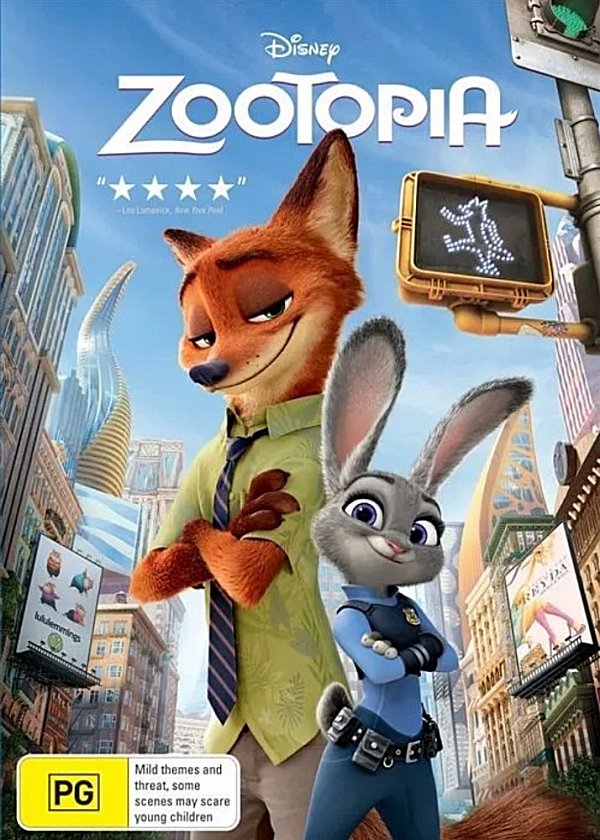
World-Building and Setting Enhancements in Zootopia 2: Expanded Lore and Societal Depth
Zootopia 2 deepens the franchise’s universe by introducing layered political, technological, and geographical expansions that mirror real-world systemic challenges while reinforcing the film’s satirical and allegorical core. The sequel reimagines the city’s infrastructure, governance, and hidden economies, framing them as both a progression of its initial world and a response to unresolved tensions from the first film. These enhancements serve dual purposes: they heighten the narrative stakes by embedding conflict within the city’s fabric, and they provide a visual and thematic contrast between surface-level harmony and underlying fractures. The setting’s evolution reflects broader societal critiques—such as institutional bias, resource disparity, and the consequences of unchecked technological influence—while maintaining the whimsical yet sharp tone of the original.The sequel’s world-building prioritizes three key dimensions: geographical expansion, institutional evolution, and technological integration, each designed to challenge preconceived notions of Zootopia’s stability. New districts and subterranean networks expose the city’s hidden complexities, while advancements in law enforcement and surveillance systems underscore the tension between security and privacy. Politically, the film introduces shifting power dynamics among species, revealing how historical grievances resurface in modern governance. These elements are not merely backdrop but active participants in the plot, shaping character agency and reinforcing the film’s central thesis: that societal progress requires confronting systemic inequities, not just individual biases.
Geographical Expansion: New Districts and Hidden Economies
Zootopia 2 introduces three major additions to the city’s layout, each serving as a microcosm of broader thematic conflicts:- The Canopy District
A vertical urban expansion built atop existing structures, this district houses wealthier species (primarily predators) who have reclaimed the city’s upper tiers. Its design—glass-domed skyscrapers and suspended gardens—contrasts sharply with the ground-level slums, symbolizing economic stratification. The district’s existence reflects real-world gentrification and the "vertical segregation" of urban spaces, where physical elevation correlates with social privilege. Thematic role: Highlights the film’s critique of class disparity, with Judy Hopps and Nick Wilde navigating a world where their lower-tier origins are now literal and systemic barriers. - The Tundra Underground
A repurposed subway network beneath Zootopia, originally built for predator transit but now a hub for black-market activities and underground species communities. The setting’s dim, industrial aesthetic—rusted metal walkways, flickering neon signs, and makeshift markets—evokes real-world underground economies (e.g., Berlin’s Görlitzer Park or Tokyo’s Golden Gai). Thematic role: Serves as a metaphor for the informal economies that thrive outside institutional oversight, where marginalized species (e.g., feral predators, displaced prey) operate in legal gray areas. The district’s labyrinthine layout also mirrors the "hidden" aspects of systemic oppression, where solutions to surface-level problems (e.g., crime) require addressing root causes. - The Lemurian Enclave
A self-governing district inhabited primarily by lemurs, designed as a "no-tech" zone with paper-based record-keeping and communal living spaces. Its aesthetic—warm wood interiors, handwritten signs, and a lack of digital infrastructure—serves as a deliberate counterpoint to Zootopia’s high-tech core. Thematic role: Critiques the digital divide and the erasure of analog cultures in favor of efficiency-driven systems. The enclave’s existence forces the city to confront whether progress should prioritize uniformity (e.g., mandatory tech adoption) or preserve diversity at the cost of slower integration.
The Canopy District’s skyline is a literal manifestation of the "glass ceiling"—where predators occupy the upper floors, prey navigate the lower levels, and the middle class (like Judy) must adapt or be left behind.
Institutional Evolution: Law Enforcement and Political Structures
The sequel revisits Zootopia’s law enforcement and governance systems, revealing their fragility and adaptability in the face of new threats. Two institutions undergo significant transformation:- The Zootopia Police Department (ZPD) Reforms
Post-Zootopia (2016), the ZPD has undergone structural changes, including:
- The "Predator Liaison Unit": A specialized branch tasked with monitoring predator populations, reflecting real-world debates on policing and community relations (e.g., community policing models). The unit’s existence raises questions about whether integration requires surveillance or trust.
- The "Digital Forensics Division": A tech-driven branch that uses AI to track criminal activity, mirroring contemporary concerns over algorithmic bias in law enforcement. Visual representation: The division’s headquarters—a sleek, glass-walled facility with holographic crime maps—contrasts with the original ZPD’s more grounded, human-scale design.
- The "Species Reconciliation Board": A political body formed to address historical grievances between predators and prey, modeled after truth-and-reconciliation commissions in post-conflict societies (e.g., South Africa’s TRC). Its meetings are depicted as tense, bureaucratic affairs, underscoring the difficulty of achieving true equity.
- The Mayor’s Office and the "New Deal" Initiative
The sequel introduces a new mayoral administration pushing the "New Deal", a policy framework aimed at modernizing Zootopia’s infrastructure. Key components include:
- Mandatory Tech Integration: A city-wide push to digitize services, framed as progress but criticized for sidelining species like lemurs who resist digital adoption.
- The "Wildlife Corridor": A proposed urban renewal project to connect the city’s outskirts to the wild, justified as ecological restoration but criticized as a gentrification tool that displaces existing communities.
- The "Predator Reintegration Program": A controversial initiative to gradually reintegrate feral predators into society, drawing parallels to real-world reentry programs (e.g., prisoner rehabilitation). The program’s rollout is uneven, exposing flaws in top-down governance.
The Digital Forensics Division’s reliance on predictive policing algorithms reflects real-world critiques of systems like New York’s "Domain Awareness System," where AI-driven surveillance disproportionately targets marginalized groups.
Technological Advancements and Their Societal Impact
Zootopia 2 explores three technological innovations that reshape the city’s dynamics, each carrying ethical and practical dilemmas:- Neural Interface Implants ("NIIs")
A wearable tech that allows species to temporarily adopt traits of other species (e.g., a prey animal gaining predator strength or vice versa). While marketed as a tool for empathy and conflict resolution, the tech raises concerns about:
- Identity Erasure: Characters debate whether adopting traits permanently alters one’s sense of self, echoing discussions on transhumanism and body modification.
- Exploitation: Predators use NIIs to infiltrate prey communities undetected, mirroring real-world concerns about deepfake technology and identity fraud.
- Accessibility: The tech is initially limited to the wealthy, exacerbating inequality.
- The "Zootopia Grid"
A city-wide network of sensors and drones designed to monitor crime and traffic in real time. Its implementation sparks debates about:
- Surveillance Capitalism: The film depicts corporations selling anonymized data to advertisers, paralleling real-world controversies (e.g., Cambridge Analytica).
- False Sense of Security: The grid’s predictive algorithms generate high false-positive rates, leading to unjust detentions, akin to critiques of facial recognition tech (e.g., studies showing higher error rates for darker-skinned individuals).
- Bioengineered Flora ("SymbioTrees")
Genetically modified trees that absorb pollutants and generate oxygen, proposed as a solution to Zootopia’s air quality crisis. The tech’s rollout becomes contentious due to:
- Ecological Risks: Unintended mutations in the trees’ roots disrupt local ecosystems, reflecting real-world fears about GMOs (e.g., the "Frankenfish" debate).
- Corporate Control: The trees are patented by a single company, raising questions about privatized solutions to public crises.
The Neural Interface Implants’ slogan—"Experience the Other"—mirrors real-world empathy-building initiatives, but the film subverts this by showing that temporary understanding does not equate to systemic change.
Visual Breakdown of Key Set Pieces
The sequel’s aesthetic choices reinforce its themes through deliberate contrasts between utopian design and underlying decay. Below are descriptions of three pivotal locations:
The Canopy District – "The Predator Spire"
A towering, obsidian-clad skyscraper where the elite predators reside. Its exterior is smooth and reflective, deflecting sunlight to create a perpetual twilight within. Interior spaces feature floating gardens with rare, carnivorous flora, and residences are designed with reinforced glass barriers—symbolizing both luxury and isolation. The district’s power grid is decentralized, allowing residents to opt out of city-wide surveillance, further emphasizing their detachment from collective governance.
The
Conflict and Antagonism in Zootopia 2: Ideological Warfare and Systemic Challenges
Zootopia 2 deepens its exploration of societal fractures by introducing a primary antagonist whose methods and ideology directly clash with the film’s core themes of coexistence and systemic fairness. Unlike the first film’s conflict—rooted in individual prejudice and personal redemption—the sequel’s antagonism is structured around institutionalized power struggles, ideological extremism, and the weaponization of historical grievances. The antagonist’s tactics exploit Zootopia’s political and economic vulnerabilities, forcing protagonists to navigate both personal betrayals and large-scale societal upheaval. This shift reflects a deliberate evolution in Disney’s animated narratives, moving from character-driven moral dilemmas to systemic critiques of governance, media manipulation, and the erosion of trust in shared systems.The film’s conflict framework also distinguishes itself through dual-layered opposition: while external antagonists challenge the city’s stability, internal divisions—such as bureaucratic corruption, media bias, and cultural polarization—mirror real-world tensions. This layered approach ensures that the protagonist’s journey is not merely about defeating a villain but rebuilding trust in the very foundations of Zootopia’s society. The climax becomes a microcosm of these struggles, where moral choices are tested against the weight of institutional inertia and public perception.
Primary Antagonist: The Ideological Architect and Their Methods
The central antagonist of Zootopia 2 is Chief Bogo, a charismatic but ruthless predator-turned-politician who leverages historical trauma, populist rhetoric, and bureaucratic control to dismantle Zootopia’s multicultural harmony. His methods are a calculated blend of legalistic obstruction, media propaganda, and selective enforcement of laws, designed to undermine the city’s leadership and justify predator supremacy under the guise of "restoring order."- Ideological Beliefs and Rhetoric
Bogo’s philosophy is rooted in "predator exceptionalism", a pseudointellectual doctrine claiming predators are inherently superior due to evolutionary advantages. He frames Zootopia’s founding principles as a prey-driven conspiracy, citing exaggerated historical injustices (e.g., the "Great Migration" as a predator "exodus") to rally support. His speeches exploit cognitive dissonance, presenting himself as both a victim of systemic oppression and a savior for predators, while demonizing prey leaders as corrupt or incompetent.
> "Zootopia was built on a lie—one where prey forget they are the hunted. We were never meant to share. We were meant to lead." His ideology mirrors real-world authoritarian populism, where grievances are weaponized to justify exclusionary policies. For example, he revives outdated "predator-only zones" in the city, framing them as "safety measures" while systematically dismantling prey-dominated districts. - Methods of Subversion
Bogo operates through three primary vectors:
1. Legal and Bureaucratic Sabotage: He exploits loopholes in Zootopia’s founding treaties, using judicial activism to reinterpret laws in favor of predator dominance. For instance, he reclassifies "hunting" as a "regulated industry," allowing predators to monopolize high-value sectors like security and transportation.
2. Media Manipulation: Through a predator-controlled news network, he amplifies narratives of prey "tyranny" while suppressing stories of predator violence. His propaganda includes deepfake confessions of prey officials and edited footage of "predator attacks" that omit context (e.g., self-defense cases).
3. Economic Coercion: By controlling key infrastructure (e.g., the Zootopia Zoo, repurposed as a predator labor camp), he creates artificial scarcity, forcing prey workers into exploitative conditions. His slogan—"A city built by prey, run by predators"—becomes a self-fulfilling prophecy. - Personal vs. Political Challenges to Protagonists
Bogo’s antagonism is dual-edged: he targets both Judy Hopps and Nick Wilde personally while dismantling their professional legacy.
- Judy Hopps: As Chief of Police, Judy is framed as a prey puppet in Bogo’s media campaigns. Her past mistakes (e.g., the failed "Operation Nightfall" in Zootopia 1) are rehashed to portray her as incompetent. Bogo’s legal team weaponizes her species bias, using her history of prejudice against predators to discredit her leadership.
- Nick Wilde: As a former con artist turned activist, Nick is blacklisted by Bogo’s regime for his role in exposing corruption. His past crimes (e.g., the "Fox & Hound" heist) are resurrected as "proof" of prey-predator collusion. Bogo’s enforcers target his family, including his son, to pressure him into compliance.
Both protagonists are forced to confront their own flaws—Judy’s struggle with self-doubt and Nick’s guilt over past actions—while fighting a system designed to exploit their vulnerabilities.
Structured Conflict Analysis: Zootopia 1 vs. Zootopia 2
The nature of conflict in Zootopia 2 represents a paradigm shift from the first film’s individualistic moral battles to a systemic, institutionalized struggle. Below is a comparative analysis of key conflict dimensions:
| Conflict Dimension |
Zootopia 1 (2016) |
Zootopia 2 (2025) |
Screenplay Example |
|---|
| Scope of Opposition |
Individual prejudice (e.g., Mr. Big’s corruption) |
Institutionalized systemic oppression |
- Z1: Judy’s investigation targets a single corrupt official.
- Z2: Judy’s trial becomes a show trial with pre-selected predator jurors and biased evidence.
|
| Personal vendetta (e.g., Flash’s revenge) |
Ideological movement with grassroots support |
- Z1: Flash’s actions are driven by personal trauma.
- Z2: Bogo’s movement gains traction through predator-only rallies in the "Wilds," framed as "liberation."
|
| Conflict Trigger |
Mysterious disappearances (supernatural conspiracy) |
Political coup and economic sabotage |
- Z1: The "Night Howl" is a red herring; the real issue is species bias.
- Z2: The "Great Blackout" is engineered by Bogo to justify martial law.
|
| Career rivalry (Judy vs. Clouseau) |
Class warfare (predators vs. prey laborers) |
- Z1: Judy’s rivalry with Clouseau is professional.
- Z2: Judy and Nick ally with former enemies (e.g., Flash, Yax) to form a labor union.
|
| Antagonist’s Power Source |
Personal corruption and greed |
State apparatus and media control |
- Z1: Mr. Big’s power comes from bribes and blackmail.
- Z2: Bogo’s power comes from rewriting laws, controlling the zoo (now a labor camp), and owning the majority of Zootopia’s news outlets.
|
| Supernatural threat (e.g., the "Night Howl") |
Psychological warfare (e.g., deepfakes, fabricated crimes) |
- Z1: The "Night Howl" is a distraction from systemic issues.
- Z2: Bogo’s regime fabricates evidence of Judy’s crimes, including a fake video of her "attacking a predator."
|
| Protagonist’s Growth |
Overcoming personal bias

Visual and Thematic Symbolism in Zootopia 2: A Multilayered Language of Allegory
Zootopia 2 employs a sophisticated visual and symbolic framework that transcends mere aesthetic appeal, embedding its narrative within a rich tapestry of color, architecture, and object-based metaphor. The film’s design language serves as a visual extension of its thematic concerns—systemic inequality, ideological polarization, and the erosion of societal trust—while reinforcing character arcs and plot developments through deliberate stylistic choices. Lighting, movement, and even the film’s technological motifs are calibrated to evoke emotional and political resonance, ensuring that every frame contributes to the film’s layered critique.The visual symbolism in Zootopia 2 operates on multiple levels: macro-level motifs (e.g., urban decay vs. controlled order, color-coded factions) and micro-level details (e.g., recurring objects like the "Truth Seeker" device or the DMV’s bureaucratic labyrinth). The animation style—particularly its use of high-contrast lighting, exaggerated motion, and expressive character designs—mirrors the film’s tonal shifts, from the stark realism of the Wilds to the surreal, almost dystopian undertones of the city’s underbelly. Below, the film’s symbolic architecture is dissected through its color palettes, spatial design, technological motifs, and cinematic techniques, each serving as a tool to deepen thematic engagement.
Color Palettes as Ideological Divides: The Chromatic Language of Faction and Identity
The film’s color scheme is not merely decorative but functions as a visual shorthand for ideological alignment, power dynamics, and emotional states. Zootopia 2 expands upon the original’s use of color to signify species-based hierarchies (e.g., predators vs. prey) by introducing faction-specific palettes that reflect moral and political affiliations. These choices align with real-world visual rhetoric, where color is often weaponized to signal trust, danger, or authority.- The Order Faction’s Monochromatic Blues and Grays
The Order’s aesthetic—dominated by cool blues, metallic grays, and sterile whites—mirrors their rigid, bureaucratic ideology. This palette evokes clinical detachment, institutional authority, and cold efficiency, reinforcing their belief in systemic control over organic freedom. Scenes set in Order-controlled spaces (e.g., the DMV’s expanded headquarters or the "Truth Seeker" interrogation rooms) use low-key lighting and desaturated hues to create an oppressive, almost sterile atmosphere. The absence of warm tones in these environments underscores the faction’s dehumanizing (or "de-animalizing") approach to governance, where individuality is subsumed by protocol. - The Wilds’ Earthy Tones and Organic Chaos
In contrast, the Wilds are rendered in warm browns, deep greens, and muted oranges, colors associated with nature, primal instincts, and untamed freedom. This palette is texturally rich, with rough textures and uneven lighting that reflect the region’s lawless, adaptive survivalist culture. The Wilds’ visual identity is further emphasized through dynamic movement—characters and landscapes shift unpredictably, mirroring the faction’s fluid, decentralized ethos. Notably, when Judy Hopps and Nick Wilde traverse the Wilds, their clothing and surroundings gradually shift from urban pastels to earthy tones, symbolizing their psychological and ideological transition toward embracing the region’s values. - The Neutral Zone’s Flickering Ambiguity
The Neutral Zone—a liminal space between Order and Wilds—employs a high-contrast, neon-lit palette with pulsing yellows, electric blues, and sickly greens. This aesthetic reflects its role as a site of ideological conflict and moral ambiguity, where neither faction’s rules fully apply. The Neon Den, for instance, uses glowing signage and reflective surfaces to create a surreal, almost hallucinatory environment, reinforcing its status as a hub for black-market deals and underground resistance. The flickering lights in this zone also visually disrupt narrative clarity, mirroring the ethical dilemmas faced by characters like Finnick, who must navigate between loyalty and betrayal.
Architectural and Spatial Symbolism: Buildings as Manifestations of Power Structures
Zootopia 2 treats architecture as a tangible expression of governance, fear, and resistance, with each major location designed to reflect its ideological function. The film’s urban and natural landscapes are not merely backdrops but active participants in the narrative, shaping character behavior and reinforcing thematic conflicts.The DMV’s expanded, fortress-like headquarters exemplifies this principle. Originally a symbol of bureaucratic inefficiency, the DMV in Zootopia 2 evolves into a high-security complex with concrete barriers, surveillance drones, and a labyrinthine interior. Its design draws from militarized architecture, complete with checkpoint-style entrances, mirrored corridors, and a central "Truth Seeker" chamber that resembles an interrogation facility. The building’s geometric precision and lack of organic curves signal its mechanistic, dehumanizing approach to order, where citizens are processed rather than engaged. The contrast between the DMV’s sterile, windowless halls and the open, sunlit streets of Zootopia visually underscores the film’s critique of authoritarian control. Conversely, the Wilds’ organic, makeshift structures—such as the treehouse hideouts, repurposed shipping containers, and cave dwellings—embody adaptability and self-sufficiency. These spaces lack the Order’s rigid symmetry but thrive on improvised ingenuity, with vines, scavenged materials, and handcrafted tools dominating the aesthetic. The absence of permanent infrastructure in the Wilds reflects its anti-establishment ethos, where survival depends on flexibility and community rather than top-down mandates. A third spatial archetype emerges in the "Undercity"—a hidden network of tunnels and abandoned subway systems where outcasts and dissidents reside. This setting is rendered in damp, flickering light, with peeling paint, rusted metal, and graffiti-covered walls. The Undercity’s claustrophobic, maze-like layout mirrors the psychological entrapment of its inhabitants, who live in perpetual limbo between Order and Wilds. The film’s use of low-angle shots and tight framing in these spaces amplifies the sense of confinement, reinforcing the theme of systemic exclusion.
Technological Motifs: Devices as Extensions of Ideological Control
Zootopia 2 introduces several technology-based symbols that function as metaphors for surveillance, manipulation, and the erosion of autonomy. These devices are not mere plot tools but visual and narrative extensions of the film’s power struggles, often designed to evoke unease through their mechanical precision and deceptive functionality.- The "Truth Seeker" Device
The Order’s flagship technology, the Truth Seeker, is a sleek, black obelisk with scanning lasers and a glowing core, resembling a cross between a lie detector and a brain-monitoring machine. Its design is cold and invasive, with no visible buttons or user-friendly interfaces, suggesting absolute control by unseen forces. When activated, the device emits a blue-hued light that penetrates subjects’ eyes, symbolizing the extraction of truth through coercion. The film’s use of close-up shots on characters’ wide, fearful eyes during Truth Seeker interrogations physically manifests their loss of agency, reinforcing the theme of forced compliance. - The "Wilds Transmitter"
In contrast, the Wilds’ technology—such as the portable "transmitter" devices used by rebels—are clunky, jury-rigged, and analog, reflecting their DIY, anti-authoritarian ethos. These devices often malfunction or emit static, mirroring the unpredictability of the Wilds’ resistance. Their warm, amber lighting contrasts with the Truth Seeker’s sterile blues, visually reinforcing the moral and technological divide between the factions. - The "Neural Link" Experiment
The film’s most chilling technological symbol is the Neural Link, a glowing, spider-like device that physically and mentally connects individuals in a hive-mind network. Its organic-mechanical hybrid design—resembling both a neural network and a parasitic organism—serves as a visual metaphor for the dangers of unchecked conformity. When the Neural Link is activated, the screen floods with green bioluminescent veins, evoking both technological integration and bodily violation. The film’s use of distorted, glitching visuals during Neural Link sequences disorients the viewer, mirroring the loss of individuality experienced by its victims.
Animation Style and Cinematic Techniques: Emotional and Political Tone Through Movement
Zootopia 2
Zootopia 2 deepens its predecessor’s allegorical framework by embedding contemporary societal critiques into its narrative, using the city’s interspecies dynamics as a microcosm for systemic power structures, media influence, and environmental exploitation. The film employs exaggerated yet plausible scenarios—such as predatory corporations, biased law enforcement, and ecological collapse—to reflect real-world tensions, positioning Zootopia as both a cautionary tale and a call to collective action. Through character arcs and institutional failures, the story interrogates how prejudice, disinformation, and institutional inertia perpetuate cycles of inequality, while its ending offers a nuanced exploration of hope as an active, rather than passive, force.The film’s commentary is layered, drawing parallels between Zootopia’s societal fractures and modern challenges like algorithmic bias, corporate lobbying, and climate denial. By framing these issues through the lens of a world where species hierarchies mirror human power dynamics, Zootopia 2 forces audiences to confront uncomfortable truths about complicity and systemic change. The following analysis dissects the film’s critiques, maps its real-world parallels, and examines how its resolution balances skepticism with agency.
Systemic Bias and Institutional Complicity in Law Enforcement
The film expands on Zootopia’s critique of policing by introducing Predator Protection Units (PPUs), elite law enforcement divisions tasked with surveilling and regulating predatory species under the guise of public safety. These units operate with unchecked authority, employing predictive policing algorithms that disproportionately target predators—mirroring real-world practices like racial profiling and stop-and-frisk policies. The PPUs’ use of biometric tracking and preemptive detention reflects concerns over mass surveillance and the criminalization of marginalized groups, particularly in the U.S. and Europe, where facial recognition and predictive policing have been linked to higher arrest rates for Black and Latino communities (ACLU, 2021).Key parallels include:
- Algorithmic Discrimination: The PPUs’ reliance on flawed data to justify harassment echoes debates over biased AI in criminal justice, such as COMPAS (Correctional Offender Management Profiling for Alternative Sanctions), which has been shown to disproportionately flag Black defendants as higher-risk (ProPublica, 2016).
- Militarized Policing: The PPUs’ armored vehicles and tactical gear resemble modern SWAT teams, whose deployment in non-violent situations has been criticized for escalating violence (American Civil Liberties Union, 2014).
- Public Justification of Overreach: Zootopia’s government frames PPU actions as necessary for "safety," paralleling how law enforcement agencies often justify excessive force or surveillance under the banner of "community protection."
The film’s portrayal of Chief Bogo, a charismatic but corrupt predator enforcer, serves as a critique of leadership that prioritizes institutional power over justice. His rise to prominence through populist rhetoric and selective enforcement mirrors real-world figures who exploit fear to consolidate authority, such as former New York City Mayor Rudy Giuliani’s "zero-tolerance" policing policies (Geller, 2000).
Zootopia 2 introduces Zootopia Today, a 24-hour news network that thrives on sensationalism, conspiracy theories, and manufactured outrage. The channel’s coverage of the "Predator Uprising" is a direct satire of infotainment journalism, where profit-driven media amplifies divisive stories to boost ratings. Scenes where reporters like Duckweed (a caricature of a pundit) exploit fear for clicks parallel real-world phenomena such as:
- Fearmongering Over Immigration: Zootopia Today’s framing of predators as existential threats mirrors U.S. media narratives during the 2016–2020 immigration debates, where figures like Fox News’ Tucker Carlson amplified baseless claims about crime and "invasions" (Media Matters, 2018).
- Deepfake Disinformation: The film’s depiction of manipulated footage to incite panic reflects growing concerns over AI-generated misinformation, such as the 2018 deepfake video of Barack Obama or the 2020 election disinformation campaigns (BBC, 2020).
- Corporate Media Bias: The network’s ownership by Big Mammal Media (a stand-in for conglomerates like Fox or Sinclair Broadcast Group) highlights how media consolidation skews coverage toward profit, as seen in studies linking corporate ownership to reduced investigative journalism (Free Press, 2017).
The character Gazelle, a former news anchor turned whistleblower, embodies the ethical dilemma faced by journalists who uncover truth at the cost of their careers. Her arc reflects real-world cases like Brian Williams’ (NBC) fabricated war stories or Jemele Hill’s (ESPN) suspension for political commentary, illustrating how media institutions punish dissent while rewarding conformity (The New York Times, 2015).
Environmental Neglect and Corporate Exploitation
Zootopia’s ecological crisis—driven by habitat destruction, pollution, and corporate greed—serves as a metaphor for climate change denial and resource extraction. The film’s Big Top Energy corporation, which prioritizes profit over environmental safety, mirrors real-world entities like:
- ExxonMobil: The company’s long history of funding climate denial while knowing about global warming risks (Inside Climate News, 2015).
- Monsanto/Bayer: Criticized for lobbying against GMO regulations and contributing to ecological harm through pesticide use (The Guardian, 2018).
- Coal and Oil Lobbying: The film’s depiction of executives dismissing scientific warnings as "alarmism" parallels the fossil fuel industry’s influence on U.S. climate policy (Union of Concerned Scientists, 2017).
The Great Unthaw, a catastrophic event caused by industrial neglect, parallels real-world tipping points like the 2021 Pacific Northwest heatwave (which killed hundreds) or the 2020 Arctic wildfires, both linked to unchecked carbon emissions (NASA, 2021). The film’s Climate Denialist Party, which gains political traction by downplaying the crisis, reflects movements like the Heartland Institute or Climate Depot, which have spread misinformation to delay action on climate policy (DeSmogBlog, 2022). The character Mr. Big, a fox CEO who initially denies the thaw’s severity before being forced to act, critiques corporate greenwashing—where companies adopt superficial sustainability measures to avoid accountability. This mirrors Unilever’s or Patagonia’s mixed records on environmental responsibility, where PR campaigns often overshadow systemic harm (Greenpeace, 2021).
Zootopia 2 explores how speciesism functions as a proxy for classism and racism, with predators occupying roles analogous to marginalized human groups. The film’s Predator Ghetto—a segregated, underfunded district—draws parallels to:
- Redlining: The systematic denial of services to minority neighborhoods, as seen in U.S. housing policies (National Community Reinvestment Coalition, 2020).
- Gentrification: The displacement of predators from the city center mirrors real-world cases like San Francisco’s tech-driven housing crisis, where low-income residents are priced out (The Atlantic, 2017).
- Cultural Appropriation: The film’s Fashion District, where predators are exploited for their "exotic" aesthetic, reflects critiques of luxury brands like Gucci or Versace profiting from Indigenous or African designs (Vogue, 2019).
The Earful subplot—where a predator’s ear is used as a fashion accessory—serves as a critique of exoticization and erasure, akin to how non-white cultures are commodified while their voices are silenced. This aligns with debates over blackface, yellowface, and the appropriation of spiritual practices (e.g., white yoga instructors profiting from Indian traditions). The film’s Underground Railroad for Predators, a secret network helping them escape persecution, parallels historical movements like the Harriet Tubman Underground Railroad or modern migrant aid groups (e.g., No More Deaths in the U.S.-Mexico border). It also reflects sanctuary cities and undocumented immigrant support networks, which provide refuge despite legal risks (Pew Research Center, 2021).
Real-World Parallels in Zootopia 2: A Thematic Breakdown
The following table organizes the film’s allegorical elements by theme, linking fictional constructs to real-world phenomena with explanatory context.
| Theme |
Zootopia 2 Parallel |
Real-World Equivalent |
Zootopia 2 culminates in a resolution that balances hope with hard-won realism, leaving audiences to grapple with the film’s enduring message: systemic change requires more than good intentions—it demands collective action, accountability, and the courage to dismantle entrenched power structures. By recontextualizing its protagonists’ struggles within a broader political and moral landscape, the sequel elevates its themes from personal growth to societal transformation, ensuring its relevance extends far beyond the animated screen. The film’s climax, where personal and systemic conflicts collide, underscores a timeless truth: progress is not linear, but the fight for equity remains essential.
FAQ
Can you give a brief summary of what Zootopia 2 is about?
Zootopia 2 (titled Zootopia: Tomorrow We Run in some regions) follows Judy Hopps and Nick Wilde as they uncover a conspiracy involving a shadowy organization called the "Big Bad Bug" that threatens the harmony of Zootopia. The film explores themes of systemic corruption, environmental collapse, and the struggle between progress and tradition, with Judy and Nick racing to expose the truth before it’s too late.
What political themes or messages does Zootopia 2 explore?
Zootopia 2 critiques systemic corruption, institutional power, and the erosion of trust in leadership, drawing parallels to real-world political scandals. The film highlights how corruption can manipulate public perception, with characters like Mayor Lionheart symbolizing politicians who prioritize image over justice. It also examines class divides and the exploitation of marginalized groups by those in power.
How does Zootopia 2 relate to real-life issues?
The movie reflects real-world concerns like environmental destruction (e.g., the "Big Bad Bug" exploiting nature), corporate greed, and the dangers of unchecked authority. Its themes of prejudice, systemic bias, and the struggle for equality mirror ongoing social movements. The film’s dystopian tone also serves as a warning about complacency in the face of rising authoritarianism or ecological crises.
What is the deeper meaning or message behind Zootopia 2?
At its core, Zootopia 2 explores the cost of progress and the importance of holding power accountable, even when it’s uncomfortable. It suggests that societal collapse often stems from ignored warnings and complacency, urging audiences to question authority and stay vigilant. The film also reinforces the original’s message about unity, but with a darker twist: harmony requires active resistance against corruption.
What are people saying about Zootopia 2 on Reddit?
On Reddit, reactions to Zootopia 2 have been mixed—some praise its ambitious storytelling and political undertones, while others criticize its pacing, tone shift, or perceived over-reliance on allegory. Many fans of the first film express disappointment with the darker direction, though its themes of corruption and environmentalism spark debate. Memes and theories about hidden meanings (e.g., "Big Bad Bug" as a metaphor for systemic issues) are also popular.
Does Zootopia 2 have anything to do with Palestine or Palestinian issues?
There is no direct connection between Zootopia 2 and Palestine in the film’s official narrative or production. However, some viewers and critics have drawn loose comparisons to the movie’s themes of occupation, resistance, and systemic oppression as allegories for broader struggles—similar to how the original Zootopia was analyzed through a racial justice lens. These interpretations are speculative and not endorsed by Disney.
|---|
|
|

Leave a Comment
Comments are moderated before appearing. The data you submit is processed according to the Privacy Policy of Voltefac.