| Pesto |
- Pasta sauce (e.g., trofie al pesto).
- Spread for sandwiches or bruschetta.
- Garnish for grilled vegetables or seafood.
|
- Herbaceous (basil), nutty (pine nuts), and cheesy (Parmigiano-Reggiano).
- High fat content (olive oil) makes it rich and cohesive.
- Less acidic; pairs best with mild or creamy dishes.
|
10–15 minutes (blending required). |
5 days refrigerated; 3 months frozen. |
Best for smooth
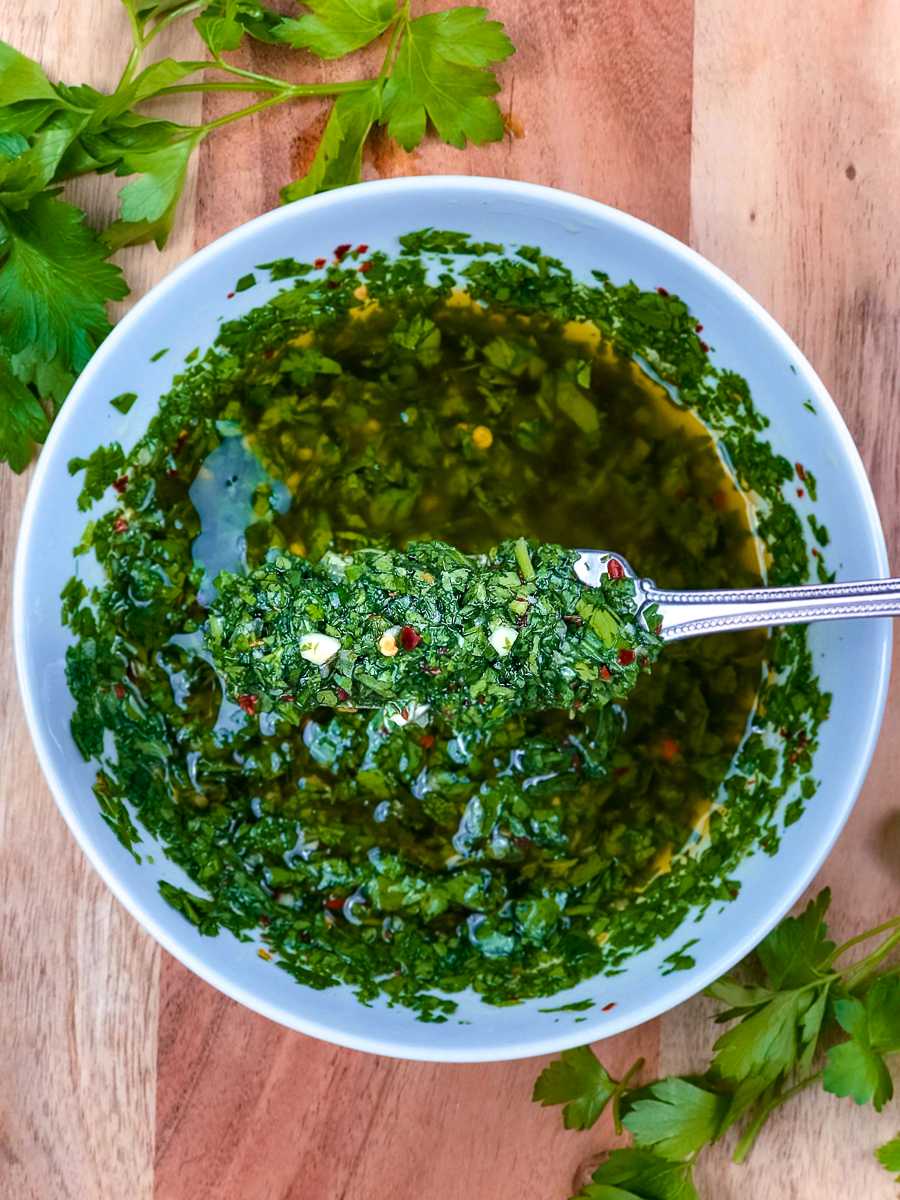
Nutritional Breakdown and Health Benefits of Chimichurri
Chimichurri stands out not only for its vibrant flavor but also for its nutrient-dense composition, offering a balance of vitamins, antioxidants, and healthy fats. Unlike many sauces that rely on heavy creams or refined sugars, chimichurri derives its richness from fresh herbs, aromatic spices, and minimally processed ingredients. Below is a detailed examination of its nutritional profile, health advantages, and practical modifications for health-conscious preparation.
Nutritional Profile of Chimichurri (Per 2-Tablespoon Serving)
The following table outlines the approximate nutritional values of traditional chimichurri, based on standard ingredients (parsley, garlic, red wine vinegar, olive oil, red pepper flakes, oregano, and salt). Variations in ingredient ratios may alter these values slightly.
| Ingredient |
Calories (kcal) |
Fat Content (g) |
Vitamin K (µg) |
Antioxidants (ORAC value*) |
Sodium (mg) |
|---|
| Fresh parsley (10g) |
3 |
0.1 |
133 (44% DV) |
High (apigenin, luteolin) |
2 |
| Garlic (5g) |
14 |
0.1 |
0.1 |
Moderate (allicin, flavonoids) |
4 |
| Red wine vinegar (15mL) |
5 |
0 |
0 |
Moderate (polyphenols) |
1 |
| Extra-virgin olive oil (15mL) |
140 |
16 (mostly monounsaturated) |
0 |
High (oleocanthal, squalene) |
0 |
| Red pepper flakes (1g) |
4 |
0.1 |
0 |
High (capsaicin) |
1 |
| Dried oregano (0.5g) |
2 |
0.1 |
0 |
High (carvacrol, thymol) |
1 |
| Salt (0.5g) |
0 |
0 |
0 |
None |
200 |
| Total (per 2 tbsp) |
168 |
16.5 |
133.2 (44% DV) |
High (aggregate) |
210 |
*ORAC (Oxygen Radical Absorbance Capacity) values are estimates and vary by source.
Health Benefits of Key Components
The nutritional advantages of chimichurri stem from its individual ingredients, each contributing unique bioactive compounds. Below are the primary health benefits associated with its core components:- Parsley: Rich in vitamin K (essential for blood clotting and bone health) and apigenin, a flavonoid with potential anti-inflammatory and detoxifying properties. Studies suggest parsley may support liver function and reduce oxidative stress.
Garlic: Contains allicin, a compound linked to cardiovascular benefits, including lowered cholesterol and blood pressure. Its antimicrobial properties may also enhance immune function.
Olive Oil: Predominantly composed of monounsaturated fats, which support heart health by improving HDL ("good" cholesterol) levels. Extra-virgin olive oil (EVOO) contains oleocanthal, a phenolic compound with anti-inflammatory effects comparable to ibuprofen.
Red Wine Vinegar: Provides polyphenols, which may improve insulin sensitivity and reduce blood sugar spikes. Acetic acid in vinegar has been associated with weight management and gut health.
Red Pepper Flakes: Capsaicin, the compound responsible for heat, acts as a metabolic booster, increasing thermogenesis and fat oxidation. It also exhibits pain-relieving and antioxidant properties.
Oregano: Contains carvacrol and thymol, antioxidants with antimicrobial and anti-cancer potential. Oregano oil has been studied for its ability to combat foodborne pathogens.Potential Allergens and Considerations:
Garlic and Onions: May trigger allergic reactions in sensitive individuals, particularly those with sulfur sensitivities.
Vinegar: Can exacerbate acid reflux or dental enamel erosion in some people; opt for balsamic vinegar as a lower-acid alternative.
Salt: High sodium content may pose risks for individuals with hypertension; reduce or substitute with herbs like smoked paprika for flavor without added salt.
Comparison with Similar Sauces: Nutritional Pros and Cons
Chimichurri’s nutritional profile distinguishes it from other herb-based sauces, offering a balance of antioxidants, healthy fats, and minimal processing. The following comparison highlights key differences:
Chimichurri vs. Pesto:
Chimichurri is lower in calories (168 kcal vs. 300+ kcal per 2 tbsp of pesto) and sodium (210 mg vs. 400+ mg), primarily due to the absence of cheese and nuts. Its vitamin K content is significantly higher (44% DV vs. 10% DV), while pesto provides more calcium and vitamin A from Parmesan.
Pesto contains more protein (3g vs. 1g) and vitamin E (from pine nuts), but its saturated fat content is higher due to cheese and nuts. Chimichurri’s antioxidant profile is broader, thanks to the inclusion of vinegar and red pepper flakes.Chimichurri vs. Salsa Verde:
Chimichurri has a higher fat content (16.5g vs. 0g in salsa verde), contributing to satiety and nutrient absorption of fat-soluble vitamins (e.g., vitamin K). However, salsa verde often includes capers or anchovies, adding sodium (500+ mg per serving) and omega-3s.
Salsa Verde is typically lower in calories (20–50 kcal per 2 tbsp) and sodium (if anchovies are omitted), but lacks the heart-healthy fats of olive oil. Chimichurri’s vinegar and garlic provide unique antimicrobial and anti-inflammatory benefits absent in salsa verde.
For health-conscious consumers, chimichurri offers a lower-calorie, lower-sodium alternative to pesto while retaining robust antioxidant and vitamin properties. Salsa verde may be preferable for those avoiding fats or seeking a tangy, caper-infused flavor, but it sacrifices long-chain fatty acids and certain vitamins.
Modifying Chimichurri for Reduced Calories and Enhanced Health Benefits
While chimichurri is inherently nutrient-dense, simple adjustments can further reduce calories, sodium, or fat without compromising flavor. The following strategies leverage ingredient substitutions and preparation techniques:- Reducing Fat Content:
Substitute olive oil with avocado oil (similar monounsaturated fat profile, slightly lower in calories) or flaxseed oil (rich in omega-3s, but use sparingly due to lower smoke point).
Emulsify with Greek yogurt or silken tofu (2 tbsp) to replace 1 tbsp of oil, adding creaminess while reducing calories by ~120 per serving. Ensure the yogurt is unsweetened to avoid added sugars.
Use aquafaba (chickpea brine) as a binder in smaller quantities (1 tbsp per 2 tbsp sauce) for a vegan,
Regional Variations and Global Adaptations of Chimichurri
Chimichurri’s evolution reflects the culinary diversity of South America, where regional climates, ingredient availability, and cultural traditions have shaped distinct variations. Beyond its Argentine origins, the sauce has been reimagined across the continent—from Uruguay’s chimichurri criollo to Chile’s pebre—each adaptation preserving local flavors while retaining the core essence of fresh herbs, oil, and acidity. Globally, chimichurri has transcended its Latin roots, integrating into international cuisines through spicier, herb-forward, or fermented interpretations. These adaptations not only highlight the sauce’s versatility but also underscore how climate, history, and modern fusion trends influence its sensory profile.The following sections explore the geographical and cultural nuances of chimichurri, from its South American iterations to its global reinventions, including sensory analyses of how environmental factors shape its taste.
Regional Variations in South America
Chimichurri’s regional diversity in South America is primarily driven by local herbs, climate, and culinary traditions. While the Argentine version dominates globally, neighboring countries have developed their own interpretations, often blending indigenous ingredients with Spanish or Italian influences. Below is a comparative analysis of key regional variations, emphasizing their unique characteristics and cultural significance.
| Region |
Key Differences |
Local Ingredients |
Cultural Context |
|---|
| Argentina (Traditional) |
- Balanced acidity, herbal depth, and umami from vinegar and garlic.
- Thicker, paste-like consistency due to minimal oil.
- Often served as a salsa cruda (raw sauce) with grilled meats.
|
- Parsley, oregano, garlic, red wine vinegar, olive oil, salt.
- Optional: chili peppers (e.g., rocoto or ají).
|
Originated in the pampas region as a preservation method for cattle ranchers, chimichurri became a staple of asado (barbecue) culture. Its simplicity reflects gaucho traditions, where fresh herbs were abundant and accessible.
|
| Uruguay (Chimichurri Criollo) |
- More fluid consistency, often emulsified with egg yolk or mustard.
- Milder acidity, with a focus on citrus notes.
- Commonly paired with chivito (steak sandwich) or seafood.
|
- Parsley, cilantro, lemon zest, white wine vinegar, olive oil.
- Optional: grated apple or onion for sweetness.
|
Uruguayan chimichurri reflects the coastal influence of its cuisine, incorporating citrus and seafood pairings. The addition of egg yolk or mustard creates a smoother texture, aligning with Uruguay’s French culinary heritage.
|
| Chile (Pebre) |
- Thicker, chunkier texture with a pronounced smoky or spicy kick.
- Higher heat tolerance, often using aji (chili peppers) prominently.
- Traditionally served with pastel de choclo (corn pie) or empanadas de pino.
|
- Coriander, parsley, garlic, red wine vinegar, olive oil, ají (e.g., ají cristal or rocoto).
- Optional: toasted corn kernels or raisins for sweetness.
|
Pebre is a Mapuche-influenced condiment, historically used to preserve meats in Chile’s arid northern regions. The inclusion of ají reflects indigenous Andean traditions, while its versatility extends to both meat and vegetarian dishes.
|
| Brazil (Chimichurri à Brasileira) |
- Tropical fruit additions (e.g., lime, mango) for brightness.
- Use of coconut oil or dendê oil (palm oil) in coastal regions.
- Often paired with picanha (top sirloin) or grilled fish.
|
- Cilantro, parsley, lime juice, coconut oil, garlic, cheiro-verde (culantro).
- Optional: grated coconut or chili for heat.
|
Brazilian chimichurri adapts to the country’s vast climate zones, with Amazonian versions incorporating wild herbs like taioba (spinach) and northeastern versions using dendê oil for a nutty, smoky depth.
|
| Peru (Chimichurri Andino) |
- Fermented or aged versions for deeper umami.
- Incorporation of huacatay (black mint) and ají amarillo.
- Used in ceviche or as a marinade for lomo saltado.
|
- Huacatay, parsley, garlic, lime juice, olive oil, ají amarillo.
- Optional: fermented fish sauce (tacuachi) for complexity.
|
Peruvian chimichurri draws from Andean and coastal traditions, with huacatay providing a minty, citrusy aroma. Fermentation techniques, borrowed from ceviche culture, enhance its longevity and depth.
|
Global Adaptations of Chimichurri
Chimichurri’s global adoption has led to creative reinterpretations that reflect local ingredient availability, spice preferences, and culinary trends. In the United States, for example, heat levels are often amplified with habaneros or ghost peppers, while European versions lean into herb-forward profiles with tarragon or dill. These adaptations not only cater to regional tastes but also demonstrate chimichurri’s ability to complement diverse protein and vegetable bases. Below are two distinct global recipes, followed by an analysis of how climate and ingredient sourcing influence its flavor.Key Adaptations:
Spice-Forward Versions (U.S./Mexico): Increased heat from chili peppers, often paired with smoky paprika or chipotle.
Herb-Intensive Versions (Europe): Emphasis on Mediterranean herbs (e.g., tarragon, basil) and citrus zest.
Fermented/Probiotic Versions (Asia): Incorporation of miso, rice vinegar, or kimchi for umami depth.
Sweet-Tangy Versions (Caribbean): Addition of pineapple, mango, or tamarind to balance acidity.
Two Global Chimichurri Recipes
1. Smoky Chipotle Chimichurri (U.S. Adaptation)
Flavor Profile: Deep smokiness from chipotle, balanced by sweetness from apple and brightness from lime. Ideal for grilled meats or tacos.
Ingredients:
1 cup flat-leaf parsley
½ cup cilantro
4 garlic cloves
1 small apple, finely diced
1 chipotle pepper in adobo, minced
½ cup red wine vinegar
½ cup olive oil
1 tsp smoked paprika
1 lime, juiced
Salt to taste
Instructions:
1. Pulse all ingredients in a food processor until finely chopped but not
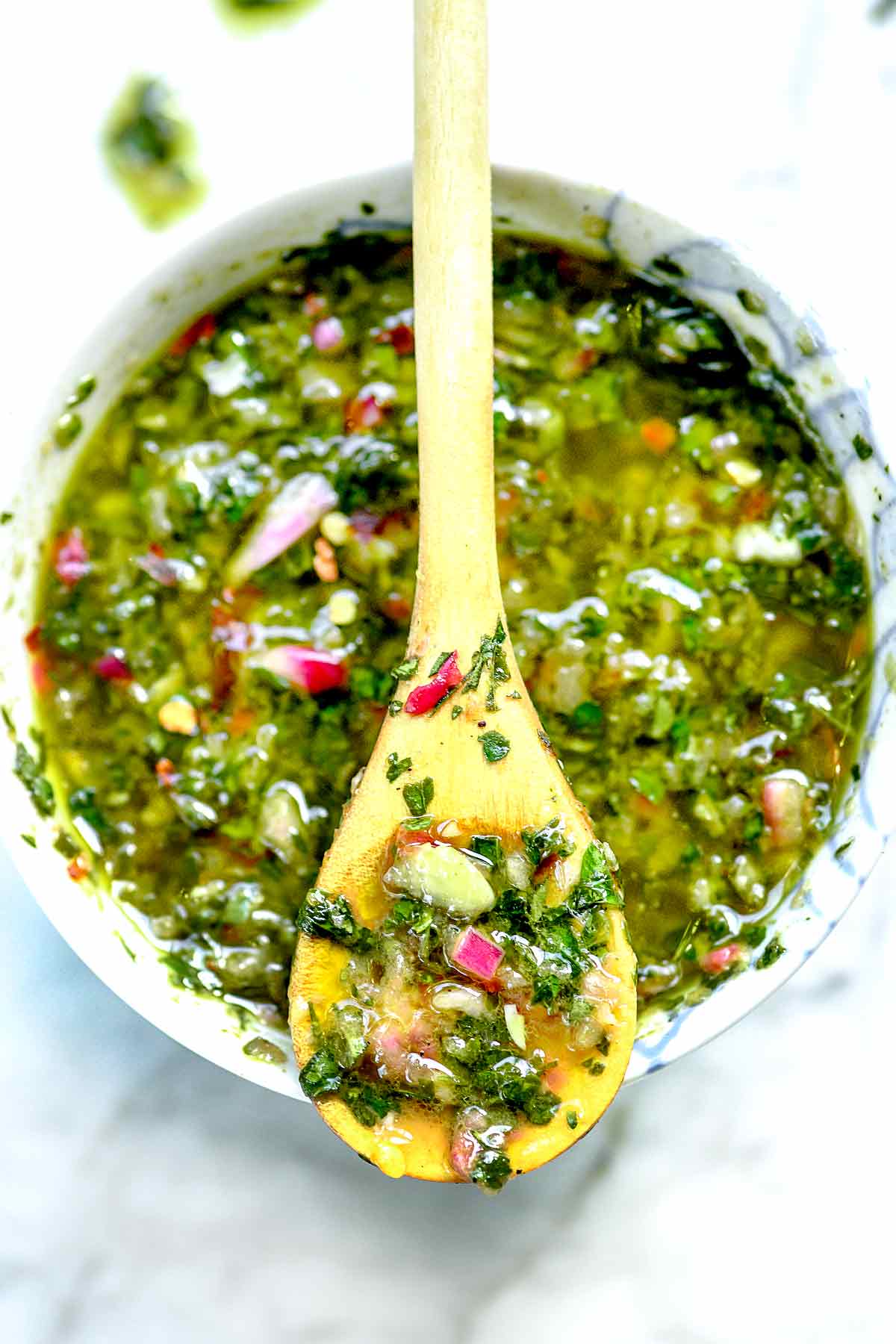
Preparation Methods and Pro Tips for Chimichurri
Chimichurri’s versatility lies in its adaptability—whether prepared through traditional labor-intensive techniques or modernized shortcuts. The method chosen influences texture, flavor depth, and shelf life. While the core ingredients remain consistent, variations in preparation—such as grinding techniques, resting periods, and ingredient ratios—can elevate chimichurri from a simple condiment to a complex, aromatic sauce. Advanced techniques, such as herb-infused oils or umami enhancers, further refine its profile, catering to both authenticity and innovation. Below, traditional and contemporary methods are contrasted, alongside troubleshooting strategies and creative repurposing ideas to minimize waste and maximize flavor.
Traditional vs. Modern Preparation Methods
The preparation of chimichurri reflects cultural techniques rooted in resourcefulness and simplicity. Traditional methods prioritize manual labor and minimal equipment, while modern adaptations leverage technology for efficiency and consistency.Traditional Method
Equipment: Mortar and pestle or a wooden board with a knife.
Technique: Ingredients are coarsely chopped or pounded to release oils and aromatics without fully emulsifying. The sauce is left slightly chunky to preserve texture.
Resting Time: Typically rested for 30 minutes to 2 hours at room temperature to allow flavors to meld. Some recipes call for overnight resting in the refrigerator for deeper infusion.
Oil Addition: Olive oil is added gradually to achieve a loose, pourable consistency, ensuring the herbs retain their texture.
Storage: Stored in an airtight container in the refrigerator for up to 5 days, with occasional stirring to redistribute settled ingredients.Modern Method
Equipment: Food processor, blender, or immersion blender for a smoother texture; or a high-powered blender for a more refined sauce.
Technique: Ingredients are pulsed briefly (3–5 seconds) to avoid over-processing, which can turn chimichurri into a paste. Some chefs use a food mill for a balanced texture between chunky and smooth.
Resting Time: Often skipped or reduced to 15–30 minutes due to time constraints, though flavor development may be less pronounced.
Oil Addition: Pre-infused oils (e.g., garlic or herb-infused olive oil) can be used to intensify flavor without additional steps.
Storage: Extended shelf life (up to 7 days) with proper sealing, though texture may degrade faster than traditional methods. For longer storage, freezing in ice cube trays (thawed and stirred before use) is recommended.
Key Difference: Traditional chimichurri emphasizes texture and rustic charm, while modern methods prioritize speed and homogeneity. Neither is superior; the choice depends on culinary goals—authenticity, convenience, or experimentation.
Advanced Techniques to Enhance Flavor
Beyond the classic parsley, garlic, and vinegar base, chimichurri’s depth can be amplified through infused oils, umami agents, and aromatic additions. These techniques cater to chefs seeking to refine their sauce for specific dishes or dietary preferences (e.g., vegetarian, gluten-free).1. Herb-Infused Olive Oil
Process: Heat ½ cup high-quality olive oil in a small saucepan over low heat. Add 1 crushed garlic clove, 1 tsp dried oregano, 1 tsp red pepper flakes, and 1 sprig fresh thyme. Simmer for 5–7 minutes, then strain through a fine-mesh sieve. Cool before incorporating into the chimichurri.
Flavor Impact: Adds layered warmth and complexity, particularly suited for grilled meats or roasted vegetables.2. Umami Boosters
Options:
1 tsp soy sauce or fish sauce (for savory depth; reduce vinegar by ½ tsp to balance acidity).
1 tsp miso paste (blended into the oil for umami richness).
1 tbsp capers or anchovy fillets (finely minced or mashed; omits from vegetarian versions).
Application: Best for bold dishes like steak or seafood, where umami complements the protein’s natural flavors.3. Citrus or Fruit Zest
Additions:
1 tsp lemon zest or ½ tsp orange zest (brightens the sauce, pairs well with poultry).
1 tsp grated apple or pear (adds subtle sweetness; ideal for fish or salads).
Timing: Fold in zest just before serving to preserve freshness.4. Spice and Heat Variations
Smoked Paprika: Replace ½ tsp red pepper flakes with ½ tsp smoked paprika for a barbecue-like depth.
Chili Oil: Swap vinegar for 1 tsp chili oil (store-bought or homemade) for a spicy, aromatic kick.
Cumin or Coriander: Add ¼ tsp ground cumin or coriander for Middle Eastern or Moroccan-inspired twists.5. Nut or Seed Enhancements
Toasted Nuts: Blend in 1 tbsp toasted almonds or walnuts for crunch and nutty undertones.
Sesame or Poppy Seeds: Sprinkle ½ tsp toasted seeds for a nutty, earthy contrast (common in fusion adaptations).
Pro Tip: When using umami agents like fish sauce or miso, taste incrementally—these ingredients are potent and can overpower the herbal notes if overused.
Troubleshooting Common Chimichurri Issues
Chimichurri’s simplicity can be deceptive; minor missteps in preparation often lead to texture or flavor imbalances. Below is a diagnostic table to identify and rectify common problems.
| Problem |
Cause |
Solution |
|---|
| Watery or Thin Consistency |
- Excessive vinegar or oil added.
- Over-chopping herbs (releases moisture).
- Using wet herbs (e.g., parsley with stems).
|
- Reduce liquid by 1–2 tbsp; stir in 1 tbsp breadcrumbs or crushed crackers to absorb excess moisture.
- Let sit uncovered in the fridge for 1 hour to evaporate excess liquid.
- For immediate use, mix with 1 tsp cornstarch or flour to thicken.
|
| Bland or Muted Flavor |
- Low-quality or stale ingredients (e.g., old garlic, rancid oil).
- Insufficient resting time.
- Underseasoned (e.g., skipping salt or vinegar).
|
- Boost with 1 tsp lemon juice, ½ tsp smoked salt, or a pinch of MSG (for umami).
- Rest for additional 1–2 hours or overnight.
- Add 1 tsp capers, anchovies, or a dash of hot sauce for depth.
|
| Overly Paste-Like Texture |
- Over-processing in a blender or food processor.
- Using too much oil relative to herbs.
|
- Return to a chunkier texture by hand-chopping with a fork or mortar.
- Stir in 1–2 tbsp additional herbs or vinegar to lighten the consistency.
- For a hybrid texture, blend half the batch and mix with the remaining coarse chimichurri.
|
| Oil Separation |
- Improper emulsification (e.g., adding oil too quickly).
- Storage in a non-airtight container.
|
- Vigorously whisk or blend to re-em
From its humble beginnings in Argentine parrillas to its modern reinventions across continents, chimichurri remains a testament to the power of simplicity in culinary artistry. Its ability to marry rustic charm with refined technique ensures its relevance in both home kitchens and high-end dining. Whether exploring its nutritional benefits, regional adaptations, or creative pairings, the essence of chimichurri lies in its capacity to inspire—proving that a few fresh herbs, a splash of acid, and a drizzle of oil can redefine a dish entirely. As global cuisines continue to embrace its versatility, one thing remains clear: chimichurri is not just a sauce, but a celebration of flavor in its most authentic form.
FAQ
what is in chimichurri sauce?
Q: What ingredients are in traditional chimichurri sauce?
what is in chimichurri seasoning?
Q: What is included in chimichurri seasoning?
what is in chimichurri spice?
Q: What spices are in chimichurri?
what is in chimichurri marinade?
Q: What goes into a chimichurri marinade?
what is in chimichurri butter?
Q: What is in chimichurri butter?
what is in chimichurri aioli?
Q: What ingredients are in chimichurri aioli?
|
|
Leave a Comment
Comments are moderated before appearing. The data you submit is processed according to the Privacy Policy of Voltefac.