| Thermos or insulated container |
8–12 minutes |
Smooth but may cool unevenly |
Thermos, hot water, thermometer |
- Portable for off-site work
-
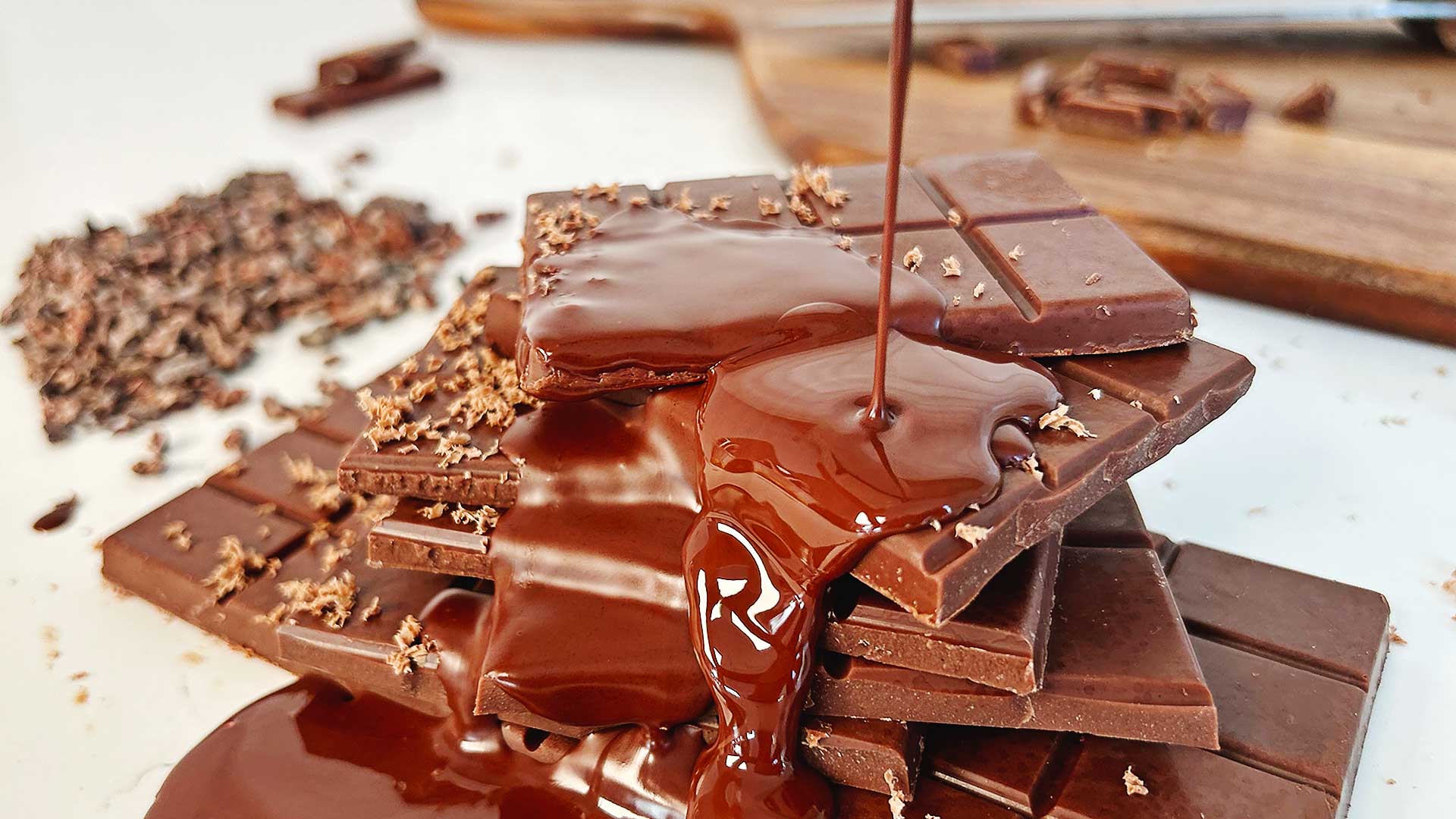
Culinary and Decorative Applications of Chocolate Ganache
Chocolate ganache is a versatile medium in both professional and home baking, serving as a foundation for textures ranging from silky fillings to glossy finishes. Its adaptability extends beyond traditional uses, allowing for creative experimentation in texture, presentation, and flavor integration. Below are structured applications that highlight its role in elevating desserts while maintaining structural integrity and visual appeal.
Five Creative Culinary Uses of Chocolate Ganache in Desserts
Ganache’s smooth yet firm consistency makes it ideal for both functional and decorative purposes in pastry work. These techniques leverage its properties to enhance texture, flavor contrast, and aesthetic presentation.
-
Truffle Centers and Balls
Ganache forms the core of classic chocolate truffles, where it is piped into molds, rolled in cocoa powder or nuts, and chilled until set. For variation, infuse the ganache with flavors such as espresso, orange zest, or chili powder before shaping. Professional truffle makers often use a 30% chocolate-to-cream ratio for a firm yet creamy center, ensuring stability during rolling and coating.
-
Layered Cake Fillings
Ganache’s density makes it perfect for filling layered cakes, such as in entremets or operas. A 50:50 chocolate-to-cream ratio yields a firm yet spreadable texture, ideal for piping between sponge or génoise layers. For added elegance, incorporate edible gold leaf or flavored syrups (e.g., raspberry or hazelnut) into the ganache before assembly.
-
Glazes and Drizzles for Pastries
Thin ganache (achieved by adding 1–2 tablespoons of cream per 100g chocolate) creates a glossy, crack-free sheen on cakes, tart shells, or éclairs. For a metallic finish, mix a small amount of edible luster dust (e.g., gold or silver) into the warm ganache before brushing. Timing is critical: apply the glaze immediately after cooling the baked item to prevent condensation and ensure adhesion.
-
Mousse and Panna Cotta Enhancements
Folded into whipped cream or panna cotta, ganache adds richness and depth without altering the airy texture. A 2:1 cream-to-chocolate ratio (by weight) ensures a stable emulsion. For example, a chocolate mousse often combines ganache with egg whites for structure, while affogato-style desserts use ganache as a molten topping over gelato or ice cream.
-
Decorative Molds and Stencils
Ganache’s malleability allows it to be shaped into intricate designs using silicone molds or stencils. Common applications include leaf motifs for wedding cakes, geometric patterns on cheesecakes, or spherical decorations for macarons or financiers. Pre-chilling the ganache to 28–30°C (82–86°F) before molding prevents sticking and ensures clean edges.
Creating Smooth, Crack-Free Ganache Drizzles for Cakes and Pastries
A flawless drizzle requires precise temperature control and technique to avoid skin formation or uneven flow. The following method ensures a professional finish on both flat and contoured surfaces.
-
Preparation of Ganache
Use a 1:1 ratio of high-quality chocolate (60–70% cocoa) to heavy cream by weight. Heat the cream to 85°C (185°F) to dissolve chocolate completely, then whisk until smooth. Strain through a fine-mesh sieve to remove impurities. For a thinner drizzle, add 1–3 tablespoons of cream per 100g of ganache.
-
Cooling and Thickening
Cool the ganache to 30–32°C (86–90°F) before drizzling. Use an infrared thermometer for accuracy. If the ganache thickens prematurely, reheat gently in 5-second bursts in a microwave or over a double boiler. Overworking can introduce air bubbles, so avoid vigorous stirring.
-
Application Techniques
For flat surfaces (e.g., sheet cakes), use a squeeze bottle or piping bag with a fine tip (e.g., Wilton #2 or #3). Hold the bottle 5–7 cm above the surface and apply in continuous, overlapping lines to prevent gaps. For contoured surfaces (e.g., domed cakes), work in sections, starting from the base upward to avoid drips.
-
Tools for Precision
- Offset spatula: Smooths excess ganache and creates clean edges.
- Toothpick or skewer: Gently guides ganache into crevices.
- Food-safe brush: Distributes thin layers evenly on delicate pastries like macarons.
- Chilling rack: Ensures even cooling and prevents condensation from the base.
-
Timing and Setting
Drizzle onto a completely cooled dessert to prevent melting. Allow 10–15 minutes for the ganache to set at room temperature (20–22°C/68–72°F). For faster setting, place the dessert in the refrigerator for 5 minutes, then finish with a final pass of ganache for a glossy sheen.
Step-by-Step Guide to Molding Ganache into Shapes
Silicone molds and stencils transform ganache into decorative elements with minimal effort. The key lies in temperature management, mold selection, and curing techniques to maintain structural integrity.
-
Selecting the Right Mold
Choose silicone molds for flexibility and easy release, or stencils for custom designs. For spheres (e.g., truffles), use 3–5 cm diameter molds; for leaves or geometric shapes, opt for shallow, textured molds. Ensure molds are food-safe and free of residual oils or release agents.
-
Preparing the Ganache
Adjust the chocolate-to-cream ratio based on the desired firmness:
- Firm shapes (e.g., leaves, stars): 60% chocolate, 40% cream.
- Soft shapes (e.g., flexible ribbons): 50% chocolate, 50% cream.
Cool the ganache to 28–30°C (82–86°F)—warm enough to flow but cool enough to set quickly in molds.
-
Filling and Setting
- Lightly grease molds with neutral oil (e.g., grapeseed) or dust with cocoa powder to prevent sticking.
- Pipe or spoon ganache into molds, filling to 80–90% capacity to allow for expansion. Use a spatula to smooth surfaces.
- Tap molds gently on a countertop to remove air bubbles, then cover with parchment paper.
- Chill in the refrigerator for 15–20 minutes or until firm to the touch (ganache should not leave fingerprints). For delicate shapes (e.g., lace patterns), use a stencil and spread a thin layer of ganache, then chill until set.
-
Demolding and Finishing
Flex the silicone mold to release shapes, or gently run a small offset spatula around the edges. For stenciled designs, carefully lift the stencil once the ganache is firm. Use a paintbrush to touch up edges or add details (e.g., dusting with powdered sugar or edible glitter).
-
Curing for Stability
For room-temperature storage, cure molded ganache for 1–2 hours at 20°C (68°F) to ensure structural integrity. For longer storage, freeze shapes for up to 1 month or refrigerate for up to 1 week. Avoid humidity, which can cause warping or sticking.
Stabilizing Ganache for Room-Temperature Storage
Ganache’s natural softness at room temperature limits its shelf life, but stabilizers like gelatin, agar-agar, or lecithin can extend its usability without altering texture. The choice of stabilizer depends on the intended application and desired mouthfeel.
Stabilization Principles for Ganache
Gelatin (2–4g perTroubleshooting Common Issues in Chocolate Ganache
Chocolate ganache is celebrated for its versatility, yet its delicate balance of ingredients and temperature sensitivity makes it prone to common pitfalls such as graininess, separation, or improper firmness. These issues often stem from deviations in technique, ingredient ratios, or environmental conditions, which can compromise both texture and presentation. Addressing these challenges requires an understanding of their root causes and precise corrective measures to restore the ganache’s intended consistency and stability. Below are systematic solutions for frequent problems, alongside strategies to salvage compromised batches and optimize production under varying conditions.
Causes and Fixes for Graininess in Ganache
Graininess in ganache typically arises from incomplete emulsification of cocoa butter and water, often due to overheating, rapid cooling, or insufficient agitation. When cocoa butter crystallizes prematurely in large, uneven particles, the texture becomes gritty rather than smooth. To prevent this, ensure the cream is brought to a gentle simmer (85–90°C / 185–194°F) before combining with chocolate, as excessive heat can degrade the fat molecules. For an already grainy ganache, reheat the mixture to 60–65°C (140–149°F), stir vigorously, then cool gradually in a water bath to encourage uniform crystallization. If graininess persists, blend the ganache briefly in a food processor or sieve it through a fine-mesh tamis to break up large particles, though this method is best suited for fillings rather than decorative layers.
Separation and Its Correction
Separation occurs when the fat and water phases of ganache fail to emulsify, often due to undermixing, sudden temperature shifts, or the use of low-quality chocolate with unstable cocoa butter content. The water may pool at the bottom, while the chocolate solidifies into a thick, greasy layer. To rectify this, reheat the separated ganache to 60–70°C (140–158°F) and whisk vigorously until the mixture becomes homogeneous. For stubborn separation, add 1–2 teaspoons of heavy cream per 100g of chocolate and reheat gently while stirring to re-emulsify. Prevention involves slowly pouring hot cream over chopped chocolate (rather than vice versa) and allowing the mixture to rest for 5–10 minutes before stirring to ensure even fat distribution.
Excessive Firmness and Over-Setting
Ganache that sets too firmly may result from an imbalance in the cream-to-chocolate ratio, rapid cooling, or the use of high-fat cocoa (e.g., 70% cocoa or higher). This issue is particularly problematic for applications requiring a spreadable or glossy finish. To soften overly firm ganache, place the container in a warm water bath (40–45°C / 104–113°F) for 5–10 minutes, stirring occasionally until pliable. For a permanent fix, adjust the ratio by adding 10–15% more heavy cream per 100g of chocolate in subsequent batches, as the extra fat content lowers the melting point. Alternatively, incorporate 1–2% (by weight) of vegetable shortening or butter to improve plasticity, though this alters the ganache’s purity.
Effects of Overmixing vs. Undermixing
The texture of ganache is highly sensitive to mixing intensity. Overmixing introduces excess air, leading to a frothy, unstable consistency that collapses during setting, while undermixing results in poor emulsification, causing separation or graininess. To correct overmixed ganache, press the surface with a spatula to expel trapped air, then smooth with a palette knife. For undermixed ganache, reheat to 60°C (140°F), stir vigorously for 2–3 minutes, and cool in a controlled environment. A real-time adjustment involves monitoring the mixture’s viscosity: the ideal ganache should coat the back of a spoon smoothly without forming streaks or bubbles.
Salvaging a Failed Ganache Batch
Even with precise techniques, ganache can fail due to ingredient inconsistencies or environmental factors. If a batch is irreparably ruined—such as when chocolate seizes or burns—repurpose the mixture by incorporating it into a fudge base, truffle centers, or as a glaze after diluting with additional cream. For seized chocolate, melt it separately and re-emulsify with fresh cream. If the ganache is too thin, chill it to thicken, then reheat and adjust the ratio by adding 10–20g of powdered sugar per 100g of chocolate to stabilize the emulsion. For burnt or bitter ganache, discard the batch entirely, as heat degradation cannot be reversed.
Environmental Factors Affecting Ganache Setting
Humidity, temperature fluctuations, and airflow directly influence ganache’s crystallization and setting time. Below is a comparative table outlining key environmental factors, their impacts, and mitigation strategies:
| Factor |
Impact on Ganache |
Solution |
|---|
| High Humidity |
Accelerates moisture absorption, causing softening or mold growth; may lead to a sticky, uneven surface. |
- Work in a climate-controlled environment (40–60% humidity).
- Use desiccants (e.g., silica gel packs) near workstations.
- Store finished ganache in airtight containers with a thin layer of parchment paper to prevent condensation.
|
| Low Temperature (<15°C / 59°F) |
Slows crystallization, resulting in a grainy or uneven set; may cause fat bloom if stored improperly. |
- Temper the ganache by reheating to 45°C (113°F), then cooling to 27°C (81°F) before use.
- Store in a cool, dry place (ideal: 16–18°C / 61–64°F) to prevent premature solidification.
- Avoid refrigerating ganache for more than 24 hours, as it may develop a waxy texture.
|
| Rapid Temperature Shifts |
Induces fat bloom (white streaks) or cracking due to uneven contraction; compromises gloss and mouthfeel. |
- Cool ganache gradually in a water bath at 20–22°C (68–72°F) for 1–2 hours before transferring to molds.
- Use insulated containers to shield ganache from drafts during setting.
- For decorative work, apply ganache at 28–30°C (82–86°F) to allow controlled spreading.
|
| Direct Airflow or Fans |
Causes uneven drying, leading to a dull finish or hardened edges; may introduce air bubbles. |
- Work in a draft-free zone or use a laminar flow hood for precision applications.
- Cover ganache with plastic wrap while setting to minimize evaporation.
- For large batches, use a humidifier to maintain stable conditions.
|
Key Formula for Stability:
For optimal environmental resilience, maintain a cream-to-chocolate ratio of 1:1 (by weight) and a working temperature of 30–32°C (86–90°F). Adjust ratios by ±5% cream based on cocoa percentage (e.g., 70% cocoa requires slightly more cream to prevent firmness).
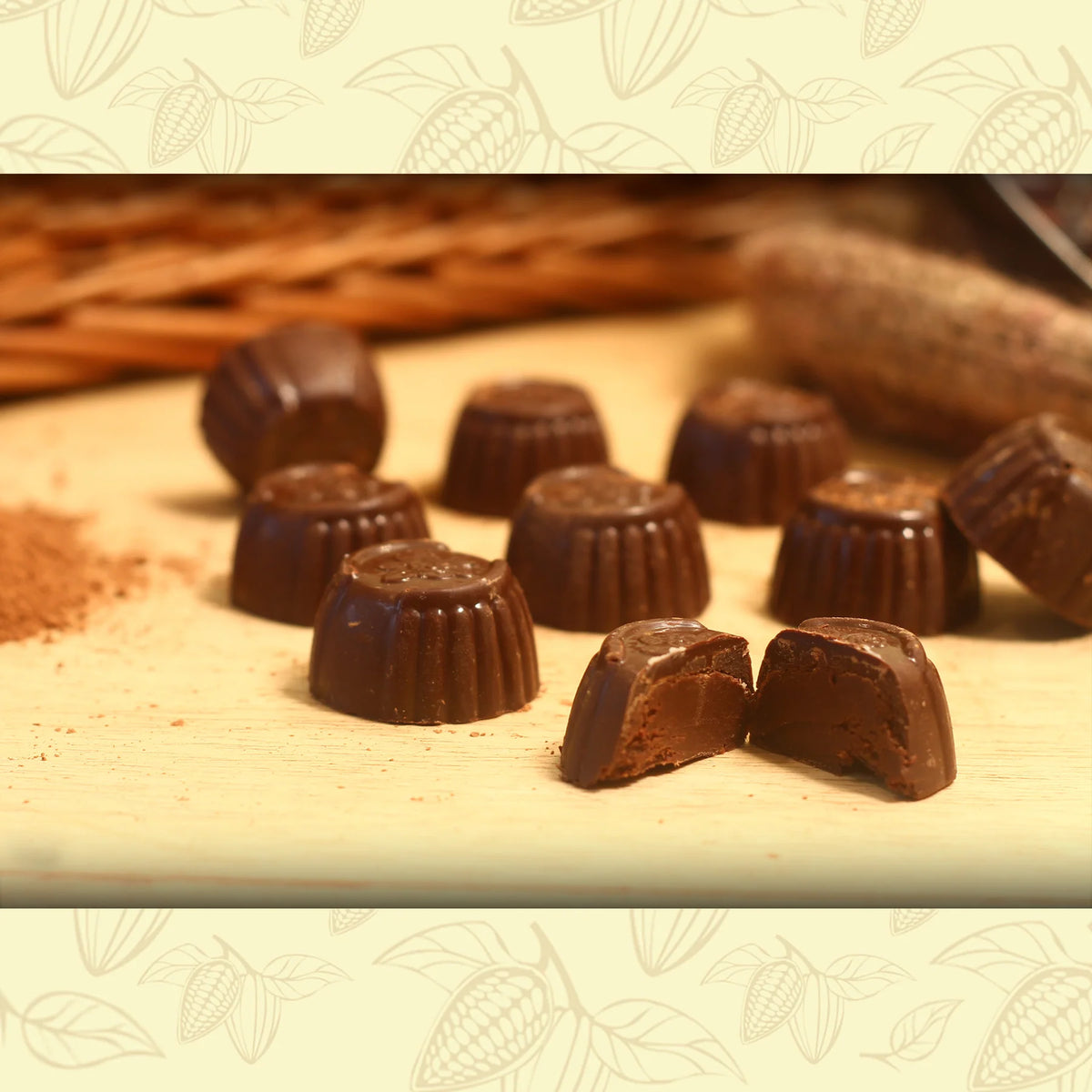
Pairings and Flavor Profiles in Chocolate Ganache
Chocolate ganache is a versatile medium that transcends its traditional role as a dessert filling or glaze, offering a rich canvas for flavor experimentation. Its balance of fat, sugar, and cocoa solids allows it to harmonize with contrasting or complementary ingredients, from delicate floral notes to bold spices. Pairings with ganache are not merely about sweetness but about creating multidimensional taste experiences—whether through texture, acidity, or umami depth. Understanding these interactions enables chefs and home bakers to elevate ganache from a simple component to a star element in both sweet and savory applications.The art of pairing ganache hinges on three principles: contrast, balance, and intensity. Contrast leverages opposing flavors (e.g., bitter vs. sweet, creamy vs. crunchy) to create intrigue, while balance ensures no single note dominates. Intensity refers to the concentration of flavors, where ganache’s richness can be offset by lighter, brighter elements. Below, the discussion explores complementary flavors, structured pairings, and a flavor wheel to guide creative applications.
Complementary Flavors and Balancing Techniques
Ganache’s natural sweetness and bitterness make it adaptable to both sweet and savory profiles, though its fat content demands careful pairing to avoid cloying or overwhelming results. The following categories outline key flavor families that enhance ganache, along with techniques to achieve harmony.
"Ganache is a chameleon—its depth allows it to embrace acidity, spice, and even saltiness, but the secret lies in proportion. A single drop of citrus zest can brighten a pound of ganache, while a pinch of sea salt can transform it from indulgent to sophisticated."
— Pastry Chef Jacques Torres (adapted from The Chocolate Experience)
Sweet Pairings
Ganache’s inherent richness pairs well with ingredients that introduce acidity, texture, or aromatic complexity. Examples include:
Fruit Preserves: Raspberry, blackberry, or fig preserves cut through ganache’s density with tartness. The acidity also prevents the ganache from tasting flat. Technique: Infuse ganache with reduced preserves (1:3 preserve-to-ganache ratio) or layer as a filling in tortes.
Caramel and Salted Caramel: The buttery, toasted notes of caramel (especially salted) amplify ganache’s cocoa depth. Technique: Swirl caramel into warm ganache for a marbled effect or drizzle over ganache-filled pastries.
Nuts: Toasted hazelnuts, pistachios, or pecans add crunch and nutty bitterness. Technique: Finely chop nuts and fold into ganache during the tempering phase, or use as a topping for contrast.
Vanilla and Spices: A vanilla bean or cinnamon stick infused into the cream before combining with chocolate enhances floral and warm undertones. Technique: Split a vanilla bean, scrape seeds into the cream, and simmer with a cinnamon stick for 10 minutes before mixing with chocolate.Savory and Umami Pairings
Ganache’s fat content makes it surprisingly effective in savory contexts, where its smoothness can glaze or bind ingredients. Key pairings include:
Cheese: Aged cheddar, blue cheese, or goat cheese provide tangy or funky notes that contrast ganache’s sweetness. Technique: Use ganache as a glaze for cheese-stuffed mushrooms or as a dip for cheese boards.
Meat Glazes: Dark chocolate ganache (70% cocoa or higher) pairs with duck, pork belly, or beef due to its bitterness complementing fatty meats. Technique: Reduce ganache with a splash of balsamic vinegar and brush over roasted meats at the end of cooking.
Miso and Soy: The umami depth of white or red miso balances ganache’s sweetness in unexpected ways. Technique: Stir 1 tablespoon of miso paste into 2 cups of ganache for a glaze or dip.
Smoked Elements: Chipotle, smoked paprika, or even a drop of liquid smoke add complexity. Technique: Infuse ganache with smoked sea salt or a finely ground chipotle pepper during the tempering phase.Balancing Sweetness and Bitterness
To avoid a one-dimensional flavor, use these ratios as guidelines:
For Dark Ganache (70%+ cocoa): Pair with 10–15% acidity (e.g., orange zest, balsamic reduction) or 5–10% salt (e.g., flaky sea salt).
For Milk or White Ganache: Introduce 20–30% tartness (e.g., lemon curd, rhubarb compote) or 15% spice (e.g., cardamom, star anise).
For Salted Ganache: Reduce sweetness by 20–25% and increase umami (e.g., soy sauce, mushrooms) or acidity (e.g., pickled onions).
Pairing Ganache with Beverages and Cheeses
Ganache-based desserts and applications benefit from strategic beverage and cheese pairings that mirror or contrast their flavor profiles. The following selections enhance the dining experience by aligning with ganache’s dominant notes—whether sweet, bitter, or complex.Wine Pairings
Wine’s acidity, tannins, and alcohol content can either cut through ganache’s richness or amplify its depth. Ideal choices include:
Red Wines:
Port (Ruby or Tawny): The caramelized, fruity notes of a 10-year tawny port echo ganache’s chocolate and spice profiles, while its alcohol content cleanses the palate. Best for: Dark chocolate ganache with orange or coffee.
Cabernet Sauvignon (Oaked): Tannins in bold Cabernet pair with dark chocolate ganache (60–70% cocoa), especially when paired with blackcurrant or espresso. Best for: Ganache-filled truffles or chocolate mousse.
Pinot Noir: Lighter-bodied and earthy, Pinot Noir complements milk or white chocolate ganache with red fruit preserves. Best for: Raspberry ganache tarts.
White Wines:
Chardonnay (Oaked): Buttery, vanilla notes in Chardonnay harmonize with milk chocolate ganache, particularly when paired with caramel or hazelnut. Best for: Ganache-dipped fruit or cheese boards.
Sauternes: The honeyed, apricot-like flavors of Sauternes mirror the sweetness of white chocolate ganache while its acidity balances richness. Best for: Ganache-glazed pastries with fruit.
Sparkling Wines:
Prosecco or Cava: The effervescence and citrus notes of Prosecco cut through dense ganache, making it ideal for palate cleansing. Best for: Ganache-filled chocolates or mousse.
Champagne (Brut): The crisp acidity and almond notes of Champagne pair with dark chocolate ganache, especially when combined with sea salt or hazelnut. Best for: Ganache-drizzled desserts with bitter chocolate.Cheese Pairings
Cheese introduces saltiness, tang, or funk that contrasts ganache’s sweetness, creating a sophisticated balance. Select cheeses based on their fat content and flavor intensity:
Soft and Creamy:
Brie or Camembert: Their buttery, mushroomy notes complement milk chocolate ganache, especially when paired with honey or figs. Technique: Serve ganache alongside cheese on a board with sliced pear.
Goat Cheese (Chèvre): Tangy and slightly grainy, goat cheese pairs with dark chocolate ganache (50–60% cocoa) and walnuts. Technique: Fold crumbled goat cheese into ganache for a dip or spread.
Aged and Sharp:
Aged Cheddar (e.g., Sharp Cheddar): The caramelized, nutty sharpness cuts through sweet ganache. Technique: Use ganache as a glaze for cheddar-stuffed dates or as a dip for cheese crisps.
Blue Cheese (e.g., Gorgonzola Dolce): The funky, salty notes of blue cheese contrast with white chocolate ganache and pear slices. Technique: Layer ganache and blue cheese in a tart shell.
Salty and Nutty:
Manchego or Pecorino: Their mineral, slightly bitter profiles pair with dark chocolate ganache (70%+) and roasted almonds. Technique: Brush ganache over Manchego slices and bake until melted for a savory snack.Non-Alcoholic Beverages
For ganache pairings in non-alcoholic contexts, focus on
Advanced Techniques and Innovations in Chocolate Ganache
Chocolate ganache has evolved beyond its classic applications, incorporating unconventional ingredients, artistic layering, and dietary adaptations to meet contemporary culinary demands. These innovations expand its versatility in both savory and sweet contexts while addressing niche preferences, such as vegan diets, herbal infusions, and smoked profiles. Below are refined methods for elevating ganache through infusion, structural experimentation, and ingredient substitution, supported by comparative analysis of traditional versus modern adaptations.
Infusing Ganache with Herbs and Smoked Elements
Herbal and smoked ganaches introduce complex aromatics and umami depth, ideal for pairing with desserts requiring contrast or savory-sweet balance. The infusion process relies on gentle heat and precise timing to preserve volatile compounds without bitterness. Herbal Infusions
Herbs like mint, basil, or thyme are best incorporated via steeping or light simmering in the liquid component (cream, milk, or plant-based alternatives) before combining with chocolate. For example:
Mint Ganache: Steep 1 tbsp fresh mint leaves in 250ml heavy cream for 10 minutes, then strain and proceed with standard ganache ratios (1:1 chocolate-to-cream by weight). Use for filling macarons or glazing white chocolate bark.
Basil Ganache: Blend 2 tbsp basil leaves with 100ml cream, heat to 60°C (140°F), then mix with 200g dark chocolate (70% cocoa). Ideal for pairing with strawberry shortcake or as a drizzle over panna cotta.Smoked Ganaches
Smoked elements—such as chipotle, bacon fat, or liquid smoke—add a charred, meaty dimension. Methods include:
Chipotle-Infused Ganache: Rehydrate 1–2 chipotle peppers in 50ml cream, then blend into 250ml cream before combining with 250g dark chocolate. Use sparingly (0.5–1 tsp rehydrated peppers per 100g chocolate) to avoid overpowering.
Bacon-Fat Ganache: Render 50g bacon until crisp, strain fat through cheesecloth, and incorporate 20g into 250g melted dark chocolate. This ganache complements caramelized onions or apple-based desserts.
Key Principle: Infusions should not exceed 10% of the total liquid volume to prevent flavor dominance. Herbs should be fine-strained post-infusion to avoid texture issues.
Layered and Marbled Ganache Effects
Layering or marbling ganache creates visual and textural contrast, often achieved through temperature control and density manipulation. Techniques include:
Color Blocking: Melt two ganaches (e.g., red velvet + white chocolate) to 35°C (95°F), then layer in a piping bag with a star tip. For stability, chill between layers at 8°C (46°F) for 10 minutes.
Swirl Marbling: Combine a thick ganache (e.g., 300g dark chocolate + 150g cream) with a thinner, contrasting one (e.g., raspberry-infused white ganache). Use a spatula to drag lines through the mixture before setting in a mold.
Gradient Ganache: Pour lighter ganache (e.g., hazelnut) into a container, then slowly pour a denser ganache (e.g., black sesame) over the back of a spoon to create a natural blend.
Temperature Note: Ganache for layering should be semi-set (28–30°C/82–86°F) to prevent mixing. Use a thermometer for precision.
Applications:
Patisserie: Layered ganache in entremets or cake tiers.
Confectionery: Marbled truffles or ganache-filled chocolates for weddings.
Savory: Smoked chipotle ganache layered with goat cheese for appetizers.
Vegan ganache replaces dairy with plant-based fats while maintaining stability. Key adjustments include:
Base Substitutes:
Coconut Milk: Full-fat canned coconut milk (1:1 ratio) yields a firmer texture but requires higher cocoa content (e.g., 70% dark chocolate).
Oat Cream: Barista-style oat cream (e.g., Oatly) works at a 1:0.8 ratio (chocolate-to-liquid) but may need stabilizers like 1 tsp arrowroot per 250ml.
Cashew Cream: Blended soaked cashews (200g) with 150ml water creates a neutral, rich base (1:1 ratio).- Stabilization Techniques:
Lecithin: Add 0.5 tsp soy or sunflower lecithin per 250g chocolate to improve emulsification.
Chilling: Vegan ganache sets slower; chill molds at -18°C (0°F) for 2–3 hours to prevent graininess.Example Recipe:
200g dairy-free dark chocolate (60% cocoa)
180ml coconut cream (chilled overnight)
1 tsp vanilla extract
0.5 tsp lecithin
Method: Heat coconut cream to 50°C (122°F), whisk in chocolate until smooth, then cool to 28°C (82°F) before using.
Comparative Analysis: Traditional vs. Modern Ganache Twists
Below is a structured comparison of classic ganache and contemporary variations, highlighting base ingredients, techniques, and optimal applications.
| Twist |
Base |
Technique |
Best Use |
|---|
| Classic Ganache |
Heavy cream + chocolate (1:1 ratio) |
Melt chocolate in cream (60–65°C/140–149°F), then cool to 28°C (82°F) |
Cake fillings, truffles, chocolate shells |
| Matcha Ganache |
Cream + 1–2 tsp high-quality matcha powder (ceremonial grade) |
Whisk matcha into warm cream (60°C/140°F) before combining with white chocolate |
Green tea mochi, macaron centers, latte-flavored desserts |
| Lavender Ganache |
Cream infused with 1 tsp culinary lavender buds |
Steep lavender in cream for 15 mins, strain, then proceed as classic ganache |
Lemon bars, shortbread, or as a glaze for floral pastries |
| Chili-Infused Ganache |
Cream + 0.5 tsp chili powder or 1 tsp chili oil |
Heat cream with chili until fragrant (do not boil), then mix with dark chocolate (50–70% cocoa) |
Spiced fruit tarts, chocolate-dipped pretzels, or savory ganache for cheese boards |
| Salted Caramel Ganache |
Cream + 50g homemade caramel (cooled) + flaky salt |
Fold caramel into warm cream, then combine with chocolate (1:1) |
Layered in mille-feuille, drizzled over ice cream |
| Vegan Coconut Ganache |
Coconut cream + 1 tsp arrowroot |
Heat coconut cream to 50°C (122°F), whisk in chocolate, then chill rapidly |
Vegan truffles, chocolate bark, or as a filling for vegan cheesecakes |
Flavor Pairing Insight: Modern twists often require complementary acidity (e.g., citrus with lavender, vineChocolate ganache exemplifies the harmony between science and creativity in culinary arts, where precise ingredient ratios and temperature control converge to produce a versatile medium for both function and aesthetics. Whether used as a decadent filling, a lustrous glaze, or an unexpected savory element, its adaptability makes it indispensable in modern baking and beyond. By mastering its foundational techniques—from troubleshooting inconsistencies to experimenting with global flavors—culinary practitioners can transform ganache into a signature tool for innovation. The journey through its composition, applications, and advanced variations underscores its enduring relevance, proving that simplicity often holds the greatest potential for sophistication.
FAQ
What is a chocolate ganache cake?
A chocolate ganache cake is a dessert where a smooth, rich chocolate ganache (made from chocolate and cream) is used as a filling, frosting, or glaze. It’s often layered between cake layers or poured over the top for a glossy finish. Ganache cakes are known for their velvety texture and intense chocolate flavor.
What is chocolate ganache made of?
Chocolate ganache is made by heating heavy cream and pouring it over chopped chocolate (or chocolate chips) to melt together. The ratio is typically 1 part chocolate to 1 part cream, though adjustments can be made for thickness. Some recipes add butter or stabilizers like corn syrup for extra shine or stability.
What is chocolate ganache used for?
Chocolate ganache is used as a filling for pastries, a glossy frosting for cakes, a glaze for cookies or tarts, and a topping for ice cream or fruit. It’s also popular for truffles, dipping chocolates, and decorating desserts with its smooth, luxurious texture.
What is chocolate ganache frosting?
Chocolate ganache frosting is a silky, semi-solid coating made by combining melted chocolate with warm cream, then cooling slightly to thicken. Unlike buttercream, it’s lighter and shinier, often used for elegant layer cakes or as a drip over desserts. It’s easy to pipe or spread but melts in warm temperatures.
What is chocolate ganache ice cream?
Chocolate ganache ice cream is a rich dessert where a layer of ganache (chocolate and cream mixture) is swirled or poured into soft-serve or semi-frozen ice cream. It creates a marbled effect or a fudge-like coating inside the scoop. Brands like Häagen-Dazs and Ben & Jerry’s offer popular versions of this style.
What is chocolate ganache filling?
Chocolate ganache filling is a smooth, creamy mixture of melted chocolate and heated cream, used to stuff pastries like éclairs, cream puffs, or cake layers. It’s poured warm into shells or between layers, then chilled to set into a firm but velvety texture. The filling is often paired with coffee or fruit for contrast.
|
:max_bytes(150000):strip_icc()/chocolate_hero1-d62e5444a8734f8d8fe91f5631d51ca5.jpg)
Leave a Comment
Comments are moderated before appearing. The data you submit is processed according to the Privacy Policy of Voltefac.