What Is Brain Drain Explained With Global Impacts And Solutions
Table of Contents
- Definition and Core Concept of Brain Drain
- Structured Definition of Brain Drain
- Historical Origins and Evolution of Brain Drain
- Comparison with Related Concepts
- Economic and Sociological Implications
- Causes and Driving Factors of Brain Drain
- Push Factors: Systemic Challenges in Origin Countries
- Pull Factors: Attractive Opportunities in Destination Countries
- Flowchart: Economic Disparities and Brain Drain
- Industries Most Affected by Brain Drain: Data-Driven Examples
- Economic and Social Consequences of Brain Drain
- Macroeconomic Costs of Brain Drain
- Social Consequences of Brain Drain
- Short-Term vs. Long-Term Effects on National Development
- Case Studies: Regional and Sectoral Perspectives on Brain Drain
- Brain Drain in Sub-Saharan Africa: Healthcare and Engineering Exodus
- Brain Drain in the Middle East: Scientists and Engineers from Iran and Syria
- Brain Drain in Eastern Europe: IT Professionals from Poland and Romania
- Mitigation Strategies and Policy Responses to Brain Drain
- Government-Led Solutions to Combat Brain Drain
- Private-Sector Initiatives and Corporate Retention Strategies
- FAQ
- what is brain drain in economics?
- what is brain drain meaning?
- what is brain drain in geography?
- what is brain drain in migration?
- what is brain drain in the philippines?
- what is brain drain in india?
Brain drain represents one of the most critical challenges of the 21st century, reshaping economies and societies by accelerating the exodus of skilled professionals from developing nations to regions offering greater opportunities. This phenomenon transcends mere migration—it reflects systemic disparities in education, wages, and institutional stability, with far-reaching consequences for innovation, healthcare, and long-term development. From post-WWII labor shifts to today’s tech-driven diasporas, the movement of talent has redefined global labor markets, forcing policymakers and economists to confront its dual nature: a loss for origin countries yet a strategic asset for destinations.
The implications of brain drain extend beyond statistics, touching cultural identity, economic resilience, and even geopolitical stability. While some nations struggle with aging workforces and knowledge gaps, others leverage migration to fuel growth, creating a paradox where human capital becomes both a liability and an opportunity. Understanding its mechanics—from push factors like political instability to pull incentives such as higher salaries—is essential to devising targeted solutions. This discussion explores the historical roots, sectoral impacts, and policy responses shaping the future of brain drain, offering a data-driven perspective on how nations can mitigate its costs while harnessing its potential for collective progress.
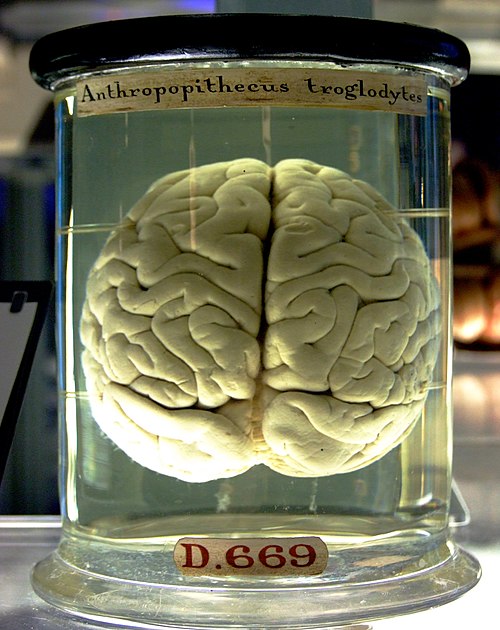
Definition and Core Concept of Brain Drain
Brain drain refers to the large-scale emigration of highly skilled professionals, researchers, and educated individuals from one country—typically a developing or economically struggling nation—to more prosperous regions in search of better opportunities. This phenomenon carries profound economic and sociological consequences, including weakened labor markets, reduced innovation capacity, and strained public investment returns in education and healthcare. Historically, brain drain has exacerbated global inequalities by depriving source countries of critical human capital while enriching destination nations with talent, often at the expense of equitable development.
Brain drain is not merely a migration issue but a systemic challenge that reshapes national competitiveness and social cohesion. The outflow of skilled workers disrupts institutional knowledge transfer, hampers technological progress, and increases the burden on remaining local professionals. Conversely, destination countries benefit from an influx of expertise, though they often face integration challenges and ethical debates over exploitation of talent.
Structured Definition of Brain Drain
The following table outlines the core components of brain drain, emphasizing its multidimensional impact:| Term | Definition | Key Impact Areas |
|---|---|---|
| Brain Drain | The permanent or semi-permanent migration of skilled individuals from a country of origin to another, driven by economic, political, or social incentives. |
|
| Reverse Brain Drain | A subset where skilled migrants return to their home countries, often due to improved conditions or policy incentives. |
|
| Brain Waste | The underutilization of skilled migrants' qualifications in destination countries, leading to mismatched employment. |
|
Historical Origins and Evolution of Brain Drain
The modern concept of brain drain emerged in the mid-20th century, particularly following World War II, when displaced scientists, engineers, and academics sought opportunities in the United States and Western Europe. Key milestones include:Blockquote:
"Brain drain is not just a loss for the sending country; it is a redistribution of global human capital that reflects deeper structural imbalances in opportunity and governance." — World Bank (2018)
Comparison with Related Concepts
Brain drain is often conflated with other migration-related phenomena, but each carries distinct implications:Brain drain involves the permanent or prolonged departure of skilled individuals, whereas brain gain refers to the net inflow of talent into a country, often through targeted immigration policies or improved economic conditions. For example:
Brain circulation describes a dynamic, cyclical movement of skilled workers between countries, where individuals temporarily relocate for education, work, or research before returning. Key examples include:
Distinctions:
Economic and Sociological Implications
The economic consequences of brain drain are quantifiable but often asymmetrical. Source countries frequently incur hidden costs, such as:Sociologically, brain drain erodes social trust in institutions, particularly when migration is perceived as a failure of national governance. For instance:
Blockquote:
"The brain drain is not just a demographic shift; it is a symptom of deeper failures in economic governance, education systems, and social mobility." — International Monetary Fund (IMF, 2020)
Causes and Driving Factors of Brain Drain
Brain drain occurs as a consequence of complex, interwoven economic, political, and social disparities between countries. The phenomenon is primarily driven by push factors—conditions in origin countries that compel skilled professionals to leave—and pull factors—attractive opportunities in destination nations that incentivize migration. These dynamics are exacerbated by systemic inefficiencies, such as underfunded education systems, stagnant wage growth, and weak institutional governance, which collectively create an environment where talent migration becomes a rational economic and professional choice.
The interplay of these factors is not uniform; instead, it varies across industries, regions, and skill levels. While some sectors, like technology and healthcare, experience acute shortages due to high demand in global labor markets, others face gradual erosion of expertise as professionals seek better prospects abroad. Below, the mechanisms behind these push and pull forces are examined, alongside empirical data illustrating their impact across critical industries.
Push Factors: Systemic Challenges in Origin Countries
Push factors refer to the adverse conditions in a professional’s home country that reduce opportunities, job satisfaction, or quality of life, prompting emigration. These factors often stem from structural weaknesses in education, economic policies, and governance.Economic Stagnation and Limited Career Growth
Many developing nations suffer from low wage growth, high unemployment rates, and a lack of upward mobility for skilled workers. For instance, in sub-Saharan Africa, graduates in fields like engineering or medicine frequently enter the workforce with salaries that fail to cover basic living costs, let alone provide incentives for long-term investment in their careers. A 2022 World Bank report highlighted that young professionals in Nigeria earn 30% less in purchasing power than their counterparts in the U.S. or EU, despite comparable educational qualifications.
Political Instability and Security Risks
Countries experiencing conflict, corruption, or weak rule of law face accelerated brain drain as professionals prioritize safety and stability. Syria, for example, lost over 80% of its pre-war skilled workforce between 2011 and 2020, with doctors, engineers, and academics fleeing to Europe and the Gulf States due to civil war and economic collapse. Similarly, Venezuela’s hyperinflation and political repression led to a mass exodus of 7 million skilled workers (25% of the population) between 2015 and 2021, including 60% of its medical professionals.
Weak Institutional Frameworks and Corruption
Corruption and bureaucratic inefficiencies distort labor markets, discouraging innovation and professional development. In India, for example, nepotism in public-sector hiring and slow bureaucratic processes deter highly educated individuals from pursuing careers in government or academia. A 2023 Transparency International study found that 40% of Indian professionals in STEM fields considered emigration due to systemic corruption in research funding and academic promotions.
Lack of Infrastructure and Professional Development
Outdated infrastructure, limited access to research facilities, and restricted opportunities for specialization further push skilled workers abroad. In Pakistan, only 30% of universities meet international accreditation standards, forcing graduates to seek advanced degrees or employment in countries with stronger academic ecosystems. The brain drain in Pakistan’s IT sector, for instance, has led to a 40% shortage of software engineers in local firms, despite the country producing over 50,000 IT graduates annually.
"The exodus of African healthcare workers to Europe is not just a loss of human capital but a systemic failure to invest in the continent’s future. Between 2000 and 2020, Sub-Saharan Africa lost 140,000 nurses and doctors to migration, with the UK alone employing one in five African-trained nurses by 2019. This outflow has crippled healthcare systems, leaving countries like Ghana and Nigeria with doctor-to-patient ratios 10 times worse than global averages." — World Health Organization (WHO) Migration of Health Workers Report, 2021
Pull Factors: Attractive Opportunities in Destination Countries
Pull factors are the incentives offered by destination countries that make emigration an appealing option. These include higher salaries, better working conditions, career advancement, and improved quality of life.Higher Compensation and Financial Incentives
Skilled professionals in sectors like technology, finance, and healthcare often earn 2–5 times more in developed nations compared to their home countries. For example, a software engineer in India earns an average of $12,000 annually, while their counterpart in the U.S. earns $120,000, a disparity that drives mass migration. Similarly, doctors in the UK earn £80,000–£120,000 ($100,000–$150,000) annually, compared to $5,000–$15,000 in Nigeria or Pakistan.
Advanced Infrastructure and Research Opportunities
Destination countries often provide superior research facilities, funding for innovation, and access to cutting-edge technology. The U.S. and Germany attract over 60% of global PhD graduates in STEM fields, with institutions like MIT and Max Planck Institute offering unparalleled resources for scientific breakthroughs. In contrast, many African and Asian universities lack basic lab equipment, pushing researchers to seek opportunities abroad.
Strong Legal Protections and Work-Life Balance
Countries with robust labor laws, healthcare systems, and work-life balance policies act as magnets for skilled migrants. Canada, for instance, offers universal healthcare, strong union protections, and pathways to citizenship, making it a top destination for Indian and Chinese professionals. The EU’s Blue Card system provides streamlined visas for high-skilled workers, further accelerating migration from Eastern Europe and North Africa.
Global Demand for Specialized Skills
Certain industries, such as AI, biotechnology, and renewable energy, face acute labor shortages in developed nations, creating demand for foreign talent. The U.S. tech sector alone issued 180,000 H-1B visas in 2023, with 60% going to professionals from India, China, and the Philippines. Similarly, Germany’s nursing shortage led to the recruitment of 50,000 foreign nurses between 2020 and 2023, primarily from the Philippines and Romania.
Flowchart: Economic Disparities and Brain Drain
Below is a visual representation of how economic disparities drive brain drain, structured as a flowchart with key nodes:1. Education System (Node A)
2. Wages and Economic Opportunities (Node B)
3. Government Policies (Node C)
4. Global Labor Market (Node D)
Visual Description:
Industries Most Affected by Brain Drain: Data-Driven Examples
The following table outlines the top industries experiencing brain drain, along with key source and destination countries, based on OECD, World Bank, and IOM reports (2020–2024):| Industry | Top Source Countries | Top Destination Countries | Annual Estimated Outflow (2023) | |||||||||||||||||||||||||||||||||||||||||||
|---|---|---|---|---|---|---|---|---|---|---|---|---|---|---|---|---|---|---|---|---|---|---|---|---|---|---|---|---|---|---|---|---|---|---|---|---|---|---|---|---|---|---|---|---|---|---|
| Healthcare (Doctors, Nurses) | Nigeria, India, Philippines, South Africa | UK, Canada, Germany, Australia | 120,000–150
Economic and Social Consequences of Brain DrainBrain drain represents a critical economic and social challenge for developing and middle-income countries, reshaping national productivity, fiscal stability, and demographic structures. While the departure of skilled labor often triggers immediate financial strain, its long-term effects extend beyond GDP declines, influencing workforce aging, institutional knowledge erosion, and cultural shifts. Understanding these consequences requires examining both the quantifiable macroeconomic losses and the qualitative social transformations that persist across generations.Macroeconomic Costs of Brain DrainThe financial impact of brain drain manifests through direct fiscal losses, reduced innovation capacity, and long-term growth suppression. Studies estimate that countries experiencing significant emigration of skilled workers face GDP losses ranging from 1% to 10% annually, depending on the sectoral concentration of emigrants. For instance:Beyond GDP, brain drain exacerbates tax revenue shortfalls by reducing the workforce contributing to social security, income taxes, and corporate investments. For example: Long-term growth stagnation occurs as brain drain disrupts human capital accumulation, particularly in knowledge-intensive industries. Countries reliant on skilled labor for R&D, healthcare, and education face innovation slowdowns, as emigrants often relocate to environments with better funding and collaboration networks. A 2018 study by the Brookings Institution found that high-skilled emigration reduces a country’s innovation output by 20–40% over a decade, as talent clusters dissolve and local institutions lose critical expertise. Social Consequences of Brain DrainThe social repercussions of brain drain extend beyond economic metrics, altering demographic structures, cultural identities, and institutional resilience. Key impacts include:The departure of skilled labor accelerates workforce aging, knowledge gaps, and cultural fragmentation, while creating asymmetric dependencies on remittances and foreign labor. - Knowledge and Institutional Erosion - Cultural and Identity Shifts - Remittance Dependencies and Social Polarization Short-Term vs. Long-Term Effects on National DevelopmentThe impact of brain drain varies significantly over time, with immediate fiscal contractions often contrasting with delayed structural adjustments. The following table compares key differences:
|


Leave a Comment
Comments are moderated before appearing. The data you submit is processed according to the Privacy Policy of Voltefac.