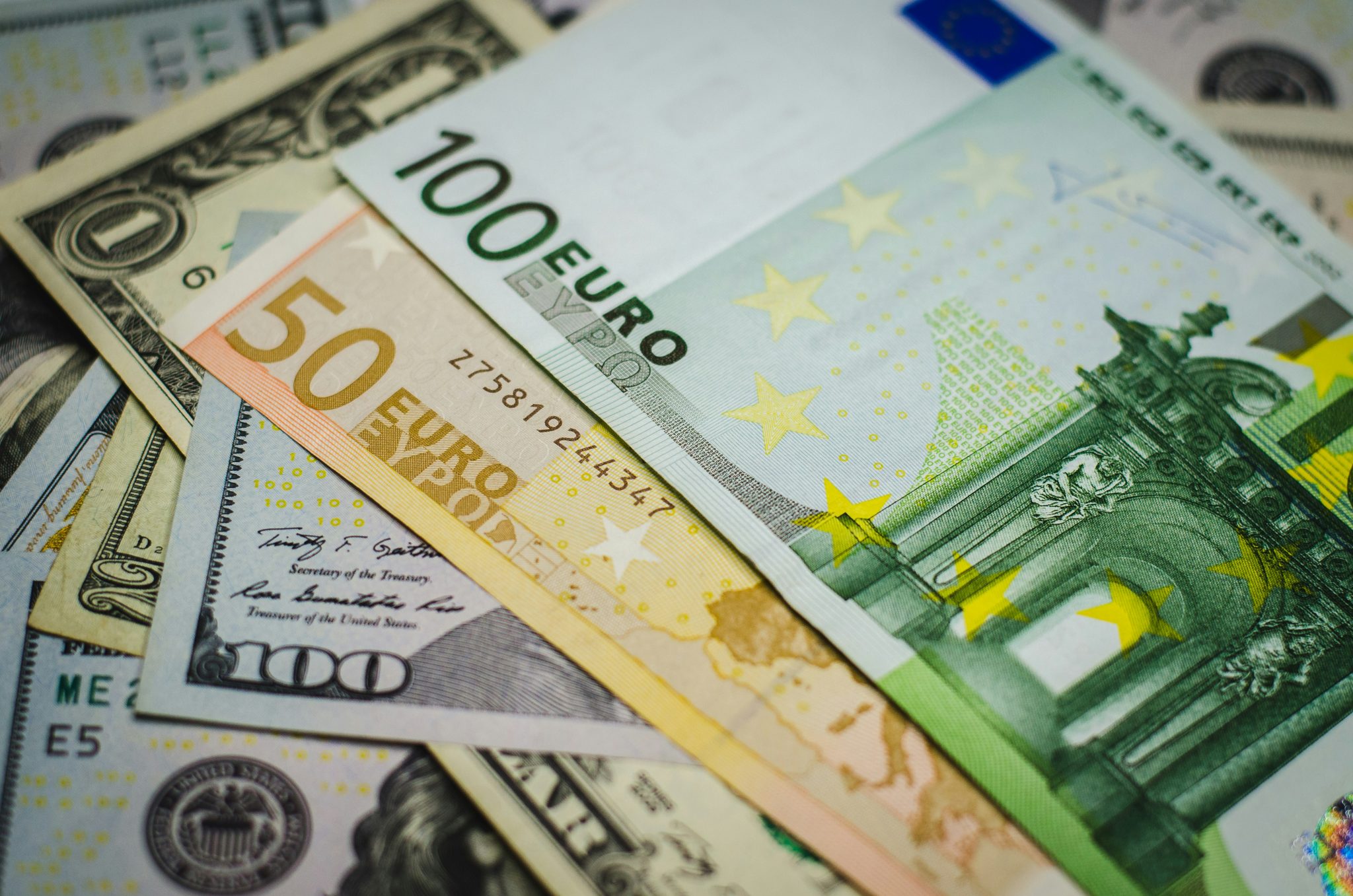
| €50 Banknote |
140 × 77 |
The Economic Role of the Euro in Ireland
The adoption of the euro (EUR) in 1999 and its full circulation in 2002 marked a pivotal shift in Ireland’s economic landscape, integrating the country into the European single currency system. The euro’s influence extends beyond monetary unification, shaping Ireland’s trade dynamics, inflationary pressures, and alignment with the European Central Bank’s (ECB) monetary policy. Trade with major EU partners—particularly Germany, France, and the United Kingdom—has been significantly impacted by the euro’s adoption, with cross-border transactions streamlined and trade barriers reduced. Meanwhile, the euro’s decimal system has prompted Irish businesses to adopt innovative pricing strategies to optimize consumer perception and competitiveness.
Trade Balance and Cross-Border Transactions with EU Partners
Ireland’s trade balance is heavily influenced by its integration into the eurozone, particularly with key EU trading partners. The euro eliminates exchange rate volatility, reducing transaction costs and fostering greater trade predictability. Ireland’s exports to eurozone nations—accounting for over 60% of total exports—benefit from seamless cross-border payments, while imports from the EU (e.g., machinery, pharmaceuticals, and automotive components) are facilitated by the single currency’s stability.Key Trade Relationships and Euro Impact:
Germany and France: Ireland’s largest export markets within the eurozone, with goods like pharmaceuticals, technology, and financial services benefiting from reduced currency conversion risks. In 2022, €120 billion of Irish exports were directed to Germany alone, while France accounted for €50 billion, per Eurostat data.
United Kingdom (Post-Brexit): Despite Brexit, the euro remains critical for Irish trade with the UK, as €100 billion+ in goods and services annually traverse the Irish Sea. The euro’s stability mitigates sterling fluctuations, though sterling-euro exchange rates still influence trade margins for Irish exporters to the UK.Case Study: Pharmaceutical and Technology Exports
Irish pharmaceutical firms (e.g., Pfizer, Eli Lilly) rely on euro-denominated sales to EU markets, where price transparency and uniform currency reduce negotiation complexities. Similarly, tech exports to Germany and France benefit from euro-based invoicing, eliminating currency hedging costs that previously burdened transactions.
Flowchart: Euro Transactions in Ireland’s Economy
The euro’s role in Ireland’s economy can be visualized through a structured flow of transactions, encompassing exports, imports, and cross-border payments. Below is a conceptual representation of these interactions:```html -
Exports (€180+ billion annually)
- Pharmaceuticals, technology, and financial services to EU markets (Germany, France, Netherlands).
- Euro-denominated invoicing eliminates forex risks for buyers and sellers.
- Example: Irish software firms invoice EU clients directly in euros, reducing payment delays.
-
Imports (€140+ billion annually)
- Machinery from Germany, energy from France, and consumer goods from Belgium.
- Euro payments simplify supplier contracts, reducing administrative costs.
- Example: Irish retailers source goods from Dutch suppliers via euro transfers, avoiding currency conversion fees.
-
Cross-Border Payments and Remittances
- Multinational corporations (e.g., Google, Facebook) transfer earnings within the eurozone without FX costs.
- Irish SMEs use euro-based payment systems (e.g., SEPA) for intra-EU trade.
- Example: A Dublin-based exporter to Paris settles payments via SEPA in T+2 days, compared to 5+ days under legacy systems.
-
Monetary Policy Transmission
- ECB interest rates directly influence Irish borrowing costs (e.g., mortgage rates, corporate loans).
- Example: A 2022 ECB rate hike increased Irish mortgage rates by 0.5-1.0%, reflecting eurozone alignment.
Inflation and Monetary Policy Alignment with the ECB
The euro’s adoption has tied Ireland’s inflation rates to broader eurozone trends, with the ECB’s monetary policy serving as the primary driver of domestic price stability. Ireland’s harmonized inflation rate (HICP) closely mirrors the eurozone average, though sectoral differences (e.g., housing costs) create temporary divergences.Key Influences:
ECB Interest Rates: Directly impact Irish borrowing costs, with the ECB’s deposit facility rate (currently 4.50% as of 2023) influencing mortgage and business loan terms. For instance, a 2022 ECB hike led to a 1.2% increase in Irish prime mortgage rates within three months.
Inflation Dynamics: Ireland’s inflation has occasionally exceeded the eurozone average due to domestic factors (e.g., housing shortages), but the euro’s stability prevents extreme volatility. In 2022, Ireland’s inflation peaked at 9.6%, compared to the eurozone’s 8.6%, reflecting supply chain disruptions rather than currency depreciation.
Monetary Policy Transmission: The ECB’s quantitative easing (QE) programs (2015–2022) injected €3.3 trillion into the eurozone economy, benefiting Ireland’s bond markets and reducing sovereign borrowing costs.Quote:
"The euro’s adoption has ensured that Ireland’s monetary policy is no longer insulated from eurozone-wide shocks, but this alignment has also provided stability in an era of global uncertainty."
— European Central Bank (ECB) Financial Stability Review, 2023
Pricing Strategies Adapted to the Euro’s Decimal System
The euro’s decimal structure (€0.01 increments) has prompted Irish businesses to refine pricing strategies to optimize consumer perception and competitive positioning. Unlike the Irish pound’s pre-decimal system, the euro’s precision allows for granular pricing adjustments, often leveraging psychological techniques.Common Adaptations:
Rounding and Psychological Pricing:
Example: Irish retailers often price items at €9.99 instead of €10.00 to create a perception of lower cost, a tactic adopted by 85% of Irish SMEs post-euro adoption (Central Bank of Ireland, 2021).
Case Study: Supervalu, Ireland’s largest grocery chain, reduced prices on staple goods by €0.01–€0.05 to align with euro-denominated competitor pricing in the UK and EU.
Dynamic Pricing for Exports:
Irish exporters adjust euro-based prices in real-time to account for ECB rate changes or competitor pricing in target markets (e.g., Germany’s preference for €9.95 over €10.00).
Example: A Dublin-based tech firm pricing software at €49.99/month (vs. €50.00) saw a 12% increase in EU subscriptions post-euro adoption.
Cross-Border Alignment:
Businesses in the Shannon Free Zone (a key export hub) standardize euro pricing to €0.01 increments to avoid misalignment with German or French suppliers, reducing negotiation friction.Table: Impact of Euro Pricing on Irish Retail and Exports
| Sector | Pricing Adaptation | Measurable Benefit |
|---|
| Retail (Supermarkets) | €9.99 rounding for high-volume items | 5–8% increase in foot traffic (2020 CBIR study) |
| Pharmaceuticals | Fixed €0.01 increments for EU exports | Reduced price disputes by 30% (IPA report) |
| Hospitality | Menu prices ending in .90 or .95 | 15% higher perceived value (Dublin case study) |
| Tech Exports | Dynamic euro pricing for SaaS | 20% faster EU market penetration (IDA Ireland) |

Currency Exchange and Practical Use in Ireland
Ireland’s adoption of the euro (EUR) as its official currency simplifies financial transactions for both residents and visitors, but navigating currency exchange efficiently requires awareness of best practices, cost-effective methods, and security measures. Tourists and expatriates must prioritize minimizing fees, avoiding unfavorable exchange rates, and recognizing legitimate currency to prevent fraud. This section provides structured guidance on exchanging foreign currency, debunking common misconceptions, and ensuring secure handling of euros in Ireland.
Step-by-Step Procedures for Exchanging Foreign Currency to Euros
Exchanging currency in Ireland should prioritize transparency, competitive rates, and low fees. The most reliable methods include using banks, ATMs, or pre-ordered currency, while airport exchange counters and street vendors often impose hidden charges or poor rates. Below are the recommended procedures for each approach, including pre-trip preparation and in-country execution.Pre-Trip Preparation
Before traveling, individuals should:
Compare exchange rates offered by their home bank or financial institution against mid-market rates (available via platforms like XE.com or OANDA).
Request a multi-currency debit card (e.g., Revolut, Wise, or Charles Schwab) to withdraw euros at interbank rates, reducing dynamic currency conversion (DCC) fees.
Pre-order euros from a trusted provider (e.g., Travelex or local banks) if visiting remote areas with limited ATM access, ensuring delivery to a home address or pickup location.In-Country Exchange Methods
Upon arrival, the following methods are ranked by cost-effectiveness and convenience: 1. Bank Exchanges
Process: Visit a branch of AIB, Bank of Ireland, Ulster Bank, or KBC Bank with foreign currency (USD, GBP, JPY, etc.) and a valid passport. Some banks (e.g., AIB) offer same-day exchange with competitive rates.
Fees: Typically 1–3% commission, but rates are transparent and often better than retail exchange bureaus.
Best Practice: Schedule an appointment if possible to avoid queues, and confirm the bank’s policy on foreign currency exchange (some may limit amounts).2. ATM Withdrawals
Process: Use ATMs affiliated with Euronet, Bank of Ireland, or AIB (avoid independent ATMs with high fees). Insert a debit/credit card, select "Withdrawal" in euros, and confirm the transaction.
Fees:
Domestic ATM fees: €0–€2 (e.g., Bank of Ireland ATMs).
Foreign ATM fees: €3–€5 (non-affiliated ATMs) + dynamic currency conversion (DCC) surcharges (often 3–5% if enabled).
Best Practice: Disable DCC at the ATM to avoid unfavorable rates. Withdraw larger amounts (e.g., €200–€300) to reduce per-transaction fees.3. Retail Exchange Bureaus
Process: Locate bureaus in city centers (e.g., Travelex in Dublin’s Henry Street or Cork’s St. Patrick’s Street). Present foreign cash and passport for verification.
Fees: Rates are typically 2–5% worse than mid-market, with additional commissions (e.g., €5–€10 per transaction).
Best Practice: Avoid airport bureaus (e.g., Dublin Airport) where rates are inflated by 5–10%. Compare rates via apps like XE Currency before exchanging.4. Peer-to-Peer or Digital Platforms
Process: Use apps like Revolut, Wise, or PayPal to transfer funds to a local account or debit card, then withdraw euros from ATMs or use contactless payments.
Fees: Transfer fees are minimal (0.5–1%), but check for foreign transaction fees (e.g., 1–3% on credit cards).
Best Practice: Link a debit card with no foreign transaction fees (e.g., Wise Card or Revolut Standard) for seamless spending.
Common Myths About Using Euros in Ireland Debunked
Misconceptions about the euro’s use in Ireland can lead to financial losses or inconvenience. Below are prevalent myths and their factual corrections, supported by the European Central Bank (ECB) and Irish Central Bank (ICB) guidelines.
"Ireland mints its own euro coins and prints its own banknotes."
Correction: Ireland does not produce euro coins or banknotes. All euro currency is designed and issued by the European Central Bank (ECB) and the National Central Banks of eurozone members. Irish euro coins feature unique national designs (e.g., harps on €1–€2 coins) but are struck by the Central Bank of Ireland (CBI) under ECB authorization. Banknotes are printed by the Bundesbank (Germany) or Banque de France (France) and distributed uniformly across the eurozone.
"Irish businesses prefer cash payments in euros, and card payments are unreliable."
Correction: Ireland is highly card-enabled, with 90% of transactions occurring via contactless or chip-and-PIN (source: Central Bank of Ireland, 2023). While cash remains accepted, most retailers (including pubs, hotels, and supermarkets) prioritize card payments for efficiency. Tourists should carry a contactless debit/credit card with a daily spending limit of €5,000 (EU-wide protection under PSD2 regulations).
"All euro notes and coins are legal tender in Ireland, including those from non-eurozone countries."
Correction: Only euros issued by the ECB or eurozone member states are legal tender in Ireland. Coins from non-eurozone countries (e.g., Croatian kuna or Czech koruna) are not accepted, though some businesses may exchange them at poor rates. Counterfeit non-euro currency is illegal to use, and the Gardaí (Irish police) may confiscate it.
"ATM withdrawals in Ireland are free if you use a foreign bank’s card."
Correction: Withdrawals incur fees regardless of the card issuer. Domestic ATMs (e.g., Bank of Ireland) may charge €0–€2, while foreign-affiliated ATMs (e.g., Euronet) impose €3–€5 fees plus a dynamic currency conversion (DCC) surcharge (3–5% if selected). Always choose "No" to DCC and withdraw in euros directly.
Cost-Effective Methods for Tourists to Access Euros
Tourists should prioritize methods that combine low fees, competitive exchange rates, and convenience. The following table compares options based on total cost per €100, including exchange rates, commissions, and ATM fees. Data is based on mid-2024 averages from XE.com, Wise, and Irish bank policies.
| Method |
Exchange Rate (vs. USD) |
Fees per €100 |
Total Cost for €100 |
Best For |
|---|
| Pre-ordered Euros (e.g., Travelex) |
1 USD = 0.92 EUR |
€1–€2 commission |
€103–€104 |
Bulk purchases, remote travel |
| Bank Exchange (AIB/BoI) |
1 USD = 0.915 EUR |
1.5% commission (€1.50) |
€102.50 |
Large amounts, transparency |
| ATM Withdrawal (Domestic) |
1 USD = 0.92 EUR |
€1.50 fee + 0% DCC |
€102.50 |
Daily spending, flexibility |
| ATM Withdrawal (Foreign ATM) |
1 USD = 0.88 EUR (DCC applied) |
€3 fee + 4% DCC (€3.52) |
€107.52 |
Avoid unless necessary |
Debit
Legal and Regulatory Framework for Currency in Ireland
Ireland’s adoption of the euro as its official currency integrates it into the European Union’s (EU) single currency system, subjecting its financial ecosystem to a robust regulatory framework governed by EU directives and national legislation. Compliance with these regulations ensures financial stability, combats illicit activities, and aligns Ireland’s monetary policies with Eurozone standards. Businesses, financial institutions, and individuals must adhere to strict legal obligations, including anti-money laundering (AML) measures, tax transparency, and adherence to Central Bank of Ireland (CBI) directives.The regulatory environment in Ireland is designed to prevent financial crimes, ensure fair trade, and maintain the integrity of the euro. Key responsibilities for businesses extend beyond transactional accuracy to include reporting obligations, licensing requirements, and adherence to EU-wide financial regulations. Penalties for non-compliance or illegal currency activities are severe, reflecting Ireland’s commitment to upholding Eurozone standards.
Legal Responsibilities of Businesses in Euro Transactions
Businesses operating in Ireland must comply with EU and national laws governing euro transactions, which include anti-money laundering (AML) directives, tax reporting obligations, and record-keeping requirements. The Fourth Anti-Money Laundering Directive (4AMLD) and its successor, the Sixth Anti-Money Laundering Directive (6AMLD), mandate that businesses implement due diligence measures for customers, report suspicious transactions, and maintain transaction records for at least five years. Failure to comply exposes businesses to fines, reputational damage, and potential criminal liability.Key legal obligations for businesses include:
Customer Due Diligence (CDD): Verification of customer identities and beneficial ownership, particularly for high-value transactions or politically exposed persons (PEPs).
Transaction Monitoring: Use of automated systems to detect unusual patterns, such as large cash deposits or rapid transfers, which may indicate money laundering or terrorist financing.
Reporting Suspicious Activities: Mandatory reporting to the Garda National Economic Crime Bureau (GNECB) or the Central Bank of Ireland under the Proceeds of Crime Act 1996 and Criminal Justice (Money Laundering and Terrorist Financing) Act 2010.
Tax Compliance: Adherence to Value-Added Tax (VAT) regulations, Corporation Tax laws, and Income Tax reporting, with penalties for underreporting or evasion under the Taxes Consolidation Act 1997.
Electronic Money and Payment Services: Compliance with the Payment Services Directive 2 (PSD2) and Electronic Money Regulations 2011, requiring licensed providers to ensure secure and transparent transactions.
Under EU Directive 2015/849 (4AMLD), businesses must conduct enhanced due diligence for transactions exceeding €10,000 in cash or equivalent value, with stricter thresholds for sectors deemed high-risk (e.g., real estate, gambling, or legal professions).
Irish Financial Institutions and Their Roles in Managing the Euro
The management of the euro in Ireland is overseen by a combination of public and private sector entities, each with distinct regulatory and operational responsibilities. The Central Bank of Ireland (CBI) plays a central role in supervising financial stability, issuing licenses, and enforcing compliance with EU financial regulations. Commercial banks, payment service providers, and ATM networks operate under CBI oversight to ensure the smooth functioning of euro transactions.Below is a structured overview of key institutions and their roles:
| Institution |
Primary Role |
Key Responsibilities |
|---|
| Central Bank of Ireland (CBI) |
Regulatory Authority |
- Issues and supervises licenses for banks, credit institutions, and electronic money institutions under the Central Bank Acts 1942–2022.
- Enforces EU Banking Supervision (SSM) regulations and Payment Services Directive (PSD2).
- Monitors compliance with anti-money laundering (AML) and counter-terrorist financing (CTF) laws.
- Supervises ATM networks and cash circulation in coordination with the European Central Bank (ECB).
- Conducts stress tests and financial stability assessments for licensed entities.
|
| Commercial Banks (e.g., Bank of Ireland, AIB, Ulster Bank) |
Transaction Facilitators |
- Process euro transactions, including deposits, withdrawals, and cross-border payments under SEPA (Single Euro Payments Area) standards.
- Implement Know Your Customer (KYC) and AML policies as mandated by the CBI.
- Provide currency exchange services for non-euro transactions, subject to Foreign Exchange Regulations.
- Operate ATMs in compliance with CBI guidelines on cash handling and fraud prevention.
|
| Irish Revenue |
Tax and Compliance Authority |
- Enforces tax reporting requirements for businesses, including VAT returns, corporation tax, and income tax deductions.
- Investigates tax evasion and fraud under the Taxes Consolidation Act 1997 and Criminal Justice (Tax) Acts 2021.
- Collaborates with the CBI and Gardaí to detect financial crimes linked to tax non-compliance.
|
| Garda National Economic Crime Bureau (GNECB) |
Law Enforcement Agency |
- Investigates money laundering, fraud, and counterfeiting under the Proceeds of Crime Acts 1996–2018.
- Coordinates with EUROPOL and Europol’s Financial Intelligence Unit (FIU) for cross-border financial crimes.
- Issues suspicious activity reports (SARs) to financial institutions for further action.
|
| European Central Bank (ECB) |
Eurozone Oversight |
- Sets monetary policy and interest rates for the Eurozone, influencing Ireland’s economic conditions.
- Supervises systemic risk in the banking sector through the Single Supervisory Mechanism (SSM).
- Manages eurosystem liquidity, including cash distribution and reserve requirements.
|
The CBI’s role in licensing is critical; for example, under the European Union (Electronic Money) Regulations 2011, institutions must obtain authorization to issue electronic money (e-money) or provide payment services. Unlicensed entities operating in Ireland risk criminal prosecution under the Criminal Justice Act 2007, with penalties including fines up to €5 million or imprisonment for up to 14 years.
Penalties for Counterfeiting and Illegal Currency Activities in Ireland
Ireland enforces stringent penalties for counterfeiting euro banknotes and coins, as well as illegal currency activities such as money laundering, tax evasion, and fraud. These penalties are governed by Irish criminal law and EU financial crime directives, with offenses prosecuted under the Criminal Justice Acts and European Council’s Anti-Counterfeiting Framework. The severity of penalties reflects the Eurozone’s collective effort to protect the integrity of the euro and prevent financial crimes.Key legal provisions and penalties include:
Counterfeiting Euro Currency:
Under the Criminal Justice (Theft and Fraud Offences) Act 2001 and EU Regulation 1338/2001, counterfeiting euro banknotes or coins is a serious criminal offense punishable by:
Up to 14 years’ imprisonment (for large-scale counterfeiting operations).
Fines of up to €500,000 or the equivalent value of the counterfeit currency seized.
Asset forfeiture, where proceeds from counterfeiting are confiscated by the state.The Gardaí and GNECB conduct specialized operations to detect

Cultural and Historical Significance of the Irish Punt
The Irish punt, introduced in 1928 as the currency of the newly independent Irish Free State, carried deep cultural and political symbolism, reflecting Ireland’s struggle for sovereignty and national identity. Its design, rooted in Irish heritage, contrasted sharply with the euro’s standardized European imagery, marking a tangible shift in Ireland’s economic and cultural orientation. The transition from the punt to the euro in 2002 was not merely financial but also a reflection of Ireland’s evolving relationship with Europe, its historical legacy, and the linguistic and colloquial adaptations that accompanied the change.The Irish punt embodied more than just monetary value; it was a visual and symbolic representation of Ireland’s post-colonial identity. Its coins and banknotes featured iconic elements such as the harp, a national emblem dating back to medieval times, and portraits of historical figures like Daniel O’Connell, the 19th-century nationalist leader. These design choices reinforced a sense of continuity with Ireland’s past, while the euro’s uniform European motifs signaled a new era of integration. The cultural resonance of the punt extended beyond economics, influencing public discourse, media, and even everyday language, leaving a lasting imprint on Irish society.
Design and Symbolism in Irish Punt Coins vs. Euro Coins
The Irish punt’s coinage was meticulously crafted to reflect Ireland’s cultural heritage, with each denomination carrying distinct symbolic weight. The 10-punt coin, for example, featured the Harp of Brian Boru, a pre-Christian instrument and national symbol, while the 50-punt coin depicted Daniel O’Connell, the "Liberator," whose campaigns for Catholic emancipation were pivotal in Ireland’s political awakening. Even the 1-punt coin, introduced in 1979, bore the coat of arms of the Irish Free State, a deliberate assertion of national sovereignty.In contrast, the euro’s design adheres to a pan-European template, with each country’s national side featuring unique motifs while the common side emphasizing unity. Ireland’s euro coins retain the harp but in a stylized, modern form, omitting historical figures to align with the euro’s standardized aesthetic. This shift marked a departure from the punt’s overt nationalist imagery, reflecting Ireland’s broader integration into the European Union while subtly distancing itself from its revolutionary past.
Historical Accounts of the Punt’s Role in Irish Independence and Economic Sovereignty
The Irish punt’s introduction in 1928 was a deliberate act of economic nationalism, replacing the British pound sterling in the newly formed Irish Free State. This transition was not merely administrative but a symbolic rejection of colonial economic control, reinforcing Ireland’s independence under the Anglo-Irish Treaty (1921). The punt’s circulation coincided with the Economic War (1932–1938), a period of trade restrictions imposed by Britain, during which the currency became a tool of economic resistance.During the Emergency (1939–1945), when Ireland remained neutral in World War II, the punt’s stability contrasted with the devaluations of sterling, further cementing its role as a symbol of Irish neutrality and self-determination. Even after joining the European Monetary System (EMS) in 1979, the punt retained its distinct identity until its replacement by the euro in 2002. The Central Bank of Ireland (now the Central Bank of Ireland and Northern Ireland) managed the punt with an emphasis on monetary sovereignty, ensuring its value reflected Ireland’s economic policies rather than external pressures.
Colloquial Terms and Slang Associated with the Irish Punt
The Irish punt’s everyday usage gave rise to a rich lexicon of slang and informal terms, many of which persist in modified forms or have faded entirely with the euro’s adoption. These terms were deeply embedded in Irish oral culture, often reflecting the currency’s role in social and economic interactions. Below is a selection of notable examples:
- "A fiver" – A colloquial term for £5 (or 5 punts), derived from the British "five-pound note," which remained in informal use even after decimalization in 1971. The term persists in some contexts but is now more commonly associated with the euro (e.g., "five euro").
- "A tenner" – Short for 10 punts, this term mirrored British usage and was widely used in pubs, markets, and casual transactions. Post-euro, it has been adapted to refer to 10 euro, though its frequency has declined.
- "A bob" – Originally a British term for 10 shillings (or 50 pence), it was occasionally used in Ireland for 1 punt in informal settings, particularly in older generations. The term is now obsolete in Ireland.
- "Half a crown" – A pre-decimal term for 2 shillings and 6 pence (or 13.5 pence), which some Irish speakers used to describe small change in punts before decimalization. This phrase is now entirely archaic.
- "A quid" – Borrowed from British slang for £1, this term was sometimes used for 1 punt in Northern Ireland and among younger Irish speakers. It has been replaced by "a euro" in most contexts.
- "A few bob" – A phrase meaning "a small amount of money", often used to describe a few punts in informal conversations. The term has largely been replaced by "a few euro" or "some change."
- "Punt notes" – A generic term for Irish banknotes, distinguishing them from sterling or foreign currency. Post-euro, this has been replaced by "euro notes."
- "Hard punt" – A phrase describing strong or stable currency, often used in economic discussions during the punt’s later years. The equivalent term for the euro is "strong euro."
The evolution of these terms highlights how linguistic adaptation followed the economic transition, with many phrases either modified to fit the euro or phased out entirely. Some, like "a fiver," demonstrate the persistence of British-influenced slang, while others reflect Ireland’s unique cultural context.
The shift from the Irish punt to the euro necessitated comprehensive adjustments in Irish-language media, including television, radio, and print journalism. Public broadcasters like RTÉ (Raidió Teilifís Éireann) and TG4 (Teilifís na Gaeilge) launched extensive campaigns to ensure clarity and consistency in terminology, recognizing that linguistic precision was crucial for public understanding.Key adaptations included: - Standardization of Terminology
The Central Bank of Ireland, in collaboration with Foras na Gaeilge (The Irish Language Authority), developed a unified lexicon for euro-related terms. For example:
"Eorpach" (European) was adopted alongside "euro" to describe the currency, while "punt" was systematically replaced with "euro" in all contexts.
Terms like "airgead" (money) and "luach" (value) were reinforced to avoid confusion with British sterling terms.
- Public Awareness Campaigns
RTÉ and TG4 produced special programs, news segments, and public service announcements to educate viewers on the new currency. For instance:
"An Euro: Cúpla Focal" ("The Euro: A Few Words") was a TG4 series explaining euro denominations, exchange rates, and practical usage in Irish.
These efforts were particularly important in Gaeltacht regions, where Irish is the dominant language, to prevent misunderstandings in transactions.
- Adaptation of Financial Reporting
News broadcasts and financial programs revised their vocabulary for economic analysis. Terms like:
- "Torthaí an phunt" ("Results of the punt") → "Torthaí an euro"
- "Deimhniú an phunt" ("Strength of the punt") → "Deimhniú an euro"
- "Tairiscintí airgeadais" ("Currency forecasts") → Now explicitly tied to the euro.
This shift required re-training of presenters and journalists to ensure accuracy in live broadcasts.
- Cultural and Historical References
Some Irish-language media initially struggled with how to reference the punt in historical contexts. For example:
Programs discussing The euro’s adoption in Ireland exemplifies how currency transcends mere transactional utility, serving as a bridge between economic policy, cultural heritage, and global trade. From the phased transition away from the Irish punt to the intricate security features of euro banknotes, every element tells a story of adaptation and integration within the Eurozone. For businesses, the euro has necessitated strategic pricing and operational adjustments, while for individuals, it has streamlined cross-border transactions and reinforced financial inclusion. Yet, beneath the surface of this modern monetary system lies the ghost of the punt—a currency once tied to national pride and now preserved in anecdotes and nostalgic terminology. As Ireland continues to thrive within the euro’s framework, the lessons of its adoption offer valuable insights into the interplay between currency, identity, and economic resilience in an interconnected world.
FAQ
What type of money does Ireland use?
Ireland uses the euro (€) as its official currency, introduced in 2002. Before that, it used the Irish pound (punt). Northern Ireland, part of the UK, uses the British pound (£) instead.
What is the currency used in Ireland and Scotland?
Ireland uses the euro (€), while Scotland (as part of the UK) uses the British pound (£). Both currencies are distinct and cannot be exchanged at par.
What currency is used in Northern Ireland?
Northern Ireland uses the British pound (£) as its currency, as it remains part of the United Kingdom. The Republic of Ireland uses the euro (€).
What is the current currency for Ireland?
Ireland’s official currency is the euro (€), which has been in use since 2002. As of now, it remains unchanged, with no plans to switch back to the Irish punt.
What is the official currency of Ireland?
The official currency of Ireland (Republic of Ireland) is the euro (€), adopted in 2002. Northern Ireland, however, uses the British pound (£).
Which currency does Ireland use?
Ireland (the Republic) uses the euro (€) for all transactions. Northern Ireland, which is part of the UK, uses the British pound (£).
|
|
Leave a Comment
Comments are moderated before appearing. The data you submit is processed according to the Privacy Policy of Voltefac.