What Is Money Laundering And How It Undermines Global Finance
Table of Contents
- Definition and Core Concepts of Money Laundering
- Precise Definition and Key Objectives
- Three-Stage Framework of Money Laundering
- Stage 1: Placement
- Stage 2: Layering
- Stage 3: Integration
- Comparative Analysis: Money Laundering vs. Related Financial Crimes
- Methods and Techniques in Money Laundering
- Shell Companies and Corporate Structures
- Casinos and Gaming Industry Laundering
- Real Estate as a Laundering Vehicle
- Cryptocurrencies and Digital Asset Laundering
- Legal and Regulatory Framework Governing Money Laundering
- Key International Laws and Treaties Combating Money Laundering
- Timeline of Major Regulatory Changes and Their Impact on Financial Institutions
- Industry-Specific Risks and Vulnerabilities in Money Laundering
- High-Risk Sectors and Operational Vulnerabilities
- Political Exposure and State-Capture Laundering
- Exploitation of Cryptocurrency and DeFi Platforms
- Detection and Prevention Tools in Money Laundering
- Role of Transaction Monitoring Systems (TMS) in Suspicious Activity Detection
- Checklist of Red Flags for Money Laundering Risks
- Comparison of Traditional Forensic Accounting and Modern Data Analytics
- Case Studies and Real-World Impact of Money Laundering
- Offshore Entities and Large-Scale Laundering: The Panama Papers and 1MDB Scandal
- Law Enforcement Operations: The FBI’s Dismantling of the Silk Road Darknet Market
- Economic and Social Consequences of Money Laundering
- FAQ
- What is the Money Laundering Act and what does it do?
- What is money laundering in simple Hindi terms?
- What is the Money Laundering Control Act, and how does it differ from other laws?
- How does the money laundering process work step by step?
- What are the key provisions of the Money Laundering Regulations 2017 (UK)?
- What are the three main stages of the money laundering cycle?
Money laundering represents one of the most pervasive financial crimes globally, disguising illicit proceeds as legitimate assets to evade detection and regulatory scrutiny. Beyond its role in fueling organized crime, terrorism financing, and corruption, this practice distorts market integrity and erodes public trust in financial systems. By systematically transforming "dirty" money into seemingly clean funds, criminals exploit structural vulnerabilities in banking, trade, and digital ecosystems—often with devastating economic and social consequences. Understanding its mechanics, from the three-stage process of placement, layering, and integration to the evolving tactics leveraging cryptocurrencies and AI, is critical for stakeholders across law enforcement, finance, and policy-making.
The phenomenon extends far beyond isolated incidents, embedding itself in high-risk industries such as real estate, gaming, and legal professions, where anonymity and complex transactions create fertile ground for abuse. International frameworks like the Financial Action Task Force (FATF) and regional laws—such as the U.S. Bank Secrecy Act or the EU’s Fourth Anti-Money Laundering Directive—serve as bulwarks against these schemes, yet criminals continuously adapt, exploiting loopholes in trade-based laundering, peer-to-peer networks, and decentralized finance (DeFi). This interplay between regulatory evolution and criminal innovation underscores the need for proactive detection tools, from transaction monitoring systems to advanced analytics powered by machine learning, to stay ahead of emerging threats.
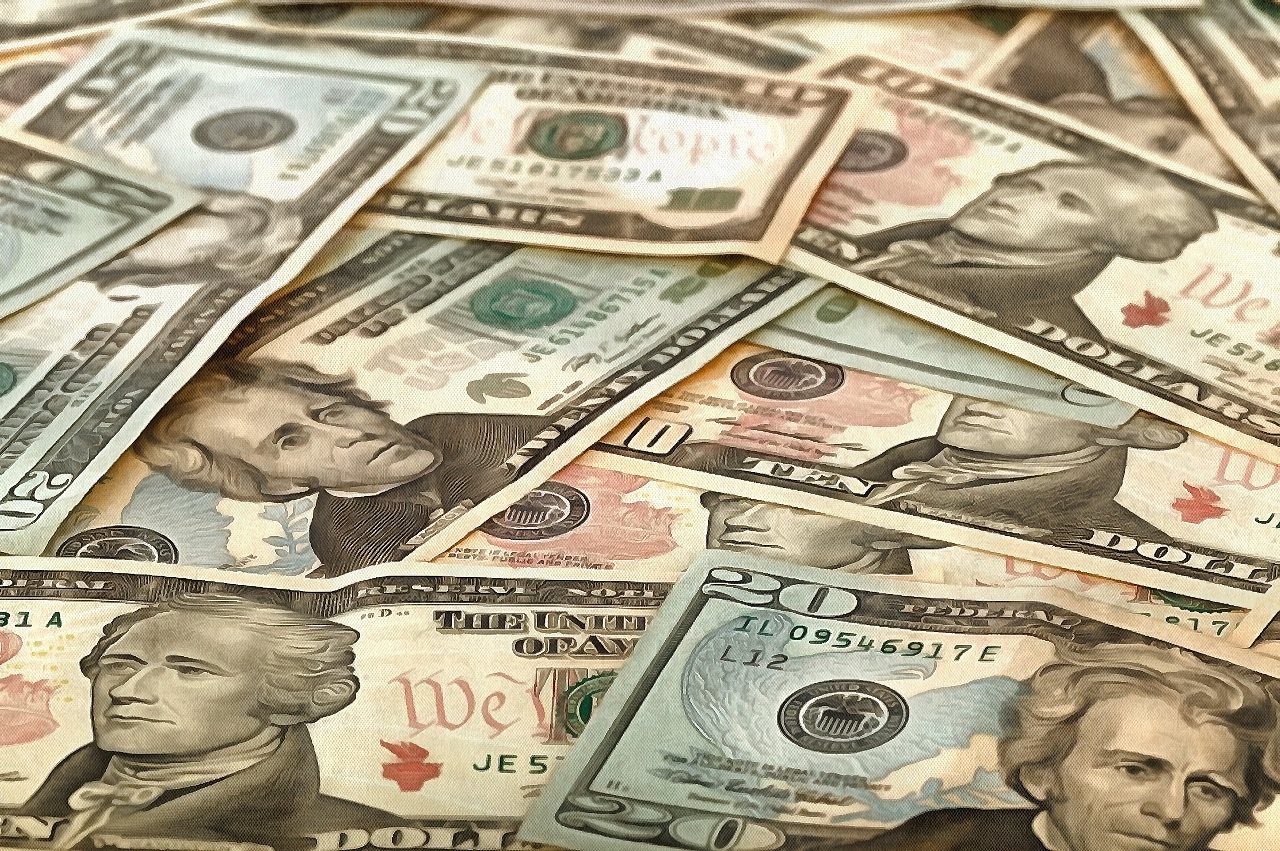
Definition and Core Concepts of Money Laundering
Money laundering represents a deliberate process through which illicit proceeds are disguised as legitimate income to obscure their origins and integrate them into the formal economy. Unlike standard financial transactions, which involve lawful earnings from business operations, employment, or investments, money laundering systematically manipulates financial systems to conceal criminal activity. Its primary objective is to legitimize funds derived from crimes such as drug trafficking, corruption, cybercrime, or terrorism financing, thereby reducing the risk of detection and prosecution. The process exploits vulnerabilities in regulatory frameworks, cross-border transactions, and the complexity of modern financial networks to transform "dirty money" into seemingly clean assets.The distinction between money laundering and other financial crimes lies in its structured approach to obscuring the source of funds rather than merely evading taxes or defrauding entities. While tax evasion involves misreporting income to reduce tax liabilities, money laundering actively reengineers the financial trail to mask criminal origins. Similarly, fraud deceives victims into transferring funds, whereas laundering repurposes already illicit funds through deceptive financial maneuvers. The following sections dissect the three-stage framework of money laundering—placement, layering, and integration—alongside a comparative analysis with related financial crimes to clarify their unique mechanisms and legal implications.
Precise Definition and Key Objectives
Money laundering is defined under international standards, such as the Financial Action Task Force (FATF) 40 Recommendations, as:> "The process of concealing the true origin and ownership of the proceeds of crime by making them appear to come from a legitimate source."
Its core objectives include:
The process differs from standard financial transactions in three critical aspects:
1. Source of Funds: Illicit vs. lawful earnings.
2. Intent: Concealment of criminal origins vs. transparency in financial reporting.
3. Legal Consequences: Criminal prosecution under anti-money laundering (AML) laws vs. civil or administrative penalties for tax fraud or regulatory violations.
Three-Stage Framework of Money Laundering
The money laundering process is structured into three sequential stages, each designed to progressively legitimize illicit funds. Understanding these phases is essential for identifying red flags in financial transactions and designing effective countermeasures.Introduction to the Three-Stage Model
The stages—placement, layering, and integration—represent a cyclical process where each phase builds upon the previous one to deepen the obscurity of the funds. The complexity increases with each stage, requiring increasingly sophisticated financial techniques to evade detection. Below is a structured breakdown of each phase, accompanied by real-world examples to illustrate their application.
Stage 1: Placement
Placement involves introducing illicit funds into the financial system in a manner that avoids immediate suspicion. This stage is the most vulnerable to detection due to the large volume of cash transactions often involved. Common methods include:- Cash Smurfing: Breaking down large sums into smaller, seemingly legitimate transactions through multiple couriers ("smurfs") to avoid triggering reporting thresholds (e.g., structuring deposits below $10,000 in the U.S. to evade Bank Secrecy Act filings).
Key Challenge: Financial institutions must monitor unusual patterns, such as frequent cash deposits below reporting thresholds or transactions inconsistent with a customer’s known source of wealth.
Stage 2: Layering
Layering complicates the audit trail by creating a series of intricate transactions across jurisdictions, entities, and financial instruments. The goal is to distance the funds from their criminal origins through multiple steps, often involving offshore accounts, cryptocurrencies, or complex corporate structures. Techniques include:- Shell Companies and Trusts: Establishing anonymous legal entities in tax havens (e.g., the BVI, Cayman Islands, or Dubai) to obscure ownership (e.g., HSBC’s 2012 fine of $1.9 billion for facilitating transactions linked to Mexican drug cartels via shell companies).
Key Challenge: Regulators and financial institutions rely on transaction monitoring systems and suspicious activity reports (SARs) to detect anomalies such as rapid currency conversions, unusual geographic routing, or transactions with no clear economic purpose.
Stage 3: Integration
Integration is the final stage, where laundered funds re-enter the economy as legitimate assets or investments. The funds are now indistinguishable from lawfully obtained income, allowing criminals to enjoy their illicit gains without fear of confiscation. Common integration methods include:- Acquisition of Businesses: Purchasing established companies with laundered funds to generate plausible income streams (e.g., buying a restaurant chain and using its revenue to justify the initial cash injection).
Key Challenge: Integration is the most difficult stage to detect, as the funds now appear as part of the legitimate economy. Authorities depend on beneficial ownership transparency, cross-border information sharing, and asset forfeiture laws to disrupt this phase.
Comparative Analysis: Money Laundering vs. Related Financial Crimes
The following table contrasts money laundering with tax evasion, fraud, and other financial crimes to highlight their distinct mechanisms, legal frameworks, and consequences. The comparison underscores how money laundering operates as an enabler of other crimes rather than a standalone offense.| Aspect | Money Laundering | Tax Evasion | Fraud | Financial Crime (e.g., Insider Trading, Market Manipulation) |
|---|---|---|---|---|
| Primary Objective | Legitimize illicit funds to obscure criminal origins. | Reduce tax liabilities by misreporting income or deductions. | Deceive individuals or entities to obtain money, property, or services. | Exploit financial markets for personal gain, often at the expense of investors. |
| Source of Funds | Proceeds from criminal activity (e.g., drug trafficking, corruption). | Lawful income deliberately underreported or hidden. | Funds obtained through deception (e.g., Ponzi schemes, identity theft). | Funds generated through illegal market activities (e.g., |
Methods and Techniques in Money Laundering
Money laundering continues to evolve alongside financial innovation, with criminals leveraging complex structures, digital assets, and trade-based mechanisms to obscure illicit origins. Traditional methods such as shell companies and casinos remain prevalent, while emerging techniques—including cryptocurrencies and AI-driven fraud—exploit gaps in regulatory oversight. Below, the most common and emerging techniques are examined, supported by real-world case studies and procedural breakdowns to illustrate their operational mechanics.Shell Companies and Corporate Structures
Shell companies serve as the cornerstone of money laundering, enabling criminals to disguise ownership, obscure transactions, and create layers of anonymity. These entities lack substantive business operations but exist solely to facilitate the movement of funds across jurisdictions. A 2020 report by the United Nations Office on Drugs and Crime (UNODC) estimated that shell companies account for 40% of all money laundering cases, often integrated into broader schemes involving fraud, corruption, or drug trafficking.Key Mechanisms:
Regulatory Gaps Exploited:
Casinos and Gaming Industry Laundering
Casinos have long been a favored vehicle for money laundering due to their high-volume cash transactions, lack of transaction records for cash deposits, and global reach. The Financial Action Task Force (FATF) identifies casinos as a high-risk sector, with smurfing (breaking large sums into smaller deposits to avoid reporting thresholds) and structuring (deliberately splitting transactions below reporting limits) as primary techniques.Case Study: The 2006 BCCI Scandal and Casino Links
The Bank of Credit and Commerce International (BCCI) collapse revealed how casinos in Macau, Monaco, and Las Vegas were used to launder $2.5 billion linked to drug trafficking and arms deals. Proceeds were deposited in cash, mixed with legitimate gambling revenues, and then withdrawn as "winnings" or transferred to offshore accounts. The FBI’s Operation Greenback (2007) later uncovered a network where Russian mafia laundered $100 million through Atlantic City casinos by exploiting table game payouts—where chips could be exchanged for cash without documentation.
Modern Casino Laundering Techniques:
Regulatory Responses:
Real Estate as a Laundering Vehicle
Real estate offers criminals a tangible, high-value asset that can be easily converted into liquid funds while providing plausible deniability. The Global Financial Integrity (GFI) 2022 report estimates that $2 trillion in illicit funds are laundered annually through property transactions, with luxury markets in London, Miami, and Vancouver as primary hubs.Case Study: The 1MDB Scandal and Malaysian Properties
Malaysian officials used shell companies to purchase high-end properties in London, New York, and Los Angeles worth over $1 billion, including:
Step-by-Step Real Estate Laundering Process:
1. Acquisition: Illicit funds are used to purchase property under a shell company or nominee’s name.
2. Inflation of Value: The property is overvalued in sale agreements (e.g., a $5 million apartment sold for $20 million to a shell company).
3. Mortgage Fraud: A fake loan is obtained using the inflated value, with proceeds wired to offshore accounts.
4. Resale: The property is sold to a straw buyer (often a legitimate investor unaware of the scheme), with funds deposited into a clean account.
5. Layering: The resale proceeds are mixed with legitimate capital before being reinvested or withdrawn.
Emerging Real Estate Laundering Trends:
Regulatory Challenges:
Cryptocurrencies and Digital Asset Laundering
Cryptocurrencies provide pseudo-anonymity, cross-border speed, and decentralization, making them ideal for money laundering. The Chainalysis 2023 report found that $2.3 billion in illicit crypto transactions occurred in 2022, with darknet markets, ransomware, and Ponzi schemes as primary sources. Unlike traditional banking, crypto transactions are pseudonymous (linked to wallet addresses rather than identities) and borderless
Legal and Regulatory Framework Governing Money Laundering
The global fight against money laundering relies on a robust legal and regulatory framework designed to deter illicit financial activities, enforce compliance, and facilitate international cooperation. Jurisdictions worldwide have adopted binding treaties, soft-law principles, and domestic legislation to harmonize standards, impose sanctions, and strengthen financial transparency. These mechanisms collectively shape the operational protocols of financial institutions, law enforcement agencies, and supervisory bodies, ensuring alignment with evolving threats in the illicit finance landscape.The effectiveness of anti-money laundering (AML) measures depends on the interplay between supranational agreements, regional directives, and national laws. Key international bodies such as the Financial Action Task Force (FATF) and Wolfsberg Group establish global benchmarks, while domestic statutes—such as the Bank Secrecy Act (BSA) in the U.S. and the Fourth Anti-Money Laundering Directive (4AMLD) in the EU—mandate institutional compliance. Below, the critical frameworks, their enforcement mechanisms, and the evolution of regulatory timelines are examined, alongside the severe penalties imposed on violators in major jurisdictions.
Key International Laws and Treaties Combating Money Laundering
The foundation of the global AML regime is built upon multilateral agreements that define obligations, reporting requirements, and cross-border cooperation. These instruments are enforced through peer reviews, sanctions, and technical assistance programs, ensuring member states adhere to standardized due diligence and risk-monitoring protocols.Core international frameworks include:
- Financial Action Task Force (FATF) Recommendations (1990, revised periodically)
The FATF, established by the G7 in 1989, publishes 40+ Recommendations that serve as the global AML/CFT (Counter-Terrorist Financing) standard. These recommendations cover customer due diligence (CDD), suspicious activity reporting (SAR), record-keeping, and international cooperation. Non-compliant jurisdictions are listed on the FATF Grey List or Black List, triggering targeted financial sanctions and reputational damage.
Enforcement Mechanism: FATF conducts Mutual Evaluations (peer reviews) every 5–7 years, assessing a jurisdiction’s AML/CFT regime against the Recommendations. Deficiencies trigger Action Plans with corrective timelines.
- United Nations Convention Against Illicit Traffic in Narcotic Drugs and Psychotropic Substances (1988)
This treaty obliges signatories to criminalize money laundering as a distinct offense, aligning domestic laws with international standards. It mandates confiscation of proceeds and cooperation in asset recovery, forming the basis for extradition treaties.
Enforcement Mechanism: The UN Office on Drugs and Crime (UNODC) monitors implementation through country-specific reports and assists jurisdictions in strengthening legal frameworks.
- Wolfsberg Group Principles (2000)
A private-sector initiative comprising 12 global banks, the Wolfsberg AML Principles provide voluntary guidelines for private banking, correspondent banking, and trade finance. These principles emphasize enhanced due diligence (EDD) for high-risk sectors (e.g., casinos, precious metals) and risk-based approaches to AML compliance.
Enforcement Mechanism: While non-binding, adherence is incentivized through reputational risks and exclusion from correspondent banking networks. Regulators (e.g., FinCEN, EBA) often reference Wolfsberg standards in enforcement actions.
- Egmont Group of Financial Intelligence Units (1995)
A network of 160+ FIUs (Financial Intelligence Units) worldwide, the Egmont Group facilitates cross-border sharing of SARs and joint operations (e.g., Project Cassandra, targeting cybercrime-linked laundering). It operates under the Egmont Principles, ensuring confidentiality and legal protections for information exchange.
Enforcement Mechanism: FIUs collaborate in joint investigations, leveraging automated systems (e.g., GoAML) to link suspicious transactions across jurisdictions.
- Asia/Pacific Group on Money Laundering (APG)
The APG, modeled after FATF, assesses AML/CFT regimes in Asia-Pacific regions (e.g., China, India, Singapore) and issues Typologies Reports on emerging laundering methods (e.g., trade-based money laundering). It maintains a Public Statement listing jurisdictions under review for non-compliance.
Enforcement Mechanism: APG conducts regional evaluations and recommends technical assistance to member states, often in partnership with the Asian Development Bank (ADB).
Timeline of Major Regulatory Changes and Their Impact on Financial Institutions
The evolution of AML regulations reflects responses to financial crimes, technological advancements, and geopolitical shifts. Below is a chronological overview of pivotal legislative and regulatory developments, alongside their operational implications for financial institutions.1970–1990: Foundational Legislation
Impact: Created the AML compliance infrastructure in U.S. banks, later adopted globally as a model for transaction monitoring systems (TMS).
- 1986 – Money Laundering Control Act (MLCA), U.S.
The MLCA criminalized money laundering as a federal offense, defining it as three-step process (placement, layering, integration). It imposed mandatory reporting for structuring (smurfing) and expanded forfeiture authorities.
Impact: Shifted AML enforcement from reactive investigations to proactive compliance, requiring FIs to implement internal controls and audit trails.
- 1988 – UN Convention Against Illicit Traffic in Narcotic Drugs
As noted earlier, this treaty globalized AML obligations, pressuring jurisdictions to align domestic laws with international standards. The Basil Convention (1988) further facilitated cross-border asset recovery.
Impact: Accelerated harmonization of criminal laws in Europe and Latin America, leading to extradition treaties for laundering offenses.
1990–2010: Expansion and Globalization
Impact: Regulatory arbitrage became a concern as FIs faced jurisdictional disparities in AML standards, prompting risk-based approaches to compliance.
- 2001 – USA PATRIOT Act
Enacted post-9/11, the Patriot Act expanded BSA authorities, introducing:
- 2005 – EU Third Money Laundering Directive (3AMLD)
The 3AMLD strengthened customer due diligence (CDD), introduced politically exposed person (PEP) screening, and mandated centralized FIUs (e.g., UK’s NCA, France’s Tracfin).
Impact: Harmonized AML laws across EU member states, reducing regulatory fragmentation but increasing compliance costs for cross-border FIs.
- 2015 – FATF Grey List and Black List
The FATF introduced enhanced monitoring for non-compliant jurisdictions (e.g., Pakistan, Nigeria, North Korea). Grey-listed countries face restricted access to international finance, while black-listed nations (e.g., Iran, Syria) are subject to sanctions.
Impact: Correspondent banks tightened KYC (Know Your Customer) policies for high-risk regions, exacerbating financial exclusion in developing economies.
2010–Present: Digitalization and Emerging Threats
Impact: Cryptocurrency exchanges (e.g., Binance, Coinbase) faced licensing obligations, while trust and company service
Industry-Specific Risks and Vulnerabilities in Money Laundering
Money laundering exploits inherent operational, regulatory, and structural weaknesses in specific industries, leveraging their cash-intensive nature, global connectivity, or discretionary services. High-risk sectors—such as banking, gaming, legal professions, and cryptocurrency ecosystems—provide fertile ground for illicit financial flows due to high transaction volumes, complex compliance frameworks, or deliberate gaps in oversight. Corrupt officials and politically exposed persons (PEPs) further exacerbate risks by exploiting institutional access to bypass safeguards, as evidenced by historical scandals involving state capture and offshore networks. Meanwhile, digital assets and decentralized finance (DeFi) platforms introduce novel vulnerabilities, including pseudonymous transactions, cross-border anonymity, and technical loopholes that traditional AML measures struggle to address.High-Risk Sectors and Operational Vulnerabilities
Certain industries are systematically targeted by money launderers due to their structural features, which either facilitate the concealment of illicit origins or provide mechanisms to integrate dirty money into the legitimate economy. The most susceptible sectors include:Key Vulnerabilities Across Sectors:
Cash Intensity: High physical cash turnover (e.g., casinos, real estate) obscures source tracking. Global Reach: Jurisdictional arbitrage exploits regulatory gaps (e.g., shell companies in tax havens). Discretionary Services: Professional enablers (e.g., lawyers, accountants) structure transactions to evade scrutiny. Technological Anonymity: Digital platforms (e.g., crypto exchanges, darknet markets) leverage encryption and decentralization.
-
Banking and Financial Institutions
Banks remain primary conduits for laundering due to their role in clearing transactions, offering correspondent banking services, and facilitating cross-border transfers. Trade-based money laundering (TBML) is particularly prevalent, where over/under-invoicing, fake shipments, or misdeclared goods inflate or deflate transaction values to move illicit funds. For example, the 1MDB scandal involved Malaysian state fund embezzlement, where launderers used shell companies to route funds through Deutsche Bank and other global financial institutions, exploiting weak due diligence in trade finance. -
Gaming and Casino Industries
The gaming sector is inherently vulnerable due to its reliance on cash transactions, high-volume bets, and the use of chips or tokens that can be exchanged for cash without full transaction records. Structuring (smurfing) involves breaking large cash deposits into smaller amounts below reporting thresholds (e.g., $10,000 in the U.S.). The 2014 Black Market Pepper scandal exposed how criminal syndicates in Macau laundered billions through casinos by exploiting weak AML controls, including the use of "straw players" to place bets on behalf of illicit actors. -
Legal and Professional Services
Lawyers, accountants, and trust service providers (TSPs) are critical enablers due to their access to client confidentiality and financial structures. Trusts and corporate vehicles are frequently abused to obscure beneficial ownership, as seen in the Panama Papers, where offshore law firms (e.g., Mossack Fonseca) facilitated the creation of shell companies for politicians, oligarchs, and criminals. The Fourth Anti-Money Laundering Directive (4AMLD) mandates that EU member states collect and verify beneficial ownership data, but enforcement remains inconsistent. -
Real Estate and Luxury Goods
High-value assets like property, art, and luxury vehicles are attractive for laundering due to their illiquid nature and ease of transfer across jurisdictions. Layering occurs when illicit funds purchase assets, which are then resold to legitimate buyers, obscuring the original source. The Sotheby’s auction of a $45 million Picasso in 2010 was linked to a money-laundering scheme involving Russian oligarchs, where the painting was used to legitimize proceeds from fraud and corruption. -
Cryptocurrency and Digital Asset Ecosystems
The rise of decentralized finance (DeFi) and cryptocurrency exchanges has introduced new vectors for laundering, leveraging features like pseudonymity, atomic swaps, and smart contracts. Unlike traditional banking, crypto transactions are often irreversible and lack central oversight, making them ideal for mixing services (e.g., Tornado Cash) that obscure transaction trails. The 2022 $600 million BTC laundering scheme via ChipMixer demonstrated how launderers exploit privacy-focused exchanges to break the chain of custody between illicit proceeds and clean funds.
Political Exposure and State-Capture Laundering
Politically exposed persons (PEPs) and corrupt officials exploit their positions to facilitate money laundering by manipulating regulatory systems, accessing privileged financial services, or leveraging state resources. Historical scandals reveal systematic patterns where officials use public office to divert funds, establish offshore networks, or pressure financial institutions into compliance with illicit schemes.Mechanisms of Political Facilitation:
State-Owned Enterprises (SOEs): Misappropriation of public funds (e.g., Brazil’s Petrobras scandal, where executives siphoned $2 billion via kickbacks). Regulatory Capture: Weakening AML laws to benefit connected elites (e.g., Malaysia’s 1MDB, where Prime Minister Najib Razak used state institutions to launder $4.5 billion). Diplomatic Immunity: Officials use embassies or sovereign wealth funds to move funds undetected (e.g., Qatar’s Al-Jazeera-linked accounts holding illicit proceeds). Shell Companies and Trusts: PEPs register entities in tax havens (e.g., BVI, Seychelles) to hide beneficial ownership, as exposed in the Paradise Papers.
-
Case Study: The 1MDB Scandal (Malaysia)
The 1 Malaysia Development Berhad (1MDB) scandal exemplifies state-capture laundering, where former Prime Minister Najib Razak and associates looted billions from the sovereign wealth fund. Key tactics included:
- Fake Loans: 1MDB secured $1.8 billion in "loans" from Malaysian banks, which were then deposited into Najib’s personal accounts.
- Offshore Networks: Funds were routed through entities in the British Virgin Islands (BVI), Luxembourg, and Sri Lanka, using shell companies like Aabar Investments.
- Gold and Art Purchases: Illicit funds were converted into tangible assets (e.g., a $170 million Van Gogh painting) to legitimize their origin.
- Corrupt Officials: Bankers at Deutsche Bank, RBS, and Citibank were complicit, failing to report suspicious transactions despite red flags.
-
Case Study: The Petrobras Scandal (Brazil)
The Lava Jato (Car Wash) operation uncovered a $2 billion bribery and money-laundering scheme involving Petrobras executives and construction firms. Key features included:
- Overbilling Schemes: Contractors inflated project costs and funneled kickbacks to politicians via shell companies.
- Political Allocations: Funds were distributed to political campaigns, ensuring legislative support for corrupt officials.
- Banking Collusion: HSBC, JPMorgan, and Itaú Unibanco processed transactions despite AML alerts, with some banks deliberately ignoring suspicious activity reports (SARs).
- Cryptocurrency Exploitation: Some launderers used Bitcoin mixers to obscure transactions linked to bribes.
-
Case Study: The Qatargate Affair (EU)
In 2022, EU lawmakers were accused of taking bribes from Qatar in exchange for political favors, exposing how foreign officials infiltrate democratic institutions. Tactics included:
- Lobbying Payments: Qatar’s embassy in Brussels allegedly paid €1 million to European politicians for favorable votes on migration policies.
- Offshore Accounts: Funds were channeled through Qatari sovereign wealth funds and shell companies in Panama and the UAE.
- Diplomatic Immunity: Payments were disguised as "consulting fees" for fake firms linked to Qatari officials.
Exploitation of Cryptocurrency and DeFi Platforms
Cryptocurrency and decentralized finance (DeFi) platforms introduce technical, jurisdictional, and operational loopholes that traditional AML measures struggle to address. Unlike traditional banking, crypto transactions are pseudonymous, borderless, and often irreversible, making them ideal for layering, integration, and obfuscation. Below is a flowchart-style breakdown of how launderers exploit these ecosystems:Core Technical Loopholes in Crypto Laundering:
P
Detection and Prevention Tools in Money Laundering
Money laundering schemes evolve alongside technological advancements, necessitating sophisticated detection and prevention tools to mitigate financial crimes. Transaction Monitoring Systems (TMS) and advanced analytics serve as critical components in identifying suspicious activities before they escalate. These tools integrate rule-based algorithms and AI-driven insights to flag anomalies, while forensic accounting and data analytics enhance the ability to uncover complex laundering networks. Financial institutions must balance real-time monitoring with forensic rigor to effectively combat evolving threats.
Role of Transaction Monitoring Systems (TMS) in Suspicious Activity Detection
Transaction Monitoring Systems (TMS) are automated platforms designed to analyze financial transactions in real time or near-real time, identifying patterns that deviate from expected behavior. These systems leverage predefined rules, statistical models, and behavioral analytics to assess risk levels, triggering alerts for further investigation when thresholds are exceeded. The effectiveness of TMS depends on three core functionalities: rule-based screening, AI-driven anomaly detection, and case management integration.Rule-Based Analytics
Rule-based systems rely on static or dynamic rules derived from regulatory guidelines (e.g., FATF recommendations) and institutional risk policies. Examples include:
Structuring thresholds: Flags transactions below reporting limits (e.g., $10,000 in the U.S. under the Bank Secrecy Act) that are aggregated to avoid detection. Geographic risk scoring: Highlights transactions involving high-risk jurisdictions (e.g., jurisdictions with weak AML frameworks). Beneficial ownership mismatches: Alerts when the transaction beneficiary does not align with the account holder’s declared business purpose. Rule-based systems are most effective in detecting smurfing (small, frequent transactions) and trade-based money laundering, where structured patterns are predictable.AI-Driven and Machine Learning Models
AI enhances TMS by adapting to evolving laundering techniques through supervised learning (trained on labeled historical data) and unsupervised learning (identifying novel patterns without prior labels). Key applications include:
Network analysis: Detects relationships between accounts, entities, and transactions using graph theory to expose layered structures (e.g., shell companies feeding into legitimate businesses). Behavioral biometrics: Tracks deviations in transaction frequency, timing, or amounts for a given customer (e.g., a sudden increase in cross-border wire transfers). Natural Language Processing (NLP): Analyzes unstructured data (e.g., emails, chat logs) for coded language or suspicious narratives in trade finance documentation. AI models reduce false positives by up to 40% compared to rule-based systems, though they require continuous retraining to avoid model drift (adaptation to new laundering tactics).Integration with Case Management
TMS alerts are only actionable when integrated with case management systems, which prioritize investigations based on risk scores and regulatory urgency. High-risk cases may trigger:
Automated Suspicious Activity Reports (SARs): Filed with Financial Intelligence Units (FIUs) like FinCEN (U.S.) or UKFIU. Enhanced Due Diligence (EDD): Triggers deeper scrutiny of high-risk customers (e.g., Politically Exposed Persons). Collaborative sharing: Links with global AML databases (e.g., Wolfsberg Group’s shared lists) to cross-reference entities across institutions. Checklist of Red Flags for Money Laundering Risks
Financial institutions must proactively monitor for structural, behavioral, and contextual red flags that indicate potential money laundering. Below is a categorized checklist derived from FATF, Basel AML Index, and industry best practices. Institutions should customize thresholds based on risk appetite and regulatory requirements.Transaction-Specific Red Flags
Transactions exhibiting unusual structuring or lack of economic justification warrant immediate scrutiny. Examples include:
Smurfing: Multiple low-value cash deposits (e.g., $9,900 per transaction) by different individuals into the same account. Round-number transfers: Payments in exact multiples (e.g., $50,000, $100,000) with no plausible business rationale. Rapid cashing out: Frequent conversion of high-value assets (e.g., cryptocurrencies, precious metals) into fiat currency via ATMs or wire transfers. Over/under-invoicing: Trade transactions where declared values deviate significantly from market rates (e.g., a shipment of electronics invoiced at 300% of fair value). Customer Behavior Red Flags
Suspicious customer profiles often involve lack of transparency or inconsistent documentation. Key indicators:
Straw purchasers: Individuals with no apparent wealth or business ties acting as account beneficiaries. Nominee accounts: Accounts opened under false identities or with forged KYC documents (e.g., expired passports, fabricated utility bills). Unusual account activity: Sudden changes in transaction patterns (e.g., a retail customer initiating large international transfers). Refusal to provide documentation: Customers who avoid sharing source of funds (SOF) or beneficial ownership details. Jurisdictional and Third-Party Risks
Transactions linked to high-risk countries or non-cooperative financial institutions pose elevated laundering risks. Monitor:
Shell company networks: Multiple entities incorporated in tax havens (e.g., British Virgin Islands, Seychelles) with no discernible economic activity. Correspondent banking relationships: Payments routed through banks with poor AML compliance (e.g., sanctioned entities or those under FATF gray-listing). Cryptocurrency exchanges: Transactions involving mixers (e.g., Tornado Cash) or peer-to-peer (P2P) platforms with no KYC requirements. Gambling and gaming platforms: High-volume deposits followed by rapid withdrawals to unrelated accounts. Trade-Based Money Laundering (TBML) Red Flags
TBML exploits the global supply chain to disguise illicit funds. Institutions should audit:
Misdeclared shipments: Freight documents listing goods (e.g., "electronic components") that do not match actual cargo (e.g., bulk cash or luxury items). Over/under-invoicing: Inconsistencies between invoice values and bank transfer amounts (e.g., a $1M invoice settled with a $300K wire). Unusual trade routes: Shipments from high-risk jurisdictions to low-risk ones with no logical trade flow (e.g., diamonds from Zimbabwe to Switzerland via Dubai). Related-party transactions: Shipments between entities with no arm’s-length relationship (e.g., a parent company selling to a subsidiary at inflated prices). Comparison of Traditional Forensic Accounting and Modern Data Analytics
Forensic accounting and data analytics represent two distinct but complementary approaches to detecting money laundering. While traditional methods rely on manual investigation and accounting principles, modern analytics leverage big data, network theory, and predictive modeling to uncover hidden patterns. Below is a comparative analysis of their methodologies, strengths, and limitations.
Case Study: Traditional vs. Modern Approaches
Aspect Traditional Forensic Accounting Modern Data Analytics Core Methodology Manual review of financial statements, ledgers, and documents using GAAP/IFRS principles. Automated analysis of structured (transactions) and unstructured data (emails, contracts) using algorithms. Data Sources Bank statements, tax returns, invoices, and interview transcripts. Transaction databases, KYC records, global AML watchlists, and alternative data (e.g., social media, satellite imagery). Detection Techniques Tracing: Following the paper trail of funds (e.g., from a shell company to a bank account).
Valuation: Assessing asset mispricing (e.g., inflated property values).
Behavioral analysis: Interviewing individuals to detect inconsistencies.Graph theory: Mapping relationships between entities (e.g., ownership chains, transaction flows).
Machine learning: Identifying anomalies via clustering (e.g., transactions with similar patterns).
Natural Language Processing (NLP): Extracting keywords from trade documents (e.g., "consignment," "commission").Strengths Highly detailed, admissible in court; effective for simple schemes (e.g., cash smuggling). Scalable for large datasets; detects hidden networks and predictive risks (e.g., future laundering attempts). Limitations Time-consuming; prone to human error; limited to available documentation. Requires high-quality data; false positives/negatives possible without human oversight. Regulatory Alignment Aligns with audit trails required by Basel III and FATF’s customer due diligence (CDD). Supports real-time monitoring under EU’s 6th AML Directive and U.S. Bank Secrecy Act (BSA).
Traditional Forensic Accounting: In the 1MDB scandal, investigators manually traced $4 Case Studies and Real-World Impact of Money Laundering
Money laundering transcends theoretical frameworks, manifesting in high-profile scandals that expose systemic vulnerabilities in global finance. The Panama Papers and 1MDB scandal exemplify how offshore entities facilitate illicit financial flows, while law enforcement operations like the FBI’s dismantling of the Silk Road network demonstrate the investigative rigor required to combat these crimes. Beyond legal repercussions, money laundering erodes economic stability, fuels corruption, and exacerbates capital flight, with measurable consequences across nations. This section examines key case studies, investigative methodologies, and the broader socio-economic ramifications of money laundering, supported by empirical data and operational insights.
Offshore Entities and Large-Scale Laundering: The Panama Papers and 1MDB Scandal
The Panama Papers (2016), a leaked dataset of 11.5 million documents from Mossack Fonseca, revealed a global network of offshore entities used to conceal wealth, evade taxes, and launder illicit funds. The scandal implicated over 140 politicians, including heads of state, and highlighted how shell companies in tax havens like Panama, the British Virgin Islands, and the Cayman Islands enabled the diversion of billions. Key findings included:
Estimated Laundered Amounts: The International Consortium of Investigative Journalists (ICIJ) estimated that the Panama Papers exposed $2 trillion in hidden offshore wealth, though the actual laundered amount remains difficult to quantify due to opacity. Political and Corporate Involvement: High-profile figures such as Iceland’s Prime Minister Sigmundur Davíð Gunnlaugsson and Ukraine’s President Petro Poroshenko faced scrutiny, while corporations like Apple, Nike, and PepsiCo were accused of using offshore structures to avoid taxes. Legal Fallout: Panama: Mossack Fonseca faced fines exceeding $10 million, while 20 employees were prosecuted. Panama’s government passed stricter anti-money laundering (AML) laws in response. Germany: A parliamentary committee investigated whether Chancellor Angela Merkel had conflicts of interest due to her husband’s offshore ties. United Arab Emirates: The scandal triggered a crackdown on tax evasion, with authorities seizing assets linked to offshore accounts. The 1MDB scandal (2015–2018) further illustrated the intersection of corruption, state capture, and money laundering. Malaysia’s 1Malaysia Development Berhad (1MDB), a sovereign wealth fund, was looted of $4.5 billion through a web of shell companies, fake loans, and kickbacks orchestrated by Jho Low, a Malaysian financier, and Prime Minister Najib Razak. Proceeds were funneled via:
Offshore Accounts: Funds were deposited in accounts in Singapore, Switzerland, and the U.S., including a $681 million payment to Najib’s personal account. Luxury Purchases: Laundered money acquired assets such as Malibu beachfront properties, a jet, and a $15 million van Gogh painting. Global Enforcement Actions: U.S.: The DOJ secured a $3.9 billion forfeiture (the largest in its history) and indicted Najib and Low. Swiss authorities froze $4.5 billion in assets. Malaysia: Najib was convicted of abuse of power, money laundering, and criminal breach of trust, receiving a 12-year prison sentence (2020). Singapore: Low was convicted in absentia for money laundering and cheating, with authorities seizing $230 million in assets. Economic Impact:
Capital Flight: Malaysia lost $1.2 billion from 1MDB’s collapse, exacerbating its fiscal deficit. Investor Confidence: The scandal contributed to a 20% drop in Malaysia’s stock market and downgrades by credit rating agencies. Anti-Corruption Reforms: The Malaysian government implemented stricter AML controls, including the Money Laundering Report (MLR) Act 2009 amendments. Law Enforcement Operations: The FBI’s Dismantling of the Silk Road Darknet Market
The Silk Road, an online black market launched in 2011 by Ross Ulbricht, facilitated the sale of illegal drugs, weapons, and counterfeit goods, generating $1.2 billion in transactions before its shutdown. Ulbricht’s operation epitomized the darknet’s role in money laundering, leveraging Bitcoin to obscure transaction trails. The FBI’s Operation Onymous (2013–2014) demonstrated how digital forensics, undercover operations, and international cooperation could dismantle such networks.Investigative Techniques and Legal Strategies:
Digital Forensics and Bitcoin Tracking: The FBI used blockchain analysis to trace Bitcoin transactions, identifying Ulbricht’s wallet address (1KFg76ywN6WjZKYpQ2D6aHqXX17f3tM2zt) as the primary receiver of proceeds. Chainalysis, a blockchain forensics firm, linked $80 million in Silk Road funds to Ulbricht’s accounts, despite Bitcoin’s pseudonymous nature. Undercover Operations: FBI agents infiltrated Silk Road as "vendors" and "buyers," gathering evidence on drug trafficking and money laundering schemes. Agent Sara Konradi (alias "Nob") posed as a Silk Road user, facilitating the seizure of $3.6 million in Bitcoin from Ulbricht’s laptop. International Cooperation: The European Cybercrime Centre (EC3) assisted in identifying Silk Road’s server locations in Iceland and the Netherlands. Liberty Reserve, a now-defunct digital currency used by Silk Road, was shut down in 2013, leading to the arrest of its founder, Arthur Budovsky, who was sentenced to 20 years in prison. Legal Prosecution: Ulbricht was arrested in October 2013 in San Francisco and charged with narcotics trafficking, money laundering, and conspiracy. At trial, prosecutors presented evidence of $28.5 million in Bitcoin seized from Ulbricht’s accounts, along with $1.2 million in cash hidden in his apartment. In February 2015, Ulbricht was sentenced to life imprisonment without parole, with the judge citing his role in facilitating "one of the largest criminal enterprises in history." Lessons for AML Enforcement:
Cryptocurrency Risks: The case highlighted the need for real-time transaction monitoring in digital currencies, leading to FinCEN’s 2019 guidance on virtual asset service providers (VASPs). Darknet Marketplaces: Law enforcement agencies now prioritize undercover operations and blockchain analytics to track illicit funds across platforms like AlphaBay and Empire Market. Jurisdictional Challenges: The Silk Road operation underscored the importance of cross-border AML cooperation, particularly in cases involving jurisdiction-free darknet markets. Economic and Social Consequences of Money Laundering
Money laundering distorts financial systems, undermines governance, and perpetuates inequality, with quantifiable effects on global economies. The United Nations Office on Drugs and Crime (UNODC) estimates that 2–5% of global GDP—equivalent to $800 billion to $2 trillion annually—is laundered. These flows exacerbate capital flight, tax evasion, and systemic corruption, while destabilizing financial markets.Key Economic Impacts:
Capital Flight and Fiscal Erosion: Sub-Saharan Africa loses $89 billion annually to illicit financial flows, according to the African Development Bank (AfDB). In Nigeria, $60 billion was stolen between 1999 and 2014, equivalent to 40% of its GDP. Latin America experiences $100 billion in annual capital flight, with Mexico and Colombia among the hardest-hit nations. Tax Revenue Loss: The Global Financial Integrity (GFI) reports that $1 trillion per year is lost to tax evasion and profit shifting, funding 20% of global terrorism and organized crime. - Financial System Instability:
Banking Sector Vulnerabilities: The 2008 financial crisis revealed how money laundering enabled fraudulent lending practices, with HSBC fined $1.9 billion (2012) for failing to monitor transactions linked to Mexican drug cartels. Shadow Banking Risks: Cryptocurrency exchanges and peer-to-peer Money laundering is not merely a financial crime but a systemic threat that undermines economic stability, enables corruption, and distorts global markets. From the Panama Papers scandal to the dismantling of darknet markets like Silk Road, real-world cases reveal how illicit networks exploit legal structures, technological advancements, and political exposure to obscure their activities. The fight against laundering demands a multi-pronged approach: strengthening regulatory frameworks, enhancing detection capabilities through AI and forensic accounting, and fostering international cooperation to dismantle cross-border schemes. As criminals refine their methods—leveraging cryptocurrencies, shell companies, and emerging fintech—stakeholders must remain vigilant, balancing innovation with compliance to preserve the integrity of financial systems. The consequences of inaction are stark: capital flight, destabilized economies, and a erosion of trust that transcends borders.
FAQ
What is the Money Laundering Act and what does it do?
The Money Laundering Act is a legal framework that criminalizes the process of disguising illegally obtained funds as legitimate income. It requires businesses and financial institutions to report suspicious transactions and implement anti-money laundering (AML) measures. Penalties for violations include fines and imprisonment. The act aims to combat financial crimes like fraud, corruption, and terrorism financing.
What is money laundering in simple Hindi terms?
Money laundering (हवाला धोखाधड़ी) is the process of converting black money (काले धन) into white money (सफेद धन) by hiding its illegal origin. It involves steps like placing dirty money into legitimate businesses, layering it through complex transactions, and integrating it back into the economy as clean funds. This practice is illegal under Indian laws like the Prevention of Money Laundering Act (PMLA).
What is the Money Laundering Control Act, and how does it differ from other laws?
The Money Laundering Control Act (e.g., the Prevention of Money Laundering Act, 2002 in India) is a law specifically designed to prevent, detect, and punish money laundering activities. It mandates reporting suspicious transactions, freezing assets, and prosecuting offenders. Unlike general financial laws, it focuses solely on tracing and confiscating illicit funds.
How does the money laundering process work step by step?
Money laundering typically involves three stages: placement (introducing illegal cash into the financial system), layering (creating complex transactions to obscure the money’s origin), and integration (reintroducing the funds as legitimate assets). Criminals may use shell companies, casinos, or cryptocurrencies to disguise the flow. The goal is to make illicit proceeds appear legal.
What are the key provisions of the Money Laundering Regulations 2017 (UK)?
The Money Laundering, Terrorist Financing and Transfer of Funds (Information on the Payer) Regulations 2017 (UK) require businesses to verify customer identities, monitor transactions, and report suspicious activity to National Crime Agency (NCA). It updates earlier laws to align with EU directives, strengthening due diligence for high-risk sectors like finance and real estate.
What are the three main stages of the money laundering cycle?
The money laundering cycle consists of placement (inserting dirty money into the financial system), layering (moving funds through multiple accounts/transactions to hide trails), and integration (reintroducing the money as legitimate income or assets). Each stage adds complexity to obscure the money’s criminal origins.

Leave a Comment
Comments are moderated before appearing. The data you submit is processed according to the Privacy Policy of Voltefac.