Understanding What Is Debt Review And Its Key Processes
Table of Contents
- Definition and Core Concept of Debt Review
- Legal Framework and Jurisdictional Scope
- Distinction from Debt Counseling and Insolvency Processes
- Historical Context and Legislative Evolution
- Eligibility Criteria for Debt Review
- Financial Thresholds for Debt Review Qualification
- Required Documentation for Debt Review Initiation
- Common Misconceptions About Debt Review Eligibility
- Assessment of Joint Applicants in Debt Review
- Step-by-Step Debt Review Process in South Africa
- Sequential Stages of the Debt Review Process
- Impact on Credit Scores and Financial Obligations in Debt Review
- Recording of Debt Review on Credit Reports and Long-Term Creditworthiness Effects
- Comparison of Debt Review vs. Alternative Debt Solutions on Borrowing Capacity and Interest Rates
- Effects of Debt Review on Existing Financial Obligations
- Legal Protections and Consumer Rights During Debt Review
- Prohibited Creditor Actions During Debt Review
- Consumer Rights During Debt Review
- Interaction with Wage Garnishment and Asset Seizure Exemptions
- Disputing Errors in Debt Review Assessments
- Case Studies and Real-World Applications of Debt Review in South Africa
- Anonymized Case Studies of Debt Review Outcomes
- Common Pitfalls in Debt Review and Corrective Actions
- Adapting Debt Review Strategies to Economic Conditions
- FAQ
- what is debt review in south africa?
- what is debt review removal?
- what is debt review and how does it work?
- what is debt review flag?
- what is debt review process?
- what is debt review clearance?
Debt review represents a structured legal framework designed to provide individuals and businesses overwhelmed by financial obligations a regulated pathway to sustainability. Unlike conventional debt management strategies, this process is governed by specific legislative protections, offering a balanced approach between creditor recovery and consumer relief. By systematically evaluating financial capacity, debt review enables the restructuring of repayments while shielding borrowers from aggressive collection tactics, thereby preserving long-term credit viability.
The concept emerged from evolving economic challenges, particularly in jurisdictions where consumer debt crises exposed gaps in traditional insolvency solutions. Its core mechanism distinguishes it from alternatives like counseling or bankruptcy, delivering tailored repayment plans that align with disposable income while ensuring creditors receive fair consideration. This system not only mitigates the risk of default but also fosters financial literacy by mandating transparent assessments of liabilities and living expenses, thereby addressing root causes of indebtedness.

Definition and Core Concept of Debt Review
Debt review represents a structured, legally regulated financial intervention designed to assist over-indebted consumers in managing repayments while protecting them from aggressive debt collection practices. Unlike voluntary debt management plans, debt review operates under a formal legal framework, primarily enforced in jurisdictions such as South Africa through the National Credit Act (NCA) of 2005. Its core purpose is to provide a fair and sustainable repayment mechanism, ensuring consumers are not unfairly penalized by creditors while still fulfilling their financial obligations. This process distinguishes itself from insolvency or bankruptcy by prioritizing debt restructuring over asset liquidation, thereby preserving the debtor’s financial stability and creditworthiness to a greater extent.
The legal foundation of debt review is rooted in the recognition that excessive debt can stem from systemic issues, such as economic downturns, medical emergencies, or predatory lending practices. By mandating fair treatment and transparent negotiations, debt review aligns with broader consumer protection objectives, ensuring that creditors cannot unilaterally terminate services (e.g., utilities, housing) without court approval during the review period. This legal safeguard creates a balanced dynamic between debtors and creditors, fostering long-term compliance and financial rehabilitation.
Legal Framework and Jurisdictional Scope
Debt review is explicitly governed by the National Credit Act (Act No. 34 of 2005) in South Africa, which establishes a comprehensive regulatory system for credit provision and debt management. Key provisions include:Outside South Africa, similar mechanisms exist under different names, such as debt management plans (DMPs) in the UK or Chapter 13 bankruptcy in the U.S., though these lack the same level of creditor protection or statutory enforcement. The NCA’s approach is unique in its prescriptive nature, requiring creditors to participate in structured negotiations rather than relying on unilateral default clauses. This framework ensures that debt review is not merely advisory but a legally binding process with enforceable outcomes.
Distinction from Debt Counseling and Insolvency Processes
Debt review differs fundamentally from other debt relief mechanisms in its legal enforceability, creditor obligations, and consumer protections. Below is a comparative analysis of debt review, debt counseling, and bankruptcy:| Feature | Debt Review | Debt Counseling | Bankruptcy |
|---|---|---|---|
| Legal Status | Mandatory under the NCA; creditors cannot ignore court-ordered repayment plans. | Voluntary; relies on creditor cooperation without legal enforcement. | Statutory process under insolvency laws; involves court supervision and asset liquidation. |
| Eligibility | Consumers with unmanageable debt (typically >50% of net income) and no prior debt review in the last 5 years. | Open to all debtors seeking advice or voluntary repayment plans, regardless of debt severity. | Individuals or businesses unable to repay debts, with assets exceeding liabilities (for liquidation) or structured repayment plans (for reorganization). |
| Process Duration | Typically 3–5 years, extendable if new debts arise or financial circumstances change. | Varies; often shorter (6–24 months) if creditors agree to terms. | 3–6 years for individuals (varies by jurisdiction); may include post-bankruptcy restrictions. |
| Creditor Obligations | Must freeze interest and fees; negotiate reduced payments based on affordability assessments. | May agree to reduced payments but can still pursue legal action if terms are breached. | Creditors receive partial repayment based on asset liquidation or structured plans; unsecured debts may be discharged. |
| Outcome | Debt restructuring with sustainable repayment terms; creditors receive partial repayment over time. | Voluntary repayment plan with potential creditor concessions, but no legal protections. | Full or partial debt discharge; may include loss of assets and credit restrictions. |
| Impact on Credit Record | Recorded as "under debt review" (negative but less severe than bankruptcy). | May appear as a default or repayment plan, depending on creditor reporting. | Severely impacts creditworthiness; remains on record for 5–10 years. |
Historical Context and Legislative Evolution
The origins of debt review trace back to global financial crises and the recognition of predatory lending practices in the early 2000s. In South Africa, the National Credit Act (NCA) was enacted in 2005 as a response to:Key legislative milestones that shaped debt review include:
The NCA’s approach was influenced by international models, such as the UK’s Debt Relief Orders (DROs) and U.S. Chapter 13 bankruptcy, but distinguished itself by its proactive creditor involvement and affordability-focused negotiations. Real-world impact includes a 30% reduction in household debt defaults post-NCA implementation, though challenges remain, such as creditor resistance and high application costs for debt counseling services.
The NCA’s debt review framework reflects a balanced approach, prioritizing consumer protection without imposing excessive burdens on creditors. Its success hinges on transparency, judicial oversight, and collaborative negotiations between debtors, creditors, and registered counselors.
Eligibility Criteria for Debt Review
Debt review serves as a structured legal process to manage unmanageable debt under South African consumer law, particularly the National Credit Act (NCA) of 2005. Eligibility is determined by financial thresholds, documentation requirements, and legal assessments to ensure applicants qualify for protection from creditors while adhering to repayment obligations. The criteria balance affordability with sustainability, preventing abuse while providing relief to those in genuine financial distress.The assessment prioritizes debt-to-income ratios, total debt obligations, and asset-liability evaluations to confirm whether an applicant’s financial situation meets the legal definition of over-indebtedness. Documentation validates claims, while joint applicants face additional scrutiny to account for shared liabilities. Misconceptions about eligibility often stem from misunderstandings of the NCA’s definitions, repayment capacity tests, and the distinction between voluntary and court-ordered debt review.
Financial Thresholds for Debt Review Qualification
Eligibility hinges on two primary financial metrics: total debt burden and repayment capacity. The National Credit Regulator (NCR) and debt counsellors evaluate these using standardized formulas to determine if an applicant’s expenses exceed their disposable income after accounting for essential living costs.Key thresholds include:
Formula for Disposable Income Test (NCA Section 86):
Disposable Income = Net Income – (Essential Expenses + Debt Repayments) Essential Expenses include food, utilities, transport, and housing (up to 20% of net income for renters or 30% for homeowners).
If Disposable Income ≤ 0, over-indebtedness is presumed.
Required Documentation for Debt Review Initiation
Applicants must submit comprehensive financial records to validate their eligibility and repayment proposals. The NCA mandates specific documents to ensure transparency and prevent fraudulent claims. Incomplete submissions delay approval or result in rejection.Core documentation categories:
- Debt and expense records:
- Asset and liability declarations:
- Legal and administrative:
Note on Joint Applications:
Spouses or life partners must submit separate but consolidated financial documents. Debt counsellors assess combined income and shared liabilities (e.g., joint loans, co-signed accounts) to determine eligibility. For example, if one partner earns R15,000/month and the other R10,000/month, their joint disposable income is evaluated against total joint debt (including individual and shared obligations).
Common Misconceptions About Debt Review Eligibility
Misunderstandings about debt review eligibility often lead to avoidable rejections or delayed relief. Below are five persistent myths and their clarifications, grounded in NCA provisions and NCR guidelines.- Myth: "Only those with extreme debt qualify for debt review." Clarification: Eligibility is not based on debt magnitude alone but on repayment capacity. An applicant with R50,000 in debt may qualify if their income is insufficient to cover essential expenses, while someone with R200,000 in debt might be rejected if their disposable income remains positive. The debt-to-income ratio (not absolute debt) is critical.
- Myth: "Debt review is only for those with multiple credit accounts." Clarification: Single large debts (e.g., a R1 million mortgage with arrears) can trigger eligibility if the applicant cannot meet repayment terms. The NCA does not specify a minimum number of creditors; affordability is the primary factor.
- Myth: "Having savings or assets disqualifies applicants." Clarification: Assets are assessed but do not automatically disqualify an applicant. For example, a homeowner with R500,000 equity may still qualify if selling the property would not resolve all debts within 3 years or would leave them homeless. The liquidation test (Section 86(1)(b)) evaluates feasibility.
- Myth: "Debt review is a one-time process; reapplying is pointless." Clarification: The NCA allows reapplication after discharge (typically 5 years) if financial circumstances worsen. However, serial applicants (those who repeatedly fail to comply with repayment plans) may face stricter scrutiny or denial. Each case is assessed on its merits.
- Myth: "Joint applicants must both meet individual eligibility criteria." Clarification: Joint applications are evaluated holistically. If one applicant’s income sustains the household’s debt obligations, the other’s financial strain may still justify review. For instance, a stay-at-home parent with no income but joint debt can qualify if their partner’s earnings are insufficient to cover essential expenses.
Assessment of Joint Applicants in Debt Review
Joint debt review applications—common among spouses, domestic partners, or business partners—require consolidated financial analysis to account for shared liabilities and income pooling. The NCA treats joint applicants as a single economic unit for assessment purposes, though individual accountability varies based on legal agreements (e.g., marriage contracts).Key considerations in joint assessments:
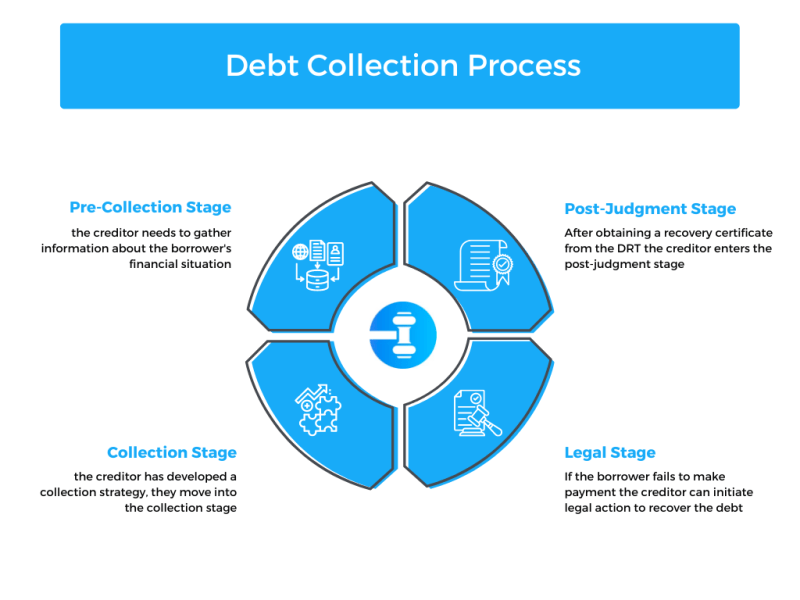
Step-by-Step Debt Review Process in South Africa
The debt review process in South Africa is a structured legal framework designed to assist over-indebted consumers in managing their financial obligations under the supervision of the National Credit Regulator (NCR) and the courts. This process involves sequential stages, each requiring active participation from debt counselors, creditors, and the consumer. Below, the procedural flow is detailed, including stakeholder roles, repayment plan calculations, and creditor responses, to provide clarity on how debt restructuring operates in practice.Sequential Stages of the Debt Review Process
The debt review process follows a regulated sequence to ensure fairness, transparency, and legal compliance. Each stage involves specific actions by the debt counselor, creditors, and the consumer, culminating in either approval or rejection of the repayment plan. The process adheres to the provisions of the National Credit Act (NCA) of 2005, particularly Sections 85 to 89, which govern debt counseling and administration orders.The following numbered steps outline the chronological progression from initial application to final resolution:
-
Initial Consultation and Assessment
The consumer contacts a registered debt counselor (approved by the NCR) to evaluate their financial situation. During this stage, the counselor:- Reviews income, expenses, and debt obligations (including credit agreements, loans, and outstanding balances).
- Assesses affordability by comparing disposable income against monthly liabilities.
- Provides pre-assessment advice on whether debt review is viable, including alternatives like debt consolidation or voluntary arrangements.
- Explains the implications of debt review, such as credit record restrictions (e.g., inability to obtain new credit without court approval).
-
Formal Application Submission
If the consumer proceeds, the debt counselor submits a Form 16.1 (Application for Debt Counseling) to the NCR and notifies all creditors. This step triggers the legal process and requires:- Documentation of all credit agreements, including statements from creditors.
- Proof of income (e.g., payslips, tax returns) and living expenses (e.g., rent, utilities, medical costs).
- A signed consent form authorizing the debt counselor to act on the consumer’s behalf.
Debt Counselor: Compiles and submits the application package.
Creditors: Receive notice of the application and are legally required to cooperate by providing account details.
National Credit Regulator (NCR): Validates the counselor’s registration and ensures procedural compliance. -
Creditor Response and Objection Period
Creditors have 20 business days to respond to the application. During this period, they may:- Agree to the debt review process without contesting the consumer’s financial status.
- Object to the application if they believe the consumer is not over-indebted or if they dispute the accuracy of the submitted information. Objections must be substantiated with evidence (e.g., proof of alternative repayment arrangements).
- Request additional information from the debt counselor or consumer (e.g., clarification on income sources or expenses).
Successful Negotiation: A creditor holding a secured loan (e.g., a home mortgage) may agree to reduce interest rates or extend repayment terms if the consumer demonstrates a stable income but high existing debt burdens.
Key Stakeholders:
Failed Negotiation: A credit provider with unsecured debt (e.g., a personal loan) might object if they believe the consumer can afford higher payments, leading to a dispute that may escalate to court.Creditors: Assess the consumer’s repayment capacity and decide on cooperation or objection.
Debt Counselor: Mediates between the consumer and creditors, addressing objections or requests for information. -
Repayment Plan Calculation and Proposal
If no objections are raised or disputes are resolved, the debt counselor prepares a repayment plan based on:-
Disposable Income Calculation:
Formula: Disposable Income = Net Income − (Living Expenses + Minimum Debt Payments)
Note: Living expenses are determined by the NCR’s prescribed standards (e.g., R3,500/month for a single person in 2023, adjusted for dependents). -
Debt Consolidation Terms:
- Creditors may agree to lower interest rates (e.g., reducing prime-based rates from 12% to 8%).
- Repayment periods are extended (e.g., from 36 to 60 months for unsecured debt).
- Secured debts (e.g., mortgages) are typically excluded from consolidation but may have adjusted terms.
-
Priority Debts Handling:
Critical debts (e.g., home loans, municipal accounts) are prioritized in the plan, while unsecured debts (e.g., credit cards) receive reduced payments based on disposable income.
Adjusted Plan:Category Amount (ZAR) Net Monthly Income 15,000 Living Expenses (NCR Standard) 5,000 Minimum Debt Payments (Current) 12,000 Disposable Income -2,000 (Negative → Over-indebted) The counselor proposes a repayment plan where:
- Unsecured debts are reduced to 30% of disposable income (e.g., R600/month instead of R3,000).
- Secured debts (e.g., R8,000/month mortgage) remain unchanged but benefit from lower interest rates.
- Total monthly payment: R8,600 (vs. original R12,000).
-
Disposable Income Calculation:
-
Creditor Approval or Court Intervention
The proposed plan is submitted to creditors for approval. If:- All creditors agree, the plan is implemented immediately, and an administration order is issued by the debt counselor.
-
One or more creditors object, the matter is escalated to the Magistrate’s Court for arbitration. The court reviews:
- The accuracy of the financial assessment.
- The fairness of the proposed terms (e.g., interest rate reductions).
- Alternative solutions (e.g., debt settlement offers).
- Approve the plan with or without modifications.
- Reject the plan and order the consumer to repay debts in full (rare, but possible if fraud is suspected).
- Extend timeframes for creditor negotiations.
Magistrate’s Court: Resolves disputes and issues final orders.
Debt Counselor: Represents the consumer’s case and provides evidence.
Creditors: Present counterarguments or accept court rulings. -
Implementation
Impact on Credit Scores and Financial Obligations in Debt Review
Debt review in South Africa serves as a structured debt relief mechanism under the National Credit Act (NCA), offering consumers a legal framework to manage unmanageable debt. While it provides financial reprieve, its implications on creditworthiness and existing financial obligations require careful consideration. The process is recorded on credit reports, influencing future borrowing capacity, interest rates, and repayment terms for secured debts such as mortgages or vehicle financing. Understanding these effects—particularly how they compare to alternatives like debt settlement—helps consumers make informed decisions aligned with long-term financial stability.The registration of a debt review on a credit report is a critical factor in assessing its long-term financial impact. The National Credit Regulator (NCR) mandates that debt review status must be reflected on credit reports, typically marked as "Under Debt Review" or "Debt Counselling Process" for a duration of five years from the date of registration. This period begins once the debt review application is approved and the consumer is placed under the protection of the NCA. During this time, credit providers are legally prohibited from taking legal action (e.g., repossession or legal suits) against the consumer for the debts included in the review. However, the negative mark on the credit report can persist even after the debt review concludes successfully, potentially affecting credit scores and loan approvals for up to five years post-completion.
Recording of Debt Review on Credit Reports and Long-Term Creditworthiness Effects
The inclusion of debt review on a credit report is governed by the Credit Bureau Act (Act No. 4 of 2005) and the NCA. Key aspects include:- Duration of Negative Marking:
The debt review status remains on the credit report for five years from the date of registration, regardless of whether the consumer completes the process successfully or defaults. This duration is non-negotiable and applies uniformly across all credit bureaus (e.g., TransUnion, Experian, XDS). Post-completion, the record may transition to a "Debt Review Completed" status, but the initial negative impact on credit scores can linger, particularly if the consumer had prior defaults or adverse listings.- Credit Score Implications:
Debt review does not result in a blacklisting (as seen in debt settlement), but it does signal to lenders that the consumer was once in financial distress requiring legal intervention. Credit scoring models (e.g., FICO or TransUnion’s proprietary scores) may penalize the consumer by 100–150 points initially, with gradual recovery over time. For context, a score drop from 650 to 500 could reclassify the consumer from "subprime" to "high-risk" in the eyes of lenders, increasing the cost of future credit.- Post-Debt Review Recovery:
The National Credit Act does not mandate credit bureaus to remove debt review records after five years, though some may automatically purge them. Consumers must proactively request removal if no adverse listings (e.g., judgments, defaults) remain. Rebuilding credit post-debt review requires disciplined financial behavior, including:
- Maintaining a clean payment history for all obligations.
- Avoiding new credit applications for at least 12–24 months post-completion.
- Gradually increasing credit limits on existing accounts to demonstrate responsible usage.
Comparison of Debt Review vs. Alternative Debt Solutions on Borrowing Capacity and Interest Rates
Debt review offers a legal and structured approach to debt relief, but its impact on future borrowing differs significantly from alternatives like debt settlement, debt consolidation, or voluntary surrender. Below is a comparative analysis of how each option affects creditworthiness, interest rates, and access to credit:
Key Distinction:
Debt review is a court-ordered process under the NCA, while debt settlement is a negotiated agreement with creditors (often resulting in partial repayment). The former preserves legal protections; the latter may offer faster relief but at the cost of severe credit damage.Scenario Debt Review Impact Alternative Solution Impact Recovery Timeline Credit Report Listing Marked as "Under Debt Review" for 5 years; no blacklisting unless defaults occur. Debt Settlement: Marked as "Settled for Less Than Full Amount" (blacklisted for 5 years); Judgment Debt: Remains for 2 years post-payment. Debt Review: 5 years (legal mark); Settlement: 5 years (blacklist); Judgment: 2 years. Credit Score Drop Moderate drop (100–150 points); recoverable with timely payments post-completion. Debt Settlement: Severe drop (200–300 points); recovery takes 3–5 years. Judgment Debt: Extreme drop (300+ points); recovery may require 5–7 years. Debt Review: 1–2 years to stabilize; Settlement: 3–5 years; Judgment: 5–7 years. Future Loan Approvals Limited approvals for unsecured credit (e.g., personal loans, credit cards) during review; secured loans (e.g., home loans) may require higher interest rates (3–5% above prime) post-completion. Debt Settlement: Nearly impossible to secure unsecured loans for 3–5 years; secured loans may require 5–7% above prime for 5+ years. Judgment Debt: No unsecured loans for 5 years; secured loans at 7–10% above prime. Interest Rate Impact Existing debts: Interest and fees are frozen during review; post-completion, rates may increase by 1–3% for remaining balances. Debt Consolidation: Lower rates (5–10%) if secured (e.g., home equity loan), but higher risk if unsecured (15–25%). Settlement: Creditors may waive interest but report as default. Debt Review: Immediate rate freeze; Consolidation: 3–5 years of lower rates; Settlement: No interest post-agreement. Secured Debt Obligations Mortgages/vehicle finance: Payments are restructured to reduce monthly burdens; no repossession risk during review. Student loans: Federal loans (e.g., NSFAS) are excluded from debt review but may require separate hardship applications. Debt Settlement: Secured debts (e.g., mortgages) may face foreclosure if equity is insufficient; student loans are non-dischargeable in settlement. Judgment Debt: Wage garnishment or asset seizure likely. Debt Review: Ongoing restructuring (3–5 years); Settlement: Immediate risk of repossession; Judgment: Ongoing legal pressure. Effects of Debt Review on Existing Financial Obligations
Debt review does not discharge or eliminate debts but restructures repayment terms under the supervision of a debt counselor. The process impacts various financial obligations differently, particularly secured debts (e.g., mortgages, vehicle finance) and government-backed loans (e.g., student loans). Below is a breakdown of how debt review interacts with these obligations:- Mortgage Payments:
Mortgages are secured debts and are included in the debt review process. The debt counselor negotiates with the bank to reduce monthly installments by:
- Extending the loan term (e.g., from 20 to 25 years).
- Lowering interest rates (though not always guaranteed).
- Temporarily suspending penalties for late payments during the review.
Important Note:
Mortgage defaults during debt review can still lead to foreclosure if the consumer fails to meet the restructured payments. Banks may also accelerate the loan term post-completion to recover lost interest.- Vehicle Financing:
Vehicle finance agreements are high-priority secured debts and are almost always included in debt review. The counselor works with the financier to:
- Reduce monthly payments by adjusting the loan term or interest rate.
- Pause repossession threats during the review period.
- Refinance the loan at a lower rate if equity exists.
Risk Consideration:
If the vehicle is underwater (owed more than its value), the financier may re
:max_bytes(150000):strip_icc()/TermDefinitions_DebtIssue-fdf52642e900457b866f2b1710958034.jpg?w=800&strip=all)
Legal Protections and Consumer Rights During Debt Review
The National Credit Act (NCA) of 2005 establishes a robust framework of legal protections for consumers undergoing debt review in South Africa. These safeguards ensure fair treatment, prevent creditor harassment, and provide recourse for disputes. Legal protections during debt review are designed to balance creditor recovery efforts with consumer rights, including immunity from certain enforcement actions and structured dispute resolution mechanisms. Understanding these rights is critical for consumers to navigate debt review effectively while ensuring compliance with statutory obligations.
Prohibited Creditor Actions During Debt Review
Once a consumer is placed under debt review, the NCA imposes strict limitations on creditors to prevent harassment, coercion, or unfair practices. Section 86(12) of the NCA explicitly prohibits creditors from engaging in the following actions:
- Initiating legal proceedings for debt recovery, including summons, judgments, or enforcement orders, without court approval.
- Contacting the consumer directly (via phone, email, or in-person) regarding the debt under review, except through the debt counsellor or court-appointed intermediary.
- Reporting the debt as "default" to credit bureaus without notifying the consumer or the debt counsellor.
- Charging interest or fees on the debt beyond the terms agreed upon in the debt review plan.
- Seizing assets or garnishing wages without a court order, as debt review suspends most enforcement actions.
Case Example: In First National Bank of SA Ltd v Van der Merwe (2012, Case No. 1021/2011), the court ruled that a creditor’s continued wage garnishment after debt review initiation violated Section 86(12), resulting in the reversal of the garnishment order and compensation for the consumer.
Consumer Rights During Debt Review
Consumers under debt review are entitled to specific rights under the NCA, ensuring transparency, fairness, and protection from predatory practices. Below are the key rights, supported by legal citations:
-
Right to Immediate Protection from Enforcement Actions
Upon submitting a debt review application, consumers are automatically protected from:
- Wage garnishment (Section 86(1)).
- Asset seizure (Section 86(2)).
- Legal claims for debt recovery (Section 86(12)). "No creditor may take any step to enforce any credit agreement against the consumer during the debt review process unless authorised by the court." — Section 86(12), National Credit Act, 2005
-
Right to a Fair Debt Review Assessment
Consumers have the right to:
- Receive a free debt review assessment from a registered debt counsellor (Section 85(1)).
- Challenge the debt counsellor’s calculations or recommendations within 20 business days of receiving the assessment (Section 85(6)).
- Request a second opinion from another registered debt counsellor at no additional cost (Section 85(7)).
-
Right to Transparent Communication
Creditors must:
- Provide written confirmation of debt review status to the consumer within 5 business days of notification (Section 86(11)).
- Disclose all debts, interest rates, and fees included in the review (Section 85(3)).
- Update credit bureaus with the debt review status (Section 86(13)).
-
Right to Dispute Errors in Debt Review Plans
If a debt review plan is deemed unfair, inaccurate, or unaffordable, consumers may:
- Submit a written objection to the debt counsellor (Section 85(6)).
- Appeal to the National Credit Regulator (NCR) if the debt counsellor fails to resolve the dispute (Section 85(8)).
- Apply to the Magistrate’s Court for a review of the plan (Section 85(9)). "A debt review plan must be fair, reasonable, and sustainable based on the consumer’s income and expenses." — Section 85(5), National Credit Act, 2005
-
Right to Termination or Modification of Debt Review
Consumers may:
- Withdraw from debt review at any time, though creditors may reinstate enforcement actions (Section 86(14)).
- Request a modification of the repayment plan if financial circumstances change (Section 85(10)).
- Challenge excessive fees charged by debt counsellors, subject to NCR oversight (Section 85(11)).
-
Right to Protection Against Credit Bureau Misreporting
Credit bureaus must:
- Remove default listings once debt review is confirmed (Section 86(13)).
- Correct errors in credit reports within 20 business days of notification (Section 40, Credit Reports Act, 1988).
- Provide free credit reports to consumers under review (Section 40A, Credit Reports Act, 1988).
Interaction with Wage Garnishment and Asset Seizure Exemptions
Debt review suspends most creditor enforcement actions, but specific exemptions apply under the Insolvency Act (Act No. 24 of 1936) and NCA. Key interactions include:-
Wage Garnishment Restrictions
- Prohibited: Creditors cannot garnish wages for debts under review (Section 86(1), NCA).
- Exemptions:
- Critical debts (e.g., maintenance orders for dependents) may still be garnished under Section 13 of the Maintenance Act (Act No. 97 of 1998).
- Tax debts owed to SARS remain enforceable (Section 168, Tax Administration Act, 2011).
- Process: If garnishment occurs illegally, consumers may file a Section 86(14) complaint with the NCR or seek an interdict from the Magistrate’s Court.
-
Asset Seizure Protections
- Prohibited: Creditors cannot seize assets (e.g., vehicles, property) without court approval (Section 86(2), NCA).
- Exemptions:
- Secured assets (e.g., a mortgage-bonded property) may still be repossessed if the consumer defaults on critical payments (e.g., home loan installments).
- Essential household items (e.g., furniture, tools of trade) are protected under Section 13 of the Magistrates’ Courts Act (Act No. 32 of 1944).
- Process: If seizure occurs unlawfully, consumers may:
- File a Section 86(12) complaint with the NCR.
- Apply for an emergency interdict to halt seizure (Rule 42, Uniform Rules of Court).
-
Judgment Debt Enforcement
- Suspended: Creditors cannot enforce judgments for debts under review (Section 86(12), NCA).
- Exceptions:
- Finalized court judgments before debt review initiation remain enforceable unless set aside.
- Tax debts or maintenance orders may proceed under separate legal frameworks.
Disputing Errors in Debt Review Assessments
Disputes regarding debt review assessments—such as incorrect debt amounts, unfair repayment plans, or procedural errors—must follow a structured process to ensure resolution. The NCA outlines clear timelines and evidence requirements:-
Initial Objection to the Debt Counsellor
- Deadline: 20 business days from receiving the assessment (Section 85(6)).
- Process:
- Submit a written objection with evidence (e.g., bank statements, proof of income, creditor correspondence).
- The debt counsellor must acknowledge receipt within 5 business days and resolve the dispute within 10 business days.
- Evidence Required:
- Income proof (payslips, tax returns, social grants).
- Debt verification (statements from creditors).
- Expense documentation (rental agreements, medical bills).
-
Escalation to the
Case Studies and Real-World Applications of Debt Review in South Africa
Debt review in South Africa has demonstrated tangible outcomes across diverse financial scenarios, from individual households to small businesses navigating economic volatility. Real-world applications reveal how structured debt management can restore financial stability, provided compliance with legal frameworks and disciplined financial planning. Below are anonymized case studies, common pitfalls with corrective actions, economic adaptations, and industry-specific challenges for small businesses.
Anonymized Case Studies of Debt Review Outcomes
Three distinct scenarios illustrate the impact of debt review under varying financial conditions, highlighting debt reduction, credit score recovery, and long-term sustainability.Case Study 1: Individual Household Recovery Post-Unemployment
A 38-year-old single parent in Johannesburg, earning R12,000/month, faced R250,000 in unsecured debt (credit cards, personal loans, and medical bills) after losing employment during the 2020 COVID-19 lockdown. The individual’s debt-to-income ratio exceeded 80%, with minimum repayments consuming 65% of disposable income.Debt Review Process and Outcome:
- Pre-Review: Monthly repayments of R18,000 (80% of income), with interest rates averaging 22% on credit cards.
- Post-Review: A 5-year restructuring plan reduced monthly repayments to R8,500, with interest capped at 15%. The consumer retained essential services (electricity, medical aid) while eliminating non-essential subscriptions.
- Financial Recovery: Within 36 months, total debt decreased by 68% (remaining R80,000), and the credit score improved from 420 to 580. The individual secured a R50,000 home loan after exiting debt review.
Lessons Learned:
- Prioritizing secured debt (e.g., home loan) over unsecured debt during restructuring prevents asset loss.
- Negotiating with creditors for reduced interest rates can accelerate repayment timelines.
- Post-debt review, maintaining a 30% debt-to-income ratio is critical for credit rebuilding.
Case Study 2: Small Retail Business Survival During Recession
A family-owned convenience store in Durban, generating R180,000/month in revenue, faced liquidity crises due to a 30% drop in foot traffic during the 2016–2018 economic downturn. The business had R450,000 in debt (R200,000 secured loan for inventory, R150,000 unsecured creditor debt, and R100,000 overdue supplier invoices).Debt Review Process and Outcome:
- Pre-Review: Monthly cash flow was negative, with R120,000 allocated to debt servicing, leaving only R30,000 for operational costs.
- Post-Review: A 4-year plan was implemented:
- Secured loan restructuring extended to 60 months with a 2% interest reduction.
- Unsecured debt consolidated into a single R100,000 loan at 12% interest.
- Supplier invoices renegotiated to 90-day payment terms.
- Financial Recovery: Within 24 months, the business achieved break-even, reinvested R80,000 in inventory diversification, and expanded to two outlets. The business owner’s personal credit score improved from 480 to 620, enabling access to a R150,000 equipment loan.
Lessons Learned:
- Business debt review requires separating personal and corporate liabilities to avoid cross-contamination in restructuring.
- Inventory management and supplier negotiations are pivotal in retail debt recovery.
- Government grants (e.g., SEFA’s Black Business Supplier Development Programme) can complement debt review strategies.
Case Study 3: High-Income Professional with Overleveraged Investments
A 45-year-old financial advisor in Cape Town, earning R45,000/month, had R1.2 million in debt (R800,000 home loan, R300,000 investment property loan, and R100,000 personal loans for speculative stock trades). Despite high income, liquidity was strained due to market volatility and high interest rates (24% on personal loans).Debt Review Process and Outcome:
- Pre-Review: Monthly debt servicing cost R38,000 (84% of income), with R15,000 allocated to speculative investments.
- Post-Review: A 7-year plan was implemented:
- Personal loans consolidated into a secured loan at 14% interest.
- Investment property loan extended to 25 years with a 1% interest reduction.
- Speculative investments liquidated to settle R40,000 of unsecured debt.
- Financial Recovery: Within 42 months, total debt reduced by 45% (remaining R650,000), and the advisor’s credit score rose from 550 to 680. The individual reinvested in low-risk retirement annuities and diversified income streams.
Lessons Learned:
- High-income earners must align debt restructuring with long-term financial goals, not just short-term relief.
- Liquidating non-core assets (e.g., speculative investments) can accelerate debt clearance.
- Professional advice on asset allocation post-debt review mitigates future overleveraging.
Common Pitfalls in Debt Review and Corrective Actions
Missteps during debt review can prolong financial distress or lead to legal complications. Below are frequent errors and proactive solutions to ensure compliance and effectiveness.
Common Pitfalls in Debt Review:
Corrective Actions:
1. Underreporting Income: Intentionally or unintentionally omitting supplementary income (e.g., side gigs, rental income) to reduce repayment obligations. This violates the National Credit Act (NCA) and can result in debt review dismissal or legal action.
2. Overlooking Hidden Debts: Failing to disclose all liabilities, such as outstanding utility bills, medical debt, or informal loans, leads to incomplete restructuring plans.
3. Ignoring Secured Debt Priorities: Treating all debts equally without prioritizing secured loans (e.g., home or vehicle loans) risks asset repossession.
4. Non-Compliance with Repayment Plans: Missing payments or altering terms without creditor approval triggers reinstatement of full debt obligations.
5. Exiting Debt Review Prematurely: Withdrawing from the process before full debt clearance may reset credit scores and reinstate high-interest rates.
6. Neglecting Post-Debt Review Financial Planning: Failing to rebuild savings or establish an emergency fund increases vulnerability to future debt cycles.
- Income Disclosure: Provide full financial disclosures to a debt counselor, including bank statements, tax returns, and employment contracts. Use the NCA’s prescribed forms (e.g., Form 17) to ensure transparency.
- Debt Audits: Conduct a comprehensive debt audit with a certified debt counselor to identify all liabilities, including those with creditors not yet engaged in the review process.
- Secured Debt Strategy: Work with the debt counselor to negotiate repayment terms for secured debts first, ensuring asset protection through structured settlements.
- Automated Payments: Set up automated transfers for debt repayments to avoid missed deadlines, with alerts for minimum payment thresholds.
- Gradual Exit Planning: Exit debt review only after achieving a sustainable debt-to-income ratio (ideally ≤30%) and securing creditor approval.
- Financial Literacy Programs: Enroll in post-debt review financial education, such as those offered by the National Debt Review Foundation (NDRF), to manage credit responsibly.
Adapting Debt Review Strategies to Economic Conditions
Debt review effectiveness varies with economic cycles, requiring flexible strategies to address inflation, unemployment, or recessions. Below are tailored approaches for different economic environments.1. Recessionary Periods (e.g., 2008 Global Financial Crisis, 2020 COVID-19 Pandemic)
- Challenge: Reduced disposable income, job losses, and creditor reluctance to negotiate.
- Adapted Strategies:
- Income Protection: Prioritize creditors offering hardship programs (e.g., temporary interest holidays) during job searches.
- Debt Consolidation: Combine multiple small debts into a single loan with lower interest rates, reducing monthly burdens.
- Government Assistance: Leverage unemployment benefits (e.g., UIF) or relief grants (e.g., R350 SRD during COVID-19) to supplement repayments.
- Asset Liquidation: Sell non-essential assets (e.g., second vehicles, luxury items) to settle high-interest debt.
- Longer Repayment Terms: Extend debt review periods (up to 60 months) to align with projected income recovery timelines.
2. High-Inflation Environments (e.g., 2022–
Debt review stands as a critical intervention for those navigating financial distress, offering a legally sanctioned alternative to extreme measures like bankruptcy while preserving essential assets and relationships with creditors. Through its phased process—spanning eligibility verification, stakeholder negotiations, and structured repayment—it demonstrates how collaborative debt management can restore stability without sacrificing future opportunities. The protective legal safeguards embedded within the system ensure equitable treatment, reinforcing consumer rights while aligning incentives for sustainable financial recovery. For individuals or businesses at the crossroads of insolvency, debt review emerges not merely as a solution, but as a proactive tool for rebuilding economic resilience.
FAQ
what is debt review in south africa?
Q: What exactly is debt review in South Africa, and who can apply for it?
what is debt review removal?
Q: What does "debt review removal" mean, and how can someone get removed from debt review?
what is debt review and how does it work?
Q: How does debt review work step by step?
what is debt review flag?
Q: What is a "debt review flag" on my credit report, and why does it appear?
what is debt review process?
Q: What are the key steps in the debt review process in South Africa?
what is debt review clearance?
Q: What is debt review clearance, and what happens after I receive it?
Leave a Comment
Comments are moderated before appearing. The data you submit is processed according to the Privacy Policy of Voltefac.