What Is Pastrami Its Definition Origins And Cultural Impact
Table of Contents
- Definition and Origins of Pastrami
- Culinary Definition and Ingredient Composition
- Historical Timeline of Pastrami’s Evolution
- Traditional Preparation Methods: Wet vs. Dry Curing
- Cultural Significance and Regional Variations of Pastrami
- Pastrami in Jewish-American Cuisine and Delicatessen Culture
- Regional Variations of Pastrami Across North America
- Global Adaptations of Pastrami in Non-Jewish Cuisines
- Nutritional Profile and Health Considerations of Pastrami
- Nutritional Composition per 100g: Raw vs. Cooked Comparison
- Health Implications and Evidence-Based Recommendations
- Pastrami in Modern Cuisine and Pop Culture
- Reinventing Pastrami in Contemporary Dishes
- Pastrami in Film, Television, and Literature
- Artisanal vs. Mass-Produced Pastrami
- Production Methods and Techniques
- Key Markers of High-Quality Pastrami
- Sustainability and Ethical Considerations
- FAQ
- What exactly is a pastrami sandwich and what makes it different from other sandwiches?
- How is a pastrami Reuben different from a regular Reuben sandwich?
- What is the traditional name for a pastrami sandwich?
- What is the pastrami Reuben sandwich officially called?
- What ingredients are in a pastrami Reuben sandwich?
- Is a pastrami burger the same as a regular burger with pastrami?
Pastrami stands as a cornerstone of delicatessen culture, blending Jewish culinary tradition with global adaptation to create a meat so iconic it transcends borders. Born from Eastern European immigrant practices, this cured and steamed beef—distinct from corned beef or roast beef—evolved into a symbol of American Jewish identity, particularly in cities like New York and Montreal, where its smoky-spiced profile became synonymous with comfort food. Beyond its historical roots, pastrami has undergone a culinary renaissance, appearing in everything from classic Reuben sandwiches to avant-garde fusion dishes, reflecting its versatility and enduring appeal.
The journey of pastrami from a modest deli staple to a globally recognized ingredient reveals much about cultural exchange, regional innovation, and the art of meat craftsmanship. Its preparation, a meticulous balance of curing, steaming, and slicing, distinguishes it from other cured meats, while its nutritional profile—rich in protein but laden with sodium—sparked debates on moderation and healthier alternatives. Today, pastrami’s legacy persists not only in tradition but also in modern gastronomy, where chefs reimagine it in unexpected ways, from gourmet pizzas to Asian-inspired bowls, cementing its place as a timeless culinary phenomenon.
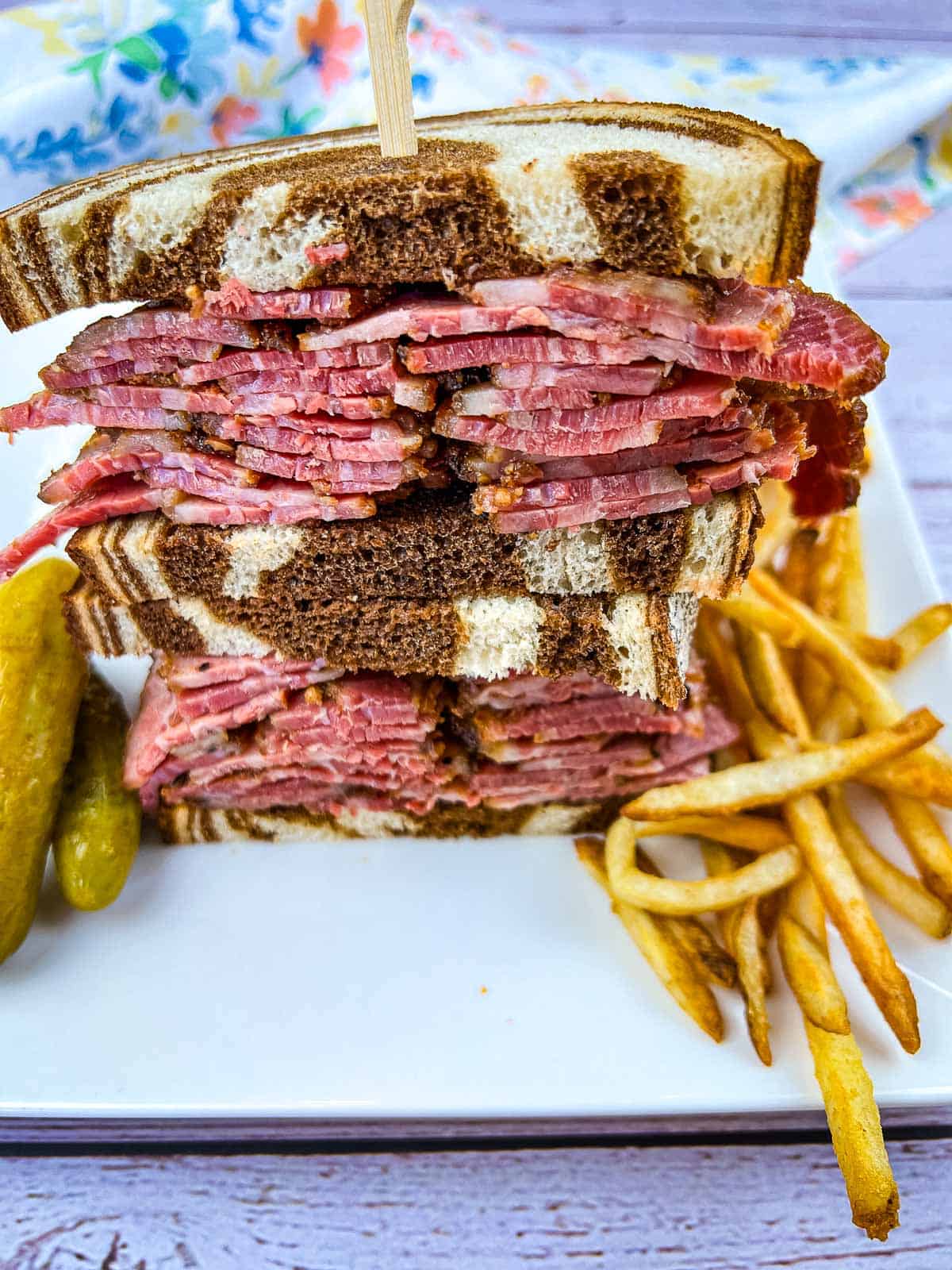
Definition and Origins of Pastrami
Pastrami is a quintessential cured and smoked meat, renowned for its tender texture, rich flavor, and cultural significance. Originating within Jewish deli traditions, it distinguishes itself through a multi-stage preparation process that incorporates curing, steaming, and smoking. Unlike other cured meats such as corned beef or roast beef, pastrami is uniquely characterized by its combination of brisket or corned beef, a blend of spices, and a prolonged steaming method that ensures unparalleled tenderness. Its evolution reflects broader migrations and culinary adaptations, from Eastern European shtetls to global delicatessens, particularly in cities like New York and Montreal, where it became a staple of Jewish-American and Canadian cuisine.The distinction between pastrami, corned beef, and roast beef lies in their preparation methods and key ingredients. While corned beef is primarily salt-cured and boiled, pastrami undergoes a secondary steaming process that enhances its tenderness. Roast beef, conversely, is typically cooked from fresh cuts without curing. Pastrami’s spice rub—often featuring garlic, mustard, peppercorns, and coriander—further differentiates it, creating a flavor profile that is both savory and aromatic.
Culinary Definition and Ingredient Composition
Pastrami is traditionally crafted from brisket or corned beef, though modern variations may incorporate other cuts like beef chuck or short ribs. The core ingredients and their roles in the final product include:- Meat Selection: Brisket (preferred for its marbling and flavor) or corned beef (pre-cured in brine).
Key Differences from Other Cured Meats
Pastrami is not merely corned beef; it is corned beef that has been re-cured, steamed, and often smoked, resulting in a distinct texture and flavor profile. Unlike roast beef, which is cooked fresh, or corned beef, which is boiled, pastrami’s preparation involves a secondary curing phase that sets it apart.
Historical Timeline of Pastrami’s Evolution
The origins of pastrami trace back to 19th-century Eastern Europe, where Jewish butchers in Poland and Ukraine developed methods to preserve beef using salt, spices, and smoking. The term "pastrami" derives from the Yiddish "pastrami" (פּאַסטראַמי), possibly linked to the Turkish "pastırma" (a dried, spiced meat) or the Romanian "pastramă", reflecting the region’s culinary cross-pollination.Key Milestones in Pastrami’s Global Spread
- Late 1800s (Eastern Europe): Jewish butchers in Poland and Romania pioneered curing techniques to extend meat shelf life during harsh winters. The method involved layering spices, salt, and nitrates before slow-cooking or smoking.
- Early 1900s (New York City): Jewish immigrants, particularly from Poland and Lithuania, adapted the recipe to American tastes, emphasizing steaming over smoking for tenderness. The Katz’s Deli (1916) and Carnegie Deli (1902) became iconic purveyors, popularizing pastrami on rye bread with mustard.
- Mid-20th Century (Montreal, Canada): Jewish delis in Montreal, such as Schwartz’s Deli (1928), introduced a smoked pastrami variant, distinguishing it from the steamed New York style. This became a defining feature of Canadian Jewish deli culture.
- Late 20th Century to Present (Globalization): Pastrami spread beyond Jewish communities through supermarket deli sections and fusion cuisine. Cities like Los Angeles, Chicago, and London now feature pastrami as a mainstream comfort food, often served in Reuben sandwiches, loaded fries, or as a charcuterie centerpiece.
Traditional Preparation Methods: Wet vs. Dry Curing
Pastrami’s preparation follows a structured process, with curing being the foundational step. Two primary curing techniques—wet (brine) curing and dry (dry rub) curing—yield distinct results in flavor and texture. Below is a comparative breakdown of each method, including step-by-step instructions formatted for clarity.Context for Curing Techniques
Curing is essential for preserving meat, enhancing flavor, and ensuring safety. Wet curing involves submerging meat in a brine solution, while dry curing relies on a spiced salt mixture applied directly to the surface. Both methods are critical in pastrami production, with wet curing being more traditional in Eastern European delis and dry curing gaining popularity for its concentrated flavor.
Critical Note: Sodium nitrite (or celery powder as a natural alternative) is used in curing to inhibit bacterial growth and develop the characteristic pink hue.Step-by-Step Curing Methods Comparison
| Step | Wet Curing (Brine) | Dry Curing (Dry Rub) |
|---|---|---|
| 1. Meat Selection | Brisket or corned beef (pre-cured if using corned beef). Trim excess fat. | Same cuts as wet curing; fat cap may be left intact for moisture retention. |
| 2. Curing Agent Application |
|
|
| 3. Rinsing and Resting | Rinse meat under cold water to remove excess brine. Rest for 24 hours. | Rinse off excess dry rub. Rest for 24–48 hours to allow flavors to penetrate. |
| 4. Secondary Curing (Steaming/Smoking) |
|
|
| 5. Slicing and Serving | Slice against the grain for maximum tenderness. Serve warm or cold. | Same slicing method; dry-cured pastrami may have a firmer bite. |
-
Wet Curing:
- Pros: More consistent flavor penetration; easier to control salt levels.
- Cons: Requires precise brine ratios; risk of over-salting if not rinsed properly.
-
Dry Curing:
- Pros: Intensifies spice flavors; no risk of brine contamination.
- Cons: Labor-intensive; uneven curing if rub isn’t applied uniformly
- Thanksgiving: A traditional centerpiece in Jewish-American households, often served alongside latkes, kugel, and other festive dishes.
- Passover: While not a traditional Passover food (due to its non-kosher preparation methods in some cases), pastrami appears in modern interpretations of the seder meal, particularly in Ashkenazi communities where it is consumed during the Omer or Lag B’Omer celebrations.
- Shabbat and Festivals: Featured in challah sandwiches or as part of elaborate smorgasbord-style meals, reflecting its role as a versatile, celebratory dish.
- Example: In Miami’s Little Havana, delis like La Carreta serve pastrami in Cuban-style "sandwiches" (similar to a Cuban sandwich but with pastrami instead of ham).
- Example: Jollibee, a major Filipino fast-food chain, has experimented with pastrami
- Protein Efficiency: Pastrami remains a high-protein food (~30g per 100g cooked), making it a viable option for muscle maintenance or athletic diets, though whole cuts (e.g., grilled steak) offer higher protein-to-fat ratios.
- Fat Profile: The saturated-to-unsaturated fat ratio (~1:1) reflects traditional beef brisket composition. Leaner alternatives (e.g., turkey pastrami) may improve this balance.
- Sodium Criticality: Sodium levels are a primary health concern, with a single 3-ounce (85g) serving often exceeding half the daily recommended limit for adults (WHO/NHANES guidelines). Chronic high intake is associated with hypertension and cardiovascular disease.
- Preservatives: Nitrites are regulated but remain controversial due to potential carcinogenic byproducts (e.g., nitrosamines) formed during high-heat cooking. The EU and some U.S. manufacturers offer "nitrite-free" alternatives using celery powder or ascorbates.
- Nitrosamine Formation: Nitrites react with amines in meat at high temperatures, producing nitrosamines, which are mutagenic in animal studies. A 2015 meta-analysis (Journal of the National Cancer Institute) linked processed meat intake to a 18% increased risk of colorectal cancer per 50g daily serving.
- Sodium-Related Hypertension: Excessive sodium intake (>2,300mg/day) is correlated with stiffening of arteries and left ventricular hypertrophy, per the American Journal of Clinical Nutrition (2014). Pastrami’s high sodium content exacerbates this risk, particularly in salt-sensitive individuals.
- Saturated Fat and Cardiometabolic Health: While pastrami’s fat content is moderate, the saturated fat component may contribute to LDL cholesterol elevation when consumed in excess. A study in Circulation (2010) found that replacing saturated fats with unsaturated fats reduced cardiovascular events by 30%.
- Preservative Overload: Chronic intake of cured meats has been associated with type 2 diabetes (per Diabetologia, 2013) and kidney disease due to sodium and additive burden.
- Limit servings to 2–3 oz (57–85g) per week, aligning with the American Institute for Cancer Research (AICR) guidelines for processed meats.
- Example: A 3-ounce pastrami sandwich (with whole-grain bread and vegetables) provides ~30g protein but also ~1,500mg sodium—nearly the daily limit for some adults.
- Opt for low-sodium pastrami (e.g., brands using reduced curing salts or potassium chloride substitutes).
- Pair with fresh vegetables (e.g., sauerkraut, pickles) to balance sodium with potassium-rich foods, which counteract hypertension risks (Journal of Human Hypertension, 2017).
- Rinse sliced pastrami briefly under water to remove surface sodium (though this reduces flavor).
- Turkey Pastrami: Made from turkey breast, it offers ~25% less saturated fat and ~10% more protein per 100g than beef pastrami (see comparison table below).
- Plant-Based Alternatives
-
Gourmet Pastrami Pizza
A departure from conventional deli sandwiches, pastrami pizza combines Italian and Jewish-American flavors into a crispy, savory pie. The base typically features a charred Neapolitan or New York-style crust, topped with a vibrant red sauce, melted mozzarella, and thinly sliced pastrami. The meat is often arranged in a herringbone pattern, its charred edges caramelized for added texture. A drizzle of umami glaze—a blend of honey, Dijon mustard, and smoked paprika—enhances the pastrami’s natural sweetness, while caramelized onions and pickled jalapeños add brightness and crunch. The dish is finished with a sprinkle of flaky sea salt and fresh basil, creating a contrast between the richness of the pastrami and the freshness of the herbs."The key to a successful pastrami pizza lies in the balance of textures: the crispness of the crust, the melt of the cheese, and the chew of the pastrami." —Modernist Deli Chef, Saveur Magazine (2021)
-
Korean-Inspired Pastrami Bibimbap
This fusion dish merges Korean comfort food with the bold flavors of pastrami, resulting in a vibrant, protein-rich bowl. The pastrami is marinated in a gochujang glaze (fermented chili paste, soy sauce, and garlic) and pan-seared until the edges are crisp, while retaining its tender interior. It is served over steamed short-grain rice alongside sautéed spinach, bean sprouts, and shiitake mushrooms, all tossed in a sesame-ginger dressing. A fried egg and kimchi add layers of heat and tang, while sesame seeds and sliced green onions provide aromatic contrast. The dish’s visual appeal lies in its colorful components, with the deep red of the gochujang-coated pastrami standing out against the green vegetables and white rice. -
Pastrami Ramen
A Brooklyn-born creation, pastrami ramen transforms the classic noodle soup into a hearty, meat-centric experience. The broth, often a tonkotsu-pastrami hybrid, combines the collagen-rich richness of pork bone broth with the smoky depth of pastrami. Thinly sliced pastrami, braised until fall-apart tender, is served atop chewy ramen noodles, topped with a soft-boiled egg, corn kernels, and nori strips. The dish is finished with a drizzle of chili oil and a sprinkle of furikake (Japanese seasoning), creating a harmonious blend of East Asian and Jewish-American flavors. The contrast between the fatty, smoky pastrami and the delicate, silky egg yolk is a defining feature."Pastrami ramen is a love letter to both cultures—it’s Jewish comfort food meets Japanese precision, with a Brooklyn twist." —Chef David Chang, Momofuku (2018)
-
Pastrami Tacos with Chipotle Crema
This dish reimagines pastrami as a taco filling, pairing its smoky-sweet profile with the bold flavors of Mexican street food. The pastrami is slow-cooked in a chipotle-adobo sauce until tender, then shredded and mixed with diced pineapple for a sweet-spicy contrast. Warm corn tortillas are filled with the pastrami mixture, topped with pickled red onions, crumbled cotija cheese, and a dollop of chipotle crema (sour cream blended with smoked chipotle peppers and lime zest). The dish is garnished with cilantro and a squeeze of lime, balancing the richness of the pastrami with the acidity of the toppings. The result is a fusion of Tex-Mex and deli culture, ideal for casual or celebratory dining. -
Pastrami and Fig Panini with Whipped Ricotta
A sophisticated take on the classic pastrami sandwich, this gourmet panini elevates the ingredients through texture and presentation. Thinly sliced pastrami is layered with aged provolone, whipped ricotta (lightened with cream cheese and lemon zest), and fresh figs, which add a jammy sweetness. The sandwich is pressed in a panini maker until the bread is golden and crisp, while the ricotta melts into a creamy blanket around the pastrami. Arugula and a drizzle of balsamic reduction are added for freshness and acidity, creating a dish that bridges deli simplicity with fine-dining elegance. -
Iconic Film and Television Moments
Pastrami’s presence in media is often tied to scenes of communal dining or personal reflection, reinforcing its role as a unifying food. Notable examples include:-
"When Harry Met Sally" (1989)
The diner scene where Sally (Meg Ryan) famously orders pastrami on rye while debating whether men and women can truly be platonic friends. The pastrami sandwich, served with pickles and mustard, becomes a symbol of casual, unpretentious friendship. The film’s director, Rob Reiner, has cited the sandwich as a nod to classic American diner culture, where food serves as a backdrop for deeper conversations."I really like pastrami on rye. With mustard." —Sally Albright, When Harry Met Sally (1989)
-
"The Simpsons" (1990s–Present)
The animated series frequently features pastrami as a staple of Springfield’s deli culture, particularly in Krusty Burger and Moe’s Tavern. Episodes like "Homer’s Enemy" (2002) use pastrami as a comedic device, with characters like Frank Grimes (Homer’s rival) dismissing it as "Jewish junk food," highlighting stereotypes while also celebrating its cultural specificity. The show’s writers often employ pastrami to evoke working-class Americana, particularly in episodes set in diners or delis. -
"Schitt’s Creek" (2015–2020)
The Canadian sitcom’s Jewish-American characters frequently reference pastrami, particularly in episodes exploring themes of cultural identity and upward mobility. Johnny Rose (Dan Levy) and his family’s love for pastrami sandwiches—often paired with pickles and mustard—serves as a comfort food during their transition from wealth to financial struggle. The dish becomes a metaphor for the characters’ struggle to hold onto their roots while adapting to new circumstances. -
"Fargo" (2014–Present)
In the TV series, pastrami appears in scenes set in North Dakota’s Jewish/homemade-pastrami-recipe-101435-hero-01b9b16a66e648d0b4343a49e6e1be11.jpg)
Artisanal vs. Mass-Produced Pastrami
The distinction between artisanal and mass-produced pastrami reflects broader trends in food manufacturing, where traditional craftsmanship contrasts with industrial efficiency. Artisanal pastrami emphasizes slow curing, handcrafted spice blends, and small-scale production, while mass-produced versions prioritize speed, uniformity, and cost reduction. These differences manifest in texture, flavor complexity, and even ethical sourcing, influencing consumer perception and culinary value.The production methods of artisanal and industrial pastrami diverge fundamentally in curing duration, ingredient quality, and quality control. Artisanal producers often rely on heritage techniques passed down through generations, whereas industrial facilities optimize for scalability and shelf life. Below, the key differences are examined, followed by criteria for assessing quality and considerations for sustainable production.
Production Methods and Techniques
Artisanal pastrami production adheres to time-honored processes that prioritize flavor development and texture. Curing times typically range from 7 to 14 days, during which the beef brisket is submerged in a brine solution containing salt, sugar, garlic, mustard, and a proprietary spice blend. The meat is then steamed for 6 to 12 hours, followed by slicing and optional smoking (though traditional pastrami is not smoked, unlike corned beef). Small-batch producers often use dry curing for the first 24–48 hours to enhance salt penetration before transitioning to a wet brine.In contrast, mass-produced pastrami employs accelerated curing methods to meet demand. Industrial brine solutions may include phosphates (e.g., sodium tripolyphosphate) to retain moisture, reducing curing time to 3 to 5 days. Steaming is standardized at 4 to 6 hours, and spice blends are formulated for consistency rather than depth. Pre-packaged slices often undergo vacuum sealing to extend shelf life, while deli counters may use tumor slicers to ensure uniform thickness, sacrificing some texture variation.
Key Markers of High-Quality Pastrami
Identifying high-quality pastrami requires attention to visual, tactile, and olfactory cues. Below is a checklist of distinguishing features, organized by sensory category:
Category Artisanal Marker Mass-Produced Marker Evaluation Tip Appearance Deep reddish-pink hue with visible marbling and a glossy fat cap. Uniform color (often overly bright due to nitrates) with minimal marbling. Check for natural fat distribution; excessive brightness may indicate artificial coloring. Thick, uneven slices (hand-cut) with a slightly uneven edge. Thin, uniform slices (machine-cut) with sharp edges. Observe slice thickness; artisanal pastrami often ranges from ¼" to ½". Visible spice granules embedded in the surface. Smooth surface with no visible spices. Run fingers over the surface; artisanal pastrami should feel textured. Texture Firm yet tender, with a slight resistance when pressed (indicating proper curing). Soft or mushy texture, often due to over-steaming or moisture retention additives. Press gently; high-quality pastrami should spring back slightly. Fat cap remains intact and slightly firm. Fat cap may be melted or overly greasy. Check fat consistency; artisanal fat should be creamy but not greasy. Flavor Complex, with layers of garlic, mustard, and smoked paprika; subtle sweetness from curing. Flat or overly salty; dominant nitrite taste with minimal spice depth. Taste for balance; artisanal pastrami should not be overwhelmingly salty. No aftertaste of artificial preservatives or metallic notes. May have a chemical or metallic undertone from additives. Smell for freshness; artificial pastrami often has a sterile odor. Sourcing and Packaging Locally sourced beef, often from grass-fed or dry-aged cuts. Industrial-grade beef, frequently from feedlot sources. Ask for sourcing details; artisanal producers disclose origin transparently. Packaged in compostable materials or sold loose to reduce waste. Vacuum-sealed in plastic with minimal eco-friendly labeling. Inspect packaging; excessive plastic use indicates mass production. Sustainability and Ethical Considerations
The environmental and ethical footprint of pastrami production varies significantly between artisanal and industrial models. Artisanal producers often prioritize small-scale, local sourcing, reducing carbon emissions associated with transportation. Grass-fed beef, for example, requires less grain and produces fewer greenhouse gases than grain-fed counterparts. Additionally, traditional curing methods minimize water usage compared to industrial brine systems, which may rely on chlorinated or chemically treated water for sanitation.Ethical concerns extend to animal welfare, where artisanal operations frequently partner with farms adhering to humane slaughter practices (e.g., Certified Humane or Animal Welfare Approved). In contrast, industrial supply chains may source from facilities with controversial treatment standards, though some mass producers now implement third-party audits to address consumer demand for transparency.
Packaging waste is another critical differentiator. Artisanal pastrami is often sold loose or in reusable containers, while industrial versions contribute to single-use plastic pollution. Pre-packaged slices, in particular, generate non-recyclable vacuum-sealed bags, exacerbating landfill waste. Some delis now offer compostable or biodegradable packaging, though adoption remains limited outside niche markets.
Local supply chains for pastrami reduce the carbon footprint by 30–50% compared to global sourcing, as transportation accounts for up to 20% of the total environmental impact of meat products. Artisanal producers further mitigate ecological harm by using 100% traceable ingredients and zero-waste curing methods, whereas industrial models prioritize scalability over sustainability, often relying on non-renewable energy for processing and refrigeration.
From its humble origins in Jewish delis to its modern-day reinventions across continents, pastrami embodies the intersection of heritage and innovation. As a meat with deep cultural roots yet boundless adaptability, it continues to captivate palates and spark conversations about tradition, health, and culinary creativity. Whether savored in a classic sandwich or reimagined in a fusion dish, pastrami remains a testament to how food can bridge cultures, evolve with time, and endure as a symbol of shared human experience. Its story is not just about a cured beef product but about the stories, flavors, and identities woven into every slice.
FAQ
What exactly is a pastrami sandwich and what makes it different from other sandwiches?
A pastrami sandwich features thinly sliced, cured, and smoked beef (pastrami) piled high on rye or pumpernickel bread, often with mustard, pickles, and sometimes Swiss cheese. It’s distinct from other sandwiches due to its cured, spiced meat and traditional Jewish deli origins, unlike grilled or roasted meats in other styles.
How is a pastrami Reuben different from a regular Reuben sandwich?
A pastrami Reuben replaces the classic corned beef with pastrami, keeping the same structure: grilled rye bread, Swiss cheese, sauerkraut, and Russian dressing. The meat’s smoky, cured flavor contrasts with the tangy, pickled elements, making it a sweeter, less salty variation.
What is the traditional name for a pastrami sandwich?
The traditional name for a pastrami sandwich is simply a "pastrami on rye" or "pastrami sandwich"—no specific regional nickname exists, though it’s often called a "Jewish deli sandwich" due to its origins in Eastern European Jewish cuisine.
What is the pastrami Reuben sandwich officially called?
The pastrami Reuben is not given a distinct official name beyond "pastrami Reuben"—it’s a variation of the classic Reuben, differentiated only by the type of meat used.
What ingredients are in a pastrami Reuben sandwich?
A pastrami Reuben sandwich includes grilled rye bread, thinly sliced pastrami, melted Swiss cheese, sauerkraut, and Russian dressing (a mix of mayonnaise and horseradish or prepared mustard). Some versions add caramelized onions or extra spices.
Is a pastrami burger the same as a regular burger with pastrami?
A pastrami burger replaces the beef patty with thinly sliced pastrami, often stacked high and served on a brioche or rye bun with mustard, pickles, and sometimes Swiss cheese. Unlike a traditional burger, it lacks a cooked patty and relies on the cured, spiced meat for flavor.
-
"When Harry Met Sally" (1989)
Cultural Significance and Regional Variations of Pastrami
Pastrami holds a distinctive place in culinary history as both a symbol of Jewish-American identity and a versatile meat product embraced across diverse cultures. Its evolution from Eastern European traditions to a staple in American delicatessens reflects broader immigrant narratives, while regional adaptations demonstrate how food transcends origin to integrate into local gastronomic traditions. Beyond its Jewish roots, pastrami has become a global phenomenon, adapting to flavors and techniques unique to each adopting cuisine.The cultural resonance of pastrami extends beyond its preparation, embedding itself in communal rituals, holiday feasts, and everyday dining experiences. Its prominence in Jewish-American cuisine underscores its role in preserving heritage while simultaneously contributing to the broader American culinary landscape. Meanwhile, regional variations—ranging from the mustard-seeded pastrami of Montreal to the pepper-forward cuts of New York—highlight how geography and tradition shape flavor profiles. This section explores pastrami’s significance in Jewish-American traditions, its regional distinctions across North America, and its global adaptations, illustrating how a single dish can serve as a bridge between cultures.
Pastrami in Jewish-American Cuisine and Delicatessen Culture
Pastrami’s association with Jewish-American identity is deeply tied to the delicatessen (delis), where it became a cornerstone of immigrant communities in the late 19th and early 20th centuries. Eastern European Jewish immigrants, particularly from Poland and Romania, brought curing and smoking techniques to the United States, adapting them to local ingredients and preferences. The deli emerged as a social hub, offering affordable, hearty meals that reflected both nostalgia for home and innovation in Americanized flavors.The pastrami sandwich, often served on rye bread with mustard and Swiss cheese, became a deli staple, symbolizing the fusion of Old World traditions with New World pragmatism. Its popularity surged during economic hardships, as it provided a filling, protein-rich meal at a low cost. Holidays further cemented pastrami’s cultural significance:
The Reuben sandwich, another iconic Jewish-American creation, often includes pastrami as a key ingredient, layered with Swiss cheese, sauerkraut, and Russian dressing on marbled rye. This dish exemplifies pastrami’s adaptability, transitioning from a standalone delicacy to a component of complex, flavorful sandwiches.
Regional Variations of Pastrami Across North America
Pastrami’s preparation and seasoning vary significantly across North America, influenced by local ingredients, immigrant traditions, and regional tastes. The following table compares key regional styles, focusing on seasoning, preparation methods, and cultural context:| Region | Primary Seasoning | Preparation Method | Cultural/Historical Context |
|---|---|---|---|
| New York (e.g., Katz’s, Pastrami Queen) | Coarse black pepper, garlic powder, coriander, paprika | Brined for 5–7 days, steamed or boiled, then smoked with hardwood (oak or hickory) | Developed by Romanian and Polish Jewish immigrants in the early 1900s. The "New York style" emphasizes a bold, peppery flavor and tender texture, often served on rye with spicy mustard. |
| Montreal (e.g., Schwartz’s Deli, The Main) | Mustard seeds, garlic, black pepper, coriander, paprika | Brined for 3–5 days, steamed, then smoked with maple or fruitwood for a sweeter profile | Influenced by Austrian and Hungarian Jewish traditions, with a sweeter, more aromatic profile due to the use of mustard seeds and maple-smoked wood. Often served in a "Montreal-style" sandwich with Swiss cheese and Thousand Island dressing. |
| Philadelphia (e.g., DiNic’s, John’s Roast Pork) | Black pepper, garlic, mustard seeds, coriander | Brined for 3–5 days, steamed or boiled, then smoked with hickory or applewood | Blends Jewish and Italian-American influences, with a slightly sweeter, less pepper-forward taste compared to New York. Often served in "Philly cheesesteak"-style sandwiches with provolone and peppers. |
| Toronto (e.g., The Beavertails, The Keg) | Mustard seeds, black pepper, garlic, coriander | Brined for 4–6 days, steamed, then smoked with a mix of hardwood and fruitwood | Reflects Montreal’s influence due to proximity, but often incorporates Canadian ingredients like maple syrup in marinades. Served in both traditional deli sandwiches and modern fusion dishes. |
| Los Angeles (e.g., Katz’s West Coast, The Butcher’s Daughter) | Black pepper, garlic, cumin, smoked paprika | Brined for 5–7 days, steamed, then smoked with mesquite or oak | Influenced by Mexican and Middle Eastern flavors, with cumin and smoked paprika adding depth. Often served in "LA-style" sandwiches with chipotle mayo or avocado. |
| Chicago (e.g., Charlie’s Deli, Sbarro) | Black pepper, garlic, mustard seeds, celery seeds | Brined for 4–5 days, steamed, then smoked with hickory | Balances Jewish and Italian traditions, with a focus on hearty, flavorful seasoning. Often paired with giardiniera (pickled vegetables) in sandwiches. |
Global Adaptations of Pastrami in Non-Jewish Cuisines
Pastrami’s versatility has led to its adoption in cuisines far removed from its Jewish-American origins, often fused with local flavors and techniques. These adaptations demonstrate how immigrant foods can become integral to new cultures, while also reflecting broader trends in globalization and culinary exchange.- Cuban Pastrami: Introduced by Jewish immigrants in Havana and later Miami, Cuban pastrami is typically brined with citrus (lime or orange), garlic, and oregano, then smoked with coffee beans or coconut husks for a unique aroma. It is often served in sandwiches with Swiss cheese, pickles, and mojo sauce, or as part of Cuban-style roast pork dishes. The influence of Afro-Caribbean and Spanish flavors is evident in the use of adobo seasoning and slow-roasting methods.
- Filipino Pastrami Burgers: In the Philippines, pastrami is incorporated into burgers or hotdogs as a filling, often paired with cheese, lettuce, tomato, and sweet chili sauce. The adaptation reflects the Filipino preference for meat-heavy, flavorful sandwiches, with pastrami providing a smoky, savory contrast to the sweet and tangy sauces.

Nutritional Profile and Health Considerations of Pastrami
Pastrami, a cornerstone of deli culture, is celebrated for its rich flavor and versatility, yet its nutritional composition warrants careful examination. As a processed meat, its consumption involves trade-offs between taste and health, particularly regarding protein intake, fat composition, sodium levels, and preservative use. Understanding these factors allows consumers to make informed dietary choices, balancing indulgence with moderation. Below is a detailed analysis of pastrami’s nutritional profile, health implications, and comparisons to similar processed meats.Nutritional Composition per 100g: Raw vs. Cooked Comparison
Pastrami’s nutritional content varies between raw and cooked states due to moisture loss, fat rendering, and sodium absorption during curing and smoking. The following table presents typical values for raw cured beef brisket (pre-smoking) and cooked pastrami (post-smoking/steaming), based on USDA and industry standards. Values are approximate and may vary by recipe or manufacturer.| Nutrient | Raw Cured Beef Brisket (100g) | Cooked Pastrami (100g) | Key Notes |
|---|---|---|---|
| Calories (kcal) | 300–350 | 250–300 | Reduction due to moisture loss (~20–30%) during cooking. |
| Protein (g) | 25–28 | 28–32 | Protein concentration increases post-cooking as water evaporates. |
| Total Fat (g) | 20–25 | 18–22 | Slight reduction; unsaturated fats may increase relative to saturated due to rendering. |
| Saturated Fat (g) | 9–11 | 8–10 | Primary source: marbling in beef brisket. High intake linked to cardiovascular risks. |
| Unsaturated Fat (g) | 8–10 | 9–11 | Includes monounsaturated (oleic acid) and polyunsaturated fats; beneficial in moderation. |
| Sodium (mg) | 1,800–2,200 | 1,500–1,900 | High sodium content from curing salts (e.g., sodium nitrate/nitrite, salt). Exceeds WHO’s recommended daily limit of 2,000mg for adults. |
| Cholesterol (mg) | 120–140 | 130–150 | Primarily from beef fat; dietary cholesterol’s impact on blood cholesterol is debated but generally limited for most individuals. |
| Nitrates/Nitrites (ppm) | 100–200 (as sodium nitrite) | 80–180 (varies by processing) | Used as preservatives and to develop color/flavor. Linked to nitrosamine formation (potential carcinogens) when heated. |
| Iron (mg) | 2.5–3.0 | 2.8–3.2 | Heme iron (highly bioavailable) from beef; supports oxygen transport but may contribute to oxidative stress. |
| Zinc (mg) | 5.0–6.0 | 5.5–6.5 | Essential for immune function and wound healing. |
Health Implications and Evidence-Based Recommendations
Pastrami’s consumption presents both nutritional benefits and risks, primarily driven by its processing methods and additive use. Below are the key health considerations supported by epidemiological and nutritional research, alongside moderation strategies.Major Health Concerns:
Processed meats like pastrami are classified by the World Health Organization’s International Agency for Research on Cancer (IARC) as Group 1 carcinogens (probable cause of colorectal cancer) due to:
Moderation and Healthier Alternatives:
To mitigate risks while retaining pastrami’s appeal, the following evidence-based strategies are recommended:
1. Portion Control:
2. Reduce Sodium Intake:
3. Choose Lean or Alternative Proteins:
Pastrami in Modern Cuisine and Pop Culture
Pastrami has transcended its traditional roots as a deli staple, evolving into a versatile ingredient in contemporary gastronomy and a cultural icon in media. Its rich, smoky-sweet profile and tender texture make it adaptable to fusion dishes, while its nostalgic appeal has cemented its place in film, television, and literature as a symbol of comfort and identity. Modern chefs and home cooks alike have reimagined pastrami in innovative ways, blending it with global flavors, while its presence in pop culture reinforces its status as a timeless culinary emblem.The integration of pastrami into modern cuisine reflects broader trends toward reinventing classic ingredients with bold, unexpected pairings. Meanwhile, its portrayal in media often highlights themes of Americana, Jewish-American heritage, and the universal appeal of hearty, flavorful food. Below, the exploration covers its culinary reinvention, cultural symbolism, and practical guidance for creating restaurant-worthy modern pastrami dishes.
Leave a Comment
Comments are moderated before appearing. The data you submit is processed according to the Privacy Policy of Voltefac.