What Is An Constitution And Its Fundamental Role In Governance
Table of Contents
- Definition and Core Purpose of a Constitution
- Three Primary Functions of a Constitution
- Rigid vs. Flexible Constitutions: Amendment Processes and Implications
- Historical Origins and Evolution of Constitutions
- Key Components of a Constitution
- Categorization of Essential Constitutional Components
- Logical Hierarchy of Constitutional Components
- Comparative Analysis of Constitutional Structures
- Types of Constitutions: Written vs. Unwritten
- Sources of Authority in Written and Unwritten Constitutions
- Decision-Making Flowchart for Classifying Constitutions
- Advantages and Disadvantages: Flexibility vs. Clarity
- Real-World Constitutional Crises and Their Resolution
- Constitutional Principles and Their Application
- Separation of Powers: Implementation in Presidential, Parliamentary, and Hybrid Systems
- Federalism vs. Unitary Systems: Distribution of Power Between Central and Regional Governments
- Rule of Law and Judicial Review: Reinterpreting Constitutional Rights
- Constitutional Rights and Protections
- Structure of Fundamental Rights in Constitutions
- Landmark Constitutional Court Rulings Expanding Rights
- Emergency Powers and Safeguards Against Abuse
- FAQ
- What exactly is a constitution?
- How does a constitutional monarchy work?
- What defines a constitutional republic?
- What is a constitutional isomer in chemistry?
- Who or what is a constitutionalist?
- What is a constitutional convention?
A constitution serves as the foundational legal framework that defines the structure, authority, and limitations of a government while safeguarding the rights of its citizens. From ancient charters like the Magna Carta to modern documents such as the South African Constitution, these texts establish the rules of engagement between state and society, balancing power distribution with individual freedoms. Their evolution reflects broader shifts in political philosophy, from social contract theories to contemporary debates on judicial interpretation and emergency governance. Understanding a constitution’s core purpose—legal supremacy, institutional organization, and rights protection—reveals its indispensable role in maintaining stability, accountability, and justice within a nation.
The study of constitutions extends beyond mere legal texts; it encompasses historical milestones, comparative analysis of rigid versus flexible systems, and the practical application of principles like separation of powers and federalism. Whether written or unwritten, constitutions shape governance by delineating sovereignty, resolving conflicts between branches of government, and adapting to societal changes. This exploration examines how constitutions function as both a blueprint for authority and a bulwark against tyranny, illustrating their dynamic interplay with political theory, judicial precedent, and real-world crises.
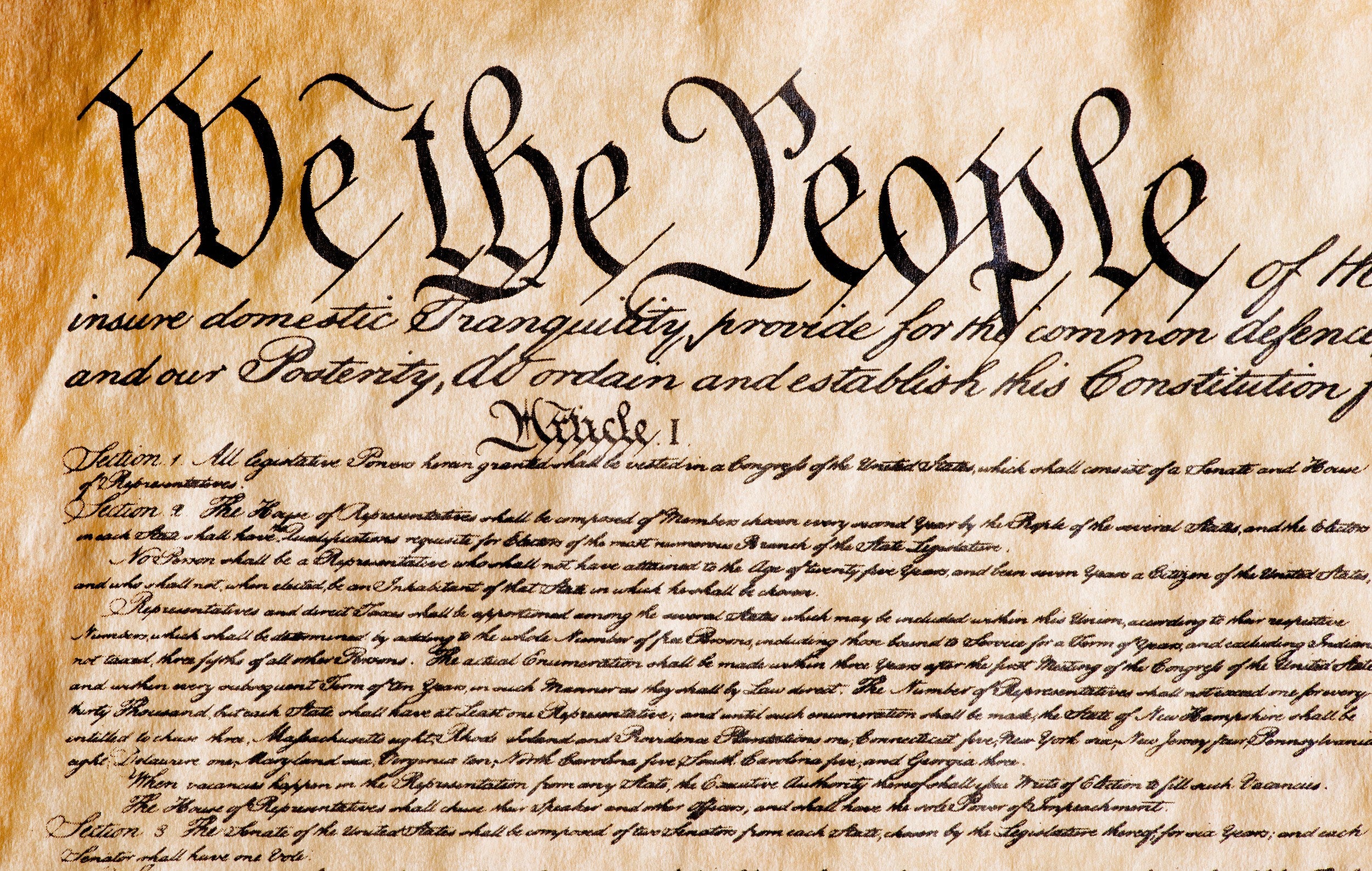
Definition and Core Purpose of a Constitution
A constitution serves as the foundational legal document of a sovereign state, defining the principles, structures, and processes that govern its political system. It establishes the relationship between the government, its institutions, and the citizens, ensuring accountability, stability, and the rule of law. The core purpose of a constitution lies in its ability to balance power, protect individual liberties, and provide a framework for societal organization while adapting to evolving societal needs.Constitutions function as the supreme legal authority within a jurisdiction, superseding all other laws and regulations. They delineate the powers of government branches—executive, legislative, and judicial—and outline mechanisms for their interaction, such as checks and balances. Beyond governance, constitutions codify fundamental rights and freedoms, serving as a bulwark against arbitrary state actions. Their design reflects a society’s values, historical context, and aspirations for justice and equity.
Three Primary Functions of a Constitution
Constitutions perform three interdependent functions that collectively shape a nation’s governance and legal order. These functions—legal authority, governance structure, and fundamental rights protection—are mutually reinforcing and essential for a functioning democracy or constitutional state.A constitution is the supreme law of the land, binding all branches of government and citizens alike, with authority derived from the collective will of the people or historical sovereignty.Legal Authority
Constitutions establish their primacy in the legal hierarchy, ensuring that all laws, executive actions, and judicial decisions conform to constitutional principles. This supremacy prevents legislative overreach, executive tyranny, or judicial arbitrariness. For example, in the United States, the Judicial Review doctrine (established in Marbury v. Madison, 1803) empowers courts to invalidate laws conflicting with the Constitution. Similarly, in India, the Basic Structure Doctrine (judicially developed) protects core constitutional features from parliamentary amendment, reinforcing the Constitution’s inviolable status.
Governance Structure
Constitutions define the organization of government institutions, specifying their roles, responsibilities, and limitations. This includes:
The structure of government outlined in a constitution determines the efficiency, responsiveness, and legitimacy of public administration.Fundamental Rights Protection
Constitutions enumerate and safeguard individual and collective rights, such as freedom of speech, equality before the law, and due process. These provisions act as constraints on government power and as guarantees for citizens. Notable examples include:
Rigid vs. Flexible Constitutions: Amendment Processes and Implications
Constitutions vary in their amendability, categorized broadly as rigid or flexible, with distinct processes and implications for stability and adaptability. Rigid constitutions require supermajorities or special procedures for amendment, ensuring longevity and consistency, while flexible constitutions allow easier modifications through ordinary legislative processes.| Feature | Rigid Constitution (e.g., U.S., India) | Flexible Constitution (e.g., UK, New Zealand) |
|---|---|---|
| Amendment Process |
|
|
| Stability vs. Adaptability |
|
|
| Examples and Historical Context |
|
|
| Implications for Governance |
|
|
Historical Origins and Evolution of Constitutions
The development of constitutions traces a trajectory from medieval charters to modern frameworks, reflecting shifts in power dynamics, Enlightenment ideals, and the rejection of absolute monarchy. Key milestones illustrate how constitutionalism evolved from limited grants of rights to comprehensive governance systems.The history of constitutions is a narrative of balancing sovereignty, liberty, and order, shaped by revolutions, wars, and intellectual movements.Medieval Foundations
Early constitutional principles emerged in feudal Europe, where monarchs sought to limit their authority through agreements with nobility and clergy. Notable precursors include:
Enlightenment and Revolutionary Constitutions
The 18th century witnessed the rise of constitutionalism as a response to absolutism, with Enlightenment thinkers advocating for natural rights and popular sovereignty. Revolutionary constitutions formalized these ideals:
Key Components of a Constitution
Constitutions serve as the foundational legal framework of a state, defining its structure, governance mechanisms, and the rights of its citizens. While variations exist across jurisdictions, most constitutions share core components that establish authority, distribute power, and safeguard individual liberties. These elements are systematically organized to create a coherent hierarchy—balancing sovereignty, accountability, and adaptability. Below is an analysis of the essential components, their logical arrangement in constitutional design, and their functional significance, illustrated through comparative examples from global constitutions.Categorization of Essential Constitutional Components
Constitutional elements can be grouped into five primary categories, each addressing distinct governance needs: ideological foundations, sovereignty and authority, power distribution, rights protection, and amendment mechanisms. These categories are not mutually exclusive; for instance, a preamble may declare sovereignty while also outlining core values. The hierarchy of these components reflects their interplay—from abstract principles (e.g., preamble) to operational rules (e.g., amendment procedures). Below is a structured breakdown:-
Preamble and Foundational Principles
The preamble serves as the constitutional narrative, articulating the state’s philosophical underpinnings, objectives, and historical context. It often invokes sovereignty (e.g., "We the People") and establishes legitimacy. For example:
- United States Constitution (1787): Begins with "We the People of the United States" to assert popular sovereignty.
- Indian Constitution (1950): Opens with "WE, THE PEOPLE OF INDIA" and declares justice, liberty, and equality as foundational goals. The preamble is not legally enforceable in most systems but provides interpretive guidance for courts (e.g., India’s Supreme Court has cited it to expand rights).
-
Sovereignty and Territorial Jurisdiction
This section defines the source of authority (e.g., popular sovereignty, divine right) and delineates the state’s territorial scope. Key clauses include:
- France (1958 Constitution): Article 3 states sovereignty resides with the people and is exercised through elected representatives.
- Saudi Arabia (Basic Law of Governance, 1992): Asserts sovereignty under the monarchy while limiting it to Islamic law (Sharia). Sovereignty clauses often clash in federal systems (e.g., Canada’s Supreme Court of Canada vs. provincial legislatures over language rights).
-
Separation and Distribution of Powers
Constitutions allocate authority among branches (executive, legislative, judicial) and sometimes sub-national entities (federalism). Mechanisms include:
- Checks and Balances: The U.S. system (e.g., presidential veto override by Congress) prevents unilateral power concentration.
- Federalism: Germany’s Basic Law (1949) grants Länder (states) concurrent powers (e.g., education) while reserving defense for the federal government.
- Unitary Systems: Japan’s Constitution (1947) centralizes authority in Tokyo, with local governments as administrative extensions.
-
Bill of Rights and Fundamental Freedoms
This section enumerates non-negotiable rights (e.g., free speech, due process) and often includes limitations (e.g., "reasonable restrictions"). Examples:
- Canada (1982 Charter of Rights and Freedoms): Section 2 guarantees mobility, opinion, and religion, but Section 1 permits "reasonable limits" for public safety.
- South Africa (1996 Constitution): Section 36 balances rights with "justifiable limitations" (e.g., hate speech restrictions). Rights clauses are frequently litigated; e.g., Roe v. Wade (U.S.) interpreted the 14th Amendment’s "liberty" to include abortion rights.
-
Amendment and Supremacy Clauses
These provisions ensure constitutional adaptability while preserving stability. Key features:
- Rigorous Amendment Procedures: The U.S. requires 2/3 congressional approval + 3/4 state ratification (e.g., 27 amendments in 230+ years).
- Supremacy Over Ordinary Law: Australia’s Constitution (1901) declares it the "supreme law," invalidating conflicting state/federal statutes.
- Emergency Powers: India’s Article 352 allows presidential rule during national crises, subject to judicial review.
Logical Hierarchy of Constitutional Components
The organization of constitutional elements follows a pyramidal structure, where foundational principles (preamble) underpin operational rules (amendment clauses). Below is a step-by-step procedure for structuring these components, using real-world constitutions as models:-
Layer 1: Ideological and Philosophical Foundations
Begin with the preamble and foundational declarations to establish the constitution’s purpose and legitimacy. This layer answers:
- Who holds ultimate authority? (e.g., "the people" in France vs. "the Crown" in the UK’s 1931 Statute of Westminster).
- What are the core values? (e.g., India’s "socialist secular" principles vs. Singapore’s "Asian values"). Example: The South African Constitution (1996) starts with "We, the people of South Africa... adopt this Constitution" and lists reconciliation and equality as priorities.
-
Layer 2: Sovereignty and Jurisdictional Scope
Define the state’s territorial boundaries and the source of its power. This layer includes:
- Citizenship and nationality clauses (e.g., Germany’s Basic Law Article 116 on ethnic German rights).
- International obligations (e.g., New Zealand’s Treaty of Waitangi as a constitutional document). Federal constitutions (e.g., Brazil’s 1988 Constitution) must also clarify the division between national and sub-national sovereignty (e.g., municipal autonomy in Article 29).
-
Layer 3: Institutional Design and Power Distribution
Allocate powers among branches and levels of government. Critical sub-layers include:
- Executive Structure: Presidential (France) vs. parliamentary (UK) systems.
- Judicial Independence: The German Basic Law (Article 97) guarantees judges’ immunity from political interference.
- Federal/Unitary Balance: Switzerland’s Constitution (1999) grants cantons (states) near-total autonomy in education and culture.
-
Layer 4: Rights and Limitations
Enumerate fundamental rights and the mechanisms for their enforcement. This layer often includes:
- Positive Rights: Canada’s Charter guarantees healthcare access (Section 7).
- Negative Rights: The U.S. First Amendment prohibits government censorship.
- Remedies: South Africa’s Constitutional Court can issue interdicts (injunctions) to protect rights. Comparative Note: Japan’s Constitution (1947) renounces war (Article 9) but lacks an explicit equality clause, unlike India’s Article 14–18.
-
Layer 5: Amendment and Enforcement Mechanisms
Outline procedures for constitutional revision and the hierarchy of legal norms. Key elements:
- Amendment Thresholds: Spain’s 1978 Constitution requires a two-thirds majority in both chambers for organic law changes.
- Judicial Review: The U.S. Supreme Court interprets the Constitution via marbury v. Madison (1803).
- Rigid vs. Flexible Constitutions: The UK’s unwritten constitution can be amended by simple parliamentary majority, unlike the U.S. rigid system.
Comparative Analysis of Constitutional Structures
Constitutions reflect diverse governance models, with unique features tailored to historical, cultural, and political contexts. Below is a responsive table highlighting five constitutions and their distinctive structural elements, emphasizing how these designs address sovereignty, federalism, and rights protection.| Constitution | Key Structural Features | Unique Innovation
Types of Constitutions: Written vs. UnwrittenConstitutions serve as the foundational legal framework governing a state, but their form varies significantly across jurisdictions. The distinction between written and unwritten constitutions hinges on their sources of authority, codification, and mechanisms for amendment. Written constitutions, such as those of India and South Africa, are formally documented in a single or set of documents, providing clear, centralized rules. In contrast, unwritten constitutions, exemplified by the United Kingdom and Israel, derive authority from a combination of statutes, judicial precedents, and constitutional conventions, lacking a singular codified text. This dichotomy influences adaptability, judicial interpretation, and the balance between flexibility and rigidity in constitutional governance.The classification of a constitution as written or unwritten depends on its primary sources of legal authority, the role of judicial review, and the presence of formal amendment procedures. Below, the structural and functional differences are examined, alongside their respective advantages and disadvantages, illustrated through real-world constitutional challenges. Sources of Authority in Written and Unwritten ConstitutionsThe authority of a constitution stems from its legal and political recognition within a jurisdiction. Written constitutions derive their legitimacy from supremacy clauses and formal ratification processes, often requiring supermajorities or constitutional conventions for amendment. Unwritten constitutions, however, rely on a patchwork of legal instruments, including:- Statutory law: Acts of Parliament or legislatures that collectively form constitutional principles (e.g., the UK’s Parliament Acts 1911 and 1949, which limit the House of Lords' power to veto legislation). "Constitutional conventions are not law but are legally enforceable to the extent that they are regarded as binding by the courts." — Lord Diplock, Thoburn v. Sunderland City Council (2002)This multiplicity of sources in unwritten systems allows for gradual evolution but introduces ambiguity in enforcement. Conversely, written constitutions provide fixed, enumerated rules, reducing interpretive disputes but potentially stifling adaptation to societal changes. Decision-Making Flowchart for Classifying ConstitutionsDetermining whether a constitution is written or unwritten requires assessing three key criteria: codification, amendment procedures, and sources of legal authority. Below is a textual representation of a decision-making flowchart:1. Is the constitution contained in a single or primary document? 2. Does the constitution include formal amendment procedures requiring supermajorities or constitutional conventions? 3. Are constitutional norms derived from statutes, common law, and conventions without a central document? "A constitution may be written or unwritten, but its effectiveness depends on the willingness of political actors to uphold its principles—whether codified or conventional." — Vernon Bogdanor, The New British Constitution (2009) Advantages and Disadvantages: Flexibility vs. ClarityThe choice between written and unwritten constitutions reflects a trade-off between adaptability and legal certainty. Each system presents distinct strengths and weaknesses, as demonstrated in constitutional crises and governance challenges.Written Constitutions Disadvantages: Unwritten Constitutions Disadvantages: Real-World Constitutional Crises and Their ResolutionConstitutional crises often expose the limitations of each system. Written constitutions face challenges when rigidity clashes with urgent reform needs, while unwritten systems grapple with ambiguity during political upheavals.Case Study 1: UK’s Brexit and the Role of Conventions Case Study 2: South Africa’s Constitutional Court and Written Flexibility "A constitution must balance the need for stability with the capacity to respond to societal changes—whether through formal amendment or evolutionary interpretation." — Ahmed Shaheed, Constitutional Law in Africa (2015) Constitutional Principles and Their ApplicationConstitutional principles serve as the foundational framework that structures governance, ensures accountability, and protects individual rights. These principles—such as the separation of powers, federalism, and the rule of law—are not merely theoretical but are actively implemented through institutional designs and judicial interpretations. Their application varies across political systems, reflecting historical contexts, cultural values, and pragmatic necessities. Below, an analysis of key principles and their real-world manifestations in diverse constitutional models is presented.Separation of Powers: Implementation in Presidential, Parliamentary, and Hybrid SystemsThe principle of separation of powers divides government authority into distinct branches—executive, legislative, and judicial—to prevent concentration of power and safeguard against tyranny. Its implementation differs based on the system of government, influencing accountability mechanisms, legislative-executive relations, and judicial independence.Presidential Systems (e.g., United States) Parliamentary Systems (e.g., Germany) Hybrid Systems (e.g., France) Federalism vs. Unitary Systems: Distribution of Power Between Central and Regional GovernmentsThe allocation of authority between national and subnational governments defines whether a state adopts federalism (decentralized power) or a unitary system (centralized power). Federal systems distribute sovereignty to regional entities, while unitary systems concentrate power in the central government, though devolutionary trends may create regional autonomy.Comparison of Federal and Unitary Systems
Rule of Law and Judicial Review: Reinterpreting Constitutional RightsThe rule of law principle requires that all individuals and institutions, including governments, are subject to and accountable under the law. Judicial review—where courts interpret and enforce constitutional provisions—plays a pivotal role in safeguarding rights. Courts often reinterpret constitutional texts to adapt to societal changes, as seen in landmark cases where judicial activism has expanded protections.Mechanisms of Judicial Review: Case Studies in Judicial Reinterpretation: 2. Germany’s Federal Constitutional Court and Digital Privacy 3. India’s Supreme Court and LGBTQ+ Rights
Constitutional Rights and ProtectionsConstitutional rights and protections form the bedrock of democratic governance, ensuring that individuals and communities are shielded from arbitrary state action while enabling societal progress. These rights are systematically categorized into civil, political, and socio-economic dimensions, each designed to address distinct aspects of human dignity and governance. Their enforceability varies across constitutions, reflecting differing priorities between immediate legal obligations and aspirational directives. The interplay between these rights and state authority—particularly during emergencies—demonstrates how constitutions navigate tensions between security and liberty. Additionally, the balance between individual freedoms and collective interests, such as public order or cultural preservation, reveals the adaptive mechanisms constitutions employ to sustain social cohesion without sacrificing fundamental principles.Structure of Fundamental Rights in ConstitutionsFundamental rights in constitutions are typically organized into hierarchical tiers, distinguishing between justiciable rights (legally enforceable in courts) and directive principles (aspirational guidelines for governance). The civil rights category, often the most immediately enforceable, includes protections like equality before the law, due process, and freedom from arbitrary detention. Political rights encompass participatory mechanisms such as voting, free association, and access to public office, ensuring democratic accountability. Socio-economic rights, while sometimes treated as non-justiciable, address systemic inequalities through guarantees like education, healthcare, and fair labor conditions. Constitutions like India’s Part III (Fundamental Rights) and the South African Bill of Rights explicitly separate justiciable rights from directive principles, whereas others, such as the German Basic Law, integrate socio-economic rights into enforceable provisions.The enforceability of these rights depends on constitutional design. For instance: "Fundamental rights are not mere aspirations; they are the minimum standards of civilized governance, enforceable against the state’s encroachment." Landmark Constitutional Court Rulings Expanding RightsJudicial interpretations have been pivotal in expanding the scope of constitutional rights, often through landmark rulings that reinterpret statutory or constitutional text to reflect evolving societal values. Below is a chronological overview of key judgments that redefined rights protections globally:
Emergency Powers and Safeguards Against AbuseConstitutions often grant emergency powers to governments to respond to crises (e.g., war, natural disasters, economic collapse), but these provisions risk becoming tools for authoritarianism. The design of safeguards varies significantly, reflecting differing priorities between state security and individual liberties. Below is a comparative analysis of India’s Article 352 (national emergency) and Germany’s Basic Law (Grundgesetz) Article 115a (defense of the state), highlighting structural differences in their safeguards:
| |||||||||||||||||||||||||||||||
|---|---|---|---|---|---|---|---|---|---|---|---|---|---|---|---|---|---|---|---|---|---|---|---|---|---|---|---|---|---|---|---|---|---|


Leave a Comment
Comments are moderated before appearing. The data you submit is processed according to the Privacy Policy of Voltefac.