What Is An Prepositions Explained For Clear Grammar Use
Table of Contents
- Definition and Core Function of Prepositions in English Grammar
- Syntactic Features Distinguishing Prepositions from Other Parts of Speech
- Prepositions as Frameworks for Spatial and Temporal Relationships
- Types of Prepositions and Their Classifications
- Classification of Prepositions by Functional Groups
- Compound Prepositions and Their Formation Rules
- Simple vs. Phrasal Prepositions: Syntactic and Semantic Distinctions
- Prepositional Phrases and Their Syntactic Hierarchy
- Common Pitfalls and Misuses of Prepositions
- Incorrect Collocations and Fixed Phrases
- Tense-Dependent Prepositional Errors
- Idiomatic Prepositions and Their Disruption
- Ambiguity Created by Prepositions
- Prepositions in Advanced Syntax and Complex Sentences
- Prepositions in Subordinate Clauses and Clause Linking
- Parsing Prepositional Phrases in Complex Sentences
- Prepositions in Passive Constructions and Agent Focus
- Prepositions in Reduced Adverbial Clauses
- Prepositions in Relative Clauses and Noun Phrase Modification
- FAQ
- What is a preposition in English?
- What are some examples of prepositions?
- How do you explain prepositions to kids?
- What are prepositions in grammar?
- What is a prepositional phrase?
- What is a preposition in French?
Understanding prepositions is fundamental to mastering English grammar, as they serve as the invisible scaffolding that connects words and conveys precise relationships in meaning. These grammatical tools act as bridges between nouns, pronouns, and other sentence elements, shaping spatial, temporal, and logical frameworks without which communication would lack clarity. From establishing locations like "under the table" to defining actions such as "before leaving," prepositions refine nuance in both written and spoken language, ensuring sentences achieve their intended precision. Their role extends beyond basic structure, influencing verb tenses, sentence ambiguity, and even idiomatic expressions that define cultural and regional variations.
Despite their ubiquity, prepositions often remain overlooked due to their seemingly simple function, yet their misuse can distort meaning entirely. Whether in formal writing, technical documentation, or everyday conversation, recognizing how prepositions operate—from simple forms like "in" to complex phrasal structures like "in spite of"—is essential for accurate and effective expression. This exploration delves into their grammatical mechanics, classifications, and common pitfalls, equipping readers with the tools to wield them confidently in any context.
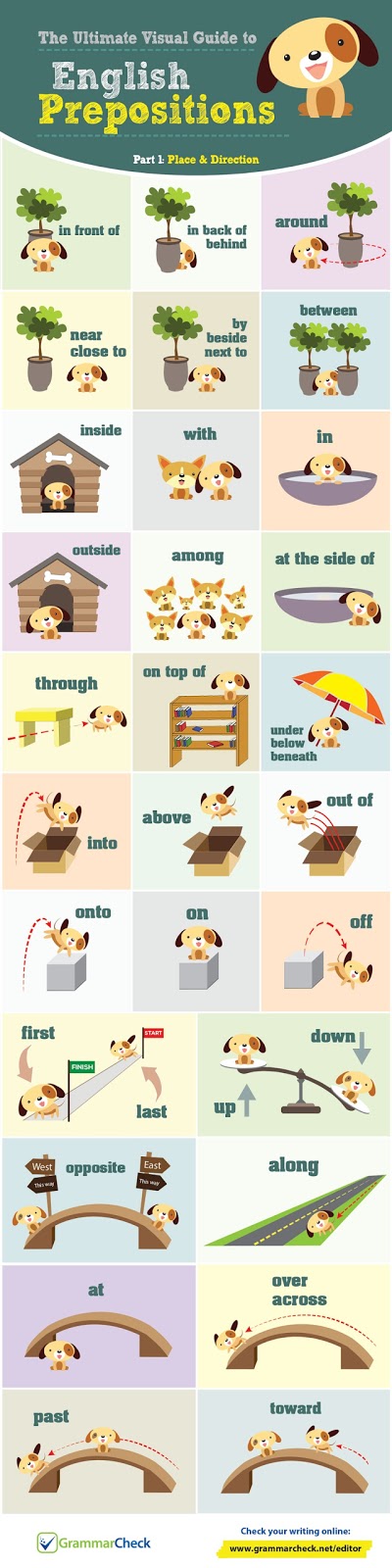
Definition and Core Function of Prepositions in English Grammar
Prepositions serve as fundamental grammatical elements in English, functioning as relational connectors that establish spatial, temporal, causal, or logical associations between words within a sentence. Unlike other parts of speech, prepositions do not operate independently; instead, they create syntactic frameworks by linking nouns, pronouns, or noun phrases to verbs, adjectives, or other prepositions. Their primary role is to clarify the relationship between entities—whether physical (e.g., proximity, movement) or abstract (e.g., possession, purpose)—thereby enhancing sentence coherence and precision. This section examines their grammatical classification, syntactic constraints, and structural contributions to sentence meaning, emphasizing their distinction from conjunctions, adverbs, and other functional categories.The core function of prepositions lies in their ability to modify verbs, adjectives, or other prepositions by introducing dependent phrases that specify context. Unlike conjunctions, which join clauses or phrases, prepositions do not introduce independent clauses; instead, they introduce prepositional phrases (e.g., "to the market," "despite the rain"), which act as adverbial or adjectival modifiers. Their syntactic dependency is absolute: a preposition cannot stand alone as a complete thought or modify a verb directly without a following noun phrase. This dependency underscores their role as subordinating elements, ensuring that the modified word (e.g., a verb like "arrive" or an adjective like "proud") receives contextual precision.
Syntactic Features Distinguishing Prepositions from Other Parts of Speech
Prepositions exhibit unique syntactic properties that differentiate them from conjunctions, adverbs, and adjectives. Below is a comparative analysis highlighting their structural and functional distinctions:Prepositions are closed-class words—their number is limited and fixed, with no new entries added to the language through derivation or composition (e.g., "under," "among," "regarding").A structured comparison reveals the following key differences:
| Feature | Prepositions | Conjunctions | Adverbs | Adjectives |
|---|---|---|---|---|
| Primary Function | Link nouns/pronouns to other words to indicate relationships (time, place, direction, manner). | Join clauses, phrases, or words of equal grammatical weight (e.g., "and," "but," "because"). | Modify verbs, adjectives, or other adverbs by providing temporal, manner, or degree information (e.g., "quickly," "very"). | Modify nouns by describing or quantifying them (e.g., "happy," "three"). |
| Dependency | Cannot stand alone; require a following noun phrase (e.g., "in the box" is incomplete without "the box"). | Can connect independent clauses (e.g., "She left, and he arrived"); no noun phrase required. | Can function independently (e.g., "Suddenly, the door opened"). | Cannot modify verbs directly; require a noun (e.g., "a red car" vs. "redly" is non-standard). |
| Role in Sentence Structure | Introduce prepositional phrases acting as adverbs (e.g., "During the storm") or adjectives (e.g., "the book on the table"). | Coordinate or subordinate clauses (e.g., "Because it rained" subordinates the clause). | Modify entire sentences (e.g., "Frankly, I disagree") or other adverbs/verbs. | Modify nouns directly (e.g., "the quick fox") or function as determiners (e.g., "each student"). |
| Position in Clause | Always precede their object (noun/pronoun) without exceptions (e.g., "to the store" is ungrammatical as "to store"). | Can appear at clause boundaries (e.g., "She ran, and he walked") or within clauses (e.g., "Because she ran"). | Can appear at sentence boundaries (e.g., "However, she left") or within clauses (e.g., "she ran quickly"). | Precede nouns (e.g., "blue sky") or follow linking verbs (e.g., "the sky is blue"). |
| Tense/Aspect Interaction | Influence verb tense indirectly by framing temporal relationships (e.g., "Before leaving" implies prior action). | No direct interaction with tense; coordinate or subordinate actions (e.g., "After she left" pairs with past tense). | Can modify verb phrases to indicate aspect (e.g., "already arrived" suggests perfective aspect). | No direct role in tense/aspect; describe states (e.g., "tired" does not alter verb tense). |
Prepositions as Frameworks for Spatial and Temporal Relationships
Prepositions create conceptual scaffolds that organize information along spatial, temporal, or logical dimensions. Their selection directly impacts sentence interpretation by defining boundaries, sequences, or hierarchies. For instance, the preposition "during" implies a contained temporal interval (e.g., "during the meeting"), whereas "before" establishes a sequential priority (e.g., "before the meeting"). These distinctions are critical in technical, legal, or scientific discourse, where ambiguity can alter meaning entirely.The temporal and spatial frameworks established by prepositions interact with verb tense and aspect to convey nuanced relationships:
Prepositions do not inherently encode tense but constrain the possible interpretations of verb phrases by defining the scope of their reference (e.g., "during the storm" implies a continuous action, while "after the storm" suggests a subsequent event).In complex sentences, prepositions may layer relationships, creating nested dependencies:
The precision of prepositional choice is particularly evident in idiomatic expressions (e.g., "take off" vs. "take on"), where the preposition alters the verb’s meaning entirely. However, even in non-idiomatic contexts, their role in aspectual framing ensures clarity in dynamic or static scenarios:
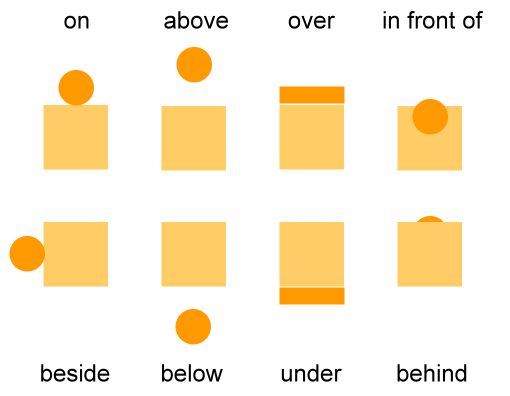
Types of Prepositions and Their Classifications
Prepositions serve as critical connectors in English grammar, linking nouns, pronouns, or noun phrases to other words in a sentence to express relationships such as location, time, direction, or cause. Their classification into functional groups provides clarity on how they govern syntactic roles and influence sentence structure. This section examines the primary categories of prepositions, their formation rules, and their interaction with other grammatical elements, including compound forms and prepositional phrases.The categorization of prepositions is based on their semantic and syntactic functions, which determine how they modify verbs, nouns, or adjectives. Understanding these distinctions is essential for precise communication, as prepositions can alter meaning when used interchangeably or in compound forms. Below, the classifications are structured to highlight their grammatical roles, followed by an analysis of phrasal prepositions and their syntactic behavior.
Classification of Prepositions by Functional Groups
Prepositions are grouped into categories based on the relationships they convey. While some overlap exists, each category fulfills a distinct purpose in sentence construction.Prepositions establish spatial, temporal, directional, causal, or instrumental relationships between elements in a sentence.The following table summarizes the primary functional groups, their grammatical roles, and example sentence structures:
| Preposition Type | Key Grammatical Role | Example Sentence Structure |
|---|---|---|
| Locative | Indicates position, presence, or absence in space. | The object rests ___ the surface. |
| Temporal | Denotes time, duration, or frequency. | The event occurs ___ midnight. |
| Directional | Signals movement from one point to another. | She walked ___ the bridge. |
| Causal | Expresses reason, motive, or purpose. | His success resulted ___ dedication. |
| Instrumental | Identifies the means or tool used. | She cut the rope ___ a knife. |
| Comparative | Establishes a point of reference for comparison. | His performance exceeded ___ expectations. |
| Possessive | Indicates ownership or association. | The key to ___ success lies in practice. |
| Agentive | Denotes the entity responsible for an action. | The painting was created ___ an artist. |
Compound Prepositions and Their Formation Rules
Compound prepositions, also known as multi-word prepositions, consist of two or more words functioning as a single unit. Their formation adheres to specific syntactic patterns, often combining adverbs, nouns, or other prepositions to convey nuanced meanings that single-word prepositions cannot.Compound prepositions emerge from the fusion of adverbs, nouns, or prepositions to create idiomatic expressions with distinct syntactic roles.The primary formation rules include:
Syntactically, compound prepositions behave as single units, governing the same grammatical structures as simple prepositions. For example, they require an object (noun or pronoun) to complete their meaning, as seen in:
"The decision was made in accordance with the guidelines." (Adverb + Preposition)
"She acted on behalf of her team." (Noun + Preposition)
Their fixed nature ensures consistency in usage, though deviations may lead to grammatical errors or shifts in meaning.
Simple vs. Phrasal Prepositions: Syntactic and Semantic Distinctions
Simple prepositions consist of a single word (e.g., on, at, by), while phrasal prepositions extend this structure through multi-word combinations. The choice between them can significantly alter sentence meaning, as phrasal prepositions often introduce idiomatic or specialized connotations.Phrasal prepositions expand the expressive range of simple prepositions by incorporating additional words to refine nuance or convey abstract relationships.Key distinctions include:
Interchangeability between simple and phrasal prepositions can lead to ambiguity or incorrect meaning. For example:
The syntactic hierarchy of prepositional phrases further illustrates this distinction, as phrasal prepositions often require additional prepositional or noun modifiers to maintain grammatical coherence.
Prepositional Phrases and Their Syntactic Hierarchy
Prepositional phrases (PPs) are formed when prepositions (simple or phrasal) combine with their objects (nouns, pronouns, or noun phrases) and optional modifiers (articles, adjectives, or possessives). Their structure follows a hierarchical pattern, where the preposition governs the entire phrase, and the object may itself include embedded prepositional or dependent clauses.A prepositional phrase consists of a preposition, its object, and optional modifiers, functioning as a single unit within a sentence.The syntactic hierarchy of a PP can be analyzed step-by-step:
1. Preposition: The head of the phrase, determining its grammatical role (e.g., in, according to).
2. Object: The noun or pronoun directly governed by the preposition (e.g., the table, her decision).
3. Modifiers: Articles (a, the), adjectives (quick decision), or possessives (John’s car) that refine the object’s reference.
4. Embedded Elements: Additional prepositional phrases or clauses within the object (e.g., the key to his success).
Example breakdown:
"According to the report from last year..."
The interaction between prepositions and articles/possessives ensures the object’s specificity. For instance:
This hierarchical structure underscores the precision required in prepositional usage, particularly in formal or technical writing where ambiguity must be avoided.
Common Pitfalls and Misuses of Prepositions
Prepositions are fundamental to grammatical accuracy in English, yet their misuse remains one of the most persistent challenges for learners and even native speakers. Errors often arise from fixed collocations, tense-dependent structures, or regional variations, leading to ambiguity, unnatural phrasing, or outright grammatical violations. Understanding these pitfalls—whether rooted in idiomatic expressions, dialectal differences, or cognitive processing—enables clearer communication and adherence to standard usage. Below, an analysis of frequent misuses, their linguistic origins, and strategies for resolution is provided.
Incorrect Collocations and Fixed Phrases
Prepositions frequently pair with specific verbs, adjectives, or nouns to form fixed collocations, where substitution disrupts meaning or grammaticality. These errors often stem from:
Common Errors and Corrections:
Key Insight: Fixed collocations often lack logical derivability, requiring memorization. For example:
Tense-Dependent Prepositional Errors
Prepositions interact dynamically with verb tenses, particularly in perfect aspects and durative constructions, where errors often reflect confusion over:
Common Tense-Related Errors:
Regional Nuances:
Idiomatic Prepositions and Their Disruption
Idiomatic expressions rely on specific prepositions that cannot be substituted without altering meaning or creating unnatural phrasing. Omissions or replacements often lead to:
Verb/Adjective Correct Preposition Incorrect Variant Example Take pride in of/from "She takes pride in her work." Interested in at/for "He is interested in history." Famous for by/at "She is famous for her paintings." Depend on/upon of/to "We depend on her support." Apologize to (person) / for (action) for/to (swapped) "Apologize to me for your mistake."
Ambiguity Created by Prepositions
Prepositions can introduce structural ambiguity, where a sentence’s meaning depends on the intended relationship between elements. Common sources include:
Ambiguous Examples and Resolutions:
Strategies to Reduce Ambiguity:
Resolution 2: "She is married to a doctor who is from Spain." (explicit subject).
1. Restructure the sentence to clarify relationships (e.g., "The doctor who is from Spain examined the patient.").
2. Use relative clauses to specify subjects ("The patient was examined by the doctor with the stethoscope.").
3. Avoid passive constructions where prepositions obscure agents ("The suspect was arrested by the police with a knife.").
4. Leverage context (e.g., in professional writing
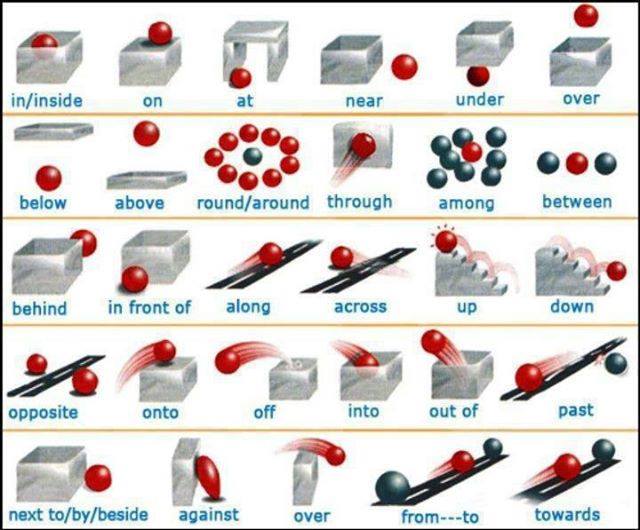
Prepositions in Advanced Syntax and Complex Sentences
Prepositions serve as critical syntactic connectors in English, enabling the integration of dependent clauses, passive constructions, and reduced adverbial structures into complex sentences. Their role extends beyond basic spatial or temporal relationships, influencing grammatical focus, logical cohesion, and semantic precision. In advanced syntax, prepositions function as bridges between independent and subordinate clauses, while also mediating interactions between relative clauses, noun phrases, and verb constructions. This section explores their syntactic versatility, parsing techniques, and structural interactions in intricate sentence formations.Prepositions in Subordinate Clauses and Clause Linking
Prepositions frequently introduce subordinate clauses by establishing relationships of cause, purpose, condition, or concession. Unlike conjunctions, which directly link clauses ("She left because she was tired"), prepositions often precede noun phrases or gerunds ("The reason for his absence is unclear"), embedding the dependent clause within a broader nominal structure. This construction allows for greater flexibility in sentence organization while maintaining grammatical clarity.Key Functions in Subordinate Clauses:
Syntactic Distinction from Conjunctions:
While conjunctions (and, although, because) directly connect clauses, prepositions in subordinate roles often require a noun phrase or gerund to complete the structure. For example:
Parsing Prepositional Phrases in Complex Sentences
Prepositional phrases (PPs) can embed within sentences as adverbial, adjectival, or nominal modifiers, requiring systematic parsing to distinguish their function. Below is a step-by-step procedure to identify and classify PPs, differentiating them from verb objects or adjectival complements.Step-by-Step Parsing Procedure:
1. Locate the Preposition:
Identify the preposition (e.g., in, of, at, by) and scan rightward to its complement (noun phrase, gerund, or clause).
2. Determine the Head Noun:
Trace the PP to the noun it modifies or governs. For example:
3. Classify the PP’s Role:
4. Distinguish from Verb Objects:
Verb objects (e.g., "She ate the cake") are not preceded by prepositions, whereas PPs are ("She is fond of cake").
Visual Flowchart (Descriptive Representation):
[Sentence] → [Locate Preposition] → [Trace to Complement] → [Identify Governing Word]
↓
[Is the PP modifying a verb/adverb?] → [Adverbial PP]
↓
[Is the PP modifying a noun/adjective?] → [Adjectival PP]
↓
[Does the PP function as a subject/object?] → [Nominal PP]
Example Analysis:
Prepositions in Passive Constructions and Agent Focus
Passive voice constructions frequently employ prepositions (by, with, for) to indicate agents, instruments, or beneficiaries, shifting emphasis from the action to the affected entity. This syntactic shift allows writers to prioritize the patient (the entity undergoing the action) while optionally omitting or including the agent.Core Prepositions in Passive Voice:
Syntactic Effects:
1. Agent Omission:
When the agent is unknown or irrelevant, the by-phrase is omitted ("The window was broken").
2. Agent Emphasis:
Including the by-phrase highlights responsibility ("The mistake was caused by negligence").
3. Ambiguity Resolution:
Prepositions clarify roles ("She was impressed by his honesty" vs. "She was impressed with the results").
Passive vs. Active Agent Focus:
Prepositions in Reduced Adverbial Clauses
Reduced adverbial clauses (also called participial phrases) omit auxiliary verbs and often begin with prepositions or gerunds ("Having arrived at the station, he waited"). These structures condense subordinate clauses while maintaining temporal, causal, or conditional relationships.Syntactic Function:
Key Prepositions in Reduction:
Example Breakdown:
Restrictions:
Prepositions in Relative Clauses and Noun Phrase Modification
Prepositions interact with relative clauses ("The book on the shelf is mine") to modify noun phrases, often restricting the placement of modifiers. Unlike post-modifiers ("the book that is on the shelf"), prepositional relative clauses ("the book on which...") are less common in modern English but retain syntactic validity.Types of Prepositional Relative Clauses:
1. Preposition + Wh-Clause:
"The man whom she is married to" (Formal; informal alternative: "her husband").
2. Preposition + Relative Pronoun:
"The shelf on which the book lies" (Less common than "the book on the shelf").
3. Prepositional Phrases as Modifiers:
"The decision by the committee was unanimous." (PP modifies "decision").
Placement Restrictions:
Modern Trends:
Example Comparison:
Prepositions emerge as the unsung architects of grammatical cohesion, weaving together the fabric of sentences with precision and adaptability. Their ability to convey location, time, cause, and direction ensures that language remains both flexible and structured, accommodating the intricacies of human thought. By distinguishing between locative and temporal roles, identifying compound forms, and avoiding common errors, writers and speakers can elevate their command of English to a level of clarity and sophistication. Whether parsing complex syntax or refining idiomatic phrasing, mastery of prepositions unlocks a deeper understanding of how language organizes meaning—bridging gaps between intention and interpretation with every carefully placed word.
FAQ
What is a preposition in English?
A preposition is a word that shows the relationship between a noun/pronoun and other words in a sentence, often indicating location (e.g., in, on, under), direction (e.g., to, toward), or time (e.g., at, during). Examples include above, below, beside, between. Prepositions always precede their objects (the noun/pronoun they relate to).
What are some examples of prepositions?
Common prepositions include in, on, at, by, for, with, about, under, over, between, through, and during. For example: "The book is on the table" (on shows location), "She left with her friends" (with shows accompaniment). Prepositions can also indicate time (before, after) or cause (because of).
How do you explain prepositions to kids?
Prepositions are like "relationship words" that help describe where or how something happens. Use simple examples: "The cat is under the bed" (location), "I’ll meet you at the park" (time/place). Kids can remember them by thinking of prepositions as "tiny maps" showing connections between things.
What are prepositions in grammar?
In grammar, prepositions are a part of speech that link nouns/pronouns to other words to clarify their function in a sentence. They answer questions like where? when? how? or to what extent? (e.g., "She hid behind the curtain"—behind shows position). Prepositions often form prepositional phrases with their objects (e.g., "in the morning").
What is a prepositional phrase?
A prepositional phrase is a group of words starting with a preposition and ending with its object (noun/pronoun), often including modifiers (e.g., "in the quiet garden" or "by the old oak tree"). It functions as an adjective (describing a noun) or adverb (describing a verb/adjective/adverb). Example: "The key is under the mat" (under the mat tells where the key is).
What is a preposition in French?
In French, prépositions are invariable words that show relationships like English prepositions (e.g., dans = in/inside, sur = on/above, avec = with). Examples: "Je suis dans la maison" (I am in the house), "Il part pour Paris" (He’s leaving for Paris). French prepositions often trigger specific verb forms (e.g., de for from/to in venir de).
Leave a Comment
Comments are moderated before appearing. The data you submit is processed according to the Privacy Policy of Voltefac.