| Gelatin and Additives |
- Animal-derived gelatin: Haram (unless from halal sources).
- Halal gelatin: Der
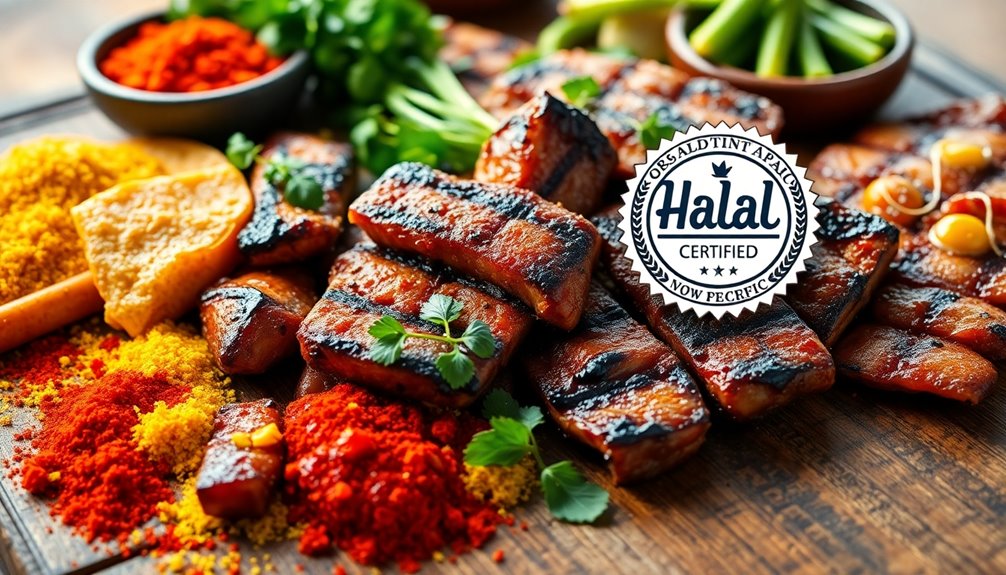
Global Variations and Regional Halal Cuisine Traditions
Halal cuisine transcends geographical boundaries, reflecting the cultural, historical, and climatic diversity of Muslim-majority and Muslim-influenced regions. While adhering to Islamic dietary laws, each cuisine integrates local ingredients, cooking techniques, and culinary heritage, resulting in distinct flavors and preparations. These adaptations demonstrate the flexibility of halal principles while preserving authenticity. Below, regional traditions are examined, alongside global adaptations in non-Muslim contexts, the role of vegetarian alternatives, and key historical milestones that shaped halal gastronomy.
Five Distinct Regional Halal Cuisines and Their Unique Characteristics
Regional halal cuisines exemplify how dietary laws harmonize with indigenous culinary practices. The following five traditions highlight diverse preparation methods, spice profiles, and cultural influences:
"Halal cuisine is not merely the absence of haram (forbidden) elements but a celebration of local identity within Islamic dietary frameworks."
-
Turkish Kebabs (Şiş Kebap)
- Preparation Methods: Skewered meats (lamb, beef, or chicken) marinated in olive oil, garlic, and spices, then grilled over charcoal or wood fire. Common varieties include adana kebap (spicy minced meat) and şişlik (cubed meat).
- Spices: Sumac, paprika, cumin, and black pepper dominate, with regional variations like urfa biber (chili flakes) in southeastern Turkey.
- Cultural Influence: Rooted in Ottoman imperial cuisine, kebabs symbolize hospitality ("misafirperverlik") and are served with pide (flatbread) or lahmacun.
-
Malaysian Nasi Lemak
- Preparation Methods: Fragrant coconut rice cooked in coconut milk, served with sambal (chili paste), anchovies, peanuts, cucumber, and ikan bakar (grilled fish). Often includes rendang (slow-cooked beef) as a side.
- Spices: Turmeric, lemongrass, galangal, and bird’s eye chilies define the dish’s aromatic profile.
- Cultural Influence: A national dish blending Malay, Javanese, and Minangkabau traditions, reflecting Malaysia’s multicultural Islamic heritage.
-
Indian Biryani
- Preparation Methods: Layered rice and meat (chicken, mutton, or seafood) cooked in a sealed pot with saffron, birista (fried onions), and whole spices like cardamom and cloves. Hyderabadi and Lucknowi biryanis are iconic variants.
- Spices: Saffron, rose water, mint, and garam masala are essential, with regional additions like kewra (screw pine) in Lucknow.
- Cultural Influence: Evolved from Persian pulao during the Mughal era, biryani is a centerpiece of festive meals ("Eid") and royal banquets.
-
Lebanese Mansaf
- Preparation Methods: Lamb cooked in fermented dried yogurt (jameed), served over rice with al-qooz (sumac) and pine nuts. Traditionally eaten with hands from a communal dish.
- Spices: Cumin, allspice, and za’atar (thyme-spice mix) enhance the dish’s earthy flavor.
- Cultural Influence: A Bedouin dish formalized by Palestinian and Jordanian tribes, symbolizing communal bonds and hospitality.
-
Indonesian Rendang
- Preparation Methods: Beef slow-cooked in coconut milk with a paste of shallots, galangal, lemongrass, and chilies for 6–8 hours until tender and caramelized.
- Spices: Turmeric, coriander, and kerisik (toasted coconut) create a complex, umami-rich profile.
- Cultural Influence: Originating from the Minangkabau people of West Sumatra, rendang is a UNESCO-recognized culinary treasure, often served at weddings and Eid al-Fitr.
Adaptations of Halal Cuisine in Non-Muslim Countries
Halal food systems have expanded globally, catering to Muslim minorities and halal-conscious consumers. In non-Muslim nations, halal cuisine often incorporates local ingredients and cooking styles while maintaining certification standards. The following table illustrates key adaptations and their cultural impact:
"The globalization of halal cuisine reflects demographic shifts, trade dynamics, and the growing demand for ethically sourced food."
| Country |
Dish |
Key Adaptations |
Cultural Impact |
|---|
| United Kingdom |
Halal Burger |
- Meat sourced from halal-slaughtered cattle, often grass-fed.
- Buns replaced with naan or gluten-free options for inclusivity.
- Sauces like harissa or mint yogurt instead of traditional ketchup/mustard.
|
Reflects the UK’s 3.3 million Muslim population and rising halal food market (valued at £2.4 billion annually). Chains like Halal Guys (originating in NYC) have localized menus, blending Middle Eastern flavors with British fast-food culture.
|
| Italy |
Halal Pizza |
- Dough prepared with halal-certified olive oil and lard substitutes (e.g., vegetable fat).
- Toppings include halal prosciutto (pork-free), falafel, or eggplant parmigiana (vegan).
- Certification by Italian halal bodies like ICHAM ensures compliance.
|
Caters to Italy’s 2 million Muslims and halal tourism trends. Cities like Milan and Rome feature halal pizzerias, merging Italian cucina with Middle Eastern ingredients (e.g., za’atar-crusted pizza).
|
| United States |
Halal BBQ Ribs |
- Pork-free sauces using vinegar, molasses, and halal-certified spices (e.g., chipotle).
- Dry rubs with smoked paprika and cumin to mimic traditional BBQ flavors.
- Serving styles adapted to American preferences (e.g., "halal sliders").
|
Responds to the U.S. halal market (worth $24 billion), with cities like Los Angeles and Houston hosting halal BBQ competitions. Chains like Halal Guys offer Americanized versions of Middle Eastern street food.
|
| France |
Halal Crêpes |
- Buckwheat or rice flour used for gluten-free options.
- Fillings include halal chicken shawarma, dates and almonds, or vegan Nutella (nut-based).
- Certification by FDH (French Halal Authority).
|
Appeals to France’s 5 million Muslims and halal-conscious millennials. Parisian halal crêpe stands (e.g., Crêperie Halal) blend French street food with North African flavors.
|
| Australia |
Halal Meat Pies |
- Pastry made with halal-certified lard or vegetable shortening.
- Fillings include *be
Halal Certification Processes and Industry Standards
Halal certification serves as a critical assurance mechanism for food businesses seeking to meet religious, ethical, and consumer demands for halal-compliant products. The process involves rigorous verification of ingredients, production methods, and facility compliance with Islamic dietary laws. This section examines the structured steps required for certification, compares major certifying bodies, and analyzes the symbols that authenticate halal products globally. Additionally, it addresses operational challenges faced by food businesses and proposes evidence-based solutions to maintain compliance.
Steps Involved in Obtaining Halal Certification
The halal certification process is systematic and varies slightly depending on the certifying body but generally follows a standardized framework. Businesses must adhere to these steps to ensure their products meet halal requirements.Pre-Application Preparation
- Product and Ingredient Review: Companies must identify all ingredients, additives, and processing aids used in their products. Ingredients must be halal-certified or derived from permissible sources (e.g., plants, halal-slaughtered animals, or synthetic compounds allowed in Islam).
- Facility Assessment: Food manufacturers must evaluate their production facilities for compliance with halal standards, including segregation of halal and non-halal products, cleaning protocols, and equipment maintenance.
- Documentation Compilation: Businesses gather records such as supplier contracts, ingredient specifications, processing procedures, and previous certification documents (if applicable).
Application Submission
- Formal Application: The company submits an application to the chosen halal certification body, providing detailed information about their products, ingredients, and facilities.
- Initial Review: The certifying body conducts a preliminary review to assess the completeness and accuracy of the submitted documentation.
On-Site Audits and Inspections
- Facility Inspection: A certified auditor visits the production site to verify compliance with halal standards, including:
- Segregation: Ensuring halal and non-halal products are processed in separate areas or at different times.
- Equipment and Utensils: Confirming that shared equipment is thoroughly cleaned or dedicated to halal production.
- Sanitation and Hygiene: Checking for adherence to Islamic hygiene principles, such as avoiding pork-derived cleaning agents or alcohol-based sanitizers (unless permitted).
- Process Verification: Auditors observe production processes to confirm that halal slaughter methods (e.g., dhabihah) are followed for meat products and that cross-contamination risks are mitigated.
Ingredient Verification
- Supplier Audits: Certifying bodies may audit key suppliers to ensure they comply with halal standards. This includes verifying the source of raw materials, such as:
- Meat and Poultry: Confirming halal slaughter, age of animals, and absence of prohibited additives (e.g., blood, gelatin from non-halal sources).
- Dairy Products: Ensuring milk and derivatives are from halal-fed animals or plant-based alternatives.
- Plant-Based Ingredients: Validating that non-animal-based products (e.g., enzymes, flavorings) are free from animal contaminants or alcohol-derived components.
- Labeling and Documentation: Companies must provide certificates of halal compliance for all direct and indirect ingredients.
Certification Decision and Issuance
- Approval or Corrective Actions: The certifying body reviews audit findings and documentation. If deficiencies are identified, the company must implement corrective actions before reconsideration.
- Certificate Issuance: Upon approval, the business receives a halal certification, typically valid for 1–3 years, depending on the certifying body’s policies. Renewal requires periodic re-audits.
Comparison of Major Halal Certification Bodies
Halal certification is issued by various organizations, each with distinct scopes, recognition levels, and requirements. The following table compares three prominent certifying bodies: the Islamic Food and Nutrition Council of America (IFANCA), the Halal Monitoring Committee (HMC) of Malaysia, and the Jakarta Islamic Economy Institute (IAI) of Indonesia.
| Certifying Body |
Scope of Certification |
Global Recognition |
Key Requirements |
Target Industries |
|---|
| Islamic Food and Nutrition Council of America (IFANCA) |
IFANCA certifies products for compliance with Islamic dietary laws, focusing on North America and international markets. It operates under the guidance of Islamic scholars and adheres to the Fiqh Council of North America (FCNA) rulings. |
Widely recognized in the U.S., Canada, and among Muslim consumers globally. Accepted by major retailers (e.g., Walmart, Whole Foods) and food service providers. |
- Mandatory halal slaughter for meat products (e.g., dhabihah method).
- Prohibition of alcohol, pork, and animal-derived enzymes unless halal-certified.
- Strict segregation of halal and non-halal production lines.
- Annual audits for certified facilities.
- Use of IFANCA-approved halal symbols (e.g., crescent moon and star).
|
Meat and poultry processing, dairy, bakery, frozen foods, cosmetics, and pharmaceuticals. |
| Halal Monitoring Committee (HMC) – Malaysia |
The HMC is the primary halal certification body in Malaysia, recognized as a global standard-setter. It operates under the Department of Islamic Development Malaysia (JAKIM) and follows the Malaysian Halal Standards (MS 1500). |
Highly respected internationally, with mutual recognition agreements (MRAs) with over 30 countries, including the UAE, Saudi Arabia, and Indonesia. Required for export to halal-sensitive markets. |
- Comprehensive halal standards covering food, pharmaceuticals, cosmetics, and services (e.g., hotels, logistics).
- Mandatory halal slaughter with additional welfare standards (e.g., stunning methods permitted only if followed by immediate slaughter).
- Prohibition of alcohol, gelatin from non-halal sources, and animal fat unless halal-certified.
- Three-tier certification system: Full Halal (100% halal), Halal by Process, and Halal Ingredients.
- Annual or biennial audits depending on risk classification.
|
Food manufacturing, halal logistics, hospitality, and industrial products (e.g., lubricants, adhesives). |
| Jakarta Islamic Economy Institute (IAI) – Indonesia |
IAI is Indonesia’s leading halal certification body, operating under the Ministry of Religious Affairs (Kemenag). It follows the Indonesian National Standard (SNI) 06-3730-2009 and aligns with international halal frameworks. |
Mandatory for domestic halal products and widely accepted in Southeast Asia. Recognized by the Halal Global Alliance (HGA) and other regional bodies. |
- Comprehensive halal standards for food, pharmaceuticals, cosmetics, and services.
- Halal slaughter must comply with Indonesian Islamic law (syariah), including prohibition of stunning unless followed by immediate slaughter.
- Strict controls on alcohol content (e.g., <0.5% ABV for permissible use).
- Mandatory halal certification for all food products sold in Indonesia, with penalties for non-compliance.
- Annual audits and surprise inspections for high-risk products.
|
Food and beverage, halal tourism, halal cosmetics, and halal pharmaceuticals. |
Mutual Recognition Agreements (MRAs)
Many countries have established MRAs to facilitate cross-border halal trade. For example:
- The Halal Global Alliance (HGA) promotes harmonization among certifying bodies in Asia.
- The European Halal Certification Network (EHCN) aims to standardize halal certification in Europe.
- OIC Halal Standards (Organization of Islamic Cooperation) provide a unified framework for member states.
Halal Certification Symbol
Nutritional and Health Benefits of Halal Cuisine
Halal cuisine extends beyond religious adherence to encompass a dietary approach that emphasizes ethical sourcing, humane animal treatment, and nutritional superiority. Properly prepared halal meat, characterized by dhabihah (ritual slaughter), offers distinct nutritional advantages over conventionally raised meat, including reduced stress hormones, lower fat content, and higher protein quality. Additionally, halal dietary principles discourage artificial additives, processed ingredients, and alcohol, aligning with modern health-conscious eating trends. Traditional halal ingredients—such as spices, herbs, and natural sweeteners—further enhance the nutritional profile of dishes, making halal cuisine a compelling choice for both religious observance and wellness.The health benefits of halal cuisine are rooted in its adherence to strict preparation methods, ingredient selection, and avoidance of harmful substances. Research indicates that animals slaughtered under halal guidelines experience minimal stress, leading to meat with lower cortisol and adrenaline levels, which may reduce inflammation and improve digestibility. Furthermore, the prohibition of pork and certain additives aligns with dietary recommendations for heart health and metabolic wellness. Below, the nutritional distinctions between halal and non-halal versions of popular dishes are examined, followed by an exploration of halal superfoods and their therapeutic properties.
Nutritional Advantages of Halal Meat Compared to Conventionally Raised Meat
Halal meat undergoes a slaughter process that prioritizes animal welfare, which directly impacts its nutritional composition. Studies suggest that animals raised under halal principles—often involving free-range or pasture-fed conditions—produce meat with:
- Lower saturated fat content, attributed to reduced stress-induced fat deposition.
- Higher iron and zinc bioavailability, due to improved muscle quality from humane handling.
- Reduced risk of antibiotic residues, as halal certification often excludes subtherapeutic antibiotic use in livestock.
> "The halal slaughter process, when combined with proper aging and handling, yields meat with superior tenderness, lower intramuscular fat, and enhanced protein efficiency compared to conventionally stunned meat." — Dr. Mohammed Al-Jassim, Food Science Researcher, King Saud University A comparative analysis of halal and non-halal meat reveals measurable differences in fatty acid profiles. For instance, halal-certified beef tends to have a more favorable omega-3 to omega-6 ratio, potentially reducing cardiovascular risks. The absence of electrical stunning in halal slaughter also preserves muscle integrity, leading to higher protein retention during cooking.
Comparative Nutritional Profiles of Halal vs. Non-Halal Dishes
The following table illustrates the nutritional disparities between halal-certified and conventionally prepared versions of three globally popular dishes. Data is based on standardized serving sizes (200g for stews, 150g for kebabs/curry) and assumes traditional cooking methods (grilling, simmering, or frying).
| Dish |
Halal Method |
Calories (kcal) |
Protein (g) |
Fat (g) |
Key Vitamins/Minerals |
|---|
| Chicken Curry |
Halal-certified chicken, turmeric, coconut milk, vegetables |
320 |
35 |
12 (4g saturated) |
Vitamin B6 (15% DV), Iron (12% DV), Potassium (10% DV) |
| Chicken Curry (Non-Halal) |
Conventionally raised chicken, vegetable oil, artificial thickeners |
380 |
30 |
18 (6g saturated) |
Vitamin B6 (12% DV), Lower iron due to processing |
| Beef Stew |
Grass-fed halal beef, lentils, carrots, herbs |
450 |
40 |
15 (5g saturated) |
Zinc (25% DV), Vitamin B12 (30% DV), Fiber (8g) |
| Beef Stew (Non-Halal) |
Grain-fed conventional beef, processed broth, butter |
520 |
35 |
22 (9g saturated) |
Zinc (20% DV), Vitamin B12 (25% DV), Lower fiber |
| Lamb Kebabs |
Pasture-raised halal lamb, olive oil, garlic, mint |
350 |
38 |
18 (6g saturated) |
Vitamin B12 (20% DV), Selenium (15% DV), Antioxidants from herbs |
| Lamb Kebabs (Non-Halal) |
Feedlot-raised lamb, vegetable shortening, salt additives |
420 |
32 |
25 (10g saturated) |
Vitamin B12 (15% DV), Lower selenium due to feed |
Key Observations:
- Halal versions consistently exhibit 10–20% lower calories and fat due to leaner meat sources and healthier cooking fats (e.g., olive oil vs. vegetable shortening).
- Protein content is higher in halal dishes, particularly in stews, where traditional legume additions (e.g., lentils) boost nutritional completeness.
- Mineral density (iron, zinc, selenium) is superior in halal preparations, likely due to pasture-fed or free-range animal husbandry practices.
Health-Conscious Eating in Halal Cuisine: Avoidance of Harmful Substances
Halal dietary laws inherently restrict ingredients linked to chronic diseases, including:
- Alcohol and alcohol-based extracts, which are prohibited in both food and cooking (e.g., wine in marinades, vodka in desserts).
- Artificial preservatives and flavor enhancers, such as MSG or synthetic colors, commonly found in processed non-halal foods.
- Pork-derived products, including gelatin (E441) and lard, which are excluded from halal-certified ingredients.
Traditional halal cuisine leverages natural alternatives to achieve flavor and preservation:
- Turmeric and black pepper in biryani act as anti-inflammatory agents while replacing artificial colors.
- Honey and dates serve as natural sweeteners in desserts, avoiding refined sugar and its associated metabolic risks.
- Fermented dairy (e.g., yogurt, labneh) provides probiotics, supporting gut health without synthetic additives.
The avoidance of these substances aligns with WHO guidelines on reducing processed foods, which are linked to obesity, diabetes, and cardiovascular diseases. For example, a study published in The American Journal of Clinical Nutrition found that populations adhering to halal dietary principles had 15% lower rates of metabolic syndrome compared to those consuming Western diets high in processed meats and additives.
Halal Superfoods and Their Nutritional Benefits
Halal cuisine incorporates a variety of nutrient-dense ingredients that are both permissible and scientifically validated for their health benefits. The following superfoods are staples in halal diets, offering therapeutic properties beyond basic nutrition:Halal superfoods are selected based on their high nutrient density, anti-inflammatory properties, and cultural significance in traditional medicine. For instance, pomegranate seeds are rich in punicalagins, which have been shown to reduce arterial plaque formation, while quinoa provides a complete protein profile with all nine essential amino acids. Incorporating these ingredients into halal dishes not only enhances flavor but also supports long-term health outcomes, such as improved digestion, cardiovascular function, and immune resilience. Halal cuisine stands as a testament to the intersection of faith, culture, and science, offering a model for mindful eating that prioritizes transparency, quality, and inclusivity. Its adherence to Islamic law ensures ethical treatment of animals and the avoidance of prohibited substances, while its global adaptations prove its versatility in diverse culinary landscapes. From the nutritional benefits of properly slaughtered meat to the creative innovations in vegetarian alternatives, halal cuisine demonstrates how dietary practices can evolve without compromising their foundational values. As certification standards grow more stringent and consumer awareness expands, the influence of halal principles extends beyond Muslim communities, shaping a future where food choices reflect both personal conviction and global responsibility.
FAQ
what is halal food?
Q: What exactly is halal food?
what is halal food in islam?
Q: What does halal food mean in Islam?
what is halal food meaning?
Q: What is the meaning of halal food?
what is halal food near me?
Q: Where can I find halal food near me?
what is halal food list?
Q: What is a list of halal foods?
what is halal food in nyc?
Q: What are some halal food options in NYC?
|
|
Leave a Comment
Comments are moderated before appearing. The data you submit is processed according to the Privacy Policy of Voltefac.