What Hogwarts House Are You Unveiling Core Values And Modern Relevance
Table of Contents
- The Historical and Cultural Significance of Hogwarts Houses
- Origins and Foundational Values of the Hogwarts Houses
- Evolution of House Traits Across the Series
- Key Historical Events Highlighting House Roles
- Comparative Analysis: Houses, Conflicts, Achievements, and Modern Parallels
- Psychological and Personality Traits Associated with Hogwarts Houses
- Correlation Between Hogwarts Houses and Psychological Frameworks
- External Factors Influencing House Alignment
- Cognitive Biases and Decision-Making Patterns in Hogwarts Houses
- Controversial House Traits: Ambition in Sly Alternative Methods for Determining Hogwarts House Alignment The Sorting Hat’s allocation of students into Hogwarts houses—Gryffindor, Hufflepuff, Ravenclaw, and Slytherin—relies on a blend of intuition, personality assessment, and cultural archetypes. While the Hat’s method remains iconic, alternative approaches can offer deeper insights into an individual’s alignment with house traits by examining behavioral patterns, creative tendencies, and social interactions. These methods complement the Hat’s process by providing empirical or observational frameworks, drawing parallels to established psychological assessments while accounting for the unique symbolic dimensions of Hogwarts lore. Beyond the Hat’s mystical evaluation, structured behavioral analyses, creative expression evaluations, and social dynamic observations serve as practical tools for identifying house tendencies. Such methods align with real-world personality models (e.g., MBTI, DISC) but adapt their frameworks to reflect the thematic and symbolic nuances of the Harry Potter universe. This section explores these alternative techniques, including a step-by-step guide for designing a survey, comparisons to psychological tests, and lesser-known textual or narrative details that subtly reinforce house stereotypes. Behavioral Assessments and House Traits
- Creative Outputs as Indicators of House Alignment
- Social Dynamics and Leadership Preferences
- Designing a House Alignment Survey: Step-by-Step Guide
- Comparing the Sorting Hat to Psychological Tests
- Controversies and Debates Surrounding Hogwarts House Stereotypes
- Ethical Implications of Fixed House Traits
- Counterexamples Defying House Stereotypes
- Structured Debate: "Are House Traits Inherently Flawed?"
- FAQ
- What Hogwarts house would I be in if I took a quiz?
- How do I find out which Hogwarts house I’m in using the UQuiz platform?
- What Hogwarts house am I if I take a test?
- Which Hogwarts house would BuzzFeed say I’m in?
- Is there a free way to find out my Hogwarts house?
- Can Spotify tell me which Hogwarts house I’m in?
The question What Hogwarts house are you? transcends a mere whimsical fantasy—it serves as a psychological and cultural lens through which individuals explore self-identity, values, and societal expectations. Rooted in J.K. Rowling’s Harry Potter series, the four houses—Gryffindor, Hufflepuff, Ravenclaw, and Slytherin—embody archetypal traits that resonate across history, psychology, and modern discourse. From their origins in medieval European traditions to their evolution as symbolic frameworks for ambition, intellect, and loyalty, these houses reflect timeless debates about morality, achievement, and human complexity.
Beyond their fictional allure, the houses function as a comparative tool for analyzing personality theories, cognitive biases, and even real-world organizational dynamics. Whether examining the Sorting Hat’s algorithmic precision or the ethical dilemmas of labeling individuals by fixed traits, this exploration bridges literary analysis with practical applications. By dissecting historical conflicts, psychological correlations, and contemporary parallels, we uncover how these houses continue to shape discussions on identity, leadership, and the fluidity of human nature.
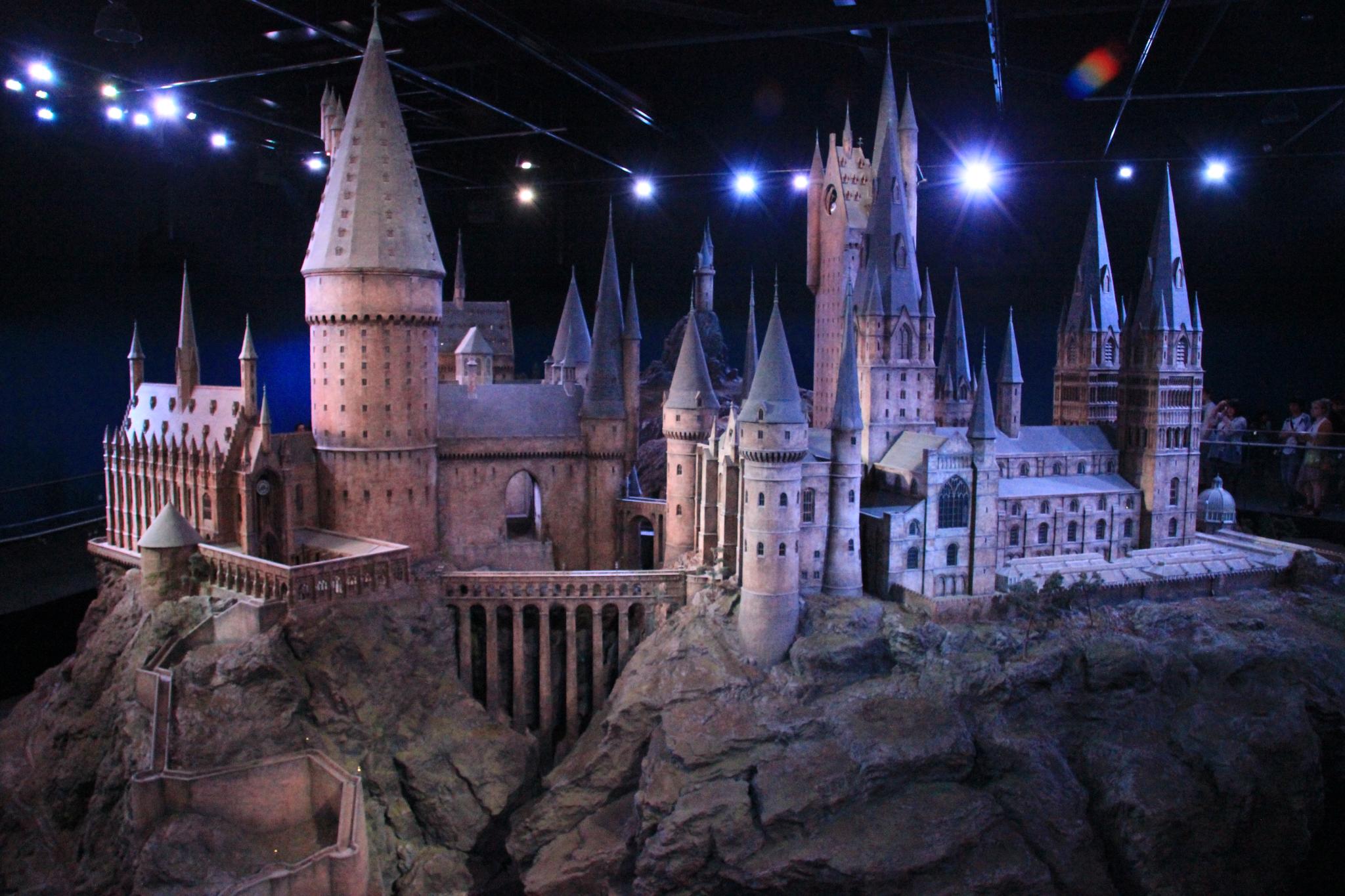
The Historical and Cultural Significance of Hogwarts Houses
The four Hogwarts houses—Gryffindor, Hufflepuff, Ravenclaw, and Slytherin—serve as the foundational pillars of magical education and identity within the Harry Potter series. Established by their respective founders centuries before the series begins, each house embodies distinct philosophical, ethical, and aspirational values that shape the moral and academic trajectories of its students. These values are not static; they evolve through historical conflicts, legendary achievements, and the personal arcs of notable figures, reflecting broader themes of heroism, loyalty, intellect, and ambition. Below, the origins, core traits, and cultural impact of each house are examined, alongside a comparative analysis of their roles in pivotal Hogwarts events and real-world parallels.Origins and Foundational Values of the Hogwarts Houses
The founders of Hogwarts—Godric Gryffindor, Helga Hufflepuff, Rowena Ravenclaw, and Salazar Slytherin—each envisioned an institution that would cultivate specific virtues in its students. Their motivations were shaped by the political and social climate of medieval Britain, where magic was emerging from secrecy into a structured society. Gryffindor, inspired by chivalric ideals, sought to foster bravery and moral courage, while Hufflepuff emphasized fairness, patience, and loyalty to counteract societal hierarchies. Ravenclaw valued intellectual curiosity and wisdom, reflecting the Renaissance-era pursuit of knowledge, whereas Slytherin prioritized ambition and cunning, advocating for a meritocratic system that rewarded resourcefulness over lineage.The houses’ founding principles were not merely abstract ideals but were embedded in the school’s physical and magical infrastructure. The Sorting Hat, for instance, was created by Godric Gryffindor to ensure students were placed in houses aligned with their innate traits, though its decisions were occasionally influenced by external factors, such as Salazar Slytherin’s desire to exclude "Muggles" and their descendants. This tension between idealism and pragmatism is a recurring theme in Hogwarts’ history, particularly during the founders’ era, when Salazar Slytherin’s vision for a "pure-blood" school led to his eventual expulsion and the founding of Slytherin House as a separate entity.
Evolution of House Traits Across the Series
The core traits associated with each house are not rigidly defined but are instead dynamic, shaped by the actions and legacies of their members. For example, Gryffindor’s emphasis on bravery is frequently tested by the moral complexities of its students. Harry Potter, a Gryffindor, embodies self-sacrificial courage, but his journey also highlights the house’s potential for recklessness, as seen in the impulsive decisions of characters like Fred and George Weasley. Similarly, Hufflepuff’s loyalty is exemplified by Cedric Diggory’s integrity during the Triwizard Tournament, yet the house’s values are challenged by the actions of characters like Ernie Macmillan, whose loyalty to authority sometimes overshadows his moral judgment.Ravenclaw’s intellect is celebrated through characters like Luna Lovegood, whose unconventional thinking redefines wisdom, and Hermione Granger, whose academic excellence is tempered by her unwavering ethical standards. Meanwhile, Slytherin’s ambition is often conflated with villainy, yet figures like Tom Riddle (Voldemort) and Draco Malfoy demonstrate how unchecked ambition can lead to corruption. However, the house also produces redeemable characters, such as Horace Slughorn, whose ambition is directed toward mentorship rather than power, and Severus Snape, whose loyalty to Dumbledore underscores the complexity of Slytherin’s values.
The series also introduces exceptions to house stereotypes, such as the Sorting of Neville Longbottom into Gryffindor despite his initial timidity, or the placement of Lily Potter in Gryffindor, whose kindness and selflessness challenge the house’s traditional association with physical bravery. These nuances illustrate that house traits are not deterministic but are instead influenced by individual agency and external circumstances.
Key Historical Events Highlighting House Roles
Hogwarts’ history is punctuated by events where the houses’ values and conflicts play a decisive role. Below is a comparative timeline of pivotal moments:- The Founding of Hogwarts (10th Century): The four founders establish the school with distinct visions, leading to Salazar Slytherin’s eventual departure and the creation of the Chamber of Secrets. This event underscores the tension between inclusivity (Gryffindor, Hufflepuff, Ravenclaw) and exclusivity (Slytherin).
Comparative Analysis: Houses, Conflicts, Achievements, and Modern Parallels
Below is a structured table outlining each house’s foundational beliefs, a defining historical conflict or achievement, and a modern-day parallel to illustrate their enduring relevance:| House Name | Founder’s Core Belief | A Historical Conflict or Achievement | Modern-Day Parallel | ||||||||||||||||||||||||||||||
|---|---|---|---|---|---|---|---|---|---|---|---|---|---|---|---|---|---|---|---|---|---|---|---|---|---|---|---|---|---|---|---|---|---|
| Gryffindor | "The brave may not live forever, but the cautious do not live at all."Emphasizes moral courage, chivalry, and self-sacrifice over cowardice. |
The Battle of Hogwarts (1998), where Gryffindor students led the defense against Voldemort’s forces, embodying the house’s willingness to stand against tyranny. | Modern military or humanitarian organizations (e.g., the Red Cross, Special Forces units) that prioritize bravery and selflessness in the face of adversity. Parallels can also be drawn to whistleblowers or activists who risk personal safety for ethical causes. | ||||||||||||||||||||||||||||||
| Hufflepuff | "Loyalty and fair play make good friends and good friends make good times."Values loyalty, patience, hard work, and fairness, rejecting elitism. |
Cedric Diggory’s integrity during the Triwizard Tournament (1994), where he refused to cheat despite the stakes, exemplifying Hufflepuff’s commitment to honor. | Community-based organizations (e.g., Rotary International, local volunteer groups) that emphasize inclusivity, teamwork, and equitable contributions to society. | ||||||||||||||||||||||||||||||
| Ravenclaw | "Wit beyond measure is man’s greatest treasure."Celebrates intellectual curiosity, creativity, and wisdom, valuing knowledge for its own sake. |
The discovery of the Diadem of Ravenclaw (1996) by Gryffindor students, which was later used to restore the house’s lost relic, symbolizing the intersection of intellect and bravery. | Academic institutions (e.g., Ivy League universities, research think tanks) and creative fields (e.g., scientific communities, artistic collectives) that prioritize innovation and critical thinking. | ||||||||||||||||||||||||||||||
| Slytherin | "It takes a great deal of bravery to stand up to your enemies, but a great deal more to stand up to your friends."Advocates for ambition, resourcefulness, and leadership, often through strategic cunning. |
The founding of Slytherin House as a separate entity (10th century) reflects Salazar
Psychological and Personality Traits Associated with Hogwarts HousesThe Hogwarts houses—Gryffindor, Hufflepuff, Ravenclaw, and Slytherin—serve as more than mere academic divisions; they embody distinct psychological archetypes rooted in established personality frameworks. By examining these houses through the lenses of the Myers-Briggs Type Indicator (MBTI), the Big Five personality traits (OCEAN model), and behavioral psychology, we can identify recurring cognitive and emotional patterns. External influences such as upbringing, trauma, and societal conditioning further shape an individual’s alignment with a house, as seen in the nuanced character arcs of Harry Potter. Additionally, the houses reflect cognitive biases and decision-making heuristics, offering insights into how fictional and real-world personalities navigate high-pressure scenarios.Correlation Between Hogwarts Houses and Psychological FrameworksThe Big Five personality traits—Openness, Conscientiousness, Extraversion, Agreeableness, and Neuroticism (OCEAN)—provide a structured way to map Hogwarts houses to empirically validated psychological constructs. Similarly, the Myers-Briggs Type Indicator (MBTI) categorizes individuals based on cognitive functions (e.g., intuition vs. sensing, thinking vs. feeling), which aligns with the houses’ core values.Gryffindor aligns closely with high Extraversion, low Conscientiousness, and moderate Neuroticism, reflecting the MBTI’s ENFP or ENFJ types. Characters like Harry Potter and Hermione Granger (despite her initial Hufflepuff leanings) exhibit bravery-driven impulsivity, a trait linked to the "hero archetype" in Jungian psychology. Their decisions often prioritize moral courage over risk assessment, a pattern observed in real-life figures such as Martin Luther King Jr. (who, per MBTI assessments, was an ENFJ) and Malala Yousafzai (an ENFP), both of whom demonstrated high Extraversion and Agreeableness in advocacy. Ravenclaw correlates with high Openness and Intelligence, mirroring the INTJ or INTP MBTI profiles. Characters like Luna Lovegood and Gilderoy Lockhart (before his downfall) embody abstract thinking and unconventional problem-solving, traits shared by real-world innovators such as Albert Einstein (INTJ) and Richard Feynman (INTP). Their cognitive style—divergent thinking over practicality—can lead to both groundbreaking insights and social alienation, as seen in Luna’s initial struggles with peer acceptance. Hufflepuff reflects high Agreeableness and Conscientiousness, akin to the ISFJ or ESFJ MBTI types. Characters like Cedric Diggory and Newt Scamander (in Fantastic Beasts) exemplify loyalty, fairness, and perseverance, aligning with the "caregiver archetype" in psychology. Real-life counterparts include Mother Teresa (ISFJ) and Fred Rogers (ESFJ), whose lives were defined by empathy-driven actions despite systemic challenges. Slytherin maps to high Neuroticism, low Agreeabless, and strategic Extraversion, resembling the ESTP or ENTJ MBTI profiles. Severus Snape and Draco Malfoy demonstrate ambition, cunning, and moral ambiguity, traits observed in historical figures like Machiavelli (ENTJ) and Elizabeth I (ESTP). The house’s association with power dynamics raises ethical debates, as ambition can drive both tyranny (e.g., Voldemort) and leadership (e.g., Snape’s redemption). External Factors Influencing House AlignmentA person’s alignment with a Hogwarts house is not solely innate but shaped by environmental, familial, and traumatic experiences. The Sorting Hat’s decision-making process in Harry Potter subtly acknowledges this, as it considers both personality and circumstance.Upbringing and Societal Expectations Trauma and Adaptive Responses Cognitive Biases and Decision-Making Patterns in Hogwarts HousesEach house exhibits distinct cognitive biases that influence decision-making under pressure, observable in Harry Potter’s high-stakes moments.Gryffindor: Overconfidence and Hero Bias Hufflepuff: Loss Aversion and Fairness Bias Ravenclaw: Confirmation Bias and Analytical Overload Slytherin: Strategic Risk-Taking and Moral Disengagement Controversial House Traits: Ambition in Sly |

| Question | Gryffindor | Hufflepuff | Ravenclaw | Slytherin |
|---|---|---|---|---|
| "My friends would describe me as..." | Brave | Loyal | Witty | Ambitious |
| "I’d rather..." | A) Fight for a cause | B) Help a friend in need | C) Solve a complex problem | D) Outsmart an opponent |
| "My workspace is..." | A) Cluttered with action figures | B) Organized with family photos | C) Covered in notes and diagrams | D) Minimalist with hidden compartments |
Comparing the Sorting Hat to Psychological Tests
The Sorting Hat’s process shares similarities with established personality frameworks but diverges in key ways:| Framework | Overlaps with Hogwarts Houses | Discrepancies |
|---|---|---|
| MBTI (16 Types) | Gryff |

Controversies and Debates Surrounding Hogwarts House Stereotypes
The Hogwarts houses—Gryffindor, Hufflepuff, Ravenclaw, and Slytherin—serve as foundational archetypes in Harry Potter, shaping character development, moral dilemmas, and fan interpretations. While these houses provide a framework for personality assessment and narrative conflict, their rigid associations (e.g., "Slytherins are ambitious yet morally ambiguous") have sparked ethical debates about labeling, media representation, and the psychological implications of fixed archetypes. Critics argue that such binaries oversimplify human complexity, while defenders highlight their role in fostering self-reflection and narrative depth. This section examines the ethical concerns raised by house stereotypes, compiles counterexamples from the series that defy expectations, and presents structured debates to explore the tensions between archetypal ideals and individual agency.Ethical Implications of Fixed House Traits
The assignment of Hogwarts students to houses based on perceived traits raises questions about determinism and the ethical risks of categorizing individuals. Academic critiques of media archetypes, such as those by Joseph Campbell and modern psychologists like Jonathan Haidt, warn that rigid classifications can reinforce stereotypes and limit personal growth. For instance, the portrayal of Slytherin as inherently "evil" or "self-serving" aligns with historical tropes of villainizing ambition, which mirrors real-world biases against traits like cunning or ruthlessness. Fan debates often reflect these concerns: some argue that house traits are aspirational (e.g., Gryffindor’s bravery as a moral compass), while others contend they reduce characters to one-dimensional labels.A key ethical dilemma lies in the slippery slope of essentialism—the assumption that a house’s core values define a person’s morality or capabilities. For example:
These patterns reflect how media archetypes can naturalize hierarchies, where certain traits (e.g., bravery, intelligence) are valorized over others (e.g., loyalty, hard work). The Harry Potter series mitigates this somewhat by subverting expectations (e.g., Neville Longbottom’s growth from "worthless" to a hero), but the initial framing of houses as fixed identities persists in fan culture.
Counterexamples Defying House Stereotypes
The Harry Potter series deliberately includes characters whose actions contradict their house’s stereotypical traits, yet these exceptions are often minimized or rationalized in fan discussions. Below is a compiled list of notable counterexamples, categorized by house, along with an analysis of why they fail to dismantle the broader stereotypes.-
Slytherin:
- Severus Snape: His unwavering loyalty to Dumbledore and sacrifice for Harry directly contradict the "Slytherin = villain" trope. Yet, fans frequently attribute his morality to his "hidden Gryffindor side" or dismiss him as a unique case.
- Horace Slughorn: Despite his initial reluctance to mentor Harry, his eventual support for Dumbledore’s cause and mentorship of Draco Malfoy (who later rejects Voldemort) challenge the house’s association with pure self-interest.
- Salazar Slytherin (founder): His creation of the Slytherin locket and later Horcrux reveals a complexity absent in the house’s modern portrayal—he sought to protect against "foolishness and meddling," not just power.
The persistence of Snape as an "exception" suggests that fan interpretations prioritize narrative convenience over textual evidence. His redemption is framed as an anomaly rather than a refutation of the house’s core traits.
-
Gryffindor:
- Peter Pettigrew: A Gryffindor who betrays his friends for self-preservation, embodying the house’s "bravery" as recklessness rather than moral courage.
- James Potter: His bullying of Snape and Lupin in childhood undermines the house’s ideal of "noble sacrifice," later redeemed only through his death.
- The Marauders (Lupin, Sirius, Pettigrew): While Remus Lupin and Sirius Black align with Gryffindor’s virtues, Pettigrew’s inclusion highlights the house’s internal contradictions—bravery without wisdom can be destructive.
Gryffindor’s counterexamples often serve as moral cautionary tales rather than challenges to the house’s positive image. Fans rarely question whether "bravery" should be unconditional.
-
Hufflepuff:
- Cedric Diggory: His death in the Triwizard Tournament is framed as a tragic flaw—his kindness makes him vulnerable, reinforcing the stereotype that Hufflepuffs lack "fighting spirit."
- Ernie Macmillan: His initial hesitation to join Dumbledore’s Army is portrayed as cowardice, despite his later bravery in Deathly Hallows.
- Newt Scamander (Hufflepuff): His quiet, methodical approach to magical creatures in Fantastic Beasts contradicts the "boring" Hufflepuff trope, yet this is rarely acknowledged in Harry Potter discussions.
Hufflepuff’s counterexamples are often erased or reinterpreted—Cedric’s death is treated as proof of his "weakness," ignoring that his loyalty to rules saved Harry’s life in the maze.
-
Ravenclaw:
- Gilderoy Lockhart: His fraudulence and narcissism expose the dangers of intellectual vanity, a trait not explicitly tied to Ravenclaw but often associated with it.
- Luna Lovegood: Her eccentricity and creativity challenge the house’s stereotype of "cold logic." Yet, her kindness is frequently attributed to Hufflepuff influence, not Ravenclaw’s potential for innovative empathy.
- Filius Flitwick: His small stature and playful demeanor defy the "serious scholar" image, but his wisdom is rarely celebrated beyond his technical skill.
Ravenclaw’s counterexamples reveal that intelligence is not monolithic—the house’s traits are often conflated with academic elitism, ignoring emotional or creative intelligence.
Structured Debate: "Are House Traits Inherently Flawed?"
Below is a debate framework designed to explore whether the Hogwarts houses, as presented, contain fundamental flaws in their design or ethical implications. The debate is structured with propositions, rebuttals, and textual evidence from the series.| Proposition | Arguments | Rebuttals | Textual Evidence |
|---|---|---|---|
| House traits are flawed because they reinforce harmful hierarchies. |
|
Leave a Comment
Comments are moderated before appearing. The data you submit is processed according to the Privacy Policy of Voltefac.