What Is Mars Atmosphere Made Of Key Composition Insights
Table of Contents
- Composition of Mars' Atmosphere: Core Elements and Gases
- Primary Gases and Their Chemical Formulas
- Interactions Under Low-Pressure Conditions
- Comparison of Greenhouse Effects: Mars vs. Earth
- Atmospheric Layers of Mars: Structure and Characteristics
- Vertical Stratification and Altitude Ranges
- Solar Radiation and Cosmic Interactions in Upper Layers
- Dust in Mars’ Atmosphere: Sources, Distribution, and Climatic Impact
- Historical and Scientific Methods for Studying Mars' Atmosphere
- Timeline of Major Scientific Missions and Their Contributions
- Instrumentation and Measurement Techniques in Mars Atmospheric Studies
- Modeling Mars' Atmospheric Evolution: Data Integration and Simulation
- Unique Phenomena and Seasonal Variations in Mars' Atmosphere
- Seasonal Changes in Mars' Atmosphere and Polar Ice Caps
- Dust Storm Cycles and Global Dust Events
- Comparison of Martian and Terrestrial Seasonal Events
- Martian Auroras: Formation and Characteristics
- Human Exploration and Future Implications: Atmospheric Challenges
- Primary Atmospheric Challenges for Human Exploration
- Technological Mitigations: Pressurized Habitats and Atmospheric Resource Utilization
- Terraforming Mars: Theoretical Methods and Feasibility
- FAQ
- What are the exact percentages of gases in Mars' atmosphere?
- What is the primary component of Mars' atmosphere?
- What is Earth's atmosphere made of?
- What is Mars' core made of?
- What gases make up the air on Mars?
- What does Mars' atmosphere consist of?
Mars' atmosphere, a thin yet dynamic envelope of gases, presents a stark contrast to Earth's life-sustaining conditions while offering critical clues about planetary evolution and potential habitability. Comprising primarily carbon dioxide with trace elements like nitrogen and argon, its composition reflects a history of volcanic activity, atmospheric loss, and interactions with solar radiation. Unlike Earth, where nitrogen and oxygen dominate, Mars' atmosphere operates under extreme low-pressure conditions, shaping its climate through unique phenomena such as global dust storms and seasonal polar ice caps. Understanding its chemical makeup not only illuminates the planet's past but also informs future human exploration and theoretical terraforming efforts.
The interplay of gases in Mars' atmosphere—particularly carbon dioxide’s dominant role—creates a greenhouse effect far less potent than Earth’s, resulting in surface temperatures averaging -60°C (-80°F). This thin atmospheric layer, just 1% as dense as Earth’s, also fails to shield the planet effectively from solar radiation or retain heat, contributing to its harsh environment. Yet, its study reveals broader insights into atmospheric dynamics, from the escape of lighter gases into space to the persistence of organic molecules that could hint at microbial life. Scientific missions, including Viking, MAVEN, and ExoMars, have systematically decoded these complexities, transforming Mars into a laboratory for planetary science.
Composition of Mars' Atmosphere: Core Elements and Gases

Mars' atmosphere is a thin, dynamic layer composed primarily of carbon dioxide (CO₂), with trace amounts of nitrogen (N₂), argon (Ar), and other minor gases. Unlike Earth, where nitrogen and oxygen dominate, Mars' atmospheric makeup reflects its cold, arid climate and lack of a strong magnetic field to retain volatiles. The low atmospheric pressure—approximately 0.6% of Earth’s surface pressure—further influences gas behavior, leading to unique interactions such as sublimation, dust transport, and limited greenhouse warming. Understanding these components and their interactions is critical for assessing habitability, climate evolution, and potential future human exploration.The dominant gas, carbon dioxide (CO₂), constitutes ~95.3% of Mars' atmosphere, followed by nitrogen (N₂) at ~2.7% and argon (Ar) at ~1.6%. Trace gases include oxygen (O₂, ~0.13%), carbon monoxide (CO, ~0.06%), water vapor (H₂O, variable), and methane (CH₄, ~10 parts per billion). These ratios differ starkly from Earth’s nitrogen-oxygen atmosphere, where CO₂ represents only 0.04%. The scarcity of oxygen and the prevalence of CO₂ directly impact Mars' greenhouse effect, surface temperatures, and potential for liquid water stability.
Primary Gases and Their Chemical Formulas
The following table compares Mars' atmospheric composition to Earth’s, emphasizing key differences in gas ratios, pressure, and density. The data reflects measurements from NASA’s Mars Atmosphere and Volatile Evolution (MAVEN) mission and the Mars Science Laboratory (MSL).| Gas | Chemical Formula | Mars Atmosphere (%) | Earth Atmosphere (%) | Pressure (kPa) | Density (kg/m³) |
|---|---|---|---|---|---|
| Carbon Dioxide | CO₂ | 95.32 | 0.04 | 0.6–0.9 | 0.015–0.020 |
| Nitrogen | N₂ | 2.7 | 78.08 | — | — |
| Argon | Ar | 1.6 | 0.93 | — | — |
| Oxygen | O₂ | 0.13 | 20.95 | — | — |
| Carbon Monoxide | CO | 0.06 | Trace | — | — |
| Water Vapor | H₂O | Variable (0.01–0.03) | 0–4 | — | — |
| Neon | Ne | 2.5 ppm | 18 ppm | — | — |
Interactions Under Low-Pressure Conditions
Mars' thin atmosphere and low temperatures (−63°C average) create a unique environment where gases behave differently than on Earth. The following processes define atmospheric dynamics:1. Gas Behavior and Phase Transitions
Mars' low pressure reduces the boiling point of liquids, including water. For example, liquid water cannot exist stably at the surface due to rapid sublimation into vapor. Instead, CO₂ undergoes direct phase transitions between solid (dry ice) and gas, forming seasonal polar caps. During Martian winters, ~25–30% of the atmosphere freezes at the poles, causing pressure fluctuations of ~25% over a Martian year.
2. Temperature Regulation and Greenhouse Effect
While CO₂ is a potent greenhouse gas, Mars' atmospheric thickness limits its warming effect. Earth’s greenhouse effect raises surface temperatures by ~33°C (from −18°C to +15°C average), whereas on Mars, the effect is ~5–6°C (from −63°C to −58°C). This occurs because:
3. Atmospheric Dynamics and Dust Transport
The triaxial shape of Mars’ orbit and obliquity variations (15°–35°) create extreme seasonal cycles. During perihelion (closest to the Sun), subsurface CO₂ ice sublimates, increasing atmospheric density by ~25–40% and driving global dust storms. These storms:
4. Trace Gases and Chemical Cycling
Comparison of Greenhouse Effects: Mars vs. Earth
The greenhouse effect on Mars is far less efficient than on Earth due to three primary factors: atmospheric composition, thickness, and surface conditions. Below is a comparative analysis of how CO₂ dominates Mars' climate while Earth’s atmosphere relies on a balanced mix of gases.1. Radiative Forcing Mechanisms
- Mars:
Atmospheric Layers of Mars: Structure and Characteristics
Mars’ atmosphere, though thin and composed primarily of carbon dioxide, exhibits distinct vertical stratification influenced by thermal dynamics, solar radiation, and particulate interactions. Unlike Earth’s layered atmosphere, which is dominated by nitrogen and oxygen, Mars’ layers reflect extreme temperature gradients, minimal atmospheric pressure, and unique phenomena such as global dust storms and polar ice caps. The vertical structure of Mars’ atmosphere—comprising the troposphere, mesosphere, thermosphere, and exosphere—plays a critical role in energy distribution, gas escape, and surface-climate interactions.The composition and behavior of each layer are shaped by solar input, cosmic radiation, and the planet’s weak gravitational pull (38% of Earth’s). Dust particles, originating from volcanic deposits and aeolian erosion, further modify radiative properties and thermal gradients, creating dynamic seasonal variations. Below, the structural and compositional distinctions of Mars’ atmospheric layers are examined, alongside their interactions with solar and cosmic influences.
Vertical Stratification and Altitude Ranges
Mars’ atmosphere is divided into four primary layers, defined by temperature profiles and chemical composition rather than fixed altitude boundaries. These layers interact with solar radiation and particulate matter, producing phenomena such as thermal inversions, ionized regions, and gas escape. The following table summarizes their altitude ranges, temperature characteristics, and dominant processes:| Layer | Altitude Range (km) | Temperature Profile | Key Processes and Phenomena |
|---|---|---|---|
| Troposphere | 0–20 km (varies seasonally) |
|
|
| Mesosphere | 20–80 km |
|
|
| Thermosphere | 80–200 km |
|
|
| Exosphere | 200–1,000+ km (gradual transition to space) |
|
|
Solar Radiation and Cosmic Interactions in Upper Layers
The thermosphere and exosphere of Mars are highly responsive to solar and cosmic influences, leading to ionization, gas escape, and the formation of dynamic plasma regions. Solar extreme ultraviolet (EUV) and X-ray radiation dissociate CO₂ and N₂, producing atomic oxygen (O), carbon monoxide (CO), and nitrogen (N), which contribute to the ionosphere. During periods of high solar activity, such as solar maxima, the thermosphere can heat by over 100°C, expanding its altitude range and increasing the rate of atmospheric escape.Key mechanisms include:
The upper atmosphere of Mars exhibits a non-equilibrium state due to solar-driven processes, where the balance between gas production (via photodissociation) and loss (via escape) determines long-term atmospheric evolution. Over billions of years, these interactions have contributed to Mars’ transition from a potentially thicker, water-rich atmosphere to its current tenuous state.Observations from missions such as MAVEN (Mars Atmosphere and Volatile EvolutioN) confirm that solar wind stripping accounts for ~100 grams of atmospheric mass lost per second, primarily hydrogen and oxygen. This process is critical for understanding Mars’ past habitability and the fate of its volatiles.
Dust in Mars’ Atmosphere: Sources, Distribution, and Climatic Impact
Dust particles are ubiquitous in Mars’ atmosphere, originating from volcanic deposits, aeolian erosion of regolith, and meteorite impacts. With diameters ranging from submicron to tens of micrometers, these particles absorb and scatter sunlight, altering surface temperatures and radiative balance. Their distribution is highly dynamic, influenced by seasonal cycles, topography, and large-scale atmospheric circulation.Sources and Composition:
Distribution and Optical Properties:
Climatic and Radiative Effects:
Historical and Scientific Methods for Studying Mars' Atmosphere
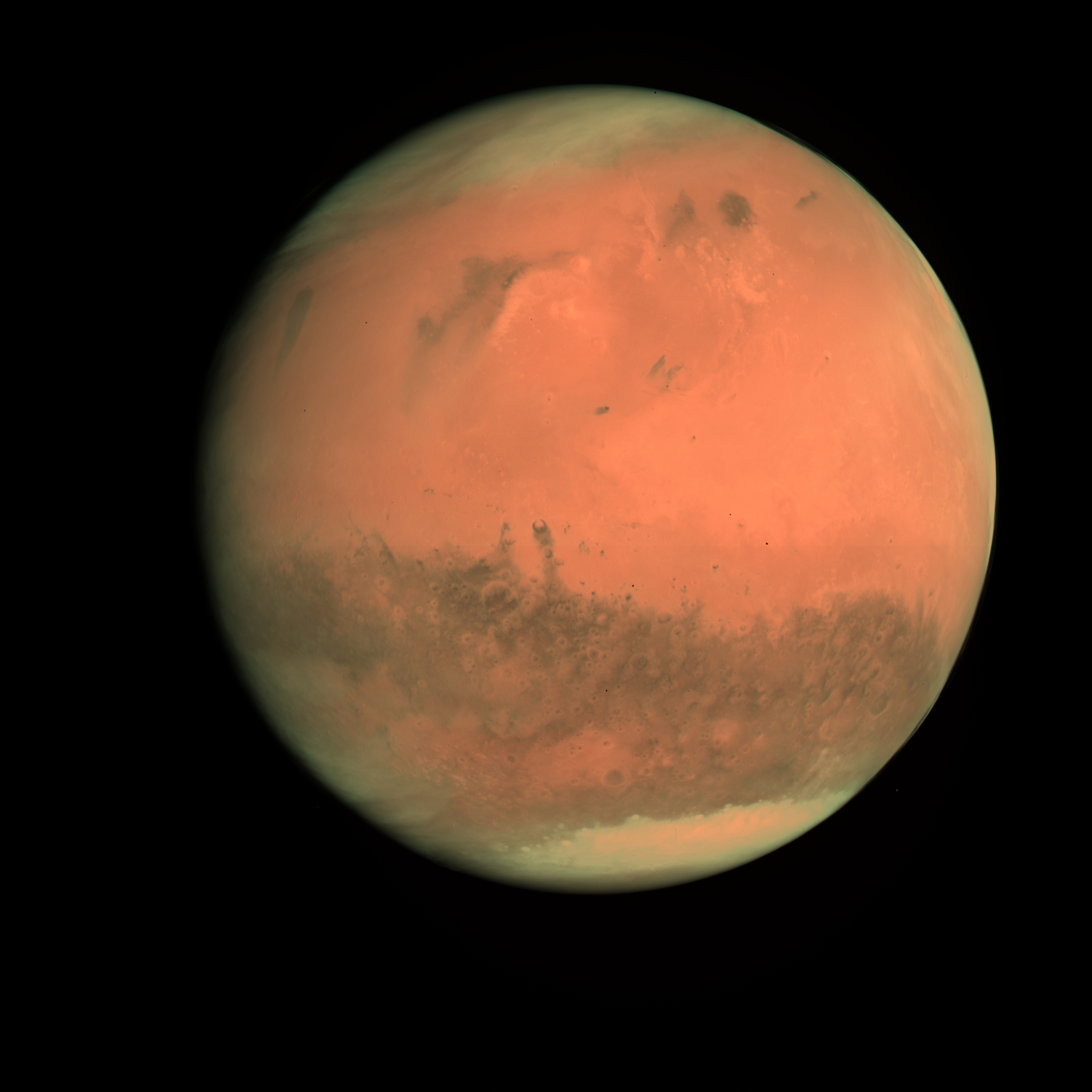
The exploration of Mars' atmosphere has evolved from early spectroscopic observations to sophisticated in-situ measurements and computational modeling. Key milestones in this scientific journey include ground-based telescopic studies, robotic missions equipped with advanced instruments, and theoretical frameworks integrating isotopic data and atmospheric escape simulations. These methods collectively reveal the compositional, dynamic, and evolutionary characteristics of Mars' thin, CO₂-dominated atmosphere, while also addressing critical questions about its past habitability and loss mechanisms.Timeline of Major Scientific Missions and Their Contributions
The study of Mars' atmosphere has been systematically advanced through dedicated missions, each employing specialized instruments to analyze composition, structure, and escape processes. Below is a chronological overview of pivotal missions, their instrumentation, and key discoveries.- Mariner 4 (1965) – First successful flyby of Mars, carrying an infrared radiometer that provided early estimates of atmospheric pressure (~6–7 mbar) and composition, though with limited accuracy due to technical constraints.
-
Viking 1 and 2 (1976) – Landers equipped with gas chromatographs and mass spectrometers measured atmospheric composition directly, confirming CO₂ as the dominant gas (~95%) alongside trace amounts of nitrogen (N₂, ~2.7%) and argon (Ar, ~1.6%). The missions also detected seasonal variations in CO₂ ice at the poles.
Viking’s mass spectrometer identified trace gases including oxygen (O₂, ~0.13%), carbon monoxide (CO, ~0.07%), and water vapor (H₂O, variable), with measurements taken at the surface in Chryse Planitia and Utopia Planitia.
- Mars Global Surveyor (1997–2006) – Orbiter with a thermal emission spectrometer (TES) mapped global atmospheric temperature, dust, and water ice distributions, revealing seasonal CO₂ condensation cycles and the presence of ozone (O₃) in the upper atmosphere.
- Mars Express (2003–present) – Carried the Planetary Fourier Spectrometer (PFS) and the SPICAM ultraviolet/visible spectrometer, detecting methane (CH₄) fluctuations (up to ~10–30 ppbv) and confirming atmospheric escape via hydrogen and oxygen loss to space.
-
Mars Reconnaissance Orbiter (MRO, 2006–present) – The Compact Reconnaissance Imaging Spectrometer for Mars (CRISM) identified mineralogical evidence of past water activity, while the Neutral Gas and Ion Mass Spectrometer (NGIMS) on MAVEN (2014–present) quantified atmospheric escape rates, revealing that solar wind stripping accounts for ~100 grams of atmospheric loss per second.
MAVEN’s observations confirmed that Mars lost ~66% of its original atmosphere due to solar wind interaction over 4 billion years, with heavier isotopes (e.g., D/H ratio of ~5.5) indicating preferential loss of lighter hydrogen.
- Curiosity Rover (2012–present) – The Sample Analysis at Mars (SAM) suite detected trace organic molecules, seasonal methane spikes (up to ~7 ppbv), and isotopic signatures of atmospheric gases, supporting hypotheses of geological or biological methane sources.
- ExoMars Trace Gas Orbiter (TGO, 2016–present) – High-resolution spectrometers (ACS and NOMAD) achieved unprecedented methane detection precision (~0.05 ppbv) and mapped spatial/temporal variations, suggesting localized or transient sources.
- Perseverance Rover (2021–present) – The Mars Environmental Dynamics Analyzer (MEDA) and SHERLOC instruments continue to monitor dust, temperature, and atmospheric chemistry, while the Mars Oxygen In-Situ Resource Utilization Experiment (MOXIE) tests oxygen extraction from CO₂ as a precursor to future human missions.
Instrumentation and Measurement Techniques in Mars Atmospheric Studies
Scientific instruments deployed on orbiters, landers, and rovers utilize distinct methodologies to probe Mars' atmospheric properties. These techniques range from remote sensing to direct sampling, each offering unique advantages in spatial resolution, temporal coverage, and compositional analysis.-
Spectroscopy (Remote Sensing)
Spectroscopic instruments analyze light absorbed or emitted by atmospheric gases to determine composition, temperature, and dynamics. Key implementations include:- Infrared Spectroscopy – Used by instruments like TES (MGS) and PFS (Mars Express) to identify CO₂, H₂O, and dust aerosols by measuring absorption bands in thermal emission spectra.
- Ultraviolet (UV) Spectroscopy – SPICAM (Mars Express) and NOMAD (ExoMars TGO) detect ozone (O₃), hydrogen coronae, and trace gases like CO via UV absorption spectroscopy.
- Near-Infrared (NIR) Spectroscopy – CRISM (MRO) maps mineralogical and atmospheric water vapor distributions by analyzing reflected sunlight in the NIR range.
Spectroscopy enables global-scale mapping but is limited by vertical resolution; complementary techniques like occultation measurements improve altitude profiling.
-
Mass Spectrometry (In-Situ Sampling)
Landers and rovers employ mass spectrometers to directly analyze atmospheric gases at the surface or in the lower atmosphere. Examples include:- Viking Landers (1976) – Used quadrupole mass spectrometers to measure CO₂, N₂, Ar, and trace gases with parts-per-million (ppm) precision.
- SAM Suite (Curiosity, 2012–present) – Combines a quadrupole mass spectrometer (QMS) with a gas chromatograph to separate and identify organic compounds and isotopes (e.g., ¹³C/¹²C ratios in CO₂).
- NGIMS (MAVEN, 2014–present) – A time-of-flight mass spectrometer that profiles atmospheric composition from ~150 km altitude downward, detecting ionized species and escape fluxes.
-
Occultation and Radio Science
Orbital missions leverage stellar or solar occultation to probe atmospheric density, temperature, and composition along the line of sight. For instance:- MAVEN’s Radio Occultation (RO) – Measures electron density and neutral gas profiles by tracking signal degradation as radio waves pass through the atmosphere.
- Mars Global Surveyor’s Aerobraking Data – Used atmospheric drag measurements to refine models of density and temperature variations with altitude.
-
Laser and Lidar Techniques
Instruments like the Mars Science Laboratory’s ChemCam (though primarily for surface analysis) and proposed future missions may employ lidar to measure dust, clouds, and trace gas distributions with high vertical resolution.
Modeling Mars' Atmospheric Evolution: Data Integration and Simulation
The reconstruction of Mars' atmospheric history relies on a multidisciplinary approach combining isotopic data, meteoritic evidence, and computational simulations of atmospheric escape. This process involves quantifying past atmospheric density, identifying loss mechanisms, and validating models against observational constraints.-
Isotopic Ratios as Paleo-Barometers
The enrichment of heavy isotopes (e.g., deuterium (D) in H₂O, argon-38/argon-36 ratios) in Mars' current atmosphere indicates preferential escape of lighter isotopes over geological timescales. Key isotopic systems include:- D/H Ratio – Current atmospheric D/H ≈ 5.5 times terrestrial values, suggesting ~80% of primordial water was lost via hydrodynamic escape during the early Noachian period (~4.1–3.7 billion years ago).
- ¹³C/¹²C and ¹⁵N/¹⁴N Ratios – Enrichment in CO₂ and N₂ isotopes (¹³C/¹²C ≈ 90‰, ¹⁵N/¹⁴N ≈ 180‰) supports models of non-thermal escape processes, such as photochemical dissociation and ion sputtering.
Isotopic fractionation provides a "fossil record" of atmospheric loss, with heavier isotopes accumulating as lighter ones are preferentially lost to space.
-
Meteorite Evidence and Noble
Unique Phenomena and Seasonal Variations in Mars' Atmosphere
Mars' thin atmosphere exhibits dynamic seasonal cycles and transient phenomena that differ fundamentally from Earth's due to its elliptical orbit, axial tilt, and lack of a global magnetic field. These variations include the sublimation of polar ice caps, planet-wide dust storms, and hemispheric pressure shifts driven by solar insolation and atmospheric composition. Unlike Earth, where seasonal changes are primarily governed by water vapor and latent heat, Mars' atmosphere responds to carbon dioxide (CO₂) sublimation, dust optical depth, and solar wind interactions, creating distinct patterns of atmospheric behavior.The seasonal evolution of Mars' atmosphere is governed by its orbital mechanics and atmospheric composition, producing phenomena such as polar ice cap formation, dust storm cycles, and pressure gradients that influence surface and atmospheric dynamics. These processes are interconnected, with dust storms altering thermal gradients and polar ice sublimation modulating atmospheric density. Understanding these mechanisms provides critical insights into Mars' climate history and habitability potential.
Seasonal Changes in Mars' Atmosphere and Polar Ice Caps
Mars experiences pronounced seasonal variations due to its 25.2° axial tilt, similar to Earth's 23.5°, but with a more elliptical orbit that amplifies temperature extremes. The primary drivers of seasonal change are the sublimation and deposition of CO₂ and water ice in the polar regions. During the southern hemisphere's summer, the South Polar Cap (SPC) undergoes significant sublimation, releasing ~30% of the atmospheric CO₂ and increasing surface pressure by up to 25%. Conversely, the northern hemisphere's winter sees the North Polar Cap (NPC) grow as CO₂ condenses, reducing atmospheric pressure and triggering wind patterns that redistribute dust.The polar ice caps consist of two distinct layers:
- Permanent water ice cap (visible year-round, primarily at the NPC).
- Seasonal CO₂ ice cap (thickens in winter, sublimates in summer, covering up to 30% of the planet's surface during peak seasons).
Water ice sublimation also contributes to atmospheric humidity, though at trace levels (~10–300 ppmv). The seasonal cycle of CO₂ ice sublimation and deposition creates a global pressure oscillation of ~25–30% between solstices, with pressure lowest in southern summer (when the SPC sublimates) and highest in northern winter (when the NPC forms). This pressure gradient drives hemispheric wind patterns, influencing dust transport and storm formation.
Dust Storm Cycles and Global Dust Events
Mars is renowned for its global dust storms, which can engulf the entire planet and last for weeks to months. These storms are triggered by a combination of solar heating, topographic features, and atmospheric instability. The process begins with localized dust devils or regional dust storms that lift fine particulate matter (typically basaltic silicate grains <10 µm in diameter) into the atmosphere. Once suspended, dust absorbs solar radiation, warming the atmosphere and reducing surface albedo, which further intensifies heating and storm growth.Key mechanisms in dust storm formation include:
- Solar heating of the surface: Differential heating between low-albedo regions (e.g., Syrtis Major) and high-albedo areas (e.g., polar caps) creates thermal gradients that destabilize the atmosphere.
- Topographic effects: Features like the Tharsis volcanic plateau and Valles Marineris act as barriers or focal points for dust lifting.
- Pressure gradients: Seasonal CO₂ ice sublimation generates wind shear, particularly in the southern hemisphere autumn, when the SPC begins to reform and pressure drops sharply.
Global dust storms typically peak during southern hemisphere spring/summer (Ls 180°–300°), when insolation is strongest and atmospheric dust loading can reach 10–20 mg/m³ (compared to Earth's ~10 µg/m³). These storms reduce surface visibility to <1 km and can increase near-surface temperatures by 10–20°C due to dust absorption. The most recent major global storm occurred in 2018, temporarily grounding NASA’s Opportunity rover until its solar panels were obscured by dust.
Comparison of Martian and Terrestrial Seasonal Events
The following table summarizes key seasonal events on Mars, their atmospheric impacts, and contrasts with Earth's seasonal patterns:
Martian Seasonal Event Atmospheric Impact Earth Analog Key Differences from Earth Southern Hemisphere Summer (Ls 270°–90°) - CO₂ sublimation from SPC increases atmospheric pressure by ~25%.
- Dust storms peak due to high surface temperatures and wind shear.
- Water vapor content rises slightly (~10–50 ppmv) near poles.
Northern Hemisphere summer (June–August) - Earth’s seasons are driven by water vapor and latent heat; Mars relies on CO₂ sublimation.
- Martian dust storms are global in scale; Earth’s are regional (e.g., Sahara, dust bowls).
- No liquid water cycle on Mars; sublimation/deposition dominates.
Northern Hemisphere Winter (Ls 270°–90°) - CO₂ condenses at NPC, reducing atmospheric pressure by ~30%.
- Polar night leads to extreme cooling (~–125°C at poles).
- Dust settling increases surface albedo, prolonging winter conditions.
Northern Hemisphere winter (December–February) - Earth’s winter involves snow/ice formation; Mars’ is dominated by CO₂ ice.
- Martian pressure drops are more extreme due to CO₂ phase changes.
- No significant ozone layer on Mars; UV radiation remains high.
Spring Thaw (Ls 0°–90°) - CO₂ ice sublimates at NPC, increasing atmospheric opacity.
- Dust devils and localized storms form as surface warms.
- Water ice recession exposes darker terrain, accelerating heating.
Spring thaw (March–May) - Earth’s thaw involves liquid water runoff; Mars’ is dry sublimation.
- Martian dust storms can obscure visibility entirely; Earth’s are rare.
- No greenhouse effect from water vapor on Mars.
Autumn Frost Formation (Ls 180°–270°) - CO₂ frost deposits on surfaces at night, sublimating by midday.
- Dust loading decreases as winds weaken.
- Polar regions experience rapid temperature swings (~100°C daily).
Autumn frost (September–November) - Earth’s frost is water-based; Mars’ is CO₂-dominated.
- Martian frost sublimates completely by noon; Earth’s persists longer.
- No seasonal leaf changes or biological activity on Mars.
Martian Auroras: Formation and Characteristics
Auroras on Mars, though faint compared to Earth’s, occur due to interactions between solar wind particles and residual magnetic fields in the planet’s crust. Unlike Earth, which has a global magnetosphere, Mars’ auroras are localized and tied to remnant magnetized regions in the southern highlands (e.g., Terra Cimmeria and Terra Sirenum), where ancient crustal magnetism persists. Solar

Human Exploration and Future Implications: Atmospheric Challenges
Mars’ thin, carbon dioxide-dominated atmosphere presents critical obstacles for sustained human presence, necessitating advanced technological solutions and long-term strategic planning. The absence of a protective magnetosphere and the extreme variability in atmospheric density—ranging from ~0.006 to 0.02 kg/m³ (compared to Earth’s ~1.2 kg/m³)—exacerbate risks such as radiation exposure, thermal extremes, and the instability of liquid water. These challenges demand innovative engineering approaches, from closed-loop life-support systems to atmospheric resource utilization (ISRU), while also shaping theoretical frameworks for potential terraforming. The interplay between Mars’ atmospheric composition and the search for microbial life further underscores the need for precise scientific instrumentation to distinguish between abiotic organic molecules and potential biosignatures.
Primary Atmospheric Challenges for Human Exploration
The combination of Mars’ tenuous atmosphere and cosmic radiation exposure creates a hostile environment for human missions. Key obstacles include:- Radiation Exposure
Mars lacks a global magnetic field, leaving its surface and low orbit vulnerable to galactic cosmic rays (GCRs) and solar energetic particles (SEPs). Without adequate shielding, cumulative radiation doses could exceed NASA’s career limits for astronauts within months, increasing cancer risks and acute health effects. The Mars Atmosphere and Volatile Evolution (MAVEN) mission confirmed that atmospheric stripping by solar wind further depletes protective gases over time.- Thermal Extremes and Pressure Instability
The atmospheric pressure on Mars averages ~6–10 mbar (0.6–1% of Earth’s), making liquid water unstable at the surface. Temperature fluctuations range from -73°C to 20°C in equatorial regions, with nighttime drops exacerbating heat loss for unshielded habitats. The lack of a substantial greenhouse effect (despite CO₂ dominance) requires insulated, pressurized structures to maintain habitable conditions.- Life-Support System Dependencies
Current missions rely on closed-loop systems (e.g., NASA’s Advanced Closed Loop System (ACLS)) to recycle air, water, and waste. However, these systems are energy-intensive and require redundancy for long-duration stays. The Viking landers demonstrated that even short-term missions (1976) faced oxygen depletion risks, highlighting the need for in-situ oxygen production (e.g., MOXIE) to sustain crewed missions.
Technological Mitigations: Pressurized Habitats and Atmospheric Resource Utilization
Emerging technologies aim to address these challenges through in-situ resource utilization (ISRU) and adaptive engineering. Key developments include:- Pressurized Habitats and Radiation Shielding
Proposed designs integrate regolith shielding (e.g., lava tube caves or 3D-printed regolith domes) to reduce radiation by 30–50% compared to aluminum structures. The Mars Dune Alpha habitat (NASA’s CHAPEA mission) tests modular, inflatable habitats with multi-layer insulation to stabilize internal temperatures. Water walls (filled with astronaut urine or ice) are being explored for additional shielding, though their long-term structural integrity remains untested.
Regolith Composition for Shielding:
Martian soil contains ~40–50% silicon dioxide (SiO₂) and iron oxides (Fe₂O₃), which are effective at absorbing high-energy protons and neutrons. A 2-meter-thick regolith layer can reduce radiation exposure to levels comparable to Earth’s surface (NASA’s Space Radiation Program).- Oxygen Extraction and CO₂ Conversion
The Mars Oxygen In-Situ Resource Utilization Experiment (MOXIE), deployed on Perseverance (2021), successfully produced 5.4 grams of O₂ per hour via solid oxide electrolysis (SOXE), splitting CO₂ into oxygen and carbon monoxide. Scaling this technology could enable local oxygen production for life support and rocket fuel. Alternative methods, such as sabatic reduction (using hydrogen to extract oxygen from minerals), are being investigated for broader applicability.
Method Oxygen Yield (g/hr) Energy Requirement (kWh/kg O₂) Feasibility Status MOXIE (SOXE) 5.4–20 (scaled) ~25–30 Proven (Perseverance) Sabatic Reduction (H₂ + CO₂) 10–50 (theoretical) ~15–20 Lab-scale testing Electrochemical CO₂ Splitting 0.1–1 (early-stage) ~50–100 Conceptual - Atmospheric Entry and Landing Systems
Mars’ thin atmosphere complicates aerocapture and aeroshell deceleration, requiring hybrid systems like HIAD (Hypersonic Inflatable Aerodynamic Decelerator) for heavy payloads. The Mars Science Laboratory (MSL) Sky Crane demonstrated precision landing, but future missions may need supersonic retropropulsion (e.g., Dragonfly-like thrusters) to handle thicker atmospheric entry profiles. Heat shield materials (e.g., phenolic impregnated carbon ablator (PICA)) must withstand 1,600°C during entry, with Mars’ higher entry velocities (~5.5 km/s vs. Earth’s 11 km/s) increasing thermal loads.
Terraforming Mars: Theoretical Methods and Feasibility
Theoretical terraforming proposals leverage Mars’ atmospheric composition to create a thicker, Earth-like atmosphere over centuries. Primary strategies include:- Greenhouse Gas Release and Atmospheric Pressure Increase
CO₂ sublimation from polar ice caps (estimated ~1.6 million km³ of CO₂ ice) could raise surface pressure to ~100 mbar, enabling liquid water stability. However, perfluorocarbon (PFC) emissions (proposed by NASA’s Carl Sagan) would require ~100,000 metric tons to achieve a 0.1 bar atmosphere, posing logistical and ethical challenges. Ammonia (NH₃) importation from asteroids or comets could further enhance greenhouse warming, but its photolytic breakdown into nitrogen and hydrogen would need containment.
Pressure Threshold for Liquid Water:
At ~10 mbar, water can exist as a liquid only at ~0°C (triple point). A 0.1 bar (100 mbar) atmosphere would allow stable liquid water at ~20°C, but 1 bar (Earth-like) would require ~10,000x current atmospheric mass, equivalent to ~10% of Earth’s ocean mass transferred to Mars.- Magnetic Shielding and Solar Wind Mitigation
A mini-magnetosphere (e.g., Alfvén shield) positioned between Mars and the Sun could reduce atmospheric escape by 50–90% (per Jim Green’s 2017 proposal). However, energy requirements (~100 GW) and structural stability in space remain unresolved. Nuclear-powered plasma generators (e.g., VASIMR-like systems) are speculative but could theoretically create an artificial magnetotail.- Biological and Chemical Pathways
Cyanobacteria or genetically engineered extremophiles could produce oxygen via photosynthesis, but Mars’ low light levels (~43% of Earth’s solar flux) and UV radiation would limit productivity. Iron oxide (rust) reduction by microbes (e.g., Acidithiobacillus ferrooxidans) could release oxygen, but scaling this would require ~10,000 km² of microbial farms, an impractical near-term solution.
Method Pressure Increase Potential (mbar) Timescale (Years) Major Obstacles CO₂ Polar Ice Sublimation 50–100 100–500 Energy input, dust storms Ammonia Importation Mars' atmosphere, though hostile by terrestrial standards, serves as a testament to the delicate balance of gases, pressure, and solar interactions that define a planet’s climate. From the seasonal cycles of CO₂ ice caps to the violent global dust storms that obscure the surface, its dynamic behavior challenges conventional understandings of atmospheric science. The lessons learned—from the challenges of human exploration to the theoretical possibilities of terraforming—underscore the fragility and resilience of planetary environments. As research advances, Mars continues to redefine our perspective on habitability, offering both obstacles and opportunities in the quest to unravel the mysteries of other worlds.
FAQ
What are the exact percentages of gases in Mars' atmosphere?
Mars' atmosphere is about 95.3% carbon dioxide (CO₂), 2.7% nitrogen (N₂), 1.6% argon (Ar), and 0.13% oxygen (O₂), with trace amounts of carbon monoxide, water vapor, and other gases. The remaining ~0.1% includes neon, krypton, xenon, and methane (in very small, variable quantities).
What is the primary component of Mars' atmosphere?
The dominant gas in Mars' atmosphere is carbon dioxide (CO₂), making up roughly 95% of its composition. Nitrogen and argon follow as the next most abundant gases, but CO₂ drives its extreme cold and thin pressure (about 1% of Earth's at the surface).
What is Earth's atmosphere made of?
Earth's atmosphere is primarily 78% nitrogen (N₂), 21% oxygen (O₂), and 0.93% argon (Ar), with trace amounts of carbon dioxide (~0.04%), water vapor, and other gases like neon and methane. This composition supports complex life and regulates temperature.
What is Mars' core made of?
Mars' core is believed to be composed mostly of iron (Fe) and nickel (Ni), with possible traces of sulfur and lighter elements. Unlike Earth, its core is partially liquid but smaller in size, contributing to Mars' weaker magnetic field. Seismic data suggests a radius of about 1,800 km.
What gases make up the air on Mars?
The "air" on Mars consists almost entirely of carbon dioxide (CO₂), with minor amounts of nitrogen (N₂), argon (Ar), and oxygen (O₂). The atmosphere is 100 times thinner than Earth's, so breathing it would be impossible for humans without a pressurized suit.
What does Mars' atmosphere consist of?
Mars' atmosphere is a thin, cold mixture dominated by carbon dioxide (95%), with nitrogen (2.8%), argon (1.9%), and tiny amounts of oxygen, carbon monoxide, and other gases. Dust storms frequently stir up fine particles, further altering visibility and temperature. The low pressure makes liquid water unstable on the surface.
Leave a Comment
Comments are moderated before appearing. The data you submit is processed according to the Privacy Policy of Voltefac.