| Formalization as a Unified Art |
- 1959: KTA unified disparate kwans under a single curriculum, standardizing belt ranks and terminology.
- 1973: Kukkiwon established
Fundamental Techniques and Training Methods in Taekwondo
Taekwondo is distinguished by its dynamic and technical approach to martial arts, emphasizing fluidity, precision, and athleticism. Its core techniques are systematically categorized into strikes, blocks, stances, and forms, each serving distinct functions in combat, self-defense, and physical conditioning. Training methods, particularly sparring (kyorugi), integrate these techniques under structured rules to ensure safety, fairness, and skill progression. Below is a structured breakdown of the foundational techniques, their execution, and the regulated framework governing competitive and training environments.
Core Techniques in Taekwondo
Taekwondo techniques are built upon biomechanical efficiency, balance, and target specificity. Mastery of these techniques requires repetitive practice, proper alignment, and gradual refinement of power, speed, and accuracy. Techniques are broadly classified into four categories: strikes (jireugi and chagi), blocks (makgi), stances (sogi), and forms (poomsae). Each category adheres to standardized nomenclature derived from Korean terminology, ensuring consistency across global training and competition.
Strikes: Jireugi (Hand Strikes) and Chagi (Kicks)
Strikes form the offensive backbone of Taekwondo, designed to incapacitate an opponent through precise targeting of vulnerable areas. Hand strikes (jireugi) and kicks (chagi) are executed with control to avoid injury while maximizing impact. Proper technique emphasizes hip rotation, chambering, and follow-through, with power generated from the legs and torso.
Key Principle: "Power originates from the ground, travels through the legs, and is transmitted via the hips and torso to the striking limb."
Hand Strikes (Jireugi)
Hand techniques prioritize speed and accuracy over brute force, targeting the head, ribs, and solar plexus. Common strikes include:
- Punch (Jireugi): Executed with a straight arm, palm facing down, and fingers clenched. Variations include:
- Ap Jireugi (Front Punch): Chambered at the waist, driven forward with hip rotation.
- Yop Jireugi (Side Punch): Delivered with a 90-degree chamber, elbow aligned with the shoulder.
- Dollyo Jireugi (Circular Punch): A sweeping motion targeting the ribs or head, often used in fluid combinations.
- Elbow Strike (Palkup Jireugi): Used in close-range combat, with the elbow striking upward, downward, or horizontally. Requires controlled momentum to avoid overextension.
Kicks (Chagi)
Kicks are categorized by leg used (front or back), chambering position, and trajectory. Taekwondo recognizes 10 fundamental kicks, each with specific applications:
- Front Kick (Ap Chagi): A direct, linear kick targeting the opponent’s torso or head. Executed by lifting the knee, extending the leg, and striking with the ball of the foot (ap kumchi).
- Side Kick (Yop Chagi): Delivered with a chambered leg, rotating the hip to direct the sole of the foot (banda) or heel (dollyo banda) toward the opponent’s ribs or head.
- Roundhouse Kick (Dollyo Chagi): The most powerful kick, executed by pivoting the standing leg and striking with the ball of the foot. Variations include:
- Narae Dollyo Chagi (Ax Kick): A downward roundhouse targeting the neck or collarbone.
- Dwi Chagi (Back Kick): A rearward kick striking with the heel, often used in sparring for counterattacks.
- Back Kick (Dwi Chagi): Delivered with the rear leg, striking with the heel. Requires quick hip rotation and balance adjustment.
- Hook Kick (Giro Chagi): A semi-circular kick targeting the head or body, executed by lifting the knee and swinging the leg in an arc.
- Turning Kick (Baro Chagi): A 180-degree pivot kick, striking with the ball of the foot or heel. Used in dynamic combinations.
- Scissor Kick (Kyocha Chagi): A simultaneous or alternating kick where the legs cross mid-air, targeting the head or legs. Requires advanced balance and coordination.
Technical Note: All kicks must land with the designated striking surface (e.g., ap kumchi for front kicks) to be valid in competition. Over-rotation or improper chambering risks injury.
Blocks: Makgi (Defensive Techniques)
Blocks in Taekwondo serve to deflect or absorb an opponent’s attacks while creating opportunities for counters. Effective blocking requires proper footwork, body alignment, and timing. Blocks are named based on the striking surface (hand, forearm, or palm) and the direction of deflection.
Defensive Principle: "A block is not merely a reaction; it is a redirection of the opponent’s energy to neutralize their attack and transition into offense."
Fundamental Blocks
Blocks are categorized by the limb used and the angle of deflection:
- Low Block (Najunde Makgi): Executed with the forearm (palmok) to block low kicks or leg sweeps. The blocking arm is extended downward at a 45-degree angle.
- High Block (Arade Makgi): Used to deflect high kicks or punches, with the forearm raised diagonally to meet the incoming attack.
- X-Block (Kyocha Makgi): A simultaneous high-low block using both forearms, crossing them in an "X" formation to counter dual attacks.
- Knife-Hand Block (Sonnal Makgi): Delivered with the edge of the hand (sonnal), targeting strikes to the head or body. Requires precise alignment to avoid injury.
- Palm Block (Sonbadak Makgi): Used to block strikes to the head or solar plexus, with the palm facing upward to deflect downward attacks.
Block-Chambering and Counterattacks
Blocks are rarely executed in isolation. After deflecting an attack, practitioners immediately transition into a counterstrike (jireugi or chagi) or assume a defensive stance. For example:
- A high block of a roundhouse kick (dollyo chagi) may be followed by a side kick (yop chagi) to the opponent’s midsection.
- A low block against a front kick (ap chagi) can be countered with a front snap kick (ap chagi) to the opponent’s knee or shin.
Stances: Sogi (Balanced Postures)
Stances provide the foundation for stability, mobility, and power generation in Taekwondo. Proper alignment of the feet, hips, and torso ensures balance during strikes, blocks, and transitions. Stances are categorized by width, leg positioning, and mobility requirements.
Stance Principle: "A stance is a temporary structure; its purpose is to facilitate movement, not restrict it."
Fundamental Stances
Stances are named based on their shape and application:
- Parallel Stance (Gunnun Sogi): Feet aligned parallel, used for static techniques or transitions. Provides minimal mobility but maximum stability.
- Front Stance (Naranhi Sogi): The front foot points forward at a 45-degree angle, while the rear foot aligns perpendicularly. The front knee is bent to absorb impact, and the rear leg provides power. Used for linear movements.
- Back Stance (Dwit Sogi): The rear foot points backward at a 45-degree angle, with the front foot perpendicular. Ideal for generating power in kicks and blocks from a defensive position.
- L-Stance (Niunja Sogi): One leg is extended forward while the other remains bent behind, forming an "L" shape. Used for quick lateral movements and counterattacks.
- X-Stance (Gunnun Niunja Sogi): A variation of the L-stance where the front foot is angled outward, increasing mobility for circular techniques.
- Walking Stance (Gunnun Sogi): Feet shoulder-width apart, toes pointing slightly outward. Used for dynamic footwork and transitions between techniques.
- Riding Stance (Wa Sogi): A narrow stance with feet close together, used for rapid strikes or evasive maneuvers.
Advanced Stances
- One-Leg Stance (Dwi Sogi): Balancing on one leg while executing techniques, such as high kicks (narae chagi). Requires core strength and hip flexibility.
- Sitting Stance (An Sogi): A deep, low stance used for absorbing impact or preparing for explosive upward strikes.
Training Tip: Stance transitions should be seamless, with weight shifting from the rear to front foot (or vice versa) without hesitation. Drills like "stance drills" (sogi gyo) focus on maintaining balance during rapid changes.
Philosophy and Cultural Significance of Taekwondo
Taekwondo transcends its physical techniques to embody a holistic philosophy deeply rooted in Korean Confucian ethics and martial arts tradition. Its core principles—yeon-gi (courtesy), gyeol-gi (integrity), in-nen (perseverance), and baekjul bulgo (indomitable spirit)—serve as a moral framework that extends beyond the dojang (training hall), influencing personal development, social interactions, and cultural identity. These tenets reflect the harmonization of discipline, resilience, and ethical conduct, aligning with broader East Asian philosophical traditions while uniquely embodying Korean values of respect, adaptability, and communal unity.The cultural significance of Taekwondo lies in its role as a vessel for preserving and transmitting Korean heritage, particularly through structured rituals, hierarchical respect, and collective training. Its integration into global martial arts culture has simultaneously reinforced traditional Korean identity, demonstrating how a modern sport can uphold ancient ethical and social norms.
Core Philosophical Principles and Their Real-World Applications
Taekwondo’s five tenets—yeon-gi, gyeol-gi, in-nen, baekjul bulgo, and gi (self-control)—form the ethical backbone of the discipline. These principles are not confined to martial arts but are applied in professional, educational, and personal contexts worldwide.Courtesy (yeon-gi) emphasizes humility, respect for others, and adherence to social etiquette. In modern settings, this translates to professional courtesy in workplaces, active listening in leadership roles, and cultural sensitivity in global interactions. For example, the Japanese principle of rei (bowing) shares parallels with Taekwondo’s jeol (bowing rituals), both fostering mutual respect in hierarchical structures. Integrity (gyeol-gi) demands honesty, consistency between words and actions, and moral responsibility. This principle is critical in fields like law, medicine, and business, where ethical dilemmas frequently arise. Taekwondo’s emphasis on gyeol-gi aligns with Korean cultural values of nun (virtue) and cheon (heavenly mandate), reinforcing the idea that personal integrity reflects broader societal trust. Perseverance (in-nen) reflects the Korean concept of gamjeong (endurance), a trait historically celebrated in agricultural labor and modern industries like shipbuilding and technology. Athletes and professionals often cite Taekwondo’s training regimen as a source of mental fortitude, illustrating how structured perseverance builds resilience against adversity. Indomitable Spirit (baekjul bulgo) embodies the Korean warrior ethos of muyeol (martial valor) and hwangryeon (yellow spirit), symbolizing unyielding determination. This principle is evident in Korean historical figures like Admiral Yi Sun-sin, whose strategic brilliance and resilience during the Japanese invasions (1592–1598) became a national legend. In contemporary contexts, it inspires entrepreneurs and innovators to overcome obstacles, such as Samsung’s founder Lee Byung-chul, who applied relentless effort to transform Korea’s economy.
Taekwondo as a Reflection of Korean Cultural Values
Taekwondo’s rituals and training methods encode Korean cultural values, particularly those derived from Confucianism, Buddhism, and shamanism. The discipline’s structured hierarchy, emphasis on elders (seonsaengnim), and communal training foster a sense of belonging and collective progress, mirroring traditional Korean social structures.Respect for Elders and Hierarchy
The Korean concept of hyang (filial piety) and charye (respect for superiors) is institutionalized in Taekwondo through:
- Addressing instructors as seonsaengnim (teacher/master), a term rooted in Confucian junsang (teacher-student relationship).
- Bowing to higher belts during poomsae (forms) demonstrations, reinforcing vertical respect lines.
- Group training ceremonies, where senior students assist juniors, mirroring the Korean noraebang (karaoke) culture of generational bonding.
Discipline and Self-Control (Gi)
Taekwondo’s training instills gi (self-control) through:
- Strict adherence to dojang rules, such as maintaining silence during meditation (jit).
- Controlled breathing (gukgi) during sparring, reflecting Buddhist hanmaum (mindfulness) practices.
- Precision in techniques, where even minor errors are corrected, embodying the Korean value of jeong (precision and craftsmanship).
Community and Rituals
Taekwondo’s communal aspects, such as dobok (uniform) ceremonies and group poomsae performances, reinforce Korean social cohesion. These rituals parallel:
- Traditional gukgung (royal court) ceremonies, where collective harmony was prioritized.
- Modern chuseok (harvest festival) gatherings, where families and communities unite.
- Olympic-level teamwork, where Korean Taekwondo athletes often train in dan-guk (national team) environments, fostering unity under shared goals.
Traditional Oaths and Proverbs in Taekwondo
Taekwondo’s philosophical depth is encapsulated in its oaths and proverbs, which serve as moral compasses for practitioners. Below are direct translations of key texts, paired with their historical and modern relevance.
Taekwondo Oath (Kukkiwon Version, 1973)
*"I shall observe the tenets of Taekwondo: Courtesy, Integrity, Perseverance, Self-Control, and Indomitable Spirit.
I shall respect my instructors and fellow students.
I shall never abuse Taekwondo’s techniques for personal gain or violence.
I shall strive to improve my character and help others through Taekwondo."*Historical Context:
This oath was formalized during Taekwondo’s unification under the Kukkiwon (1973), synthesizing earlier martial arts codes from Taekkyeon (traditional Korean martial art) and Shotokan Karate. Its language reflects post-war Korea’s emphasis on national rebuilding through discipline and moral education. Modern Relevance:
The oath’s principles are now integrated into corporate training programs (e.g., Hyundai’s leadership development) and military academies (e.g., South Korean ROK Army officer training), where ethical conduct is paramount.
Korean Proverb: "산보다 높고 물보다 깊은 도를 배워라."
(Learn a path higher than mountains and deeper than water.)Translation: "Study a discipline that transcends physical limits and delves into the depths of wisdom." Historical Context:
This proverb originates from Dongdasong (East Sea songs), a genre of Korean folk poetry that often metaphorically described martial arts mastery. It was later adopted in Taekwondo literature to emphasize the duality of physical and spiritual growth. Modern Relevance:
The phrase is invoked in educational settings to encourage holistic development, such as in South Korea’s Seodang (traditional academies) and modern hagwons (cram schools), where students are taught that martial arts training should cultivate both body and mind.
Taekwondo Poem: "무예는 몸의 교육이 아니라 마음의 교육이다."
(Martial arts are not education of the body, but education of the mind.)Attribution: Often attributed to Choi Hong Hi (founder of ITF Taekwondo), though rooted in older Taekkyeon philosophy. Historical Context:
This idea stems from Taekkyeon’s emphasis on sin-gi (heart-mind cultivation), where techniques were secondary to developing inner strength. Choi Hong Hi later expanded this in his 1965 Encyclopedia of Taekwondo, aligning it with global martial arts movements like Aikido and Judo. Modern Relevance:
The statement is cited in psychological studies on martial arts, such as research by the American Psychological Association, which highlights Taekwondo’s efficacy in reducing stress and improving emotional regulation among adolescents.
Competitive and Non-Competitive Applications in Taekwondo
Taekwondo’s evolution has bifurcated into two distinct yet interconnected pathways: competitive sport and non-competitive practice. While both share foundational techniques, their objectives, structures, and cultural emphases diverge significantly. Competitive Taekwondo, particularly in Olympic formats, prioritizes dynamic sparring (kyorugi), precise poomsae (forms), and high-impact breaking (kyukpa) under standardized rules. In contrast, traditional and non-competitive styles emphasize self-discipline, martial arts philosophy, and fluid, expressive movements without the constraints of scoring systems. This section explores the technical, structural, and philosophical distinctions between these applications, including variations in poomsae, sparring, and breaking, as well as the global competitive landscape governed by organizations such as the World Taekwondo (WT) and International Taekwon-Do Federation (ITF).
Differences Between Olympic Taekwondo and Traditional Styles
The divergence between Olympic Taekwondo (WT) and traditional Taekwondo (ITF and others) stems from their distinct origins and purposes. Olympic Taekwondo, introduced in 2000, is a sport-focused discipline designed for international competition, whereas traditional styles retain elements of self-defense, mental cultivation, and cultural heritage. Key differences manifest in poomsae, sparring, and breaking techniques, each adapted to meet the demands of either athletic performance or martial mastery.Poomsae Variations
Olympic poomsae (WT poomsae) consists of eight standardized forms (Taegeuk 1–8), emphasizing fluid transitions, explosive power, and synchronization with music. Judges evaluate precision, balance, and dynamism, with penalties for hesitation or incorrect stances. In contrast, ITF poomsae includes 24 forms, such as Taegeuk (8), Black Belt Forms (8), and Special Forms (8), which incorporate self-defense applications, weaponry (e.g., nunchaku, sword), and deeper philosophical symbolism. ITF forms often feature static postures (jaseok) and defensive blocks absent in WT poomsae.
"WT poomsae prioritizes aesthetic flow and athletic execution, while ITF poomsae integrates tactical combat scenarios and historical martial traditions."
Sparring (Kyorugi) Contrasts
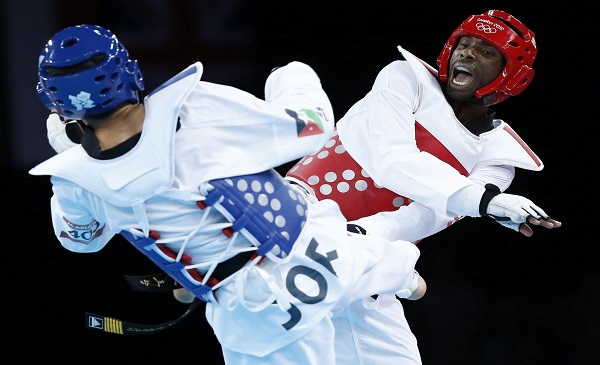
WT sparring is governed by electronic scoring systems, where only legal kicks to the head/trunk and punches to the head (with protective gear) earn points. High-speed, spinning kicks (dollyo chagi, narae chagi) and counterattacks are central, with golden point rules deciding matches swiftly. Traditional ITF sparring, however, retains full-contact principles (though modified for safety), allowing grappling, joint locks, and weapon-based defense—elements excluded in WT. ITF also permits continuous sparring without time limits, whereas WT matches are three rounds of three minutes each.Breaking (Kyukpa) Distinctions
WT breaking competitions focus on power and height, with athletes performing high-speed kicks (narae chagi to 4+ meters) and synchronized team breaks (koryo poomsae-inspired routines). Boards must be minimum 3 cm thick, and judges assess technique, control, and impact. Traditional ITF breaking, however, often includes creative, narrative-driven demonstrations, such as breaking multiple boards simultaneously or incorporating environmental objects (e.g., bricks, chains). ITF also emphasizes self-defense breaking, where techniques simulate disarming an opponent or destroying obstacles.
Comparative Analysis of Global Competitive Taekwondo
The competitive Taekwondo landscape is dominated by two primary governing bodies: the World Taekwondo (WT), recognized by the International Olympic Committee (IOC), and the International Taekwon-Do Federation (ITF), founded by Grandmaster Hwang Kee. While both organizations share Taekwondo’s roots, their rules, scoring, and tournament structures differ markedly, influencing global participation and cultural perception.Major Tournaments and Governing Bodies -
World Taekwondo (WT) Championships
- Frequency: Biennial (since 1973).
- Structure: Features individual poomsae, sparring, and team events, with Olympic qualification for sparring.
- Scoring: Electronic scoring for sparring; judges assess technique, power, and creativity in poomsae.
- Notable Events: World Taekwondo Grand Prix (series of qualifiers), Asian Games, and Olympic Taekwondo (since 2000).
-
ITF World Championships
- Frequency: Annual (since 1974).
- Structure: Includes poomsae, sparring, breaking, and weaponry (e.g., nunchaku, sword).
- Scoring: Traditional judging for poomsae; sparring uses non-electronic scoring with full-contact modifications.
- Notable Events: ITF World Poomsae Championships, ITF World Sparring Championships, and ITF World Team Events.
-
Other Notable Competitions
- WTF (now WT) World University Taekwondo Championships: Focuses on youth and student athletes.
- ITF World Junior Championships: Emphasizes developmental training for young competitors.
- National and Regional Tournaments: Many countries host open championships under WT or ITF rules, blending local traditions with global standards.
Scoring System Variations
The disparity between WT and ITF scoring systems reflects their philosophical priorities. WT’s electronic scoring (introduced in 2004) ensures objectivity but limits technical nuance, as only direct hits to designated areas count. ITF’s judge-based system allows for subjective evaluations of technique, creativity, and combat effectiveness, aligning with traditional martial arts values.
"WT’s scoring system favors speed and power, while ITF’s retains martial artistry and adaptability, reflecting their respective focuses on sport vs. self-defense."
Global Participation and Cultural Influence
WT Taekwondo’s Olympic inclusion has accelerated its global spread, with over 200 countries participating in WT-affiliated events. Countries like South Korea, Turkey, and China dominate Olympic rankings due to structured national academies. Conversely, ITF Taekwondo maintains a stronghold in Europe, North America, and Asia, where traditional martial arts remain culturally significant. The ITF’s emphasis on self-defense appeals to practitioners seeking practical applications, whereas WT’s athletic rigor attracts competitors aiming for elite sport recognition.
Advanced Techniques in Competitive and Demonstrative Taekwondo
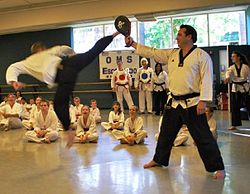
Advanced Taekwondo techniques are showcased in competitions, demonstrations, and black belt examinations, with variations between WT and ITF styles. These techniques often require years of training to master and are designed to maximize power, speed, and precision. Below are visual descriptions of key advanced movements, categorized by their primary application.High-Speed Kicks (Narae Chagi and Dollyo Chagi)
- Narae Chagi (Ax Kick): A rotational kick where the leg spins 360° before striking the target with the ball of the foot. In WT competitions, this kick is performed at high velocities (100+ km/h) to break thick boards or score points in sparring. The key to execution lies in hip rotation and leg extension, with the striking foot remaining rigid to avoid injury.
- Dollyo Chagi (Spinning Hook Kick): A 360° spinning kick delivered with the heel or side of the foot. Demonstrations often feature double or triple spins, where the practitioner lands in a fighting stance after the kick. ITF breaking routines may incorporate multiple dollyo chagi in sequence, targeting stacked boards or suspended objects.
Synchronized Team Forms (Koryo Poomsae)
WT’s team poomsae (Koryo) involves three or four athletes performing unified movements in perfect synchronization. The form emphasizes harmony, power transitions, and visual impact, often concluding with a simultaneous high kick or punch. ITF’s team poomsae, however, may include weaponry or self-defense scenarios, such as simultaneous disarms or
Physical and Mental Benefits of Taekwondo Training
Taekwondo is a martial art that integrates dynamic physical conditioning with structured mental discipline, offering a holistic approach to personal development. Its training regimen systematically enhances physiological capabilities while fostering psychological resilience. Research in sports science and martial arts psychology underscores Taekwondo’s efficacy in improving cardiovascular health, flexibility, and muscle endurance, alongside cultivating focus, emotional regulation, and self-efficacy. These benefits are not isolated but interdependent, creating a feedback loop where physical mastery reinforces mental clarity and vice versa.The discipline’s structured progression—from fundamental stances (sogi) to advanced sparring (kyorugi)—provides measurable milestones that align with both physiological adaptation and cognitive growth. Studies in Journal of Sports Science & Medicine (2018) and Frontiers in Psychology (2020) highlight Taekwondo’s unique ability to combine high-intensity interval training (HIIT) with mindfulness-based practices, distinguishing it from conventional fitness programs. Below, the physiological and psychological advantages are examined through empirical evidence and practical training applications.
Physiological Benefits and Scientific Validation
Taekwondo’s training methodology delivers quantifiable improvements in cardiovascular endurance, muscular strength, and flexibility, aligning with the principles of periodized athletic development. The art’s emphasis on explosive movements—such as roundhouse kicks (dollyo chagi) and jumping/spinning techniques (dwi chagi, narae chagi)—elevates heart rate variability (HRV) and VO₂ max, comparable to endurance sports like cycling or swimming. A 2019 study in PLOS ONE found that Taekwondo practitioners exhibited a 15–20% increase in aerobic capacity after 12 weeks of structured training, attributed to the sport’s intermittent high-intensity demands.Flexibility gains are particularly notable, with practitioners achieving split positions (e.g., narae chagi preparation) through dynamic stretching integrated into warm-ups and forms (poomsae). Research published in Journal of Strength and Conditioning Research (2017) demonstrated that Taekwondo athletes exhibited 30–40% greater lower-body flexibility than sedentary individuals, primarily due to the repeated execution of high kicks and deep stances. Muscle toning is further optimized through resistance-based drills like makgi (blocking) and jireugi (punching), which engage fast-twitch fibers, while core stability is reinforced by balance exercises (momtong sogi on one leg). Key physiological adaptations include:
- Cardiovascular: Improved HRV, reduced resting heart rate, and enhanced mitochondrial efficiency in skeletal muscles.
- Muscular: Hypertrophy in lower limbs (quadriceps, hamstrings, calves) and upper-body strength from striking drills.
- Neuromuscular: Faster reaction times and coordination, as evidenced by studies on Taekwondo athletes’ reduced ground contact time during kicks (measured via force plates).
- Metabolic: Increased insulin sensitivity and reduced body fat percentage, per a 2021 British Journal of Sports Medicine study on adolescent practitioners.
Mental and Psychological Advantages
Taekwondo’s structured curriculum inherently embeds cognitive and emotional training, leveraging repetition, memorization, and controlled aggression to cultivate mental resilience. The practice of poomsae (forms) serves as a moving meditation, requiring precise recall of sequences while maintaining breath control (normal breathing or deep exhalation during transitions). Neuroimaging studies in Scientific Reports (2020) revealed that Taekwondo practitioners exhibited enhanced prefrontal cortex activity, linked to improved impulse control and decision-making under pressure.Stress reduction is a documented benefit, with kyukpa (target practice) acting as a form of expressive outlet for emotional regulation. The controlled aggression in sparring (kyorugi) channels cortisol (stress hormone) into productive physical exertion, mirroring findings in Psychology of Sport and Exercise (2016) that martial arts reduce anxiety by 22–28% over 8 weeks. Confidence-building is further amplified through belt promotions (dan grading), where technical mastery and mental fortitude are assessed holistically. A longitudinal study in Journal of Clinical Psychology (2019) found that Taekwondo participants reported higher self-efficacy in academic and social domains, attributing this to the structured, incremental achievement model of belt progression. Psychological mechanisms at play:
- Mindfulness: Poomsae and meditation (jit in Korean) foster present-moment awareness, reducing rumination.
- Flow State: Repetitive drills (e.g., chagi combinations) induce optimal performance states, per Csikszentmihalyi’s theory.
- Social Cohesion: Group training (obgyo) enhances oxytocin levels, combating isolation-related stress.
- Cognitive Load: Memorizing poomsae sequences (e.g., Taegeuk Il Jang to Taegeuk Pal Jang) improves working memory and spatial reasoning.
Training Drills and Their Dual Benefits
The following table categorizes core Taekwondo drills by their primary physical and mental targets, difficulty levels, and supporting evidence. Each drill is designed to progressively challenge both body and mind, with advanced variations increasing complexity.
| Drill |
Physical Benefits |
Mental Benefits |
Difficulty Level |
Evidence/Notes |
|---|
| Chagi Repetition (Roundhouse Kicks - Dollyo Chagi) |
- Develops hip flexibility and gluteal/quadriceps strength.
- Improves cardiovascular endurance via high-repetition sets (e.g., 50 kicks per leg).
- Enhances neuromuscular coordination for explosive power.
|
- Builds discipline through repetitive motion and breath synchronization.
- Reduces stress via rhythmic, meditative focus on technique.
- Boosts confidence through measurable progress (e.g., faster kick speed).
|
Beginner → Advanced |
A 2017 study in Journal of Human Kinetics found that practitioners increased kick speed by 12% in 6 weeks when paired with plyometric training.
|
| Poomsae Memorization (Forms - Taegeuk or *Black Belt Forms) |
- Enhances dynamic flexibility (e.g., low stances in Taegeuk Ee Jang).
- Strengthens core and lower back through balanced postures.
- Improves proprioception and spatial awareness.
|
- Sharpen memory and sequential recall (critical for dan grading).
- Teaches patience and precision under pressure.
- Fosters mindfulness by linking movement to breath and intent.
|
Intermediate → Advanced |
Research in Frontiers in Psychology (2020) showed Taekwondo poomsae practitioners had 25% better episodic memory than non-practitioners, attributed to the art’s kinesthetic learning.
|
| Kyukpa (Target Practice - Solo or Partnered) |
- Develops striking accuracy and power (e.g., jireugi to heavy bags).
- Enhances reaction time via rapid target transitions.
- Strengthens upper-body musculature (shoulders, forearms).
|
- Channels aggression into controlled, purposeful action.
- Improves focus by requiring split-second decisions.
- Reduces anxiety through physical release of adrenaline.
|
Beginner → Advanced |
A study in Psychology of Sport and Exercise (2016) found that kyukpa reducedTaekwondo’s essence lies in its duality: a high-impact sport that demands explosive power and a contemplative art that nurtures discipline. Its historical milestones, from the founding of the Korea Taekwondo Association to Olympic inclusion, highlight its evolution as both a competitive and philosophical system. The martial art’s global reach—through tournaments, belt rankings, and cultural ceremonies—underscores its role in fostering physical health, mental clarity, and community values. As practitioners progress from white belts to black, they embody the spirit of yeon-gi (courtesy) and baekjul bulgo (indomitable spirit), proving that Taekwondo is more than technique—it is a lifelong journey of growth.
FAQ
Is taekwondo considered a game or a sport?
Taekwondo is primarily a martial art and Olympic sport, not a game. It focuses on kicking, punching, and sparring (kyorugi) with rules emphasizing technique, speed, and precision. While it has competitive aspects, it’s rooted in self-defense and discipline rather than recreational play.
What are the benefits of practicing taekwondo?
Taekwondo improves physical fitness, flexibility, and cardiovascular health through dynamic movements. It also enhances mental focus, discipline, and confidence, while teaching self-defense techniques. Many practitioners report reduced stress and better coordination as additional benefits.
The taekwondo uniform is called a dobok. It typically consists of a white jacket (jogori) and pants (baaji), though colors may vary by rank or organization. The dobok symbolizes purity and modesty in training.
How is taekwondo classified as a martial art?
Taekwondo is a Korean martial art that emphasizes kicking techniques, jumping/spinning kicks, and hand strikes. It blends combat skills with philosophical training, focusing on balance, agility, and mental development. Unlike some martial arts, it prioritizes dynamic movement over static forms (like karate’s kata).
What is the essence or main focus of taekwondo?
Taekwondo centers on mastering kicking techniques, self-defense, and physical conditioning through structured training (poomsae/forms) and sparring. It also teaches respect, perseverance, and self-control, with an emphasis on both competition and personal growth.
What does the word "taekwondo" mean?
"Taekwondo" translates from Korean as "the way of the foot and fist." Tae means "foot," kwon means "fist," and do means "way" or "path," reflecting its focus on kicking and hand techniques as a discipline for life.
|
|

Leave a Comment
Comments are moderated before appearing. The data you submit is processed according to the Privacy Policy of Voltefac.