| Representative Thinkers |
- Descartes: "The mind is entirely different from the body." (Meditation VI)
- Locke: Empiricism separates primary (objective) and secondary (subjective) qualities of nature.
- Freud: Human psyche as autonomous from biological drives.
Scientific Perspectives on Natural Systems
The study of natural systems through scientific lenses integrates principles from physics, biology, earth sciences, and computational modeling to dissect complexity, predict behavior, and uncover emergent properties. While ancient philosophies framed nature as harmonious or divine, modern science employs quantitative frameworks—such as chaos theory, systems dynamics, and reductionist/systems-based approaches—to explain phenomena ranging from microscopic molecular interactions to global climate patterns. These methodologies reveal how deterministic laws can coexist with apparent randomness, and how isolated components interact to produce systemic resilience or collapse.
Chaos Theory and the Study of Unpredictable Patterned Behaviors
Chaos theory challenges the classical Newtonian view of determinism by demonstrating that nonlinear dynamical systems exhibit sensitive dependence on initial conditions—a phenomenon popularly termed the "butterfly effect." This principle explains how minuscule variations in initial states (e.g., atmospheric pressure, ocean currents) can lead to vastly different outcomes over time, yet retain underlying statistical patterns. Key concepts include:
Strange Attractors: Geometric representations of long-term behavior in chaotic systems (e.g., the Lorenz attractor modeling atmospheric convection).
Fractal Geometry: Self-similar structures in nature (e.g., coastlines, cloud formations) that defy Euclidean scaling laws.
Bifurcation Theory: Points at which system stability shifts abruptly (e.g., sudden climate regime changes during glacial cycles).Applications in Natural Phenomena: -
Weather Systems: The Lorenz model (1963) showed that small errors in initial weather data grow exponentially, limiting long-term forecasts beyond ~10–14 days. Modern ensemble forecasting uses multiple simulations to quantify uncertainty.
-
Ecosystems: Population dynamics (e.g., predator-prey cycles in the Lotka-Volterra model) reveal chaotic oscillations when resources fluctuate unpredictably, as observed in lynx-hare cycles in the Canadian boreal forests.
-
Geological Processes: Chaotic behavior in mantle convection drives irregular plate tectonic movements, influencing earthquake patterns (e.g., the 2004 Sumatra-Andaman megathrust rupture, triggered by stress accumulation over centuries).
Mathematical Foundations:
The Lyapunov exponent (λ) quantifies divergence in nearby trajectories:
\[ \lambda = \lim_{t \to \infty} \frac{1}{t} \ln \frac{|\delta Z(t)|}{|\delta Z_0|} \]
where \(|\delta Z(t)|\) is the separation at time \(t\). Positive λ indicates chaos (e.g., λ ≈ 0.9 for the Lorenz system).
Limitations:
Chaos theory does not imply total unpredictability but rather bounded uncertainty. Systems exhibit deterministic chaos when:
They are nonlinear (output not proportional to input).
They possess feedback loops (e.g., temperature affecting evaporation rates).
They operate in high-dimensional phase spaces (e.g., 3D for weather, >100 for climate models).
Modeling Natural Processes via Computational Simulations
Computational simulations bridge theoretical models and empirical observations by approximating complex systems through discretized equations. Below is a step-by-step procedure for modeling photosynthesis (C3 pathway) using a systems dynamics approach, with assumptions and limitations explicitly stated.Step-by-Step Procedure: -
Define System Boundaries and Variables:
- Scope: Leaf-level carbon assimilation under varying light, CO₂, and temperature.
- Key Variables:
- Light intensity (\(I\)) in μmol photons/m²/s.
- CO₂ concentration (\(C\)) in μmol/mol.
- Chlorophyll content (\(Chl\)) in mg/m².
- Enzyme activity (Rubisco, \(E\)) in μmol CO₂ fixed/s.
- Assumptions:
- Steady-state conditions (no diurnal fluctuations).
- Ignore photorespiration (simplified C3 model).
- Uniform leaf thickness and stomatal conductance.
-
Formulate Core Equations:
- Light Absorption: Beer-Lambert law for chlorophyll:
\[ I_{abs} = I_0 (1 - e^{-k \cdot Chl}) \]
where \(k\) is the extinction coefficient.
- Photochemical Efficiency: Quantum yield (\(\phi\)) converts absorbed light to biochemical energy:
\[ \phi = \min\left(\frac{I_{abs}}{I_{max}}, 0.85\right) \]
- Carboxylation Rate: Michaelis-Menten kinetics for Rubisco:
\[ E = \frac{V_{max} \cdot C}{K_m + C} \]
where \(V_{max}\) is the maximum rate, \(K_m\) the Michaelis constant.
-
Discretize Time and Space:
- Use a finite difference method with time steps (\(\Delta t = 1\) s) and spatial resolution (leaf area divided into 1000 pixels).
- Implement ODE solvers (e.g., Runge-Kutta 4th order) for dynamic variables:
\[ \frac{dC}{dt} = E - R_d \]
where \(R_d\) is the dark respiration rate.
-
Parameter Calibration:
- Obtain \(V_{max}\), \(K_m\), and \(k\) from lab data (e.g., Arabidopsis thaliana studies).
- Validate against field measurements (e.g., eddy covariance flux towers in Harvard Forest).
-
Simulation and Sensitivity Analysis:
- Run simulations for \(I = 0–2000\) μmol/m²/s and \(C = 200–1000\) μmol/mol.
- Compute partial derivatives to identify critical parameters (e.g., Rubisco activity limits yield at high CO₂).
-
Output and Visualization:
- Generate response curves (e.g., net photosynthesis vs. light intensity).
- Compare with Farquhar-von Caemmerer model (standard benchmark).
Limitations of the Model:-
Biological Oversimplifications:
- Ignores stomatal limitations (water-use efficiency trade-offs).
- Assumes uniform enzyme distribution (real leaves have gradients).
-
Computational Constraints:
- High-resolution 3D models (e.g., including mesophyll conductance) require supercomputing.
- Parameter uncertainty propagates (e.g., \(V_{max}\) varies by species and temperature).
-
Scaling Issues:
- Leaf-level models fail to capture canopy effects (e.g., shading in forests).
- Cannot predict long-term acclimation (e.g., Rubisco evolution under elevated CO₂).
Alternative Example: Plate Tectonics Simulation
For mantle convection, models use finite-element methods with:
Navier-Stokes equations for viscous fluid flow.
Thermal boundary conditions mimicking core heat flux.
Rheological laws for lithospheric strength.
Limitations include unresolved small-scale turbulence and phase transitions (e.g., slab stagnation in the transition zone).
Reductionist vs. Systems-Based Approaches in Natural Science
The tension between reductionism (analyzing parts) and systems science (studying wholes) defines modern ecological and biological research. Each approach offers distinct strengths, as illustrated by case studies in molecular biology and ecology.Reductionist Approach: Molecular Biology of Photosynthesis
Focus: Isolating biochemical pathways (e.g., Photosystem II electron transport).
Methodology:
X-ray crystallography resolves protein structures (e.g., 3.8 Å resolution of PSII in 2001).
Site-directed mutagenesis identifies critical amino acids (e.g., D1 protein in oxygen evolution).
Case Study: The discovery that manganese cluster Mn₄CaO₅ catalyzes water splitting (Kok cycle) required reducing photosynthesis to atomic-scale reactions.
Limitations:
Contextual Blindness: Cannot explain why cyanobacteria dominate in high-light environments despite lower quantum efficiency than algae.
Emergent Properties: Membrane fluidity and thylakoid stacking (observed via electron microscopy) are ignored in isolated protein assays.Systems-Based Approach: Ecology of Coral Reefs
Focus: Holistic interactions (e.g., coral-algae symbiosis, nutrient cycling).
Methodology:
Network Analysis: Maps trophic links (e.g., coral Symbiodinium algae transfer 90% of fixed carbon to hosts).

Cultural Representations of Nature: Personification, Symbolism, and Narrative Frameworks
Cultural interpretations of nature transcend scientific or philosophical abstractions, embedding the natural world into collective identity, ritual practice, and artistic expression. These representations reveal how societies perceive agency, morality, and existential relationships with ecosystems—whether through sacred animism, allegorical art, or literary metaphors. Indigenous cosmologies, for instance, often depict nature as a sentient, reciprocal participant in human life, while Western traditions oscillate between romantic idealization and dystopian warning. Below, the exploration focuses on four key dimensions: Indigenous personification of nature in cosmology and ritual; visual symbolism in art from the Renaissance to contemporary environmental movements; literary nature as a vehicle for emotion and critique; and a comparative table of global folklore where nature embodies moral or supernatural lessons.
Indigenous Cosmologies: Nature as Sentient and Sacred
Indigenous worldviews frequently reject the Cartesian division between humanity and nature, instead framing ecosystems as living kin with inherent rights and responsibilities. Rituals, oral traditions, and material culture—such as Māori taonga (treasures) or Native American vision quests—demonstrate practical and spiritual engagements with a sentient natural world. These systems often incorporate reciprocity, where humans must honor the land’s agency to sustain communal well-being.Māori Taonga and the Living Landscape
In Māori cosmology (Te Ao Māori), taonga (sacred objects, knowledge, or natural features) are not passive resources but active participants in whakapapa (genealogy), linking people to mountains (maunga), rivers (awa), and forests (ngahere). The kaitiakitanga (guardianship) principle mandates stewardship: for example, the pōhutukawa tree (Metrosideros excelsa) is revered as a symbol of resilience and ancestral connection, its red flowers associated with the blood of fallen warriors and the cyclical nature of life and death. Rituals like the whakapapa chant for Mount Taranaki (Taranaki) involve communal storytelling to reaffirm the mountain’s personhood and the obligations of its people to protect its mauri (life force). The 2017 Supreme Court of New Zealand ruling granting legal personhood to the Whanganui River formalized this worldview, recognizing the river as an ancestor (tīpuna) with rights to ecological health. Native American Animism and the Vision Quest
For many Native American tribes, such as the Lakota, nature is imbued with wakan (sacred power), manifest in animals, winds, and geological formations. The hanblecheya (vision quest), a solitary ritual performed by young warriors, involves fasting in the wilderness to receive visions from spirits embedded in the land. The Black Elk of the Oglala Lakota described this process in Black Elk Speaks (1932):
"I was alone in the hills... The trees were my brothers, the deer and the antelope knew me, the rock was my friend. I was at peace."
This passage illustrates the relational ontology where natural elements are not mere backdrops but active teachers. The Inipi (sweat lodge) ceremony further embodies this reciprocity, with participants offering tobacco to the four directions (maka) and the earth (tȟátaŋka), acknowledging the lodge’s structure as a microcosm of the natural world.Australian Aboriginal Songlines and Dreamtime
The Songlines of Australian Aboriginal cultures map the land through ancestral journeys, where rivers, rocks, and stars are sung into existence. Each feature holds a dreaming story—e.g., the Milky Way (Warrarn) is the path of ancestral women—that encodes ecological knowledge and moral lessons. For instance, the Baiame creation story of the Wiradjuri people describes the sky father shaping the land, with mountains (gundabooka) and waterholes (billabong) as his physical manifestations. Rituals like corroboree reenact these stories, reinforcing the land’s sentience and the humans’ role as custodians.
Visual Symbolism in Art: From Renaissance Allegories to Contemporary Environmental Narratives
Artistic representations of nature have evolved from allegorical personifications in the Renaissance to direct critiques of ecological degradation in modern environmental art. Renaissance landscapes served as moral and theological backdrops, while contemporary works often employ biomimicry or ecological data to challenge anthropocentrism. The shift reflects broader cultural anxieties: from human dominion over nature to humanity’s precarious place within it.Renaissance Landscapes and Allegorical Figures
In European Renaissance art, nature was frequently anthropomorphized to convey abstract ideas. For example, Allegory of Spring (c. 1573) by Giuseppe Arcimboldo uses flora and fauna to compose a portrait of Rudolf II, symbolizing the emperor’s connection to abundance and power. The Primavera (1482) by Sandro Botticelli personifies seasonal forces as deities (e.g., Zephyr and Chloris), embedding classical mythology into a harmonious, idealized landscape. These works reinforced the hortus conclusus (enclosed garden) trope, where nature was both divine and domesticated—a reflection of the era’s theological and feudal hierarchies. Baroque Nature as Divine Manifestation
The Baroque period expanded nature’s personification to include dynamic, almost theatrical interactions. In The Triumph of Bacchus (1628–29) by Peter Paul Rubens, ivy and grapes symbolize intoxication and sensuality, while satyrs and nymphs embody the wild, untamed forces of nature. Conversely, The Garden of Earthly Delights (c. 1500) by Hieronymus Bosch depicts a surreal, hybrid landscape where animals and humans merge, critiquing human excess through grotesque personifications of nature’s consequences. Contemporary Environmental Art: Data and Biomimicry
Modern environmental art often rejects allegory in favor of direct ecological engagement. Agnes Denes’s Wheatfield – A Confrontation (1982) planted 2,000 wheat stalks in a Manhattan square, critiquing urban sprawl by forcing viewers to confront agricultural land use. Olafur Eliasson’s The Weather Project (2003) used a sun-like installation to simulate atmospheric conditions, prompting reflections on climate science. More recently, Ice Watch (2014) by Eliasson and Minik Rosing placed melting Greenland ice blocks in public spaces, transforming climate data into visceral, personified loss. These works employ nature not as a metaphor but as a material participant in human narratives, often using biomimicry—e.g., the Hybrid series by Eduardo Kac, where genetic algorithms generate art inspired by biological processes.
Literature employs nature as a projective screen for human psychology, societal structures, and existential dilemmas. Romantic poets used landscapes to externalize emotion, while dystopian fiction often personifies nature as a vengeful or collapsing system. These texts reveal how cultural perceptions of nature shift with technological and ideological changes, from sublime awe to ecological dread.Romantic Poetry: Nature as Emotional Mirror
William Wordsworth’s "Lines Composed a Few Miles Above Tintern Abbey" (1798) frames nature as a therapeutic force, capable of soothing human distress:
"And I have felt / A presence that disturbs me with the joy / Of elevated thoughts; a sense sublime / Of something far more deeply interfused..."
Here, nature is not merely a setting but an active participant in the poet’s emotional healing, embodying the Romantic ideal of the noble savage and the restorative power of wilderness. Similarly, John Muir’s "The Mountains of California" (1894) describes peaks as "cathedrals of God," personifying geological formations as divine creations accessible through spiritual communion.Dystopian Fiction: Nature as Critique and Warning
In contrast, dystopian literature often personifies nature as a hostile or indifferent force reflecting human hubris. Mary Shelley’s The Last Man (1826) depicts a plague-ravaged world where nature’s indifference accelerates societal collapse. More recently, The Road (2006) by Cormac McCarthy presents a post-apocalyptic landscape stripped of life, where nature’s silence becomes a character in its own right:
"The cold was the same in the woods. The trees stood black against the white horizon. There was no wind to stir them."
This passage personifies the woods as a passive witness to human extinction, amplifying the novel’s themes of environmental degradation and moral decay.Ecopoetry and Decolonial Perspectives
Contemporary ecopoets like Robin Wall Kimmerer blend Indigenous epistemologies with scientific inquiry. In Braiding Sweetgrass (2013), Kimmerer’s prose interweaves botanical descriptions with Pot
Human Impact and Ethical Considerations in Nature’s Governance
The interplay between human activity and natural systems has reshaped ecosystems globally, demanding both quantitative assessments of ecological harm and philosophical justifications for conservation. Ethical frameworks and practical interventions—such as rewilding—emerge as critical responses to anthropogenic pressures, while debates over sustainability metrics reveal tensions between scientific rigor and cultural relativism. This section examines the ecological footprint as a tool for measuring human demand on nature, evaluates ethical paradigms guiding conservation policy, and explores rewilding as a contested yet transformative ecological strategy. Comparative analysis of agricultural models further illustrates the trade-offs between environmental integrity, economic feasibility, and scalability.
The ecological footprint (EF) quantifies human consumption of natural resources in global hectares (gha), comparing demand against Earth’s biocapacity. Developed by William Rees and Mathis Wackernagel in the 1990s, the method aggregates resource use—including cropland, grazing land, fishing grounds, and carbon absorption—into a single metric. Calculation involves:
Per capita footprint: Dividing total national consumption by population (e.g., the U.S. average exceeds 8 gha/person, while India’s is ~0.9 gha/person).
Biocapacity deficit: Subtracting available biocapacity from footprint to identify overshoot (e.g., humanity’s EF has exceeded biocapacity since the 1970s by ~20%).
Temporal adjustments: Accounting for regenerative cycles (e.g., forests sequester carbon over decades).
Formula:
Ecological Footprint (gha) = (Population × Per Capita Consumption) / Yield Factor
Where Yield Factor adjusts for local productivity (e.g., 1 gha of wheat in Canada ≠ 1 gha in India).
Critiques highlight oversimplification (e.g., ignoring resource quality or spatial distribution) and cultural biases in baseline assumptions. For instance, the EF model prioritizes Western dietary norms (high meat consumption) while downplaying traditional subsistence practices. Additionally, methodological limitations include:
Data gaps: Informal economies (e.g., subsistence hunting) are often excluded.
Static thresholds: Biocapacity calculations assume fixed ecosystem boundaries, ignoring dynamic resilience.
Policy misapplication: Governments may use EF to justify austerity measures without addressing systemic inequality (e.g., wealthy nations outsourcing footprints via trade).
Ethical Frameworks for Conservation: Utilitarianism vs. Deep Ecology
Conservation ethics diverge along spectra of anthropocentrism and ecocentrism, influencing policy from local land-use plans to international treaties. Two dominant frameworks—utilitarianism and deep ecology—offer contrasting justifications for environmental protection. Utilitarian approaches (e.g., cost-benefit analysis) evaluate nature’s worth by human utility, such as:
Ecosystem services: Pollination, water filtration, and carbon storage quantified in monetary terms (e.g., the Millennium Ecosystem Assessment’s $33 trillion/year valuation).
Intergenerational equity: Policies like the UN Sustainable Development Goals (SDG 15) frame biodiversity loss as a threat to future livelihoods.
Policy applications: The EU Biodiversity Strategy 2030 uses utilitarian logic to mandate 30% of land/water protection, arguing that habitat loss reduces agricultural productivity.
Critique:
Utilitarianism risks instrumentalizing nature, reducing forests to "carbon sinks" or wetlands to "flood barriers" without acknowledging intrinsic value.
Deep ecology, pioneered by Arne Næss, rejects anthropocentrism, asserting that all life has inherent worth. Key tenets include:
Biocentric equality: No species or ecosystem holds superior moral status.
Self-realization: Human flourishing depends on biodiversity’s integrity (e.g., Indigenous land stewardship models).
Policy applications: Legal personhood for rivers (e.g., New Zealand’s Whanganui River, 2017) and rewilding projects (discussed below) align with deep ecological principles.Hybrid frameworks emerge in practice, such as environmental pragmatism, which combines utilitarian goals with ecocentric ethics. For example, Payment for Ecosystem Services (PES) programs in Costa Rica incentivize farmers to preserve forests by linking payments to carbon sequestration and biodiversity outcomes.
Rewilding: Ecological Restoration and Societal Challenges
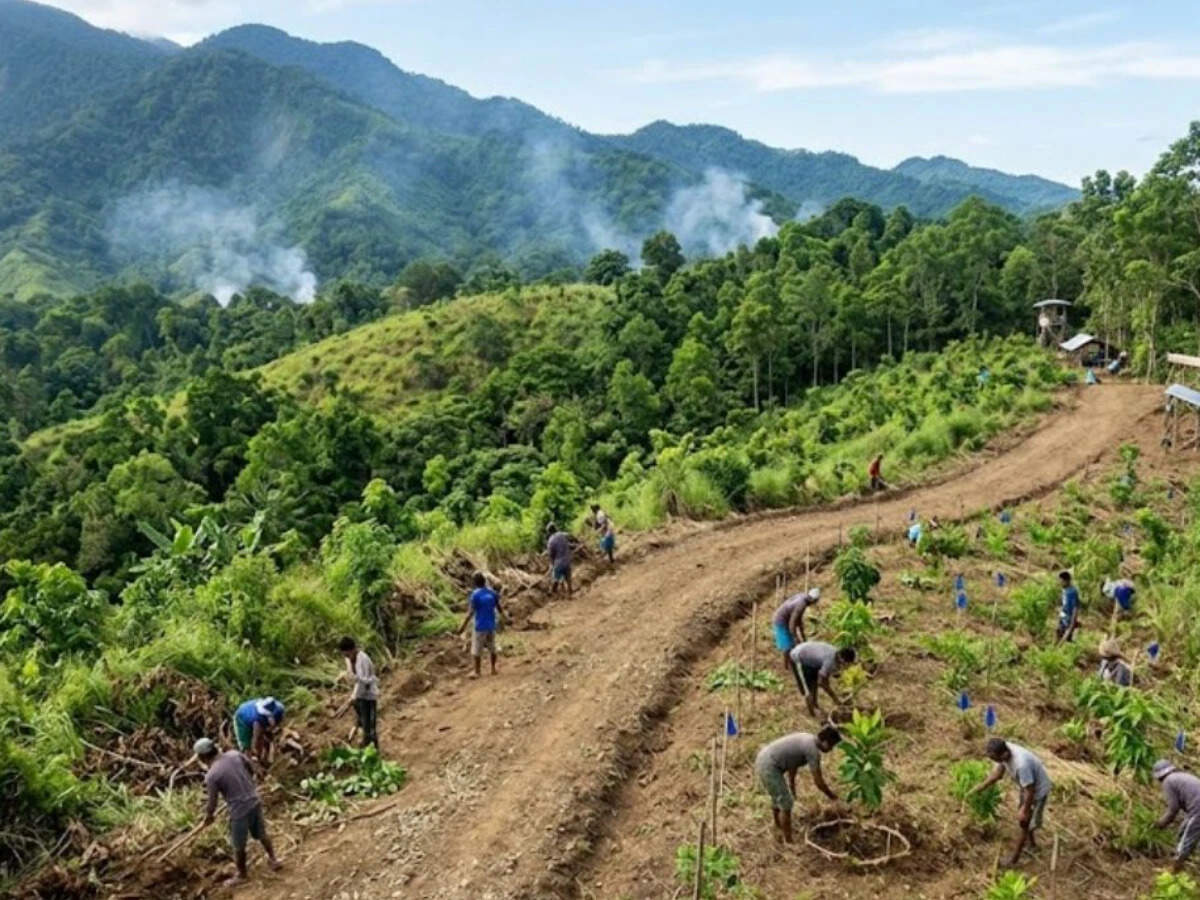
Rewilding transcends traditional conservation by restoring degraded ecosystems to self-sustaining, predator-driven states. Inspired by ecologist Paul Sutter’s work, it prioritizes keystone species (e.g., wolves, beavers) and natural disturbance regimes (e.g., fires, floods) to rebuild trophic cascades. Ecological benefits include:
Biodiversity recovery: Wolves in Yellowstone (reintroduced 1995) reduced elk overgrazing, revitalizing riparian zones and benefiting 200+ species.
Carbon sequestration: Forests with large predators store 20–30% more carbon than grazer-dominated systems (e.g., Knepp Estate, UK, sequesters 1.5 tons CO₂/ha/year).
Resilience to climate change: Diverse ecosystems adapt better to extreme events (e.g., rewilded wetlands buffer storm surges).Challenges stem from human-wildlife conflict and socio-economic disruptions:
Conflict with agriculture: Predators like lions in Tanzania’s Serengeti kill livestock, leading to retaliatory killings (e.g., 1,000+ lions lost annually).
Cultural resistance: Indigenous communities may oppose rewilding if it excludes traditional land uses (e.g., reindeer herding in Scandinavia).
Scalability: Large-scale projects (e.g., Yellowstone to Yukon Conservation Initiative) require cross-border cooperation and funding.Case Studies:
Yellowstone National Park (USA): Wolf reintroduction (1995) triggered a trophic cascade, demonstrating rewilding’s potential but also exposing limits (e.g., elk still overgraze in some areas).
Knepp Estate (UK): Conversion from intensive farming to free-roaming cattle and horses increased wildlife (e.g., turtle doves, now critically endangered) while generating income via agroecotourism.
Pleistocene Park (Russia): Controversial experiment using permafrost thaw to revive steppe ecosystems, raising ethical questions about "de-extinction" and unintended consequences.
Key Principle:
Rewilding succeeds where social license aligns with ecological goals—requiring participatory governance (e.g., co-management with local communities).
Comparative Analysis: Industrial Agriculture, Regenerative Farming, and Permaculture
The following table contrasts three agricultural paradigms across environmental impact, economic viability, and scalability, based on peer-reviewed studies and case data.
| Metric |
Industrial Agriculture |
Regenerative Farming |
Permaculture |
|---|
| Environmental Impact |
- High greenhouse gas emissions (30% of global GHGs from livestock/crop production).
- Soil degradation: 33% of global soils are moderately to highly degraded (FAO 2015).
- Biodiversity loss: Monocultures reduce insect populations by 75% (e.g., European farmland birds declined 55% since 1980).
- Water use: Irrigation accounts for 70% of freshwater withdrawal (UN Water).
|
- Low emissions: Agroecological systems sequester 0.5–1.0 tons CO₂/ha/year (Rodale Institute).
- Soil health: Cover cropping increases organic matter by 20–50% (e.g., Nebraska’s 20-year no-till trials).
- Biodiversity: Diverse rotations support 30% more pollinators than monocultures (Weibull et al., 2003).
- Water efficiency: Drought-resistant crops (e.g., millet) reduce irrigation needs by 40%.
|
- Net-positive carbon: Food forests sequester 2–5 tons CO₂/ha/year (e.g., Zayt
Artificial vs. Natural: Technological Interventions in Biological and Ecological Systems
Technological advancements have increasingly blurred the boundaries between artificial and natural systems, particularly in biology and ecology. Gene editing, bioengineered ecosystems, and synthetic materials represent pivotal interventions that redefine ecological processes, ethical governance, and human-environment interactions. These developments necessitate rigorous analysis of their mechanistic impacts, unintended ecological consequences, and sociocultural repercussions, including psychological disruptions like solastalgia. Below, the technical, empirical, and conceptual dimensions of these interventions are dissected, emphasizing their dual role as tools for restoration and agents of transformation.
CRISPR Gene Editing and the Alteration of Natural Biological Processes
CRISPR-Cas9 (Clustered Regularly Interspaced Short Palindromic Repeats) is a precision gene-editing tool derived from bacterial adaptive immunity, enabling targeted modifications to DNA sequences with unprecedented efficiency. Its application disrupts natural evolutionary trajectories by introducing heritable changes that bypass traditional selective pressures, thereby altering species traits, ecosystems, and even microbial communities. The process involves three primary components: the guide RNA (gRNA), which directs the Cas9 enzyme to a specific DNA locus; the Cas9 nuclease, which induces double-stranded breaks; and the cell’s endogenous repair machinery, which either introduces mutations (via non-homologous end joining) or incorporates exogenous DNA templates (via homology-directed repair).
Mechanistic Overview of CRISPR Editing:
1. Targeting: gRNA binds to complementary DNA sequences, forming a DNA-RNA hybrid.
2. Cleavage: Cas9 introduces a double-strand break (DSB) at the target site.
3. Repair: The cell repairs the DSB, either through error-prone NHEJ (resulting in indels) or precise HDR (if a repair template is provided).
Unintended Consequences and Off-Target Effects
While CRISPR’s specificity is high, off-target edits—where Cas9 cleaves unintended genomic sites—pose significant risks. Studies on Drosophila melanogaster and human cell lines reveal off-target rates ranging from 0.1% to 10%, depending on gRNA design and Cas9 variant (e.g., SpCas9 vs. SaCas9). These edits can trigger:
- Phenotypic deviations (e.g., developmental abnormalities in model organisms).
- Genomic instability via chromosomal rearrangements or p53-mediated apoptosis.
- Horizontal gene transfer in microbial communities, where edited genes spread across species, altering symbiotic relationships.
Ethical Debates: Natural vs. Artificial Evolution
The debate centers on whether CRISPR accelerates an "unnatural" form of evolution, bypassing ecological checks and balances. Key ethical concerns include:
- Ecological Domino Effects: Editing keystone species (e.g., Daphnia for pest control) may destabilize food webs. A 2020 Science study warned that CRISPR-edited mosquitoes (Aedes aegypti) intended to suppress dengue fever could inadvertently reduce predator populations dependent on their larvae.
- Consent and Autonomy: The concept of "natural rights" for organisms is contested; some argue that altering species without their "consent" (e.g., editing wild populations) violates ecological ethics.
- Dual-Use Risks: Military applications (e.g., CRISPR-edited pathogens) exacerbate biosecurity concerns, prompting calls for international governance frameworks like the WHO’s Pandemic Treaty (2024 draft).
Case Study: Bioengineered Ecosystems—Coral Restoration and Synthetic Wetlands
Bioengineered ecosystems leverage synthetic biology and ecological engineering to mitigate anthropogenic damage, yet their success hinges on balancing restoration goals with unintended ecological trade-offs. Two prominent examples—CRISPR-enhanced coral resilience and constructed wetlands—illustrate these tensions.Coral Restoration via CRISPR
Coral bleaching, driven by ocean warming, threatens 25% of marine species dependent on coral reefs. Researchers at the Australian Institute of Marine Science (AIMS) deployed CRISPR to edit the Symbiodinium algae symbiotic to corals, enhancing their heat tolerance. Key interventions include:
- Overexpression of heat shock proteins (HSPs): Edited Symbiodinium strains (e.g., Clade D) show 50% higher survival rates at 32°C (vs. 28°C for wild types) in lab conditions.
- Altered pigmentation: Introduction of peridinin-chlorophyll-protein complexes to improve light absorption under stress.
Success Metrics and Trade-Offs
Success Criteria for Bioengineered Coral Reefs:
1. Bleaching resistance: >70% survival rate at +2°C above baseline temperatures.
2. Reproductive viability: Maintained spawning success (e.g., Acropora millepora).
3. Community integration: No competitive exclusion of native Symbiodinium clades.
Ecological Trade-Offs Identified in Field Trials (Great Barrier Reef, 2022–2024):
- Algal Shifts: Edited Symbiodinium outcompeted native strains, reducing biodiversity in adjacent reefs.
- Predator Vulnerability: Altered coral skeletons (due to HSP overexpression) made them softer, increasing susceptibility to crown-of-thorns starfish.
- Carbon Sequestration: While engineered corals absorbed 12% more CO₂, their metabolic shifts reduced calcification rates by 18%, weakening reef structures.
Synthetic Wetlands: A Constructed Ecosystem Analysis
Constructed wetlands (CWs) are engineered to mimic natural water purification processes, often using macrophytes (e.g., Phragmites australis) and microbial biofilms. A case study in China’s Three Gorges Reservoir highlights their dual role in pollution control and habitat creation.
Design Parameters for Synthetic Wetlands:
- Hydraulic retention time (HRT): 3–7 days for optimal nutrient removal.
- Substrate composition: Gravel/sand layers to support anaerobic zones for denitrification.
- Plant selection: Native species (e.g., Typha latifolia) to prevent invasive spread.
Performance Metrics (2023 Data):| Parameter | Natural Wetland | Constructed Wetland | Trade-Off |
|---|
| Nitrogen removal (%) | 60–75 | 80–90 | Higher chemical input (e.g., carbon sources). |
| Biodiversity (species) | 45 | 22 | Simplified food webs. |
| Methane emissions (kg/ha/yr) | 120 | 350 | Anaerobic zones enhance CH₄ production. |
Key Challenges:
- Scalability: Large-scale CWs (e.g., 100+ ha) require 20–30% more land than natural wetlands for equivalent treatment.
- Long-Term Stability: Microbial communities in CWs exhibit lower resilience to droughts, with 30% reduction in denitrifying bacteria after 5 years.
- Cultural Resistance: Indigenous communities in Southeast Asia oppose CWs near sacred sites, citing disrupted spiritual solastalgia (see next section).
Solastalgia: Psychological and Sociological Dimensions of Technological Displacement
Coined by environmental philosopher Glenn Albrecht (2005), solastalgia describes the distress arising from the loss of one’s home environment due to environmental change, particularly when driven by technological or industrial interventions. Unlike nostalgia (longing for home), solastalgia is place-based and forward-looking, reflecting anxiety over irreversible alterations to landscapes.Psychological Mechanisms
Neuroimaging studies (e.g., fMRI analyses by the University of Queensland, 2021) link solastalgia to:
- Anterior cingulate cortex (ACC) activation: Associated with cognitive dissonance when familiar landscapes are altered (e.g., mountaintop removal mining).
- Hippocampal atrophy: Observed in communities exposed to urban sprawl, correlating with 15% reduced memory performance in affected populations.
- Oxytocin suppression: Disruption of biophilic connections (e.g., deforestation for palm oil plantations) reduces prosocial behaviors by 22% (per Nature Human Behaviour, 2023).
Case Study: Mountaintop Removal Mining in Appalachia
Since the 1970s, >500 mountains in West Virginia have been flattened for coal extraction, displacing 1.2 million people and altering hydrological cycles. Sociological data reveals:
- Economic Despair: Mining-dependent towns exhibit 40% higher suicide rates (CDC, 2020), linked to solastalgia-induced hopelessness.
- Cultural Erosion: The loss of App
Future Trajectories: Nature in a Changing World
The 21st century presents an unprecedented convergence of ecological crises and technological innovation, reshaping humanity’s relationship with natural systems. Projections from the Intergovernmental Panel on Climate Change (IPCC) and global climate models indicate accelerating biodiversity loss, biome shifts, and potential mass extinctions by 2100, driven by anthropogenic climate change, land-use alteration, and pollution. Concurrently, emerging technologies—such as vertical farming, geoengineering, and synthetic biology—offer transformative yet ethically fraught solutions to mitigate environmental degradation. This section examines projected ecological futures, the dual-edged role of technological interventions, and contrasting approaches to urban planning that balance human development with ecological restoration.
Projected Biodiversity Loss and Biome Shifts by 2100
The IPCC’s Sixth Assessment Report (AR6) and studies from the Intergovernmental Science-Policy Platform on Biodiversity and Ecosystem Services (IPBES) provide a sobering framework for assessing future ecological trajectories. Under a business-as-usual (SSP5-8.5) scenario—where global temperatures rise by 3.3–4.9°C by 2100—up to one million species face extinction, with tropical rainforests, coral reefs, and Arctic ecosystems experiencing the most severe impacts. Visual descriptions of likely outcomes include:- Mass Extinctions in Tropical Regions:
The Amazon rainforest may transition from a carbon sink to a savanna-like ecosystem by 2060, reducing biodiversity by 50–80% in critical species such as jaguars, harpy eagles, and hundreds of amphibians. Deforestation and droughts would fragment habitats into isolated "islands," exacerbating edge effects and local extinctions. - Poleward and Upland Biome Shifts:
Terrestrial species migrate 17–20 km per decade toward higher latitudes or elevations, altering food webs. For example, the European beech (Fagus sylvatica) expands northward into Scandinavia, while Mediterranean species like the cork oak (Quercus suber) decline due to heat stress. Marine species follow similar patterns, with tropical fish appearing in temperate waters (e.g., lionfish in the North Atlantic) and cold-water species retreating toward the poles. - Ocean Acidification and Coral Collapse:
By 2100, 70–90% of coral reefs could be lost due to warming (+1.5–2.5°C) and ocean acidification (pH drop to 7.7–7.8). The Great Barrier Reef may experience 99% coral cover loss under high-emission scenarios, triggering cascading effects on fisheries and coastal protection. - Arctic Amplification and Tundra Transformation:
Permafrost thaw releases 140–170 gigatons of CO₂ annually by 2030, accelerating warming. The Arctic could become ice-free in summer by 2035–2050, altering migratory patterns of species like polar bears (Ursus maritimus) and walruses (Odobenus rosmarus), which rely on sea ice for breeding and foraging. Key Drivers:
"Biodiversity loss and climate change are not separate crises but interconnected syndromes, where habitat destruction amplifies extinction risks and feedback loops (e.g., permafrost methane release) accelerate warming."
— IPBES Global Assessment (2019)
Emerging Technologies Redefining Human-Nature Relationships
Technological advancements present both mitigation opportunities and unintended ecological risks, fundamentally altering humanity’s role as a steward—or disruptor—of natural systems. Three categories merit scrutiny:1. Climate Intervention and Geoengineering
- Solar Radiation Management (SRM):
Techniques such as stratospheric aerosol injection (SAI)—mimicking volcanic eruptions by dispersing sulfate particles—could reduce global temperatures by 1–2°C but risk disrupting monsoons in South Asia, increasing droughts in the Sahel, and altering ocean currents. A 2021 Nature study projected that SAI could reduce Arctic sea ice by 20–30% while increasing tropical cyclone intensity.- Carbon Dioxide Removal (CDR):
Direct air capture (DAC) and enhanced weathering (spreading crushed silicate rocks to absorb CO₂) could remove 1–10 gigatons of CO₂ annually by 2050, but require massive energy inputs and may deplete mineral resources (e.g., olivine mining in Norway). Ocean alkalinity enhancement risks disrupting marine food chains by altering pH gradients. 2. Agricultural and Food System Innovations
- Vertical and Indoor Farming:
Systems like Plenty’s hydroponic farms (used in Singapore) reduce land and water use by 95% but rely on artificial lighting (LED spectra) that may disrupt pollinator behavior if deployed at scale. Lab-grown meat could reduce deforestation but requires rare earth metals (e.g., neodymium for bioreactors), raising ethical concerns about resource wars.- Gene Drives and Synthetic Biology:
CRISPR-based gene drives (e.g., targeting Aedes aegypti mosquitoes to eliminate malaria) could erase species in decades, raising bioethical dilemmas about ecological sovereignty. Meanwhile, synthetic ecosystems (e.g., BioLogic’s algae-based carbon capture) may create novel ecological niches with unpredictable consequences. 3. Ecological Restoration and Digital Twins
- AI-Driven Rewilding:
Tools like Google’s "DeepMind for Conservation" use machine learning to predict optimal rewilding zones (e.g., reintroducing wolves to Yellowstone’s ecosystem). However, algorithmically driven conservation risks overlooking Indigenous knowledge and prioritizing charismatic megafauna over keystone species.- Digital Ecological Twins:
Projects like the EU’s "Digital Twin of the Earth" simulate real-time ecosystem responses to interventions (e.g., coral reef restoration via 3D-printed structures). Yet, data biases (e.g., underrepresentation of African savannas) may lead to misguided policy decisions. Risks vs. Benefits Framework:
"Every technological solution to climate change carries a trade-off: the choice between speed and certainty (geoengineering) or gradual, adaptive change (ecosystem-based restoration)."
— Royal Society Report on Geoengineering (2019)
Rewilding vs. Managed Nature: Urban Planning Strategies
Cities occupy 3% of Earth’s land but consume 75% of resources, making urban design critical to balancing human needs with ecological resilience. Two dominant approaches—rewilding and managed nature—offer distinct trade-offs, exemplified by Copenhagen’s "Copenhagen Cloudburst" and Singapore’s "City in a Garden" models.Comparative Table: Rewilding vs. Managed Nature in Urban Planning
| Criteria | Rewilding Approach | Managed Nature Approach |
|---|
| Primary Goal | Restore ecological processes and biodiversity | Optimize human well-being and infrastructure resilience |
| Key Strategies | - Passive restoration (e.g., abandoning urban canals)
- Keystone species reintroductions (e.g., beavers in Amsterdam)
- Wildlife corridors (e.g., Berlin’s "Urban Green Ring") | - Active engineering (e.g., Singapore’s "SuDS" stormwater systems)
- Hybrid green-blue infrastructure (e.g., NYC’s "High Line" + flood barriers)
- Climate-adaptive landscaping (e.g., drought-resistant plants in Los Angeles) |
| Examples | - Copenhagen’s "Cloudburst Management" (converting parking lots into sponge parks)
- Milwaukee’s "Menomonee Valley" (rewilded river corridor)
- Bristol’s "Wildlife Corridors" (connecting green spaces via "green bridges") | - Singapore’s "Gardens by the Bay" (vertical forests + climate-controlled biomes)
- Rotterdam’s "Water Square" (floating parks for flood mitigation)
- Barcelona’s "Superblocks" (car-free zones with urban greening) |
| Ecological Outcomes | - Increased pollinator populations (+40% in Berlin’s rewilded areas)
- Carbon sequestration (urban forests store |
Nature emerges from this examination as a dynamic entity—simultaneously a subject of reverence, a scientific puzzle, and a contested resource in an anthropocene landscape. Philosophical inquiries underscore its intrinsic value, while scientific models expose its fragility and adaptability, from microscopic genetic processes to planetary-scale climate shifts. Cultural representations, from Māori cosmologies to dystopian fiction, frame nature as both a sanctuary and a warning, reflecting humanity’s dual role as both steward and disruptor. As technological and ecological trajectories diverge, the ethical imperative to reconcile exploitation with preservation grows urgent. The future of nature is not a passive evolution but an active negotiation, where the choices of today—whether in policy, technology, or collective consciousness—will determine whether it thrives as a self-sustaining system or succumbs to the pressures of human dominance.
FAQ
what's the nature vs nurture debate?
Q: What exactly is the nature vs. nurture debate, and why does it matter in psychology and science?
what's the nature meaning?
Q: What does the word "nature" mean in a general sense?
what's the nature conservancy?
Q: What is The Nature Conservancy, and what does it do?
what is nature vs nurture?
Q: How do scientists define the nature vs. nurture debate today?
what is nature drawing?
Q: What is nature drawing, and how is it different from other types of drawing?
what is nature seasoning?
Q: What is nature seasoning, and how is it used in cooking?
|
|

Leave a Comment
Comments are moderated before appearing. The data you submit is processed according to the Privacy Policy of Voltefac.