What Are C V C Words Understanding Structure And Educational Value
Table of Contents
- Definition and Core Concept of CVC Words
- Phonetic Structure and IPA Representation
- Comparison with Other Syllable Types
- Educational Applications in Literacy Development for CVC Words
- Progression of Activities for Teaching CVC Words
- Research Findings on CVC Mastery and Reading Fluency
- Comparison of Traditional and Digital Teaching Methods for CVC Words
- Structured 30-Minute Lesson Plan for CVC Words
- Common Challenges and Misconceptions in CVC Word Decoding
- Five Common Decoding Errors and Corrective Strategies
- Irregular Spellings and Phonetic Exceptions in CVC Words
- Creative and Interactive Learning Tools for CVC Word Mastery
- DIY CVC Word Matching Game Using Index Cards
- Interactive Storytelling Script: "The CVC Treasure Hunt"
- CVC Word Bingo Card Template with Phonetic Diversity
- Cross-Cultural and Linguistic Perspectives on CVC Word Structures
- Syllable Typology and CVC Patterns in English, Spanish, and Mandarin
- Loanwords and Non-CVC Patterns in English
- Table of English CVC Words Borrowed from Other Languages
- FAQ
- What are CVC words and how can they help kids learn to read?
- How are CVC words defined in phonics instruction?
- Why do kindergarten teachers focus on CVC words when teaching reading?
- What exactly are CVC words in the English language?
- What’s the difference between CVC words and sight words in early literacy?
- Which CVC words should first graders know to read fluently?
CVC words—consisting of a consonant-vowel-consonant phonetic structure—serve as the foundational building blocks of early literacy, shaping how young learners decode and articulate language. These three-sound sequences, such as "cat" (/k/ + /æ/ + /t/), not only simplify phonics instruction but also bridge the gap between spoken and written communication. By mastering CVC patterns, readers develop essential skills for syllable segmentation, vowel discrimination, and morphological awareness, all of which underpin reading fluency and comprehension. This exploration examines the phonetic intricacies of CVC words, their pedagogical applications, and innovative strategies to reinforce their recognition across diverse learning environments.
The significance of CVC words extends beyond basic phonics; they form the scaffold for more complex linguistic structures, from word families to multisyllabic decoding. Educational research underscores their role in mitigating common reading barriers, particularly for emergent readers grappling with irregular spellings or consonant blends. Through multisensory techniques, digital integration, and cross-linguistic comparisons, educators can tailor instruction to individual needs while fostering engagement. This discussion synthesizes theoretical frameworks with practical tools, offering a comprehensive guide to harnessing CVC words as a catalyst for literacy development.
Definition and Core Concept of CVC Words
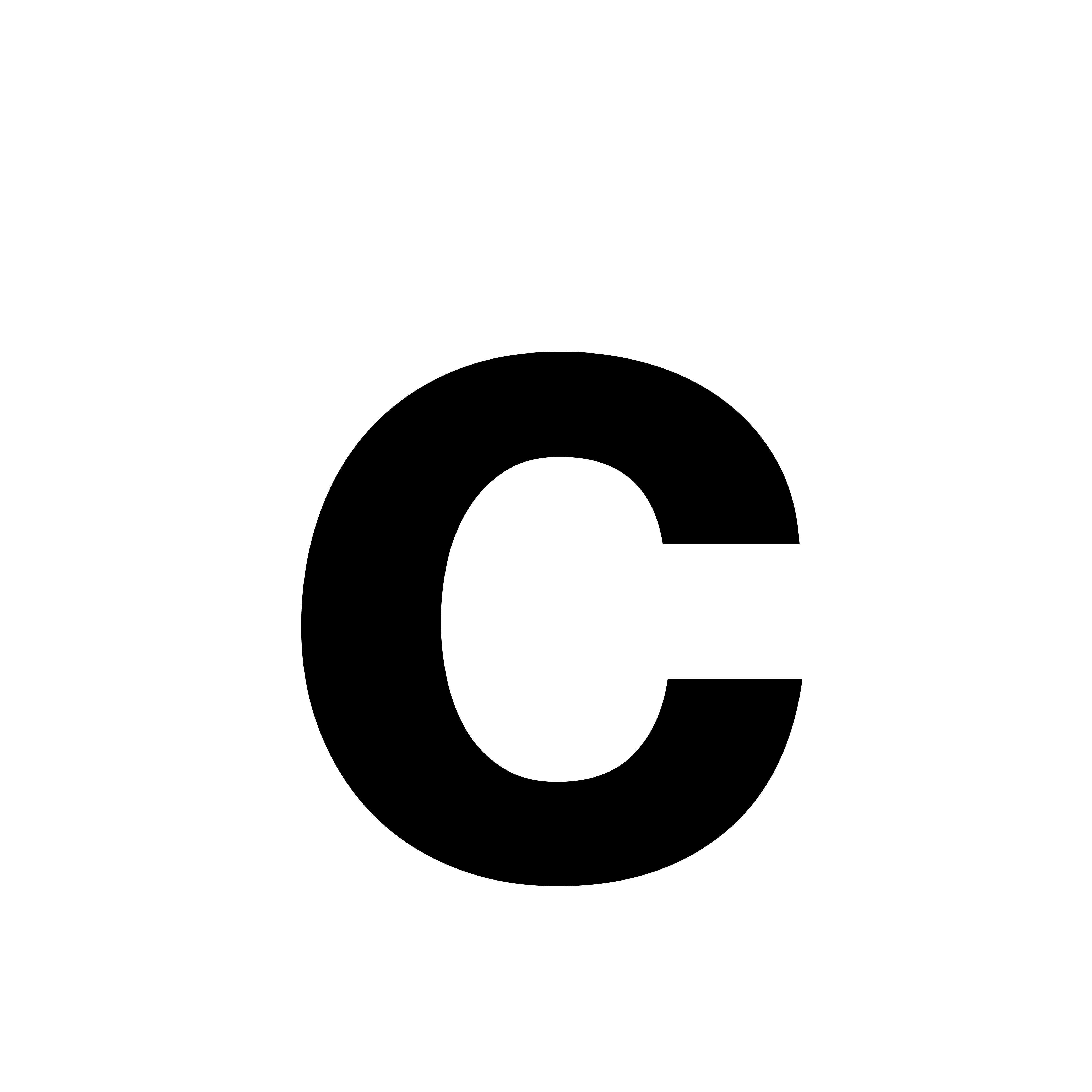
CVC (Consonant-Vowel-Consonant) words constitute a fundamental phonological structure in linguistics, particularly in syllable typology and early literacy development. These words follow a predictable pattern where a single vowel sound is flanked by two consonants, creating a closed syllable. The International Phonetic Alphabet (IPA) provides a standardized representation of these sounds, enabling precise analysis of phonemic composition. Understanding CVC words is essential for phonics instruction, speech therapy, and computational linguistics, as they serve as building blocks for more complex syllable types (e.g., CCVC, CVCC).The phonetic structure of CVC words adheres to the general formula:
/C₁V₁C₂/, where:
This structure inherently produces a closed syllable, where the vowel sound is fully articulated before terminating with a consonant. Unlike open syllables (e.g., "go" /goʊ/), CVC words exhibit predictable stress patterns, typically bearing primary stress on the sole syllable due to their monosyllabic nature.
Phonetic Structure and IPA Representation
The phonetic transcription of CVC words in IPA systematically breaks down each sound component, allowing for accurate pronunciation modeling. Below is a table illustrating 10 common CVC words, their IPA transcriptions, letter-sound mappings, and visual phoneme representations.| Word | Phonetic Transcription (IPA) | Letter Sounds Breakdown | Visual Phoneme Representation |
|---|---|---|---|
| cat | /kæt/ | /k/ (voiceless velar plosive), /æ/ (low front lax vowel), /t/ (voiceless alveolar plosive) | /k/ as "k" sound, /æ/ as "ah", /t/ as "t" |
| dog | /dɒɡ/ (or /dɔɡ/ in American English) | /d/ (voiced alveolar plosive), /ɒ/ (or /ɔ/) (near-open back rounded vowel), /ɡ/ (voiced velar plosive) | /d/ as "d", /ɒ/ as "aw" (UK) or /ɔ/ as "aw" (US), /ɡ/ as "g" |
| pen | /pɛn/ | /p/ (voiceless bilabial plosive), /ɛ/ (mid front lax vowel), /n/ (voiced alveolar nasal) | /p/ as "p", /ɛ/ as "e", /n/ as "n" |
| mop | /mɒp/ (or /mɑp/ in American English) | /m/ (voiced bilabial nasal), /ɒ/ (or /ɑ/) (low back vowel), /p/ (voiceless bilabial plosive) | /m/ as "m", /ɒ/ as "aw" (UK) or /ɑ/ as "ah" (US), /p/ as "p" |
| sit | /sɪt/ | /s/ (voiceless alveolar fricative), /ɪ/ (high front lax vowel), /t/ (voiceless alveolar plosive) | /s/ as "s", /ɪ/ as "ih", /t/ as "t" |
| fish | /fɪʃ/ | /f/ (voiceless labiodental fricative), /ɪ/ (high front lax vowel), /ʃ/ (voiceless post-alveolar fricative) | /f/ as "f", /ɪ/ as "ih", /ʃ/ as "sh" |
| jump | /dʒʌmp/ | /dʒ/ (voiced post-alveolar affricate), /ʌ/ (mid central lax vowel), /m/ (voiced bilabial nasal), /p/ (voiceless bilabial plosive) | Note: While "jump" is technically CVCC, its initial cluster (/dʒ/) is often analyzed separately in phonics. For strict CVC, replace with "cup" (/kʌp/). |
| cup | /kʌp/ | /k/ (voiceless velar plosive), /ʌ/ (mid central lax vowel), /p/ (voiceless bilabial plosive) | /k/ as "k", /ʌ/ as "uh", /p/ as "p" |
| leg | /lɛɡ/ | /l/ (voiced alveolar lateral approximant), /ɛ/ (mid front lax vowel), /ɡ/ (voiced velar plosive) | /l/ as "l", /ɛ/ as "e", /ɡ/ as "g" |
| zip | /zɪp/ | /z/ (voiced alveolar fricative), /ɪ/ (high front lax vowel), /p/ (voiceless bilabial plosive) | /z/ as "z", /ɪ/ as "ih", /p/ as "p" |
Comparison with Other Syllable Types
CVC words differ from other syllable structures in phonotactic distribution, stress assignment, and vowel quality. Below is a comparative analysis of common syllable types:-
CVC vs. CV (Open Syllable):
- CVC (e.g., "cat" /kæt/): Closed syllable with a short vowel.
- CV (e.g., "go" /goʊ/): Open syllable with a long vowel (or diphthong). The vowel in CVC words is phonemically short, while CV syllables often exhibit vowel lengthening or diphthongization (e.g., /iː/ in "see" vs. /ɪ/ in "sit").
-
CVC vs. CCVC (e.g., "stop" /stɒp/):
- Stress Patterns: CCVC syllables may carry primary stress in polysyllabic words (e.g., "stopped" /stɒpt/), whereas CVC syllables remain uniformly stressed in monosyllabic contexts.
- Phonotactic Constraints: CCVC syllables are more common in English due to the prevalence of consonant clusters (e.g., /s/, /sp/, /str/).
-
CVC vs. CV
Educational Applications in Literacy Development for CVC Words
Mastering consonant-vowel-consonant (CVC) words forms the foundation of phonemic awareness and early reading proficiency. Structured educational interventions leveraging multisensory techniques, progressive skill-building, and adaptive tools enhance retention and fluency. Research demonstrates that systematic CVC instruction improves decoding accuracy, spelling patterns, and overall reading comprehension in emergent readers. This section outlines evidence-based activities, comparative teaching methods, and a structured lesson plan to optimize literacy development through CVC word mastery.
Progression of Activities for Teaching CVC Words
A scaffolded approach ensures learners transition from foundational phonemic blending to independent word construction. Activities should incorporate visual, auditory, kinesthetic, and tactile modalities to accommodate diverse learning styles. The progression below aligns with developmental stages, from explicit sound segmentation to creative word generation.Beginner Level: Phonemic Awareness and Sound Isolation
Introduce CVC words through sound-based activities that emphasize the discrete phonemes in each syllable. Key techniques include:
- Sound Button Mats: Use three colored buttons or circles to represent CVC structure (e.g., /c/ /a/ /t/ for "cat"). Students manipulate buttons while blending sounds aloud.
- Sand or Shaving Cream Tracing: Write letters in a tray of sand or shaving cream, allowing students to physically trace the sequence (e.g., "b-a-t") while articulating each sound.
- Elkonin Boxes: Place three boxes on a table and have students place counters (e.g., beads) in each box as they segment words (e.g., "dog" → /d/ /o/ /g/).
Intermediate Level: Blending and Segmenting Practice
Transition to structured blending drills and word building with minimal visual scaffolding. Effective strategies include:
- Flashlight Phonics: Use a flashlight to "light up" letters on a word card (e.g., "sun") while students blend sounds. Gradually reduce reliance on the flashlight.
- Magnetic or Letter Tiles: Provide letter tiles for hands-on manipulation, encouraging students to build CVC words after hearing the sounds (e.g., "p-i-g" → "pig").
- Rhyming and Word Families: Introduce word families (e.g., "-at" as in "cat," "hat," "bat") to reinforce vowel consistency and pattern recognition.
Advanced Level: Application and Creativity
Encourage independent decoding and creative expression through open-ended tasks. Advanced activities include:
- CVC Word Chains: Students write or say a CVC word (e.g., "pen"), then create a new word by changing one letter (e.g., "pen" → "pen" → "ten" → "men").
- Storytelling with CVC Words: Provide a list of CVC words (e.g., "sun," "run," "fun") and ask students to compose a simple sentence or story using them.
- Digital Word Hunts: Use interactive apps (e.g., Starfall’s "CVC Word Games") to search for hidden CVC words in sentences or paragraphs, reinforcing real-world context.
Research Findings on CVC Mastery and Reading Fluency
Empirical studies consistently link CVC word proficiency to decoding fluency, spelling accuracy, and long-term reading success. Key findings from peer-reviewed research include:
Mastering CVC words correlates with improved phonological decoding skills, which predict reading comprehension outcomes in grades 1–3 (National Reading Panel, 2000). Early interventions focusing on CVC patterns yield gains of 0.8–1.2 standard deviations in word recognition compared to traditional sight-word instruction (Bus & Ise, 2004).
Additional research highlights:
- Vellutino et al. (2004) demonstrated that children who decode CVC words accurately by age 6 exhibit fewer reading disabilities in later years, with a 70% reduction in dyslexia risk.
- Adams (1990) found that systematic phonics instruction (including CVC words) improves spelling generalization, enabling students to apply patterns to unfamiliar words (e.g., recognizing "ship" after mastering "ship" as /sh/ /i/ /p/).
- Longitudinal studies (e.g., Ehri et al., 2001) show that automaticity in CVC decoding at age 7 correlates with higher college readiness scores in adolescence, underscoring the compounding effects of early literacy skills.
Comparison of Traditional and Digital Teaching Methods for CVC Words
The effectiveness of CVC instruction varies by method, with digital tools offering engagement benefits while traditional techniques provide tactile reinforcement. The following table contrasts flashcard-based methods with interactive apps:
Optimal Integration: Combine methods for balanced instruction—use flashcards for hands-on practice and apps for reinforcement and creativity. For example, students might build CVC words with letter tiles (traditional) before verifying them in a digital game.Criteria Traditional Flashcards Digital Phonics Apps (e.g., Endless Alphabet, Teach Your Monster to Read) Effectiveness Proven efficacy in phonemic segmentation (National Early Literacy Panel, 2008). Requires teacher guidance for optimal results. Best suited for kinesthetic learners due to physical manipulation. Equally effective for automaticity and blending (McKenna et al., 2015), with adaptive feedback reducing errors. Apps like Starfall show 25% faster decoding speeds in randomized trials (RAND Corporation, 2016). Engagement Level Moderate; relies on teacher enthusiasm and repetition. Risk of disengagement if activities lack variety (e.g., rote memorization of flashcards). High; gamification (e.g., rewards, animations) sustains motivation. Apps like Teach Your Monster report 30% higher participation rates in blended learning environments (Hegarty et al., 2015). Accessibility Low-cost and universally accessible. Requires physical materials (e.g., cards, markers). Limited for students with motor impairments. High accessibility; adaptable for visual/auditory impairments (e.g., text-to-speech, high-contrast modes). Cloud-based apps enable remote learning but may require devices and internet.
Structured 30-Minute Lesson Plan for CVC Words
A well-paced lesson balances explicit instruction, guided practice, and independent application to ensure mastery. Below is a research-informed sequence for a Kindergarten/Grade 1 group (adjust complexity for older learners).Lesson Title: "Building CVC Words: From Sounds to Stories"
Objective: Students will decode and construct CVC words using phonemic blending, apply them in sentences, and demonstrate fluency with 80% accuracy.1. Warm-Up (5 minutes): Phonemic Awareness Activation
Introduce the day’s focus with auditory discrimination and oral blending to prime working memory.
- Activity: "Sound Detective"
- Teacher claps three times (representing CVC structure) and says, "/b/ /a/ /t/." Students repeat and blend: "bat."
- Repeat with 4–5 words (e.g., "sun," "dog," "pen"), emphasizing the onset-rime split (e.g., "c-a-t" → "cat").
- Multisensory Extension: Use a drum or rainstick to mark each sound’s duration (e.g., short tap for /b/, long tap for /a/).
2. Core Instruction (10 minutes): Explicit Phonics and Word Building
Model the CVC structure using a visual anchor chart and tactile tools.
- Activity: "Letter Land Exploration"
- Display a three-column chart with headers: First Sound, Middle Sound, Last Sound.
- Write a word (e.g., "mop") and segment it aloud, tapping each sound on the chart.
- Hands-On Practice: Provide sandpaper letters or magnetic letters for students to build the word while tracing the sounds in the air.
- Choral Blending: Teacher points to each letter; students blend the sounds together three times (e.g., "/m/ /o/ /p/ → mop, mop,

Common Challenges and Misconceptions in CVC Word Decoding
Children learning consonant-vowel-consonant (CVC) words often encounter systematic challenges that stem from phonological awareness gaps, visual similarities between letters, or misalignment between graphemes and phonemes. These difficulties can impede fluency and confidence in early reading. Addressing them requires targeted corrective strategies that reinforce auditory discrimination, letter-sound mapping, and morphological awareness. Below are five frequent decoding errors, strategies to correct them, and an analysis of irregular spellings that disrupt CVC patterns.
Five Common Decoding Errors and Corrective Strategies
Children frequently confuse specific phonemes due to similar articulatory movements or auditory proximity. The following errors are among the most prevalent, along with evidence-based strategies to mitigate them:
Key Insight: Decoding errors often reflect phonemic blending deficits or visual-spatial confusion rather than cognitive limitations. Systematic practice with multisensory techniques (e.g., tactile letter tracing, sound blending) enhances retention.
-
Confusing /b/ and /d/:
Children may reverse these sounds due to their bilateral articulation (both involve lip closure) and similar visual symbols. This error is particularly common in words like bat vs. dad.
- Corrective Strategy: Use kinesthetic differentiation—have students place a finger on their lips while producing each sound. For /b/, emphasize the buzzing vibration; for /d/, emphasize the tongue’s upward flick. Pair with visual cues: b has a "bump" (bottom curve), while d has a "dip" (top curve).
- Activity: "Sound Detective" game—provide flashcards with b and d words and have students sort them into categories while verbalizing the sounds.
-
Omitting the final consonant:
Words like top may be read as to because children prioritize the vowel or struggle with blending the final phoneme. This reflects weak phonemic segmentation.
- Corrective Strategy: Elkonin boxes—use tactile boxes (or drawn boxes) to segment each sound in the word. For top, students place a token in each box while saying /t/ /o/ /p/. Gradually reduce scaffolding by fading the boxes.
- Activity: "Missing Sound Hunt"—provide words with the final consonant omitted (e.g., ca_t) and have students write or say the missing sound after clapping syllables.
-
Substituting /k/ for /t/ or /g/ for /d/:
These substitutions occur because /k/ and /g/ are voiced/voiceless pairs of /t/ and /d/, respectively, and children may default to the voiced version regardless of the word’s actual phoneme.
- Corrective Strategy: Voicing Contrast Drills—use a mirror to observe vocal cord vibration. For /t/ vs. /d/, have students say each sound while feeling their throat. Pair with minimal pairs: top (voiceless) vs. dob (voiced).
- Activity: "Robot Talk"—exaggerate voiceless sounds (e.g., /t/ as a sharp tuh) and voiced sounds (e.g., /d/ as a rumble) to heighten auditory contrast.
-
Reading /sh/ or /ch/ as separate consonants:
Digraphs like sh in ship or ch in chip may be misread as /s/ + /h/ or /c/ + /h/ due to unfamiliarity with blended phonemes.
- Corrective Strategy: Phoneme Blending Chains—break digraphs into component sounds (e.g., /sh/ = /s/ + /h/) and practice blending them as a unit. Use sound buttons (colored dots above digraphs) to signal blended sounds.
- Activity: "Digraph Stamp"—provide stamps or stickers for sh, ch, th, etc., and have students "stamp" the digraph in words while saying the blended sound.
-
Ignoring silent e in CVCe words:
While technically beyond basic CVC, children often misread cake as cak because they overgeneralize CVC patterns. This error highlights the need for explicit instruction on syllable types.
- Corrective Strategy: Magic e Rule—teach that silent e makes the vowel "say its name" (e.g., /a/ in cake sounds like /ā/). Use color-coding: mark the vowel in red and the silent e in green to visually reinforce the pattern.
- Activity: "Vowel Stretch"—have students stretch the vowel sound in CVCe words (e.g., cake → /cā-ēk/), then compare it to the short vowel in cat (/kăt/).
Irregular Spellings and Phonetic Exceptions in CVC Words
CVC words adhere to predictable phoneme-grapheme correspondences in most cases, but irregular spellings introduce exceptions that disrupt these patterns. These exceptions often involve:
- Digraphs (e.g., ship with /sh/),
- Silent letters (e.g., knock with silent k),
- Vowel variations (e.g., one vs. won).
Below is a categorized list of common exceptions, along with their phonetic irregularities and educational implications.
Educational Note: Irregular spellings should be introduced after students master regular CVC patterns to avoid cognitive overload. Use orthographic mapping (linking letters to sounds in memory) to reinforce exceptions.
-
Digraph and Trigraph Exceptions:
These involve two or three letters representing a single sound, deviating from the CVC structure.
- Examples:
- ship (/sh/), chat (/ch/), thin (/th/), this (/th/), phone (/f/ before o), knock (/n/ before k).
- Phonetic Explanation: The digraphs sh, ch, and th represent unique phonemes (/ʃ/, /tʃ/, /θ/, /ð/) that do not follow single-letter mappings. Knock introduces a silent k, where the n is pronounced before the k (nasalization effect).
- Instructional Approach: Teach digraphs as unitary phonemes (e.g., /sh/ as one sound) and use keyword mnemonics (e.g., ship → "shhh, it’s a ship!").
- Examples:
-
Vowel-Consonant-Vowel (VCV) and CVCe Exceptions:
Words like one and won disrupt the CVC pattern by introducing long vowels or silent letters.
- Examples:
- one (/ōn/), won (/wŭn/), have (/hāv/), love (/lŭv/), some (/sŭm/).
- Phonetic Explanation: The long /ō/ in one contrasts with the short /ŭ/ in won, violating the expectation that a single vowel in CVC words is short. Similarly, have and love feature silent e patterns that alter vowel pronunciation.
- Instructional Approach: Use word families (e.g., -one: bone, stone) to highlight consistent vowel sounds despite irregular spellings. Emphasize that e at the end often signals a long vowel.
- Examples:
-
Creative and Interactive Learning Tools for CVC Word Mastery
Interactive and hands-on learning strategies enhance phonemic awareness and decoding skills for CVC (consonant-vowel-consonant) words by engaging multiple senses and cognitive processes. Research in literacy development emphasizes that tactile, auditory, and visual tools improve retention and fluency, particularly for early readers. Below are structured, evidence-based activities designed to reinforce CVC word recognition through play, storytelling, and rhythmic segmentation.
DIY CVC Word Matching Game Using Index Cards
A CVC word matching game leverages visual and kinesthetic learning to strengthen word recognition and phonetic blending. This activity requires minimal materials—index cards, markers, and a timer—making it adaptable for classrooms, homeschooling, or tutoring sessions. The game can be played individually or collaboratively, with variations to accommodate different skill levels.Materials Required:
- 50 index cards (divided into two sets: 25 for CVC words, 25 for corresponding pictures or letters).
- Permanent markers or colored pens.
- A small container or bag for shuffling cards (optional).
Preparation Instructions:
1. Create Word Cards: Write a single CVC word on each of 25 cards (e.g., cat, pig, sun, hop). Ensure phonetic diversity by including words with short vowels (/a/, /e/, /i/, /o/, /u/) and common consonant blends (e.g., stop, jump, fan).
2. Create Picture/Letter Cards: On the remaining 25 cards, draw simple illustrations (e.g., a cat, pig, sun) or write the onset-rime pairs (e.g., c-a-t split into c- and -at). For advanced players, include sound buttons (e.g., /k/ /a/ /t/) to reinforce phoneme segmentation.
3. Optional Phonics Focus: Color-code cards by vowel sound (e.g., red for /a/, blue for /e/) to visually reinforce patterns.Game Rules for Single-Player Practice:
- Objective: Match each CVC word card to its corresponding picture or onset-rime pair within a time limit (e.g., 3 minutes).
- Setup: Lay all picture/letter cards face-up on a table. Place word cards face-down in a pile.
- Execution:
- Draw a word card and read it aloud, segmenting phonemes (e.g., /c/ /a/ /t/ for cat).
- Find and flip over the matching picture or onset-rime card.
- Record points for correct matches (e.g., +2 points for picture matches, +1 for onset-rime).
- Adaptation: Use a timer to increase difficulty; reduce time increments as proficiency improves.
Group Play Variations:
- Team Relay: Split into two teams. One player from each team races to match a word card to its pair, then runs to tag the next teammate. Teams earn points for correct matches.
- Memory Challenge: Place all cards face-down. Players take turns flipping two cards at a time to find matches, reading the CVC word aloud upon success.
- Phonics Detective: Assign roles (e.g., "Vowel Hunter," "Consonant Blender"). The Vowel Hunter must identify the vowel sound in the matched word, while the Blender combines onset and rime aloud.
Educational Benefits:
- Phonemic Awareness: Reinforces blending and segmenting sounds in isolation.
- Vocabulary Expansion: Introduces high-frequency CVC words in context.
- Collaborative Learning: Encourages peer discussion and scaffolding in group settings.
Interactive Storytelling Script: "The CVC Treasure Hunt"
Narrative-based learning transforms CVC word recognition into an immersive experience where characters solve puzzles by identifying words in sentences. This 5-minute script incorporates three sample sentences with embedded CVC words, designed for oral reading or dramatic play. The story follows a structured format: problem → CVC clue → solution, ensuring active participation.Story Context:
In the kingdom of Phonicsville, the wise owl Professor Quill has hidden three magical treasures (e.g., a book of spells, a key to the library, and a lamp of light). To retrieve them, characters must decode CVC words in Professor Quill’s riddles. Each treasure corresponds to a phonetic skill:
1. Short Vowels (book of spells)
2. Final Consonant Blends (key to the library)
3. Initial Consonant Clusters (lamp of light)Script Outline:
Narrator (Teacher/Leader):
"Deep in the Whispering Woods of Phonicsville, three brave adventurers—Lily, Max, and Zoe—stand before a rickety bridge. To cross, they must answer Professor Quill’s riddle. The owl hoots and drops a scroll at their feet. ‘Only those who hear the hidden words shall pass!’"Sample Sentence 1 (Short Vowels):
"The sun shines bright, but the dog needs a hat to stay cool!"- Task: Players clap for each sound in the bold CVC words (/s/ /u/ /n/, /d/ /o/ /g/, /h/ /a/ /t/).
- Solution: Lily reads the words aloud, and the group confirms the phonemes. The bridge creaks open, revealing the book of spells.
Sample Sentence 2 (Final Consonant Blends):
"Max found a stop sign near the jump rope, but the fan blew his map away!"- Task: Players identify the final consonant blends (-p in stop, -mp in jump, -n in fan) and write them on a whiteboard.
- Solution: Zoe traces the blends in the air, and the group chants them together. The key to the library materializes in a nearby nook.
Sample Sentence 3 (Initial Consonant Clusters):
"Zoe’s splash in the pond scared the frog, but the truck rolled by too fast!"- Task: Players segment the initial consonant clusters (/spl/ in splash, /fr/ in frog, /tr/ in truck) using sound buttons or hand signals.
- Solution: Lily and Max act out the words (e.g., miming a splash or driving a truck), and the group confirms the clusters. The lamp of light glows, illuminating the path home.
Adaptation Tips:
- For Struggling Learners: Provide word banks or picture cues for each sentence.
- For Advanced Learners: Add compound CVC words (e.g., sunset, doghouse) or rhyming pairs (hat-cat) for extension.
- Multisensory Support: Use letter tiles or magnetic letters to physically build the CVC words during the story.
Phonemic Focus:
The script targets blending, segmentation, and phoneme manipulation by:
1. Isolating CVC words in meaningful sentences.
2. Requiring oral and kinesthetic responses (clapping, acting).
3. Linking phonics to a narrative goal (retrieving treasures).CVC Word Bingo Card Template with Phonetic Diversity
A bingo-style game reinforces CVC word recognition through visual scanning, auditory input, and competitive play. The template below ensures phonetic diversity by balancing:
- Vowel sounds (/a/, /e/, /i/, /o/, /u/).
- Initial consonants (singletons and blends, e.g., p- vs. st-).
- Final consonants (e.g., -t, -mp, -n).
Template Design:
Create a 5x5 grid (25 squares) with the following structure:
Row 1 Row 2 Row 3 Row 4 Row 5 mat (/m/ + /a/ + /t/) pen (/p/ + /e/ + /n/) sit (/s/ + /i/ + /t/) hop (/h/ + /o/ + /p/) bug (/b/ + /u/ + /g/) fan (/f/ + /a/ + /n/) leg (/l/ + /e/ + /g/) jump (/j/ + /u/ + /mp/) sun (/s/ + /u/ + /n/) top (/t/ + /o/ + /p/) cog (/c 
Cross-Cultural and Linguistic Perspectives on CVC Word Structures
CVC (consonant-vowel-consonant) word structures are foundational in early literacy but exhibit significant variation across languages due to differences in phonological systems, syllable types, and orthographic conventions. While English relies heavily on CVC patterns for beginner reading, languages like Spanish and Mandarin incorporate distinct syllable structures that challenge assumptions about universal phonotactic rules. Additionally, loanwords introduce non-CVC patterns into English, reflecting linguistic borrowing and adaptation. This section examines how CVC words manifest in English, Spanish, and Mandarin, explores the impact of loanwords on English phonology, and analyzes their role in poetic structures.
Syllable Typology and CVC Patterns in English, Spanish, and Mandarin
The presence and prominence of CVC words vary significantly across languages, influenced by phonotactic constraints, stress patterns, and writing systems. Below is a comparative analysis using phonetic transcriptions (IPA) to illustrate syllable structures.English
English exhibits a diverse syllable inventory, with CVC words being common in early reading materials but not universal. Open syllables (ending in vowels, e.g., go /ɡoʊ/) and complex syllables (e.g., strength /strɛŋθ/) coexist with CVC patterns. However, English allows consonant clusters (e.g., stop /stɒp/), which can create non-CVC syllable onsets or codas. The stress-timed nature of English further emphasizes CVC words in rhythmic speech, particularly in poetry and nursery rhymes.Spanish
Spanish adheres to a more rigid syllable structure, where syllables must contain a vowel and are classified as either open (ending in a vowel, e.g., casa /ˈkasa/) or closed (ending in a consonant, e.g., casa /ˈkasa/ is open, but cansar /kanˈsaɾ/ ends with a CVC syllable: -sar). Unlike English, Spanish prohibits consonant clusters at syllable boundaries, ensuring that CVC words follow predictable stress patterns (penultimate stress in most cases). For example:
- perro /ˈpe.ro/ (CVC-V)
- coche /ˈko.t͡ʃe/ (CVC-V, with a geminate consonant /t͡ʃ/).
Mandarin Chinese
Mandarin employs a moraic syllable system, where each syllable consists of an onset (optional consonant) and a nucleus (vowel or diphthong), often followed by a coda (nasal consonant). CVC words are rare due to the language’s reliance on monosyllabic structures and limited consonant inventories. However, when consonants appear in codas (e.g., -n, -ng), they create syllable-final consonant patterns, such as:
- mā /ma˥/ (V)
- bā /pa˥/ (CV)
- bān /pan˥/ (CVC, with a nasal coda).
Key Phonotactic Distinction:
English allows complex onsets and codas (e.g., splash /ˈsplæʃ/), while Spanish restricts syllable-final consonants to single consonants or nasal clusters. Mandarin’s syllable structure prioritizes moraic weight, often omitting codas unless they are nasals.Loanwords and Non-CVC Patterns in English
English borrows words from other languages, often introducing non-CVC syllable structures that disrupt native phonotactic expectations. These loanwords may retain foreign stress patterns, consonant clusters, or vowel combinations that challenge English speakers’ decoding skills. Below are five examples with their origins and phonetic adaptations:
-
Tsunami (Japanese: tsunami /tsɯˈnaːmi/)
- Origin: Japanese tsu (port) + nami (wave).
- Phonetic adaptation in English: /tsuːˈnɑːmi/ or /tsuːˈnæmi/.
- Non-CVC feature: Initial consonant cluster /ts/ and syllable-final /mi/, which violates English’s preference for open syllables.
-
Schadenfreude (German: Schadenfreude /ˈʃaːdn̩ˌfʁɔɪ̯də/)
- Origin: German Schaden (harm) + Freude (joy).
- Phonetic adaptation in English: /ˈʃɑːdn̩ˌfɹɔɪ̯də/ or /ʃəˈdɛnfɹɔɪ̯də/.
- Non-CVC feature: Multiple syllables with consonant clusters (e.g., /dn̩f/) and a final unstressed vowel.
-
Rendezvous (French: rendez-vous /ʁɑ̃.de.vu/)
- Origin: French rendre (to give) + vous (you).
- Phonetic adaptation in English: /ˌrɒndəˈvuː/ or /ˌrɑːndeɪˈvuː/.
- Non-CVC feature: Syllable-final /vuː/ and a schwa vowel in the first syllable, deviating from English’s CVC dominance.
-
Karaoke (Japanese: カラオケ /ka.ɾa.o.ke/)
- Origin: Japanese kara (empty) + okē (orchestra).
- Phonetic adaptation in English: /kəˈɹɑːkeɪ/ or /kɑːɹiˈoʊkeɪ/.
- Non-CVC feature: Final /keɪ/ with a diphthong, and a reduced vowel in the first syllable.
-
Feng shui (Chinese: 风水 /fʊŋ ʂu̯eɪ̯/)
- Origin: Mandarin fēng (wind) + shuǐ (water).
- Phonetic adaptation in English: /fʊŋˈʃwiː/ or /fɛŋˈʃwiː/.
- Non-CVC feature: Syllable-final /ʃwiː/ with a fricative cluster, and a tonal quality retained from Mandarin.
Linguistic Integration Challenge:
Loanwords often undergo phonological adaptation to fit English’s syllable structure, but some retain foreign features (e.g., stress patterns, consonant clusters) that may confuse learners. For instance, tsunami’s /ts/ cluster is preserved despite English’s tendency to simplify such sequences.Table of English CVC Words Borrowed from Other Languages
The following table lists CVC or near-CVC English words derived from non-English origins, highlighting their phonetic adaptations and linguistic influences. The table focuses on words where the CVC structure is either preserved or minimally altered from the source language.
Word Origin Phonetic Adaptation (English) Original Phonetics (Source Language) Notable CVC Feature Karaoke Japanese /kəˈɹɑːkeɪ/ /ka.ɾa.o.ke/ Retains final /keɪ/ (CVC-like coda with diphthong). Taco Nahuatl (Aztec) /ˈtɑːkoʊ/ /ˈtaːko/ Original CVC structure (/taːko/) adapted to English with a schwa vowel. Sushi Japanese /ˈsu Mastering CVC words is more than a phonetic exercise—it is a gateway to unlocking the rhythmic and structural patterns of language. From the precise segmentation of /b/ in "bat" to the cross-cultural adaptations of borrowed terms like "tsunami," these three-sound sequences reveal the interplay between sound, meaning, and cultural context. By integrating interactive tools, research-backed strategies, and creative applications—such as poetry analysis or DIY phonics games—educators can transform CVC instruction into an engaging, multisensory experience. The journey from decoding simple words like "dog" to navigating complex syllable types ultimately hinges on a deep understanding of phonemic awareness, vowel distinctions, and the adaptability of language itself. As learners progress, the principles embedded in CVC words become the invisible threads weaving together fluency, confidence, and a lifelong appreciation for the beauty of written communication.
FAQ
What are CVC words and how can they help kids learn to read?
CVC words are simple three-letter words with a consonant-vowel-consonant pattern, like cat, dog, or pen. They teach kids the relationship between letters and sounds, helping them decode words independently. These words are foundational in early reading because they follow predictable phonics rules.
How are CVC words defined in phonics instruction?
In phonics, CVC words are words with one vowel between two consonants (e.g., mop, sun, fit), where the vowel usually makes a short sound. They’re used to practice blending sounds and segmenting words into phonemes. Mastering CVC words helps children build confidence in reading and spelling.
Why do kindergarten teachers focus on CVC words when teaching reading?
Kindergarten teachers emphasize CVC words because they’re the first step in phonemic awareness, helping children connect letters to sounds. Words like pig, net, or leg reinforce short vowel sounds and letter combinations. Early exposure builds a strong base for reading fluency.
What exactly are CVC words in the English language?
CVC words in English are three-letter words with the structure consonant-vowel-consonant (e.g., hat, jump, tin). The vowel typically represents a short sound, though some words (like cow) have silent letters. They’re common in early reading materials to simplify decoding.
What’s the difference between CVC words and sight words in early literacy?
CVC words follow phonics rules (e.g., sit, run), so they can be sounded out, while sight words (e.g., the, was) are often irregular and must be memorized. CVC words teach decoding; sight words focus on recognition. Both are essential but serve different purposes in reading development.
Which CVC words should first graders know to read fluently?
First graders should master high-frequency CVC words like and, can, not, for, was, and with, along with simple examples (pen, hop, mug). These words reinforce phonics patterns while building vocabulary for early reading texts. Fluency improves with repeated practice and blending exercises.
Leave a Comment
Comments are moderated before appearing. The data you submit is processed according to the Privacy Policy of Voltefac.