What Jupiter Is Made Of Unveiling Its Core To Clouds
Table of Contents
- Composition Breakdown of Jupiter’s Interior Layers
- Chemical Composition of Jupiter’s Core
- Layered Structure of Jupiter’s Interior
- Phase Transitions and Planetary Magnetism
- Comparison of Jupiter’s Core Composition to Gas Giant Formation Models
- Atmospheric Structure and Gaseous Composition of Jupiter
- Vertical Stratification of Jupiter’s Atmosphere by Altitude
- Dominant Gaseous Components and Their Altitudinal Distribution
- Trace Gases and Their Contribution to Cloud Formation and Chemistry
- Jupiter’s Magnetic Field and Metallic Hydrogen Dynamics
- Mechanism of Magnetic Field Generation via Metallic Hydrogen
- Comparison of Jupiter’s and Earth’s Magnetospheres
- Role of Metallic Hydrogen in Internal Heat Retention and Luminosity
- Influence of Rapid Rotation on Magnetic Field Symmetry and Auroras
- Formation Theories and Primordial Material of Jupiter
- Evidence Supporting the Core Accretion Theory
- Jupiter’s Composition as a Probe of Solar Nebula Chemistry
- Jupiter’s Gravitational Influence on Nearby Material
- Observational Methods and Spectroscopic Data of Jupiter’s Composition
- Infrared Spectroscopy and Atmospheric Gas Detection
- Radio Wave Observations and Deep Atmospheric Probing
- Key Missions and Their Contributions to Jupiter’s Compositional Data
- Challenges and Indirect Probing of Jupiter’s Interior
- Comparative Planetary Chemistry: Jupiter vs. Other Gas Giants
- Hydrogen-Helium Ratios and Formation Region Implications
- Cloud Composition Across Gas Giants: A Comparative Analysis
- Unique Chemical Signatures in Jupiter’s Atmosphere
- Flowchart: Jupiter’s Compositional Influence on Satellite Systems
- FAQ
- What is Jupiter made of for kids?
- Is Jupiter made of rock or gas?
- What is Jupiter made of compared to other planets in the solar system?
- What is Jupiter’s atmosphere made of?
- Is Jupiter made of gas?
- What is Jupiter’s surface made of?
Jupiter, the solar system’s colossal gas giant, presents a compositional enigma where extreme pressures and temperatures forge exotic states of matter—from a molten core of rock and metal to vast oceans of liquid and metallic hydrogen. Unlike terrestrial planets, Jupiter lacks a solid surface, revealing its secrets only through indirect measurements and spectroscopic analysis. This exploration dissects the planet’s layered structure, from its dense core to its turbulent atmosphere, while examining how its unique chemistry—including trace compounds like phosphine and ammonia—shapes its magnetic field, storms, and even the evolution of its moons.
The study of Jupiter’s composition bridges planetary formation theories with cutting-edge observational data, offering insights into the solar nebula’s primordial chemistry and the dynamics of gas giants. By comparing its internal layers to theoretical models and contrasting it with other gas planets, researchers uncover clues about the planet’s origin, its role in sculpting the early solar system, and the challenges of probing environments where hydrogen transitions from gas to liquid to metallic states. Missions like Juno and the James Webb Space Telescope have revolutionized this field, providing unprecedented details on atmospheric gases, deep-water reservoirs, and the magnetic field generated by a convective ocean of metallic hydrogen.
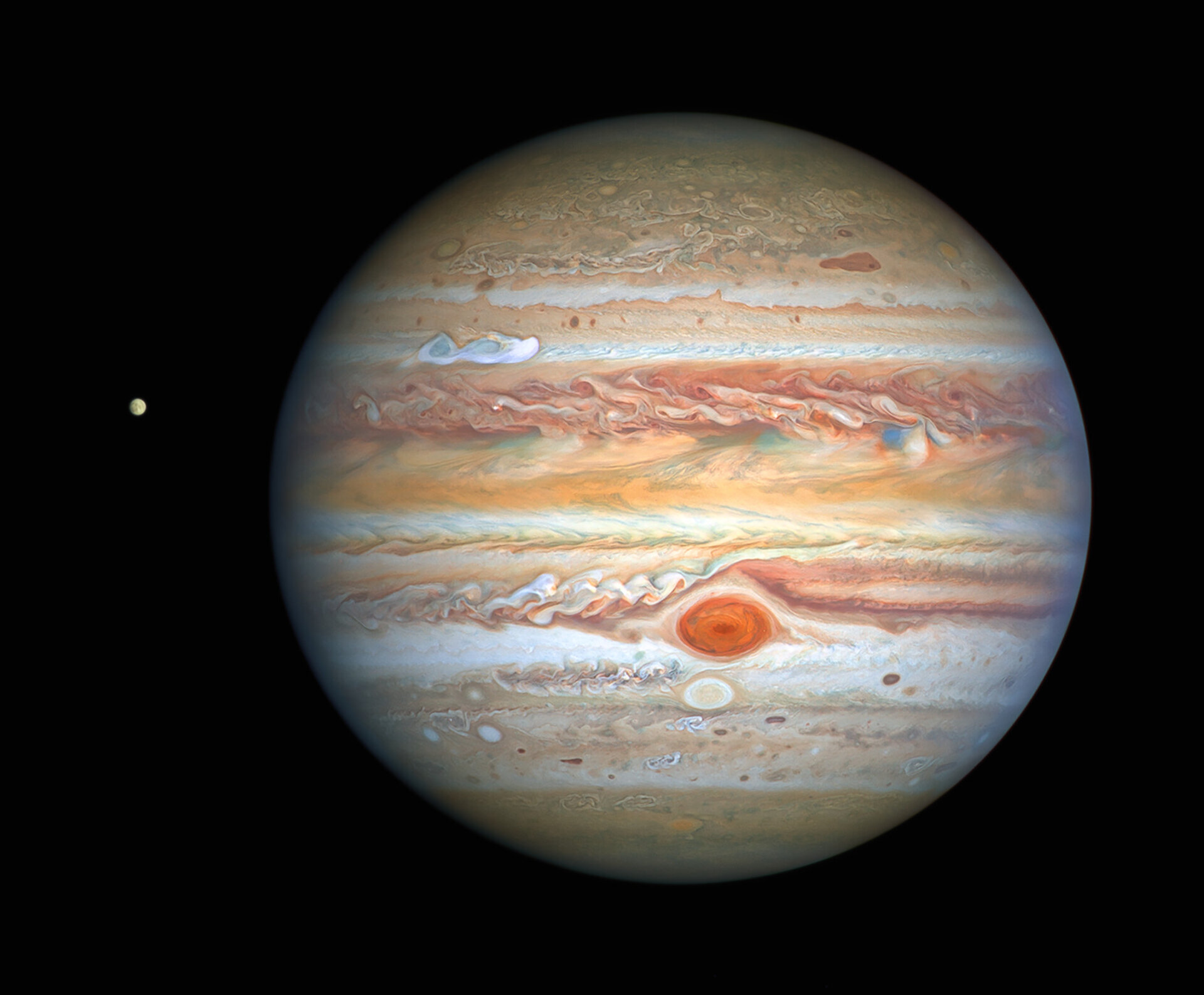
Composition Breakdown of Jupiter’s Interior Layers
Jupiter’s interior represents a dynamic interplay of extreme pressure, temperature gradients, and exotic states of matter, making it a critical case study in planetary science. Unlike terrestrial planets, Jupiter lacks a solid surface and instead transitions through distinct layers—each defined by phase changes in hydrogen and helium, as well as a dense core composed of heavier elements. Understanding these layers provides insights into gas giant formation, planetary magnetism, and the broader processes governing the evolution of giant exoplanets.The composition of Jupiter’s interior is inferred through a combination of observational data (e.g., gravitational measurements, magnetic field modeling, and spectroscopic analysis of its atmosphere) and theoretical models constrained by high-pressure physics. While direct sampling remains impossible, advancements in computational simulations and laboratory experiments (e.g., shockwave experiments replicating Jupiter-like conditions) have refined predictions about its layered structure. Below, the chemical and physical properties of each layer are examined, alongside their roles in sustaining Jupiter’s powerful magnetic field and gravitational influence.
Chemical Composition of Jupiter’s Core
Jupiter’s core is hypothesized to consist of a dense, rocky-metallic mixture enriched in heavy elements relative to the surrounding hydrogen-helium envelope. Current models suggest a mass fraction of ~10–30 Earth masses (approximately 1–3% of Jupiter’s total mass), though estimates vary due to uncertainties in core erosion over time. The core’s composition is inferred to include:- Rocky materials (silicates and oxides) – Primarily magnesium silicate (MgSiO₃), iron oxides (FeO), and aluminum oxides (Al₂O₃), similar to Earth’s mantle but under far greater pressures.
Density estimates for the core range from ~5–15 g/cm³, significantly higher than the overlying hydrogen layers (which average ~0.2–1 g/cm³). The core’s exact structure remains debated: some models propose a diffuse, gradient-rich region where heavy elements mix with hydrogen over time, while others suggest a distinct, compact core eroded by convective mixing from above.
Key Prediction: If Jupiter’s core were to dissolve entirely due to convective overturn, its magnetic field strength might weaken, as the core’s metallic components contribute to dynamo action in the overlying metallic hydrogen layer.
Layered Structure of Jupiter’s Interior
Jupiter’s interior can be divided into four primary layers, each characterized by distinct phase transitions, temperature, and pressure regimes. Below is a text-based representation of the structure, ordered from the center outward:| Core (Radius: ~0–20,000 km) |
| - Composition: Rocky-metallic mix |
| - Pressure: ~3–4 million bar |
| - Temperature: ~20,000–30,000 K |
| - Density: 5–15 g/cm³ |
| Metallic Hydrogen Layer (Radius: |
| ~20,000–70,000 km) |
| - Phase: Liquid metallic hydrogen (H⁺) |
| - Pressure: ~1–3 million bar |
| - Temperature: ~10,000–20,000 K |
| - Conductivity: High (drives magnetism) |
| Liquid Molecular Hydrogen Layer |
| (Radius: ~70,000–90% of Jupiter’s radius)|
| - Phase: Supercritical H₂/He fluid |
| - Pressure: ~0.1–1 million bar |
| - Temperature: ~5,000–10,000 K |
| - Behavior: Highly conductive, convective|
| Outer Atmosphere (Radius: >90%) |
| - Composition: H₂ (90%), He (10%), traces |
| of CH₄, NH₃, H₂O, and aerosols |
| - Pressure: 1–100 bar (troposphere) |
| - Temperature: ~130 K (cloud tops) |
| - Dynamics: Storms, belts, and zones |
Temperature and Pressure Gradients:
Phase Transitions and Planetary Magnetism
The generation of Jupiter’s magnetic field is directly tied to phase transitions in its hydrogen-dominated interior, particularly the molecular-to-metallic hydrogen shift. This transition occurs due to:1. Electron Proton Dissociation (EPD):
2. Helium Rain and Phase Separation:
3. Dynamo Mechanism:
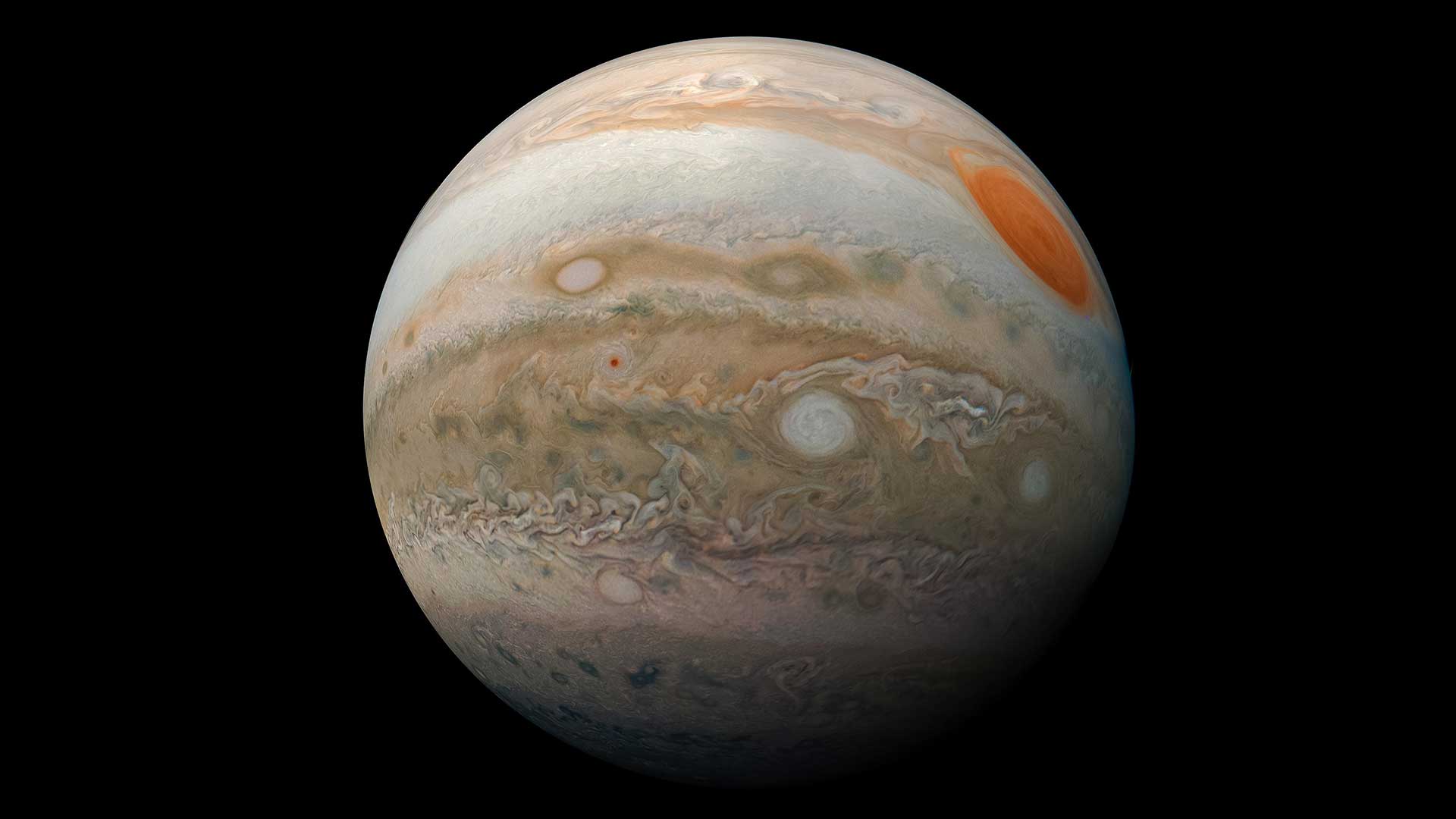
Critical Observation: Jupiter’s magnetic field is ~20,000 times stronger than Earth’s, with a non-spherical shape distorted by solar wind interactions. The field’s offset from the planet’s center (~10% of its radius) suggests asymmetries in the dynamo region, possibly linked to core erosion or helium differentiation.
Comparison of Jupiter’s Core Composition to Gas Giant Formation Models
Theoretical models of gas giant formation propose two primary pathways: core accretion and disk instability. Jupiter’s inferred core composition provides constraints for these models, summarized below:| Feature | Core Accretion Model | Disk Instability Model | Jupiter’s Observed Properties |
|---|---|---|---|
| Core Formation | Solid core (~10 Earth masses) forms first via planetesimal accretion, then attracts gas. | No pre-existing core; gas clumps directly under gravitational instability. | Core mass estimated at 10–30 Earth masses, favoring core accretion but with potential for erosion. |
| Heavy Element Enrichment | Core retains primordial ices (H₂O, CH₄, NH₃) and rocky materials. | Heavy elements mixed uniformly in the protoplanetary disk. | Atmospheric metallicity (~2–4× solar) suggests enrichment from planetesimals, supporting core accretion. |
| Core Erosion Risk | Core may dissolve over time due to convective mixing with hydrogen. | No distinct core; heavy elements remain distributed. | Possible "fuzzy core" or partial erosion, as metallic hydrogen may penetrate the core boundary. |
| Magnetic Field Origin | Dynamo driven by metallic hydrogen + core conductivity. | Dynamo relies solely on metallic hydrogen layer. | Strong, offset field suggests core contributions, aligning with core accretion predictions. |
| Heat Retention | Core contraction and Kelvin-Helmholtz cooling dominate. | Gravitational energy from collapse dominates. | Jupiter radiates ~1.6–2× solar energy, implying ongoing contraction (consistent with core accretion). |
Atmospheric Structure and Gaseous Composition of Jupiter
Jupiter’s atmosphere is a dynamic, multi-layered system composed primarily of hydrogen (H₂) and helium (He), with trace compounds forming complex chemical interactions and visible cloud structures. Unlike terrestrial atmospheres, Jupiter lacks a solid surface, and its gaseous envelope extends thousands of kilometers into a high-pressure, high-temperature interior. The atmospheric layers—troposphere, stratosphere, and thermosphere—exhibit distinct thermal and compositional gradients, driven by solar radiation, internal heat, and convective processes. Trace gases, though present in minute quantities, play critical roles in cloud formation, storm dynamics, and energy redistribution, contributing to phenomena such as the Great Red Spot and ammonia ice crystals.The vertical stratification of Jupiter’s atmosphere reflects pressure-dependent phase transitions and chemical equilibria, with deeper layers hosting exotic states of matter, such as metallic hydrogen and helium rain. Understanding these layers is essential for interpreting observational data from missions like Juno, which has revealed asymmetries in atmospheric composition, temperature, and storm activity. Below, the structural and compositional characteristics of Jupiter’s atmosphere are examined, including the roles of dominant and trace gases, storm systems, and deeper atmospheric processes.
Vertical Stratification of Jupiter’s Atmosphere by Altitude
Jupiter’s atmosphere is divided into three primary layers based on temperature gradients and chemical behavior: the troposphere, stratosphere, and thermosphere. Each layer hosts distinct thermal profiles and dominant gas species, influenced by radiative cooling, convective mixing, and external energy inputs. The boundaries between these layers are defined by temperature inversions—regions where temperature increases with altitude—triggered by absorption of solar or internal heat by specific molecules.Key Characteristics of Each Layer:
- Stratosphere (50–300 km altitude, pressures: 0.1–10⁻⁴ bar):
Temperature increases with altitude in this layer due to absorption of ultraviolet (UV) and infrared (IR) radiation by hydrocarbons (e.g., acetylene, C₂H₂) and other photochemical products. The stratosphere lacks significant convection and instead relies on radiative equilibrium. Ethane (C₂H₆) and acetylene (C₂H₂) form haze layers that obscure deeper cloud structures, contributing to the planet’s muted appearance in visible light. The stratosphere also hosts polar stratospheric clouds composed of water ice and ammonia hydrosulfides.
- Thermosphere (300–1,000+ km altitude, pressures: <10⁻⁴ bar):
This uppermost layer experiences extreme heating (up to 1,000 K) due to solar EUV/X-ray radiation and auroral processes. Hydrogen atoms (H) dominate at these altitudes, with helium and trace species like molecular hydrogen (H₂) and methane (CH₄) undergoing dissociation. The thermosphere extends into Jupiter’s exosphere, where atmospheric particles escape into space, forming a tenuous hydrogen corona detectable in UV observations.
Temperature Inversion Zones:
The stratosphere’s temperature rise is primarily driven by absorption of solar UV by acetylene (C₂H₂) and ethylene (C₂H₄), while the thermosphere’s heating stems from auroral electron precipitation and photodissociation of H₂. These inversions create stable layers that trap aerosols and influence long-term weather patterns.
Dominant Gaseous Components and Their Altitudinal Distribution
Jupiter’s atmosphere is overwhelmingly composed of hydrogen (~90% by volume) and helium (~10%), with trace compounds accounting for less than 1% of the total mass. However, these minor constituents are critical for cloud formation, chemical reactions, and energy transport. The vertical distribution of these gases is governed by condensation curves, where temperature and pressure dictate the phase (gas, liquid, or solid) of each compound.Primary Gases and Their Roles:
- Ammonia (NH₃):
Condenses at pressures of ~0.5–1 bar to form the uppermost visible cloud layer (around 100 km altitude). Ammonia ice crystals scatter sunlight, contributing to Jupiter’s banded appearance and acting as nucleation sites for larger storms. Depletion of NH₃ in certain regions suggests vertical mixing or photochemical destruction.
- Water Vapor (H₂O):
The most abundant oxygen-bearing compound, water condenses at pressures of ~3–7 bar to form thick clouds below the ammonia layer. These clouds are obscured by overlying ammonia haze but are inferred from microwave and IR observations. Water vapor is a key driver of convective storms, including the Great Red Spot.
- Phosphine (PH₃):
A highly reactive trace gas (0.1–1 ppm) that condenses at pressures of ~2–3 bar, forming a cloud layer below water ice. Phosphine’s presence is linked to lightning-induced chemistry and may contribute to the red hues observed in Jupiter’s Great Red Spot through reactions with phosphorus compounds.
- Ammonium Hydrosulfide (NH₄SH):
Forms a cloud layer at pressures of ~2–5 bar, situated between ammonia and water clouds. This compound absorbs sunlight in the near-IR, influencing the planet’s thermal structure and contributing to the brownish tones in Jupiter’s belts and zones.
Condensation Altitudes and Cloud Layers:
The three primary cloud decks—ammonia (high-altitude), ammonium hydrosulfide (mid-altitude), and water (deep)—create a stratified system where each layer obscures deeper structures. Microwave observations (e.g., from Juno’s MWR instrument) penetrate these layers to map water and ammonia distributions, revealing asymmetries tied to storm activity.
Trace Gases and Their Contribution to Cloud Formation and Chemistry
Trace gases, present in parts per million (ppm) or lower, are instrumental in shaping Jupiter’s atmospheric chemistry and visible features. These compounds undergo photolysis, condensation, or reactions with other species to form aerosols, hazes, and colored particulates. Below is a responsive table summarizing key trace gases, their sources, and roles in cloud dynamics or chemical cycles.| Trace Gas | Abundance (ppm) | Primary Sources | Role in Cloud Formation/Chemistry | Observational Signatures | |||||||||||||||||||||||||||||||||||||||||||||||||||||||||||||||||||||
|---|---|---|---|---|---|---|---|---|---|---|---|---|---|---|---|---|---|---|---|---|---|---|---|---|---|---|---|---|---|---|---|---|---|---|---|---|---|---|---|---|---|---|---|---|---|---|---|---|---|---|---|---|---|---|---|---|---|---|---|---|---|---|---|---|---|---|---|---|---|---|---|---|---|
| Methane (CH₄) | 0.3–3 | Photolysis of hydrocarbons; thermal decomposition of organics | Forms haze layers in the stratosphere via polymerization into tholins; reacts with ammonia to produce complex organics | Absorption bands in near-IR (3.3–3.5 µm); detected in auroral regions | |||||||||||||||||||||||||||||||||||||||||||||||||||||||||||||||||||||
| Ethane (C₂H₆) | 1–10 | Photolysis of methane; lightning-induced chemistry | Condenses in stratospheric haze; precursor to acetylene and other hydrocarbons | Stratospheric haze at 100–300 km; IR emission bands | |||||||||||||||||||||||||||||||||||||||||||||||||||||||||||||||||||||
| Hydrogen Sulfide (H₂S) | 0.1–1 | Volcanic outgassing (if present in moons); deep atmospheric reactions | Forms ammonium hydrosulfide clouds; contributes to red/brown hues in storms | Absorption at 4.05 µm; inferred from cloud spectroscopy | |||||||||||||||||||||||||||||||||||||||||||||||||||||||||||||||||||||
| Carbon Monoxide (CO) | 0.1–1 | Photolysis of methane; auroral chemistry |
| Parameter | Jupiter | Earth |
|---|---|---|
| Magnetosphere Size (at standoff distance) | ~2–3 million km (15–20 Jupiter radii) | ~65,000 km (10 Earth radii) |
| Magnetic Field Strength (equatorial cloud tops) | 4.2 gauss (dipole component) | 0.3–0.6 gauss |
| Radiation Belt Energy (trapped particles) | Electrons: >10 MeV; Protons: >100 MeV (intense belts extending beyond Io’s orbit) | Electrons: ~1–10 MeV; Protons: ~10–100 MeV (Van Allen belts) |
| Interaction with Solar Wind | Solar wind plasma is captured and co-rotates, forming a magnetodisk aligned with Jupiter’s equator. Io’s volcanic emissions (sulfur dioxide) enhance plasma density. | Solar wind compresses the magnetosphere on the dayside and stretches the magnetotail on the nightside. |
| Auroral Activity | Polar auroras driven by magnetospheric plasma waves and Io’s plasma torus, with emissions in UV/X-ray and radio wavelengths (e.g., kilometric radiation). | Auroras primarily driven by solar wind interaction with Earth’s magnetosphere (visible light, UV). |
Role of Metallic Hydrogen in Internal Heat Retention and Luminosity
Metallic hydrogen plays a dual role in Jupiter’s thermal evolution: as a conductor of heat and a source of residual energy through gravitational compression and Kelvin-Helmholtz contraction. The following mechanisms contribute to Jupiter’s infrared excess luminosity (emitting ~1.6–2.0 times the solar energy it receives):1. Gravitational Compression Heating: As metallic hydrogen is compressed under Jupiter’s immense gravity, adiabatic heating raises temperatures to ~10,000–20,000 K near the core. This process releases energy over geological timescales, supplementing the planet’s internal heat budget.
2. Phase Separation and Latent Heat: Theoretical models suggest that helium and neon may rain out of the metallic hydrogen layer, releasing latent heat as they condense into a metallic or ionic phase. This helium differentiation could account for ~10% of Jupiter’s total luminosity.
3. Ohmic Heating: The movement of electrically conductive metallic hydrogen in Jupiter’s magnetic field generates Joule heating, dissipating energy as resistive losses. Estimates suggest this contributes ~1–10% of the total internal heat flux.
The combination of these processes results in Jupiter radiating ~5.44 × 10^17 watts—equivalent to ~1.67 W/m² at Earth’s distance—despite receiving only ~4.7 W/m² from the Sun. Metallic hydrogen’s conductive properties also facilitate efficient heat transport from the core to the outer layers, preventing thermal stratification and maintaining convective stability.
Influence of Rapid Rotation on Magnetic Field Symmetry and Auroras
Jupiter’s 9.9-hour rotational period imposes a dominant influence on its magnetic field geometry and auroral phenomena, leading to the following characteristics:Jupiter’s rapid rotation enforces axisymmetric dynamo action, where convective flows are organized into Taylor columns—cylindrical vortices aligned with the rotation axis. This symmetry stabilizes the dipole field while permitting non-axisymmetric multipole components (e.g., octupole contributions) near the poles, as observed in magnetic field models derived from Galileo and Juno missions. The rotation also distorts the magnetosphere into a magnetodisk, where plasma co-rotates with the planet up to ~50 Jupiter radii, creating a centrifugal equatorial plasma sheet.Key rotational effects include:
The symmetry
Formation Theories and Primordial Material of Jupiter
Jupiter’s origin remains a cornerstone of planetary science, offering insights into the solar nebula’s early chemistry and the mechanisms governing gas giant formation. The core accretion theory stands as the leading paradigm, supported by isotopic ratios of primordial elements and observational constraints from Jupiter’s current composition. This framework posits that Jupiter formed through a hierarchical process—beginning with solid dust aggregation, followed by runaway accretion of planetesimals, and culminating in rapid gas capture from the solar nebula. Isotopic signatures, particularly hydrogen/deuterium (H/D) and helium-3/helium-4 (³He/⁴He) ratios, provide direct evidence of Jupiter’s primordial material, while its gravitational influence shaped the compositions of surrounding bodies, including the Galilean moons and captured asteroids.Evidence Supporting the Core Accretion Theory
The core accretion model explains Jupiter’s formation as a three-stage process: initial dust coagulation into kilometer-sized planetesimals, followed by gravitational accumulation of these solids into a massive planetary core (~10 Earth masses), and finally, the rapid accretion of nebular gas once the core exceeded a critical threshold (~5–10 Earth masses). Key isotopic data underpinning this theory include:- Hydrogen/Deuterium Ratios (H/D)
Jupiter’s H/D ratio (~2.25 × 10⁻⁵) closely matches that of the solar nebula (~1.6 × 10⁻⁵), with slight enrichments attributed to cometary and interstellar material accreted later. The Galileo probe measurements revealed that Jupiter’s envelope retains primordial deuterium levels, suggesting minimal post-formation processing.
- Helium Isotopes (³He/⁴He)
The ³He/⁴He ratio (~1.66 × 10⁻⁴) in Jupiter’s atmosphere aligns with solar values, indicating that helium was captured directly from the nebula rather than produced via radioactive decay. This ratio is ~2–3 times higher than in Uranus and Neptune, implying Jupiter’s formation occurred closer to the Sun where helium was more abundant.
- Noble Gas Abundances (Neon, Argon, Krypton)
Jupiter’s neon depletion (relative to solar) suggests post-formation differentiation, where noble gases may have been sequestered into a metallic hydrogen layer or lost via atmospheric escape. However, argon and krypton levels remain near solar, supporting the idea that Jupiter’s envelope preserved early nebular composition.
Core Accretion Timeline (Simplified)
1. Dust Aggregation (0–1 Myr): Micron-sized silicate and ice grains coagulate via electrostatic forces into pebble-sized bodies (cm–m scale).
2. Planetesimal Formation (1–10 Myr): Gravitational instability triggers kilometer-scale planetesimals, which collide and merge into a lunar-to-Mars-sized core.
3. Runaway Accretion (10–50 Myr): The core reaches ~10 Earth masses, initiating runaway gas capture as hydrogen and helium dominate the accreted material.
4. Gas Envelope Stabilization (50–100 Myr): Jupiter’s mass stabilizes at ~318 Earth masses, with the metallic hydrogen layer forming under extreme pressures (~1–4 Mbar).
Jupiter’s Composition as a Probe of Solar Nebula Chemistry
Jupiter’s bulk composition reflects the solar nebula’s primordial chemistry, with variations arising from spatial and temporal heterogeneity in the protoplanetary disk. Key observations include:- Elemental Abundances vs. Solar Ratios
Jupiter’s oxygen, carbon, and nitrogen levels are enriched relative to solar, suggesting incorporation of ices (H₂O, CO, NH₃) from the outer nebula (beyond the frost line, ~5 AU). The C/O ratio (~0.5–0.7) indicates a mix of nebular gas and comet-like material, with possible contributions from carbon-rich chondrites.
- Primordial vs. Later-Accreted Materials
Cometary impacts (e.g., Shoemaker-Levy 9 in 1994) delivered volatile-rich material, but Jupiter’s high gravitational binding energy (~60 km/s escape velocity) limits retention of low-mass impactors. Instead, metal-rich asteroids (e.g., carbonaceous chondrites) may have contributed to Jupiter’s enhanced heavy-element content in the deep envelope.
- Isotopic Fractionation Patterns
The ¹³C/¹²C ratio in Jupiter’s methane (~89‰) is solar-like, but nitrogen isotopes (¹⁵N/¹⁴N ~1.1 × 10⁻³) show slight depletion relative to solar, possibly due to photochemical processing in the nebula. Argon-36/Argon-38 ratios (~5.5) further constrain Jupiter’s formation location, as argon-36 is more volatile and would have been lost in warmer regions.
Key Compositional Milestones in Jupiter’s Formation
<1 Myr: Dust-to-pebble transition in the solar nebula’s midplane. 1–10 Myr: Core reaches ~1 Earth mass via streaming instability (pebble accretion). 10–50 Myr: Runaway gas accretion begins as the core exceeds 5 Earth masses, triggering H₂/He collapse. 50–100 Myr: Metallic hydrogen formation at ~1.4 Mbar, marking the onset of magnetic field generation. >100 Myr: Late-stage impacts (e.g., comets, differentiated bodies) alter surface chemistry but have minimal effect on deep envelope composition.
Jupiter’s Gravitational Influence on Nearby Material
Jupiter’s massive gravitational field (2.5 × 10²⁹ kg) has profoundly shaped the chemical and dynamical evolution of its surrounding environment, including:- Capture and Disruption of Asteroids and Comets
Jupiter’s Hill sphere (~0.02–0.05 AU) allows it to trap Trojan asteroids (L₄/L₅ Lagrange points) and disrupt long-period comets (e.g., Shoemaker-Levy 9). Spectroscopic analysis of Trojan asteroids (e.g., 624 Hektor) reveals D-type compositions, similar to Kuiper Belt objects, suggesting capture from the outer solar system.
- Galilean Moon Formation and Compositional Influences
The Galilean moons (Io, Europa, Ganymede, Callisto) formed from a circumplanetary disk fed by volatiles stripped from infalling planetesimals. Jupiter’s strong tidal forces induced differentiation, with:
- Migration and Dynamical Clearing of the Solar System
Jupiter’s early inward migration (Grand Tack hypothesis) may have scattered super-Earths from the inner solar system, explaining the lack of massive planets beyond 5 AU. Its resonant interactions with Saturn also contributed to the Kuiper Belt’s structure, with Plutino objects (3:2 resonance) exhibiting primordial C/O ratios similar to Jupiter’s envelope.
Gravitational Capture Mechanisms
Direct Accretion: High-velocity impactors (v > 10 km/s) are disrupted rather than captured. Three-Body Interactions: Jupiter’s gravity ejects or traps objects in stable orbits (e.g., Trojans, irregular satellites). Gas Drag in Proto-Disk: Low-velocity bodies (e.g., cometesimals) are slowly accreted before nebular gas dispersal (~5 Myr).
Observational Methods and Spectroscopic Data of Jupiter’s Composition
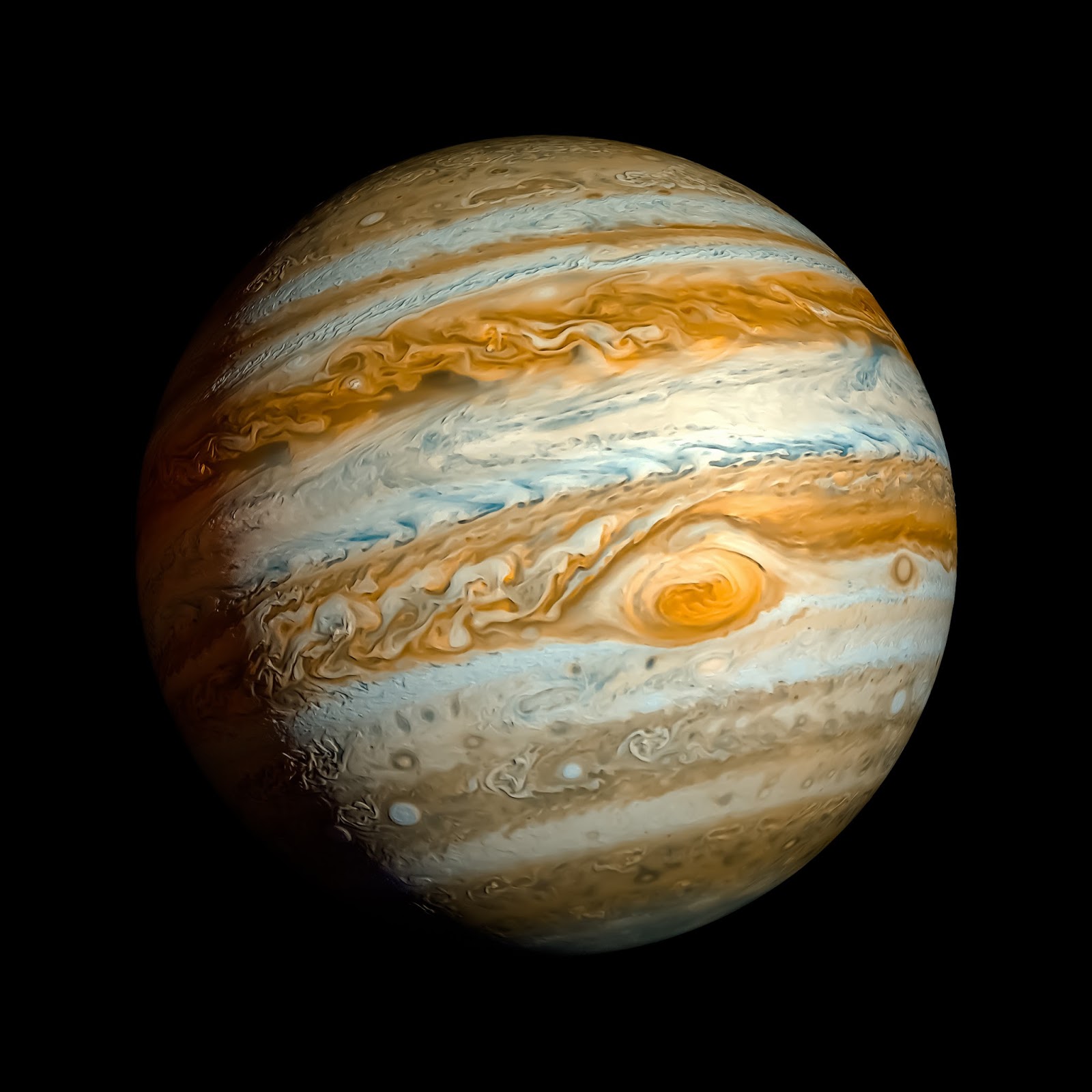
Jupiter’s composition remains one of the most extensively studied aspects of planetary science, yet its deep interior and dynamic atmosphere pose unique challenges for direct observation. Spectroscopic techniques, radio wave analysis, and gravitational modeling provide critical insights into its atmospheric gases, cloud layers, and internal structure. These methods rely on missions like the James Webb Space Telescope (JWST), Juno, and legacy probes such as Galileo and Voyager, each contributing distinct datasets that refine our understanding of Jupiter’s chemistry, thermal structure, and formation history.Spectroscopy remains the primary tool for dissecting Jupiter’s atmospheric composition, as its layered clouds and high-pressure environments obscure direct visual observation. Infrared (IR) and radio wave instruments detect molecular signatures by analyzing how light interacts with gases, aerosols, and ions at varying altitudes. Gravitational measurements and seismic wave modeling complement these observations, offering indirect probes of Jupiter’s interior despite the absence of a solid surface.
Infrared Spectroscopy and Atmospheric Gas Detection
Infrared spectroscopy exploits the unique absorption and emission spectra of molecules to identify and quantify Jupiter’s atmospheric constituents. The James Webb Space Telescope (JWST) and Juno’s JIRAM (Jovian Infrared Auroral Mapper) instrument have revolutionized this field by resolving spectral lines with unprecedented precision. Key targets include ammonia (NH₃), methane (CH₄), and phosphine (PH₃), each exhibiting distinct absorption bands in the near-IR (0.8–5.0 µm) and mid-IR (5–28 µm) ranges.Ammonia (NH₃) is a dominant cloud-forming gas in Jupiter’s upper troposphere, detected via its strong absorption features near 3.0 µm (ν₁ symmetric stretch) and 6.1 µm (ν₄ bending mode). JWST observations in 2022 revealed spatial variations in NH₃ abundance, correlating with storm systems and the Great Red Spot’s dynamic environment. Methane (CH₄), though less abundant than hydrogen and helium, produces identifiable bands at 3.3 µm (ν₃ asymmetric stretch) and 7.7 µm (ν₄ bending mode), with deeper layers accessible via thermal emission in the 8–13 µm range. Juno’s JIRAM detected methane-rich regions in the lower troposphere, suggesting vertical mixing processes.
Phosphine (PH₃), a potential biosignature candidate, exhibits a prominent absorption feature at 4.2 µm, though its detection in Jupiter’s atmosphere remains controversial. Early claims from ground-based telescopes (e.g., ALMA) suggested elevated PH₃ levels, but follow-up JWST data (2023) attributed some signals to sulfur compounds or instrumental artifacts. The debate underscores the need for high-resolution spectroscopy to distinguish between abiotic (e.g., volcanic outgassing) and hypothetical biogenic sources.
Cloud Particle Analysis
IR spectroscopy also probes Jupiter’s cloud layers by analyzing light scattering and absorption by aerosols. Ammonia ice clouds (5–1 bar) and ammonium hydrosulfide (NH₄SH) clouds (1–3 bar) exhibit distinct spectral signatures in the 1–5 µm range. Juno’s JIRAM mapped these layers, revealing vertical gradients in particle size and composition, with larger ice crystals associated with convective upwellings near storm regions.
Radio Wave Observations and Deep Atmospheric Probing
Radio waves penetrate deeper into Jupiter’s atmosphere than optical or IR light, enabling the study of subsurface layers and internal dynamics. The Juno mission’s Microwave Radiometer (MWR) operates at six frequencies (0.6–22 GHz), targeting emissions from ammonia gas and water vapor. These frequencies correspond to absorption depths of 5–100 bars, revealing:A key discovery from Juno’s MWR data is the asymmetric distribution of water in Jupiter’s atmosphere, with the north hemisphere exhibiting higher moisture levels than the south. This asymmetry challenges models of atmospheric circulation and suggests complex internal heat transport mechanisms. Additionally, radio occultation experiments (e.g., Galileo probe) measured electron density profiles, providing constraints on Jupiter’s ionospheric composition and magnetic field interactions.
Key Missions and Their Contributions to Jupiter’s Compositional Data
The following table summarizes pivotal missions that have advanced our understanding of Jupiter’s composition, highlighting their instrumentation and major discoveries:| Mission | Launch Year | Instrumentation | Key Discoveries |
|---|---|---|---|
| Pioneer 10/11 | 1972/1973 | Infrared Radiometer (IRR), Magnetometer, Radio Science Subsystem (RSS) | First direct measurements of Jupiter’s temperature profile and ammonia absorption bands. |
| Voyager 1/2 | 1977 | Infrared Interferometer Spectrometer (IRIS), Ultraviolet Spectrometer (UVS) | Mapped ammonia clouds, detected methane and water vapor; revealed atmospheric banded structure. |
| Galileo | 1989 (arrived 1995) | Near-Infrared Mapping Spectrometer (NIMS), Atmospheric Structure Instrument (ASI) | Probed deep atmosphere via probe entry; detected water vapor, helium abundance, and lightning activity. |
| Cassini | 1997 (flyby 2000) | Composite Infrared Spectrometer (CIRS), Radio Science (RS) | Studied upper atmosphere composition during flyby; confirmed PH₃ presence (later disputed). |
| New Horizons | 2006 (flyby 2007) | Linear Etalon Imaging Spectral Array (LEISA), Alice UV Spectrometer | Detected acetylene (C₂H₂) and ethylene (C₂H₄) in stratosphere; validated photochemical models. |
| Juno | 2011 (arrived 2016) | JIRAM (IR), MWR (radio), UVS, JEDI (energetic particles), Gravity Science Experiment | High-resolution ammonia mapping, water asymmetry, deep wind profiles, and metallic hydrogen signatures. |
Challenges and Indirect Probing of Jupiter’s Interior
Jupiter’s interior presents three primary observational challenges:1. Extreme Pressures and Temperatures: Pressures exceed 3 million bars at the core, while temperatures reach ~20,000 K in the metallic hydrogen layer. These conditions preclude traditional drilling or sampling.
2. Lack of a Solid Surface: The gradual transition from gas to liquid metallic hydrogen obscures seismic layering, complicating direct seismic tomography (unlike Earth or rocky planets).
3. Atmospheric Obscuration: Upper cloud layers (NH₃, NH₄SH) block visible and near-IR light, requiring radio waves or gravitational methods to probe deeper.
Indirect Probing Techniques
Scientists employ three complementary approaches to model Jupiter’s interior:
- Gravitational Measurements
Juno’s Gravity Science Experiment detects minute variations in Jupiter’s gravitational field by tracking the spacecraft’s orbit. These data reveal:
- Seismic Wave Modeling
Although Jupiter lacks a solid surface to reflect seismic waves
Comparative Planetary Chemistry: Jupiter vs. Other Gas Giants
The solar system’s gas giants—Jupiter, Saturn, Uranus, and Neptune—exhibit distinct chemical compositions shaped by their formation environments, migration histories, and internal dynamics. Jupiter, as the prototypical gas giant, serves as a benchmark for understanding the primordial solar nebula’s compositional gradients, while the ice-rich Uranus and Neptune reveal insights into the outer solar system’s volatile enrichment. Comparative analysis of their hydrogen-helium ratios, cloud layer chemistries, and trace element abundances elucidates formation theories, atmospheric stability, and the influence of planetary-scale processes on satellite systems.
Hydrogen-Helium Ratios and Formation Region Implications
The hydrogen-to-helium (H/He) ratio is a fundamental diagnostic of gas giant formation, reflecting both the solar nebula’s initial composition and subsequent accretion processes. Jupiter’s atmosphere closely mirrors the primordial solar nebula’s metallicity, with an H/He ratio of approximately 0.17–0.20 by mass, aligning with solar abundances (0.15–0.18). Saturn, though similar, exhibits a slightly enhanced helium fraction (~0.24–0.27 by mass), suggesting either a higher initial helium capture efficiency or post-formation helium rain separation. In contrast, Uranus and Neptune display subsolar H/He ratios (~0.15–0.17 by mass) due to their ice-dominated envelopes, where water, ammonia, and methane dilute the gaseous fraction.
Key Implications for Formation Regions:
Primordial Solar Nebula Composition (Grevesse et al., 2010):
H/He mass ratio ≈ 0.15–0.18
Metallicity (Z) ≈ 0.01–0.02 (heavy elements beyond H/He)
Cloud Composition Across Gas Giants: A Comparative Analysis
The visible cloud layers of gas giants are governed by thermodynamic phase transitions of volatile compounds, producing distinct spectral signatures. Below is a side-by-side comparison of their primary cloud compositions, ordered by altitude (highest to lowest pressure levels):| Planet | High-Altitude Clouds (<1 bar) | Mid-Altitude Clouds (1–5 bar) | Deep Clouds (>5 bar) | Unique Traces |
|---|---|---|---|---|
| Jupiter | Ammonia (NH₃) ice | Ammonium hydrosulfide ((NH₄)SH) | Water (H₂O) clouds | Phosphine (PH₃), high-altitude water vapor, germane (GeH₄) |
| Saturn | Ammonia (NH₃) ice | Ammonium hydrosulfide ((NH₄)SH) | Water (H₂O) clouds (less prominent) | Phosphine (PH₃), acetylene (C₂H₂), vertical mixing of hydrocarbons |
| Uranus | Methane (CH₄) ice | Hydrogen sulfide (H₂S) ice | Ammonia-water (NH₃-H₂O) clouds | Carbon monoxide (CO), hydrogen cyanide (HCN), stratospheric haze |
| Neptune | Methane (CH₄) ice | Hydrogen sulfide (H₂S) ice | Ammonia-water (NH₃-H₂O) clouds | Carbon monoxide (CO), ethane (C₂H₆), dynamic methane photolysis |
Unique Chemical Signatures in Jupiter’s Atmosphere
Jupiter’s atmosphere hosts several anomalous or rare chemical species that distinguish it from other gas giants, arising from its high internal heat flux, metallicity, and dynamic meteorology. Key signatures include:-
Phosphine (PH₃):
Detected at ~0.3–3 ppm in Jupiter’s troposphere, PH₃ is produced via abyssal upwelling of phosphorus-rich material from the metallic hydrogen layer or volcanic outgassing from Io’s plume deposits.Phosphine Abundance (Cavalié et al., 2017):
Jupiter: 0.3–3 ppm
Saturn: ~0.01–0.1 ppm (trace levels) -
High-Altitude Water Vapor:
Jupiter exhibits unexpected water vapor at pressures <0.5 bar, likely delivered by cometary impacts (e.g., Shoemaker-Levy 9, 1994) or vertical mixing from deep moist convection.Water Vapor Mixing Ratio (Fletcher et al., 2018):
Equatorial region: ~10⁻⁴ (stratospheric)
Mid-latitudes: ~10⁻⁵ (tropospheric) -
Germane (GeH₄) and Arsine (AsH₃):
Trace amounts of germanium and arsenic hydrides suggest enhanced heavy-element delivery from planetesimal accretion or differentiation of a rocky core.Germane Detection (Lellouch et al., 2001):
GeH₄/H₂ ≈ 7 × 10⁻¹⁰ (100× solar abundance) -
Stratospheric Hydrocarbons and Aromatics:
Jupiter’s upper atmosphere contains acetylene (C₂H₂), ethylene (C₂H₄), and benzene (C₆H₆), produced by UV-driven photochemistry of methane and ethane, unlike Saturn’s dominant acetylene haze.
Flowchart: Jupiter’s Compositional Influence on Satellite Systems
Jupiter’s chemical exchange, tidal heating, and magnetic field interactions create a dynamic system that shapes its moons’ compositions and habitability. Below is a process-oriented flowchart illustrating these linkages:-
Primary Drivers:
- Internal Heat Flux (16–20× solar): Powers convection, driving atmospheric circulation and moon tidal flexing.Jupiter’s composition is a testament to the extremes of planetary science, where theory and observation collide to reveal a world far removed from Earth yet fundamentally linked to its origins. From the rocky remnants of its core to the swirling storms of its upper atmosphere, every layer tells a story of gravitational forces, chemical reactions under crushing pressures, and the dynamic interplay between internal heat and external solar influences. As research advances, Jupiter serves as a Rosetta Stone for understanding gas giant formation, the behavior of matter under extreme conditions, and the potential habitability of its moons—highlighting why this planet remains a cornerstone of solar system exploration.
FAQ
What is Jupiter made of for kids?
Jupiter is mostly made of hydrogen and helium gases, like a giant, stormy ball. It doesn’t have a solid surface like Earth—just layers of gas and liquid under high pressure. Its colorful stripes and swirling storms (like the Great Red Spot) come from different gases and weather patterns.
Is Jupiter made of rock or gas?
Jupiter is mostly made of gas (hydrogen and helium), with no solid rock surface. Deep inside, pressure squeezes hydrogen into a strange metallic liquid, but the outer layers are swirling gases. Only its tiny, dense core might contain rock and metal.
What is Jupiter made of compared to other planets in the solar system?
Jupiter is a gas giant, unlike rocky planets like Earth or Mars. It’s mostly hydrogen (90%) and helium (10%), similar to the Sun’s composition. Its mass is so huge it makes up over twice as much as all other planets combined.
What is Jupiter’s atmosphere made of?
Jupiter’s atmosphere is mostly hydrogen (about 90%) and helium (about 10%), with traces of methane, ammonia, water vapor, and compounds like phosphine. Cloud layers contain ammonia crystals (white bands) and other colored chemicals that create its striped appearance.
Is Jupiter made of gas?
Yes, Jupiter is primarily made of gas—hydrogen and helium—with no solid surface. The gas becomes denser with depth, eventually turning into a liquid metallic hydrogen state under extreme pressure. Only its core may have rocky/metallic materials.
What is Jupiter’s surface made of?
Jupiter doesn’t have a solid surface like Earth. Instead, its outer layers are thick gases that gradually turn into liquid under pressure. If you tried to "land," you’d sink through hundreds of miles of gas before reaching a possible rocky core.
- Internal Heat Flux (16–20× solar): Powers convection, driving atmospheric circulation and moon tidal flexing.Jupiter’s composition is a testament to the extremes of planetary science, where theory and observation collide to reveal a world far removed from Earth yet fundamentally linked to its origins. From the rocky remnants of its core to the swirling storms of its upper atmosphere, every layer tells a story of gravitational forces, chemical reactions under crushing pressures, and the dynamic interplay between internal heat and external solar influences. As research advances, Jupiter serves as a Rosetta Stone for understanding gas giant formation, the behavior of matter under extreme conditions, and the potential habitability of its moons—highlighting why this planet remains a cornerstone of solar system exploration.
Leave a Comment
Comments are moderated before appearing. The data you submit is processed according to the Privacy Policy of Voltefac.