What Planet Has Rings Exploring Solar Systems Celestial Orbits
Table of Contents
- Scientific Overview of Ringed Planets
- Composition and Physical Properties of Planetary Rings
- Gravitational Dynamics and Structural Maintenance
- Comparative Analysis of Solar System Ring Systems
- Orbital Mechanics and Long-Term Evolution
- Historical Discoveries and Observations of Planetary Rings
- Early Telescopic Observations and the Enigma of Saturn’s "Handles"
- 19th-Century Breakthroughs: Composition and Structure Revealed
- Major Milestones in Ring Research: A Chronological Overview
- Technological Advancements Enabling Ring Research
- Cultural and Scientific Impact of Ring Discoveries
- Formation Theories and Planetary Science
- Leading Theories on Ring Formation
- Role of Tidal Forces and Orbital Resonance
- Evolutionary Processes in Ring Systems
- Cross-Sectional Structure of a Ring System
- Unique Characteristics of Each Ringed Planet
- Jupiter’s Faint and Dusty Rings
- Saturn’s Bright and Icy Ring System
- Uranus’ Narrow and Arc-Dominated Rings
- Neptune’s Fragmented and Dark Rings
- Comparative Table of Ringed Planets
- Technological Methods for Studying Planetary Rings
- Occultation Experiments and Ring Structure Analysis
- Stellar and Radio Occultation Techniques in Compositional Studies
- Visual Representation of Spacecraft Instrument Mapping
- Ground-Based Telescopes vs. Orbital Missions in Ring Studies
- Future Directions and Emerging Techniques
- Artistic and Cultural Depictions of Ringed Planets
- Historical and Modern Artistic Representations of Ringed Planets
- Literature, Film, and Music Inspired by Planetary Rings
- Aesthetic Appeal of Planetary Rings
- Amateur Astronomer’s Guide to Observing Saturn’s Rings
- FAQ
- Which planet has rings around it?
- Which planet in our solar system has rings?
- Which planet has rings besides Saturn?
- Which planet has rings made of ice and rock?
- Which planets have rings around them?
- Which planet has rings bigger than Saturn’s?
Among the solar system’s most mesmerizing phenomena, planetary rings stand as dynamic testaments to gravitational forces and cosmic evolution. While Saturn’s iconic rings dominate public imagination, they are not the only celestial structures of their kind. From Jupiter’s dusty veils to Neptune’s enigmatic arcs, these formations reveal intricate interactions between matter and orbital mechanics, challenging conventional assumptions about planetary formation. Understanding their composition—ranging from icy fragments to metallic debris—sheds light on the violent histories of their parent worlds, while advancements in space exploration continue to unravel their mysteries.
The study of ringed planets bridges astronomy, physics, and planetary science, offering insights into the fundamental processes shaping our universe. Gravitational dynamics, such as the Roche limit, dictate why rings persist in narrow bands rather than coalescing into moons, while shepherd moons and resonance patterns create the delicate structures observed today. Comparative analysis across Saturn, Jupiter, Uranus, and Neptune highlights stark differences in material density, visibility, and stability, reflecting each planet’s unique environmental conditions. Historical discoveries, from Galileo’s early telescopic observations to the Cassini mission’s close-up imagery, have redefined our perception of these celestial phenomena, transforming them from mere curiosities into laboratories for studying solar system evolution.
Scientific Overview of Ringed Planets
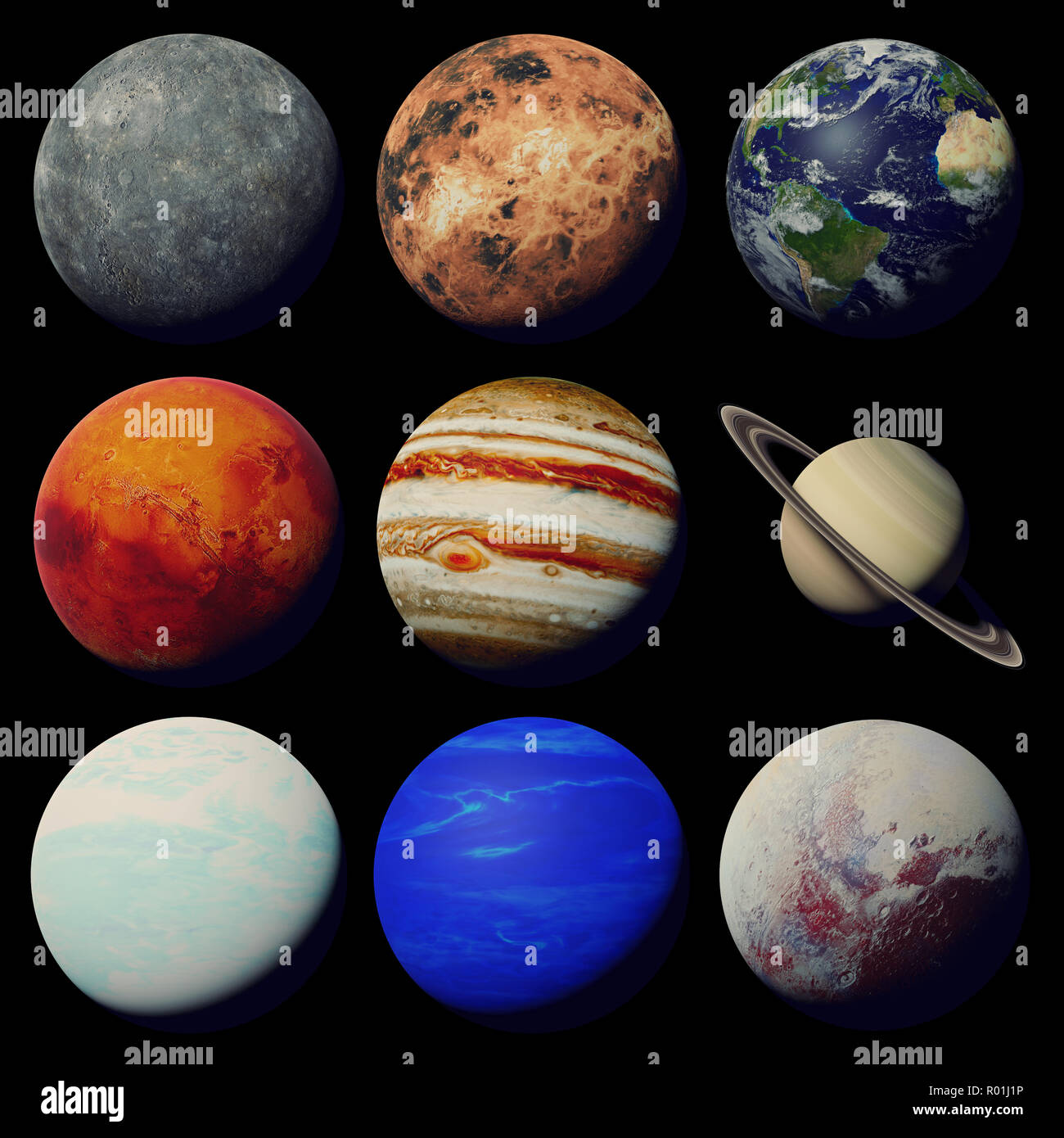
Planetary rings are dynamic, complex structures composed primarily of ice, dust, and rocky debris, orbiting planets within their equatorial planes. These systems exhibit a delicate balance between gravitational forces, collisional dynamics, and tidal interactions, with Saturn’s rings serving as the most visually striking and studied example. While all four gas giants in the solar system possess rings, their compositions, densities, and structural characteristics vary significantly due to differences in planetary mass, orbital mechanics, and external influences such as moons and solar radiation.
The stability of these rings is governed by fundamental principles of orbital dynamics, including the Roche limit, which defines the minimum distance at which a celestial body can approach a planet without being torn apart by tidal forces. Shepherd moons further sculpt ring edges through resonant gravitational interactions, creating sharp boundaries and intricate wave patterns. Comparative analysis reveals that while Saturn’s rings are the most extensive and reflective, Jupiter’s and Neptune’s systems are darker and denser, while Uranus’s rings exhibit a unique inclination relative to its axial tilt.
Composition and Physical Properties of Planetary Rings
Planetary rings are heterogeneous aggregates of particles ranging from micrometer-sized dust grains to kilometer-scale boulders, with compositions dominated by water ice, silicates, and organic compounds. Saturn’s rings, for instance, consist of ~99.9% pure water ice with trace amounts of rocky impurities, contributing to their high albedo (reflectivity). In contrast, Jupiter’s rings are composed of darker, silicate-rich material, likely sourced from micrometeoroid impacts on its inner moons. Uranus’s rings contain a mix of organic compounds and carbonaceous dust, while Neptune’s Adams ring features clumps of material possibly linked to its moon Galatea.The size distribution of ring particles follows a power-law scaling, where smaller particles dominate numerically but larger bodies influence the system’s dynamics. Collisional cascades continuously fragment and resupply particles, maintaining a steady-state equilibrium. Spectroscopic observations reveal variations in particle composition across ring segments, with denser regions often correlating with higher concentrations of silicates or organic residues.
Gravitational Dynamics and Structural Maintenance
The stability of planetary rings depends on three primary mechanisms: orbital resonance, shepherding effects, and tidal forces. The Roche limit, derived from the balance between a body’s self-gravity and a planet’s tidal forces, sets an upper bound for ring formation. For Saturn, this limit lies at approximately 2.44 planetary radii, explaining why no large moons exist within this zone. Shepherd moons, such as Prometheus and Pandora in Saturn’s F ring, confine ring edges through 1:1 mean-motion resonances, preventing dispersion.Wave phenomena, such as spiral density waves and bending waves, arise from interactions with embedded moons or ring particles. Keplerian shear—the differential orbital velocity across the ring—causes particles to collide and redistribute, forming gaps and ringlets. Numerical simulations indicate that rings younger than 100 million years would dissipate due to collisional damping, suggesting that observed systems may be transient or actively replenished by moonlet disruptions or comet impacts.
Comparative Analysis of Solar System Ring Systems
The four gas giants exhibit distinct ring characteristics, reflecting their unique environments and evolutionary histories. Below is a comparative table summarizing key properties:| Planet | Primary Composition | Discovery Year | Key Distinguishing Features | Notable Moons Influencing Rings |
|---|---|---|---|---|
| Saturn | Water ice (99.9%), silicates, organic compounds | 1610 (Galileo), confirmed 1655 (Huygens) | Most extensive and reflective rings; divided into seven main groups (D to G); Cassini Division separates A and B rings. | Prometheus, Pandora (F ring shepherds); Mimas, Janus (gap maintenance) |
| Jupiter | Silicate dust, micrometeoroid debris | 1979 (Voyager 1) | Dark, tenuous rings; Halo ring (innermost), Main ring, and Gossamer rings (Thebe and Amalthea); low albedo (~0.05). | Metis, Adrastea (source of dust); Thebe, Amalthea (Gossamer ring sources) |
| Uranus | Water ice, organic carbon, silicates | 1977 (ground-based occultation) | Narrow, dark rings inclined 98° to orbital plane; ε ring is brightest; Zeta ring contains a dusty component. | Cordelia, Ophelia (ε ring shepherds); Belinda, Rosalind (inner ring confinement) |
| Neptune | Ice, organic compounds, dust | 1989 (Voyager 2) | Partial, arc-like structures in Adams ring; Le Verrier ring is incomplete; high dust content. | Galatea (Adams ring arcs); Larissa (possible source of dust) |
Orbital Mechanics and Long-Term Evolution
The longevity of planetary rings is constrained by Poynting-Robertson drag, solar radiation pressure, and collisional erosion. Over 10⁸–10⁹ years, these processes cause particles to spiral inward or be ejected, leading to ring dissipation. Saturn’s rings, for example, may have formed ~100 million years ago from a disrupted moon or comet, given their youthful appearance compared to the solar system’s age (~4.6 billion years).Shepherding resonances play a critical role in maintaining ring edges, as seen in Saturn’s Encke Gap (confined by Pan) and the Keeler Gap (confined by Daphnis). Numerical models indicate that non-axisymmetric perturbations, such as those from inclined moons, can excite spiral density waves and vertical corrugations, further shaping ring morphology. The F ring’s braided structure results from repeated interactions with Prometheus and Pandora, demonstrating the dynamic interplay between gravity and collisions.
Roche Limit Formula:
The distance \( d \) within which a satellite of density \( \rho_s \) orbiting a planet of density \( \rho_p \) and mass \( M_p \) will disintegrate is given by:
\[ d = R_p \left(2 \frac{M_p}{M_s}\right)^{1/3} \approx 2.44 R_p \left(\frac{\rho_p}{\rho_s}\right)^{1/3} \]
where \( R_p \) is the planet’s radius. For Saturn (\( \rho_p \approx 687 \, \text{kg/m}^3 \)), this limit lies at ~2.44 planetary radii.
Historical Discoveries and Observations of Planetary Rings
The study of planetary rings represents a cornerstone in the evolution of observational astronomy, blending early telescopic curiosity with modern high-precision instrumentation. From Galileo’s initial perplexing observations of Saturn in 1610 to the high-resolution imaging of the Cassini-Huygens mission in the 21st century, each discovery expanded humanity’s understanding of dynamic celestial phenomena. These advancements not only refined models of planetary formation but also introduced new paradigms in orbital mechanics, material science, and planetary system dynamics. Below follows a chronological exploration of key milestones, technological breakthroughs, and their enduring scientific and cultural significance.Early Telescopic Observations and the Enigma of Saturn’s "Handles"
Galileo Galilei’s 1610 observations of Saturn through his rudimentary telescope revealed anomalous protrusions on either side of the planet, which he initially described as "handles" or "ears." These features baffled astronomers for decades, as their appearance varied over time—disappearing entirely in 1612 before reappearing in 1613. The inconsistency suggested a dynamic structure rather than fixed satellites. Christiaan Huygens resolved this mystery in 1655 with his Systema Saturnium, proposing that Saturn was encircled by a thin, flat ring inclined to the planet’s equatorial plane. Huygens’ deduction, based on improved telescopic resolution, marked the first scientific description of a planetary ring system. His work laid the foundation for subsequent investigations into Saturn’s rings, though the true nature of their composition and stability remained speculative until the 19th century.19th-Century Breakthroughs: Composition and Structure Revealed
The 18th and 19th centuries saw critical advancements in telescope design and spectroscopic analysis, enabling deeper scrutiny of Saturn’s rings. In 1857, James Clerk Maxwell mathematically proved that the rings could not be a solid disk, as such a structure would disintegrate due to tidal forces. Instead, he proposed they consisted of countless small, independently orbiting particles—a theory later confirmed by visual evidence. Pierre-Simon Laplace and later astronomers like Édouard Roche expanded on this, refining models of ring stability and the role of gravitational interactions. By the late 1800s, the discovery of gaps in the rings (e.g., the Cassini Division, observed by Giovanni Cassini in 1675) suggested the presence of embedded moons or resonant perturbations, a concept that would later underpin modern ring dynamics research.Major Milestones in Ring Research: A Chronological Overview
The progression of ring research reflects parallel advancements in telescope technology and space exploration. Below is a structured timeline of pivotal discoveries and their enabling technologies:- 1610: Galileo Galilei observes Saturn’s anomalous "handles" through a low-magnification telescope, marking the first recorded sighting of planetary rings.
- 1655: Christiaan Huygens publishes Systema Saturnium, proposing Saturn’s rings are a thin, flat disk encircling the planet, based on observations with a 50x telescope.
- 1675: Giovanni Domenico Cassini discovers the major gap in Saturn’s rings now named the Cassini Division, using a 100x telescope. He also identifies four of Saturn’s moons (Iapetus, Rhea, Tethys, Dione).
- 1857: James Clerk Maxwell’s theoretical work demonstrates that Saturn’s rings must be composed of numerous small particles, debunking the solid-ring hypothesis.
- 1895: The discovery of Uranus’ rings by William Lassell (though initially disputed) expands the scope of ring systems beyond Saturn, hinted by irregularities in the planet’s brightness.
- 1977: A serendipitous observation during a stellar occultation reveals Jupiter’s faint ring system, detected by the Voyager 1 spacecraft. This challenges the assumption that rings are exclusive to Saturn.
- 1979: Voyager 2 confirms the existence of Uranus’ rings during its flyby, revealing nine distinct rings with complex structures, including shepherding moons.
- 1981: Voyager 2 discovers Neptune’s rings during its encounter, identifying five primary rings (Adams, Le Verrier, Galle, Lassell, Arago) and later, more tenuous arcs.
- 1990s: Ground-based adaptive optics and infrared spectroscopy (e.g., using the W.M. Keck Observatory) resolve finer details in Saturn’s rings, detecting vertical structures and propeller-shaped features.
- 2004–2017: The Cassini-Huygens mission provides unprecedented data on Saturn’s rings, including their composition (primarily water ice with trace organics), age (potentially as old as the Solar System), and dynamic interactions with moons like Prometheus and Pandora.
- 2005: The New Horizons spacecraft observes additional faint rings around Jupiter during its gravity-assist flyby, refining models of ring formation.
- 2010s–Present: Advanced instruments like the James Webb Space Telescope (JWST) and ground-based interferometry (e.g., ALMA) enable multi-wavelength analysis of ring systems, probing their thermal properties and dust dynamics.
Technological Advancements Enabling Ring Research
The evolution of observational tools has been instrumental in transforming ring research from speculative astronomy to a precision science. Key technological leaps include:- Spectroscopy: From the 19th-century visual spectrographs to modern infrared and ultraviolet spectrometers (e.g., Cassini’s Visual and Infrared Mapping Spectrometer), this technique has identified ring compositions, including water ice, silicates, and organic compounds.
- Adaptive Optics: Systems like those at the W.M. Keck Observatory mitigate atmospheric distortion, achieving resolutions comparable to space-based telescopes. This has revealed vertical structures in Saturn’s rings and the dynamics of "propeller" moonlets.
- Spacecraft Flybys and Orbiters: Missions such as Voyager, Galileo, Cassini, and New Horizons provided close-up imaging, gravitational measurements, and in-situ data, uncovering phenomena like ring spokes (Saturn), dusty arcs (Neptune), and shepherding moons.
- Radio Occultation: By measuring how radio signals from spacecraft pass through rings, scientists deduce particle densities, temperatures, and even the presence of unseen moons (e.g., Voyager 2’s detection of Uranus’ rings).
- Computer Modeling: Numerical simulations of ring dynamics (e.g., using N-body algorithms) have replicated observed structures, such as density waves and resonant gaps, validating theoretical predictions.
Cultural and Scientific Impact of Ring Discoveries
The discovery of planetary rings transcended mere astronomical curiosity, reshaping paradigms in planetary science, physics, and even philosophy. Saturn’s rings became a symbol of cosmic elegance and complexity, inspiring art, literature, and cultural narratives. Scientifically, they challenged classical mechanics by demonstrating the stability of non-solid structures in gravitational fields—a principle later applied to protoplanetary disks and circumstellar debris. The identification of rings around Jupiter, Uranus, and Neptune expanded the definition of a "ring system," revealing that such features are not unique anomalies but common byproducts of planetary formation. These discoveries also underscored the role of moons in sculpting rings through gravitational resonances, a mechanism now recognized in exoplanetary systems. Ultimately, rings serve as natural laboratories for studying orbital dynamics, material aggregation, and the interplay between celestial bodies, offering insights into the early Solar System and the potential for ring systems in extrasolar environments.

Formation Theories and Planetary Science
The origin of planetary rings remains one of the most debated topics in planetary science, with leading hypotheses rooted in dynamical processes, collisional history, and the primordial conditions of the solar system. Three primary theories—capture of moons, collisional disruption of satellites, and remnants of the primordial solar nebula—compete to explain the formation of ring systems, each supported by observational and theoretical evidence. These mechanisms are not mutually exclusive; rather, they may operate in tandem or sequentially to shape the complex structures observed today. Understanding these processes requires examining the roles of tidal forces, orbital resonances, and long-term evolutionary dynamics, particularly in systems like Saturn’s rings, where interactions between particles and moons produce intricate patterns.Leading Theories on Ring Formation
The formation of planetary rings is influenced by a combination of gravitational, collisional, and radiative processes, with each theory emphasizing distinct initial conditions and evolutionary pathways.Capture of Moons
This theory posits that rings form from the tidal disruption of moons or other celestial bodies that ventured too close to a planet, exceeding the Roche limit—the distance within which a satellite’s self-gravity is insufficient to overcome the planet’s tidal forces. The resulting debris spreads into a disk, stabilized by collisions and radiation pressure. Observational support includes the irregular shapes of some ring moons (e.g., Saturn’s Pan and Daphnis), which suggest past disruptions.
Collisional Disruption of Satellites
In this scenario, rings originate from the catastrophic fragmentation of a larger moon due to impacts or internal stresses. The debris field then spreads into a ring system, with particle sizes ranging from micrometers to meters. Jupiter’s faint rings are thought to stem from this process, likely involving the breakup of small moons like Metis or Adrastea. Collisional cascades further refine the ring structure over time.
Remnants of the Primordial Solar Nebula
Some models propose that rings are leftover material from the protoplanetary disk that failed to accrete into moons. This theory aligns with the high dust content in Saturn’s rings, which may represent ancient nebular debris. However, the lack of similar rings around gas giants like Uranus and Neptune challenges this hypothesis, suggesting additional factors (e.g., late-stage dynamical events) may be necessary.
Role of Tidal Forces and Orbital Resonance
Tidal forces and mean-motion resonances are primary drivers of ring structure, governing particle distribution, density waves, and the formation of gaps. Saturn’s F-ring, a narrow and dynamically active ring, exemplifies these interactions.Tidal Forces
Within the Roche limit (~2.44 planetary radii for a fluid satellite), tidal stresses exceed a moon’s gravitational binding energy, preventing its formation. Particles in rings experience differential tidal forces, causing them to spread into disk-like structures. For example, Saturn’s Cassini Division (a 4,800 km gap) is maintained by the 2:1 resonance with Mimas, which clears particles from this region.
Orbital ResonanceSaturn’s F-Ring as a Case Study
Resonances occur when orbital periods of ring particles and moons align in integer ratios (e.g., 1:2, 3:2). These interactions create density waves, spiral patterns, and propeller-shaped features. In the F-ring, Prometheus and Pandora (shepherd moons) confine the ring through gravitational perturbations, while embedded moonlets (S/2004 S 3–6) carve gaps via local resonances.
The F-ring’s complexity arises from:
Evolutionary Processes in Ring Systems
Rings are not static; they evolve through erosion, accretion, and external influences. Their lifetimes are estimated at 100 million–1 billion years, far shorter than the solar system’s age, implying continuous replenishment.Key Evolutionary MechanismsStep-by-Step Evolutionary Timeline
1. Erosion
Collisional: High-velocity impacts fragment particles, producing a size distribution dominated by centimeter-scale bodies. Radiative: Solar UV and micrometeoroid bombardment sputter material, generating dust. Electromagnetic: Charged particles in Saturn’s magnetosphere erode icy ringlets, contributing to the E-ring. 2. Accretion into Moons
Particles coalesce via sticky collisions (for icy grains) or electrostatic forces, forming moonlets (e.g., Pan in Saturn’s A-ring). Larger moons (e.g., Daphnis) clear gaps via gravitational sweeping. 3. Solar Radiation Pressure
Micron-sized dust particles are pushed outward by sunlight, creating diffuse halos (e.g., Saturn’s G-ring). Radiation pressure competes with gravitational confinement, setting an upper limit to particle sizes (~10 cm for Saturn’s rings).
1. Initial Formation
2. Dynamical Settling (10,000–100,000 years)
3. Steady-State Phase (Millions of years)
4. Long-Term Depletion (100+ million years)
Cross-Sectional Structure of a Ring System
A typical ring system exhibits vertical and radial stratification, with density variations influenced by particle size, composition, and dynamical interactions. Below is a text-based conceptual diagram of Saturn’s ring system, labeled by region and density:+---------------------+
| |
| Crown | (Optically thick, icy particles)
| (Upper haze layer)| ~100–300 m scale height
| |
+----------+----------+
|
v
+---------------------+
| |
| A-Ring | (Bright, moderate density)
| (Outer region) | - Width: ~14,600 km
| - Density: | ~50–100 g/cm² (optical depth τ ~0.5–1.0)
| • Ice-rich | - Key features: Encke Gap (shepherded by Pan)
| • Particle size:| 1 cm–10 m
| 1 mm–10 m |
| |
+----------+----------+
|
v
+---------------------+
| |
| Cassini Div. | (Resonance gap, low density)
| (2:1 Mimas res.) | - Width: ~4,800 km
| - Density: | ~1–10 g/cm² (τ ~0.01)
| • Dust-dominated| - Maintained by Mimas’ gravity
| |
+----------+----------+
|
v
+---------------------+
| |
| B-Ring | (Densest, most reflective)
| (Inner region) | - Width: ~25,500 km
| - Density: | ~500–1,000 g/cm² (τ ~3–5)
| • Ice + silicates| - Particle size: 1 cm–10 m
| • High collisional| - "Straw" and "plateau" structures
| activity |
| |
+----------+----------+
|
v
+---------------------+
| |
| C-Ring | (Translucent, low density)
| (Inner region) | - Width: ~17,500 km
| - Density: | ~1–10 g/cm² (τ ~0.1)
| • Dust + pebbles| - Gradual transition to D-ring
| |
+----------+----------+
|
v
+---------------------+
| |
| D-Ring
Unique Characteristics of Each Ringed Planet
The four gas giants in the solar system—Jupiter, Saturn, Uranus, and Neptune—each host distinct ring systems that vary dramatically in composition, structure, and visual appearance. These differences reflect underlying physical processes, including gravitational interactions, material sources, and orbital dynamics. Saturn’s iconic rings dominate public perception, yet Jupiter’s dusty bands, Uranus’ narrow arcs, and Neptune’s fragmented loops reveal a broader diversity shaped by planetary environments and evolutionary history.
Jupiter’s Faint and Dusty Rings
Jupiter’s ring system, discovered in 1979 by Voyager 1, consists of three primary components: the main ring, the halo ring, and the gossamer rings (comprising the Amalthea and Thebe rings). Unlike Saturn’s bright, icy structures, Jupiter’s rings are composed predominantly of microscopic dust particles, likely sourced from meteoroid impacts on its inner moons—Metis, Adrastea, Amalthea, and Thebe. The main ring, spanning 129,000 km in radius but only ~30–300 km thick, exhibits a dark albedo (~0.05), reflecting less than 5% of sunlight due to its silicate and organic-rich composition.
The halo ring, a diffuse inner layer extending to ~122,700 km, interacts dynamically with Jupiter’s magnetosphere, causing charged particles to spiral inward. The gossamer rings, named for their tenuous appearance, are embedded within the orbits of Amalthea and Thebe and extend outward as far as 262,000 km. Their stability is maintained by shepherding effects from these moons, though their low optical depth (τ < 0.001) makes them nearly invisible from Earth without spacecraft instrumentation.
Key Distinction: Jupiter’s rings are dust-dominated, with particle sizes ranging from submicron to ~10 µm, whereas Saturn’s rings contain meter-sized icy boulders.
Saturn’s Bright and Icy Ring System
Saturn’s rings are the most extensive and visually striking in the solar system, composed primarily of water ice with trace amounts of silicate impurities. Their albedo exceeds 0.6, making them the most reflective natural objects in the solar system. The rings are divided into seven major divisions, each with unique structural features:- D Ring: The innermost, faint ring (~67,000 km from Saturn’s center) with a low optical depth and embedded within the planet’s magnetosphere.
Saturn’s rings exhibit color variations correlated with composition:
Notable Feature: The Roche Division (a 2,900 km gap between A and B rings) is not a physical gap but a density wave caused by orbital resonances with Janus and Epimetheus.
Uranus’ Narrow and Arc-Dominated Rings
Uranus’ ring system, discovered in 1977 during a stellar occultation, consists of 13 known rings, all confined within a 42,000 km radius of the planet. Unlike Saturn’s continuous bands, Uranus’ rings are partial and arc-like, with some segments spanning only 10–20° of the orbit. The most prominent rings—ε (Epsilon), δ (Delta), γ (Gamma), η (Eta), and β (Beta)—exhibit sharp edges and high optical depth (τ ~ 0.5–1.0), suggesting recent formation or ongoing shepherding.The ε Ring, the brightest and most stable, contains shepherd moons Cordelia and Ophelia, which maintain its ~100 km width through gravitational confinement. Other rings, such as ζ (Zeta) and λ (Lambda), are broad and diffuse, possibly composed of carbonaceous material (albedo ~0.02–0.05). Uranus’ rings also display color variations:
The arcs in Uranus’ rings (e.g., 9 and 10 Rings) are unusually stable, defying classical models of ring dynamics. Proposed explanations include:
Orbital Anomaly: Uranus’ rings are tilted ~98° relative to its equator, aligning with the planet’s extreme axial tilt, suggesting a shared dynamical origin (e.g., a past giant impact).
Neptune’s Fragmented and Dark Rings
Neptune’s rings, discovered in 1989 by Voyager 2, are the darkest and most fragmented in the solar system, with albedos as low as 0.01–0.02. The five main rings—Galle, Le Verrier, Lassell, Arago, and Adams—are composed of dark organic material, possibly carbon-rich compounds or irradiated ices. The Adams Ring contains five bright arcs (Liberty, Equality, Fraternity, Courage, and Justice), each spanning ~10° of the orbit, with no continuous ring structure.The arcs’ stability is attributed to:
Neptune’s rings exhibit distinct coloration:
The partial nature of Neptune’s rings contrasts with Saturn’s continuous bands, implying recent formation (geologically speaking) or ongoing dynamical disruption. Models suggest the arcs may be transient features, with lifetimes of ~10–100 million years.
Dynamic Instability: Neptune’s arcs are not in equilibrium; simulations show they would disperse within ~100 orbits without shepherding.
Comparative Table of Ringed Planets
The following table summarizes key characteristics of each planet’s ring system, emphasizing structural and compositional differences.| Planet | Ring Name | Notable Feature | ||||||||||||
|---|---|---|---|---|---|---|---|---|---|---|---|---|---|---|
| Jupiter | Main Ring | Dust-dominated (τ < 0.001), sourced from Metis/Adrastea impacts; dark albedo (~0.05). | ||||||||||||
| Halo Ring | Diffuse inner layer interacting with magnetosphere; extends to 122,700 km. | |||||||||||||
| Method | Discovery | Limitations |
|---|---|---|
| Ground-Based (HST) | Seasonal brightness variations in Saturn’s rings | Cannot resolve sub-kilometer structures |
| Orbital (Cassini) | Propeller moonlets in Saturn’s A-ring | Limited to single planetary systems |
| Ground-Based (VLT) | Silicate detection in Uranus’ rings | Atmospheric interference affects spectra |
| Orbital (Galileo) | Dust composition of Jupiter’s rings | Short mission duration (8 years) |
Future Directions and Emerging Techniques
Advancements in technology are expanding the toolkit for ring studies. Next-generation interferometry (e.g., ELT or LISA) may achieve resolutions comparable to orbital missions for certain wavelengths. Additionally, AI-driven data analysis is being applied to Cassini’s vast dataset to identify subtle patterns in ring dynamics, such as spiral density waves or clumping phenomena.Emerging Methods:
Artistic and Cultural Depictions of Ringed Planets
The intersection of planetary science and human creativity has long captivated artists, writers, and filmmakers, transforming scientific discoveries into enduring cultural symbols. Ringed planets, particularly Saturn, have served as a muse for centuries, evolving from vague celestial abstractions to hyper-realistic depictions as observational technology advanced. These artistic representations not only reflect humanity’s fascination with the cosmos but also underscore the aesthetic and symbolic power of planetary rings—structures that embody both cosmic grandeur and delicate fragility.The cultural resonance of ringed planets extends beyond visual art into literature, music, and cinema, where they symbolize mystery, infinity, and the sublime. Their luminous arcs against the void of space have inspired narratives of exploration, existential reflection, and even metaphysical speculation. For amateur astronomers, the rings of Saturn remain one of the most accessible and visually rewarding targets in the night sky, offering a tangible connection between scientific observation and artistic appreciation.
Historical and Modern Artistic Representations of Ringed Planets
Early depictions of Saturn’s rings in art were often speculative, shaped by limited astronomical knowledge. The Dutch astronomer Christiaan Huygens first accurately described the rings in 1655, yet early illustrations—such as those by Johannes Hevelius in the 17th century—depicted them as solid disks or attached to the planet. By the 18th and 19th centuries, advancements in telescope design allowed artists like Étienne Léopold Trouvelot to render the rings with greater precision, capturing their segmented structure and shadow play.In the 20th century, the rise of space exploration and high-resolution imaging revolutionized artistic portrayals. NASA’s Voyager and Cassini missions provided unprecedented data, enabling illustrators such as Don Davis and Luc Van den Abeele to create hyper-detailed, scientifically accurate renderings of Saturn’s rings, including their complex braided structures and shepherd moons. Modern digital artists, including those at NASA’s Jet Propulsion Laboratory (JPL), now use computational models to generate dynamic visualizations, blending artistry with real-time observational data.
"The rings of Saturn are a cosmic masterpiece—a symphony of ice and rock, frozen in time yet perpetually in motion, defying the chaos of the void." — Adapted from descriptions by Carl Sagan, Cosmos (1980)
Literature, Film, and Music Inspired by Planetary Rings
Ringed planets have permeated popular culture as metaphors for infinity, transcendence, and the unknown. In literature, Arthur C. Clarke’s 2001: A Space Odyssey (1968) uses Saturn’s rings as a backdrop for the monolith’s revelation, symbolizing humanity’s ascent beyond Earth. Ursula K. Le Guin’s The Left Hand of Darkness (1969) and Kim Stanley Robinson’s Mars Trilogy (1990s) incorporate planetary rings as elements of world-building, reflecting themes of isolation and cosmic scale.In film, Saturn’s rings have appeared in iconic scenes, from Stanley Kubrick’s 2001 (where they frame the monolith’s emergence) to James Cameron’s Avatar (2009), where ringed planets evoke alien ecosystems. Disney’s The Little Prince (1974) and Pixar’s Wall-E (2008) feature Saturn as a celestial landmark, reinforcing its cultural status as a symbol of wonder. Music has also drawn inspiration: Pink Floyd’s The Dark Side of the Moon (1973) includes a lyric referencing "Saturn’s rings," while David Bowie’s Space Oddity (1969) subtly alludes to cosmic exploration beyond Earth’s atmosphere.
"To stand upon the pale cold crescent of Earth’s moon and see the bright blue and white planet of our home, and to see Saturn’s rings… is to see ourselves as part of something vast and timeless." — Carl Sagan, Pale Blue Dot (1994)
Aesthetic Appeal of Planetary Rings
The visual allure of planetary rings lies in their symmetry, luminosity, and contrast against the dark expanse of space. Saturn’s rings, composed of billions of ice and rock particles ranging from microscopic dust to mountain-sized boulders, scatter sunlight with a blinding brilliance when viewed edge-on or at high phase angles. Their geometric precision—spanning 282,000 km yet averaging only 10 meters in thickness—creates an illusion of fragility, as if the rings could dissolve into the void at any moment.The color palette of the rings varies subtly: the A-ring appears golden, the B-ring is icy white, and the C-ring is translucent, with Encke Gap and Keeler Gap casting sharp shadows like cosmic calligraphy. When viewed through a telescope, the rings exhibit dynamic phenomena, including spokes (radial markings caused by electrostatic forces) and propeller-shaped disturbances from embedded moonlets. This interplay of light and shadow transforms the rings into a living, breathing entity, a celestial phenomenon that feels both ancient and ephemeral.
Amateur Astronomer’s Guide to Observing Saturn’s Rings
Saturn’s rings are among the most accessible celestial wonders for amateur astronomers, visible even through modest telescopes. Below are key guidelines for optimal observation, balancing clarity with technical feasibility.-
Optimal Viewing Conditions
Saturn reaches opposition (closest to Earth) roughly every 378 days, offering the brightest and most detailed views. The best periods for observation occur during summer in the Northern Hemisphere (May–October), when Saturn’s tilt maximizes ring visibility. Avoid observing near full moon, as its glare can overwhelm faint details. Clear, dry nights with minimal atmospheric turbulence (high seeing conditions) are ideal. -
Telescope Requirements and Magnification
A 4-inch (100mm) aperture telescope at 50x magnification will reveal Saturn as a distinct disk with visible rings, though finer details (e.g., Cassini Division) require 8-inch (200mm) or larger apertures. For best results:- Use 100x–200x magnification for crisp ring structure, but avoid exceeding 2x the aperture in inches (e.g., a 6-inch scope should not exceed 120x).
- Employ high-contrast filters (e.g., blue or green filters) to enhance ring details by reducing atmospheric haze.
- For digital imaging, a Dedicated Astronomy Camera (e.g., ZWO ASI series) with stacking software (e.g., Autostakkert!) can improve resolution.
-
Ring Tilt and Seasonal Variations
Saturn’s axial tilt (26.7°) causes the rings to appear fully open (maximum tilt) every 13–15 years, offering the most dramatic views. During ring-plane crossing (every ~14–15 years), the rings appear as a thin line or vanish entirely, a rare event last observed in 2009 and next due in 2025. Track Saturn’s tilt using NASA’s JPL Horizons or Stellarium for planning. -
Enhancing Observations with Accessories
- Barlow lenses (e.g., 2x or 3x) increase magnification without sacrificing image quality.
- Atmospheric dispersion correctors mitigate chromatic aberration in low-altitude observations.
- Sketching or digital capture can reveal subtle variations in ring brightness and shadowing over time.
-
Key Features to Identify
With practice, observers can discern:- The Cassini Division (a dark gap between A and B rings, best seen at high magnification).
- Encke Gap (a narrow slit in the A-ring, requiring 10-inch+ apertures).
- Saturn’s moons (Titan, Rhea, Dione, and Tethys), which orbit near the rings and can cast shadows.
"The rings of Saturn are not merely a scientific curiosity—they are a portal to the sublime, a reminder that the universe is both vast and intimate, a dance of ice and light that has unfolded for billions of years." — Adapted fromPlanetary rings are more than just cosmic adornments; they are silent narrators of the solar system’s violent past and ongoing transformations. Saturn’s dazzling ice particles, Jupiter’s dusty halos, and Neptune’s dark arcs each tell a story of collisions, tidal forces, and the delicate balance between destruction and creation. As technology advances, from adaptive optics to interplanetary probes, our understanding of these structures deepens, revealing their role in planetary dynamics and even offering clues about exoplanetary systems beyond our own. Whether through the lens of a telescope, the data streams of a spacecraft, or the pages of scientific literature, the allure of ringed planets endures—a reminder that the universe’s most breathtaking features often conceal its most profound secrets.
FAQ
Which planet has rings around it?
Saturn is the most famous planet with rings, but Jupiter, Uranus, and Neptune also have ring systems. Saturn’s rings are the brightest and most extensive, made mostly of ice and rock.
Which planet in our solar system has rings?
Four planets in our solar system have rings: Saturn (the most prominent), Jupiter, Uranus, and Neptune. All four were confirmed by spacecraft observations.
Which planet has rings besides Saturn?
Jupiter, Uranus, and Neptune all have ring systems. Jupiter’s rings are faint and dusty, while Uranus’ and Neptune’s are darker and narrower than Saturn’s.
Which planet has rings made of ice and rock?
Saturn’s rings are primarily composed of ice and rock, with some dust. Jupiter’s rings also contain ice and dust, though they’re much less dense.
Which planets have rings around them?
The four gas giants—Saturn, Jupiter, Uranus, and Neptune—have rings. Saturn’s are the most visible, while the others require telescopes or spacecraft to detect.
Which planet has rings bigger than Saturn’s?
No planet has rings visibly larger than Saturn’s when viewed from Earth. However, some estimates suggest Uranus’ rings might extend farther from the planet than Saturn’s, but they’re fainter and less dense.
Leave a Comment
Comments are moderated before appearing. The data you submit is processed according to the Privacy Policy of Voltefac.