| Second Revision |
1954 |
"I pledge allegiance to the flag of the United States of America, and to the Republic for which it stands, one Nation under God, indivisible, with liberty and justice for all."
|
Added "under God" during the Cold War era, influenced by the anti-communist sentiment of the 1950s. The amendment was proposed by President Dwight D. Eisenhower and Congress as a response to the Soviet Union’s at
Legal and Constitutional Debates Surrounding the Pledge of Allegiance
The Pledge of Allegiance has been a focal point of constitutional litigation for over eight decades, with landmark Supreme Court rulings shaping its interpretation under the First Amendment (free speech and establishment clauses) and Fourteenth Amendment (equal protection). These cases reflect broader debates on religious expression, state authority in public institutions, and individual rights in civic rituals. The Supreme Court’s evolving jurisprudence—particularly in West Virginia v. Barnette (1943), Elk Grove Unified School District v. Newdow (2004), and Kennedy v. Bremerton School District (2022)—has redefined the boundaries of mandatory recitation, student participation, and coercion in public schools. Below, the legal framework, key amendments, and state-level variations in Pledge enforcement are analyzed to clarify the Pledge’s constitutional status.
Supreme Court Rulings and Their Constitutional Implications
The Supreme Court’s decisions on the Pledge of Allegiance have oscillated between upholding state authority and protecting individual dissent, often balancing free speech against establishment clause concerns. Three cases stand out for their lasting impact:- West Virginia v. Barnette (1943)
The Court struck down mandatory Pledge recitation in public schools, ruling that compulsory flag-saluting violated the First Amendment’s free speech protections for Jehovah’s Witnesses who objected on religious grounds. Justice Robert H. Jackson’s majority opinion established that government coercion of speech—even in patriotic contexts—is unconstitutional, framing the Pledge as a matter of personal conscience rather than civic obligation. - Elk Grove Unified School District v. Newdow (2004)
The Court dismissed Michael Newdow’s challenge to the Pledge’s inclusion of "under God" on jurisdictional grounds (lack of standing), but the case reignited debates over the establishment clause. Lower courts had previously ruled that the phrase endorsed religion, but the Supreme Court avoided a substantive ruling. The decision underscored the complexity of separating secular and religious symbolism in public ceremonies, leaving the Pledge’s constitutionality ambiguous for non-religious objections. - Kennedy v. Bremerton School District (2022)
While not directly about the Pledge, this case expanded protections for personal religious expression in public schools. The Court ruled that a high school football coach’s post-game prayers at the 50-yard line were protected free speech, even if they occurred on school property. Though not a precedent for the Pledge, the decision signals a broader trend toward accommodating religious practices in civic contexts, potentially influencing future challenges to mandatory recitation. The Court’s shifting stances reflect tensions between neutrality in public institutions and individual rights to dissent or express faith. While Barnette prohibited coercion, later cases like Newdow and Kennedy suggest a nuanced approach where religious objections may not always override state policies—unless they involve direct compulsion.
Constitutional Amendments Frequently Cited in Pledge Litigation
Legal challenges to the Pledge primarily invoke the following amendments, each addressing distinct aspects of its enforcement:- First Amendment
Free Speech Clause: Prohibits government from compelling speech (e.g., Barnette’s rejection of mandatory Pledge recitation).
Establishment Clause: Bars laws "respecting an establishment of religion," leading to challenges over phrases like "under God" (e.g., Newdow’s argument).
Free Exercise Clause: Protects individuals from government interference in religious practices, though it has been less central in Pledge cases.- Fourteenth Amendment
Due Process Clause: Ensures equal protection under the law, relevant in cases where students face disciplinary action for refusing the Pledge (e.g., suspensions for Jehovah’s Witnesses in pre-Barnette eras).
Equal Protection Clause: Implies that selective enforcement (e.g., punishing dissenters but not others) may violate constitutional guarantees.- Fifth Amendment
Self-Incrimination Protections: Rarely cited, but theoretically applicable if refusing the Pledge were linked to loyalty oaths (historically used to suppress dissent).These amendments create a multi-layered framework for evaluating the Pledge’s legality, with the First Amendment as the primary battleground. Courts must weigh whether the Pledge’s recitation is government speech (protected) or individual expression (protected only if voluntary).
State Laws on Mandatory Pledge Recitation in Public Schools
While the Supreme Court has limited mandatory Pledge recitation to voluntary participation since Barnette, state laws and local policies continue to vary, with some jurisdictions retaining de facto requirements. The table below summarizes key variations, including legal bases and recent cases:
| State |
Mandatory? |
Legal Basis |
Recent Cases or Policies |
|---|
| Alabama |
No (voluntary) |
State law (Alabama Code §16-28-2) permits but does not require recitation. |
No recent litigation; schools follow voluntary guidelines post-Barnette. |
| California |
No |
State law (Education Code §48907) prohibits mandatory recitation, citing Barnette. |
No active cases; districts adhere to voluntary policies. |
| Texas |
No (but common practice) |
No state mandate; local districts may encourage recitation. |
2019: A parent sued a school district for requiring students to stand during the Pledge (dismissed for lack of coercion). |
| New Jersey |
No |
State law (N.J.S.A. 18A:35-4.1) explicitly permits refusal without penalty. |
2020: A Muslim student challenged a district’s policy of forcing students to stand during the Pledge (case settled out of court). |
| Florida |
No (but controversial) |
No state mandate; some districts include the Pledge in daily routines. |
2021: A bill proposing to add "in God we trust" to school curricula (failed). |
| Illinois |
No |
State law (105 ILCS 5/10-20.1) allows opt-outs for religious or philosophical objections. |
2018: A Sikh student sued after being disciplined for not standing (case resolved in favor of the student). |
| New York |
No |
State education law (Education Law §305) permits but does not mandate recitation. |
2022: A district policy faced scrutiny for requiring students to stand during the Pledge (no legal action). |
| Virginia |
No (historically contentious) |
State law (Code §22.1-296) permits refusal; no penalties for dissent. |
2017: A teacher was fired for refusing to lead the Pledge (reinstated after ACLU intervention). |
| Washington |
No |
State law (RCW 28A.320.130) prohibits mandatory recitation. |
2020: A case involving a Muslim student’s refusal led to a district policy change allowing opt-outs. |
| Alaska |
No (but rural variations) |
No state mandate; some rural schools include the Pledge in morning routines. |
No recent litigation; practices vary by

Cultural Significance and Symbolism of the Pledge of Allegiance
The Pledge of Allegiance transcends its role as a legal recitation, embedding itself deeply into the cultural fabric of the United States as a ritual of civic identity, patriotism, and collective belonging. Each phrase carries layered meanings—historically, politically, and socially—that reflect evolving national values, controversies, and adaptations. Beyond its constitutional debates, the Pledge’s symbolic power lies in its ability to evoke unity while simultaneously sparking division, serving as both a mirror and a catalyst for societal tensions. Its presence in daily rituals, from school classrooms to national tragedies, underscores its dual function: as a unifying anthem and a contested symbol of American identity.The Pledge’s cultural resonance stems from its deliberate design to encapsulate foundational American ideals, often reinterpreted through the lens of contemporary events. Its integration into public life—whether in sports arenas, military ceremonies, or political rallies—transforms it from a passive recitation into an active performance of allegiance. Meanwhile, its repurposing in protests, parodies, and alternative versions highlights its malleability as a tool for both resistance and reinforcement of power structures. Below, the symbolic weight of each phrase, its ritualistic role, and its adaptations in popular culture are examined to illustrate its enduring, yet contentious, place in American civic life.
Symbolic Meaning of Each Phrase in the Current Pledge
The Pledge’s 24-word formulation, adopted in its modern form in 1954, distills core American values into a concise yet open-ended declaration. Each phrase carries historical baggage and contemporary interpretations that shift with political and social currents. The analysis below dissects the symbolic layers of the Pledge, tracing their origins and contemporary significance.
"I pledge allegiance to the flag of the United States of America, and to the Republic for which it stands, one Nation under God, indivisible, with liberty and justice for all."
The Pledge’s structure follows a hierarchical progression: allegiance to the flag (a tangible symbol), the Republic (the abstract system), and ultimately the Nation (the collective entity). The addition of "under God" in 1954—inspired by Cold War-era anti-communist sentiment—explicitly tied American identity to Judeo-Christian morality, distinguishing the U.S. from secular ideologies. This phrase, though controversial, became a litmus test for religious inclusion and exclusion, particularly in debates over church-state separation. "One Nation" reinforces unity, yet its indivisibility is frequently challenged by regional, racial, and ideological fractures. "Liberty and justice for all" remains aspirational, often critiqued for its unfulfilled promise, especially in movements advocating for civil rights, LGBTQ+ equality, or economic justice.The Pledge’s symbolic ambiguity allows it to be interpreted through multiple lenses:
National Unity vs. Division: The phrase "one Nation" was historically used to counter sectionalism (e.g., during the Civil War) and later to promote assimilation (e.g., melting pot ideology). However, it has also been weaponized to silence dissent, as seen in the 1960s when students were punished for refusing to recite it during anti-war protests.
Religious Identity: "Under God" reflects the 1950s’ Protestant consensus but has excluded non-religious individuals, leading to legal challenges (e.g., Newdow v. U.S. Congress, 2004) and alternative recitations like the "Secular Pledge" (omitting the phrase).
Aspirational Ideals: "Liberty and justice for all" functions as both a moral compass and a critique of systemic inequities, from slavery to modern debates over policing and healthcare.
Ritualization of the Pledge in American Civic Life
The Pledge’s transformation into a ritualized practice—marked by hand-over-heart gestures, flags, and collective recitation—elevates it from a legal requirement to a performative act of civic participation. Its integration into daily routines (e.g., school mornings, sports events) and solemn occasions (e.g., funerals for fallen soldiers, presidential inaugurations) reinforces its role as a shared cultural experience. Below are key contexts where the Pledge’s ritualistic function is most pronounced, along with the social dynamics they reflect.
"The Pledge is not merely words; it is a physical and emotional commitment to a shared identity, often enforced through repetition and spectacle."
1. Educational Institutions: The Daily Reinforcement of Allegiance
Schools serve as the primary site for the Pledge’s ritualization, where its recitation is often mandatory despite legal ambiguities (e.g., West Virginia v. Barnette, 1943). The practice begins as early as kindergarten, embedding patriotism into children’s identities through:
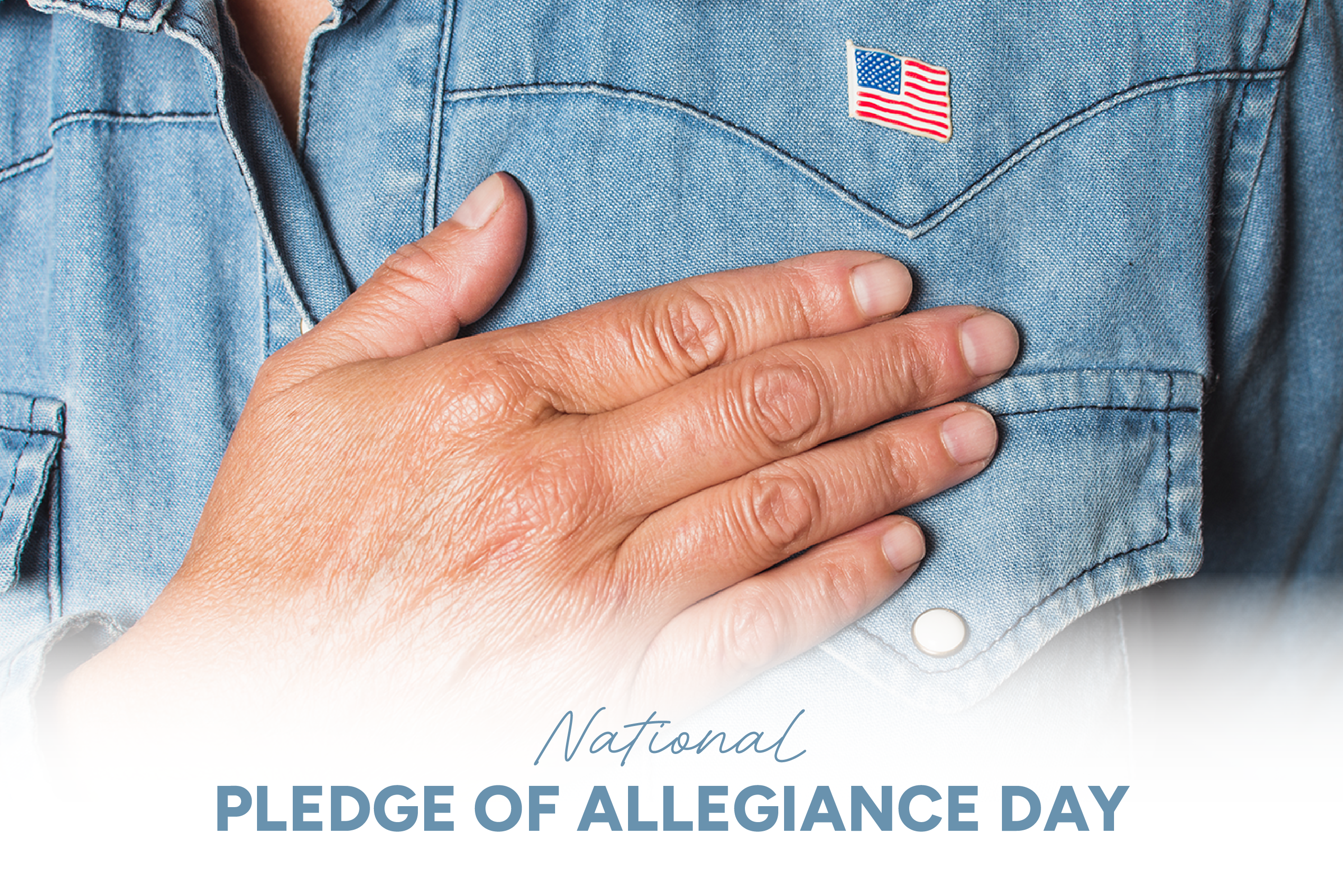
Flag Salutes and Hand Gestures: The right-hand-over-heart gesture, standardized in 1942, symbolizes respect for the flag and the nation. Its enforcement in schools has led to debates over religious accommodation (e.g., Jehovah’s Witnesses’ objections to saluting flags as idolatry).
Collective Recitation: The synchronized nature of group recitation fosters a sense of belonging, but it also creates pressure to conform, particularly for marginalized students (e.g., immigrants, LGBTQ+ youth).
Controversies Over Participation: Cases like Elk Grove Unified School District v. Newdow (2004) highlight tensions between state-mandated patriotism and individual rights, with courts ruling that schools cannot compel students to recite the Pledge.2. Sports and Entertainment: Patriotism as Spectacle
Sports events—especially those involving the national anthem or flag ceremonies—have become prime stages for the Pledge’s ritualistic display. Examples include:
Pre-game Pledges in NFL/MLB: Teams and players recite the Pledge before games, often accompanied by flag presentations. This practice intensified after 9/11, with players kneeling during the anthem sparking national debates (e.g., Colin Kaepernick’s protests in 2016).
Olympic and Paralympic Games: Athletes recite the Pledge during medal ceremonies, linking individual achievement to national pride. The 2020 Tokyo Olympics saw athletes wearing masks while reciting, adapting the ritual to pandemic-era norms.
Military and Veterans’ Events: The Pledge is frequently recited at memorials (e.g., Veterans Day, Memorial Day) to honor service members, blending grief with patriotic duty.3. Government and Political Ceremonies: Legitimizing Authority
The Pledge’s recitation in political contexts reinforces the legitimacy of institutions and leaders. Notable examples include:
Presidential Inaugurations: The Pledge is recited by the president-elect, the outgoing president, and often children or military personnel, framing the transition of power as a continuity of national identity.
Congressional Sessions: The House and Senate begin sessions with the Pledge, signaling allegiance to the democratic process. This practice has faced scrutiny during polarized sessions (e.g., 2019 government shutdown).
Naturalization Ceremonies: New citizens recite the Pledge as the culmination of their oath-taking, symbolizing their integration into the American body politic.4. Military and Law Enforcement: Oaths of Service
The Pledge intersects with military oaths and police oaths, creating layered rituals of loyalty. For example:
Military Basic Training: Recruits recite the Pledge alongside the military oath, merging civic and martial allegiance. The phrase "under God" in the military oath (added in 1954) mirrors the Pledge’s religious undertones.
Police Academies: Cadets often recite the Pledge during graduation, framing law enforcement as a protector of national values—though this has been challenged by movements like Black Lives Matter, which critique police as enforcers of systemic oppression.
Adaptations and Repurposing in Popular Culture
The Pledge’s malleability has led to its adaptation in protests, parodies, and alternative versions, reflecting its role as both a tool of power and a site of resistance. These repurposings reveal how the Pledge’s symbolism is contested, subverted, and reclaimed by different social groups. Below are key examples, categorized by their intent: resistance, satire, and alternative visions of allegiance.
"The Pledge’s adaptability demonstrates its dual nature: it can be a shield for the status quo or a spear for dissent, depending on who wields it."
1. Protests and Activism: The Pledge as a Site of Dissent
Marginalized groups have repurposed the Pledge to critique its exclusivity or hypocrisy, often using it as a rhetorical weapon. Examples include:
Civil Rights Movement: In the 1960s, students at San Francisco’s Galileo High School refused to recite the Pledge, arguing it was incompatible with their anti-war and civil rights activism. This defiance led to West Virginia v. Barnette (1943), which established that students cannot be compelled to
Controversies and Modern Interpretations of the Pledge of Allegiance
The Pledge of Allegiance remains a focal point of debate in American civic discourse, reflecting broader tensions between religious freedom, secularism, and national identity. Since its 1954 amendment to include the phrase "under God," the Pledge has become a flashpoint for legal challenges, cultural reinterpretations, and evolving social movements. Modern controversies extend beyond its religious implications to encompass issues of inclusivity, racial justice, and individual autonomy in public institutions. These debates often intersect with constitutional principles, educational policies, and the evolving role of patriotism in a pluralistic society.The Pledge’s linguistic and symbolic ambiguities have led to divergent interpretations, particularly regarding its mandatory recitation in public spaces and its alignment with contemporary values of diversity and equity. Legal precedents, such as West Virginia v. Barnette (1943) and Newdow v. U.S. Congress (2004), have shaped its application, while grassroots movements continue to challenge its recitation in schools and government settings. Below, the analysis explores the historical and ongoing disputes surrounding the Pledge, its treatment in educational institutions, and emerging debates tied to social justice and inclusivity.
Addition of "Under God" in 1954 and Religious Objections
The inclusion of "under God" in the Pledge was a deliberate political and cultural response to the Cold War-era perception of the United States as a bastion of religious freedom against atheistic communism. Proposed by President Dwight D. Eisenhower and approved by Congress in June 1954, the amendment was framed as a reaffirmation of American exceptionalism and Judeo-Christian values. The change was not merely linguistic but reflected a broader effort to distinguish the U.S. from secular ideologies during the height of the Red Scare.Religious objections to the phrase emerged almost immediately, particularly from secular humanist, atheist, and non-theistic communities. Critics argued that the Pledge violated the Establishment Clause of the First Amendment by endorsing a specific religious perspective, thereby coercing students and citizens into affirming a theistic worldview. Legal challenges followed, culminating in the 1962 Supreme Court case Engel v. Vitale, which struck down state-mandated prayers in public schools—a precedent that indirectly informed later Pledge-related litigation. The Supreme Court addressed the Pledge’s constitutionality directly in West Virginia v. Barnette (1943), which ruled that compelling students to recite the Pledge violated their free speech rights, particularly for Jehovah’s Witnesses who objected to its salute to the flag. However, the 1954 amendment reignited debates, as courts grappled with whether "under God" constituted an unconstitutional endorsement of religion. The U.S. Court of Appeals for the Ninth Circuit ruled in Newdow v. U.S. Congress (2004) that the phrase violated the Establishment Clause, but the Supreme Court declined to hear the case, leaving the Pledge’s legality intact. Key arguments against "under God" include:
Non-theistic exclusion: The phrase alienates individuals who do not adhere to a theistic belief system, including atheists, agnostics, and followers of non-Abrahamic religions.
Coercion in public schools: Mandatory recitation in classrooms may pressure students into affirming a religious statement, particularly in states without opt-out policies.
Symbolic harm: Critics argue the phrase reinforces a Christian-nationalist narrative, undermining the secular foundations of public education.
"The phrase 'under God' was added to the Pledge to distinguish the United States from 'godless communism.' Its retention today reflects a persistent tension between civic nationalism and religious identity."
— Historian Kevin Kruse, One Nation After Trump (2020)
Public vs. Private Schools: Legal Precedents and Recitation Practices
The treatment of the Pledge in public and private schools diverges significantly, shaped by constitutional constraints, institutional policies, and parental rights. Public schools operate under strict First Amendment limitations, while private and religious schools enjoy broader discretion in enforcing the Pledge.Public Schools: Mandatory Recitation and Opt-Out Policies
In public schools, the Pledge’s recitation is governed by case law and state-level policies. The Supreme Court’s Barnette ruling established that students cannot be compelled to participate in patriotic rituals that conflict with their beliefs. However, the absence of a uniform national policy has led to inconsistencies:
Opt-out provisions: Some states (e.g., California, New Jersey) explicitly permit students to abstain from reciting the Pledge, while others (e.g., Texas, Florida) have no such provisions, leaving enforcement to individual school discretion.
Teacher-led recitation: Courts have generally upheld the practice of teachers leading the Pledge as long as participation is voluntary and no penalties are imposed for refusal.
Disciplinary actions: Rare cases of punishment for non-participation (e.g., a 2018 incident in Idaho where a student was forced to stand during the Pledge) have sparked legal challenges, though most schools avoid such measures to prevent litigation.Private and Religious Schools: Discretion and Institutional Identity
Private and religious schools are not bound by the same constitutional constraints and often treat the Pledge as an integral part of their mission. For example:
Christian academies: Many explicitly incorporate the Pledge into daily routines, framing it as a reinforcement of faith-based values.
Secular private schools: Some, such as progressive or international schools, may omit the Pledge or modify its recitation to emphasize secular civic education.
Parental rights: In homeschooling contexts, families may choose to include or exclude the Pledge based on personal or religious convictions.
"The Pledge in public schools is a microcosm of America’s broader struggle to balance patriotism with pluralism. Its recitation is not just about words—it’s about who gets to define the terms of national belonging."
— Legal scholar Marci A. Hamilton, God vs. the Gavel (2005)
Notable Cases of Refusal
Jehovah’s Witnesses (1940s–1950s): Early objections centered on the Pledge’s salute to the flag, which the Witnesses interpreted as idolatry. Barnette (1943) upheld their right to refuse.
Atheist Students (2000s–Present): Cases like Newdow v. U.S. Congress highlighted conflicts between secularism and the Pledge’s religious language. Though legally unresolved, these challenges have influenced public perception.
LGBTQ+ Students (2010s–Present): Some students and activists argue that the Pledge’s traditional language excludes LGBTQ+ identities, particularly in states with anti-LGBTQ+ policies (e.g., Florida’s 2022 "Don’t Say Gay" law).
Emerging Debates: LGBTQ+ Inclusivity and Racial Justice Movements
Recent social movements have reframed discussions around the Pledge, particularly regarding its alignment with contemporary values of equity and inclusivity. Two primary areas of contention have emerged: LGBTQ+ representation and racial justice critiques.LGBTQ+ Inclusivity
The Pledge’s language has been scrutinized for its implicit heteronormativity and lack of recognition for LGBTQ+ individuals. Critics argue that phrases like "one nation, indivisible" and "with liberty and justice for all" ring hollow when LGBTQ+ rights are systematically denied. Key developments include:
State-level modifications: In 2021, the City of Philadelphia encouraged schools to recite a modified version of the Pledge that included LGBTQ+ affirmations, such as "with liberty and justice for all, including LGBTQ+ people."
Corporate and institutional adaptations: Some companies (e.g., Disney, Apple) have allowed employees to recite inclusive variations during virtual meetings, though these are not legally binding.
Backlash and resistance: Conservative groups have opposed such modifications, arguing they politicize the Pledge and undermine its original intent.Racial Justice and Anti-Racism Movements
The Pledge’s historical ties to white nationalism and its symbolic association with systemic racism have prompted calls for its reinterpretation or abandonment. Key critiques include:
Colonial and exclusionary origins: The Pledge was written in 1892 by socialist Francis Bellamy, who envisioned it as a tool for assimilating immigrants—an approach later co-opted by nativist groups. Its early recitation excluded Black Americans, who were systematically disenfranchised.
Modern racial disparities: Movements like Black Lives Matter have highlighted how the Pledge’s recitation in schools often coincides with curricula that downplay or justify racial oppression (e.g., Confederate monuments, redlining history).
Proposals for reform: Some educators advocate for replacing the Pledge with anti-racist affirmations, such as:
> *"I pledge allegiance to the United States of America, and to the proposition that all
Global Perspectives and Similar Oaths
The Pledge of Allegiance, while uniquely American in its origins and cultural resonance, shares structural and ideological parallels with civic oaths and pledges worldwide. These rituals serve as symbolic affirmations of national identity, civic duty, and allegiance to shared values, though their implementation varies significantly across democratic and authoritarian regimes. International comparisons reveal how such oaths function as tools of unity, coercion, or resistance, depending on the political and social context in which they are embedded. The Pledge’s global influence—whether through adoption in U.S. territories, diplomatic references, or critiques by human rights organizations—highlights its role as both a cultural export and a contested symbol of national identity.
National Pledges and Oaths: Comparative Structures and Purposes
Many nations incorporate oaths or pledges into civic education, citizenship ceremonies, or daily rituals to reinforce national cohesion. Unlike the U.S. Pledge, which emphasizes allegiance to a "nation under God," other countries’ oaths often prioritize secular principles, historical narratives, or constitutional obligations. Below are key examples illustrating these differences:
-
Canada’s Oath of Citizenship
Canada’s oath, administered during citizenship ceremonies, reflects a multicultural and inclusive approach. It requires new citizens to swear or affirm loyalty to the Crown and adherence to the Canadian Charter of Rights and Freedoms. Unlike the U.S. Pledge, it omits religious references entirely, aligning with Canada’s secular legal framework. The oath’s structure is formal and legalistic, emphasizing constitutional fidelity over symbolic patriotism.
"I swear (or affirm) that I will be faithful and bear true allegiance to Her Majesty Queen Elizabeth II, Queen of Canada, Her Heirs and Successors, and that I will faithfully observe the laws of Canada and fulfill my duties as a Canadian citizen."
-
India’s Fundamental Duties
India’s constitutional framework includes a set of Fundamental Duties (Article 51A) that citizens must uphold, such as respecting the national flag, promoting harmony, and protecting the environment. These duties are recited in schools and public ceremonies, serving as a moral and civic obligation rather than a pledge of allegiance. The emphasis is on individual responsibility to society, contrasting with the U.S. Pledge’s collective declaration of loyalty to the nation.
-
France’s Laïcité and the Republic’s Values
France’s civic oath, integrated into naturalization ceremonies, centers on the principles of the Republic: liberty, equality, fraternity, and secularism (laïcité). Applicants swear to respect these values and the laws of the Republic, with no mention of a deity or historical symbols. The oath’s secular nature reflects France’s strict separation of church and state, a deliberate contrast to the U.S. Pledge’s religious phrasing.
"I swear to respect and defend, as far as I am able, the principles of the Republic indivisible, secular, democratic and social, and to respect all those who, whatever their beliefs, live under its flag."
-
Japan’s National Anthem and Moral Education
Japan’s post-World War II constitution avoids explicit oaths of allegiance but incorporates patriotic rituals through the national anthem (Kimigayo) and moral education in schools. The anthem’s performance in public settings (e.g., sports events) is voluntary but often tied to displays of national pride. Unlike the U.S. Pledge, Japan’s approach is less formalized, relying on cultural norms rather than legal or ceremonial mandates.
-
China’s Patriotic Education and Oaths
China’s civic rituals, such as the "National Flag Salute Ceremony" and the "Youth Pledge," emphasize loyalty to the Communist Party and the state. The Youth Pledge, recited by schoolchildren, includes commitments to "love the motherland and the people" and "serve the socialist cause." These oaths function as tools of ideological indoctrination, starkly differing from the U.S. Pledge’s focus on constitutional principles and individual rights.
"I pledge allegiance to the Communist Party of China, to the socialist motherland, and to the people. I am willing to dedicate my youth to the motherland and the people, to learn science and technology, to master production skills, to work hard and strive for progress, and to grow into a builder of socialism!"
The structural differences—religious vs. secular, legalistic vs. moral, collective vs. individual—reflect broader societal values. Democratic societies often design oaths to affirm rights and pluralism, while authoritarian regimes use them to enforce conformity and state loyalty.
International Perceptions and Critiques of the Pledge of Allegiance
The Pledge of Allegiance has been both celebrated and scrutinized on the global stage, particularly due to its religious phrasing and compulsory nature in U.S. schools. Human rights organizations and foreign governments have raised concerns about its potential to marginalize non-religious individuals or minorities, while others view it as a benign expression of patriotism.
-
Human Rights Critiques
Organizations such as the American Civil Liberties Union (ACLU) and the United Nations Human Rights Committee have highlighted the Pledge’s religious content as a violation of secularism principles. In 2002, the ACLU argued that the phrase "under God" compelled students to participate in a religious exercise, violating the Establishment Clause. While U.S. courts have repeatedly upheld the Pledge’s constitutionality, international observers note that mandatory religious affirmations in civic rituals may undermine inclusivity, particularly in multicultural societies.
-
Diplomatic and Academic Reactions
Some foreign governments, particularly in secular or post-colonial states, have expressed discomfort with the Pledge’s religious undertones. For example, during the Cold War, Soviet-era media often mocked the Pledge as evidence of American "jingoism" and religious hypocrisy. Conversely, allies like the United Kingdom have praised the Pledge as a symbol of American civic culture, albeit without adopting its religious elements in their own ceremonies.
-
Comparative Analysis with Secular Oaths
Countries with strict secular traditions, such as Turkey or Tunisia, have historically avoided religious language in civic oaths. Turkey’s citizenship oath, for instance, requires allegiance to the Republic and its laws without any reference to a deity. This contrast underscores how the Pledge’s religious phrasing is an outlier in global civic rituals, often viewed as anachronistic in an era of increasing secularism.
-
Military and Diplomatic Adaptations
The U.S. military and diplomatic corps occasionally modify the Pledge for international contexts. For example, in secular or Muslim-majority countries, U.S. personnel may omit the religious phrase to avoid offense. This adaptation reflects the Pledge’s malleability as a symbol, though its core structure remains tied to American exceptionalism.
Critiques of the Pledge often hinge on two key issues: compulsory participation (seen as coercive in democratic contexts) and religious exclusivity (perceived as discriminatory in pluralistic societies). These debates mirror broader global tensions between national identity and individual rights.
Pledges and Oaths in Authoritarian vs. Democratic Societies
The role of civic oaths varies dramatically between authoritarian and democratic systems, with the Pledge of Allegiance serving as a case study for how such rituals can either foster unity or enforce conformity. Authoritarian regimes typically use oaths to reinforce state control, while democracies employ them to affirm shared values without suppressing dissent.
-
Authoritarian Regimes: Tools of Control
In countries like North Korea, Cuba, or historical examples such as Nazi Germany, oaths are designed to cultivate absolute loyalty to the state or ruling ideology. North Korea’s "Eternal Leader" oath, for example, requires citizens to swear allegiance to Kim Il-sung and Kim Jong-il, with dissent punishable by severe consequences. Similarly, the Nazi Party’s oath of loyalty to Hitler was a cornerstone of its indoctrination machinery. These oaths are not voluntary; they are enforced through education, media, and legal systems to eliminate dissent.
"I swear by my honor to devote all my thoughts and deeds to the service and protection of the Leader Kim Jong Un and to the cause of the revolution until my last breath."
(North Korean Citizenship Oath, adapted)
The coercive nature of these oaths contrasts sharply with the U.S. Pledge, which—despite controversies—remains a voluntary (though often compulsory in schools) expression of allegiance.
-
Democratic Societies: Balancing Unity and Pluralism
Democracies like the U.S., Canada, and Germany use oaths to reinforce civic values while accommodating diversity. The U.S. Pledge, for instance, includes the phrase "with liberty and justice for all," which theoretically protectsThe Pledge of Allegiance remains a potent symbol of American identity, embodying both the nation’s aspirations for unity and the enduring debates over its place in a diverse society. While its recitation in schools and public spaces persists, its legal and cultural significance has evolved from a tool of patriotism to a flashpoint for discussions on secularism, free expression, and inclusivity. As global perspectives challenge its uniqueness and domestic controversies resurface, the Pledge’s legacy endures—not merely as a ritual, but as a reflection of the ongoing dialogue between tradition and progress in democratic governance.
FAQ
What are the exact words of the Pledge of Allegiance?
The current Pledge of Allegiance is: "I pledge allegiance to the flag of the United States of America, and to the Republic for which it stands, one Nation under God, indivisible, with liberty and justice for all." The phrase "under God" was added in 1954.
What is the significance of the Pledge of Allegiance in America?
The Pledge of Allegiance is a patriotic oath of loyalty to the U.S. flag, the nation, and its ideals of liberty and justice. It’s commonly recited in schools, government ceremonies, and public events as a symbol of national unity. Its wording has evolved since its creation in 1892.
Why do students recite the Pledge of Allegiance in school?
Students recite the Pledge of Allegiance in schools to foster patriotism, civic pride, and a sense of shared identity. It’s part of many daily routines, though its use has been debated due to legal challenges over religious references (e.g., "under God"). Courts have ruled it’s constitutional as a ceremonial, non-religious act.
Is there a Pledge of Allegiance specifically for the Christian flag?
No, there is no official or widely recognized "Pledge of Allegiance to the Christian flag." The U.S. Pledge is secular in intent, though its inclusion of "under God" in 1954 reflects Cold War-era cultural influences. Some religious groups may use modified versions for their own purposes, but none are sanctioned by law.
Is the Pledge of Allegiance mandatory in public schools?
The Pledge of Allegiance is not legally mandatory in public schools, but many choose to recite it voluntarily. Courts have upheld its use as long as it’s not coerced (e.g., students can opt out or remain silent). Some states or districts have policies requiring it, but federal law protects the right to refuse.
How do you say the Pledge of Allegiance in Spanish?
There’s no single official Spanish translation, but a common version is:
|
|

Leave a Comment
Comments are moderated before appearing. The data you submit is processed according to the Privacy Policy of Voltefac.