What Is Halal Explained Core Principles Practices Global Impact
Table of Contents
- Definition and Core Principles of Halal
- Literal Meaning and Cultural Significance of Halal
- Integration of Halal Principles into the Five Pillars of Islam
- Halal vs. Haram: Religious, Ethical, and Practical Distinctions
- Role of Sharia in Defining Halal Standards
- Halal in Food and Dietary Practices
- Halal Certification Process for Food Products
- Step-by-Step Guide to Identifying Halal-Labeled Products
- Halal Extensions to Plant-Based Foods, Additives, and Processing
- Regional Variations in Halal Food Preparation Methods
- Halal Slaughter Techniques: Dhabihah and the Role of the Muqqadam
- Halal in Finance and Business
- Concept of Halal Finance and Prohibited Practices
- Principles of Islamic Banking and Financial Instruments
- Halal Certification in Non-Food Industries
- Halal in Lifestyle and Daily Life
- Halal Clothing and Modesty Codes
- Halal Entertainment and Media Consumption
- Halal Social Interactions and Etiquette
- Halal-Friendly Products in Modern Life
- Halal Certification and Global Standards
- Process of Obtaining Halal Certification for Businesses
- Comparison of Global Halal Certification Standards
- Role of Halal Auditors and Inspectors
- Step-by-Step Guide for Businesses to Transition to Halal Compliance
- FAQ
- what is a halal diet?
- what is a halal burger?
- what is a halal restaurant?
- what is a halal meal?
- what is a halal mortgage?
- what is a halal market?
Halal represents far more than a dietary restriction—it is a holistic framework governing ethical, financial, and lifestyle choices rooted in Islamic principles. From the permissible slaughter of animals under dhabihah to the prohibition of riba (interest) in finance, halal standards shape daily life for over 1.8 billion Muslims worldwide while influencing global industries, from food certification to ethical business models. This guide dissects the religious, cultural, and practical dimensions of halal, tracing its evolution from ancient Islamic jurisprudence to modern certification systems that now span continents.
The concept of halal extends beyond ritualistic observance, embedding itself into economic systems, consumer markets, and personal conduct. Whether examining the technicalities of halal food preparation—where a single misstep in cross-contamination can void certification—or navigating the complexities of halal finance, which requires reimagining traditional banking, the principles demand precision and adaptability. By exploring case studies of halal-certified cosmetics in Europe or the rise of Islamic microfinance in Southeast Asia, this discussion reveals how halal operates as both a spiritual obligation and a dynamic global standard, bridging faith and modernity.
Definition and Core Principles of Halal
The term halal originates from the Arabic root ḥ-l-l, meaning "permissible," "lawful," or "licit," and serves as a foundational concept in Islamic jurisprudence (fiqh). Beyond its religious connotations, halal encompasses ethical, social, and practical dimensions, shaping dietary laws, financial transactions, business practices, and even personal conduct. Its cultural significance extends globally, influencing over 1.8 billion Muslims worldwide while also gaining recognition in secular markets due to its emphasis on transparency, animal welfare, and quality assurance.Halal principles are deeply embedded in the Five Pillars of Islam, the core acts of worship that structure Muslim life. These pillars—Shahada (faith declaration), Salat (prayer), Zakat (charity), Sawm (fasting), and Hajj (pilgrimage)—provide a framework where halal principles manifest in daily rituals. For instance, the act of Salat (prayer) requires ritual purity (taharah), which includes halal dietary practices to maintain spiritual cleanliness. Similarly, Zakat (charity) often prioritizes funds for halal-compliant causes, reinforcing ethical stewardship.
Literal Meaning and Cultural Significance of Halal
The Arabic term halal (حَلَال) contrasts with haram (حَرَام), meaning "forbidden." While halal primarily denotes religious permissibility, its cultural interpretation varies across regions and communities. In the Middle East, halal often emphasizes dietary restrictions (e.g., prohibitions on pork, alcohol, and improperly slaughtered meat), whereas in Southeast Asia, it may extend to financial ethics (e.g., riba-free banking) and social harmony. The concept also reflects broader Islamic values such as justice, mercy, and accountability, as articulated in the Quran:"He has only forbidden you dead animals, blood, the flesh of swine, and that which has been dedicated to other than Allah. But whoever is forced [by necessity], neither desiring [it] nor transgressing [its limit], then indeed, Allah is Forgiving and Merciful." — Quran 2:173This verse illustrates the flexibility of halal in accommodating necessity, a principle later expanded by Islamic scholars to address modern challenges, such as medical exceptions or halal-certified pharmaceuticals.
Integration of Halal Principles into the Five Pillars of Islam
The Five Pillars of Islam serve as a practical application of halal principles, demonstrating their role in both spiritual and secular life. Below is a structured breakdown of their intersections:- Shahada (Faith Declaration) The declaration of faith ("There is no god but Allah, and Muhammad is His messenger") establishes halal as a cornerstone of Islamic identity. This pillar underscores the obligation to reject haram (e.g., idolatry, blasphemy) while embracing permissible actions aligned with divine guidance.
- Salat (Prayer) Ritual purity (wudu and ghusl) requires halal substances (e.g., water, permissible soaps) and prohibits impurities (najis). The timing of prayers also adheres to halal schedules, avoiding haram distractions like non-Islamic work during prayer times.
-
Zakat (Charity)
Zakat funds must be distributed to eligible recipients (furu al-zakat), excluding haram expenditures (e.g., gambling, interest-based loans). The Quran mandates:
"Zakat expenditures are only for the poor and for the needy and for those employed to collect [zakah] and for bringing hearts together [for Islam] and for freeing captives [or slaves] and for those in debt and for the cause of Allah and for the [stranded] traveler..." — Quran 9:60
This highlights halal’s role in social equity and economic justice. - Sawm (Fasting) Fasting during Ramadan prohibits haram actions, including eating, drinking, or intimate relations from dawn to sunset. It also discourages haram speech (e.g., gossip, lies) and encourages halal behaviors like patience and gratitude.
- Hajj (Pilgrimage) The pilgrimage to Mecca involves halal rituals, such as wearing ihram (a state of purity), performing tawaf (circumambulation) around the Kaaba, and avoiding haram acts (e.g., hunting, quarreling) in the sacred months.
Halal vs. Haram: Religious, Ethical, and Practical Distinctions
The distinction between halal and haram is not binary but exists on a spectrum, with makruh (disliked) and mubah (neutral) actions occupying intermediate categories. Below is a comparative table outlining key differences:| Category | Halal (Permissible) | Haram (Forbidden) | Ethical/Practical Implications |
|---|---|---|---|
| Dietary Laws | Meat slaughtered with dhikr (invocation of Allah), halal-certified products, plant-based foods. | Pork, carrion, blood, improperly slaughtered meat, alcohol. | Promotes animal welfare, food safety, and ethical consumption. |
| Halal-certified processed foods (e.g., gelatin-free, no animal enzymes). | Food additives derived from haram sources (e.g., gelatin from pork). | Encourages transparency in food labeling and global trade compliance. | |
| Fasting during Ramadan (abstaining from food/drink/sinful acts). | Eating/drinking during fasting hours without valid excuse. | Fosters self-discipline, empathy for the poor, and spiritual growth. | |
| Financial Transactions | Trade without riba (interest), halal investments (e.g., real estate, ethical businesses). | Riba (usury), gambling (maisir), speculative trading (gharar). | Supports Islamic finance (murabaha, mudarabah), ethical wealth distribution. |
| Charitable donations (sadaqah, zakat) for halal causes. | Donations funding haram activities (e.g., weapons, oppression). | Ensures wealth circulates within socially responsible frameworks. | |
| Social Conduct | Truthfulness, kindness, avoiding backbiting (ghibah). | Lying, slander, oppression (zulm), or harming others. | Builds trust and cohesion in Muslim and non-Muslim communities. |
| Marriage and family relations based on Islamic principles. | Polygamy beyond legal limits, haram marriages (e.g., with close relatives). | Ensures familial and societal stability rooted in Sharia guidelines. |
Role of Sharia in Defining Halal Standards
Sharia, derived from the Quran and Sunnah (prophetic traditions), provides the legal framework for halal determinations. Key sources include:-
Quran
The Quran serves as the primary source, containing explicit prohibitions (e.g., alcohol, pork) and ethical guidelines. For example:
"O you who have believed, intoxicants, gambling, [sacrificing on] stone altars, and divining arrows are but defilement from Satan’s hand, so avoid them that you may be successful." — Quran 5:90
This verse prohibits *haram
Halal in Food and Dietary Practices
Halal dietary laws govern not only the consumption of permissible foods (halal) but also the ethical treatment of animals, the purity of ingredients, and the integrity of food processing. Beyond the prohibition of pork and alcohol, halal extends to slaughter methods, ingredient sourcing, and even cross-contamination risks in food preparation. This section explores the certification process, key practices, and regional adaptations that ensure compliance with Islamic dietary guidelines while addressing consumer awareness and industry standards.The halal certification process is a systematic evaluation ensuring that food products adhere to Islamic law (Shariah). It encompasses slaughter techniques, ingredient verification, and facility inspections to prevent contamination or non-compliance. For consumers, identifying halal products requires familiarity with certification symbols, processing methods, and potential risks in shared kitchen environments. Meanwhile, halal principles apply to all food categories—meat, plant-based products, additives, and processed foods—demanding meticulous sourcing and handling.
Halal Certification Process for Food Products
The certification of halal food products involves multiple stages, including slaughter verification, ingredient screening, and facility audits. Certified bodies, such as JAKIM (Malaysia), IFANCA (International Fatwa Committee), or Halal Certification Bodies (HCB) in the UAE, conduct inspections to validate compliance. Key components include:- Slaughter Method Validation: Confirmation that animals are slaughtered according to dhabihah (Islamic ritual slaughter), which requires:
- A swift, deep cut to the throat (jannah) severing the trachea, esophagus, and carotid arteries.
- The recitation of Bismillah (In the name of Allah) before slaughter.
- Use of a sharp knife to minimize animal suffering and ensure dhabihah efficacy.
- Ingredient Screening: Prohibition of non-halal substances, including:
- Pork and its derivatives (gelatin, enzymes).
- Alcohol and alcohol-derived ingredients (e.g., vanilla extract processed with alcohol).
- Cross-contaminated products (e.g., meat processed in facilities handling pork).
- Facility Inspection: Ensuring dedicated halal processing lines, separate storage, and sanitization protocols to prevent cross-contamination.
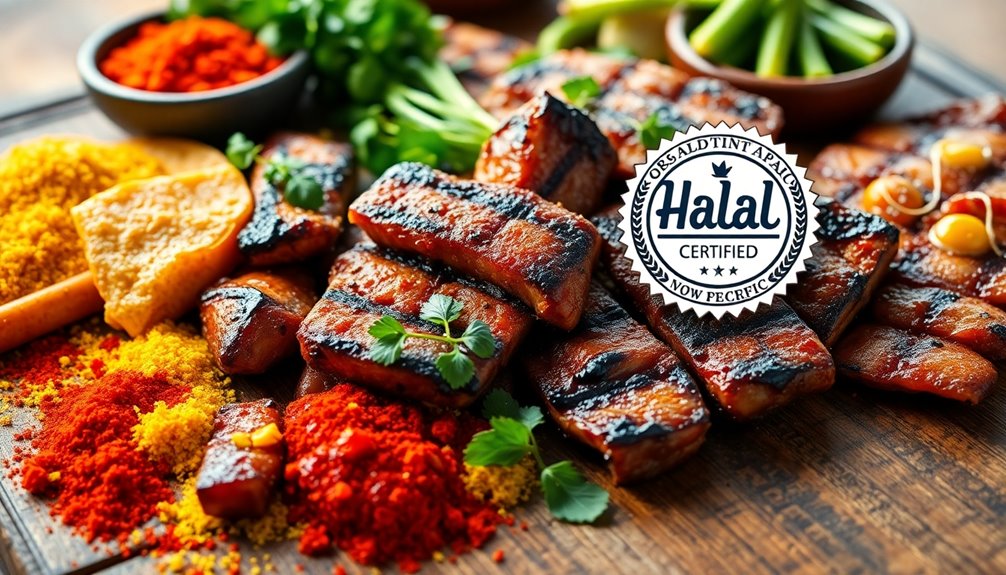
Certification bodies issue halal logos or certificates upon approval, which must be renewed periodically to maintain compliance.
Step-by-Step Guide to Identifying Halal-Labeled Products
Consumers can verify halal status in supermarkets or restaurants using the following criteria, organized by visual and documentary clues:- Certification Symbols:
- Country-Specific Logos: Recognize national halal marks (e.g., Malaysia’s JAKIM crescent, UAE’s MUHAS logo).
- International Certifications: Look for symbols from IFANCA, Halal Monitoring Committee (HMC), or European Halal Development Network (EHDN).
- Restaurant Signage: Halal-certified eateries often display certificates or menus marked with halal icons.
- Product Labels:
- Halal Claims: Statements such as "Certified Halal", "100% Halal", or "Prepared in a Halal Facility" indicate compliance.
- Ingredient Lists: Scan for prohibited additives (e.g., lard, alcohol-based flavorings) or vague terms like "natural flavors" (which may hide non-halal sources).
- Red Flags:
- Lack of Certification: Absence of halal logos or certificates in high-risk products (e.g., processed meats, sauces).
- Shared Equipment: Products labeled "May Contain" or "Processed in a Facility with" non-halal ingredients.
- Unclear Slaughter Methods: Pre-packaged meats without halal certification may rely on non-Islamic slaughter techniques.
Pro Tip: Cross-reference certification bodies’ databases (e.g., JAKIM’s Halal Directory) for verified halal products in your region.
Halal Extensions to Plant-Based Foods, Additives, and Processing
Halal principles are not limited to meat; they encompass all food categories, including plant-based products, additives, and processing techniques. Key considerations include:- Plant-Based Foods:
- Permissible Sources: Fruits, vegetables, grains, and legumes are inherently halal if uncontaminated.
- Processing Risks: Plant oils (e.g., palm oil) must be processed without alcohol or animal-derived catalysts.
- Cross-Contamination: Facilities handling halal plant foods must avoid shared equipment with non-halal products (e.g., pork-derived enzymes in soy sauce).
- Additives and Preservatives:
- Prohibited Substances: Alcohol-based emulsifiers (e.g., glycerol monostearate), carmine (derived from insects), and certain food colorings (e.g., E120, cochineal).
- Permissible Alternatives: Use of halal-certified enzymes (e.g., microbial amylase) and plant-based gums (e.g., carrageenan from seaweed).
- Processing Techniques:
- Avoidance of Non-Halal Aids: No use of pork gelatin in capsules or alcohol in flavor extraction.
- Sanitation Standards: Regular cleaning of equipment to prevent residual contamination from non-halal products.
Example: A halal-certified chocolate bar must ensure cocoa processing does not involve alcohol-based solvents, and packaging materials (e.g., gelatin in capsules) are derived from halal sources.
Regional Variations in Halal Food Preparation Methods
Halal food preparation varies across cultures, reflecting local culinary traditions while adhering to core Islamic principles. The following table compares key practices in Middle Eastern, Southeast Asian, and African regions:
Note: Regional methods often incorporate local ingredients (e.g., Southeast Asian coconut milk) while ensuring compliance with halal slaughter and processing standards.Region Slaughter Method Meat Preparation Plant-Based Adaptations Cross-Contamination Controls Middle Eastern Dhabihah with Bismillah recitation; often communal slaughter in markets. Grilling (shawarma), slow-cooking (mansaf), or stuffing (kababs). Use of tahini, za’atar, and dates in dishes; avoidance of wine-based marinades. Dedicated halal butcher shops; separate storage for meat and dairy. Southeast Asian Dhabihah with local adaptations (e.g., sembelihan in Indonesia). Stir-frying (rendang), curries, or satay skewers. Fermented plant foods (e.g., tempeh, ketan rice); coconut milk as a halal fat substitute. Strict segregation in wet markets; halal-certified street food vendors. African Dhabihah with tribal variations (e.g., dahiya in East Africa). Grilling (nyama choma in Kenya), stews (biryani), or dried meats (jerky). Use of spices (e.g., berbere), tubers (yams), and legumes; avoidance of alcohol in marinades. Community-led slaughter; separate processing for halal and non-halal livestock.
Halal Slaughter Techniques: Dhabihah and the Role of the Muqqadam
The dhabihah method is central to halal meat production, emphasizing animal welfare and religious adherence. Key elements include:- Preparation:
- The animal is positioned facing qibla (direction of Mecca) to align with Islamic tradition.
- A sharp knife is used to ensure a swift, painless cut, avoiding unnecessary suffering.
- Execution:
- The muqqadam (slaughterer) makes a single, deep incision across the throat, severing:
- The trachea (windpipe).
- The esophagus (food pipe).
- The jugular veins and carotid arteries (to drain blood rapidly).
- The Bismillah (Bismillahi Allahu Akbar) is recited before the cut to invoke divine permission.
- Post-Slaughter:
- Blood is fully drained (tahrim) to prevent accumulation, which is considered impure in Islam.
- The meat is inspected for defects (e.g., disease) before distribution.
Visualization:
- The knife’s angle ensures a clean, downward stroke from the base of the neck to the breastbone, avoiding damage to the spinal cord.
- The muqqadam must be trained to maintain precision, as improper cuts can prolong suffering or render the meat non-halal.
- In industrial settings, automated systems mimic manual techniques but require oversight to ensure compliance.
blockquote
*"The Prophet (peace be upon
Halal in Finance and Business
Halal finance represents a structured economic framework aligned with Islamic principles, emphasizing ethical, risk-sharing, and asset-backed transactions while excluding exploitative or speculative practices. Unlike conventional finance, which often relies on interest-based lending, halal finance prioritizes fairness, transparency, and sustainable growth. This system extends beyond food and diet to encompass banking, investments, and commercial activities, ensuring compliance with Shariah law through rigorous scrutiny of financial instruments and business models.The integration of halal principles in finance and business has given rise to innovative solutions such as Islamic banking, ethical investment funds, and Shariah-compliant corporate governance. These alternatives address the prohibitions outlined in Islamic jurisprudence, including riba (interest), gharar (excessive uncertainty), and maisir (speculation), while fostering inclusive economic participation. Below, the core mechanisms, industry applications, and real-world implementations are explored to illustrate the breadth and adaptability of halal finance.
Concept of Halal Finance and Prohibited Practices
Halal finance operates on the foundation of Shariah-compliant principles, which categorically prohibit practices deemed exploitative or morally questionable. The two most critical prohibitions are riba (interest or usury) and speculative investments (gharar and maisir), both of which are considered haram (forbidden) under Islamic law. Riba distorts economic equity by rewarding lenders without productive risk-sharing, while speculative investments—such as short-selling, derivatives without underlying assets, or gambling-like financial instruments—introduce excessive uncertainty (gharar) that contradicts the principle of ethical risk management.To mitigate these issues, halal finance replaces traditional financial instruments with permissible alternatives that align with Shariah principles. For example:
- Interest-based loans are replaced with profit-and-loss-sharing (PLS) agreements, where returns are tied to the performance of an underlying asset or business.
- Speculative trading is substituted with asset-backed transactions, ensuring that financial contracts derive value from tangible economic activity.
- Conventional bonds are transformed into sukuk (Islamic bonds), which function as certificates of ownership in real assets (e.g., infrastructure, real estate) and generate returns through rental income or profit-sharing.
Key Prohibitions and Permissible Alternatives:
"Halal finance rejects the separation of finance from ethics, insisting that economic transactions reflect moral and social responsibility."
— Islamic Financial Services Board (IFSB)Prohibited Practice Halal Alternative Example Interest (riba) Profit-sharing (mudarabah) A bank and investor share profits/losses from a business venture. Speculative derivatives Asset-backed trading (murabaha) A bank sells goods to a client at a marked-up price, financed via deferred payment. Short-selling Tawarruq (asset-backed financing) A trader purchases an asset to settle a debt, using it as collateral. Conventional bonds Sukuk (Islamic bonds) Investors buy certificates representing ownership in a highway project. Principles of Islamic Banking and Financial Instruments
Islamic banking operates on a distinct set of principles designed to eliminate riba and gharar while promoting asset-backed transactions and risk-sharing. The core mechanisms include:
1. Asset-Backed Transactions: All financial contracts must be linked to real, tangible assets to ensure economic substance.
2. Risk-Sharing: Returns are determined by the performance of the underlying asset or business, aligning the interests of all parties.
3. Transparency and Fairness: Contracts must be clearly defined, with no hidden costs or exploitative terms.
4. Ethical Sourcing: Funds must not be used for haram industries (e.g., alcohol, gambling, pork-related products).Below is a structured overview of the primary Islamic banking instruments, categorized by their function:
Flowchart of Islamic Banking Instruments:
"Islamic banking is not just an alternative to conventional finance but a paradigm shift toward ethical capitalism."
1. Trade Financing Mechanisms
— Accounting and Auditing Organization for Islamic Financial Institutions (AAOIFI)-
Murabaha (Cost-Plus Sale)
A bank purchases goods at the client’s request and sells them at a marked-up price, with deferred payment terms. The markup (markup) compensates the bank for financing and administrative costs.Example: A company needs $100,000 to purchase machinery. The bank buys the machinery for $100,000 and sells it to the company for $110,000, payable in installments over 2 years.
-
Ijara (Leasing)
The bank owns an asset (e.g., equipment, property) and leases it to a client for periodic rental payments. Ownership may transfer to the client at the end of the lease (ijara wa-iqtina).Example: A hospital leases medical equipment from an Islamic bank under a 5-year lease agreement, with an option to purchase at a nominal price.
-
Istisna’a (Manufacturing/Construction Financing)
Funds are provided for the construction or manufacture of an asset, with payments made in stages as milestones are achieved. This avoids gharar by tying financing to tangible progress.Example: A developer secures financing for a residential project, with payments released as floors are completed and inspected.
-
Mudarabah (Profit-Sharing)
An investor provides capital, while an entrepreneur manages the business. Returns are shared based on a pre-agreed ratio, with losses borne by the investor.Example: A mudarabah agreement between a bank and a retail business, where the bank funds inventory and shares 60% of profits (losses are fully borne by the bank).
-
Musharakah (Joint Venture)
Both parties contribute capital and share management responsibilities, with profits and losses divided proportionally.Example: Two partners establish a halal restaurant, each contributing 50% of the capital and sharing all profits/losses equally.
-
Sukuk (Islamic Bonds)
Certificates representing ownership in an asset (e.g., infrastructure, real estate) or a pool of assets. Returns are generated through rental income, profit-sharing, or asset appreciation.Example: A sukuk issued for a solar farm project, where investors receive annual dividends from energy sales and eventual asset repayment.
-
Takaful (Islamic Insurance)
A cooperative risk-sharing model where participants contribute to a pool to cover losses, with no speculative elements. Profits are distributed to participants if the pool remains solvent.Example: A takaful plan for health coverage, where members pay premiums into a shared fund to cover medical expenses.
-
Wakalah (Agency/Delegation)
A party (e.g., bank) acts as an agent to manage funds or assets on behalf of another, with fees structured as a service charge rather than interest.Example: A bank manages a client’s investment portfolio under wakalah, charging a fixed fee for advisory services.
Halal Certification in Non-Food Industries
Halal certification extends beyond food to encompass industries where ethical sourcing, ingredient scrutiny, and compliance with Shariah principles are critical. This includes sectors such as cosmetics, pharmaceuticals, technology, and fashion, where halal standards ensure that products align with Islamic values and avoid prohibited substances or processes. The certification process involves:
- Ingredient Verification: Ensuring raw materials (e.g., glycerin, alcohol, animal-derived components) are halal-sourced and free from contaminants.
- Production Methods: Confirming that manufacturing processes (e.g., testing on animals, cross-contamination with haram substances) comply with Shariah guidelines.
- Ethical Sourcing: Validating that supply chains avoid exploitation, child labor, or environmentally harmful practices.
- Certification Bodies: Independent organizations (e.g., Halal Industry Act (HIA) Malaysia, Islamic Food and Nutrition Council of America (IFANCA)) audit and certify products.
Industries and Halal Compliance Requirements:
Industry Key Compliance Focus Example of Halal Certification Cosmetics Alcohol-free formulations, no animal testing, halal-certified ingredients (e.g., beeswax). Halal Beauty Standards by Malaysian Department of Islamic Development (JAKIM). Halal in Lifestyle and Daily Life
The concept of halal extends far beyond dietary restrictions, permeating every aspect of a Muslim’s daily life. It serves as a moral and ethical framework guiding behavior, consumption, and interactions in alignment with Islamic principles. From attire and social etiquette to leisure and financial decisions, halal lifestyle choices reflect a commitment to purity, integrity, and ethical responsibility. This section explores the practical applications of halal in modern living, including clothing, entertainment, social customs, and the challenges of maintaining halal principles in diverse cultural and professional environments.
Halal Clothing and Modesty Codes
Islamic modesty (haya) is a cornerstone of halal lifestyle, governing attire for both men and women. Modesty in clothing ensures dignity, self-respect, and adherence to divine guidance, while also fostering social harmony. The standards vary by cultural context but are rooted in Quranic verses and Prophetic traditions (Sunnah), emphasizing coverage of the body and avoidance of ostentatious or revealing garments.For women, modesty typically includes:
- Wearing an abaya (a loose overgarment) or hijab (headscarf) in public, covering the body from the neck to the wrists and ankles.
- Choosing loose-fitting clothing that does not cling to the body’s contours.
- Avoiding transparent, sheer, or tight-fitting fabrics that may be considered immodest.
For men, modesty requires:
- Wearing clothing that covers the body from the navel to the knees, avoiding shorts or sleeveless tops in public.
- Ensuring garments are not excessively tight or revealing.
- Adhering to cultural norms in certain regions, such as wearing a kufi (skullcap) or thobe (long robe) in Gulf countries.
Cultural Variations and Adaptations:
Modesty standards are not rigid but adapt to local customs. For example:
- In Southeast Asia, women may wear baju kurung (a long skirt with a blouse) instead of an abaya.
- In Western societies, Muslim women may opt for tailored hijabs or stylish abayas that comply with workplace dress codes.
- Some conservative communities enforce stricter norms, such as mandating full-face veils (niqab) or separate gender spaces.
Halal Fashion Industry:
The global halal fashion market has grown significantly, with brands offering certified modest wear. Key features of halal-certified clothing include:
- Use of ethical and sustainable materials (e.g., organic cotton, non-toxic dyes).
- Compliance with Islamic modesty guidelines without compromising functionality or style.
- Avoidance of riba (usury) in pricing and fair labor practices in manufacturing.
Halal Entertainment and Media Consumption
Entertainment is a significant aspect of leisure, but its permissibility (halal) depends on content alignment with Islamic values. Media that promotes violence, immorality, or excessive materialism is considered haram (forbidden). Muslims are encouraged to engage in entertainment that fosters intellectual, spiritual, or social growth while avoiding harmful influences.Permissible Entertainment Options:
- Literature and Poetry: Islamic scholars, classical Arabic poetry, and morally uplifting novels are preferred.
- Music and Singing: Instrumental music without lyrics is often permissible, while vocal music with lyrics may be restricted unless it adheres to Islamic themes. Many Muslims avoid secular music entirely.
- Film and Television: Movies and shows with positive moral lessons, historical accuracy, or family-friendly themes are favored. Examples include:
- The Message (1976) – A biographical film on the Prophet Muhammad’s life.
- Prince of Persia: The Sands of Time (2010) – A visually appealing film with minimal objectionable content.
- Halal TV channels (e.g., Iqraa TV, Peace TV) offering Islamic programming.
- Gaming: Video games with educational or strategic value (e.g., Civilization, Assassin’s Creed in moderation) are acceptable if they do not promote violence or immorality.
Avoiding Haram Media:
- Explicit Content: Pornography, graphic violence, and scenes promoting alcohol, drugs, or promiscuity are strictly prohibited.
- Gambling-Themed Entertainment: Games of chance, such as online casinos or sports betting, are haram due to their association with maysir (gambling).
- Social Media: Platforms like Instagram or TikTok may require filtering to avoid exposure to inappropriate content. Muslims often use privacy settings or avoid engaging with controversial topics.
Halal Certification for Media:
Some platforms and products obtain halal certification to assure compliance with Islamic principles. For example:
- Halal Movies: Films screened at Islamic cultural festivals or certified by organizations like Halal Media Association.
- Halal Music: Albums certified by Islamic scholars or released under halal labels (e.g., Nasheed music, which excludes instruments like the drum).
- Halal Streaming Services: Platforms like HalalTube or Islamic Network curate content for Muslim audiences.
Halal Social Interactions and Etiquette
Social interactions in Islam are governed by principles of respect, honesty, and kindness. Halal etiquette ensures that relationships—whether personal, professional, or communal—are built on trust and ethical conduct. Key aspects include greetings, communication, and avoidance of haram behaviors such as backbiting (ghibah), lying, or deceit.Greeting Rituals and Social Customs:
- Islamic Greetings: The traditional greeting As-salamu alaykum ("Peace be upon you") is preferred over secular greetings like "hello" in formal or religious contexts. The response is Wa alaykum as-salam ("And upon you be peace").
- Handshakes: In conservative settings, men may avoid shaking hands with unrelated women, while women may greet other women without physical contact. In Western cultures, a handshake is often acceptable if initiated by a non-Muslim.
- Dining Etiquette: Sharing food is encouraged, but halal meals must be consumed only with halal-certified ingredients. Eating in the presence of non-Muslims is permissible if the food is halal and no haram activities (e.g., gambling) are involved.
- Funeral Practices: Attending and participating in funerals (janazah) is a communal duty (fard kifayah), emphasizing solidarity and remembrance of the deceased.
Avoiding Harmful Social Behaviors:
- Backbiting (Ghibah): Speaking negatively about others in their absence is strictly prohibited. Muslims are encouraged to address grievances directly or maintain silence.
- Lying and Deceit: Islam condemns falsehood in all forms, including white lies, as it undermines trust and integrity.
- Harassment and Oppression: Physical, verbal, or emotional abuse is haram, and Muslims are obligated to seek justice for victims.
- Excessive Debt and Financial Harm: Lending money with riba (interest) or engaging in fraudulent financial practices is forbidden.
Halal Networking and Professional Conduct:
In professional settings, Muslims uphold halal principles by:
- Avoiding haram industries (e.g., alcohol, pork, weapons of mass destruction).
- Ensuring business transactions comply with Shariah (e.g., no riba, fair trade practices).
- Maintaining honesty in contracts, advertising, and dealings with clients.
- Respecting workplace diversity while advocating for halal accommodations (e.g., prayer spaces, halal catering).
Halal-Friendly Products in Modern Life
The demand for halal-certified products has expanded beyond food, encompassing cosmetics, electronics, pharmaceuticals, and household items. Consumers seek assurance that products align with Islamic ethics, including purity, sustainability, and ethical sourcing. Below is a table outlining common halal-certified products and methods to verify their authenticity.
Product Category Examples of Halal-Friendly Products Key Halal Compliance Factors Verification Methods Cosmetics and Personal Care - Halal-certified skincare (e.g., Al-Quds Cosmetics, Halal Beauty by Aveda).
- Perfumes without alcohol (e.g., Amouage, Rasasi).
- Halal hair dyes and shampoos (alcohol-free, no animal-derived ingredients).
- No animal-derived ingredients (e.g., gelatin, lanolin, carmine).
- Alcohol-free formulations
Halal Certification and Global Standards
Halal certification serves as a critical mechanism for verifying compliance with Islamic dietary, financial, and lifestyle principles across industries. Businesses seeking market access in Muslim-majority countries or catering to global halal-conscious consumers must navigate accreditation processes, varying regional standards, and rigorous auditing frameworks. This section examines the certification process, key accreditation bodies, cost structures, and the comparative analysis of global halal standards. Additionally, it explores the roles of halal auditors, compliance strategies for businesses, and ongoing debates surrounding certification credibility and adaptability.
Process of Obtaining Halal Certification for Businesses
The halal certification process varies by jurisdiction but generally follows a structured approach involving application, facility inspection, documentation review, and ongoing monitoring. Businesses must first identify a recognized certification body aligned with their target markets—such as JAKIM (Malaysia), IFANCA (International Fatwa and Research Academy), or MUI (Indonesian Ulema Council)—each with distinct requirements. The process typically includes:- Application Submission: Businesses provide detailed information about their operations, including product formulations, sourcing, and manufacturing processes. For food producers, this may involve ingredient lists, processing methods, and equipment used.
- Facility Inspection: Auditors assess compliance with halal principles, including segregation of halal and non-halal products, cleanliness, and adherence to slaughtering or processing standards (e.g., Dhabihah for meat).
- Documentation Review: Certifiers verify records such as supplier contracts, halal ingredient certificates, and staff training logs. Financial institutions must demonstrate compliance with Shariah principles, including prohibited (haram) transactions like interest (riba).
- Certification Issuance: Upon approval, businesses receive a halal certificate valid for 1–3 years, contingent on periodic re-audits.
- Renewal and Surveillance: Continuous monitoring ensures sustained compliance, with unannounced inspections conducted to address risks such as cross-contamination or supplier non-compliance.
Costs vary by certifier, business size, and product complexity. For example:
- Small food producers may pay $500–$2,000 annually for certification.
- Large manufacturers or financial institutions could incur $10,000–$50,000+, including audit fees, staff training, and facility upgrades.
- Global certifications (e.g., IFANCA) often require higher fees due to broader recognition but may reduce redundant certifications for multinational operations.
Comparison of Global Halal Certification Standards
Halal certification standards differ by region, reflecting cultural, legal, and religious interpretations. Below is a comparative table of key frameworks, highlighting variations in requirements and mutual recognition:
Key Observations:Standard/Body Issuing Authority Key Requirements Recognition & Validity Notable Differences MS1500 JAKIM (Malaysia) Mandatory for domestic/exported halal products; covers food, cosmetics, pharmaceuticals. Requires 100% halal ingredients, Dhabihah slaughter, and segregation. Widely recognized in ASEAN, Middle East, and Europe; accepted by IFANCA. Stricter on pharmaceuticals (e.g., alcohol-free excipients) and cosmetics (e.g., no pork-derived glycerin). IFANCA (Global) International Fatwa Academy Aligns with Shariah principles but allows flexibility for non-Muslim majority countries. Focuses on core halal criteria (e.g., slaughter, alcohol limits). Recognized in Gulf Cooperation Council (GCC), Europe, and North America. Permits non-Islamic certifiers (e.g., UK Halal Development Council) under mutual recognition agreements. MUI-Fatwa (Indonesia) Indonesian Ulema Council Emphasizes local cultural adaptations (e.g., fish consumption in non-Muslim regions). Allows non-halal certified ingredients if unavoidable. Dominant in Southeast Asia; less stringent than MS1500 for some products. More lenient on alcohol traces (e.g., in pharmaceuticals) compared to GCC standards. EU Halal Guidelines Member State Authorities No EU-wide halal certification; relies on national bodies (e.g., UK Halal Food Authority). Focuses on food safety and labeling transparency. Limited recognition in Muslim-majority markets; often requires additional certifications (e.g., MS1500). No religious oversight in some EU countries; halal meat must comply with EU slaughter regulations. GCC Standard (GSO 2076) Gulf Cooperation Council Strict on slaughter methods, alcohol content (<0.5% in non-alcoholic products), and pork/gelatin prohibition. Mandatory for GCC markets; often paired with MS1500 for exports. Zero tolerance for cross-contamination in meat processing. Singapore Halal (SHP) Majlis Ugama Islam Singapore Balances religious compliance with food safety regulations. Requires third-party audits. Recognized in ASEAN and Australia; used by multinational corporations. Alcohol limits (e.g., <0.5% in cosmetics) align with EU standards.
- Mutual Recognition Agreements (MRAs) exist between JAKIM, IFANCA, and GCC, reducing redundant certifications for businesses operating in multiple regions.
- Non-Islamic countries (e.g., EU, Australia) lack unified halal frameworks, leading to fragmented compliance and higher costs for exporters.
- Cultural adaptations (e.g., MUI’s fish rulings) create discrepancies, particularly in pharmaceuticals and cosmetics.
Role of Halal Auditors and Inspectors
Halal auditors and inspectors serve as the enforcement arm of certification bodies, ensuring compliance with religious and legal standards. Their responsibilities span pre-certification assessments, post-audit monitoring, and dispute resolution. Key aspects include:Training and Qualifications:
- Auditors undergo Shariah-based training in Islamic jurisprudence (Fiqh), food science, and industrial hygiene.
- Certifiers like JAKIM require auditors to hold degrees in Islamic studies, agriculture, or food technology, supplemented by specialized halal courses.
- International bodies (e.g., IFANCA) mandate cross-cultural training to adapt standards for global markets.
Responsibilities:
- Facility Inspections: Verify segregation of halal/non-halal zones, equipment cleanliness, and slaughterhouse compliance (e.g., Dhabihah for meat).
- Documentation Review: Audit supplier contracts, ingredient certificates, and staff training records to ensure traceability.
- Risk Assessment: Identify cross-contamination risks (e.g., shared machinery for halal/non-halal products) and recommend corrective actions.
- Staff Training: Oversee employee education on halal handling, including prohibited ingredients (e.g., pork, alcohol) and prayer/ablution facilities in workplaces.
- Dispute Resolution: Mediate conflicts between businesses and certifiers, particularly in cases of non-compliance or cultural disputes (e.g., alcohol traces in pharmaceuticals).
Ensuring Compliance:
- Auditors employ random testing (e.g., DNA analysis for meat authenticity) and unannounced inspections to prevent fraud.
- Technology integration (e.g., blockchain for supply chain transparency) is increasingly used to verify ingredient sourcing and processing.
- Continuous improvement is encouraged through feedback loops between auditors, businesses, and certifying bodies.
Challenges:
- Subjectivity in interpretations (e.g., alcohol limits in cosmetics) can lead to inconsistencies.
- Resource constraints in developing countries may result in understaffed audit teams or delays in certification.
- Conflict of interest risks arise if certifiers also consult for businesses, though independent third-party audits mitigate this.
Step-by-Step Guide for Businesses to Transition to Halal Compliance
Transitioning to halal compliance requires systematic planning, from supply chain overhaul to staff training. Below is a structured approach for businesses:1. Assessment and Gap Analysis
Halal is not static but a living system that evolves with societal needs, technological advancements, and cultural exchanges. From the meticulous oversight of a muqqadam during slaughter to the auditing of halal-certified pharmaceuticals in non-Muslim markets, the framework demands rigor, transparency, and ethical consistency. As industries from fashion to fintech adopt halal principles, the conversation shifts from compliance to innovation—proving that halal is not a limitation but a catalyst for ethical entrepreneurship and inclusive growth. Understanding halal, therefore, is not merely about adhering to rules but recognizing its power to redefine industries, challenge norms, and foster a global economy built on shared values of fairness, sustainability, and integrity.
FAQ
what is a halal diet?
Q: What exactly is a halal diet and what foods does it include?
what is a halal burger?
Q: What makes a halal burger different from a regular burger?
what is a halal restaurant?
Q: How do you know if a restaurant is truly halal?
what is a halal meal?
Q: What defines a halal meal beyond just the food?
what is a halal mortgage?
Q: What is a halal mortgage and how does it work?
what is a halal market?
Q: What can you buy at a halal market?
Leave a Comment
Comments are moderated before appearing. The data you submit is processed according to the Privacy Policy of Voltefac.