Sex What Is Exploring Biological Cultural And Social Dimensions
Table of Contents
- Biological and Scientific Foundations of Human Sex Determination and Differentiation
- Genetic Sex Determination: Chromosomal Basis and Fertilization
- Primary Sex Characteristics: Gonadal and Reproductive Organ Development
- Secondary Sex Characteristics: Puberty and Hormonal Maturation
- Cultural and Societal Perspectives on Sex
- Cultural Definitions of Sex Across Civilizations
- Historical Shifts in Societal Attitudes Toward Sex
- Gender Norms and Cultural Interpretations of Sex
- Anthropological Studies on the Social Construction of Sex
- Sex in Human Relationships and Intimacy
- Psychological and Emotional Dimensions of Sexual Intimacy
- Physical, Emotional, and Mental Benefits of Sexual Intimacy
- Models of Sexual Satisfaction and Their Implications
- Cultural Influences on Sexual Behaviors and Taboos
- Consensual vs. Non-Consensual Sexual Interactions: Legal, Ethical, and Psychological Consequences
- Sexual Health and Wellness
- Physiological and Psychological Factors in Sexual Dysfunctions
- Sexually Transmitted Infections (STIs): Epidemiology, Transmission, and Prevention
- Prevention Strategies
- Step-by-Step Protocol for Maintaining Sexual Health
- Sexual Diversity and Identity
- The Spectrum of Human Sexual Identities
- Biological, Psychological, and Social Theories of Sexual Orientation
- Historical Responses to Sexual Diversity: From Persecution to Recognition
- FAQ
- What does the term "sex" mean in a general sense?
- What does the word "sex" mean in Greek?
- Why are French fries called "sex" in some contexts (e.g., slang)?
- What is the difference between sex and gender?
- How do sexual reproduction and asexual reproduction differ?
- How do gender and society interact with each other?
Sex represents one of humanity’s most fundamental yet complex biological, psychological, and cultural constructs, shaping identities, relationships, and societal structures across civilizations. From chromosomal determinants to evolving social norms, its definition transcends mere anatomical distinctions, embedding itself in reproductive science, gender dynamics, and interpersonal intimacy. This exploration dissects the interplay between biological mechanisms—such as hormonal regulation and reproductive anatomy—and cultural narratives that redefine sex as both a fixed and fluid concept, influencing everything from personal well-being to global policy.
The study of sex extends beyond textbook definitions to encompass its psychological impact on relationships, the spectrum of sexual health challenges, and the diverse expressions of identity that challenge traditional binaries. By examining historical shifts, medical advancements, and anthropological insights, this discourse reveals how sex functions as both a biological imperative and a socially negotiated experience, demanding interdisciplinary understanding to address contemporary ethical, legal, and health-related dilemmas.

Biological and Scientific Foundations of Human Sex Determination and Differentiation
Sex in humans is governed by a complex interplay of genetic, hormonal, and anatomical factors that establish biological distinctions between males and females. These differences manifest at multiple levels—chromosomal, gonadal, hormonal, and phenotypic—each contributing to the development of reproductive systems and secondary sexual characteristics. The process begins at fertilization, where genetic sex is determined, and progresses through puberty, where hormonal signals trigger the maturation of primary and secondary traits. Understanding these mechanisms requires examining chromosomal inheritance, gonadal differentiation, hormonal regulation, and the sequential development of anatomical features.Genetic Sex Determination: Chromosomal Basis and Fertilization
The foundation of human sex determination lies in the chromosomal composition of gametes. Humans possess 23 pairs of chromosomes, with the 23rd pair designated as sex chromosomes (X and Y). Females inherit two X chromosomes (XX), while males inherit one X and one Y chromosome (XY). The SRY gene (Sex-determining Region Y) located on the short arm of the Y chromosome encodes a transcription factor critical for initiating male development.Step-by-step genetic sex determination:
1. Fertilization: The sperm contributes either an X or Y chromosome, determining the zygote’s chromosomal sex.
3. Absence of SRY: In XX embryos, the absence of SRY results in the default development of ovaries via the WNT4 signaling pathway and FOXL2 gene regulation.
4. Bipotential Gonad Differentiation: Before sex determination, both male and female embryos possess indifferent gonads, which can develop into testes or ovaries based on genetic cues.
Key Insight: The Y chromosome’s SRY gene is the primary genetic switch for male development; its absence defaults to female differentiation.
Primary Sex Characteristics: Gonadal and Reproductive Organ Development
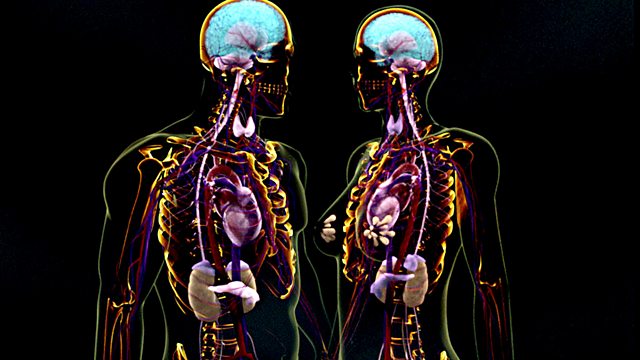
Primary sex characteristics refer to the anatomical structures directly involved in reproduction, which diverge based on gonadal differentiation. The development of these organs is orchestrated by hormonal signals from the testes or ovaries.Comparison of Male and Female Reproductive Systems
| Feature | Male Reproductive System | Female Reproductive System |
|---|---|---|
| Gonads |
|
|
| Internal Duct Systems |
|
|
| External Genitalia |
|
|
| Hormonal Regulation |
|
|
Critical Period: Gonadal differentiation occurs between weeks 6–12 of gestation, while external genitalia formation completes by week 12.
Secondary Sex Characteristics: Puberty and Hormonal Maturation
Secondary sex characteristics emerge during puberty, a period triggered by the hypothalamic-pituitary-gonadal (HPG) axis activation. This process involves the secretion of gonadotropin-releasing hormone (GnRH), which stimulates the pituitary to release LH and FSH, subsequently promoting gonadal steroid production.Developmental Timeline and Hormonal Roles
Puberty typically begins between ages 8–14 in girls and ages 9–15 in boys, though timing varies due to genetic, nutritional, and environmental factors. Key hormonal changes include:
- Estrogen (Estradiol, E2) in Females:
- Testosterone in Males:
Comparison of Secondary Sex Characteristics
| Trait | Female Development | Male Development | |||||||||||||||||||||||||||||||||||||||||||||||||||||||||||||
|---|---|---|---|---|---|---|---|---|---|---|---|---|---|---|---|---|---|---|---|---|---|---|---|---|---|---|---|---|---|---|---|---|---|---|---|---|---|---|---|---|---|---|---|---|---|---|---|---|---|---|---|---|---|---|---|---|---|---|---|---|---|---|---|
| Adipose Distribution | Subcutaneous fat in hips, thighs, and breasts; essential for estrogen synthesis.
Cultural and Societal Perspectives on SexHuman understanding of sex extends beyond biological determinants, evolving as a dynamic interplay between cultural narratives, religious doctrines, and societal norms. Across civilizations, sex has been framed through mythologies, legal codes, and artistic expressions, reflecting broader power structures, moral frameworks, and evolving human relationships. While biological sex provides a foundational template, cultural interpretations assign meaning, taboos, and rituals that shape individual and collective identities. This section examines how sex is constructed socially, tracing historical shifts from ancient civilizations to modern movements, while analyzing the role of gender norms, media, and anthropological insights in shaping these perspectives.Cultural Definitions of Sex Across CivilizationsDefinitions of sex vary significantly across cultures, often influenced by environmental, economic, and spiritual factors. In ancient Mesopotamia, sex was intertwined with fertility cults, where deities like Inanna (Ishtar) symbolized both sexual desire and agricultural abundance. The Code of Hammurabi (c. 1750 BCE) regulated sexual conduct, distinguishing penalties for men and women based on social hierarchies, reflecting patriarchal structures. Conversely, in ancient India, the Kama Sutra (c. 200–500 CE) celebrated sexual pleasure as a spiritual and social art, contrasting with the later Puritanical influences in medieval Europe, where sex was demonized as sinful under Christian doctrine.In African traditions, sex was often communal and ritualized. The Yoruba people of Nigeria associated sexuality with ancestral worship, while the Zulu practiced ukuthwala (bride abduction) as a courtship ritual, challenging Western notions of romantic love. Indigenous societies, such as the Lakota in North America, viewed sex as part of a sacred balance between humans and nature, with gender roles fluidly defined. Meanwhile, East Asian cultures like China’s Confucianism emphasized filial piety and gender roles, where women’s sexuality was tightly controlled to maintain familial harmony, while Japanese Shinto rituals incorporated sacred prostitution (miko) in some historical periods. "Sexuality is not an instinctive reality but a complex cultural construct shaped by historical, economic, and political forces." — Michel Foucault, The History of Sexuality Historical Shifts in Societal Attitudes Toward SexSocietal attitudes toward sex have undergone radical transformations, often in response to political upheavals, scientific discoveries, and social movements. Below is a chronological overview of key shifts:
Gender Norms and Cultural Interpretations of SexGender norms dictate expectations around sex, often reinforcing power imbalances and limiting individual autonomy. These norms vary by culture but frequently enforce rigid binaries, where masculinity is linked to dominance, heteronormativity, and emotional restraint, while feminine traits are associated with nurturing, passivity, and sexual purity. Below are cross-cultural examples:
"Gender is not a biological given but a phenomenon deeply embedded in each culture’s symbolic order." — Gayle Rubin, The Traffic in Women Anthropological Studies on the Social Construction of SexKey anthropological research highlights how sex is culturally constructed, often challenging Western assumptions. Below are summarized findings from seminal studies:
Models of Sexual Satisfaction and Their ImplicationsHistorical and contemporary frameworks provide distinct lenses for understanding sexual satisfaction. The Masters and Johnson model (1966) categorized sexual response into excitement, plateau, orgasm, and resolution, emphasizing physiological phases. While foundational, this model has been critiqued for its heteronormative and male-centric focus, overlooking non-genital pleasure and female sexual response variability (Levine, 2003).The Kinsey Scale (1948) introduced a 0–6 spectrum of sexual orientation, challenging binary notions of sexuality. Modern psychological frameworks, such as Plante’s Sexual Wellness Model (2014), expand satisfaction criteria to include safety, pleasure, autonomy, and equity. These models underscore the importance of consent, communication, and mutual desire in contemporary relationships. Comparative analysis of satisfaction models: Cultural Influences on Sexual Behaviors and TaboosCultural backgrounds profoundly shape sexual norms, taboos, and relationship dynamics. In collectivist cultures (e.g., many Asian or Middle Eastern societies), sexual expression may be constrained by familial expectations or religious doctrines, leading to internalized shame or repressed desires (Peplau, 2003). Conversely, individualist cultures (e.g., Western nations) often prioritize autonomy and self-actualization, fostering open discussions about sexuality (Schwartz, 2004).Religious and ethnic traditions further influence sexual behaviors. For example: Cultural taboos and their psychological impacts: Consensual vs. Non-Consensual Sexual Interactions: Legal, Ethical, and Psychological ConsequencesConsensual sexual interactions are characterized by freely given, reversible, informed, and enthusiastic agreement (FRIES model, 2014). Non-consensual interactions—including rape, coercion, or manipulation—violate ethical and legal standards, with severe psychological and societal repercussions.The following table contrasts these dynamics:
Key ethical principle for consensual sex: Sexual Health and WellnessSexual health is a multidimensional aspect of overall well-being, encompassing physical, psychological, and social dimensions. Physiological factors such as hormonal imbalances, vascular conditions, or neurological disorders can disrupt sexual function, while psychological stressors—including anxiety, depression, or trauma—often exacerbate dysfunctions. This section explores the interplay between biological and psychological determinants of sexual dysfunctions, examines the global burden of sexually transmitted infections (STIs), and outlines evidence-based protocols for maintaining sexual wellness. Emphasis is placed on preemptive care, safe practices, and the integration of mental health strategies to optimize sexual well-being across the lifespan.Physiological and Psychological Factors in Sexual DysfunctionsSexual dysfunctions—defined as persistent disturbances in sexual desire, arousal, orgasm, or pain—affect approximately 43% of women and 31% of men globally, with prevalence varying by age, culture, and comorbid conditions (Laumann et al., 2006; WHO, 2018). Physiological mechanisms often involve neurovascular, endocrine, or musculoskeletal dysfunctions, while psychological contributors include stress, relationship conflicts, or mental health disorders. Below are the primary categories of dysfunctions, their etiologies, and evidence-based interventions.### Erectile Dysfunction (ED) Treatment Approaches: First-line pharmacotherapy (PDE5 inhibitors: sildenafil, tadalafil, vardenafil) achieves 60–80% success rates in organic ED but requires underlying vascular/neurological optimization (e.g., statins for atherosclerosis, testosterone replacement for hypogonadism). ### Hypoactive Sexual Desire Disorder (HSDD) Interventions: Testosterone replacement therapy (TRT) in hypogonadal men improves libido and erectile function, but off-label use in women remains controversial due to cardiovascular risks (FDA, 2016). ### Genito-Pelvic Pain/Penetration Disorder (GPPPD) Management: Sexually Transmitted Infections (STIs): Epidemiology, Transmission, and PreventionSTIs remain a global health priority, with 376 million new infections annually (WHO, 2021). Bacterial (e.g., Chlamydia trachomatis, Neisseria gonorrhoeae), viral (e.g., HIV, HPV), and parasitic (e.g., Trichomonas vaginalis) pathogens exhibit distinct transmission routes, symptoms, and sequelae. Prevention strategies leverage barrier methods, vaccination, and early detection, while treatment adherence mitigates complications such as infertility or increased HIV susceptibility.### Key STIs: Symptoms, Transmission, and Complications Asymptomatic infection rates: Up to 80% of women with gonorrhea and 50% of men with chlamydia exhibit no symptoms, delaying diagnosis and treatment (CDC, 2020).
Prevention StrategiesPre-exposure prophylaxis (PrEP): Daily tenofovir/emtricitabine reduces HIV acquisition by >90% in high-risk individuals (CDC, 2014).Step-by-Step Protocol for Maintaining Sexual HealthA proactive approach to sexual health integrates pre-conception care, safe practices, and regular monitoring to prevent dysfunctions and infections. Below is
Sexual Diversity and IdentityHuman sexuality exists along a spectrum of identities, orientations, and expressions that defy rigid binary classifications. While traditional frameworks often categorize sex as male or female and sexual orientation as heterosexual or homosexual, contemporary research and societal discourse recognize a broader continuum. This spectrum includes bisexuality, asexuality, pansexuality, and other identities that challenge heteronormative assumptions. Biological, psychological, and social theories attempt to explain these variations, yet each perspective faces critiques regarding its explanatory power and cultural applicability. Historically, societies have oscillated between persecution and progressive recognition of non-heteronormative identities, culminating in modern legal milestones such as same-sex marriage and gender identity protections. Cross-cultural comparisons reveal diverse attitudes—from celebration to stigmatization—highlighting how cultural norms shape perceptions of sexual diversity.The Spectrum of Human Sexual IdentitiesSexual identities encompass a range of orientations that describe an individual’s enduring physical, romantic, or emotional attraction to others. These identities are not mutually exclusive and often exist on a continuum rather than discrete categories. Below are key identities within this spectrum, each reflecting distinct patterns of attraction and self-identification.The Kinsey Scale (1948) introduced a 0–6 continuum to measure sexual orientation, acknowledging that human sexuality exists on a spectrum rather than in fixed categories. Later expansions, such as the Klein Sexual Orientation Grid, incorporated additional dimensions like emotional attraction and sexual behavior. Biological, Psychological, and Social Theories of Sexual OrientationTheories attempting to explain sexual orientation are multidisciplinary, each offering partial explanations while facing critiques regarding determinism, cultural bias, or lack of empirical support. Below are key perspectives and their limitations.Historical Responses to Sexual Diversity: From Persecution to RecognitionSocietal attitudes toward sexual diversity have evolved from outright persecution to incremental legal and social recognition, reflecting broader shifts in human rights and scientific understanding. Key phases include: |
Leave a Comment
Comments are moderated before appearing. The data you submit is processed according to the Privacy Policy of Voltefac.