Dosa, a cornerstone of South Indian cuisine, transcends its humble origins as a fermented rice crepe to become a globally celebrated dish. Rooted in centuries-old culinary traditions, its crispy layers and subtle tanginess reflect the harmonious blend of rice and urad dal, a staple duo in regional diets. Beyond its cultural significance, dosa has evolved into a versatile canvas for innovation, adapting to diverse palates while retaining its essence—whether as a street food staple in Chennai or a gourmet fusion creation in international kitchens.
The journey of dosa begins with its fermented batter, a process that transforms simple ingredients into a textural masterpiece, balancing crispness with a soft interior. Its regional variations—from the spiced Mysore masala to the fluffy Pesarattu—highlight the adaptability of this dish, while modern interpretations push boundaries with global flavors. As both a comfort food and a culinary experiment, dosa embodies the fusion of tradition and creativity, making it a timeless subject for exploration.
Definition and Origins of Dosa: Cultural Roots and Evolution
Dosa, a cornerstone of South Indian cuisine, exemplifies the region’s culinary ingenuity through its fermented rice batter and crispy yet soft texture. Originating in the ancient agrarian societies of Tamil Nadu, dosa reflects a harmonious blend of nutritional wisdom and gastronomic tradition, where rice and lentils—staple crops—were transformed into a versatile dish. Its evolution over centuries mirrors broader socio-cultural shifts, from temple offerings to a globally acclaimed street food, while retaining its core identity as a symbol of South Indian hospitality.
The dish’s cultural significance extends beyond sustenance, embedding itself in festivals, communal meals (sadhus and brahmins), and regional pride. Fermentation, a key technique, not only enhances digestibility but also imparts a distinct tangy flavor and fluffy consistency, distinguishing dosa from flatbreads in other culinary traditions. Its adaptation across continents—from Singapore’s roti prata to UK fusion menus—demonstrates how a traditional recipe transcends borders while retaining authenticity.
Historical and Cultural Origins of Dosa in South India
Dosa’s ancestry traces back to the Dravidian agricultural societies of Tamil Nadu, Karnataka, and Andhra Pradesh, where rice and lentils formed the dietary backbone. Archaeological evidence suggests fermented rice-based foods existed as early as the 3rd century BCE, with references in ancient Tamil literature like the Silappadikaram and Manimekalai, where idiyappam (steamed rice noodles) and appam (fermented rice cakes) were documented. By the medieval period (6th–13th century CE), dosa emerged as a refined dish, particularly in Tamil Brahmin households, where it was prepared for temple rituals and festive occasions.
The fermentation process, likely influenced by natural lactic acid bacteria in the batter, was a practical solution to preserve rice and lentils while improving their nutritional profile. This method also aligned with Ayurvedic principles, which emphasized fermented foods for gut health. Over time, dosa became a symbol of South Indian identity, featured in royal courts (e.g., Vijayanagara Empire) and later as a street food staple during the British colonial era, when it became accessible to laborers and soldiers.
Key Ingredients in a Classic Dosa Recipe
The hallmark of dosa lies in its fermented rice-lentil batter, a balance of simplicity and technique that defines its texture and taste. The core ingredients include:
- Rice (parboiled or raw): Forms the base; parboiled rice yields a softer dosa, while raw rice creates a crispier exterior.
Urad dal (black gram): Provides protein and a slight bitterness, essential for fermentation.
Rice flour or semolina (optional): Used in variations like rava dosa to alter texture.
Water and salt: Maintain batter consistency and flavor.
Fermentation agents: Traditionally, a small portion of previous day’s batter or yogurt/curd is added to initiate fermentation (24–48 hours at room temperature).
"Fermentation in dosa is not merely a cooking technique but a culinary science—yeast and lactic acid bacteria break down starches into sugars, producing carbon dioxide for fluffiness and acetic acid for tanginess."
The batter’s viscosity and bubble formation during fermentation determine the dosa’s signature crispy edges and soft interior. Modern adaptations may include leavening agents (e.g., baking soda in instant dosa mixes), but traditional methods prioritize natural fermentation for authenticity.
Historical Timeline of Dosa’s Global Spread
Dosa’s journey beyond South India began with trade, migration, and colonialism, leading to regional adaptations while preserving its essence. Key milestones include:
- 18th–19th Century (Colonial Era):
British soldiers and traders in Mysore and Madras (Chennai) popularized dosa in military cantens and coastal towns.
Idli-dosa became a breakfast staple in Ceylon (Sri Lanka) and Malaya (Malaysia/Singapore) via Tamil labor migration.
- 20th Century (Post-Independence and Diaspora):
1950s–1970s: South Indian restaurants in Singapore, Mauritius, and Fiji rebranded dosa as roti canai or prata, incorporating local spices (e.g., coconut milk, sugar).
1980s–1990s: Indian diaspora in the US, UK, and Canada introduced dosa to fusion menus, pairing it with chutneys, eggs, or modern fillings (e.g., paneer, cheese).
- 21st Century (Globalization and Innovation):
UK/Europe: Dosa appears in vegan/health food trends, with variations like masala dosa or stuffed dosa in London’s Brick Lane.
Middle East: Adapted as dosa wraps in Dubai, using spiced batters and fillings like shawarma.
Australia/New Zealand: Featured in brunch menus with avocado or smoked fish.
Comparative Analysis: Dosa Across Regions
The following table highlights how dosa has been reimagined while retaining its core identity, adapting to local tastes and ingredients.
Region
Local Name
Key Variations
Cultural Significance
South India (Tamil Nadu/Karnataka)
Dosa
Masala dosa: Spiced potato filling.
Rava dosa: Semolina-based, crispier.
Adai: Mixed lentil dosa, thicker and savory.
Neer dosa
: Water-based, thin and delicate.
Central to temple prasadam (offerings) and festive meals. Symbolizes communal dining in households and uttapam stalls.
Singapore/Malaysia
Roti Prata
Thicker, fluffier batter with coconut milk or sugar.
Often served with curry or kaya (coconut jam).
Teh tarik-style versions with condensed milk.
Reflects Peranakan and Malay-Chinese fusion, blending South Indian techniques with local sweet-savory preferences. A breakfast staple in hawker centers.
United Kingdom
Dosa (or "Indian Crêpe")
Cheese dosa: Melted cheddar or halloumi fillings.
Breakfast dosa: Eggs, bacon, or smoked salmon.
Gluten-free versions: Using sorghum or chickpea flour.
Dessert dosa: Sweetened with jaggery or Nutella.
Represents South Asian diaspora cuisine, catering to vegan/health-conscious trends. Featured in Brick Lane (London) as a symbol of multiculturalism.
Middle East (UAE/Oman)
Dosa Wrap
Shawarma dosa: Spiced chicken or lamb fillings.
Falafel dosa: Middle Eastern-inspired wraps.
Stuffed with feta and herbs (Greek influence).
Serving with mint chutney and garlic sauce.
Adapted to fast-food culture, offering a quick, protein-rich meal. Popular in food courts and street carts alongside kebabs.
Types and Variations of Dosa
Dosa, a cornerstone of South Indian cuisine, exhibits remarkable diversity in texture, flavor, and preparation techniques, reflecting regional culinary traditions and dietary preferences. While its core identity lies in the fermented rice-lentil batter, variations arise from modifications in ingredients, fermentation methods, cooking techniques, and fillings. These adaptations not only cater to taste preferences but also address nutritional needs, such as protein enrichment or gluten-free alternatives. Regional specialties further illustrate how dosa has evolved into a versatile dish, transcending its origins to become a global culinary phenomenon.
The classification of dosa types is primarily determined by preparation methods—crispy, soft, stuffed, and fermented—each offering distinct sensory experiences. Additionally, regional adaptations, such as Mysore’s signature masala dosa or Andhra’s Pesarattu, highlight how local ingredients and cultural practices shape the dish. Below, the categorization explores these dimensions, followed by a detailed recipe for stuffed dosa and a comparative analysis of fermented versus non-fermented textures.
Categorization by Preparation Method
Dosa variations are fundamentally categorized based on batter consistency, cooking techniques, and the presence of fillings. The four primary types—crispy (masala), soft (neer), stuffed (podi), and fermented (rava)—each serve distinct culinary purposes and align with regional or dietary trends.
Crispy Dosa (Masala Dosa)
The most iconic variant, crispy dosa is characterized by its thin, golden-brown exterior and fluffy, slightly chewy interior. The batter, typically fermented for 8–12 hours, is spread thinly on a hot tawa (griddle) and cooked until edges crisp. A key feature is the masala podi (spiced powder) poured onto the dosa before folding, which is a blend of roasted urad dal, rice, chana dal, and spices like pepper, mustard seeds, and curry leaves. Variations include Mysore masala dosa, where the podi is layered between two dosa crepes, and Onion dosa, which incorporates finely chopped onions into the batter for added crunch.
Soft Dosa (Neer Dosa)
Originating from Tamil Nadu, soft dosa prioritizes a mushy, non-crispy texture with a slightly tangy flavor. The batter is less fermented (or sometimes unfermented) and cooked on a lightly oiled tawa, resulting in a pillowy, almost steamed consistency. Unlike crispy dosa, neer dosa is often served with coconut chutney and sambar, emphasizing its role as a comforting, everyday meal. Regional adaptations include Karnataka’s neer dosa, which may use a mix of rice and ragi (finger millet) for a nuttier taste.
Stuffed Dosa (Podi Dosa)
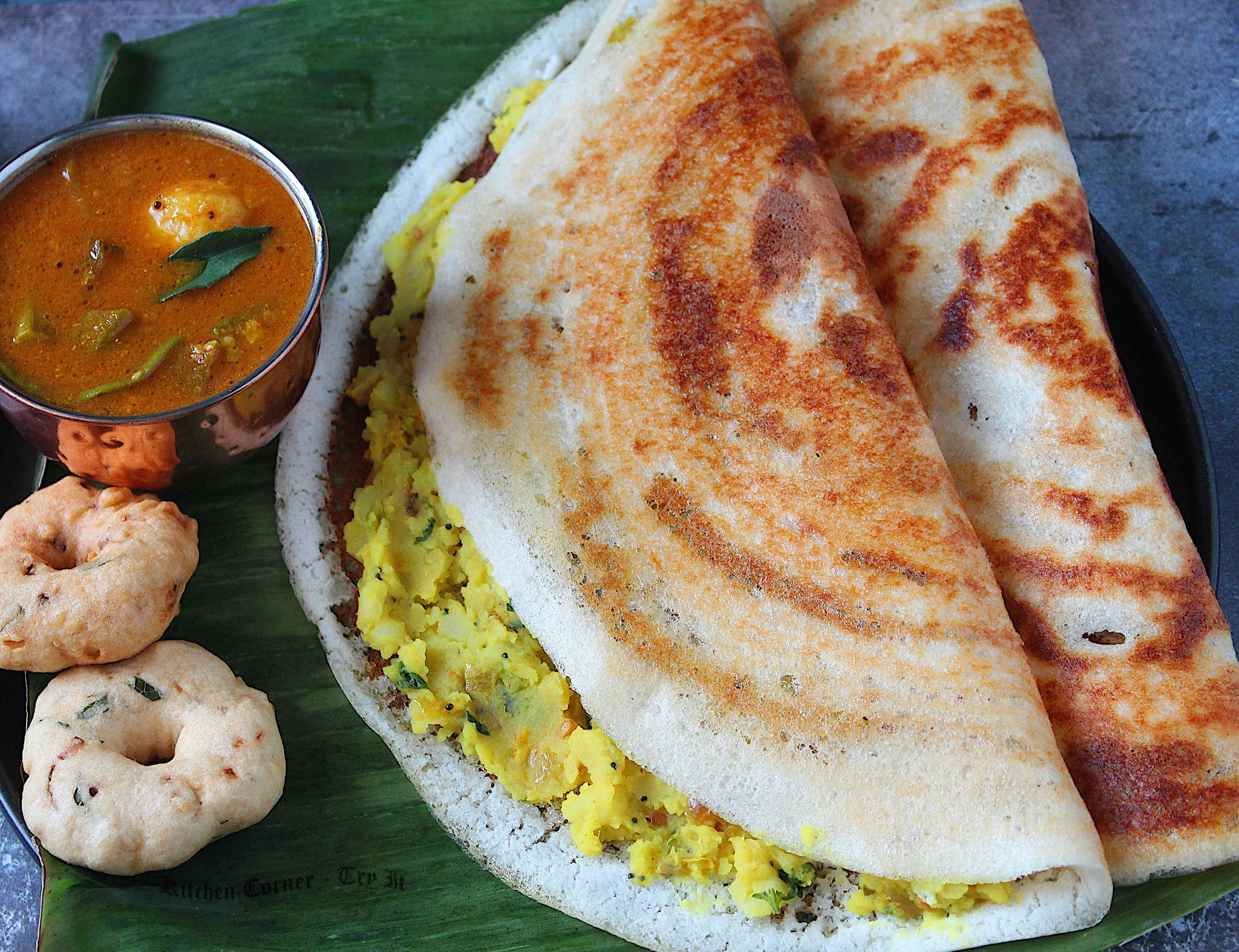
Stuffed dosa features a thick, semi-circular crepe filled with spiced mixtures, offering a hearty and protein-rich option. The batter is less fermented than masala dosa, allowing it to hold fillings without tearing. Common fillings include potato masala, paneer (cottage cheese), or vegetable medleys, which are seasoned with mustard seeds, curry leaves, green chilies, and asafoetida. The dish’s popularity stems from its balance of textures—crisp edges, soft batter, and a flavorful core—making it a staple in South Indian restaurants and home kitchens.
Fermented vs. Non-Fermented Dosa (Rava Dosa)
Fermentation is a defining characteristic of traditional dosa, but modern adaptations introduce rava dosa (semolina dosa), which skips fermentation for convenience. Fermented dosa relies on lactic acid fermentation of rice and urad dal batter (8–12 hours), yielding a tangy, aerated texture with a crispy exterior and soft interior. In contrast, rava dosa uses instant-mix semolina batter, cooked immediately on a tawa, resulting in a lighter, fluffier, and less tangy profile. While fermented dosa is labor-intensive, rava dosa is favored for its quick preparation, though it lacks the depth of flavor and probiotic benefits of fermentation.
Regional Variations Across India
Dosa’s adaptability has led to distinct regional interpretations, shaped by local ingredients, climatic conditions, and cultural influences. While the core technique remains consistent, variations in batter composition, cooking methods, and accompaniments create unique identities.
Karnataka: Mysore Masala Dosa
A signature of Mysore cuisine, this dosa is double-layered with a generous application of masala podi between two crepes. The batter is fermented with a touch of jaggery or sugar to enhance sweetness, and the podi includes grated coconut and sesame seeds for added richness. Served with coconut chutney and sambar, it embodies Karnataka’s royal culinary heritage.
Andhra Pradesh: Pesarattu
A green gram (moong dal) dosa, Pesarattu is a protein-packed variant where the batter is made from split green gram dal, rice, and spices. The dosa is thicker and softer than traditional dosa, often cooked on a cast-iron tawa for even heat distribution. It is traditionally served with tomato-onion chutney and a side of pachadi (yogurt-based curry). Pesarattu is a staple during Andhra’s Ugadi festival and is known for its earthy, nutty flavor.
North India: Gobi Manchurian Dosa
A fusion adaptation, this dosa replaces the traditional filling with Gobi Manchurian—a spicy Indo-Chinese stir-fry of cauliflower, capsicum, and soy sauce. The batter is often less fermented to accommodate the filling’s moisture, and the dosa is pan-fried until golden. Served with green chutney and mint-coriander sauce, it reflects North India’s penchant for hybrid cuisines.
Kerala: Puttu Parotta vs. Kerala-Style Dosa
While Kerala is famous for puttu (steamed rice cakes), its dosa variants include thick, fluffy dosas made with raw rice batter and coconut milk. Some versions incorporate tapioca (sabudana) for a gelatinous texture, while others use fermented black chana dal for a dark, protein-rich batter. Kerala dosa is often paired with avial (coconut-yogurt stew) or meen moilee (fish curry).
Tamil Nadu: Rava Dosa and Adai
Tamil Nadu’s rava dosa is a quick-cooking variant using semolina (suji) and rice flour, often flavored with ginger and green chilies. Adai, a layered dosa, combines rice, lentils, and vegetables into a thick, savory pancake, steamed or pan-fried. Both variants emphasize ease of preparation and are staples in Tamil Brahmin households.
Step-by-Step Procedure for Stuffed Dosa with Three Unique Fillings
Stuffed dosa (podi dosa) combines the crispiness of a crepe with the heartiness of a filling, making it a versatile dish for breakfast or dinner. Below is a standard batter recipe followed by three distinct filling variations—spiced potato, paneer, and vegetable mix—each offering a unique flavor profile.
Key to Success:
Batter consistency should be slightly thicker than masala dosa batter to hold fillings without tearing.
Fillings must be dry and well-seasoned to prevent sogginess.
Cooking temperature should be medium-high to achieve crisp edges while keeping the interior soft.
Batter Preparation (Serves 4)
Ingredients:
2 cups rice (preferably sona masoori or parboiled)
½ cup urad dal (split black gram)
¼ cup chana dal (split Bengal gram)
1 tsp fenugreek seeds (methi)
½ tsp salt (adjust to taste)
Water (as needed)
Culinary Techniques and Equipment for Dosa Preparation
The art of crafting the perfect dosa lies in mastering both traditional techniques and the appropriate use of specialized equipment. Fermentation, heat control, and tool selection significantly influence texture, flavor, and structural integrity. This section explores the scientific and practical aspects of dosa-making, including batter fermentation protocols, essential equipment, and comparative techniques to achieve optimal results.
Fermentation Process for Dosa Batter
Fermentation is the cornerstone of dosa preparation, as it develops the signature crispy exterior and soft interior. The process relies on the action of lactic acid bacteria and yeast, which break down carbohydrates, increase gluten formation, and enhance digestibility. Ideal fermentation conditions—temperature, time, and batter composition—determine the final texture and taste.
Key Parameters for Fermentation
Temperature: The optimal range is 28°C to 32°C (82°F to 90°F). Temperatures below 25°C (77°F) slow fermentation, while above 35°C (95°F) risk over-fermentation or an overly sour taste.
Time: Typically 8 to 12 hours, depending on ambient temperature. A well-fermented batter exhibits fine bubbles, a slightly tangy aroma, and a thin, pourable consistency (similar to pancake batter).
Batter Composition: A 1:4 ratio of rice to urad dal (with water) ensures proper fermentation. Excessive rice thickens the batter, while too much dal may inhibit fermentation due to high protein content.
Troubleshooting Common Fermentation Issues
Over-fermentation occurs when batter sits beyond 12 hours or at high temperatures (>32°C). Signs include a strong vinegar-like sourness, excessive bubbles, and a thick, lumpy texture. Remedy: Dilute with warm water (not hot) and a pinch of salt or baking soda to neutralize acidity.
Under-fermentation results from low temperatures (<25°C) or insufficient time. The batter remains flat, dense, and bland. Remedy: Extend fermentation by 2–4 hours or use a warm place (e.g., near an oven with light on) to accelerate microbial activity.
Pro Tips for Consistency
Use filtered water to avoid impurities that may hinder fermentation.
Add 1 tsp of sugar or jaggery per cup of batter to feed yeast and promote even fermentation.
Stir the batter gently every 2–3 hours to distribute yeast and prevent a skin from forming.
Essential Equipment for Dosa Making
Traditional dosa-making relies on specialized tools designed to achieve the characteristic crispy edges and thin, even spread. While modern alternatives exist, understanding the purpose of each tool ensures authenticity and efficiency.
Core Equipment and Alternatives
The dosa press (dosa kavuni) is the most iconic tool, featuring a wooden or metal frame with a perforated plate that distributes batter evenly under pressure. It requires moderate skill to master but guarantees professional results.
Technique
Equipment Needed
Skill Level
Time Required
Press Method
Dosa press (kavuni), tawa (griddle)
Intermediate
3–5 minutes per dosa
Hand-Spreading
Flat spatula, tawa
Beginner
2–4 minutes per dosa
Crepe Pan Method
Non-stick crepe pan, silicone spatula
Beginner-Friendly
4–6 minutes per dosa
Rolling Pin Method
Rolling pin, bowl, tawa
Advanced (for thin dosas)
5–7 minutes per dosa
Alternative Tools for Beginners
Crepe Pan: Ideal for those unfamiliar with dosa presses. Use a non-stick pan (8–10 inches) and spread batter thinly with a silicone spatula. Preheat the pan on medium-high heat and cook until golden brown edges form (2–3 minutes per side).
Tawa (Griddle): A cast-iron or stainless-steel griddle with medium-high heat is essential for crisping. Ensure even heat distribution to prevent burning.
Bowl and Rolling Pin: For paper-thin dosas, spread batter in a bowl, then roll with a rolling pin before transferring to the tawa. Requires practice to avoid tearing.
Achieving an Evenly Crispy Dosa: Batter Consistency and Heat Control
The crispiness of dosa stems from a balance of batter viscosity and precise heat management. An ideal dosa has a crispy, lace-like edge with a soft, fluffy center. Below is a step-by-step illustration of the process:
Step 1: Batter Consistency
Ideal Texture: Batter should be smooth, thin, and pourable—similar to single-cream consistency. Test by dropping a spoonful into water; if it spreads evenly, it is ready.
Adjustments:
Too thick? Add warm water (1–2 tbsp at a time) while stirring.
Too thin? Let it ferment longer (1–2 hours) or add 1–2 tbsp rice flour to thicken.
Step 2: Heat and Cooking Technique
Preheat the Tawa: Place on medium-high heat until hot but not smoking. A drop of water should sizzle and evaporate instantly.
Pressing the Dosa:
For the press method, apply firm, even pressure to spread batter thinly (1–2 mm). Rotate the press in a circular motion to ensure uniform thickness.
For hand-spreading, use a spatula to create a thin, even layer before flipping.
Flipping and Crisping:
Flip the dosa when edges turn golden (1–2 minutes). Press down gently with a clean cloth to release air bubbles.
Cook the second side for 30–45 seconds until crispy spots appear. Avoid overcooking, which causes dryness.
Text-Based Illustration of Heat Zones
```
Tawa Heat Distribution (Front to Back):
[High Heat] --------------------> [Medium Heat]
^ ^
| |
Edge Crisping Center Cooking
```
High Heat (Edges): Ensures instant crisping and prevents sogginess.
Medium Heat (Center): Allows the interior to cook without burning.
Pro Tip: If the dosa browns too quickly, reduce heat to medium and press gently to distribute batter.
Common Mistakes and Fixes
Burnt edges: Heat is too high or batter is uneven. Solution: Lower heat to medium and spread batter more evenly.
Soggy center: Undercooked or excess oil. Solution: Cook longer on the second side or reduce oil to 1 tsp per dosa.
Uneven thickness: Improper pressing technique. Solution: Practice with the press or use a silicone mat for better control.
Nutritional Profile and Health Benefits of Dosa
Dosa, a staple in South Indian cuisine, is often celebrated for its versatility and flavor but is frequently misunderstood in terms of nutritional value. A balanced analysis of its macronutrient composition—derived from fermented rice and urad dal batter, often cooked in ghee or oil—reveals both its caloric density and potential health advantages. This section examines the nutritional breakdown of a standard dosa, compares its health implications with whole wheat and alternative variations, and debunks prevalent misconceptions through evidence-based insights.
The nutritional profile of dosa varies based on preparation methods, but a standard crispy dosa (100g) prepared with rice, urad dal, and ghee typically contains the following macronutrients:
Calories: ~210–250 kcal
Carbohydrates: ~30–35g (primarily from rice and fermented urad dal)
Protein: ~4–5g (contributed by urad dal, a rich source of plant-based protein)
Fiber: ~2–3g (fermentation enhances digestibility and fiber content)
Fat: ~8–10g (majority from ghee/oil used for cooking, with minimal fat from the batter itself)
Micronutrients: Iron, calcium, and B vitamins (from urad dal and fermentation process).
The fermentation process not only improves digestibility but also increases the bioavailability of nutrients like amino acids and vitamins, particularly folate and niacin. However, the fat content can be a concern if dosa is consumed frequently without moderation, as excessive ghee or oil may elevate saturated fat intake.
Comparison of Whole Wheat Dosa and Traditional Rice Dosa
Whole wheat dosa and traditional rice dosa differ significantly in nutritional composition, gluten content, glycemic impact, and digestibility, making them suitable for varying dietary needs.
Nutritional and Glycemic Differences
Whole wheat dosa replaces rice with whole wheat flour, altering its macronutrient profile and health implications.
Parameter
Traditional Rice Dosa (100g)
Whole Wheat Dosa (100g)
Carbohydrates
~30–35g (refined rice, high GI)
~28–32g (whole grain, lower GI)
Protein
~4–5g (from urad dal)
~5–6g (higher due to wheat protein)
Fiber
~2–3g
~4–5g (2–3x higher due to bran)
Gluten Content
Gluten-free (rice + urad dal)
Contains gluten (wheat-based)
Glycemic Index (GI)
High (~70–80)
Moderate (~55–65)
Digestibility
Moderate (fermentation aids digestion)
Easier (whole grains + fermentation)
Fat Content (from cooking)
~8–10g (ghee/oil)
~7–9g (similar, but wheat absorbs less oil)
Key Health Implications
Gluten Sensitivity: Traditional rice dosa is naturally gluten-free, making it suitable for individuals with celiac disease or gluten intolerance. Whole wheat dosa, while nutritious, contains gluten and may trigger adverse reactions in sensitive individuals.
Glycemic Impact: Whole wheat dosa has a lower glycemic index (GI) due to its higher fiber and protein content, which slows glucose absorption. This makes it a better option for blood sugar management compared to refined rice dosa, which spikes blood glucose levels more rapidly.
Digestibility and Satiety: The increased fiber in whole wheat dosa enhances satiety and supports gut health, whereas traditional dosa may lead to quicker hunger recurrence due to its lower fiber content.
Nutrient Density: Whole wheat dosa provides more B vitamins, magnesium, and antioxidants from the wheat bran, whereas rice dosa relies primarily on urad dal for micronutrients.
Health-Conscious Dosa Variations
To align with modern dietary preferences—such as low-calorie, high-protein, or gluten-free diets—dosa can be adapted without compromising its texture or taste. These modifications leverage alternative flours, fermented legumes, and reduced-fat cooking techniques.
1. Low-Calorie Dosa (Cauliflower Batter)
Substituting rice flour with grated cauliflower reduces carbohydrate content while preserving protein and fiber, making it ideal for weight management.
Key Ingredients:
Cauliflower rice (replaces 50–70% of traditional rice flour).
Urad dal (fermented for protein and texture).
Spices (turmeric, cumin, black pepper for flavor).
Cooking Method: Lightly sautéed in minimal oil (1 tsp per dosa) or air-fried for crispiness.
- Nutritional Benefits (per 100g):
Calories: ~90–120 kcal (vs. 210–250 kcal in traditional dosa).
Carbohydrates: ~15–20g (reduced by ~50%).
Fiber: ~3–4g (higher due to cauliflower and fermentation).
Protein: ~4–5g (unchanged, from urad dal).
Fat: ~2–3g (significantly reduced).
- Considerations:
May lack the crispiness of traditional dosa; requires proper batter consistency.
Best paired with high-protein fillings (e.g., paneer, sprouted chana) to balance nutrition.
2. Gluten-Free Dosa (Millet Flour Blend)
Millets such as sorghum (jowar), foxtail millet (kuttu), and finger millet (ragi) provide gluten-free alternatives with superior nutritional profiles.
Fermented batter (enhances digestibility and nutrient absorption).
Cooking Method: Traditional dosa pan or cast-iron skillet with minimal ghee (~1 tsp).
- Nutritional Benefits (per 100g):
Carbohydrates: ~28–32g (complex carbs from millets).
Protein: ~5–6g (higher than rice dosa due to millet protein).
Fiber: ~4–5g (millets are rich in dietary fiber).
Micronutrients: Higher in calcium (ragi), iron (jowar), and antioxidants.
GI: Low (~45–55), ideal for diabetics.
- Considerations:
Millet dosas may have a slightly denser texture; adjusting water content in the batter helps.
Pair with coconut chutney or tomato-onion masala to enhance flavor.
3. High-Protein Dosa (Moong Dal Addition)
Incorporating split yellow moong dal into the batter increases protein content while maintaining a balanced macronutrient profile.
Key Ingredients:
Rice flour + moong dal (1:1 ratio) or urad dal + moong dal (2:1 ratio).
Fermentation: 8–12 hours for optimal protein digestibility.
Cooking Method: Lightly oiled (1 tsp ghee or olive oil).
- Nutritional Benefits (per 100g):
Protein: ~8–10g (double that of traditional dosa).
Carbohydrates: ~25–30g (slightly reduced due to moong dal substitution).
Fiber: ~5–6g (moong dal is high in soluble fiber).
Fat: ~5–7g (lower if cooked in olive oil).
- Considerations:
Moong dal batter may require slightly longer fermentation for smoothness.
Ideal for post-workout meals or high-protein diets.
Common Myths About Dosa and Evidence-Based Rebuttals
Misconceptions about dosa often stem from its association with deep-frying or high-carbohydrate content. Below are prevalent myths debunked with scientific and nutritional evidence.
Dosa’s healthfulness depends on preparation methods, ingredient choices, and portion control—not the dish itself.
Serving Styles and Pairings in Dosa Preparation
Dosa transcends its role as a mere breakfast staple in South Indian cuisine, evolving into a versatile centerpiece for festive meals, casual dining, and modern culinary experimentation. Its adaptability lies in the artful pairing of textures, flavors, and temperatures, where each accompaniment enhances the dosa’s inherent crispness or softness. Traditional pairings—sambar, chutneys, and side dishes—are not merely complementary but essential to balancing the meal’s harmony. Meanwhile, contemporary adaptations redefine dosa as a fusion canvas, blending global ingredients with regional techniques. This section explores the cultural and gastronomic principles governing dosa pairings, from classic combinations to innovative presentations, ensuring both authenticity and creativity are preserved.
Traditional Accompaniments and Flavor Profiles
The essence of a dosa meal lies in its trinity of accompaniments: sambar (lentil stew), chutneys, and side dishes, each contributing distinct flavor dimensions that elevate the dish beyond a standalone entity. These components are deeply rooted in South Indian culinary philosophy, where tempering (tadka), acid-base balance, and textural contrast are prioritized. Sambar, with its tangy, spiced lentil base, provides umami depth, while chutneys introduce freshness or heat. Side dishes like rasam or pachadi further diversify the palate, ensuring a meal that is both nutritious and sensorially satisfying.
Key Flavor Profiles:
Sambar: A tamarind-based lentil stew with mustard seeds, curry leaves, and vegetables, offering sour, spicy, and earthy notes. Variations include toor dal sambar (mild) and vegetable sambar (richer, with ghee).
Coconut Chutney: Grated coconut blended with green chilies, curry leaves, and roasted spices, delivering creamy, cooling, and slightly sweet undertones. Often paired with masala dosa or neer dosa.
Mint-Coriander Chutney: A vibrant, herbal and citrusy blend of mint, cilantro, green chilies, and roasted cumin, ideal for rava dosa or adai.
Tomato-Onion Chutney: A tangy, slightly sweet condiment with roasted tomatoes, onions, and jaggery, complementing pesarattu or egg dosa.
Rasam: A light, sour, and spicy broth made from tamarind, tomatoes, and lentils, served as a palate cleanser between dosa bites.
Pachadi: A cooling yogurt-based curry with grated vegetables, offering a mild, creamy contrast to crisp dosas.
"The art of dosa pairing lies in the interplay of temperatures—warm sambar against cool chutneys, crisp dosa against soft sides—creating a symphony of textures that define the meal’s character."
Pairing Guide for Dosa Varieties
The selection of accompaniments should align with the dosa’s texture, density, and flavor intensity. Below is a curated pairing guide to optimize taste and balance for different dosa types, ensuring each bite offers a harmonious progression of flavors.
Dosa Type
Chutney
Sambar/Stew
Side Dish
Masala Dosa
Coconut chutney (creamy contrast)
Vegetable sambar (spiced, ghee-rich)
Rasam (light, sour broth)
Rava Dosa
Mint-coriander chutney (herbal freshness)
Toor dal sambar (mild, tamarind-based)
Pachadi (yogurt curry)
Neer Dosa
Tomato-onion chutney (tangy sweetness)
Coconut milk sambar (rich, coconut-infused)
Avial (kerala-style vegetable stew)
Pesarattu
Coconut chutney (balances moisture)
Tomato rasam (spicy, tomato-forward)
Podi (spiced powder for sprinkling)
Adai
Mint-coriander or ginger chutney (refreshing)
Mix vegetable sambar (layered flavors)
Curry leaves stir-fry (crispy, aromatic)
Egg Dosa
Green chili chutney (spicy kick)
Egg sambar (tomato-based, less sour)
Boiled vegetables with lemon
Ghee Roti Dosa
Coconut chutney (luxurious pairing)
Special sambar (with cashews, extra spices)
Mango pachadi (sweet-tangy contrast)
Notes for Pairing:
Crisp dosas (e.g., rava, masala) pair best with cooling chutneys and warm sambar to highlight texture contrast.
Soft dosas (e.g., neer, adai) benefit from spicy or tangy chutneys to cut through richness.
Savory dosas (e.g., egg, onion) require lighter sambar to avoid overwhelming the palate.
Festive dosas (e.g., ghee roti) justify richer accompaniments like coconut milk sambar or cashew-based curries.
Assembling a Festive Dosa Platter
A well-presented dosa platter is a visual and culinary masterpiece, reflecting regional aesthetics while catering to communal dining. The arrangement should prioritize layering, color contrast, and temperature variation to create an inviting spread. Below are key principles for assembling a traditional festive platter, suitable for celebrations like weddings, festivals, or special gatherings.
Platter Design Elements:
Central Focus: Place the largest dosa type (e.g., masala or ghee roti) in the center, surrounded by smaller varieties.
Color Gradients: Arrange accompaniments in warm-to-cool hues—deep red sambar near the center, green chutneys on the periphery, and white rice or pachadi at the edges.
Temperature Zones:
Hot zone: Sambar, rasam, and fried sides (e.g., vada).
Room temperature: Dosas, chutneys, and pickles.
Cool zone: Yogurt-based dishes (pachadi) and cucumber salads.
Garnishes: Sprinkle curry leaves, grated coconut, or fried shallots over sambar and chutneys for aroma and visual appeal.
Serving Utensils: Use banana leaves for an authentic touch, or ceramic bowls for modern elegance. Serve dosas on a large platter with a metal ring to keep them crisp.
Step-by-Step Assembly:
1. Base Layer: Spread a banana leaf or line a platter with white paper for contrast.
2. Dosa Arrangement: Place 3–5 dosas in a sunburst pattern, alternating sizes (e.g., large masala dosa in the center, surrounded by rava and adai).
3. Chutney Placement: Position small bowls of chutneys (coconut, mint-coriander, tomato-onion) in triangular formation around the dosas, ensuring each has a dedicated spoon.
4. Sambar and Stews: Place two medium bowls of sambar (one vegetable, one toor dal) near the center, with rasam or pachadi in smaller bowls
From its sacred origins in South India to its modern reinventions across continents, dosa remains a testament to culinary craftsmanship and cultural exchange. Whether enjoyed with a tangy sambar or reimagined in a fusion bowl, its journey reflects how a single dish can bridge heritage and innovation. Understanding dosa is not just about mastering its techniques but appreciating its role as a symbol of adaptability—where fermented rice batter becomes a gateway to endless gastronomic possibilities.
FAQ
What ingredients are used to make dosa?
Dosa is made from a fermented batter primarily consisting of rice and urad dal (black gram), ground together and soaked overnight. Some variations include additional ingredients like rice flour, salt, water, and sometimes a pinch of baking soda or curd for fermentation.
Is dosa a type of Indian food?
Yes, dosa is a popular South Indian dish, originating from the state of Tamil Nadu. It is a staple in South Indian cuisine, often served with coconut chutney, sambar, or other accompaniments.
What does "dosage" mean?
Dosage refers to the prescribed amount of medication or supplement to be taken at one time or over a specific period. It is determined by factors like the patient’s age, weight, and medical condition, and is usually specified by a doctor or pharmacist.
How is dosa batter prepared?
Dosa batter is made by soaking rice and urad dal separately for several hours, then grinding them into a smooth paste. The batter is left to ferment overnight, which gives it a light, spongy texture. Some recipes also include raw rice or other grains for added nutrition.
What is a "dosa" in a hospital context?
In a hospital setting, "dosa" typically refers to a medical term for a type of skin lesion or rash, often characterized by raised, scaly patches. It can be associated with conditions like psoriasis or certain infections, and requires medical evaluation.
What materials are dosa made from?
Dosa is made from a fermented batter consisting of rice and urad dal as the main ingredients. The batter is thinly spread and cooked on a hot griddle, resulting in a crispy, crepe-like dish. No additional materials like flour or wheat are used in traditional dosa.


Leave a Comment
Comments are moderated before appearing. The data you submit is processed according to the Privacy Policy of Voltefac.