| Eligibility Criteria |
- Nonprofits must apply for 501(c) status and demonstrate public benefit, non-distribution constraint, and operational test (e.g., 501(c)(3) for charities).
- Religious entities automatically qualify under §501(c)(3) without additional scrutiny.
- Government bodies are exempt by default under §115.
|
- Nonprofits must register with national authorities (e.g., Finanzamt in Germany) and prove nonprofit purpose and public benefit.
- Religious entities often enjoy broad exemptions (e.g., France’s Concordat for Catholic institutions).
- Government bodies are exempt under national constitutional provisions (e.g., Article 136 of the German Basic Law).
|
- Charities must register with the Charity Commission and meet public benefit test (e.g., relief of poverty, advancement of education).
- Religious charities (e.g., churches) are exempt under Charities Act 2011, §2(2).
- Public-sector bodies are exempt from corporation tax under <
Eligibility Criteria and Legal Requirements for Tax-Exempt Status
Tax-exempt status confers significant financial and operational advantages to qualifying organizations, but its attainment depends on strict adherence to legal frameworks governing nonprofit and charitable entities. Eligibility hinges on structural compliance, mission alignment with public benefit tests, and compliance with regulatory oversight. High-income jurisdictions like the U.S., UK, and Canada impose rigorous criteria to prevent misuse, ensuring exemptions serve their intended purpose of fostering societal welfare. Below are the foundational prerequisites, procedural steps, and governing mechanisms that define tax-exempt status.
Organizational Structure and Mission Alignment
To qualify for tax-exempt status, an organization must demonstrate a nonprofit purpose and a charitable or public benefit mission as defined by tax law. The structure must align with the legal classification of exempt entities, typically requiring:
- Nonprofit Status: Incorporation under state or local law as a nonprofit corporation or trust, with provisions prohibiting profit distribution to private individuals (e.g., U.S. 501(c)(3) entities must include dissolution clauses directing assets to another exempt organization upon liquidation).
- Public Benefit Focus: Activities must serve a public or charitable purpose, such as education, religion, science, or literacy, rather than private interests. For example, a U.S. 501(c)(3) organization must pass the "public benefit test", which evaluates whether its mission directly addresses community needs (e.g., a hospital providing low-income healthcare or a university offering scholarships).
- Operational Independence: Exempt organizations must operate independently of private influence, avoiding undue control by donors, members, or investors. This includes prohibitions on private inurement (directly benefiting individuals) and private benefit (indirectly enriching private parties).
Key Distinction:
In the U.S., 501(c)(3) organizations (charitable) differ from 501(c)(4) social welfare groups or 501(c)(6) business leagues, which may engage in lobbying or advocacy but are subject to stricter limits on political activity. Similarly, the UK’s Charity Commission distinguishes between charities (public benefit) and community amateur sports clubs (CASC), each with distinct eligibility thresholds.
Step-by-Step Application Process for Tax-Exempt Status
The application process varies by jurisdiction but follows a structured workflow involving documentation, review, and approval. Below is the U.S. 501(c)(3) application process as an example, applicable to high-income countries with analogous systems (e.g., Canada’s CRA or UK’s HMRC).Prerequisites Before Filing:
- Incorporation: The organization must be legally formed under state law (e.g., filing Articles of Incorporation in the U.S.).
- EIN Assignment: Obtain an Employer Identification Number (EIN) from the IRS, required for tax filings.
- Bylaws and Governance: Adopt conflict-of-interest policies, whistleblower protections, and record-keeping procedures to meet transparency standards.
Application Submission:
1. Form 1023 (Long Form) or Form 1023-EZ (Streamlined):
- Form 1023 is for organizations with annual gross receipts exceeding $50,000 or assets over $250,000. It requires detailed disclosure of governance, financials, and mission.
- Form 1023-EZ is for smaller organizations (under $50,000 in receipts and $250,000 in assets) and includes simplified questions but fewer exemptions (e.g., no private foundation status).
- Fee: $600 for Form 1023-EZ; $275–$600 for Form 1023 (based on income).
2. Supporting Documents:
- Organizational documents (bylaws, conflict-of-interest policy).
- Financial statements (audited or reviewed, if applicable).
- Proof of public support (e.g., donor lists, grant letters).
- Narrative description of programs and activities.
Review Timeline and Approval:
- Processing Time: 2–6 months for Form 1023-EZ; 6–24 months for Form 1023 (longer for complex cases).
- IRS Examination: The IRS may request additional information or schedule an on-site visit to verify compliance.
- Approval Letter: Upon approval, the organization receives a Determination Letter (e.g., 501(c)(3) letter), granting tax-exempt status retroactive to the filing date.
Post-Approval Compliance:
- Annual Filings: Exempt organizations must file Form 990 (or 990-EZ/N) annually, disclosing financials and activities.
- State Registration: Many states require additional filings (e.g., Charitable Solicitation Registration) to legally fundraise.
Common Pitfalls and Disqualifying Factors
Failure to meet eligibility criteria or violating exempt status can result in revocation of tax-exempt status, back taxes, and penalties. Below are frequent disqualifiers, illustrated with real-world examples:
Private Inurement: Direct or indirect distribution of assets/profits to private individuals (e.g., excessive compensation to board members or donors).
Example: A U.S. nonprofit’s CEO earning $1.2 million annually (far exceeding market rates) led to IRS scrutiny and partial revocation of 501(c)(3) status (Case: American Media Inc. v. IRS, 2018).
Excessive Lobbying: Political campaign intervention or advocacy exceeding 501(c)(3) limits (e.g., spending >50% of resources on lobbying).
Example: The National Rifle Association (NRA) faced IRS investigations for alleged political intervention, though no revocation occurred due to legal challenges.
Unrelated Business Income (UBI): Generating profit from activities not substantially related to the exempt mission.
Example: A children’s hospital operating a for-profit café with $5M in annual revenue triggered UBI tax liability unless the activity directly supported its mission (IRS Revenue Procedure 97-13).
Lack of Public Benefit: Failing to serve a broad public or charitable interest (e.g., a "nonprofit" golf club serving only members).
Example: The Sierra Club Legal Defense Fund lost exempt status in 1996 when it was deemed to benefit only environmental litigants rather than the general public (IRS Ruling 9643).
Noncompliance with Governance Rules: Violations such as lack of independent board oversight or failure to file annual reports.
Example: Salvation Army faced IRS penalties in 2019 for late Form 990 filings, resulting in automatic revocation under IRC § 6033(i).
Role of Governing Bodies in Approval and Oversight
Tax-exempt status is granted and monitored by national and subnational authorities, each with distinct jurisdictions and enforcement powers. Below are key governing bodies and their functions:
| Jurisdiction | Governing Body | Key Responsibilities | Appeal Process for Denials |
|---|
| United States | IRS (Internal Revenue Service) | Issues 501(c) determination letters; conducts examinations and audits; enforces IRC § 501 compliance. | Appeals Process: File Form 12022 within 30 days; request a hearing with the IRS Appeals Office. |
| United Kingdom | Charity Commission | Registers and regulates charities under Charity Act 2011; investigates public benefit and charitable purpose. | Appeal to First-tier Tribunal (Charity) within 28 days of decision. |
| Canada | CRA (Canada Revenue Agency) | Grants charitable status under Income Tax Act § 149.1; oversees donation receipts and political activities. | Objection Process: File Form CPT-1 within 90 days; reviewed by CRA Appeals. |
| Australia | ACNC (Australian Charities and Not-for-profits Commission) | Registers DGR (Deductible Gift Recipient) entities; enforces ACNC Act 2012 compliance. | Review by ACNC Board or |

Types of Tax-Exempt Entities and Their Functions
Tax-exempt entities operate under specific legal frameworks designed to serve public or charitable purposes while receiving certain financial benefits, such as exemption from income taxes. These organizations vary widely in structure, purpose, and operational restrictions, each adhering to distinct eligibility criteria and regulatory guidelines. Understanding their classifications, permitted activities, and limitations is essential for compliance, strategic planning, and effective governance.The categorization of tax-exempt entities reflects their primary missions, funding mechanisms, and interactions with government or political processes. Below, a structured breakdown outlines the key types, their functions, and operational distinctions, followed by a comparative analysis of their regulatory frameworks and implications for fundraising and employment practices.
Categorization of Tax-Exempt Entities
Tax-exempt organizations in the U.S. are primarily classified under Internal Revenue Code (IRC) Section 501(c), with additional subcategories addressing specific public benefits. The most common classifications include:- Charitable Organizations (501(c)(3))
Entities focused on relief of poverty, advancement of education, scientific research, or other charitable purposes. Restrictions include prohibitions on political campaign intervention and limitations on private inurement (benefits to insiders). Examples include universities, hospitals, and public foundations. - Social Welfare Organizations (501(c)(4))
Groups promoting social welfare, civic improvement, or common good, such as neighborhood associations or advocacy coalitions. Unlike 501(c)(3) entities, they may engage in limited political activity (e.g., lobbying) but cannot operate primarily for profit. - Labor Unions and Professional Associations (501(c)(5))
Organizations representing employees or professionals, such as trade unions or bar associations. Their activities are restricted to collective bargaining, member representation, and industry-specific advocacy. - Chambers of Commerce and Business Leagues (501(c)(6))
Associations promoting business interests, including local chambers or industry trade groups. Political activity is permitted but must not constitute a primary purpose. - Civic Leagues (501(c)(7))
Fraternal or social clubs, such as veterans’ organizations or service clubs (e.g., Rotary International). Membership-based activities are permitted, but income-generating ventures must align with exempt purposes. - Religious and Apostolic Organizations (501(c)(3))
Entities advancing religious worship, education, or charity, such as churches, synagogues, or missionary groups. Exemptions extend to income derived from religious activities, though unrelated business income (UBI) may be taxable. - Educational Institutions (501(c)(3))
Schools, colleges, and research institutions providing academic or vocational training. Exempt status applies to tuition, grants, and donations, but commercial ventures (e.g., bookstores) may incur UBI taxes. - Veterans’ Organizations (501(c)(19))
Groups supporting military veterans, such as the American Legion or VFW. Exemptions cover membership dues and charitable contributions, with restrictions on political lobbying. - Nonprofit Hospitals and Medical Research Facilities (501(c)(3))
Healthcare providers offering charitable care or conducting medical research. Community benefit standards (e.g., free/low-cost services) are mandatory for tax exemption. - Homeowners’ Associations (HOAs) (501(c)(7))
Residential associations managing shared properties. Exemptions apply to assessments and fees, but income from unrelated activities (e.g., rental properties) may be taxable. Note: Some entities, such as 501(c)(3) organizations, may also qualify for additional state or local exemptions, while others (e.g., 501(c)(4)) operate under broader political activity rules.
Comparative Analysis of Exempt Organizations: Key Operational Differences
The following table contrasts the regulatory frameworks of 501(c)(3) and 501(c)(4) organizations, highlighting distinctions in purpose, funding, and political engagement. These differences directly influence governance, fundraising strategies, and compliance requirements.
| Feature |
501(c)(3) – Charitable Organizations |
501(c)(4) – Social Welfare Organizations |
|---|
| Primary Purpose |
Relief of poverty, education, science, religion, or other charitable activities. Must operate exclusively for exempt purposes.
"No substantial part of activities may involve propaganda or other attempts to influence legislation."
|
Promotion of social welfare, civic improvement, or common good. May include lobbying or advocacy as secondary activities.
"Primary purpose must not be political campaign intervention."
|
| Funding Sources |
- Donations, grants, and membership fees (tax-deductible for donors).
- Government contracts and philanthropic endowments.
- Unrelated Business Income (UBI) taxed unless exempt (e.g., low-income housing).
|
- Dues, contributions, and event revenue (non-deductible for donors).
- Grants from private foundations or government agencies (with restrictions).
- No UBI tax exemption; all income subject to tax unless exempt under specific rules.
|
| Political Activity Rules |
- Prohibited from endorsing or opposing candidates ("501(c)(3) electioneering ban").
- Limited lobbying allowed (e.g., 501(h) election permits up to 20% of expenditures on lobbying).
- Voter education (nonpartisan) permitted if not candidate-focused.
|
- May engage in issue advocacy (e.g., ballot initiatives, lobbying) but cannot primarily support/oppose candidates.
- No restrictions on voter education or grassroots lobbying.
- IRS "intervention test" applies: Political activity must not dominate the organization.
|
| Transparency Requirements |
- Form 990 (annual information return) required for most entities.
- Disclosure of executive compensation, governance policies, and unrelated business income.
- State-level filings may apply (e.g., charitable solicitation registration).
|
- Form 990 or 990-EZ required if gross receipts exceed $50,000.
- Less stringent disclosure on political spending, but IRS may scrutinize "dark money" contributions.
- State-level lobbying reports may be mandatory.
|
| Fundraising Strategies |
- Donor incentives: Contributions are tax-deductible, enhancing appeal.
- Grants and corporate sponsorships often prioritize 501(c)(3) entities.
- Restrictions on solicitation in certain states (e.g., "charity solicitation laws").
|
- Fundraising focused on membership drives, events, or advocacy campaigns.
- Non-deductible contributions may limit high-net-worth donor participation.
- Strategic partnerships with 501(c)(3) entities to leverage tax benefits.
|
Key Takeaway: While 501(c)(3) organizations enjoy broader donor incentives and public trust, their political restrictions limit advocacy efforts. Conversely, 501(c)(4) entities can engage in lobbying and issue advocacy but face funding challenges due to non-deductible contributions and heightened IRS scrutiny.
Impact of Tax-Exempt Status on Fundraising Strategies
Tax-exempt status significantly shapes an organization’s ability to secure financial
Financial and Operational Implications of Tax Exemptions
Tax-exempt status fundamentally reshapes an organization’s financial strategy, operational constraints, and compliance obligations. While exemption from federal, state, or local income taxes provides significant cost advantages, it introduces complexities in revenue generation, financial reporting, and transactional transparency. Organizations must navigate restrictions on income-producing activities, such as the Unrelated Business Income Tax (UBIT), while ensuring compliance with disclosure requirements like Form 990 (U.S.) or equivalent filings. The interplay between exempt status and financial operations—including grants, donations, and in-kind contributions—demands careful structuring to avoid unintended tax liabilities for both donors and recipients.The financial implications extend beyond tax savings, influencing budgeting, fundraising strategies, and stakeholder trust. Exempt entities must balance mission-driven revenue streams with permissible activities, often requiring specialized accounting and legal oversight. Below, the operational and fiscal consequences are examined, including procedural frameworks for compliance and real-world examples of financial transparency practices.
Impact on Revenue Streams and Restrictions on Income-Generating Activities
Tax-exempt organizations derive revenue from multiple sources, but not all activities align with their primary charitable, educational, or religious missions. The Internal Revenue Code (IRC) §501(c)(3) and analogous regulations impose strict limits to prevent exempt entities from operating like for-profit businesses. Revenue-generating activities are permissible only if they are substantially related to the organization’s exempt purpose or fall under de minimis exceptions. Activities that generate unrelated business income (UBI)—defined as income from a trade or business regularly carried on and not substantially related to the exempt purpose—trigger tax obligations.For example:
- A university-affiliated bookstore selling textbooks may qualify as related to its educational mission.
- A charity hosting paid seminars on unrelated topics (e.g., real estate investment) risks UBI classification.
- Rental income from property not directly used for exempt purposes (e.g., leasing office space to a for-profit entity) is typically taxable.
Organizations must evaluate each revenue stream against the substantial relation test and functional integration test to determine taxability. Failure to comply can result in penalties, loss of exempt status, or reputational damage. The IRS Publication 598 provides guidelines for distinguishing between related and unrelated activities, emphasizing that exempt organizations must prioritize mission alignment in financial planning.
The calculation and reporting of UBI involve a structured process to ensure compliance with IRS requirements. Organizations must identify taxable income, apply deductions, and file Form 990-T if thresholds are exceeded. Below is a procedural breakdown:1. Identification of Unrelated Business Activities
Exempt organizations must first determine which activities constitute UBI. The IRS defines UBI as income from:
- A trade or business (e.g., operating a café, selling merchandise not directly tied to the mission).
- Activities conducted regularly (not occasional or incidental).
- Income not substantially related to the exempt purpose.
Example:
A hospital operating a gift shop selling branded merchandise may qualify as related if proceeds fund patient care programs. However, if the shop sells unrelated products (e.g., electronics) with no mission link, the income is taxable. 2. Calculation of Gross Income
Gross income includes all revenue from UBI activities, minus directly connected expenses. For instance:
- Gross revenue from a charity’s paid membership program (if unrelated to its mission) is taxable.
- Costs of goods sold (COGS) for inventory-based activities (e.g., selling crafts) are deductible.
Formula for Taxable Income:
Taxable UBI = Gross Income – Allowable Deductions (e.g., COGS, salaries for UBI activities, marketing costs directly tied to the activity)
3. Application of Deductions and Exemptions
Deductions for UBI include:
- Ordinary and necessary expenses (e.g., rent, utilities, employee wages for UBI-specific roles).
- Charitable contributions made by the organization (but not contributions received).
- Depreciation on assets used exclusively for UBI activities.
Exclusions:
- Net operating losses (NOLs) from UBI can be carried forward but not back.
- Capital gains from the sale of assets held >1 year are taxed at lower rates but still subject to UBI rules.
4. Threshold for Filing Form 990-T
Organizations must file Form 990-T if:
- Gross UBI exceeds $1,000 in a tax year.
- The organization has net income from UBI after deductions.
Filing Deadline:
- April 15 (or the 15th day of the 4th month after the organization’s accounting period ends).
- Extensions may be requested via Form 8868.
5. Payment of Unrelated Business Income Tax (UBIT)
Tax is calculated at the corporate tax rate (currently 21% for C-corporations, though exempt organizations may face graduated rates for pass-through entities).
UBIT = Taxable Income × Applicable Tax Rate (e.g., 21% for C-corps or lower rates for other structures)
6. Recordkeeping and Documentation
Organizations must maintain:
- Separate financial records for UBI activities.
- Supporting documentation for deductions (e.g., invoices, payroll records).
- IRS-approved accounting methods (e.g., accrual or cash basis, consistent with UBI reporting).
Penalties for Non-Compliance:
- Failure to file Form 990-T when required: $210 per month (max $10,500).
- Underpayment of tax: Interest and penalties (20% accuracy-related penalty for negligence).
- Loss of exempt status in extreme cases (e.g., repeated violations).
Financial Transparency and Public Disclosure Obligations
Tax-exempt organizations are subject to public disclosure requirements to ensure accountability and maintain trust. In the U.S., Form 990 series (990, 990-EZ, 990-N) serves as the primary transparency tool, while international equivalents (e.g., Charities Commission filings in the UK, ACNC reports in Australia) impose similar obligations. These filings detail financial activities, governance structures, and compensation, providing stakeholders with insights into operational integrity.Key Components of Financial Transparency: -
Form 990 (U.S.) Requirements
Exempt organizations must file Form 990 (or 990-EZ for smaller entities) annually, disclosing:
- Revenue and expenses (including UBI and related deductions).
- Compensation of top executives (Schedule J).
- Grants and contributions (Schedule I).
- Governance details (e.g., board member names, conflicts of interest).
- Mission-related activities and unrelated business operations.
-
Public Accessibility
Forms 990 are publicly available via the IRS Exempt Organizations Select Check database, enabling donors, regulators, and the public to scrutinize financial health. Organizations with gross receipts <$50,000 may file Form 990-N (e-Postcard), but this does not require financial details.
-
International Equivalents
- UK (Charity Commission): Annual reports (S1 reports) include financial statements, trustee details, and governance policies.
- Canada (CRA): T3010 filings for registered charities, disclosing revenue sources, program expenses, and donor acknowledgments.
- Australia (ACNC): Annual Information Statements (AIS) and financial reports for registered charities.
-
Best Practices for Transparency
Organizations enhance credibility by:
- Proactively publishing financial reports beyond regulatory requirements (e.g., annual impact reports).
- Detailed breakdowns of UBI activities in filings to clarify mission alignment.
- Independent audits for larger entities (required for Form 990 if gross receipts exceed $500,000 or assets exceed $10 million).
Example of Transparency in Action:
The American Red Cross includes a detailed UBI section in its Form 990, explaining how income from its pharmacy and retail operations is reinvested into disaster relief. This practice builds donor confidence by demonstrating financial stewardship.
Tax Consequences for Transactions Involving Exempt Organizations
Transactions between exempt organizations and other entities—such
Global Variations in Tax Exemption Policies
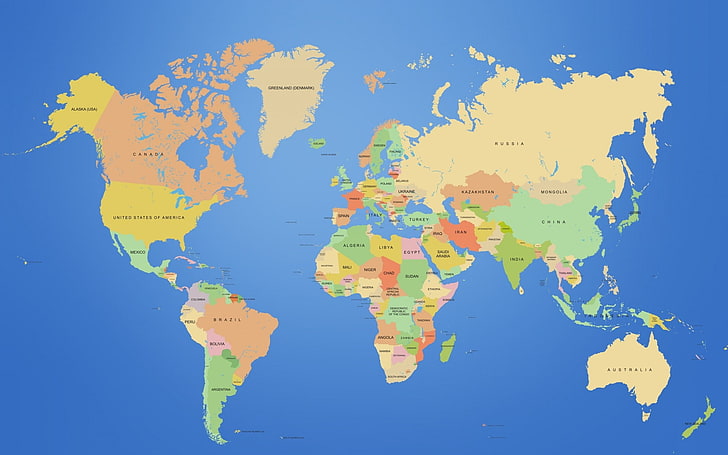
Tax exemption frameworks vary significantly across regions, shaped by distinct legal traditions, economic priorities, and interpretations of public benefit. While some jurisdictions adopt broad eligibility criteria to encourage charitable activities, others impose stringent conditions to prevent misuse or ensure alignment with national policy objectives. These differences extend to enforcement mechanisms, compliance burdens, and the sectors granted preferential treatment. Understanding these variations is critical for cross-border organizations, donors, and policymakers navigating an increasingly interconnected global tax landscape.Regional disparities in tax-exempt policies reflect broader socioeconomic and governance structures. For instance, common-law systems like those in North America prioritize case-law precedents and donor intent, whereas civil-law jurisdictions in Europe emphasize statutory clarity and administrative oversight. Meanwhile, emerging economies in Asia often balance rapid development needs with the promotion of social welfare through targeted exemptions. These distinctions influence not only the operational feasibility of tax-exempt entities but also their ability to access international funding and collaborate across borders.
Comparative Analysis of Tax-Exempt Frameworks
North America, Europe, and Asia exhibit fundamental differences in how tax-exempt status is defined, administered, and enforced. Below is a comparative overview of key aspects:Eligibility Criteria
North America (e.g., U.S., Canada) relies heavily on the public benefit test, where organizations must demonstrate a primary purpose of serving the public interest, often aligned with IRS Section 501(c)(3) or equivalent Canadian charitable status. Eligibility is further contingent on operational transparency, governance standards, and prohibition of private inurement. In contrast, European frameworks (e.g., UK, Germany) often require explicit charitable purpose as defined by statutory lists (e.g., UK Charities Act 2011) or constitutional provisions (e.g., Germany’s Abgabenordnung). Asian jurisdictions (e.g., Singapore, Japan) frequently tie exemptions to government-approved objectives, such as poverty alleviation or national development, with stricter scrutiny of foreign-funded initiatives. Enforcement Mechanisms
Enforcement in North America is decentralized, with primary oversight by tax authorities (e.g., IRS, CRA) supplemented by periodic audits and public disclosures (e.g., Form 990 in the U.S.). Europe adopts a more centralized approach, with dedicated charity regulators (e.g., UK Charity Commission, German Bundesamt für Finanzen) conducting proactive investigations and revoking status for non-compliance. Asian systems often integrate enforcement with broader tax administration, using risk-based assessments and collaboration with financial intelligence units to detect fraudulent claims. Public Benefit Tests
The U.S. applies a functional test, evaluating whether an organization’s activities directly advance public welfare, while the UK emphasizes object-based tests tied to statutory purposes (e.g., relief of poverty, advancement of education). Japan’s system incorporates a hybrid model, requiring entities to align with government-identified priorities (e.g., disaster relief, cultural preservation) while demonstrating measurable impact. These variations influence how organizations structure their missions, with North American entities often adopting broad, community-focused goals and European/Asian entities adhering to narrower, policy-driven objectives.
Tax-Exempt Benefits and Compliance Burdens by Sector
The following table compares tax reliefs and compliance requirements for key sectors across selected jurisdictions, illustrating how regional policies prioritize different social and economic goals.
| Sector |
Country/Region |
Tax Reliefs |
Compliance Burdens |
|---|
| Healthcare |
United States |
- Federal income tax exemption for nonprofit hospitals (IRS 501(c)(3)).
- State-level property tax exemptions for qualifying facilities.
- Exemption from payroll taxes for employee benefits (e.g., HSA contributions).
|
- Community benefit reporting requirements (e.g., IRS Form 990, Schedule H).
- Charity care standards (e.g., 20% of gross patient revenue for Medicare/Medicaid patients).
- Annual financial audits and governance disclosures.
|
| United Kingdom |
- 100% exemption from corporate income tax for charitable hospitals.
- VAT exemption on healthcare services provided directly to patients.
- Inheritance tax relief for donations to medical research charities.
|
- Registration with the Charity Commission and annual returns.
- Compliance with the Charity Governance Code and Public Benefit Requirement.
- Stricter reporting on financial hardship policies for NHS partnerships.
|
| Singapore |
- 100% income tax exemption for approved healthcare charities (e.g., Community Chest).
- GST exemption on healthcare services provided by registered institutions.
- Donor tax deductions (up to 25% of chargeable income).
|
- Approval by the Commissioner of Charities and annual reporting.
- Mandatory contributions to national healthcare funds (e.g., HealthEndowment Fund).
- Restrictions on foreign funding without government approval.
|
| Japan |
- Corporate tax exemption for nonprofit hospitals (up to 80% of income).
- Reduced property tax rates for medical facilities in underserved areas.
- Tax incentives for donations to designated medical research institutions.
|
- Registration with the Ministry of Health, Labour and Welfare and annual filings.
- Mandatory provision of low-cost healthcare services to vulnerable populations.
- Scrutiny of foreign collaborations under the Foreign Exchange and Foreign Trade Act.
|
| Research and Education |
United States |
- 501(c)(3) exemption for universities and research institutions.
- Tax-deductible donations and endowment tax advantages.
- State-level exemptions from sales tax on research equipment.
|
- IRS Form 990-T filing for unrelated business income.
- Compliance with Uniform Management of Public Funds Act for state-funded research.
- Disclosure of lobbying activities and political expenditures.
|
| Germany |
- Corporate tax exemption for gemeinnützige research institutions.
- VAT exemption on educational services and research outputs.
- Tax-deductible donations (up to 20% of taxable income).
|
- Registration with local Finanzamt and annual Körperschaftsteuererklärung.
- Compliance with Abgabenordnung (tax code) and Fördermittelrichtlinien (grant guidelines).
- Restrictions on commercialization of research without approval.
|
| India |
- 100% exemption from income tax for approved educational institutions (Section 10(23C)).
- 80% exemption for research organizations under Section 10(23B).
- Donor deductions (up to 50% of gross income for corporate donors).
|
- Registration with the Income Tax Department and annual Form 10B filings.
Case Studies and Practical Applications of Tax-Exempt Status
Tax-exempt status profoundly influences the operational, financial, and strategic decisions of nonprofit organizations, universities, hospitals, and other qualifying entities. Its implications extend beyond mere tax savings, shaping fundraising strategies, program expansion, and public trust. Real-world applications reveal how exemptions enable mission-driven growth while demanding rigorous compliance to preserve eligibility. This section examines high-profile case studies, compliance frameworks, and impact metrics to illustrate the tangible effects of tax-exempt status on organizational sustainability and societal contribution.
Case Study: Harvard University’s Tax-Exempt Advantages and Controversies
Harvard University, as one of the world’s most prestigious academic institutions, exemplifies how tax-exempt status fuels institutional expansion while inviting scrutiny over its financial practices. Founded in 1636, Harvard operates under Section 501(c)(3) of the U.S. Internal Revenue Code, granting it exemption from federal income tax and enabling it to solicit tax-deductible donations. This status has allowed Harvard to accumulate an endowment exceeding $53 billion (as of 2023), the largest of any university globally. The endowment’s growth is directly tied to tax-exempt investments, including restricted and unrestricted funds that generate annual returns of ~$2–3 billion, funding scholarships, research, and infrastructure.However, Harvard’s tax-exempt status has also sparked controversies, particularly regarding private benefits and public justification. Critics argue that elite universities like Harvard disproportionately benefit from tax exemptions while serving primarily affluent students. In 2019, the U.S. Department of Justice investigated whether Harvard’s admissions policies discriminated against Asian-American applicants—a case that indirectly highlighted broader debates about whether tax-exempt institutions prioritize public good over private interests. Additionally, Harvard’s real estate holdings, valued at over $10 billion, have faced scrutiny over whether they align with its nonprofit mission or serve as profit-generating assets. The university’s response underscores the dual-edged nature of tax-exempt status: it enables unparalleled resources for education and research but requires transparent governance to justify public trust. Harvard’s 2020–2025 Strategic Plan explicitly ties financial growth to increased access and diversity, demonstrating how tax-exempt entities must actively demonstrate social impact to mitigate controversies.
Scenario-Based Exercise: Evaluating Tax-Exempt Eligibility
Organizations seeking tax-exempt status must meet strict legal criteria, but gray areas often arise in practice. Below is a hypothetical scenario for readers to assess eligibility, identifying red flags and qualifying factors.Scenario: "Green Horizon Foundation"
A newly formed nonprofit aims to reduce plastic pollution in coastal communities. Its activities include:
- Partnering with local governments to organize beach cleanups (volunteer-based).
- Selling eco-friendly water bottles at a 20% markup to fund operations.
- Offering paid consulting services to corporations on sustainable packaging, with profits reinvested into cleanup programs.
- Lobbying state legislatures to ban single-use plastics (limited to 5% of annual budget).
Key Questions for Evaluation:
1. Primary Purpose Test: Does the organization’s core mission align with charitable, educational, religious, or scientific purposes under IRS 501(c)(3)?
- Qualifying Factor: Beach cleanups and advocacy for plastic bans clearly serve a public good.
- Red Flag: Selling water bottles and consulting services may blur the line between unrelated business income (UBI) and mission-driven activities.
2. Private Benefit Doctrine: Does the organization provide excessive benefits to insiders (e.g., founders, employees)?
- Qualifying Factor: Volunteer-based cleanups and reinvested profits suggest minimal private enrichment.
- Red Flag: 20% markup on water bottles could be seen as excessive commercial activity if profits exceed operational needs.
3. Excess Benefit Rule (IRS 4958): Are any individuals receiving disproportionate compensation for services rendered?
- Qualifying Factor: If consulting fees are market-rate and documented transparently, they may pass scrutiny.
- Red Flag: Lack of independent board oversight on fee structures could trigger IRS audits.
4. Lobbying Limits: Does political activity exceed 501(c)(3) restrictions (no more than 15% of total expenditures)?
- Qualifying Factor: 5% of the budget for lobbying is within limits.
- Red Flag: If lobbying expands without clear educational or advocacy justification, it risks losing exempt status.
Decision Framework:
- Likely Eligible: If the foundation strictly limits commercial activities to <20% of revenue, maintains transparent financial records, and ensures no private inurement (e.g., founders not profiting beyond reasonable salaries).
- High-Risk: If >30% of revenue comes from unrelated business (e.g., consulting), or if board members lack independence in financial decisions.
Step-by-Step Guide to Maintaining Tax-Exempt Compliance
Tax-exempt organizations must proactively manage compliance to avoid automatic revocation or intermediate sanctions. Below is a structured compliance checklist, prioritized by risk and frequency.1. Annual Filing Requirements
Tax-exempt entities must file Form 990-series returns annually, with penalties for late submissions. The IRS Exempt Organizations Select Check (a random audit tool) targets organizations with:
- Unrelated Business Income (UBI) exceeding $1,000.
- High executive compensation (e.g., CEO salaries >$1M).
- Failed compliance in prior audits.
| Entity Type | Required Filing | Deadline | Penalty for Late Filing |
|---|
| Public Charities | Form 990 | 15th day of 5th month | $20/day (max $10,000/year) |
| Private Foundations | Form 990-PF | 15th day of 5th month | $20/day (max $5,000/year) |
| Smaller Nonprofits | Form 990-EZ | 15th day of 5th month | $50/month (max $2,500/year) |
| Religious Organizations | Form 990-N (e-postcard) | N/A (exempt if <$50K revenue) | $50/month (max $2,500/year) if late |
2. Board Governance Checks
The IRS emphasizes board independence and oversight to prevent self-dealing. Key actions include:
- Annual Board Evaluations: Assess whether >50% of board members are independent (not related to the organization’s operations).
- Conflict-of-Interest Policies: Document whistleblower protections and disclosure requirements for board/employee conflicts.
- Compensation Transparency: Justify executive salaries against market benchmarks (e.g., using Guidestar or Charity Navigator data).
3. Audit Triggers and Red Flags
The IRS prioritizes audits for organizations exhibiting:
- Unreported UBI: Failure to file Form 990-T for taxable income from unrelated trades.
- Excessive Political Activity: Spending >15% of budget on lobbying without educational justification.
- Lack of Documentation: Missing records for grants, donations, or endowment investments.
- Sudden Financial Shifts: Spikes in revenue without corresponding program expansion (may indicate private inurement).
4. Proactive Compliance Strategies
- Quarterly Financial Reviews: Compare actual vs. budgeted UBI to avoid surprises.
- Third-Party Audits: Engage independent auditors to validate Form 990 accuracy.
- IRS Compliance Hotline: Use IRS EO Tax Exempt and Government Entities Division for pre-filing consultations.
Leveraging Tax-Exempt Status for Social Impact: Metrics and Strategies
Tax-exempt organizations redirect tax savings and donor contributions into programs that create measurable social impact. Below are key metrics and strategies used by high-performing exempt entities to maximize their mission-driven outcomes.1. Cost Savings Redirected to Programs
Tax-exempt status enables organizations to reinvest savings into core activities. For example:
- Hospitals: Nonprofit hospitals like Cedars-Sinai (U.S.) report ~$250 million/year in tax savings, which funds uncompensated care programs (e.g., free clinics for low-income patients).
- Universities: Stanford University allocates ~$1
Tax exemption is more than an absence of tax liability—it is a conditional privilege that balances fiscal policy with public good, demanding adherence to legal, ethical, and operational standards. Organizations that secure exempt status must navigate a labyrinth of eligibility tests, disclosure requirements, and evolving global regulations, where missteps can erode trust and financial stability. The comparative analysis of frameworks across regions reveals both opportunities and challenges, from streamlined compliance in some jurisdictions to heightened scrutiny in others. Ultimately, the responsible stewardship of tax-exempt status enables entities to amplify their missions, whether through expanded access to funding, enhanced transparency, or strategic reinvestment of savings. As regulatory landscapes evolve, stakeholders must remain vigilant, leveraging exemption as a catalyst for sustainable impact rather than a shield against accountability.
FAQ
Being tax exempt on a W-4 means you’re claiming no federal income tax withholding from your paycheck. This is typically for employees who won’t owe federal income tax (e.g., due to low income, tax-free wages, or specific exemptions like certain religious or nonprofit workers). However, you may still owe taxes when filing your annual return if your income exceeds exemption thresholds.
What does it mean to be tax deductible?
Tax deductible means an expense can be subtracted from your taxable income, reducing the amount of income subject to tax. Common examples include mortgage interest, charitable donations, or business expenses. Deductible items lower your tax bill but must meet IRS rules (e.g., documentation requirements).
What does it mean to file taxes exempt?
Filing taxes exempt means you’re claiming you’re not required to pay federal income tax due to specific circumstances, such as being under the standard deduction limit, having tax-free income, or qualifying for an exemption (e.g., dependents). It doesn’t mean you skip filing entirely—you may still need to submit a return (e.g., Form 1040EZ) to confirm.
Why would someone be tax exempt?
Someone may be tax exempt because their income is below the IRS filing threshold, they qualify for a specific exemption (e.g., religious groups like churches, nonprofit organizations, or certain government bonds), or their income is tax-free by law (e.g., municipal bond interest or some scholarships). Exemptions also apply to dependents claimed on another taxpayer’s return.
Why would I be tax exempt?
You might be tax exempt if your income is too low to owe federal taxes (e.g., under $13,850 for single filers in 2023), you’re a dependent claimed by someone else, or your income is tax-free (e.g., veterans’ benefits, life insurance proceeds, or certain state/local bond interest). Check IRS guidelines or consult a tax professional to confirm your eligibility.
What does it mean to be tax free?
Tax free means income or transactions are not subject to federal, state, or local taxes. Examples include Roth IRA withdrawals (after age 59½), municipal bond interest, and some gifts or inheritances. Tax-free status is granted by law for specific items, but rules vary (e.g., state taxes may still apply).
|
|

Leave a Comment
Comments are moderated before appearing. The data you submit is processed according to the Privacy Policy of Voltefac.