What Are Vikings Fearsome Explorers Warriors Legacy
Table of Contents
- Origins and Early History of the Vikings
- Key Events Marking the Viking Age
- Political Structures of Norway, Sweden, and Denmark During the Viking Age
- Viking Society and Daily Life
- Social Hierarchy and Economic Roles
- Religious Practices and Cosmology
- Daily Life: Diet, Clothing, and Housing
- Trade Networks and Economic Exchange
- Viking Exploration and Colonization
- Viking Expeditions to North America and the Discovery of Vinland
- Viking Settlements Beyond Scandinavia: Trade Hubs and Governance Centers
- Challenges Faced by Viking Explorers
- Viking Warfare and Military Tactics
- Military Structure and Elite Units
- Battle Formations and Tactical Adaptability
- Weapons, Armor, and Comparative Advantages
- Step-by-Step Reconstruction of a Viking Raid
- Viking Legacy and Cultural Impact
- Linguistic Contributions and Loanwords
- Influence on Art, Literature, and Mythology
- Technological and Ideological Exchange Through Trade
- Viking Presence in Global Folklore and Modern Media
- FAQ
- What were the Vikings called in their own language?
- What was the Viking race or ancestry?
- What was the ethnicity of the Vikings?
- What colors did Vikings associate with or use in their symbols and flags?
- What are Vikings called today?
- What religion did the Vikings practice?
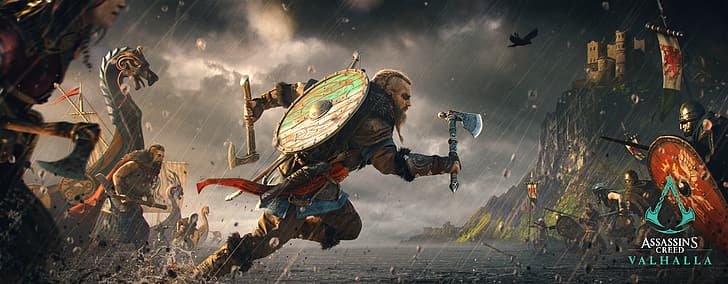
The Vikings emerged as one of history’s most formidable seafaring cultures, originating from Scandinavia between the late 8th and early 9th centuries. Far more than mere raiders, they were master navigators, traders, and settlers whose influence stretched from North America to the Byzantine Empire. Their societal structure, religious beliefs, and military prowess reshaped Europe’s political and cultural landscape, leaving an indelible mark on global civilization.
Rooted in the rugged terrains of Norway, Sweden, and Denmark, Viking society thrived on innovation—whether in shipbuilding, exploration, or warfare. Their longships, combining speed and durability, enabled expeditions across uncharted waters, while their raids on monasteries and coastal towns, like the infamous attack on Lindisfarne in 793, cemented their reputation as both feared and revered. Beyond conquest, the Vikings established enduring settlements, from Iceland’s isolated fjords to the bustling trade hubs of Kiev and Dublin, fostering economic and cultural exchanges that bridged continents.
Origins and Early History of the Vikings
The Vikings emerged as a dominant maritime and warrior culture during the late 8th to early 9th centuries, originating from the Scandinavian Peninsula—modern-day Norway, Sweden, and Denmark. Their early history is characterized by a blend of agricultural societies, political fragmentation, and a burgeoning seafaring tradition that facilitated both trade and raiding. The Viking Age (c. 793–1066 CE) marked a period of rapid expansion, cultural exchange, and technological innovation, reshaping Europe’s political and economic landscape. This era began with the first recorded Viking raid on the monastery at Lindisfarne in 793 CE, signaling the transition from localized Scandinavian activity to large-scale overseas ventures.The Vikings’ geographical roots lay in Scandinavia’s diverse environments: Norway’s fjords and mountainous terrain fostered shipbuilding and coastal raids, while Sweden’s vast forests and river systems supported agricultural surplus and trade networks. Denmark, with its fertile plains and strategic access to the Baltic and North Seas, became a hub for military campaigns and settlement. These regions were politically fragmented into petty kingdoms and chieftaincies, with power often concentrated in regional strongholds such as Uppåkra (Sweden), Trøndelag (Norway), and Lejre (Denmark). Social structures were hierarchical, with jarls (earls) and konungs (kings) ruling over free farmers (karls) and thralls (slaves), though centralized authority remained weak until the 10th century.
Key Events Marking the Viking Age
The Viking Age is defined by a series of pivotal events that expanded their influence from Scandinavia to Europe, the Mediterranean, and North America. Below is a chronological overview of significant milestones:-
793 CE: Raid on Lindisfarne
The first recorded Viking attack occurred when Norse raiders sacked the holy island of Lindisfarne in Northumbria, England. This event shattered the myth of Christian Europe’s invulnerability and marked the beginning of the Viking Age. The raid targeted monasteries, which were wealthy repositories of gold, silver, and religious artifacts, making them prime targets."The heathen men ravaged God’s church on the holy island of Lindisfarne with unspeakable savagery, killing the monks and carrying off plunder."
— Anglo-Saxon Chronicle -
800–850 CE: Expansion into the British Isles and Frankish Empire
Viking activity intensified in the British Isles, with raids on Dorestad (Netherlands, 834 CE) and the establishment of the Danelaw (886 CE) in England—a region under Danish law. Meanwhile, Frankish annals document Viking incursions along the Rhine and Loire rivers, culminating in the Battle of Brissarthe (841 CE), where a Frankish army was defeated by a Danish fleet. -
860–870 CE: The Great Heathen Army and the Fall of York
A massive Viking force, known as the Great Heathen Army, invaded East Anglia (865 CE) and later captured York (866 CE), establishing it as Jórvík, a key Norse settlement. This period saw the first recorded Viking winter camps in England, a tactic that would later define their military strategy. -
911 CE: Treaty of Saint-Clair-sur-Epte
The Frankish king Charles the Simple granted the Viking leader Rollo the region of Normandy (Northmannia) in exchange for his allegiance. This treaty marked the beginning of Viking assimilation into Western European feudal systems, leading to the formation of the Dukes of Normandy, whose descendants would later conquer England in 1066 CE. -
985–986 CE: Erik the Red’s Exile and Settlement of Greenland
Following a murder conviction in Norway, the Icelandic chieftain Erik the Red was exiled and discovered Greenland during his three-year voyage. He returned to Iceland, convinced settlers to accompany him, and established the first Norse colony in Greenland around 985 CE, naming it to attract settlers despite its harsh climate. -
1000 CE: Leif Erikson’s Voyage to Vinland (North America)
Erik the Red’s son, Leif Erikson, led an expedition from Greenland to Vinland (modern-day Newfoundland, Canada), establishing a short-lived settlement at L’Anse aux Meadows. This predates Columbus’s voyage by nearly 500 years, though the colony was abandoned due to conflicts with the indigenous Skrælings (likely the Thule people). -
1066 CE: Battle of Stamford Bridge and the End of the Viking Age
The Viking Age effectively concluded with the Norman Conquest of England at the Battle of Hastings (1066 CE). However, the last major Viking battle occurred earlier that year when Harald Hardrada, king of Norway, was defeated by King Harold Godwinson at Stamford Bridge (25 September 1066 CE), ending Norse ambitions in England.
Political Structures of Norway, Sweden, and Denmark During the Viking Age
Scandinavia’s political landscape during the Viking Age was fragmented, with power distributed among petty kings, chieftains, and regional assemblies. Below is a comparative table of the political systems in Norway, Sweden, and Denmark, highlighting ruling dynasties, notable leaders, and conflicts:| Aspect | Norway | Sweden | Denmark | ||||||||||||||||||||
|---|---|---|---|---|---|---|---|---|---|---|---|---|---|---|---|---|---|---|---|---|---|---|---|
| Political Organization | Divided into regional fylker (provinces) ruled by petty kings or jarls. The Thing (assembly) held local authority, but centralized power emerged under Harald Fairhair (c. 872–930 CE), who unified Norway through conquest. | Comprised of landskap (lands) with weak central authority. Power was shared among local chieftains and the Althing of Uppsala, a religious and political assembly. The Swedish Yngling Dynasty claimed divine descent but faced competition from regional rulers. | More centralized than Norway or Sweden, with Lejre as a key power center. The Skjoldungs (or Schildungs) dynasty, including legends like King Frodi and King Hrolf Kraki, dominated early Danish politics. By the 9th century, Gorm the Old (c. 936–958 CE) and his son Harald Bluetooth (c. 958–986 CE) consolidated power. | ||||||||||||||||||||
| Notable Ruling Dynasties |
|
|
The Arab traveler Ibn Fadlan (10th century) described Viking traders in the Volga region, noting their longships, beer consumption, and burial customs. Trade was not merely commercial but also cultural, spreading Norse artifacts, linguistic influences (e.g., Old Norse loanwords in English), and technological innovations like the sternpost rudder. The Vikings were not just raiders but astute merchants, leveraging their navigational skills to create a proto-global economy. Their trade networks integrated disparate regions, fostering cultural exchange and economic interdependence long before the rise of centralized states in Europe.
Viking Exploration and ColonizationThe Viking Age (c. 793–1066 AD) marked a period of unprecedented maritime expansion, as Norse seafarers ventured far beyond their Scandinavian homelands into uncharted territories. Their expeditions were driven by a combination of trade opportunities, resource acquisition, and the restless spirit of exploration. Viking explorers established settlements across Europe, Asia, and North America, leaving a lasting imprint on global history. These voyages were not merely acts of conquest but also cultural exchanges that facilitated the spread of technology, governance models, and trade networks. The technological ingenuity of Viking ships, coupled with advanced navigational techniques, enabled them to traverse vast oceans and establish enduring colonies in distant lands.The Viking Age witnessed the most ambitious maritime expeditions of the pre-modern era, with explorers navigating the North Atlantic, Mediterranean, and even reaching the Middle East. Their journeys were documented in sagas, runestones, and archaeological findings, providing insights into their routes, motivations, and challenges. Among their most remarkable achievements was the colonization of North America over half a millennium before Christopher Columbus, as well as the establishment of trade hubs like Dublin, York, and Kiev, which became pivotal in the early medieval economy. Viking Expeditions to North America and the Discovery of VinlandThe Norse exploration of North America represents one of the most extraordinary achievements of the Viking Age, predating European colonization by centuries. According to the Saga of the Greenlanders and the Saga of Erik the Red, the Icelandic explorer Leif Erikson (c. 970–1020 AD) led the first confirmed Viking expedition to the continent around 1000 AD. Erikson, son of Erik the Red, had previously established settlements in Greenland, and his voyages to the west were likely motivated by the search for timber, grapes, and other resources scarce in the harsh Arctic climate.Erikson’s landing site, later named Vinland (modern-day Newfoundland, Canada), was described in the sagas as a fertile land abundant in wild grapes, timber, and game. Archaeological evidence at L’Anse aux Meadows, a UNESCO World Heritage Site in northern Newfoundland, confirms Norse presence in North America. Excavations led by Helge Ingstad in the 1960s uncovered a Viking settlement featuring: While the settlement at L’Anse aux Meadows was short-lived—likely abandoned due to conflicts with indigenous peoples (possibly the Beothuk or Dorset Inuit)—it demonstrates the Vikings’ capability for long-distance colonization. Later expeditions, such as those led by Thorfinn Karlsefni (c. 1010 AD), established more permanent settlements, though these were eventually abandoned, possibly due to dwindling resources or hostility from local populations. Viking Settlements Beyond Scandinavia: Trade Hubs and Governance CentersViking explorers did not limit their expansions to North America; they established trade networks, colonies, and political strongholds across Europe and Eurasia, reshaping early medieval commerce and governance. These settlements often served as multicultural melting pots, where Norse warriors, merchants, and craftsmen interacted with local populations, fostering linguistic, religious, and economic exchanges.The following settlements were among the most significant in Viking expansion:
Challenges Faced by Viking ExplorersDespite their seafaringViking Warfare and Military TacticsThe Vikings of the late 8th to early 11th centuries were renowned for their martial prowess, adaptability, and psychological acumen in battle. Their military structure was highly decentralized yet cohesive, blending elite warrior units with specialized roles that maximized both combat effectiveness and morale. Unlike many contemporary European armies, which relied on feudal levies or standing professional forces, Viking warfare emphasized mobility, surprise, and the integration of cultural elements—such as poetic glorification (skaldic tradition)—into tactical execution. Their weapons, armor, and formations were designed for both offensive raids and defensive engagements, often exploiting the vulnerabilities of static or less disciplined foes. This section examines the organizational hierarchy, battlefield strategies, and comparative advantages of Viking warfare, alongside a reconstruction of their raid methodologies, which left a lasting imprint on European military history.Military Structure and Elite UnitsThe Viking military operated under a fluid command system, where leadership was often situational and tied to prestige rather than formal rank. At the core were the hird, elite warriors bound by oath to a king or chieftain, who provided personal service in exchange for land, plunder, or political influence. These warriors were typically the most skilled fighters, often selected for their prowess in both combat and leadership. Their role extended beyond mere soldiers; they served as shock troops in battle, breaking enemy formations to create openings for the broader force.The berserkers represented an extreme but highly effective subset of Viking warriors, known for their trance-like fury (berserkergang) induced by ritualistic practices, possibly involving hallucinogenic substances or adrenaline-fueled rage. Clad in bear or wolf pelts, they fought with a terrifying intensity, often disregarding wounds or fatigue. While their tactics were unpredictable, their presence alone could demoralize opponents, forcing them into disorganized retreat. Historical accounts, such as those in the Sagas, depict berserkers as nearly invincible in close combat, though their utility was limited by their inability to maintain cohesion in prolonged engagements. Complementing the warriors were the skalds, professional poets who composed verses (drápa) to immortalize battles, mock enemies, or rally troops. Their role was psychological, using rhythmic chanting and vivid imagery to heighten morale, shame adversaries, or even influence battlefield decisions. Skaldic poetry often included taunts directed at enemy leaders, undermining their authority and cohesion. For example, the skald Eyvindr Skáldaspill allegedly composed verses during the Battle of Hafrsfjord (c. 872), where Harald Fairhair’s forces defeated rival kings, cementing his legend through poetic propaganda. Battle Formations and Tactical AdaptabilityViking battle formations were characterized by their flexibility, combining defensive solidarity with opportunistic aggression. The most iconic was the shield wall (skjaldborg), a tightly packed line of warriors interlocking shields to form an impenetrable barrier. Each soldier held a round shield (typically 0.9–1.2 meters in diameter) at a 45-degree angle, overlapping edges to cover gaps. Behind the front rank, archers or spearmen provided depth, while flanks were protected by cavalry (where available) or dismounted warriors. The shield wall’s strength lay in its ability to absorb frontal assaults while delivering devastating counterattacks through coordinated spear or axe thrusts.A variation, the shield array (skjaldhryggur), was a looser formation used for mobility or encirclement tactics. Warriors maintained shield contact but allowed gaps for maneuverability, enabling them to exploit weaknesses in enemy lines. This formation was particularly effective in raids, where Vikings often feigned retreat to lure pursuers into ambushes. The keg array (kegur), a wedge-shaped formation, was used for breaking enemy lines, with the point of the wedge delivering concentrated force while the flanks protected against counterattacks. Viking tactics also emphasized deception. The use of skirmishers (lightly armed warriors) to harass and probe enemy positions was common, while feigned retreats (hildisvíss) were employed to draw opponents into exposed terrain or into the path of reinforcements. The Saga of Hervör describes how Viking warriors would deliberately abandon ships during raids, luring pursuers into shallow waters where they could be ambushed by hidden allies. Weapons, Armor, and Comparative AdvantagesViking weaponry was a blend of practicality and symbolic power, designed for both individual combat and coordinated assaults. The double-bit axe (døx) was a signature weapon, versatile for both throwing and close-quarters combat. Its broad head could crush shields or cleave armor, while its weight (often 1–2 kg) made it effective in melee. The sword (sverð), particularly the Ulberht or Ingeberg types, was prized for its quality, with some blades featuring high-carbon steel capable of penetrating mail. However, swords were expensive and primarily wielded by elite warriors, while common soldiers relied on spears (geir) or seaxes (short knives/swords).Armor varied by class. Elite warriors wore lamellar armor (overlapping iron or leather plates) or chainmail (byrnie), though the latter was rare due to its high cost and maintenance. Most soldiers wore leather jerkins (briggja) or boiled leather armor, which provided limited protection against slashing but little defense against piercing weapons. Helmets were often simple nasal or bowl types, with the iconic "horned helmets" being a later romanticization. Psychological intimidation played a role; the shield boss (a wooden or metal knob at the shield’s center) was sometimes adorned with animal imagery or runic inscriptions to instill fear. Compared to contemporary European armies: Viking siege methods differed from their contemporaries. Instead of prolonged blockades, they preferred rapid assaults, using battering rams (hramr), siege towers, and fire arrows to breach defenses quickly. The Saga of Egil describes how Vikings would set ships ablaze and roll them into fortified gates, creating fire barriers to force surrender. Psychological warfare was key; the destruction of religious sites (e.g., Lindisfarne in 793) was not just about plunder but about breaking the moral resolve of communities. Step-by-Step Reconstruction of a Viking RaidViking raids followed a cyclical pattern of reconnaissance, deception, assault, and retreat, designed to maximize plunder while minimizing casualties. Below is a structured breakdown of a typical raid, from preparation to withdrawal: |


Leave a Comment
Comments are moderated before appearing. The data you submit is processed according to the Privacy Policy of Voltefac.