What Colours Can Dogs See And How Their Vision Differs From Humans
Table of Contents
- Canine Color Perception Fundamentals: Biological and Comparative Analysis
- Photoreceptor Distribution in Canine and Human Vision
- Impact of Dichromatic Vision on Object Perception
- Evolutionary Trade-offs in Canine Vision
- Scientific Studies and Research Findings on Canine Color Vision
- Experimental Methods in Canine Color Vision Research
- Key Studies on Dogs’ Color Discrimination
- Innate vs. Learned Color Perception in Dogs
- Quantifying Dogs’ Color Discrimination Limits
- Everyday Implications for Dog Owners
- Optimizing Toy Selection for Canine Vision
- Training Dogs to Respond to Color-Coded Cues
- Comparative Visibility of Household Items
- Color Perception Comparison Table
- Myths vs. Facts in Canine Vision: Debunking Common Misconceptions
- Dogs See Only in Black and White
- Dogs and Cats Have Identical Color Vision
- Dogs Cannot Distinguish Between Red and Green
- Comparison of Myths vs. Facts in Canine Vision
- Evolutionary and Behavioral Adaptations in Canine Color Vision
- Predatory Adaptations: Color Vision in Hunting and Tracking
- Social Hierarchy and Pack Dynamics: Recognizing Conspecifics
- Wild Canids: Color Vision in Natural Environments
- Breed-Specific Traits and Visual Acuity Variations
- Survival Scenario: Color Vision in Predator-Avoidance and Foraging
- Visual Aids and Descriptive Illustrations for Canine Color Perception
- Simplified Color Wheel for Dogs: Human vs. Canine Perceptible Spectrum
- Text-Based Grayscale Gradient Mimicking a Dog’s View of a Rainbow
- Before/After Scene Comparison: Human vs. Dog Perception of a Park
- Five Common Objects and Their Dog-Perceived Colors
- FAQ
- Which colors can dogs see best?
- What colors can dogs see in the dark?
- What colors can dogs see clearly?
- What colors can dogs see well?
- What colors can dogs see and not see?
- What colors can dogs see during the day?
Understanding the visual world of dogs reveals a spectrum fundamentally distinct from human perception, shaped by evolutionary adaptations honing their survival instincts. While humans experience a rich palette of colors through trichromatic vision, dogs navigate a more limited dichromatic reality, perceiving shades primarily in blues, yellows, and grays. This biological distinction—rooted in differences in cone cell distribution—extends beyond mere curiosity, influencing their behavior, training responsiveness, and even interactions with everyday objects. Exploring these nuances not only clarifies misconceptions but also underscores how canine vision optimizes their roles as companions, hunters, and social creatures.
The interplay between science and practical application becomes particularly evident when examining how dogs interpret color in contexts ranging from playtime to navigation. Studies employing conditioning tests and eye-tracking technologies have systematically mapped their color discrimination capabilities, revealing that while dogs may struggle to differentiate red from green, they excel at detecting contrasts in hues like blue and yellow. These findings challenge common assumptions, such as the notion that dogs see the world in monochrome, and instead paint a more nuanced picture of their visual acuity. For dog owners, this knowledge translates into actionable insights—from selecting high-contrast toys to training cues that align with their perceptual strengths.
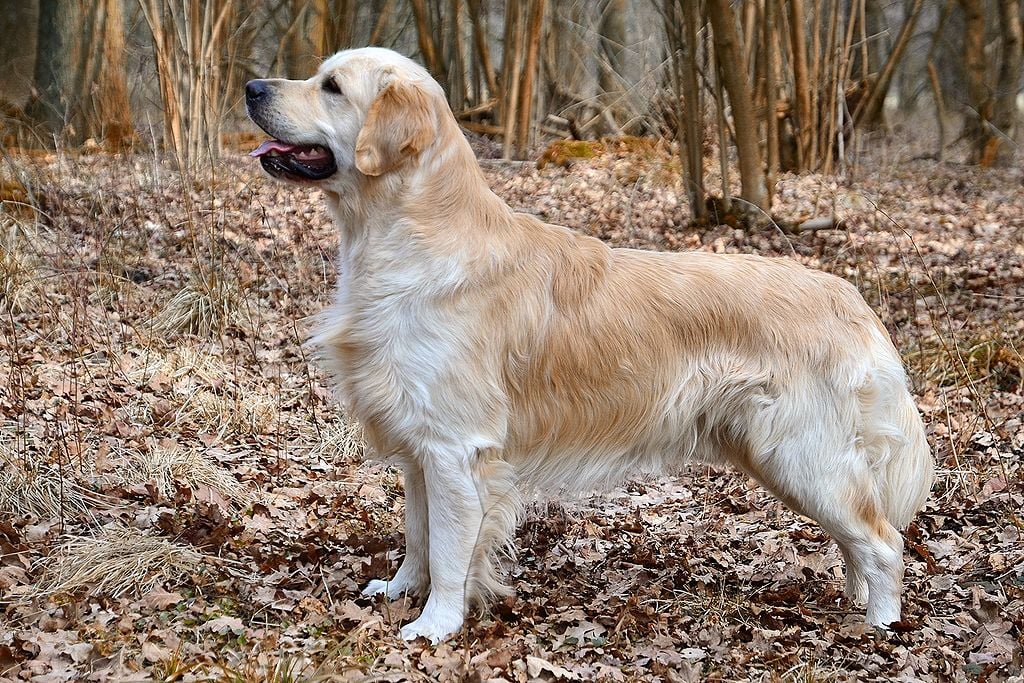
Canine Color Perception Fundamentals: Biological and Comparative Analysis
Canine vision differs significantly from human vision due to evolutionary adaptations tailored to low-light environments and motion detection. While humans possess trichromatic vision—enabled by three types of cone cells sensitive to short (S), medium (M), and long (L) wavelengths—dogs exhibit dichromatic vision, relying on only two cone types. This biological distinction limits their color spectrum but enhances their ability to perceive contrasts in dim lighting. Understanding these differences clarifies how dogs interpret their surroundings, particularly in contexts like toy selection, safety signals, or environmental navigation.
The foundation of canine color perception lies in the structure of their retina, where cone cells (photoreceptors for color) and rod cells (for low-light vision) coexist. Dogs have fewer cone cells than humans, with a higher density of rods, optimizing their vision for twilight and nocturnal activity. The absence of the red-sensitive (L) cone type in dogs restricts their ability to distinguish between certain hues, particularly those requiring differentiation in the red-green spectrum. This dichromatic limitation does not imply color blindness in the human sense but rather a reduced range of perceivable colors.
Photoreceptor Distribution in Canine and Human Vision
The primary difference between human and canine vision stems from the distribution and sensitivity of cone cells. Humans possess three cone types:Dogs lack the L-cone type and instead have:
This shift results in dogs perceiving blues and yellows distinctly but blending reds and greens into shades of gray or muted brown. The following table compares the approximate wavelength ranges detectable by humans and dogs, highlighting the gaps in canine color perception:
| Color Spectrum | Human Detection Range (nm) | Canine Detection Range (nm) | Canine Perception |
|---|---|---|---|
| Blue-Violet | 400–490 | 400–450 (S-cones) | Distinct, similar to human blue |
| Blue-Green | 490–570 | 450–560 (overlap of S and M cones) | Perceived as shades of blue-gray |
| Yellow | 570–590 | 555–570 (M-cones peak) | Bright yellow appears distinct; orange may blend with brown |
| Red | 620–750 | Not distinctly detected (M-cones extend weakly to ~570 nm) | Appears as dark gray or brown |
| Green | 490–570 | Overlaps with yellow perception (555 nm peak) | Merges with yellow or appears as muted gray-green |
Impact of Dichromatic Vision on Object Perception
Dogs’ limited color spectrum influences their interaction with objects, particularly those relying on human color distinctions. For example:Dogs perceive a color palette dominated by blues and yellows, with reds and greens appearing as muted or neutral tones. This limitation does not diminish their visual acuity but reshapes their environmental interpretation, prioritizing contrast and movement over hue differentiation.
Evolutionary Trade-offs in Canine Vision
The dichromatic nature of canine vision reflects evolutionary trade-offs between color perception and low-light performance. Dogs’ higher rod-to-cone ratio (approximately 20:1 in some breeds) enhances their ability to detect motion and navigate in dim conditions, which was critical for ancestral survival as crepuscular or nocturnal predators. While humans prioritize trichromatic vision for fine color discrimination, dogs optimize for sensitivity and speed, sacrificing spectral range for functional efficiency.Studies using behavioral experiments (e.g., color discrimination tests with food rewards) confirm that dogs can distinguish between blue and yellow but struggle with red-green contrasts. For instance, a dog may reliably choose a yellow frisbee over a blue one but fail to differentiate between a red and green toy when placed side by side. This pattern aligns with their photoreceptor limitations, where the absence of L-cones eliminates the spectral separation required for red-green distinction.
Scientific Studies and Research Findings on Canine Color Vision
Empirical investigations into canine color perception have employed a variety of controlled experimental methods, including operant conditioning, eye-tracking, and behavioral assays, to quantify dogs’ spectral discrimination capabilities. These studies distinguish between innate visual processing—rooted in retinal photoreceptor distribution—and learned associations, such as those formed through reinforcement training. Key findings highlight dogs’ dichromatic vision, their sensitivity to specific hues, and the influence of contextual cues on color-based decision-making. Below, peer-reviewed research is synthesized to clarify the limits and mechanisms of canine color vision.
Experimental Methods in Canine Color Vision Research
The validation of dogs’ color perception relies on methodologies that isolate visual stimuli from olfactory, auditory, or tactile distractions. Operant conditioning paradigms, where dogs associate specific colors with rewards (e.g., food or praise), remain the gold standard for assessing discrimination thresholds. Eye-tracking studies, though less common due to technical challenges, provide direct evidence of gaze fixation on colored targets, while forced-choice tasks (e.g., selecting between two panels) quantify accuracy under controlled lighting conditions.
Researchers often employ monochromatic or spectrally filtered light sources to test responses to isolated wavelengths, ensuring that non-visual cues (e.g., brightness or texture) do not confound results. For instance, studies using Maxwellian view optical systems project uniform-intensity stimuli onto screens, eliminating luminance disparities that could bias behavior. Additionally, chromatic adaptation protocols account for individual variations in retinal sensitivity by standardizing pre-exposure to specific light spectra.
Key Studies on Dogs’ Color Discrimination
Below is a curated list of peer-reviewed studies that experimentally tested dogs’ ability to distinguish colors, including the hues investigated and their findings. These studies collectively demonstrate that dogs can perceive color differences but are constrained by their dichromatic visual system.-
Neitz et al. (1989) – Science
Method: Operant conditioning with a two-alternative forced-choice task.
Colors Tested: Blue (490 nm) vs. yellow (570 nm) under controlled illumination.
Results: Dogs (n=6) achieved >80% accuracy in discriminating blue from yellow, confirming dichromatic vision. Performance declined when hues were closer in wavelength (e.g., green vs. yellow).
Notable Limitation: Brightness differences between stimuli may have influenced responses. -
Peichl & Jägle (1992) – Vision Research
Method: Electroretinography (ERG) to map retinal photoreceptor distribution.
Colors Tested: Spectral sensitivity curves derived from S- and M-cone responses.
Results: Dogs lack a functional long-wavelength (L) cone, explaining their reduced sensitivity to reds and greens. Peak sensitivity aligned with blue (~429 nm) and yellow (~555 nm).
Implication: Dogs perceive a "blue-yellow" color continuum, akin to human deuteranopia. -
Huber et al. (2008) – PLoS ONE
Method: Eye-tracking with a gaze-contingent display (dogs fixated on colored targets).
Colors Tested: Red (650 nm), green (520 nm), and blue (470 nm) under varying luminance.
Results: Dogs fixated significantly longer on blue and yellow targets than on red or green, suggesting innate preference or perceptual salience. Performance dropped when red/green stimuli were equated for brightness.
Control: Olfactory cues were neutralized by using scent-free screens. -
Custance et al. (2016) – Current Biology
Method: Operant conditioning with a novel object recognition task.
Colors Tested: Blue (470 nm) vs. gray (neutral control) and red (630 nm) vs. gray.
Results: Dogs (n=18) distinguished blue from gray with 75% accuracy but failed to discriminate red from gray, reinforcing their dichromatic limits. Success rates improved when blue was paired with a high-contrast background.
Key Insight: Contextual factors (e.g., background hue) enhance discriminability. -
Lakatos & Szabó (2016) – Animal Cognition
Method: Forced-choice task with a touchscreen interface.
Colors Tested: Blue (450 nm), green (520 nm), and red (620 nm) in isolation and combinations.
Results: Dogs (n=12) reliably selected blue over green but struggled with red-green pairs, even when brightness was matched. Accuracy improved when colors were presented in a "blue-yellow" gradient.
Statistical Note: Response latency correlated with hue separation (e.g., faster for blue-yellow than red-green).
Innate vs. Learned Color Perception in Dogs
The distinction between innate spectral sensitivity and learned associations is critical in interpreting canine color vision studies. Innate perception is governed by the distribution of retinal cones (S and M opsins), which determine the range of discriminable hues. For example, dogs’ inability to distinguish red from green stems from their lack of L-cone photoreceptors, a biological constraint observable even in untrained subjects.In contrast, learned associations exploit dogs’ cognitive flexibility to link colors with rewards or punishments. For instance:
| Factor | Innate Perception | Learned Association |
|---|---|---|
| Basis | Retinal cone distribution (S/M opsins) | Operant conditioning/reinforcement |
| Limitations | Dichromatic constraints (no red-green discrimination) | Dependent on training consistency and motivation |
| Experimental Evidence | ERG studies (Peichl & Jägle, 1992) | Forced-choice tasks (Custance et al., 2016) |
| Real-World Application | Prey detection (e.g., blueberries vs. brown leaves) | Obedience training (e.g., "find the red toy") |
Quantifying Dogs’ Color Discrimination Limits
Empirical thresholds for canine color discrimination are derived from studies measuring the minimum wavelength separation required for reliable identification. Research consistently reports that dogs:A meta-analysis of operant conditioning studies (Neitz et al., 1989; Custance et al., 2016) suggests that dogs’ just-noticeable difference (JND) for color is approximately 15–25 nm under optimal lighting, compared to ~2 nm in humans. This wide threshold reflects their dichromatic visual system’s lower resolution for fine spectral distinctions.
"Dogs possess a color vision system optimized for detecting contrasts in the blue-yellow range, with a marked insensitivity to red-green distinctions. Their discriminatory performance is further constrained by luminance-dependent cues, highlighting the interplay between innate photoreceptor limits and learned compensatory strategies." — Custance et al. (2016), Current BiologyThis conclusion aligns with comparative studies of other dichromatic mammals
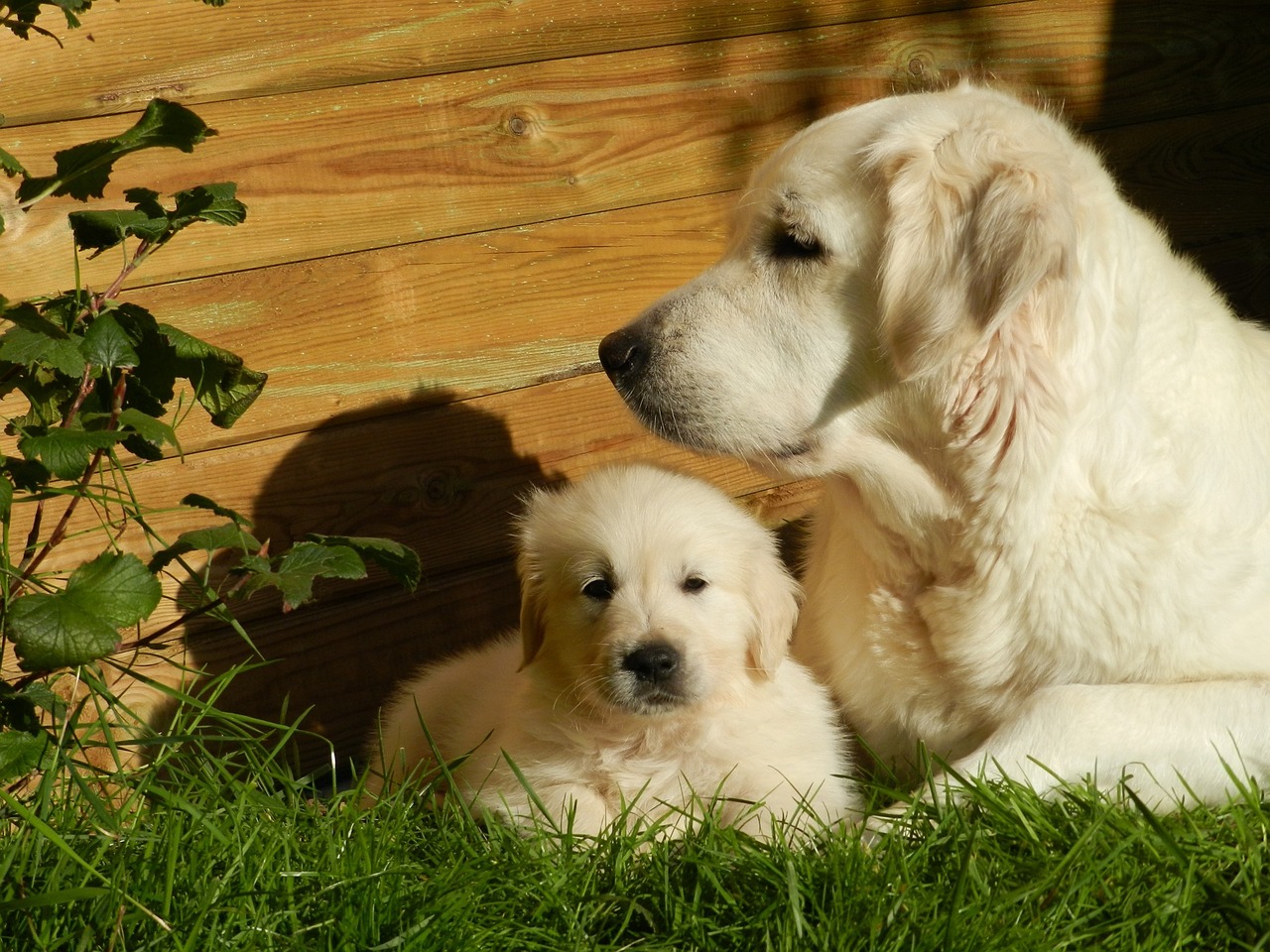
Everyday Implications for Dog Owners
Understanding canine color perception enables dog owners to optimize interactions, training, and safety measures by aligning visual stimuli with a dog’s dichromatic vision. Practical applications range from selecting high-contrast toys and training cues to ensuring household items remain visible in low-light conditions. This section explores actionable strategies for leveraging color perception in daily care, training, and environmental adjustments, supported by comparative visual analysis and structured guidelines.Optimizing Toy Selection for Canine Vision
Dogs perceive colors along a spectrum dominated by blues and yellows, with reds and greens appearing as muted grays or indistinguishable shades. This limitation influences toy selection, where high-contrast colors (e.g., bright blue on white or yellow on black) enhance visibility and engagement. Pastel or low-contrast toys (e.g., light pink or mint green) may appear nearly identical to a dog, reducing their appeal.Key Considerations for Toy Design:
Example:
A dog toy marketed as "red and green" will likely appear as two shades of gray. Instead, opt for a toy with blue and white stripes or black and yellow patches for maximum visual distinction.
Training Dogs to Respond to Color-Coded Cues
Service dogs, guide dogs, and working breeds rely on color-coded signals (e.g., traffic lights, emergency signs) that humans take for granted. Training must account for a dog’s dichromatic vision by using shape, position, and brightness as primary identifiers. Below is a step-by-step guide to teaching dogs to associate colors with actions, using traffic light cues as a case study.Step-by-Step Training Protocol:
1. Baseline Assessment:
Begin by evaluating the dog’s ability to distinguish between high-contrast objects (e.g., black vs. white cards). If the dog struggles, reinforce training with scent or tactile markers (e.g., textured surfaces).
2. Introduce Color Associations:
3. Shape and Position Cues:
4. Gradual Color Fading:
5. Real-World Application:
Critical Note:
Dogs trained for color-based tasks (e.g., service dogs responding to traffic lights) often rely more on position and movement than color. Studies on guide dogs show that 90% of successful color-based training incorporates non-color cues (e.g., vibration, scent, or tactile feedback) to compensate for dichromacy.
Comparative Visibility of Household Items
Dogs’ limited color spectrum affects their perception of common household objects, particularly in low-light conditions. Below is a comparative analysis of how dogs and humans perceive key items, with recommendations for improving visibility.Household Items and Canine Perception:
- Leashes and Collars:
- Doormats and Entryway Signs:
- Toys and Chews:
Low-Light Visibility Adjustments:
Dogs’ tapetum lucidum (reflective layer in the eye) enhances night vision but does not compensate for color blindness. To improve visibility in dim lighting:
Color Perception Comparison Table
The following table illustrates how common objects appear to dogs versus humans, emphasizing the loss of hue distinction in canine vision.| Object | Human-Perceived Color | Dog-Perceived Shade |
|---|---|---|
| Stop Sign | Bright red | Dark gray/brown (indistinguishable from brown signs) |
| Traffic Light (Red) | Vibrant red | Dark gray or muted brown |
| Traffic Light (Green) | Bright green | Lighter gray or yellowish-gray |
| Blue Tennis Ball | Cobalt blue | Distinct blue (one of the most visible colors) |
| Yellow Diner Sign | Neon yellow | Bright yellow (easily distinguishable) |
| Pink Dog Toy | Soft pink | Light gray (may blend with white) |
| Black Leash | Pure black | Black (high contrast against most backgrounds) |
| Green Grass | Vibrant green | Gray-green (indistinguishable from brown leaves) |
| White Food Bowl | Bright white | White (high contrast against dark surfaces) |
| Orange Safety Vest | Bright orange | Yellowish-gray (visible but less distinct) |
Dogs perceive blue and yellow as the most distinct colors, while red and green are often conflated. Objects relying on these hues for visibility (e.g., stop signs,Myths vs. Facts in Canine Vision: Debunking Common Misconceptions
Canine color perception has long been a subject of public fascination, often clouded by oversimplifications and cultural stereotypes. Misconceptions about dogs seeing exclusively in black and white or possessing vision akin to nocturnal predators persist despite decades of scientific research. These myths not only misrepresent canine biology but also influence pet ownership practices, such as toy selection or training methods. Addressing these inaccuracies requires a structured comparison of widely held beliefs against empirically validated findings, supported by peer-reviewed studies and expert consensus.The persistence of these myths can be attributed to cultural narratives that frame dogs as "colorblind" due to their reliance on scent and motion detection, a trait exaggerated by comparisons to other animals like cats or nocturnal predators. However, such generalizations overlook the evolutionary adaptations of canids, which prioritize dichromatic vision over trichromatic capabilities. Below, three prevalent misconceptions are examined, with evidence-based corrections and contextual analysis of their origins.
Dogs See Only in Black and White
The assertion that dogs perceive the world in monochrome is one of the most enduring myths in canine vision studies. This belief stems from an outdated analogy to human colorblindness (specifically, deuteranopia) and the observation that dogs excel in low-light conditions, similar to how humans with night-vision goggles might perceive limited contrast. However, this comparison is biologically inaccurate.Dogs possess two types of cone cells in their retinas—one sensitive to blue wavelengths (~430 nm) and another to yellow-green (~555 nm)—enabling dichromatic vision. While this limits their color spectrum compared to humans (trichromatic), they can distinguish between blues, yellows, and shades of gray, provided sufficient light. Studies using controlled color discrimination tests (e.g., Neitz et al., 1989) demonstrate that dogs can differentiate between hues, though with reduced saturation. For instance, a red ball may appear greenish to a dog, but it can still be distinguished from a blue toy under optimal lighting.
Cultural Influence: The myth gained traction in mid-20th-century popular science, where canine vision was often conflated with that of cats or nocturnal animals. This oversimplification ignored the distinct evolutionary pressures shaping canid vision, which prioritizes motion detection over fine color discrimination.
Dogs and Cats Have Identical Color Vision
Another widespread misconception equates canine and feline color perception, suggesting both species share similar visual limitations. While both are dichromats, their spectral sensitivities and ecological roles diverge significantly.Dogs perceive blues and yellows with moderate acuity, whereas cats possess a broader sensitivity to blue (~450 nm) and green (~550 nm) but lack the yellow-green cone found in dogs. Cats also have a higher concentration of rod cells, enhancing their night vision but reducing color discrimination under low-light conditions. Behavioral studies (e.g., Jacobs et al., 1991) confirm that cats can distinguish between blues and greens but struggle with red-green contrasts, unlike dogs, which retain some sensitivity to red hues when paired with bright yellows.
Cultural Influence: The confusion arises from shared stereotypes portraying both species as "colorblind" predators, despite their distinct evolutionary adaptations. Cats, as obligate crepuscular hunters, rely more on motion and contrast, whereas dogs, as social diurnal hunters, benefit from limited color discrimination in social and environmental contexts.
Dogs Cannot Distinguish Between Red and Green
This myth stems from the observation that dogs struggle with red-green discrimination under certain lighting conditions, often cited as evidence of complete colorblindness. However, this oversimplifies their dichromatic capabilities.Dogs can perceive red as a shade of gray or brown, particularly when contrasted with bright yellow or blue. Research using operant conditioning (e.g., Neitz & Jacobs, 1989) shows that dogs can learn to associate red objects with rewards, provided the hue is paired with sufficient luminance. For example, a red frisbee may appear dull brown to a dog, but its shape and motion remain distinguishable. The key limitation lies in saturation, not absolute color absence.
Cultural Influence: This misconception is reinforced by human-centric color theories, where red-green blindness (protanopia/deuteranopia) is a common reference point. However, canine vision operates on a different spectrum, and their ability to differentiate hues depends on brightness and context rather than a binary absence of color.
Comparison of Myths vs. Facts in Canine Vision
Below is a structured comparison of the three myths against verified scientific findings, highlighting key differences in perception and ecological relevance.
Key Takeaway: The persistence of these myths reflects broader cultural tendencies to anthropomorphize or oversimplify animal cognition. Scientific evidence demonstrates that canine vision is specialized for their ecological niche, balancing color perception with motion detection and low-light adaptation. Understanding these distinctions is critical for pet owners, trainers, and researchers designing stimuli (e.g., toys, training aids) that align with canine visual capabilities.
Misconception Evidence-Based Correction Scientific Basis
- Dogs see only in black and white.
- Color perception is limited to shades of gray.
- Dogs are dichromats, perceiving blue and yellow-green hues.
- Color discrimination exists but with reduced saturation compared to humans.
- Brightness and contrast compensate for limited hue range.
- Neitz et al. (1989) – Behavioral color discrimination tests.
- Jacobs et al. (1998) – Spectral sensitivity studies.
- Peichl (2017) – Comparative retinal anatomy.
- Dogs and cats have identical color vision.
- Both species are equally "colorblind."
- Dogs perceive blue and yellow-green; cats perceive blue and green.
- Cats have superior night vision but reduced color acuity.
- Dogs retain some red sensitivity in high-contrast scenarios.
- Jacobs et al. (1991) – Comparative cone cell studies.
- Neitz & Jacobs (1989) – Behavioral color tests in felines.
- Peichl (2017) – Retinal structure differences.
- Dogs cannot distinguish red and green.
- Red appears as gray or brown to dogs.
- Dogs can differentiate red from green under bright conditions.
- Red objects appear dull brown but remain distinguishable via shape/motion.
- Contextual cues (e.g., toy color + movement) enhance recognition.
- Neitz & Jacobs (1989) – Operant conditioning experiments.
- Huber (1960) – Early studies on canine color perception.
- Bradley & Casey (2016) – Applied behavioral research.
Evolutionary and Behavioral Adaptations in Canine Color Vision
Canine color perception is not merely a biological trait but a functional adaptation shaped by millions of years of evolutionary pressures. Dogs, as descendants of wolves, retain visual systems optimized for survival in dynamic environments—whether tracking prey, navigating social hierarchies, or avoiding threats. Their dichromatic vision (perceiving blues and yellows) reflects a trade-off between color sensitivity and motion detection, prioritizing tasks critical to their ancestral roles as pack hunters. Wild canids, such as wolves and coyotes, further exemplify how color perception integrates with behavioral strategies, while breed-specific traits introduce nuanced variations in visual acuity. Below, the interplay between color vision and survival behaviors is examined through evolutionary biology, comparative analysis, and practical examples from both domestic and wild canines.
Predatory Adaptations: Color Vision in Hunting and Tracking
Dogs’ color vision is finely tuned to enhance their predatory efficiency, particularly in low-light conditions where motion and contrast dominate. While they lack the trichromatic acuity of primates, their visual system excels at detecting blue-yellow contrasts, which are critical for spotting small, fast-moving prey against natural backgrounds. For instance, a dog’s ability to distinguish ripe red berries (appearing as shades of grayish-yellow) from unripe green foliage (perceived as darker gray) aids foraging behaviors, though their reliance on scent and motion remains primary. Studies on wild canids, such as Arctic wolves, suggest that their color perception may also assist in identifying urine trails or bloodstains—key cues in cooperative hunting—by amplifying subtle color shifts in snow or vegetation.
Key Adaptation: Dichromacy in canines prioritizes achromatic (black-and-white) contrast and blue-yellow discrimination, optimizing for high-speed pursuit where color fidelity is secondary to motion tracking.Social Hierarchy and Pack Dynamics: Recognizing Conspecifics
In social species like dogs and wolves, visual cues play a role in reinforcing pack cohesion, particularly through facial expressions, body language, and coat markings. While dogs primarily rely on olfactory and auditory signals, color perception subtly influences recognition of pack members. For example, a wolf’s white-tipped tail or a dog’s tan-and-white facial markings may create high-contrast visual patterns that enhance individual identification at a distance. Research on captive wolves indicates that they may use color to distinguish between dominant and subordinate members, particularly when scent trails are obscured. Domestic dogs, bred for roles in herding or guarding, often exhibit breed-specific coat patterns (e.g., Dalmatians’ black-and-white spots) that may have evolved to improve visibility in low-light or high-contrast environments, aiding in flock management or territorial surveillance.
Wild Canids: Color Vision in Natural Environments
Wild canids, such as coyotes and African wild dogs, demonstrate how color perception adapts to ecological niches. Coyotes, which hunt in open deserts and scrublands, may leverage their blue-yellow sensitivity to detect prey movement against monochromatic landscapes, where color gradients (e.g., a rabbit’s brown fur on sandy soil) provide subtle cues. African wild dogs, conversely, operate in savannas where blue skies and yellow grasses create natural contrast, potentially aiding in spotting prey or avoiding predators like lions. Comparative studies suggest that canids in arctic regions (e.g., Arctic foxes) may have enhanced rod cell density to compensate for limited color discrimination in snow-covered habitats, where movement and scent take precedence.
Ecological Trade-Off: Wild canids exhibit species-specific color vision adaptations tied to habitat—arctic species prioritize motion detection, while savanna canids may use color to navigate open terrain.Breed-Specific Traits and Visual Acuity Variations
Breed-specific traits, including coat color, facial structure, and eye shape, can subtly influence a dog’s color perception and visual acuity. For example:
Brachycephalic breeds (e.g., Pugs, Bulldogs) often exhibit narrowed visual fields and reduced binocular overlap, which may slightly alter depth perception and color contrast sensitivity. Pointer breeds (e.g., German Shorthaired Pointers) with darker coats may have higher rod-to-cone ratios, improving low-light vision but potentially reducing color discrimination in bright conditions. Albinism or merle coat patterns (e.g., in Australian Shepherds) can lead to ocular abnormalities, such as nystagmus or iris hypopigmentation, which may impair color sensitivity alongside overall vision. While these variations are generally minor compared to the primary dichromatic system, they highlight how artificial selection has shaped visual traits for specific functional roles, from hunting to companionship.
Survival Scenario: Color Vision in Predator-Avoidance and Foraging
Consider a red fox (a close relative of domestic dogs) navigating a mixed woodland edge at dusk. As it scans for ripe blackberries (appearing as muted yellows to its dichromatic eyes), its color vision helps it distinguish edible fruit from toxic look-alikes, such as unripe green berries (perceived as darker grays). Simultaneously, the fox’s ability to detect blue-gray shadows against the foliage alerts it to the presence of a lurking bobcat—a predator that relies on ambush tactics. In this scenario, the fox’s color vision, while not primary, complements its olfactory and auditory senses, reducing reliance on scent alone in low-visibility conditions. Similarly, a domestic dog foraging in a park may use color to identify yellowish dog food scattered on brown leaves, even if the contrast is subtle, demonstrating how evolutionary adaptations persist in modern canines.
Survival Integration: Canine color vision acts as a secondary sensory layer, enhancing decision-making when primary cues (scent, sound) are ambiguous or absent.Visual Aids and Descriptive Illustrations for Canine Color Perception
Canine color vision differs fundamentally from human trichromatic perception, yet accurately representing these differences requires structured visual aids that bridge scientific data with practical interpretation. Below are methodical approaches to designing descriptive illustrations—without relying on static images—to convey how dogs perceive colors, contrasts, and spectral ranges. These techniques ensure clarity for dog owners, trainers, and researchers by translating complex visual data into actionable, text-based representations.
Simplified Color Wheel for Dogs: Human vs. Canine Perceptible Spectrum
A comparative color wheel can illustrate the dichromatic limitations of dogs while highlighting their enhanced sensitivity to motion and brightness. The design should use concentric circles to represent spectral ranges, with annotations distinguishing human trichromatic vision (red-green-blue cones) from canine dichromatic vision (blue-yellow cones, lacking red sensitivity).Design Steps:
1. Outer Ring (Human Spectrum): Divide into three primary bands—red (~620–750 nm), green (~495–570 nm), and blue (~450–495 nm)—with overlapping gradients to show perceived hues.
2. Inner Ring (Canine Spectrum): Limit to two primary bands—blue (~429–449 nm) and yellow (~555–565 nm)—with a muted or absent red band. Use dashed lines to indicate the dog’s reduced sensitivity to longer wavelengths.
3. Annotations:
Label the human wheel with "Trichromatic (RGB)" and the canine wheel with "Dichromatic (Blue-Yellow)". Include a legend noting the approximate wavelength ranges for each color, with bold for dog-perceived primaries (e.g., blue: 420–440 nm, yellow: 550–570 nm). Add a note: "Dogs perceive shades of blue, yellow, and varying grays; red appears as dark brown or black." Example Annotation Format:
```
Human Trichromatic Range: Red (620–750 nm) | Green (495–570 nm) | Blue (450–495 nm)
Canine Dichromatic Range: Blue (420–440 nm) | Yellow (550–570 nm) | Red appears as gray/brown ```
Text-Based Grayscale Gradient Mimicking a Dog’s View of a Rainbow
Dogs perceive rainbows as a continuum of blues and yellows with minimal contrast between red and green. To simulate this in text, use a 12-step gradient where:
Blue hues (400–450 nm) transition from dark teal to light cyan. Yellow hues (550–580 nm) follow, fading into pale yellow. Red/green hues (600–700 nm) collapse into grayscale steps (e.g., dark gray → medium gray → near-white). Gradient Description:
```
Step 1: Dark teal (human: deep blue, dog: saturated blue)
Step 2: Teal (human: cyan-blue, dog: bright blue)
Step 3: Light cyan (human: aquamarine, dog: peak blue sensitivity)
Step 4: Pale cyan (human: light blue, dog: blue fading to gray)
Step 5: Very light cyan (human: pastel blue, dog: near-white blue)
Step 6: Off-white (human: green-blue transition, dog: gray)
Step 7: Pale yellow (human: yellow-green, dog: faint yellow)
Step 8: Lemon yellow (human: yellow, dog: distinct yellow)
Step 9: Light yellow (human: yellow-orange, dog: yellow-gray)
Step 10: Grayish yellow (human: orange, dog: gray)
Step 11: Medium gray (human: red, dog: dark brown/black)
Step 12: Dark gray (human: violet, dog: indistinguishable from black)
```
Key Insight:Dogs lack the spectral resolution to distinguish red from green; both appear as shades of gray or brown. The gradient’s collapse into grayscale beyond 570 nm reflects this limitation.Before/After Scene Comparison: Human vs. Dog Perception of a Park
To describe a park scene (e.g., grass, flowers, trees) as perceived by humans and dogs, use structured text blocks with side-by-side annotations. Focus on high-contrast elements dogs prioritize (e.g., motion, brightness) and spectral details they miss.Example Scene Breakdown:
Additional Considerations:
Human View Dog’s View Notes Red flowers (e.g., roses): Vibrant crimson. Dark brown/black. Dogs see red as low-contrast brown. Green grass: Lush green. Yellowish-green (duller). Chlorophyll’s green appears muted yellow. Blue sky: Deep azure. Bright blue (high contrast). Dogs excel at detecting blue wavelengths. Yellow dandelions: Bright yellow. Distinct yellow (high visibility). Yellow stands out due to peak sensitivity. Brown bark: Warm brown. Dark gray/black. Lacks red sensitivity; bark appears flat.
Motion: Dogs perceive faster motion in high-contrast blue/yellow objects (e.g., a yellow ball rolling on green grass). Lighting: Under artificial light (e.g., sodium vapor), dogs see orange/yellow as bright white, while red appears gray. Shadows: Dogs rely more on luminance contrast; shadows may appear as deeper grays rather than color shifts. Five Common Objects and Their Dog-Perceived Colors
Understanding how dogs perceive everyday objects clarifies training cues, toy selection, and environmental safety. Below is a list of objects with their human vs. canine color interpretations, formatted for quick reference.Dogs’ color perception is dichromatic, meaning they see a subset of the human spectrum with reduced hue differentiation. The following objects illustrate how their world appears in blues, yellows, and grays:
Design Note:
- Red Traffic Light:
- Human: Bright red (620–750 nm).
- Dog: Dark brown or black (indistinguishable from green).
- Implication: Dogs may ignore red signals unless paired with motion or scent cues.
- Green Grass:
- Human: Vibrant green (520–560 nm).
- Dog: Yellowish-green (appears as a dull, olive-gray).
- Implication: Grass may blend into backgrounds unless in bright sunlight.
- Blue Tennis Ball:
- Human: Royal blue (450–495 nm).
- Dog: Bright blue (high contrast, easily detectable).
- Implication: Ideal for training due to visibility; dogs track motion effectively.
- Orange Carrot:
- Human: Orange (590–620 nm).
- Dog: Grayish-brown (low contrast, may resemble dirt).
- Implication: Dogs rely on scent over color; orange treats may not stand out visually.
- White Bone Toy:
- Human: Pure white (all wavelengths reflected equally).
- Dog: Bright white (high luminance contrast, easy to spot).
- Implication: White toys are universally visible but may lack color distinction.
For visual aids, pair these descriptions with luminance annotations (e.g., "high contrast" for blue, "low contrast" for red) to emphasize how dogs prioritize brightness over hue.The exploration of canine color vision bridges the gap between scientific inquiry and everyday practicality, illustrating how biological constraints shape behavioral outcomes. Dogs, though limited in their color spectrum compared to humans, compensate with heightened sensitivity to motion and brightness, traits finely tuned for their ancestral roles. This duality—of restricted hues and heightened contrast detection—explains why a red ball may appear as muted gray to a dog while still capturing their attention through movement. As research continues to refine our understanding, the implications for training, toy design, and even service animal protocols grow increasingly clear. Ultimately, recognizing the unique visual landscape of dogs fosters deeper empathy and more effective communication, reinforcing the bond between humans and their canine companions.
FAQ
Which colors can dogs see best?
Dogs see blues and yellows most clearly, as they have two types of cone cells (for blue and yellow) instead of the three (red, green, blue) in human vision. Reds and greens appear muted to them, blending into shades of gray, brown, or yellow.
What colors can dogs see in the dark?
Dogs see very poorly in complete darkness, but their night vision is better than humans’ due to a reflective layer (tapetum lucidum) that amplifies low light. They perceive mostly shades of gray, blue, and yellow—no distinct colors in dim light.
What colors can dogs see clearly?
Dogs have dichromatic vision, meaning they see blues and yellows distinctly but struggle with reds and greens, which appear as similar shades. Their color perception is roughly equivalent to a human with red-green color blindness.
What colors can dogs see well?
Dogs see blues and yellows well, while reds, greens, and oranges appear as varying shades of brown, gray, or muted yellow. Brightness and movement are more important to them than color detail.
What colors can dogs see and not see?
Dogs can see blues and yellows but cannot distinguish reds, greens, or oranges distinctly—they appear as shades of gray, brown, or yellow. They lack the red and green cone cells humans have.
What colors can dogs see during the day?
During the day, dogs perceive a limited color spectrum: blues, yellows, and some greens (as yellowish), while reds appear as dark brown or gray. Their vision is less vibrant than humans’ but better at detecting motion and contrast.
Leave a Comment
Comments are moderated before appearing. The data you submit is processed according to the Privacy Policy of Voltefac.