What Is Advent Season Exploring History Traditions And Modern Meaning
Table of Contents
- Historical and Cultural Origins of Advent Season
- Theological and Liturgical Foundations in Early Christianity
- Evolution of Advent Traditions Across European Cultures
- Symbolism of the Four-Week Advent Structure
- Advent Traditions: Rituals, Symbols, and Modern Adaptations
- Global Advent Traditions: A Comparative Overview
- Secular and Inclusive Adaptations of Advent
- Traditional vs. Modern Advent Symbols: Cultural and Emotional Impact
- Advent in Liturgical and Devotional Practices
- Liturgical Structure of Advent in Major Christian Denominations
- Advent Hymns Across Denominations
- Advent in Monastic Traditions
- FAQ
- What does Advent season mean in the Catholic Church?
- What is Advent season according to the Bible?
- What is the meaning of Advent season?
- What is Advent season all about?
- When is Advent season in 2025?
- What is the difference between Advent season and Christmas season?
Advent Season represents a profound intersection of faith, tradition, and cultural evolution, marking the four-week period preceding Christmas in Christian observance. Rooted in ancient liturgical practices, it transcends religious boundaries to shape modern customs, from sacred rituals to secular countdowns. This exploration delves into its theological origins, global adaptations, and contemporary relevance, revealing how Advent’s core themes of hope, anticipation, and preparation resonate across diverse communities.
The season’s historical trajectory—from early church fasting periods to the emergence of symbolic traditions like the Advent wreath—reflects a dynamic interplay between spirituality and cultural expression. Regional variations, such as Germany’s Adventskranz or Sweden’s St. Lucia celebrations, highlight how local customs have redefined its observance. Meanwhile, secular interpretations, from gratitude journals to eco-conscious calendars, demonstrate its enduring adaptability in an increasingly pluralistic world. By examining Advent’s rituals, liturgical structures, and modern reinventions, this discussion uncovers its timeless significance as both a spiritual anchor and a shared cultural experience.
Historical and Cultural Origins of Advent Season
The Advent season traces its roots to the early Christian liturgical calendar, evolving as a period of preparation for both the commemoration of Christ’s Incarnation and His anticipated Second Coming. Theological foundations emerged from patristic writings, where fasting and prayer were linked to the dual expectation of Christ’s birth and eschatological return. By the 4th century, the Western Church formalized Advent as a time of penitential reflection, distinct from Lent, though its structure and observances underwent significant transformation over centuries. European cultures later infused Advent with regional customs, blending religious devotion with folk traditions, while modern secular interpretations have repurposed its themes into commercial and familial countdowns.Theological and Liturgical Foundations in Early Christianity
The origins of Advent are deeply intertwined with Christological theology and the development of the Christian liturgical year. Early church fathers, including St. Ambrose of Milan (340–397 AD), emphasized Advent as a time to prepare for Christ’s coming in both history (Incarnation) and future (Parousia). The Gelasian Sacramentary (6th century) references a four-week Advent season, though earlier evidence suggests shorter periods of preparation, possibly tied to the Feast of St. Martin (November 11) or the Feast of the Dedication of the Basilica of St. Mary Major (August 5). The Council of Agde (506 AD) and later the Council of Vaison (529 AD) codified Advent as a penitential season, mirroring Lent but without the same intensity of fasting, as it was intended for the laity rather than clergy.The four-week structure gained prominence in the Gregorian Sacramentary (7th century), aligning with the biblical themes of Isaiah 7:14 ("Behold, a virgin shall conceive") and Luke 1:26–38 (Annunciation), which highlight God’s intervention in human history. The Advent Antiphons (O Antiphons), sung from December 17–23, reflect this dual expectation:
"O Sapientia, quae ex ore Altissimi prodiisti, attingens a fine usque ad finem, fortiter suaviterque disponens omnia: veni ad docendum nos viam sapientiae." ("O Wisdom, coming forth from the mouth of the Most High, reaching from end to end mightily, and sweetly ordering all things: Come and teach us the way of prudence.")This period also drew parallels to Old Testament fasting traditions, such as those observed before the Exodus or during the Babylonian exile, reinforcing Advent’s role as a time of spiritual discipline.
Evolution of Advent Traditions Across European Cultures
The transition from liturgical observance to cultural practice varied significantly across Europe, with regional adaptations reflecting local customs, climate, and economic conditions. Below is a chronological timeline of key developments, illustrating how Advent traditions emerged and diverged:| Era/Period | Region/Culture | Tradition or Milestone |
|---|---|---|
| 6th–8th Centuries | Western Europe (Franks, Anglo-Saxons) | The Gelasian Sacramentary (6th century) introduces a four-week Advent, though its length fluctuates. Anglo-Saxon monasteries adopt Advent as a time for scriptural readings and processions, particularly during the Feast of St. Nicholas (December 6), which later merged with Advent customs. |
St. Boniface (7th–8th century) promotes Advent observances in Germany, linking it to the Yule traditions of Germanic tribes, which included evergreen decorations symbolizing life amid winter. |
||
| 16th Century | Germany (Protestant Reformation) | Johannes Gutenberg’s printing press enables the mass production of Advent calendars, originating in 19th-century Germany as a way to count down to Christmas. The first known Adventskranz (Advent wreath), crafted by Johann Hinrich Wichern (1839), consists of 24 candles (later reduced to four) arranged in a circular form to symbolize the eternal nature of God and the light of Christ. |
| 17th Century | Scandinavia (Sweden, Norway) | The Julbock ("Yule Goat") emerges as a pre-Christian symbol of Thor’s goat (Tanngrisnir), later repurposed in Advent as a straw goat decoration placed in churches or homes. By the 18th century, it evolves into a paper or candy goat distributed during Advent. |
| 18th–19th Centuries | France (Catholic Counter-Reformation) | Advent Cons (short masses) are introduced in Parisian churches, emphasizing marian devotion and the Immaculate Conception. The Grotto of Lourdes (1858) becomes a pilgrimage site during Advent, blending local Marian traditions with liturgical observance. |
| Late 19th Century | United Kingdom (Victorian Era) | Charles Dickens’ A Christmas Carol (1843) popularizes Advent as a family-centered season, shifting focus from penitence to charity and nostalgia. The Advent candle tradition spreads via Anglican hymnals, often paired with carols like "Come, Thou Long-Expected Jesus." |
| 20th Century | Global (Secularization) | Commercial Advent calendars (e.g., Richard Sellmer’s 1908 design) transform into consumerist countdowns, detached from religious meaning. In Japan, Advent is adopted by Christian minorities but also repurposed in corporate settings as a product launch period. |
Symbolism of the Four-Week Advent Structure
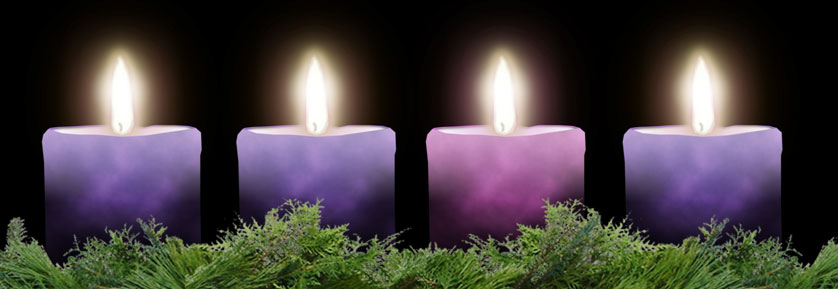
The four-week Advent cycle encodes theological and agricultural symbolism, reflecting both biblical prophecy and early Christian fasting practices. Each week corresponds to a candle on the Advent wreath, traditionally lit sequentially, though modern variations (e.g., three purple candles, one pink) introduce nuance:1. First Week (Hope – Prophet Candle)
Themes: Isaiah 9:2 ("The people who walked in darkness have seen a great light") and Genesis 3:15 (Protoevangelium).
Symbolism: The first candle represents hope in God’s promise of redemption. Early church fathers linked this week to John the Baptist’s proclamation (Matthew 3:1–2) and the virgin birth.
2. Second Week (Faith – Bethlehem Candle)
Themes: Isaiah 7:14 ("Emmanuel") and Micah 5:2 ("Bethlehem").
Symbolism: The second candle embodies faith in Christ’s Incarnation, aligning with the Annunciation (Luke 1:26–38). Medieval monks associated this week with fasting in preparation for Christmas.
3. Third Week (Joy – Shepherd Candle)
Themes: Luke 2:10–11 ("Glory to God in the highest") and Psalm 98:1 ("Make a joyful noise to the Lord").
Symbolism: The third candle (pink) signifies joy, often linked to Gaudete Sunday (Latin for "

Advent Traditions: Rituals, Symbols, and Modern Adaptations
Advent traditions span centuries and continents, blending religious devotion with cultural expression. While rooted in Christian observance, these customs have evolved to reflect local heritage, secular values, and contemporary lifestyles. Rituals often center on light, anticipation, and communal participation, adapting to modern sensibilities while preserving their symbolic depth. Below, global traditions are cataloged alongside innovative adaptations, highlighting how Advent’s essence endures through creativity and inclusivity.Global Advent Traditions: A Comparative Overview
Advent customs vary widely, shaped by geography, climate, and historical influences. The following table presents select traditions, emphasizing their dates, regional significance, and unique practices. These observances illustrate how Advent transcends borders, incorporating indigenous elements, colonial legacies, and seasonal adaptations.| Country/Region | Tradition Name | Date/Period | Significance |
|---|---|---|---|
| Latin America (Mexico, Guatemala, etc.) | Las Posadas | December 16–24 | A reenactment of Mary and Joseph’s search for shelter, featuring processions, piñatas, and communal meals. Blends indigenous and Spanish colonial traditions, emphasizing hospitality and solidarity. |
| Sweden, Norway, Finland | St. Lucia Day | December 13 | A festival honoring St. Lucia with candlelit processions, saffron buns (lussekatter), and white robes. Symbolizes light in darkness, with roots in Viking Yule celebrations. |
| Germany, Austria, Switzerland | Adventskranz (Advent Wreath) | First Sunday of Advent – Christmas Eve | A circular evergreen wreath with four candles, lit weekly. Represents eternity, hope, and the progressive revelation of Christ’s birth. Often accompanied by family gatherings and hymns. |
| Philippines | Simbang Gabi | December 16–24 (dawn masses) | Nine consecutive Masses attended before sunrise, culminating in a feast. A fusion of Spanish colonial and indigenous animist traditions, emphasizing penance and communal prayer. |
| United Kingdom, Ireland | Advent Carol Services | Late November – December 24 | Choral performances of Advent hymns (e.g., "O Come, O Come, Emmanuel") in historic churches. Highlights musical heritage and the anticipation of Christ’s arrival. |
| United States (Southern states) | Advent Candle Lighting with Scripture | Weekly (Sunday evenings) | Four candles symbolizing hope, peace, joy, and love, paired with Bible readings. Often integrated into family devotions or church services. |
| Ethiopia (Orthodox Tewahedo Church) | Ganna (Advent Fast) | November 27 – January 7 | A 40-day fasting period culminating in Christmas (Ganna). Includes prayer, abstinence from meat/dairy, and preparation for Epiphany celebrations. |
| Japan | Advent as "Kurisumasu" Preparation | December 1–24 | Incorporates Western Advent elements (e.g., wreaths) but often secularized, focusing on osenbon (paper lanterns) and kadomatsu (bamboo decorations) for New Year. |
| Australia, New Zealand | Advent in Summer | December (outdoor adaptations) | Traditions shift to daytime events (e.g., beachside candlelit services) or indoor gatherings due to warm weather. Emphasizes community and relief from holiday stress. |
Secular and Inclusive Adaptations of Advent
Modern families and individuals often reinterpret Advent to align with personal values, such as mindfulness, sustainability, or interfaith harmony. These adaptations retain the season’s core themes—anticipation, reflection, and generosity—while removing religious connotations. Below are examples of contemporary practices, including DIY alternatives for non-religious symbols.Advent’s focus on preparation and light lends itself to secular interpretations. For instance, gratitude journals replace prayer books, and eco-friendly calendars substitute commercial gift-giving. These adaptations emphasize intentionality, creativity, and connection to nature or community.
-
Gratitude or Intention Calendars
Families use a 24-door calendar to open prompts daily, such as:- Writing letters to loved ones
- Donating to local shelters
- Practicing acts of kindness anonymously
-
Eco-Conscious Countdowns
Replacements for disposable Advent calendars include:- Upcycled Materials: Calendars crafted from old maps, fabric scraps, or recycled cardboard, with pockets for small gifts or handwritten notes.
- Nature-Based Tracking: Using pinecones, acorns, or stones painted with numbers, placed in a bowl and removed daily.
- Charity-Themed: Donating small amounts to environmental causes (e.g., $1/day to reforestation projects) and tracking progress on a shared chart.
-
Interfaith or Cultural Blending
Families with diverse backgrounds might combine traditions, such as:- Lighting candles for both Hanukkah and Advent
- Incorporating Kwanzaa principles (e.g., Nia—purpose) into Advent reflections
- Hosting a potluck featuring dishes from multiple heritage (e.g., Swedish lussekatter alongside Filipino bibingka).
-
Digital and Minimalist Approaches
For those seeking low-waste or tech-integrated options:- App-Based Countdowns: Using apps like "Advent Countdown" or "Gratitude Journal" to set daily reminders for reflections or goals.
- Virtual Communities: Participating in online Advent challenges (e.g., #AdventReads for book lovers or #GivingTuesday pledges).
- Minimalist Wreaths: Creating wreaths with foraged items (e.g., dried orange slices, twine, and found objects) to symbolize sustainability.
Traditional vs. Modern Advent Symbols: Cultural and Emotional Impact
Advent symbols evolve alongside societal changes, reflecting shifts in values, technology, and environmental awareness. Traditional elements—such as candles, evergreens, and wreaths—carry deep historical and spiritual significance, while modern alternatives address contemporary needs for accessibility, inclusivity, and ecological responsibility.The emotional resonance of these symbols lies in their ability to evoke shared human experiences: hope in darkness, patience in waiting, and joy in giving. Below is a comparative analysis of traditional and modern symbols, along with their cultural or psychological effects.
| Traditional Symbol
Advent in Liturgical and Devotional PracticesAdvent, as a season of spiritual preparation, is deeply embedded in the liturgical and devotional life of Christianity, shaping worship, prayer, and personal reflection across denominations. Its structure varies by tradition, yet common threads—such as scriptural readings, hymnody, and monastic disciplines—unify its observance. This section explores the liturgical frameworks of major Christian denominations, the role of Advent in monastic and personal devotion, and its significance in interfaith dialogue, emphasizing shared spiritual values and collaborative practices.Liturgical Structure of Advent in Major Christian DenominationsThe Advent season is organized around four Sundays, each with distinct themes rooted in scripture and tradition. While the exact readings and emphases differ by denomination, the overarching narrative of anticipation, repentance, and hope remains consistent.#### Catholic Tradition: Scripture Readings and O Antiphons The Catholic Church’s Advent lectionary draws from the Prophets (Old Testament) and the Gospels of Matthew and Luke, emphasizing prophecy, exile, and the coming of the Messiah. The First Sunday of Advent focuses on watchfulness (Matthew 24:36–44), while subsequent Sundays highlight repentance (Second Sunday, Isaiah 11:1–10), joyful expectation (Third Sunday, Luke 3:1–6), and the arrival of Christ (Fourth Sunday, Luke 1:26–38). A defining feature of Catholic Advent is the O Antiphons, sung from December 17–23. These seven antiphons, each beginning with "O" (e.g., "O Wisdom" or "O Root of Jesse"), address Christ with messianic titles drawn from Isaiah 11 and 60. They are traditionally recited or sung before the Magnificat at Vespers and form the basis of the acrostic "ERO CRAS" (Latin for "Tomorrow, I will be"), with the first letters spelling out "Emmanuel" backward. #### Lutheran Tradition: Advent Hymns and Thematic Emphases Lutheran services also emphasize confession and absolution, aligning with the season’s call to repentance. The Advent wreath, with its four candles, symbolizes the light of Christ progressively revealed, often accompanied by readings from Isaiah’s "Servant Songs" and Paul’s letters (e.g., Romans 13:11–14 on watchfulness). #### Anglican and Episcopal Tradition: Advent Collects and Choral Music Choral music plays a prominent role, with settings of Advent motets (e.g., Bach’s "Christum wir sollen loben schon") and hymns like "Lo, How a Rose E’er Blooming" (Bernard of Clairvaux, 12th century). The Advent Carol Service, popular in the UK, blends readings, carols, and lessons on Isaiah’s prophecies and the Magnificat. #### Orthodox Tradition: Nativity Fast and Scriptural Focus Orthodox services include Vespers with stichera (hymns) from the Odes of Kassiani and prokeimenon (antiphons) from the Psalms. The Philokalia and Jesus Prayer ("Lord Jesus Christ, Son of God, have mercy on me") are central to personal devotion. Advent Hymns Across DenominationsAdvent hymnody serves as a theological and emotional bridge between scripture and worship. Below is a responsive table comparing key hymns by denomination, thematic focus, and lyrical content.
Advent in Monastic TraditionsMonastic communities treat Advent as a time for intensified prayer, silence, and communal discipline, drawing on ancient practices like lectio divina, exAdvent Season stands as a testament to humanity’s enduring quest for meaning during times of waiting and reflection. Whether through centuries-old liturgical practices, globally diverse traditions, or contemporary adaptations, its essence lies in fostering hope and unity. The four-week journey—marked by candlelight, hymns, and acts of preparation—serves as a reminder of shared values, bridging faith, family, and community. As customs evolve, Advent’s core message endures: a season not merely of anticipation for Christmas, but of intentional living, connection, and the universal longing for light in darkness. FAQWhat does Advent season mean in the Catholic Church?Advent is the Catholic liturgical season marking the four weeks before Christmas, beginning on the fourth Sunday before December 25. It focuses on preparation for the birth of Jesus (Christmas) and the Second Coming, symbolized by the Advent wreath and candles. The color purple (or blue) represents penance and hope, and Masses emphasize themes like anticipation, repentance, and charity. What is Advent season according to the Bible?The Bible doesn’t explicitly mention "Advent" as a named season, but its themes are rooted in Old Testament prophecies (e.g., Isaiah 7:14, 9:6) about the Messiah’s coming and New Testament passages (e.g., Luke 2:1-7) describing Jesus’ birth. Advent reflects the biblical narrative of waiting for God’s promises—both Christ’s first coming and his future return—tying to passages like 1 Thessalonians 5:23 and Matthew 24:42-44. What is the meaning of Advent season?Advent is a Christian season of spiritual preparation, combining joyful anticipation for Christ’s birth with solemn reflection on his eventual return. It balances celebration with penitence, using traditions like Advent calendars, wreaths, and daily prayers to foster patience, hope, and renewal. The word comes from Latin adventus, meaning "coming," encompassing all aspects of Christ’s arrival in human history. What is Advent season all about?Advent is about spiritual readiness—celebrating Christ’s first coming as a baby in Bethlehem while awaiting his second coming as judge and savior. It encourages practices like prayer, fasting, and acts of kindness to deepen faith and community. The season also critiques consumerism, urging focus on Christ’s message over materialism, often marked by Advent devotions like Jesse Trees or scripture readings. When is Advent season in 2025?Advent 2025 will begin on Sunday, December 1, 2025 (the fourth Sunday before Christmas), and end on December 24 at midnight (Christmas Eve). The season always includes the four Sundays leading up to Christmas, regardless of the calendar date. Many churches start Advent observances on December 1 for practical purposes, even if liturgically it begins on the Sunday. What is the difference between Advent season and Christmas season?Advent is the four-week period before Christmas (December 1–24), focused on preparation, hope, and penitence for Christ’s birth and return. Christmas season (December 25–January 6, ending with Epiphany) celebrates the Incarnation with joyful themes like gift-giving, feasting, and the visit of the Magi. Advent is solemn and anticipatory; Christmas is festive and commemorative. |
|---|

Leave a Comment
Comments are moderated before appearing. The data you submit is processed according to the Privacy Policy of Voltefac.