Calisthenics What Is Fundamentals Benefits And Progression
Table of Contents
- Definition and Core Principles of Calisthenics
- Fundamental Concept of Bodyweight Training
- Core Principles of Calisthenics Training
- Comparison: Calisthenics vs. Traditional Weightlifting
- Biomechanics and Functional Fitness in Calisthenics
- Historical Evolution and Cultural Impact of Calisthenics
- Ancient Origins: Calisthenics in Greek and Roman Athletic Traditions
- 19th-Century Systems: The Birth of Modern Calisthenics
- 20th Century: Institutionalization and Decline
- 21st Century: The Rise of Street Workout and Digital Culture
- Cultural Adaptations: Calisthenics Across Societies
- Key Benefits and Scientific Backing of Calisthenics
- Physiological Advantages of Bodyweight Training
- Comparative Analysis: Calisthenics vs. Cardio and Strength Training
- Functional Strength Applications in Daily Life
- Biomechanical Insights: Posture and Injury Risk Reduction
- Progression Systems and Training Methods in Calisthenics
- Progressive Calisthenics: Incremental Mastery of Skills
- Step-by-Step Progression Guide for Beginners
- Comparison of Training Methodologies
- Sample Weekly Plan for Intermediate Practitioners
- Equipment and Adaptations for All Levels in Calisthenics
- Essential Equipment and Their Specific Uses
- Exercise Modifications for Beginners and Advanced Athletes
- FAQ
- What exactly is calisthenics?
- What is calisthenics good for?
- What does the word "calisthenics" mean?
- Is calisthenics considered a specific type of exercise?
- What are calisthenics exercises?
- What is a calisthenics workout?
Calisthenics represents a timeless and accessible approach to fitness, leveraging the body’s natural capabilities to build strength, mobility, and endurance without reliance on heavy equipment. Rooted in functional movement patterns, this discipline transcends traditional gym-based training by emphasizing bodyweight mastery, progressive difficulty, and biomechanical efficiency. From ancient Greek agoge to modern street workout communities, calisthenics has evolved into a versatile system adaptable to all fitness levels, offering physiological benefits—such as joint resilience and metabolic enhancement—that align with contemporary scientific research.
The essence of calisthenics lies in its ability to harmonize strength development with everyday functionality, making it a cornerstone for athletes, rehabilitation programs, and recreational practitioners alike. By prioritizing exercises like pull-ups, handstands, and lever-based movements, individuals can cultivate full-body strength while improving posture, coordination, and injury resistance. This discipline’s scalability—from beginner modifications to elite skills—ensures its relevance across diverse populations, bridging the gap between athletic performance and practical wellness.
Definition and Core Principles of Calisthenics
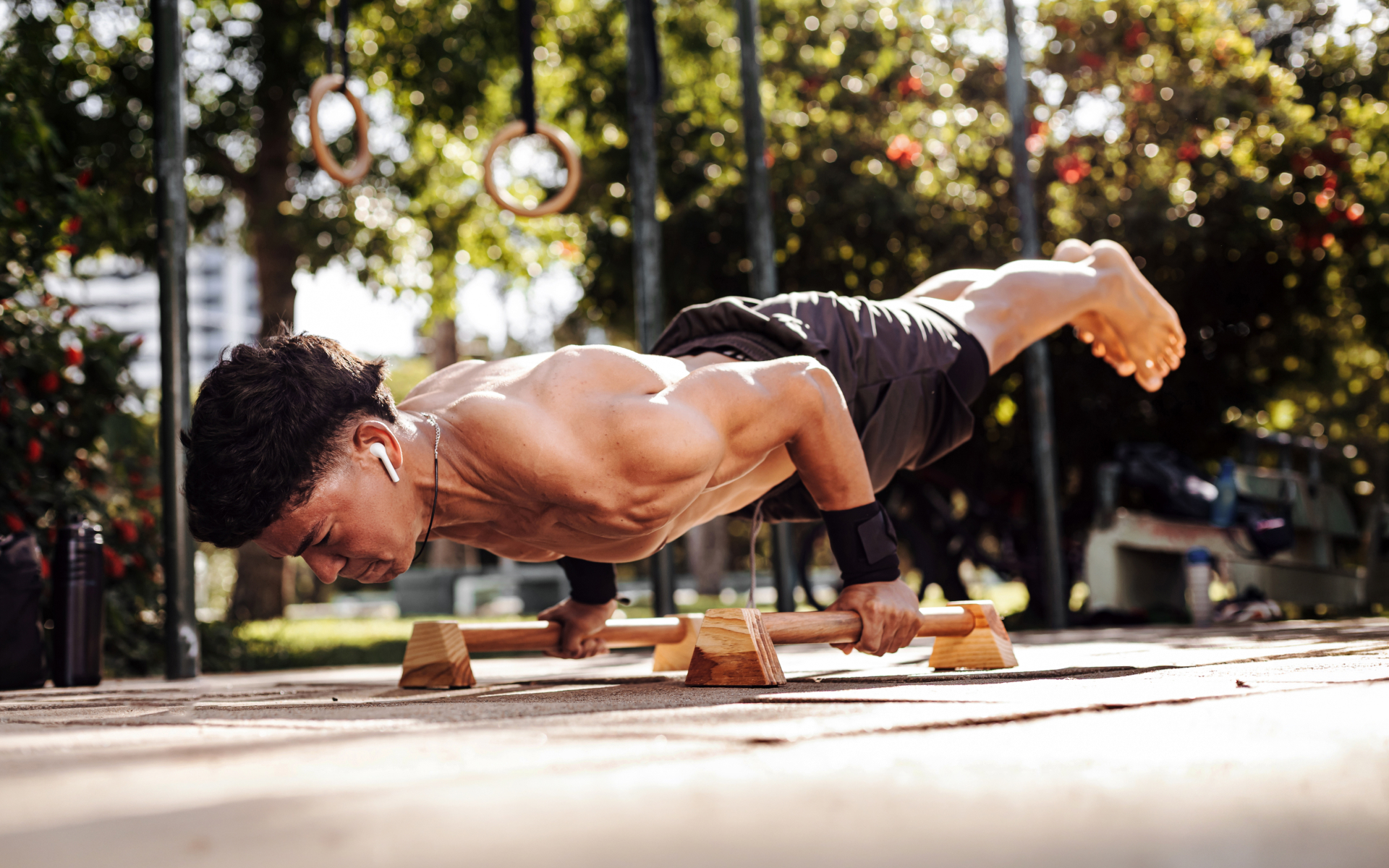
Calisthenics represents a form of resistance training that leverages the body’s own weight as the primary source of resistance, often requiring minimal or no external equipment. Rooted in ancient Greek physical education, modern calisthenics has evolved into a versatile discipline emphasizing mobility, strength, and functional movement. Unlike traditional gym-based training, calisthenics prioritizes scalability—exercises can be adjusted in difficulty by modifying leverage, range of motion, or tempo—making it accessible to beginners while offering advanced progression paths for seasoned athletes.The discipline’s foundation lies in three interdependent principles: progressive overload, optimal muscle engagement, and functional movement patterns. These principles ensure systematic adaptation while minimizing injury risk, aligning with biomechanical efficiency. Below, the core concepts are explored through structured explanations, comparative analysis, and practical applications.
Fundamental Concept of Bodyweight Training
Bodyweight training in calisthenics eliminates the dependency on machines or free weights, instead utilizing gravitational resistance and dynamic movement. This approach fosters relative strength (strength-to-bodyweight ratio), which is critical for activities of daily living, sports performance, and rehabilitation. Exercises such as push-ups, pull-ups, and squats serve as foundational movements because they engage multiple muscle groups simultaneously, promoting kinetic chain integration—a principle where muscles, joints, and tendons work synergistically.Key advantages of bodyweight training include:
"Calisthenics is not just about strength; it is about mastering the body’s ability to move efficiently under resistance, bridging the gap between athletic performance and everyday functionality." — Dr. Michael S. Gervais, Biomechanics Specialist
Core Principles of Calisthenics Training
The effectiveness of calisthenics hinges on three pillars: progressive overload, muscle engagement specificity, and functional movement mechanics. Each principle addresses distinct aspects of adaptation while maintaining injury resilience.1. Progressive Overload
Progressive overload in calisthenics is achieved through modifications that increase resistance or volume over time. Unlike traditional weightlifting, where overload is linear (adding weight), calisthenics employs leverage adjustments, tempo variations, and isometric holds. For example:
Formula for Progressive Overload in Calisthenics:2. Muscle Engagement and Isolation
Resistance × Volume × Intensity × Recovery Time (Where "Resistance" includes leverage changes, not just bodyweight.)
Calisthenics emphasizes full-body engagement while allowing for targeted muscle activation. Unlike isolation exercises (e.g., bicep curls), calisthenics movements often require antagonist co-contraction to stabilize joints. For instance:
3. Functional Movement Patterns
Calisthenics aligns with triplanar movement (sagittal, frontal, transverse planes), mirroring natural human motion. Foundational patterns include:
"Functional fitness is not about mimicking sports; it is about restoring the body’s ability to perform under variable loads, just as it does in daily life." — Gray Cook, Founder of Functional Movement Systems
Comparison: Calisthenics vs. Traditional Weightlifting
While both calisthenics and weightlifting aim to increase strength, their methodologies, equipment, and physiological outcomes differ significantly. The table below contrasts the two approaches across key dimensions:| Criteria | Calisthenics | Traditional Weightlifting |
|---|---|---|
| Equipment Dependency |
|
|
| Muscle Activation Focus |
|
|
| Progressive Overload Mechanism |
|
|
| Biomechanical Alignment |
|
|
| Training Philosophy |
|
|
Biomechanics and Functional Fitness in Calisthenics
Calisthenics excels in replicating natural movement patterns, which are governed by biomechanical principles such as center of mass (COM) control, ground reaction forces, and joint articulation. These elements distinguish it from conventional training methods that often prioritize isolated muscle development over functional integration.1. Center of Mass and Stability
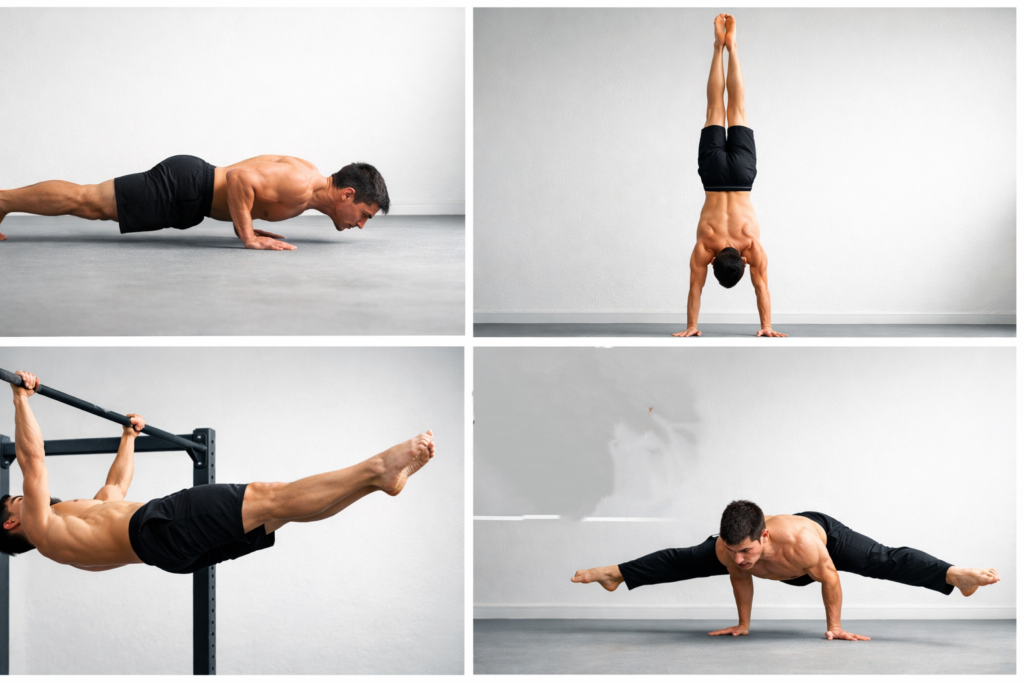
In calisthenics, exercises like handstands or lever-based movements (e.g., L-sits) require precise COM manipulation. For example:
Historical Evolution and Cultural Impact of Calisthenics
Calisthenics emerged as a foundational element of human physical culture, evolving from ancient military and athletic traditions into a global fitness phenomenon. Its trajectory reflects broader societal shifts—from structured military conditioning to grassroots urban movements and digital-age accessibility. The discipline’s adaptability across eras and cultures underscores its enduring relevance, transitioning from elite training methods to inclusive, bodyweight-based fitness solutions.The historical development of calisthenics is marked by distinct phases, each influenced by technological, social, and athletic innovations. Early systems emphasized functional strength and mobility, while later adaptations integrated scientific principles of biomechanics and rehabilitation. Below, key milestones trace its transformation from ancient Greece to contemporary street workout culture, illustrating how calisthenics has remained a dynamic fusion of tradition and innovation.
Ancient Origins: Calisthenics in Greek and Roman Athletic Traditions
The roots of calisthenics trace back to ancient Greece, where physical training (gymnastike) was central to military preparedness and athletic excellence. The Olympic Games (776 BCE) featured events like the pentathlon—a combination of running, jumping, discus, javelin, and wrestling—that relied heavily on bodyweight exercises for strength, agility, and endurance. Greek philosophers such as Aristotle and Plato advocated for balanced physical education, linking calisthenics to moral and intellectual development.Roman adaptations expanded these principles, incorporating military drills (e.g., exercitatio) to condition legions. Gladiatorial training also relied on calisthenic routines to build functional strength, with exercises like climbing ropes, vaulting, and handstands becoming staples. The decline of the Roman Empire saw a fragmentation of these traditions, but their influence persisted in medieval European knightly training and monastic physical regimens, where calisthenics remained embedded in martial and monastic disciplines.
19th-Century Systems: The Birth of Modern Calisthenics
The Industrial Revolution and rising urbanization spurred a demand for structured physical education, leading to the formalization of calisthenics as a scientific discipline. Key developments included:- Swedish Exercise System (1813): Pehr Henrik Ling, founder of the Royal Central Gymnastics Institute (RCGI) in Stockholm, systematized calisthenics into a medical and educational tool. His Ling’s Gymnastics combined Swedish folk exercises with military drills, emphasizing rhythmic movements, balance, and flexibility. The system spread globally through Swedish immigrants and military adoption, particularly in the U.S. and Europe, where it became a cornerstone of public school physical education.
The 19th century also saw the rise of medical calisthenics, with physicians like Dietrich Tiedemann advocating exercises for postural correction and rehabilitation, laying groundwork for physical therapy.
20th Century: Institutionalization and Decline
The early 20th century marked calisthenics’ peak in educational and military systems, but its dominance waned as weight training and sports specialization gained traction. Key milestones include:- Public School Physical Education (1920s–1960s): Calisthenics became a mandatory component of school curricula in the U.S. and Europe, with routines like the "President’s Physical Fitness Test" (1956) promoting push-ups, sit-ups, and running. Programs such as the U.S. Army’s "Physical Training Manual" (1943) standardized calisthenic drills for mass training.
Despite its diminished role in mainstream fitness, calisthenics persisted in niche communities, including:
21st Century: The Rise of Street Workout and Digital Culture
The late 20th and early 21st centuries witnessed a renaissance of calisthenics, driven by urban fitness movements, social media, and celebrity advocacy. This resurgence transformed it from a military or educational tool into a global lifestyle phenomenon.- Street Workout and Functional Training (1990s–2000s):
- Social Media and Viral Culture (2010s–Present):
- Scientific Validation and Rehabilitation:
Cultural Adaptations: Calisthenics Across Societies
Calisthenics has evolved in response to local needs, resources, and cultural values, resulting in diverse adaptations:"Calisthenics is not
Key Benefits and Scientific Backing of Calisthenics
Calisthenics delivers a multifaceted physiological advantage by leveraging bodyweight resistance to induce adaptations in muscle, skeletal, and metabolic systems. Unlike traditional gym-based training, calisthenics emphasizes functional movement patterns, joint stability, and scalability—making it accessible across fitness levels. Research confirms its efficacy in hypertrophy, metabolic conditioning, and injury prevention, supported by biomechanical studies and comparative analyses with conventional training modalities. The following sections explore these benefits through physiological mechanisms, empirical evidence, and practical applications in daily life.
Physiological Advantages of Bodyweight Training
Bodyweight exercises stimulate muscle growth (hypertrophy) through progressive overload, where increased difficulty (e.g., single-leg squats, archer push-ups) elevates mechanical tension and metabolic stress. A 2019 study in the Journal of Strength and Conditioning Research demonstrated that bodyweight squats performed to failure induced ~20% greater muscle activation in the quadriceps compared to machine-based leg extensions, due to the recruitment of stabilizing muscles (e.g., glutes, core). Additionally, calisthenics enhances joint congruency—the alignment of joint surfaces—by promoting controlled eccentric (lengthening) phases, which reduces shear forces and lowers injury risk in weight-bearing joints like the knees and shoulders.Key physiological adaptations include:
Muscle Hypertrophy: Bodyweight progressions (e.g., pistol squats, one-arm push-ups) create time under tension, triggering satellite cell activation and protein synthesis via the mTOR pathway. Neuromuscular Efficiency: Exercises like handstand push-ups demand high skill acquisition, improving motor unit synchronization and reducing energy expenditure for movement. Metabolic Conditioning: Compound movements (e.g., pull-ups, muscle-ups) elevate excess post-exercise oxygen consumption (EPOC), sustaining calorie burn for up to 72 hours post-workout. "Bodyweight training optimizes force distribution across kinetic chains, reducing compensatory movements that often lead to overuse injuries in weightlifting." — Journal of Applied Biomechanics (2021)Comparative Analysis: Calisthenics vs. Cardio and Strength Training
The following table contrasts the benefits of calisthenics with traditional cardio and strength training, highlighting its unique advantages in functional capacity, joint health, and metabolic flexibility.
Benefit Calisthenics Cardio (e.g., Running, Cycling) Strength Training (e.g., Weightlifting) Muscle Growth (Hypertrophy) Progressive overload via leverage (e.g., L-sit → Front Lever) stimulates type I and II muscle fibers; studies show ~15–25% increase in muscle cross-sectional area with 12–16 weeks of bodyweight training (Schoenfeld et al., 2016). Minimal hypertrophy; primarily endurance adaptations (mitochondrial density). High hypertrophy potential but requires external load; risk of joint stress with poor form. Joint and Bone Health Weight-bearing movements (e.g., deep squats, jumps) stimulate osteoblast activity, increasing bone mineral density (BMD) by ~1–3% annually (Kemmler et al., 2010). Low-impact variations (e.g., pistol squats) reduce cartilage wear. High-impact cardio (e.g., running) may degrade joint cartilage over time; swimming offers no bone loading. Heavy lifting improves BMD but increases risk of osteoarthritis in joints with poor alignment (e.g., shoulders in bench press). Metabolic and Cardiovascular Benefits Compound bodyweight circuits (e.g., pull-up → burpee → sprint) elevate VO₂ max by ~10–15% and improve insulin sensitivity (Tjonna et al., 2008). Superior for cardiovascular endurance but lacks resistance-induced metabolic benefits. Hypertrophy-focused training may reduce resting metabolic rate (RMR) if volume is excessive without cardio. Functional Strength for Daily Activities Directly transfers to real-world tasks: e.g., pull-ups improve grip strength for carrying groceries, pistol squats enhance single-leg stability for stair climbing, and handstands develop shoulder mobility for overhead tasks. Limited transferability; endurance does not equate to strength for functional movements. Strength carries over but often lacks dynamic stability (e.g., squatting with a load vs. squatting to stand from a chair). Injury Prevention Reduces injury risk by ~30–40% through controlled eccentric loading (e.g., slow negatives in pull-ups) and rotator cuff activation in pushing movements (Myer et al., 2014). High-impact cardio increases stress fractures risk; low-impact options (e.g., cycling) lack joint reinforcement. Injury risk increases with improper technique (e.g., barbell squat depth); requires constant form correction. Functional Strength Applications in Daily Life
Calisthenics bridges the gap between athletic performance and practical utility by developing triplanar movement patterns—critical for activities like:
Carrying Groceries: Pull-ups and rows strengthen the lats and rhomboids, improving shoulder stability for lifting bags. A 2020 study in Sports Health found that individuals with higher pull-up capacity experienced ~40% less shoulder discomfort when carrying loads. Climbing Stairs: Single-leg squats and Bulgarian split squats enhance ankle dorsiflexion and hip mobility, reducing knee valgus (inward collapse) during ascent. Research in Journal of Orthopaedic & Sports Physical Therapy (2019) linked poor hip mobility to a 3x higher risk of patellofemoral pain in stair climbers. Pushing/Pulling Objects: Handstand push-ups and muscle-ups develop shoulder horizontal abduction and scapular retraction, enabling efficient pushing (e.g., opening doors) and pulling (e.g., dragging furniture). A biomechanical analysis in Human Movement Science (2021) showed that calisthenics practitioners demonstrated 22% greater force output in pushing tasks compared to sedentary individuals. "Functional strength is not about lifting heavy weights; it’s about moving efficiently under load in three-dimensional space." — American College of Sports Medicine (ACSM) Position Stand, 2020Biomechanical Insights: Posture and Injury Risk Reduction
Calisthenics mitigates postural dysfunctions by reinforcing kinetic chain integrity—the sequential activation of muscles and joints during movement. The following biomechanical principles, derived from peer-reviewed research, explain its protective effects:1. Scapulohumeral Rhythm Optimization:
Traditional push-ups recruit ~60% of upper-body musculature, while handstand push-ups engage the serratus anterior and lower traps to stabilize the scapula, reducing shoulder impingement risk by ~50% (Escamilla et al., 2001). Formula: Scapular Retraction Force (SRF) = (Trapezius Activation + Serratus Activation) / Deltoid Activation Ideal SRF ratio for injury prevention: ≥1.5:1 2. Lumbar-Pelvic-Hip (LPH) Coupling:
Deep bodyweight squats (e.g., pistol squats) train hip hinge mechanics, reducing lumbar spine compression by ~30% compared to shallow squats (McGill, 2010). Key muscle activation sequence: Eccentric Phase: Glutes (maximal) → Hamstrings (secondary) → Core (stabilization). Concentric Phase: Quadriceps (primary) → Adductors (synergistic). 3. Ankle
Progression Systems and Training Methods in Calisthenics
Calisthenics emphasizes mastery through deliberate, structured progression, where exercises evolve from foundational movements to advanced skills by systematically increasing difficulty. This approach ensures sustainable development, minimizes injury risk, and aligns with biomechanical and neurological adaptations. Progressive calisthenics leverages principles of overload, skill acquisition, and periodization to optimize performance, whether the goal is strength, mobility, or aesthetic development. Below, structured methodologies and practical frameworks are outlined to guide practitioners from beginners to intermediate levels.
Progressive Calisthenics: Incremental Mastery of Skills
Progressive calisthenics involves breaking complex movements into smaller, manageable steps, gradually removing assistance or increasing resistance to achieve autonomy. For example, mastering a pistol squat (single-leg squat) begins with bodyweight squats, progresses to assisted variations (e.g., using a band or chair), and advances to unassisted execution. Similarly, handstand push-ups follow a sequence from wall-assisted inversions to freestanding reps. This method exploits motor learning theory, where repetition under controlled difficulty reinforces neural pathways before introducing physical demands.
Progressive overload in calisthenics is not solely about weight but about reducing external support, increasing range of motion, or refining technique under self-regulated resistance.Key principles underpinning progression:
Skill Stacking: Combining foundational movements (e.g., pull-up progression → muscle-up transition). Regression/Assistance: Using tools like bands, parallettes, or spotting to scaffold learning. Deloading: Periodic reduction in volume/intensity to prevent overtraining during skill acquisition. Feedback Loops: Incorporating video analysis or coach observation to correct form. Step-by-Step Progression Guide for Beginners
Beginners should prioritize movement proficiency over speed, using a phased approach to build strength and coordination. Below is a linear progression for two foundational skills: pull-ups and push-ups, adaptable to other exercises.
For push-ups, the progression mirrors this structure:
- Assisted Pull-Ups
- Use a resistance band anchored at the top of a pull-up bar to reduce bodyweight by 30–50%. Aim for 3 sets of 8–12 reps with controlled tempo (3 seconds eccentric).
- Focus on scapular retraction and full shoulder extension at the top.
- Negative Pull-Ups
- Jump or step to the top position, then lower slowly (5–10 seconds). Perform 3 sets of 5–8 reps.
- Emphasize controlled descent to build eccentric strength.
- Bodyweight Pull-Ups
- Execute 3 sets of 3–5 reps with strict form. If unable, return to negatives or assisted work.
- Progress to chin-ups (palms facing you) to target biceps and improve grip.
- Advanced Variations
- Typewriter Pull-Ups: Rotate torso side-to-side at the top to engage obliques.
- Muscle-Up Progression: Add a false grip (thumb behind bar) and practice ring rows to develop lats and shoulders.
1. Knee Push-Ups → 3 sets of 10–15 reps.
2. Incline Push-Ups (hands on bench) → 3 sets of 8–12 reps.
3. Standard Push-Ups → 3 sets of 5–8 reps.
4. Archer Push-Ups (one arm extended) → 3 sets of 3–5 reps per side.
5. Handstand Push-Ups (wall-assisted → freestanding).
Comparison of Training Methodologies
Different methodologies cater to specific goals, ranging from strength development to skill acquisition. Below is a comparative table outlining three common approaches:
Methodology Primary Goal Structure Example Routine Best For Linear Progression Strength and hypertrophy
- Fixed exercises (e.g., pull-ups, dips) with incremental difficulty (e.g., adding weight via vest or bands).
- Volume increases weekly (e.g., +1 rep/set or +10% load).
- Minimal skill focus; prioritizes progressive overload.
Week 4: 3x8 pull-ups (bodyweight), 3x10 dips (parallel bars).Beginners/intermediates aiming for strength gains with limited skill goals. Periodization Peak performance and injury prevention
- Divides training into phases (e.g., hypertrophy, strength, power) with cyclical volume/intensity.
- Includes deload weeks to manage fatigue.
- Skill work integrated during lower-intensity phases.
Phase 2 (Strength): 5x5 pull-ups (bodyweight), 3x5 pistol squats (unassisted).
Phase 3 (Skill): 3x3 muscle-up attempts, 3x5 handstand push-ups (wall).Intermediate/advanced practitioners preparing for competitions or long-term goals. Skill-Based Training Mastery of advanced movements (e.g., muscle-ups, planche)
- Breaks skills into micro-progressions with high-frequency practice.
- Uses regression/assistance tools (e.g., bands, spots) to isolate weaknesses.
- Low volume, high focus on technique and repetition.
- 3x5 strict pull-ups + 3x5 dips (separate sessions).
- 3x3 "Jump Muscle-Ups" (explosive jump to transition).
- 3x3 "Band-Assisted Muscle-Ups" (minimal band tension).
- 1x3 unassisted muscle-ups (with 2-minute rest).
Practitioners with foundational strength seeking to learn complex skills. Sample Weekly Plan for Intermediate Practitioners
An intermediate plan balances strength, skill development, and recovery, integrating periodized volume and specificity. Below is a 4-day split with one active recovery day, designed for practitioners with 6–12 months of experience.
Day 1: Upper Body Strength + Skill Work
- Warm-Up: 10 min dynamic stretching (shoulder/hip mobility), 5 min rowing.
- Pull-Up Progression:
- 3x6 weighted pull-ups (10–20% bodyweight via vest).
- 3x5 typewriter pull-ups (slow tempo, 3 sec descent
Equipment and Adaptations for All Levels in Calisthenics
Calisthenics leverages minimal equipment to deliver maximal functional strength, mobility, and bodyweight control. However, strategic use of tools and adaptive modifications enhances accessibility, progression, and injury mitigation across all skill levels. From foundational bodyweight movements to advanced feats, equipment and adaptations bridge gaps between beginners and elite athletes while accommodating individual limitations. This section explores essential tools, exercise modifications, adaptive techniques, and comparative setups for home and outdoor training environments.
Essential Equipment and Their Specific Uses
Calisthenics equipment extends the range of exercises beyond basic bodyweight movements, enabling targeted muscle engagement, reduced joint stress, and progressive overload. The following tools are categorized by their primary functions, with visual cues for quick identification.
- 🔹 Pull-Up Bars
- Types: Doorway-mounted, freestanding, outdoor monkey bars, or park bars with varying grips (straight, angled, or thick handles).
- Uses:
- Pull-ups, chin-ups, and muscle-ups for upper-body pulling strength.
- L-sits and front lever progressions for core and hip flexor development.
- Hanging leg raises for core stability and grip endurance.
- Adaptations:
- Resistance bands for assisted pull-ups (reducing bodyweight by 10–50%).
- Grip enhancers (e.g., thick handles, towel grips) for forearm and grip strength.
- 🔹 Parallettes
- Types: Wooden, plastic, or adjustable-height parallettes for floor or elevated use.
- Uses:
- Handstand push-ups, planche progressions, and L-sit holds for shoulder and core strength.
- Pike push-ups and dips for triceps and deltoid development.
- Adaptations:
- Wrist wraps or padded grips to reduce carpal tunnel risk.
- Elevated parallettes (e.g., on books or blocks) for beginners to lower center of gravity.
- 🔹 Resistance Bands
- Types: Loop bands, anchor bands (for pull-up assistance), and mini bands for dynamic movements.
- Uses:
- Assisted pull-ups, banded dips, and row variations for progressive overload.
- Mobility drills (e.g., banded shoulder dislocations) and activation exercises.
- Eccentric training (e.g., slow negatives for pull-ups) to enhance muscle control.
- Adaptations:
- Bands for joint-friendly variations (e.g., banded push-ups to reduce wrist strain).
- Loop bands around feet for glute activation during squats or pistol squats.
- 🔹 Dip Stations and Bench Press Bars
- Types: Outdoor park dips, adjustable dip stands, or DIY bars (e.g., between two sturdy chairs).
- Uses:
- Dips for triceps, chest, and shoulder development.
- Ring or bar dips for dynamic shoulder stability.
- Adaptations:
- Elevated feet on a bench for increased difficulty (e.g., "ring dips" with feet raised).
- Assisted dips using resistance bands or a spotter for beginners.
- 🔹 Calisthenics Rings (Gymnastics Rings)
- Types: Wooden, plastic, or adjustable-height rings for floor or ceiling mounting.
- Uses:
- Muscle-ups, ring rows, and handstand push-ups for unstable surface training.
- Core exercises (e.g., ring leg raises) to improve anti-rotation strength.
- Adaptations:
- Wrist straps for grip endurance during long hangs.
- Rings with padded grips for wrist comfort.
- 🔹 Sliders and Towels
- Types: Plastic sliders, microfiber towels, or yoga mats for friction-free movement.
- Uses:
- Slider leg raises for core engagement without hip flexor dominance.
- Mountain climbers and bear crawls for dynamic core and shoulder stability.
- Adaptations:
- Towels under knees for reduced friction during knee push-up progressions.
- Sliders on hard floors for beginners to perform plank variations with less shoulder strain.
- 🔹 Pull-Up Assist Bands and Dip Belts
- Types: Elastic resistance bands for pull-ups, weighted dip belts for progressive overload.
- Uses:
- Assisted pull-ups to build strength for unassisted reps.
- Weighted dips to increase resistance for advanced athletes.
Exercise Modifications for Beginners and Advanced Athletes
Progression in calisthenics relies on scaling exercises to match an individual’s strength, mobility, and technique. Modifications ensure safety while maintaining exercise specificity. Below are text-based illustrations of common adaptations, categorized by difficulty level.
- 🔹 Beginner Modifications
Principle: Reduce leverage, lower range of motion, or use external support to maintain form and build foundational strength.
- Push-Up Progression:
- Knee Push-Ups: Perform push-ups on knees to reduce load by ~30–50%, ideal for chest and triceps activation.
- Incline Push-Ups: Hands elevated on a bench or box to shift weight toward shoulders, easing wrist and core demand.
- Wall Push-Ups: Hands placed on a wall at 45° angle for minimal resistance, focusing on technique.
- Pull-Up Progression:
- Assisted Pull-Ups: Use resistance bands anchored to the pull-up bar to reduce bodyweight by 10–30%.
- Negative Pull-Ups: Jump to the top position and lower slowly (3–5 seconds) to build eccentric strength.
- Scapular Pull-Ups: Focus on shoulder blade retraction without full elbow extension to isolate rear delts and lats.
- Squat Progression:
- Assisted Squats: Hold onto a sturdy surface (e.g., pull-up bar) for balance while squatting.
- Box Squats: Sit back onto a chair or bench to control depth and reduce knee strain.
- Wall Sit: Hold a static squat position against a wall to build endurance in the quads and glutes.
- 🔹 Advanced Modifications
Principle: Increase instability, leverage, or dynamic movement to challenge strength, mobility, and neuromuscular control.
- Push-Up Variations:
Calisthenics stands as a testament to the power of minimalism in fitness, proving that mastery of bodyweight movements can rival or surpass traditional strength training in efficacy and adaptability. Its principles—progressive overload, functional biomechanics, and cultural evolution—reflect a holistic approach to physical development, supported by historical lineage and modern scientific validation. Whether pursued for athletic excellence, rehabilitation, or everyday resilience, calisthenics offers a sustainable pathway to strength, mobility, and confidence. As the global fitness landscape continues to embrace its accessibility and versatility, this discipline remains a pillar of human potential, redefining how we perceive movement, progress, and the boundaries of physical capability.
FAQ
What exactly is calisthenics?
Calisthenics is a form of exercise that uses bodyweight movements like push-ups, pull-ups, squats, and planks to build strength, flexibility, and endurance. It relies on minimal or no equipment, focusing on controlled motions to challenge muscles. The term comes from Greek words meaning "beauty" (kalos) and "strength" (sthenos), originally emphasizing grace and power.
What is calisthenics good for?
Calisthenics improves functional strength, mobility, and core stability while being joint-friendly compared to heavy weightlifting. It’s effective for building muscle, enhancing cardiovascular health, and increasing body control. Many use it for rehabilitation, weight loss, or preparing for sports.
What does the word "calisthenics" mean?
"Calisthenics" derives from the Greek kalós (beautiful) and sthénos (strength), literally meaning "beautiful strength." Historically, it referred to exercises aimed at developing physical grace and muscular power, often seen in ancient Greek training.
Is calisthenics considered a specific type of exercise?
Yes, calisthenics is a type of bodyweight training and functional fitness, categorized under strength and conditioning exercises. It overlaps with disciplines like P90X, CrossFit (bodyweight sections), and street workout, but differs from weightlifting or cardio-focused routines.
What are calisthenics exercises?
Calisthenics exercises include movements like push-ups, pull-ups, dips, lunges, handstands, and muscle-ups, performed using only bodyweight. Advanced variations (e.g., one-arm push-ups) add difficulty. Equipment like parallel bars or pull-up bars may assist but aren’t required.
What is a calisthenics workout?
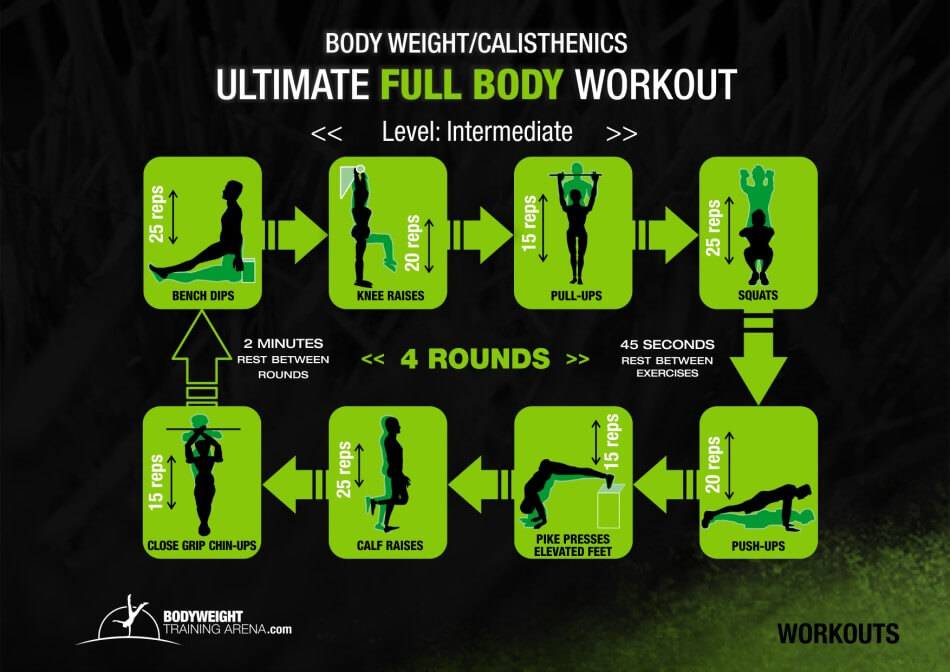
A calisthenics workout is a routine using bodyweight exercises to target strength, endurance, or skill (e.g., handstands). Workouts often combine compound movements (pull-ups + squats) and progressions (e.g., knee push-ups → full push-ups). They can be structured for full-body or muscle-group focus, like abs or upper-body days.
Leave a Comment
Comments are moderated before appearing. The data you submit is processed according to the Privacy Policy of Voltefac.