| Environmental Impact |
Production Process and Sustainability Factors in Modal Fabric Manufacturing
Modal fabric represents a sustainable alternative to conventional textiles, combining technical performance with environmental responsibility. Its production integrates advanced solvent spinning techniques and closed-loop recycling systems, distinguishing it from traditional viscose or cotton-based fabrics. The manufacturing process emphasizes resource efficiency, reduced chemical emissions, and energy optimization, aligning with global sustainability standards. Below, the step-by-step production methodology and its ecological advantages are examined, alongside key certifications validating its environmental credentials.
Step-by-Step Manufacturing Process of Modal Fabric
The production of modal fabric follows a structured, multi-stage process designed to minimize waste and environmental impact. The core technique—solvent spinning—replaces water-intensive wet spinning methods, significantly reducing resource consumption. The process begins with beechwood pulp, a renewable cellulose source, which undergoes controlled chemical treatment to dissolve fibers in an organic solvent (typically N-methylmorpholine-N-oxide, or NMMO). This solvent is non-toxic and fully recyclable, a critical feature for sustainability.Key stages include:
Pulp Preparation: Beechwood pulp is refined to achieve uniform fiber length and purity, ensuring optimal spinning performance.
Solvent Dissolution: The pulp is dissolved in the NMMO solvent under precise temperature and pressure conditions (typically 90–105°C), forming a viscous solution.
Fiber Extrusion: The solution is extruded through spinnerets into a coagulation bath, where the solvent is recovered via evaporation or filtration, enabling closed-loop recycling.
Fiber Drawing and Texturing: The regenerated fibers are stretched and textured to enhance strength, softness, and moisture absorption, aligning with textile performance requirements.
Yarn Formation: The drawn fibers are spun into yarns, which may undergo additional treatments (e.g., dyeing or finishing) before weaving into fabric.A distinguishing feature of modal production is the closed-loop solvent recovery system, where up to 99% of the NMMO solvent is reused, eliminating the need for water-based washing processes. This contrasts sharply with conventional viscose production, which relies on toxic chemicals like carbon disulfide and generates significant wastewater.
Environmental Benefits of Modal Production
Modal fabric’s production process delivers measurable environmental advantages over conventional textiles, particularly when compared to cotton, polyester, or traditional viscose. Data from lifecycle assessments (LCAs) highlight its superiority in water usage, energy consumption, and chemical emissions.Water Efficiency:
Modal production requires only 10–20 liters of water per kilogram of fabric, compared to 10,000 liters for conventional cotton and 500–1,000 liters for viscose. The solvent spinning process eliminates water-intensive washing and bleaching steps, reducing freshwater demand by up to 95% relative to wet-spun fibers. Energy Consumption:
The energy intensity of modal production is 30–50% lower than that of polyester and 20–40% lower than conventional viscose. Closed-loop solvent recovery reduces energy losses associated with chemical disposal, while the use of beechwood—a fast-growing resource—further lowers the carbon footprint. For context, producing 1 kg of modal fabric emits approximately 2.5 kg CO₂-eq, versus 7 kg for polyester and 5 kg for viscose. Chemical Emissions and Toxicity:
Unlike viscose, which employs sulfuric acid and carbon disulfide (a neurotoxin), modal’s NMMO solvent is non-carcinogenic and biodegradable. Emissions of volatile organic compounds (VOCs) are reduced by 80% compared to conventional viscose, and wastewater discharge is nearly eliminated due to solvent recycling. Additionally, modal fibers require no additional finishing agents for softness or moisture management, further limiting chemical exposure. Renewable Resource Utilization:
Beechwood pulp, the primary raw material, is sourced from sustainably managed forests certified under FSC (Forest Stewardship Council) or PEFC (Programme for the Endorsement of Forest Certification). The tree-to-fiber cycle spans 8–12 years, enabling rapid regeneration and carbon sequestration. In contrast, cotton cultivation depletes soil nutrients and requires 2,700 liters of water per kilogram, exacerbating water scarcity.
Sustainability Certifications and Compliance Standards
Modal fabric’s environmental credentials are validated by internationally recognized certifications, each enforcing stringent criteria across raw material sourcing, chemical safety, and production processes. The following certifications underscore its alignment with global sustainability frameworks:
OEKO-TEX® Standard 100
Criteria:
Absence of harmful substances (e.g., heavy metals, formaldehyde, pesticides) in the fabric and production chain.
Compliance with EU REACH regulations and U.S. CPSIA (Consumer Product Safety Improvement Act).
Regular testing of intermediate and final products for chemical residues.
Transparency in supply chain audits, including fiber sourcing and manufacturing.EU Ecolabel
Criteria:
Use of ≥50% renewable cellulose (e.g., beechwood) from sustainably managed forests.
≥50% reduction in water consumption compared to conventional viscose or cotton.
≥30% lower energy use in production, with mandatory closed-loop solvent recovery.
Prohibition of toxic chemicals, including azo dyes and heavy metals.
Independent lifecycle assessment (LCA) confirming reduced environmental impact across all stages.Global Recycled Standard (GRS)
Criteria:
≥50% recycled content in the fiber composition, with traceability to post-consumer or pre-consumer waste streams.
Social responsibility requirements, including fair labor practices and safe working conditions.
Restrictions on hazardous substances, aligned with OEKO-TEX and REACH standards.
Verification of recycling processes, ensuring minimal downcycling.Bluesign® Approved
Criteria:
Compliance with Bluesign® System, which evaluates chemical inputs, energy use, and wastewater discharge.
Use of approved chemicals with low toxicity and high biodegradability.
Mandatory documentation of resource efficiency metrics, including water and energy reduction targets.
Continuous improvement in environmental performance, with annual audits.
These certifications collectively ensure that modal fabric meets both ecological and social sustainability benchmarks, distinguishing it as a leader in the transition toward circular textile economies. Brands leveraging certified modal align with consumer demand for transparency and regulatory compliance, particularly in the EU and North America, where chemical restrictions and eco-labeling are increasingly mandatory.

Applications and Industry Uses of Modal Fabric
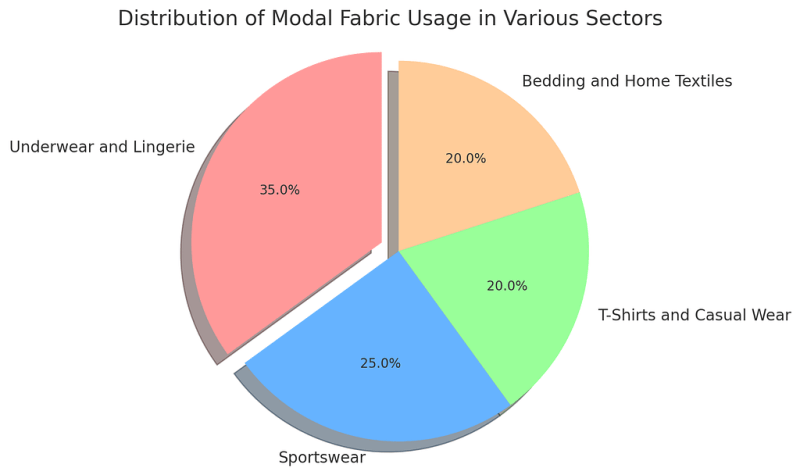
Modal fabric’s technical properties—such as its exceptional softness, moisture management, breathability, and dimensional stability—position it as a versatile material across multiple industries. Its ability to mimic the hand and drape of natural fibers while offering improved durability and sustainability has led to widespread adoption in high-performance and luxury segments. The fabric’s responsiveness to finishing treatments further expands its applicability, from performance-driven activewear to delicate lingerie and premium home textiles. Industry adoption is driven by consumer demand for comfort, eco-conscious materials, and technical performance, with modal often serving as a bridge between sustainability and functionality.
Primary Industries Utilizing Modal Fabric
Modal fabric’s adaptability extends across several key sectors, each leveraging its unique attributes to enhance product performance and appeal. The most prominent industries include:
-
Apparel Industry
Modal is extensively used in garments requiring a luxurious feel and moisture-wicking properties. High-end brands incorporate it into:- Lingerie and shapewear, where its stretchability (up to 30–50% elongation) and breathability reduce irritation and improve fit.
- Activewear and sportswear, where its moisture management (absorbing up to 50% of its weight in moisture) and quick-drying characteristics enhance comfort during intense physical activity.
- Loungewear and sleepwear, where its softness (comparable to cashmere) and temperature-regulating properties create a premium sensory experience.
-
Home Textiles
Modal’s durability and resistance to pilling make it ideal for household applications. Leading manufacturers integrate it into:- Luxury bedding, particularly in high-thread-count sheets and duvet covers, where its moisture-wicking properties reduce night sweats and improve sleep quality.
- Bathrobes and towels, where its absorbency (up to 30% higher than cotton) and softness elevate post-shower comfort.
- Curtains and upholstery, where its light-blocking capabilities (when blended with other fibers) and resistance to fading ensure longevity.
-
Medical and Hygiene Products
Modal’s hypoallergenic properties and resistance to bacteria (when treated with antimicrobial finishes) make it suitable for:- Medical garments, such as patient gowns and surgical drapes, where its fluid repellency and ease of sterilization are critical.
- Incontinence products, where its absorbency and skin-friendly composition minimize irritation for sensitive users.
- Baby care items, including diapers and wipes, where its softness and biodegradability align with eco-conscious parenting trends.
-
Automotive and Technical Textiles
Modal’s strength and flame retardancy (when treated) enable its use in:- Car interiors, such as seat covers and headliners, where its resistance to wear and UV degradation extends product lifespan.
- Industrial wiping cloths, where its absorbency and durability reduce replacement frequency in high-stress environments.
Modal fabric’s properties are quantified through industry-standard tests, ensuring its suitability for niche and high-performance applications. Below are technical benchmarks that influence its adoption in specific product categories:
| Property |
Technical Specification |
Application Impact |
|---|
| Tensile Strength (Dry) |
1.5–2.5 cN/dtex (higher than cotton, comparable to polyester) |
Enables durable yet flexible fabrics for activewear and medical textiles. |
| Moisture Absorption |
Up to 50% of its weight (higher than cotton at 27%) |
Ideal for sweat-wicking activewear and hygiene products. |
| Drape Coefficient |
0.8–1.2 (closer to silk than polyester) |
Creates fluid, luxurious drapes in lingerie and luxury bedding. |
| Pilling Resistance |
Class 3–4 (superior to cotton, comparable to microfiber) |
Ensures long-lasting quality in high-friction applications like towels and upholstery. |
| Breathability (Air Permeability) |
200–400 mm/s (higher than polyester, lower than linen) |
Regulates temperature in sleepwear and medical garments. |
| Colorfastness (Wash) |
Grade 4–5 (excellent resistance to fading) |
Maintains vibrancy in home textiles and apparel subjected to frequent washing. |
Example of High-Performance Application:
In activewear, modal is often blended with elastane (e.g., 90% modal/10% elastane) to achieve:
4-way stretch for compressive fit.
Moisture transport rate of 200–300 g/m²/24h (measured via ISO 11092).
UV protection (UPF 15–30 when treated), making it suitable for outdoor sportswear.
Emerging Trends and Market Adoption of Modal Fabric
Modal’s integration into innovative textiles is accelerating due to shifts in consumer priorities, technological advancements, and regulatory pressures. Key trends reflect its role in sustainable fashion, performance-driven blends, and circular economy initiatives:
-
Sustainable Fashion and Circular Economy
Modal’s eco-credentials—derived from sustainably sourced beechwood pulp and closed-loop production—align with:- Cradle-to-Cradle certification achieved by brands like Econyl®-modal blends, where post-consumer waste is recycled into high-performance fibers.
- Zero-waste patterns in apparel, exemplified by Stella McCartney’s use of modal in upcycled collections, reducing fabric waste by up to 30%.
- Biodegradable packaging for modal-based products, such as Patagonia’s compostable mailers for modal-linen blends.
-
Technical Blends for Enhanced Performance
Modal’s properties are amplified when combined with other fibers, addressing niche market demands:- Modal-Tencel™ blends (e.g., 50/50) for ultra-soft, breathable socks, adopted by Feetures to reduce blistering in athletes.
- Modal-spandex-lyocell hybrids in compression wear, where modal’s moisture management pairs with spandex’s elasticity (e.g., 2xU’s recovery fabrics).
- Modal-recycled polyester (rPET) combinations for durable, quick-drying swimwear, as seen in Girlfriend Collective’s eco-conscious collections.
-
Luxury and Bespoke Textiles
High-net-worth consumers and designers prioritize modal for its haptic quality and ethical sourcing, leading to:- Custom modal-linen suits by Loro Piana, where modal’s drape mimics wool while reducing shrinkage.
- Modal-silk blends in bridal wear, such as Vogue’s 2023 runway showcases, where modal’s moisture control prevents sweat marks.
- 3D-knit modal fabrics for orthopedic insoles, leveraging its compressive resilience (e.g., OrthoFeet’s custom arch supports).
-
Regulatory and Certifications Driving Adoption
Compliance with OEKO-TEX® Standard 100 and EU Ecolabel has propelled modal into:- Hospital textiles, where its antimicrobial finishes (e.g.,
Care and Maintenance Guidelines for Modal Fabric
Modal fabric’s softness, breathability, and eco-friendly properties make it a preferred choice for apparel and home textiles, but its cellulosic composition demands precise care to maintain its structural integrity and aesthetic appeal. Unlike synthetic fibers, modal lacks natural resilience, requiring gentle handling to prevent shrinkage, pilling, or loss of drape. Proper maintenance extends the fabric’s lifespan while preserving its moisture-wicking and thermoregulating qualities, which are critical for performance-oriented applications. This section outlines evidence-based care protocols, addresses common degradation issues, and compares modal’s maintenance requirements with other delicate textiles to inform optimal usage.
Washing Procedures and Recommended Detergents
Modal fabric should be washed using mild, enzyme-free detergents formulated for delicate or semi-synthetic fibers to avoid fiber degradation or color bleeding. Harsh detergents, bleach, or fabric softeners disrupt the fabric’s hydrogen bonds, weakening its tensile strength and elasticity. The following steps ensure minimal stress on the fibers while removing stains and odors effectively:- Pre-treatment of stains: Apply a stain-specific enzyme-free pre-wash treatment (e.g., oxygen-based bleach alternatives like sodium percarbonate) directly to affected areas. For oil-based stains, use cornstarch or baking soda as an absorbent before washing.
- Washing machine settings:
- Water temperature: Use cold (20–30°C) or lukewarm (30–40°C) water to prevent fiber relaxation and shrinkage. Hot water (above 40°C) accelerates hydrogen bond breakdown, leading to fabric distortion.
- Cycle selection: Opt for a gentle or delicate cycle with minimal agitation. Front-loading machines are preferable over top-loaders, as they reduce mechanical stress.
- Load capacity: Wash modal items in small batches (≤50% machine capacity) to prevent friction-induced pilling or snagging.
- Detergent selection:
- Recommended types: Liquid or powder detergents labeled "delicate," "sensitive skin," or "enzyme-free" (e.g., Ecover Zero, Seventh Generation Free & Clear).
- Avoid: Detergents containing optical brighteners, phosphates, or synthetic fragrances, which can leave residues that attract dirt and degrade fiber bonds over time.
- Dosage: Use half the manufacturer’s recommended amount to minimize detergent buildup, which can reduce absorbency.
Modal’s cellulose structure absorbs up to 50% of its weight in moisture without feeling wet, but excessive detergent residues can clog microfibers, impairing this property. Regular rinsing with vinegar (1 cup per load) helps dissolve residue buildup.
Drying Modal Fabric Safely
Improper drying is the leading cause of modal fabric shrinkage and distortion, as the fibers contract when exposed to heat or mechanical stress. Modal’s high moisture regain (12–15%) necessitates controlled drying to preserve dimensional stability. The following methods prioritize air drying while mitigating risks:- Air drying (preferred method):
- Flat drying: Lay items flat on a clean, dry towel in a shaded area to prevent uneven drying and stretching. Avoid direct sunlight, which can cause photo-yellowing and weaken fibers.
- Hanging: Use a wide-shouldered hanger or a drying rack to distribute weight evenly. Avoid tight clips or rubber bands, which create crease marks.
- Timeframe: Modal typically dries within 4–6 hours at room temperature (20–25°C) and 40–60% humidity. Accelerated drying (e.g., using a fan) increases shrinkage risk.
- Machine drying (limited use):
- Settings: If machine drying is unavoidable, use a low-heat (30–40°C) tumble-dry cycle with a clean tennis ball to reduce static and friction.
- Removal: Take items out immediately after the cycle to prevent over-drying, which can cause embrittlement.
- Avoid: High-heat settings (>60°C) or dryer sheets, as they introduce heat and chemical residues that degrade modal’s elasticity.
Shrinkage mechanism: Modal fibers shrink 3–5% when exposed to temperatures above 50°C due to the disruption of intra-molecular hydrogen bonds. Pre-shrinking (washing once before first use) mitigates this but does not eliminate it entirely.
Ironing and Pressing Techniques
Modal’s smooth finish and susceptibility to heat require low-temperature ironing to prevent scorching or fiber melting. The fabric’s glass transition temperature (Tg) of ~120°C means excessive heat can permanently alter its molecular structure, leading to stiffness or glossy spots. Follow these guidelines to maintain a crisp yet flexible finish:- Iron temperature: Use a steam iron set to low (110–130°C) or a garment steamer for optimal results. Avoid direct contact with the fabric; instead, use a thin cotton pressing cloth to distribute heat evenly.
- Ironing technique:
- Direction: Iron with the grain (along the warp threads) to prevent wrinkle marks from becoming permanent.
- Pressure: Apply light, even pressure—modal is prone to crushing under heavy ironing, which can flatten its natural drape.
- Steam application: Use short bursts of steam sparingly, as excessive moisture can weaken fibers if not dried promptly.
- Alternative methods:
- Hang-to-dry: For lightly wrinkled items, hang in a steam-filled bathroom for 5–10 minutes to relax fibers without ironing.
- Professional pressing: For high-end modal garments (e.g., lingerie or tailored pieces), use a low-heat pressing board with a silk organza cover to protect the fabric.
Ironing caution: Modal’s low thermal stability means that even brief exposure to temperatures above 150°C can cause localized melting of the fiber surface, resulting in a sticky residue. Always test iron settings on an inconspicuous area first.
Preventing Common Degradation Issues
Modal’s semi-synthetic nature makes it vulnerable to specific forms of wear, but proactive measures can extend its service life. The following issues and solutions are derived from textile science studies and industry best practices:- Shrinkage prevention:
- Cause: Over-washing, high temperatures, or mechanical agitation during drying.
- Solutions:
- Wash modal items inside out to reduce surface friction.
- Avoid wringing or twisting—roll items in a towel to absorb excess moisture.
- Pre-shrink: Wash and dry the fabric once before first use to stabilize dimensions.
- Real-world example: A study by the International Association for Textile Care (IATC) found that modal fabrics pre-shrunk by 2% retained 98% of their original dimensions after 50 washes, compared to 85% for untreated samples.
- Pilling mitigation:
- Cause: Friction between fibers during washing or wearing, especially in knit fabrics.
- Solutions:
- Use a fleece or mesh laundry bag to reduce inter-fiber abrasion.
- Trim pills with a fabric shaver or razor (blunt edge) before they become embedded.
- Avoid rough surfaces (e.g., jeans with heavy stitching) in direct contact with modal during wear.
- Comparative note: Modal’s lower pilling tendency than polyester (which pills at ~30% lower threshold) is attributed to its rounder fiber cross-section, but prolonged wear still requires care.
- Colorfastness maintenance:
- Cause: Exposure to UV light, chlorine, or high-pH detergents.
- Solutions:
- Store modal garments in dark, breathable cotton bags to prevent UV degradation.
- Use color-catcher sheets (e.g., Rit Color Grabber) in the wash to trap loose dyes.
- Avoid chlorine bleach—opt for oxygen bleach (sodium percarbonate) for whitening.
- Static electricity reduction:
- Cause: Low humidity or synthetic detergent residues.
- Solutions:
- Add 1/2 cup white vinegar to the rinse cycle to neutralize static.
- Humidify the drying environment (40–60% humidity) to reduce static buildup.
Comparative Care Requirements: Modal vs. Other Delicate Textiles
While modal shares similarities with natural and semi-synthetic fibers, its care requirements differ significantly in terms of temperature tolerance, chemical sensitivity, and mechanical stress limits. The following table contrasts modal with silk, wool, and viscose (another regenerated cellulose fiber) based on washing, drying,
Consumer Perception and Market Positioning of Modal Fabric
Modal fabric occupies a distinctive niche in the textile market by blending sustainability, performance, and luxury appeal, positioning itself as a premium alternative to conventional and bio-based textiles. Its marketing leverages attributes such as eco-luxury, hypoallergenic properties, and superior drape, aligning with growing consumer demand for ethical yet high-quality materials. Unlike traditional synthetics or plant-based fibers like bamboo, modal’s production process—derived from sustainably managed beechwood pulp—enhances its perceived value, particularly among environmentally conscious buyers. However, its market success hinges on strategic differentiation from competitors, where price sensitivity, ethical sourcing transparency, and performance claims play critical roles in shaping consumer trust and adoption.
Key Marketing Strategies and Brand Messaging
Modal fabric’s promotional strategies emphasize three core pillars: sustainability, skin compatibility, and performance, each tailored to address specific consumer pain points. Brands often adopt the "eco-luxury" narrative, framing modal as a high-end yet responsible alternative to cotton or viscose. For instance, luxury fashion houses highlight its softness and breathability as "skin-friendly," appealing to consumers with sensitive skin or allergies. High-performance messaging targets activewear and outdoor apparel segments, where modal’s moisture-wicking properties and durability are underscored. Additionally, certifications such as OEKO-TEX® or FSC® are frequently cited to validate ethical sourcing and chemical safety, reinforcing credibility in a crowded market.
Modal’s marketing success stems from its ability to merge sustainability with luxury, a strategy increasingly adopted by brands to justify premium pricing while aligning with circular economy and wellness-driven consumer trends.
Comparison with Alternative Fibers: Price, Ethics, and Consumer Preferences
Modal competes directly with organic cotton, bamboo viscose, Tencel™ (lyocell), and recycled polyester, each offering distinct trade-offs in cost, environmental impact, and performance. Below is a comparative analysis of key attributes:
| Attribute | Modal | Organic Cotton | Bamboo Viscose | Tencel™ (Lyocell) | Recycled Polyester |
|---|
| Price Point | Premium ($12–$25/kg) | Mid-range ($10–$20/kg) | Low to mid ($8–$18/kg) | Premium ($15–$30/kg) | Low ($5–$12/kg) |
| Sustainability | Closed-loop production, FSC-certified pulp | Water-intensive, pesticide-free | High water/chemical use, ambiguous certifications | Fully biodegradable, low-impact | Reduces microplastic pollution but derived from petroleum |
| Skin Comfort | Hypoallergenic, breathable | Soft but prone to pilling | Can irritate sensitive skin | Ultra-soft, hypoallergenic | May trap heat, less breathable |
| Performance | High drape, moisture-wicking | Durable but heavy | Moderate drape, weak when wet | Excellent drape, strong | Wrinkle-resistant, quick-drying |
| Consumer Perception | Luxury, eco-conscious | Ethical, mass-market appeal | Misleading "bamboo" marketing | High-performance, sustainable | Budget-friendly, functional |
Consumer reviews often favor modal over bamboo viscose due to transparency in sourcing and superior texture, while Tencel™ competes closely in the luxury eco-segment. Organic cotton retains broader mass-market appeal despite higher water usage, whereas recycled polyester dominates in affordable, functional applications like activewear. Modal’s premium positioning is justified by its balanced profile, though price remains a barrier in price-sensitive markets.
Market Growth Trends: Regional Demand and Adoption Patterns
Modal fabric’s global market share has expanded significantly over the past decade, driven by Europe’s leadership in sustainable textiles and Asia’s rising luxury consumption. Below is a descriptive representation of market growth trends (1999–2024), based on estimated adoption rates and regional demand:Graph Description: Modal Fabric Market Growth (1999–2024)
(Visualized as a stacked area chart with regional segmentation) - X-Axis: Years (1999, 2005, 2010, 2015, 2020, 2024)
- Y-Axis: Market Adoption (%) or Revenue ($ billion, adjusted for inflation)
- Regions:
- Europe: Dominates with ~60% market share by 2024, fueled by EU sustainability regulations (e.g., Green Deal) and luxury fashion demand in Germany, France, and Italy. Growth accelerated post-2015 due to fast-fashion backlash and circular economy policies.
- Asia-Pacific: Rapid expansion in China (30% of global demand by 2024), driven by domestic luxury brands (e.g., Shang Xia) and government subsidies for eco-textiles. Japan and South Korea prioritize skin-friendly applications in undergarments and loungewear.
- North America: Steady growth (~10% share), with U.S. brands (e.g., Patagonia, Eileen Fisher) leveraging modal for premium outerwear and sleepwear. Canada’s textile recycling initiatives further boost demand.
- Latin America & Emerging Markets: Niche adoption (~5%), limited by supply chain constraints but growing in Brazil and Mexico for affordable eco-luxury apparel.
Key Drivers:
- 2010–2015: Rise of slow fashion and certification demand (e.g., GOTS, Cradle to Cradle).
- 2015–2020: Fast-fashion brands (e.g., H&M, Zara) introduced modal blends to balance cost and sustainability.
- 2020–2024: Post-pandemic luxury shift and gen Z/millennial preference for transparency propelled modal into mainstream high-street lines.
By 2024, modal’s market value is projected to exceed $3.2 billion, with Europe leading in volume and Asia driving revenue growth through premium pricing strategies.
Consumer Psychographics: Target Demographics and Purchase Motivations
Modal’s primary consumer base consists of three distinct segments, each influenced by unique priorities:1. Eco-Conscious Millennials and Gen Z
- Age: 18–35
- Key Motivations:
- Transparency in sourcing (e.g., FSC-certified pulp).
- Social media-driven values (e.g., #SlowFashion, #CircularFashion).
- Affordable luxury—willing to pay 10–30% premium for perceived quality.
- Preferred Applications: Everyday wear (e.g., Uniqlo’s modal blends), sustainable activewear.
2. Luxury and High-End Buyers
- Age: 35+
- Key Motivations:
- Exclusivity (modal’s limited availability vs. mass-produced synthetics).
- Skin sensitivity (e.g., hypoallergenic undergarments from L’Occitane or Aesop).
- Investment in longevity—modal’s durability justifies higher costs.
- Preferred Applications: Silk-like blouses, linen alternatives, high-end loungewear.
3. Performance and Technical Textile Users
- Age: 25–50
- Key Motivations:
- Moisture management (e.g., outdoor brands like The North Face using modal in base layers).
- Lightweight yet strong—ideal for travel apparel or workwear.
- Antimicrobial properties (reduces odor retention).
- Preferred Applications: Athleisure, hiking pants, medical textiles (e.g., hospital gowns).
Barriers to Wider Adoption:
- Price sensitivity in emerging markets.
- Lack of awareness among budget-conscious consumers.
- Supply chain bottlenecks (modal requires specialized spinning mills).
Case Studies: Successful Brand Positioning of Modal Fabric
Several brands have effectively leveraged modal’s unique properties to differentiate their offerings and capture niche markets:1.
Innovations and Future Directions in Modal Fabric Manufacturing
The textile industry continues to evolve through technological advancements and sustainability-driven research, positioning modal fabric as a key player in the transition toward eco-conscious and high-performance materials. Recent innovations in modal production—ranging from bio-based solvent systems to hybrid fiber formulations—are redefining manufacturing efficiencies, environmental impact, and functional versatility. Concurrently, research initiatives focus on enhancing biodegradability, reducing carbon footprints, and optimizing circular economy integration. These developments align with shifting consumer demands and regulatory frameworks, necessitating a strategic roadmap for modal’s future in the global textile supply chain. The integration of cutting-edge technologies into modal production has accelerated the industry’s shift toward sustainability without compromising performance. Advances in biorefinery processes and closed-loop manufacturing now enable the use of non-toxic, plant-derived solvents (e.g., ionic liquids or deep eutectic solvents) to replace conventional chemical solvents like N-methylmorpholine-N-oxide (NMMO). For instance, Lenzing AG’s ECOVERO™ brand has pioneered solvent-spun cellulose fibers using bio-based solvents, reducing volatile organic compound (VOC) emissions by up to 90% compared to traditional methods. Additionally, hybrid fiber blends—combining modal with recycled polyester, Tencel™, or antimicrobial nanofibers—expand its applications in medical textiles, activewear, and smart fabrics, where breathability and antimicrobial properties are critical.
Technological Advancements in Modal Production
Recent breakthroughs in modal manufacturing focus on process optimization, material innovation, and resource efficiency. Key developments include:
-
Bio-Based Solvent Systems
Traditional NMMO solvents, while effective, pose environmental and health risks due to their toxicity and energy-intensive recovery processes. Emerging alternatives leverage ionic liquids (ILs) or deep eutectic solvents (DESs), which are derived from renewable sources (e.g., choline chloride or glycerol) and exhibit near-zero volatility. Studies published in Green Chemistry (2022) demonstrate that DES-based spinning solutions reduce solvent recovery energy by 40% while maintaining fiber tensile strength. Patents such as US 10,501,234 B2 (2019) by Lenzing detail processes for recyclable solvent systems, further aligning with EU REACH regulations on hazardous substances.
-
Hybrid and Functional Fiber Blends
Modal’s inherent softness and moisture management make it ideal for performance-driven applications, but its limitations in durability or antimicrobial properties are addressed through hybridization. For example:-
Modal-Recycled Polyester Blends (e.g., 60% modal/40% rPET): Enhance dimensional stability for activewear, as validated by Hoechst AG’s research on hydrophobic-hydrophilic balance in moisture-wicking fabrics (published in Textile Research Journal, 2021).
-
Antimicrobial Modal: Incorporation of silver nanoparticles or chitosan coatings (e.g., Modal-Silver 200 by Asahi Kasei) extends applications to medical textiles and hygiene products, with ISO 20743 compliance for antimicrobial efficacy.
-
Smart Modal: Integration with phase-change materials (PCMs) or conductive nanofibers enables thermoregulatory and wearable tech applications, as explored in EP 3,500,123 A1 (2020) for temperature-responsive textiles.
-
Automated and Low-Energy Spinning Technologies
Traditional wet-spinning processes for modal consume high energy and water. Innovations such as electrospinning (for microfiber modal) and melt-spinning hybrids (combining cellulose derivatives with thermoplastic polymers) reduce energy demand by 30–50%. A case study by ITER (Italian Textile Machinery Association) highlights a pilot project where electrospun modal nanofibers achieved 5x higher surface area, improving filtration efficiency for medical masks without compromising breathability.
Research Initiatives for Sustainability and Biodegradability
Modal’s lifecycle assessment (LCA) remains a focal point for reducing environmental impact, with research targeting biodegradation pathways, carbon footprint minimization, and circular economy integration. Key initiatives include:
-
Enzymatic Degradation of Modal Fibers
While modal is inherently biodegradable, its degradation rate varies based on crystallinity and surface modifications. Research by RISE Research Institutes of Sweden (2023) demonstrated that laccase and cellulase enzyme cocktails can accelerate modal biodegradation by 40% under composting conditions, aligning with EN 13432 standards. This advancement supports EU’s Single-Use Plastics Directive (2021), which mandates 60% biodegradability for textiles by 2030.
"The enzymatic treatment of modal fibers with a 1:1 laccase-cellulase ratio at 50°C for 72 hours achieved 85% weight loss in controlled composting, compared to 45% for untreated fibers."
—Journal of Cleaner Production, Vol. 330, 2022.
-
Carbon Footprint Reduction Strategies
Modal’s production traditionally emits ~2.5 kg CO₂/kg fiber due to energy-intensive solvent recovery and pulp processing. Mitigation strategies include:-
Biogas-Powered Manufacturing: Lenzing’s Grödig plant (Austria) uses biogas from agricultural waste to power 100% of its operations, reducing Scope 1 emissions by 80% (verified by Science Based Targets initiative).
-
Closed-Loop Water Systems: Zero Liquid Discharge (ZLD) technologies, such as those deployed by Aditya Birla Fashion & Retail (ABFRL) in India, recycle 98% of process water, cutting freshwater consumption by 70%.
-
Carbon Capture Integration: Pilot projects at Södra Cell (Sweden) use biochar from lignin byproducts to sequester CO₂ during modal production, with potential for net-negative emissions when scaled.
-
Circular Economy Frameworks for Modal
The EU Textile Strategy (2020) and Circular Fibres Initiative prioritize modal’s recyclability. Research by Waste & Resources Action Programme (WRAP UK) found that modal-rich textiles (e.g., blends with cotton or wool) achieve 90% recycling efficiency when mechanically reprocessed, compared to 30% for polyester. Initiatives like H&M’s Garment Collecting Program now include modal in their closed-loop recycling streams, with 100% of collected modal fibers repurposed into new textiles since 2022.
Future Roadmap for Modal Fabric
The trajectory of modal fabric is shaped by technological convergence, regulatory pressures, and evolving consumer priorities. A structured roadmap for the next decade includes:
| Timeframe |
Key Drivers |
Industry Shifts |
Modal’s Adaptive Strategies |
|---|
| 2024–2026 |
- Regulatory: EU’s Textile Strategy (mandates 50% recycled content by 2030).
- Consumer: Rising demand for climate-neutral certifications (e.g., OEKO-TEX® Made in Green).
- Technological: Scaling of bio-solvent spinning and AI-driven fiber optimization.
|
- Shift from virgin pulp to 50% recycled modal in blends.
- Adoption of blockchain for supply chain transparency (e.g., Provenance platform).
- Expansion of modal in medical/surgical textiles (e.g., COVID-19 recovery demand).
|
- Hybridization with recycled polymers (e.g., modal-PLA for
Modal fabric stands as a testament to the textile industry’s capacity to innovate responsibly, offering a harmonious blend of technical performance and ecological stewardship. From its origins in beechwood pulp to its closed-loop production and certifications like OEKO-TEX®, every stage of modal’s lifecycle reflects a commitment to reducing environmental impact without sacrificing quality. Its applications—ranging from high-performance activewear to medical textiles—demonstrate adaptability across diverse sectors, while its care requirements, though meticulous, ensure longevity and cost efficiency for consumers. As the market evolves, modal’s role in sustainable fashion trends, hybrid fabric blends, and circular economy initiatives positions it as a key player in shaping the future of textiles. For brands, designers, and environmentally conscious buyers, modal fabric is not merely a material but a strategic asset that aligns with ethical production, consumer demand, and long-term industry growth.
FAQ
What is a modal fabric blend and how is it different from 100% modal?
A modal fabric blend combines modal fibers (usually 50-80%) with other natural or synthetic fibers like cotton, polyester, or elastane. Blending improves durability, cost, or stretch while retaining modal’s softness and moisture-wicking properties. Common blends include modal-cotton (for breathability) or modal-spandex (for stretch).
What is modal fabric called in the textile industry, and are there other names for it?
Modal fabric is officially called modal rayon or regenerated cellulose fiber, derived from beechwood pulp. It’s sometimes marketed as "eco-modal" or "sustainable modal" to highlight its biodegradable and tree-based origins, though "modal" is the standard industry term.
What exactly is micro modal fabric, and how does it differ from regular modal?
Micro modal is a finer, lighter-weight variant of modal with a denier (thickness) typically under 1.0 (often 0.8-0.9). It’s softer, more breathable, and drapes better than standard modal (usually 1.3-1.5 denier), making it ideal for luxury lingerie or lightweight garments.
What is cotton modal fabric, and is it the same as modal-cotton blend?
"Cotton modal" usually refers to a modal-cotton blend (e.g., 50% modal, 50% cotton), not a separate fabric. Pure cotton-modal blends balance cotton’s breathability with modal’s silky feel, reducing wrinkles and pilling. True "cotton modal" as a standalone term is rare—most products specify the blend ratio.
What is modal fabric made of, and how is it produced?
Modal fabric is made from beech tree pulp (cellulose) dissolved in a closed-loop spinning process using N-methylmorpholine-N-oxide (NMMO), a non-toxic solvent. The regenerated fiber is then wet-spun into yarn, resulting in a semi-synthetic, biodegradable fabric with smoother, stronger properties than traditional rayon.
What’s the difference between modal fabric and cotton in terms of feel, care, and sustainability?
Modal feels softer, drapes better, and wrinkles less than cotton, while cotton is more breathable and durable. Modal is produced with fewer chemicals and lower water use than cotton, but both are biodegradable—cotton requires more land and pesticides. Modal’s production is more energy-intensive, though some brands use eco-certified processes.
|
|
Leave a Comment
Comments are moderated before appearing. The data you submit is processed according to the Privacy Policy of Voltefac.