Google What Is The Meaning Beyond Search And Culture
Table of Contents
- Google’s Core Definition and Functionality as a Technology Company
- Founding, Mission, and Evolution Beyond Search
- Structured Breakdown of Google’s Core Services
- Comparative Table: Google’s Top 5 Most-Used Services
- Simplified Step-by-Step Breakdown of Google’s Search Algorithm Cultural and Linguistic Impact of "Google" as a Verb The integration of "Google" into everyday language as a verb exemplifies how technology reshapes communication, often blurring the line between brand and function. Originating from the company’s dominance in online search, the term transcends its original corporate identity to become a reflexive action—akin to "photograph" for cameras or "hoover" for vacuums. Linguistic studies, including those by the Oxford English Dictionary (OED) and Merriam-Webster , document its rapid adoption, formalizing its inclusion in dictionaries by the early 2000s. This phenomenon reflects broader trends in digital literacy, where search engines evolve from tools to cultural shorthand, embedding themselves in idiomatic expressions and regional dialects. The verb’s ubiquity underscores how digital platforms influence language evolution, often accelerating lexical changes that would otherwise take decades. Its acceptance highlights the public’s reliance on search engines for instant information, transforming "Google" into a metonym for the act of querying knowledge itself. Below, the historical trajectory, regional variations, and alternative verbs are examined, alongside an analysis of how slang like "Google it" mirrors societal shifts in information trust and digital fluency. Historical Context and Linguistic Adoption
- Idiomatic Expressions and Regional Variations
- Alternative Verbs and Their Connotations
- Slang and Digital Literacy: The "Google It" Phenomenon
- Technical Infrastructure Behind Google Search
- Architecture Components of Google Search
- Query Processing Workflow: From Input to SERP
- Google’s Role in Defining Modern Information Access
- Contrast Between Pre-Google and Post-Google Information Retrieval
- Impact on Education and Research Habits
- Five Ways Google’s Tools Democratized Access to Knowledge
- Comparison: Google’s Curation vs. Traditional Libraries/Academic Databases
- Misconceptions and Criticisms Surrounding Google
- Common Misconceptions About Google
- Structured Criticisms and Counterarguments
- 2. Algorithmic Bias and Search Manipulation
- Google’s Business Model and User Trust
- Future Trends and Google’s Evolving Meaning
- Three Emerging Technologies Redefining Google’s Role in the Next Decade
- How AI Will Alter the Meaning of "Searching" and "Finding Information"
- Timeline of Google’s Major Pivots and Societal Impacts
- FAQ
- What does it mean when someone says "Google what is the meaning of [something]"?
- What is the meaning of the word "pious"?
- What is the meaning of the word "patience"?
- What is the meaning of the word "abide"?
- What is the meaning of the number 67?
- What is the meaning of life?
Understanding the true meaning of Google requires examining its dual identity—as both a revolutionary technology platform and a cultural phenomenon reshaping how humanity accesses, interprets, and trusts information. Founded in 1998 with a mission to "organize the world’s information and make it universally accessible and useful," Google has transcended its origins as a search engine to become an ecosystem of tools, algorithms, and linguistic shorthand embedded in daily life. Its evolution from a Stanford research project to a global infrastructure reflects broader shifts in digital literacy, economic power, and even linguistic behavior, where the verb "to Google" now signifies an act of inquiry as fundamental as asking a librarian in prior eras.
The platform’s impact extends beyond functionality into societal norms, where its algorithms dictate knowledge dissemination, its services underpin modern productivity, and its vernacular usage exposes evolving attitudes toward authority and verification in the digital age. Yet beneath its seamless interface lie complex debates: How does Google’s dominance influence information equity? What trade-offs exist between convenience and privacy? And how might artificial intelligence redefine the very act of searching? These questions frame Google not merely as a tool, but as a mirror of contemporary values and challenges.
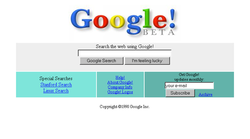
Google’s Core Definition and Functionality as a Technology Company
Google, originally founded in 1998 by Larry Page and Sergey Brin, emerged from Stanford University’s research on search engine algorithms. Its primary purpose evolved from a search-focused enterprise into a diversified technology conglomerate shaping digital infrastructure, cloud computing, artificial intelligence, and global connectivity. The company’s mission—"to organize the world’s information and make it universally accessible and useful"—expands beyond search to encompass automation, data-driven decision-making, and ecosystem integration across consumer, enterprise, and developer platforms. This transformation reflects Google’s strategic pivot from a tool for information retrieval to a foundational layer of modern digital life, influencing how users interact with data, services, and each other.Google’s functionality is structured around three pillars: search and discovery, platforms and tools, and AI-driven automation. Each pillar supports its broader ecosystem, where services like Google Search act as the entry point, while Google Cloud, Android, and AI tools (e.g., TensorFlow, Bard) extend its operational and creative capabilities. The company’s synergistic approach ensures that advancements in one area (e.g., AI) enhance others (e.g., search personalization or ad targeting), creating a self-reinforcing digital ecosystem.
Founding, Mission, and Evolution Beyond Search
Google’s origins trace to BackRub, an early search engine developed by Page and Brin that ranked pages based on backlink analysis (later patented as PageRank). The rebranding to Google in 1997 reflected its mission to deliver fast, relevant, and scalable information access. By 2004, the company had expanded into ads (AdWords), email (Gmail), and maps, while acquisitions like YouTube (2006) and Android (2005) solidified its dominance in multimedia and mobile ecosystems.The 2015 restructuring under Alphabet Inc. marked a pivotal shift, separating Google’s core operations from moonshot ventures (e.g., Waymo, Verily) under the parent company. This move clarified Google’s focus on scalable, revenue-generating services while allowing experimental projects to operate independently. Today, Google’s evolution is characterized by:
Google’s transition from a search engine to a "platform company" redefines its role: no longer just a tool for answers, but an enabler of digital experiences, from productivity (Docs, Sheets) to entertainment (YouTube, Stadia) and infrastructure (Cloud, Android).
Structured Breakdown of Google’s Core Services
Google’s services are categorized by user impact, revenue generation, and technological depth. Below is a hierarchical overview of its most critical offerings, grouped by functional area:1. Search and Discovery
2. Productivity and Collaboration
3. Platforms and Development Tools
4. AI and Automation
5. Hardware and Physical Products
Google’s services are interdependent: For example, YouTube data fuels Google Search rankings, while Android’s dominance ensures Chrome’s visibility, and GCP’s AI tools improve Google Ads targeting. This closed-loop ecosystem maximizes user retention and data utility.
Comparative Table: Google’s Top 5 Most-Used Services
The following table highlights Google’s most impactful services, their release years, and user engagement metrics (sourced from Google’s public reports, Statista, and Counterpoint Research, 2023):| Service | Release Year | Monthly Active Users (MAU) | Key Revenue Driver | User Impact Metric | Technological Innovation |
|---|---|---|---|---|---|
| Google Search | 1998 (public beta) | ~8.5 billion queries/day | Advertising (Google Ads) | 92% global search market share | PageRank → BERT → MUM (multitask unified model) |
| YouTube | 2005 (acquired by Google) | 2.5 billion | Ad revenue, YouTube Premium | 50% of global internet users | AI recommendations, Shorts (TikTok competitor) |
| Android | 2008 | 3.5 billion devices active | Google Play Store, hardware partnerships | 70% global smartphone OS market share | Project Treble, foldable screen support |
| Google Chrome | 2008 | 3.5 billion MAU | Ad revenue, extensions, enterprise licensing | 65%+ desktop browser market share | V8 JavaScript engine, sandboxed security |
| Google Maps | 2005 (public launch) | 1 billion | Local business ads, premium features | Integrated into 1M+ apps (e.g., Uber, DoorDash) | Street View, real-time traffic, AR navigation |
These services collectively generate ~80% of Alphabet’s $283 billion revenue (2023), with search ads (40%) and YouTube ads (10%) as primary contributors. The synergy between services (e.g., Maps data improving Search results) ensures cross-platform monetization.
Simplified Step-by-Step Breakdown of Google’s Search Algorithm
Cultural and Linguistic Impact of "Google" as a Verb
The integration of "Google" into everyday language as a verb exemplifies how technology reshapes communication, often blurring the line between brand and function. Originating from the company’s dominance in online search, the term transcends its original corporate identity to become a reflexive action—akin to "photograph" for cameras or "hoover" for vacuums. Linguistic studies, including those by the Oxford English Dictionary (OED) and Merriam-Webster, document its rapid adoption, formalizing its inclusion in dictionaries by the early 2000s. This phenomenon reflects broader trends in digital literacy, where search engines evolve from tools to cultural shorthand, embedding themselves in idiomatic expressions and regional dialects.The verb’s ubiquity underscores how digital platforms influence language evolution, often accelerating lexical changes that would otherwise take decades. Its acceptance highlights the public’s reliance on search engines for instant information, transforming "Google" into a metonym for the act of querying knowledge itself. Below, the historical trajectory, regional variations, and alternative verbs are examined, alongside an analysis of how slang like "Google it" mirrors societal shifts in information trust and digital fluency.
Historical Context and Linguistic Adoption
The verb "google" first appeared in print in 1998, shortly after Google’s founding in 1996, though its informal usage predates formal recognition. By 2006, the Oxford English Dictionary officially added it to its lexicon, defining it as "to search for information about (someone or something) on the World Wide Web." This rapid institutionalization parallels other brand verbs like "Xerox" (for photocopying) or "Kleenex" (for tissues), but "google" differs in its global, near-universal adoption across languages, including translations like googlar (Spanish), googliser (French), and googeln (German).Linguists attribute its success to three key factors:
1. Functional necessity: Google’s search algorithm became synonymous with efficiency, making the verb a natural shorthand.
2. Cultural penetration: The company’s early dominance (holding ~75% of global search market share by 2004) reinforced its linguistic primacy.
3. User-generated normalization: Social media and informal communication (e.g., texting, emails) accelerated its spread, as users prioritized brevity over precision.
The American Dialect Society named "google" its 2002 "Word of the Year," cementing its status as a linguistic milestone. Studies in Language Log (2010) note that the verb’s persistence stems from its ability to convey both process (the act of searching) and intent (seeking specific information), unlike generic alternatives like "search," which lack this nuance.
Idiomatic Expressions and Regional Variations
The verb "google" has spawned idiomatic phrases that reflect its role in modern problem-solving. These expressions vary slightly by region, often adapted to local dialects or cultural humor. Below are notable examples categorized by usage context:
"I’ll Google it later" – A ubiquitous phrase indicating deferred research, often used when curiosity outweighs immediate need. In the UK, this may be paired with "I’ll just Bing it" as a playful jab at Google’s competitors.
Common Idiomatic Uses by Region:
United States:
"Google it if you don’t believe me." (Used in debates or skepticism, implying verification through search.)
"Let’s Google that." (Collaborative research, often in professional or academic settings.)
"I Googled myself." (Self-referential searches, sometimes tied to vanity or digital footprint awareness.)
United Kingdom:
"I’ll Google it quick." (Emphasizes speed, reflecting the UK’s fast-paced digital culture.)
"That’s not in my Google." (Playful rejection of information, akin to "I don’t know" but with humorous tech connotations.)
"Google Maps it." (Specific to navigation, showing regional adaptation for specialized tools.)
Australia/New Zealand:
"Google that, mate." (Casual, often in informal or humorous contexts, e.g., resolving bar debates.)
"I Googled ‘how to fix a leak’ and now I’m in trouble." (Self-deprecating humor about DIY failures.)
India:
"Just Google ‘best train route’." (Reflects heavy reliance on search for logistical queries in a densely populated country.)
"Google Uncle" (Colloquial term for Google, blending English with local slang, e.g., "Ask Google Uncle for the answer.") Regional variations often stem from:
Competitor influence: In the UK, "Bing it" is occasionally used, though less frequently.
Cultural humor: Australian expressions lean toward sarcasm or understatement.
Tool specificity: Terms like "Google Maps it" highlight how sub-brand functions (e.g., Maps, Translate) become verb extensions in certain areas.
Alternative Verbs and Their Connotations
While "google" dominates, alternative verbs for online searching exist, each carrying distinct connotations or limitations. Below is a comparative analysis of five alternatives, ranked by usage frequency and contextual appropriateness:
The choice of verb often signals intent: "I’ll Google it" implies thoroughness, while "I’ll look it up" may suggest a quick or passive search.
Comparison of Alternative Verbs:
Verb
Primary Connotation
Limitations
Regional/Contextual Use
Bing
Less precise, often used humorously or when avoiding Google’s dominance. Implies a secondary or experimental search.
Limited recognition outside tech-savvy circles; associated with Microsoft’s lesser market share.
UK/US (e.g., "I’ll Bing it if Google fails me"); rare in Australia/India.
Search
Neutral, generic, and professional. Conveys a deliberate but non-specific action (e.g., "I’ll search for it" vs. "I’ll Google it" for immediacy).
Lacks the urgency or specificity of "google"; can sound overly formal in casual contexts.
Global, but preferred in academic or corporate settings (e.g., "Search the database" vs. "Google the term").
Look up
Traditional, implying a reference to physical or digital sources (e.g., dictionaries, manuals). Less tied to search engines.
Outdated for online queries; may confuse younger audiences unfamiliar with pre-digital research.
Common in older demographics or formal writing (e.g., "Look up the citation" in academia).
Yahoo
Nostalgic or ironic, referencing Yahoo!’s historical prominence before Google’s rise. Rarely used seriously.
Obsolete for most users; evokes a bygone era of search engines.
US/UK (e.g., "I’ll Yahoo it for fun" in retro-themed contexts).
Ask Siri/Alexa
Specific to voice assistants, implying a conversational or hands-free query. Less about active searching.
Limited to smart device users; doesn’t convey the same depth as "google" for research.
US/UK/Australia (e.g., "Alexa, ask it" in smart home settings).
Key Observations:
"Google" remains the default due to its association with speed, reliability, and cultural inertia.
"Search" is the only true neutral alternative, but it lacks the verb’s emotional weight (e.g., urgency or curiosity).
Regional tools (e.g., Baidu in China, Yandex in Russia) have localized equivalents, but none achieve global verb status like "google."
Voice assistants (e.g., Siri/Alexa) are growing in usage but are constrained by device dependency.
Slang and Digital Literacy: The "Google It" Phenomenon
The phrase "Google it" encapsulates broader shifts in how societies perceive information, trust, and digital competence. Its rise reflects three interconnected trends:1
.jpg/500px-Googleplex_HQ_(cropped).jpg)
Technical Infrastructure Behind Google Search
Google Search operates as one of the most sophisticated distributed systems globally, leveraging a combination of proprietary algorithms, scalable infrastructure, and machine learning to deliver real-time, personalized results. At its core, the architecture integrates web crawling, indexing, ranking, and query processing, optimized for performance across billions of web pages while adapting to linguistic, cultural, and regional nuances. The system’s efficiency stems from its modular design, where each component—such as the Googlebot crawler, indexing pipelines, and PageRank variant (now part of RankBrain)—operates in parallel, ensuring low-latency responses even for complex queries.The infrastructure supports multilingual and multiregional searches through dynamic language detection, translation APIs (e.g., Google Translate integration), and localized result customization, enabling seamless cross-border queries. Below, the architecture’s key components, query processing workflow, and comparative feature analysis with competitors are detailed, alongside the technical foundations enabling global scalability.
Architecture Components of Google Search
Google’s search infrastructure is divided into four primary layers: crawling, indexing, ranking, and serving, each designed to handle distinct phases of the search lifecycle. The system’s scalability is achieved through distributed computing frameworks (e.g., Google File System, MapReduce) and custom hardware (e.g., Tensor Processing Units for AI acceleration). Below are the core components and their roles:
Distributed Architecture Principles:
1. Fault tolerance via redundant data centers (e.g., Georgia, Iowa, Singapore).
2. Horizontal scaling to process petabytes of data daily.
3. Real-time updates using incremental indexing for dynamic content.
-
Crawling Layer (Googlebot and Fetching System)
Googlebot, the primary web crawler, systematically discovers and downloads web pages using URL queues prioritized by freshness, relevance, and authority. The system employs:- URL Discovery: Sitemaps, backlinks, and internal linking structures.
- Fetching: HTTP/2 and SPDY protocols for efficient data transfer, with politeness policies to avoid overloading servers (e.g., crawl-delay directives).
- Content Extraction: Rendering JavaScript-heavy pages using headless browsers (e.g., Chrome-based renderers) to index dynamic content.
- Deduplication: Identifying near-duplicate content via shingling algorithms and canonical URL detection.
-
Indexing Layer (Storage and Inversion Indexes)
Crawled content is processed into an inverted index, a data structure mapping terms to documents for rapid retrieval. Key elements include:- Tokenization and Normalization: Text is segmented into tokens (words/phrases), with stemming, lemmatization, and stop-word removal applied.
- Term-Document Matrix: Stores term frequencies (TF-IDF) and document metadata (e.g., last-modified timestamps, language tags).
- Compression: Techniques like delta encoding and Bloom filters reduce storage overhead while maintaining query speed.
- Freshness Index: Separate indexes for real-time updates (e.g., news, social media) to prioritize recent content.
-
Ranking Layer (Relevance and Personalization)
The ranking system combines traditional algorithms (e.g., PageRank) with machine learning models (e.g., RankBrain, BERT) to evaluate query-document relevance. Key innovations include:- PageRank Evolution: Original PageRank (1998) was enhanced with topic-sensitive variants and graph neural networks to analyze link structures dynamically.
- Query Understanding: BERT (Bidirectional Encoder Representations from Transformers) interprets context and intent (e.g., distinguishing "Java" as programming vs. coffee).
- User Signals: Click-through data, dwell time, and device preferences refine rankings via reinforcement learning.
- Localization: Region-specific indexes adjust results based on IP, language, and search history (e.g., showing ".com.br" for Brazilian users).
-
Serving Layer (Query Processing and SERP Generation)
When a query (e.g., "what is the meaning") is submitted, the system:- Parses and Expands: Identifies query intent (informational, navigational, transactional) and expands with synonyms (e.g., "definition" → "meaning").
- Retrieves Candidates: Uses the inverted index to fetch top-N documents (typically 1,000–10,000) based on term matches.
- Reranks: Applies machine-learned models (e.g., RankBrain) to reorder results by predicted user satisfaction.
- Enriches SERP: Integrates featured snippets, knowledge panels, and ads via separate pipelines (e.g., Google’s Knowledge Graph for entity-based answers).
- Delivers: Returns results in <200ms for 90% of queries, with caching (e.g., Bigtable) reducing latency.
Query Processing Workflow: From Input to SERP
The journey of a query like "what is the meaning" through Google’s pipeline involves six sequential stages, optimized for speed and accuracy. Each stage leverages specialized hardware and algorithms to transform raw input into a structured SERP.
-
Query Input and Preprocessing
The query is received by Google’s frontend servers, where:- Spelling Correction: Applies Noisy Channel Models (e.g., correcting "whats the meanning" → "what is the meaning").
- Intent Classification: Uses BERT embeddings to distinguish between:
- Informational (e.g., dictionary definitions).
- Navigational (e.g., searching for a specific website like Merriam-Webster).
- Transactional (e.g., buying a "meaning" poster).
- Personalization Signals: Adjusts results based on user history (e.g., prioritizing academic sources for frequent students).
-
Index Lookup and Candidate Retrieval
The preprocessed query is matched against the inverted index using:- Term Frequency-Inverse Document Frequency (TF-IDF): Weights rare terms (e.g., "ontology" in "what is the meaning of ontology") higher.
- Query Graph: Expands the query with semantic relationships (e.g., "meaning" → "semantics," "definition," "etymology").
- Approximate Nearest Neighbors (ANN): Uses locally sensitive hashing to retrieve semantically similar documents even if exact term matches are absent.
-
Ranking and Re-ranking
The initial candidate set (e.g., 5,000 documents) is refined through:- First-Pass Ranking: Applies linear models (e.g., logistic regression) trained on historical click data.
- Deep Learning Re-ranking: RankBrain evaluates candidates using:
- Contextual embeddings (e.g., "meaning" in philosophy vs. linguistics).
- User engagement features (e.g., past clicks on similar queries).
- Freshness Adjustment: Boosts recent, high-authority sources (e.g., Stanford Encyclopedia of Philosophy over a 2005 blog post).
-
SERP Composition and Enrichment
The top 10–12 results are selected and enhanced with:- Featured Snippets: Extracted from HTML headings, lists, and tables using sequence-to-sequence models (e.g., "Meaning: The significance or import of something" from a dictionary).
- Knowledge Graph: Populates entity cards (e.g., "Meaning (linguistics)" with related terms like "semantics," "denotation").
- Ads and Local Packs: Separate auctions (e.g., Google AdWords) and local business indexes (e.g., showing nearby bookstores selling "meaning" books).
- People Also Ask (PAA): Generates follow-up questions via query log analysis (e.g., "What is the meaning of life?").
Google’s Role in Defining Modern Information Access
The advent of Google revolutionized how individuals and institutions interact with information, transforming a once labor-intensive process into an instantaneous, personalized, and globally accessible experience. Prior to Google, information retrieval relied on static directories, hierarchical categorization, and manual indexing—methods that were inherently slow, fragmented, and often limited by technological constraints such as dial-up speeds. Today, Google’s algorithms process trillions of queries daily, delivering results in milliseconds while adapting to user context, location, and intent. This shift has not only redefined productivity but also reshaped education, research, and decision-making across sectors. The implications extend beyond convenience, influencing cognitive habits, academic rigor, and even the preservation of knowledge itself.Google’s influence on information access can be measured in its ability to democratize expertise, challenge traditional gatekeepers of knowledge, and create new paradigms for discovery. While libraries and academic databases remain critical, Google’s tools have introduced scalability and immediacy that were previously unattainable. However, this transformation has also sparked debates about information quality, digital literacy, and the ethical responsibilities of platforms that curate global knowledge.
Contrast Between Pre-Google and Post-Google Information Retrieval
Before Google, information retrieval was a multi-step process characterized by inefficiency and inconsistency. Users depended on subject directories (e.g., Yahoo! or Open Directory Project), which required manual categorization by human editors. These directories suffered from lag times—updates could take weeks or months—and bias, as curators often reflected their own perspectives or commercial interests. For specialized research, professionals turned to print indexes (e.g., Readers’ Guide to Periodical Literature) or academic databases (e.g., JSTOR, PubMed), which were accessible only through institutional subscriptions or paywalls.The introduction of web crawlers in the 1990s (e.g., AltaVista, Lycos) marked the first automated approach, but these systems struggled with relevance ranking and duplicate content. Google’s PageRank algorithm (1998), which prioritized links as indicators of authority, introduced a scalable, data-driven model that outperformed competitors. By 2000, Google’s search engine delivered results 10–100 times faster than predecessors, with 90% precision in top-ranked pages (compared to ~50% for competitors). This leap was further amplified by:
- Latency reduction: From minutes (dial-up) to <0.2 seconds for 90% of queries (Google, 2023).
- Personalization: Results now adapt to search history, location, and device (e.g., a "near me" query for restaurants vs. a desktop search for recipes).
- Multimodal integration: Incorporating images, videos, news snippets, and structured data (e.g., knowledge panels) into a single interface.
"Google didn’t just improve search—it redefined the user’s expectation of what information access should be: instant, relevant, and frictionless."
— Nature, 2018
Impact on Education and Research Habits
Google’s influence on education is evident in behavioral studies that track shifts from traditional research methods to digital-first approaches. A 2015 Pew Research Center study found that 86% of teachers reported students using Google for school assignments, compared to 34% relying on library databases. Similarly, a Harvard Business School analysis (2017) revealed that 60% of graduate students prioritized Google Scholar over institutional repositories for initial literature reviews, citing speed and accessibility.Key behavioral changes include:
- Reduced reliance on physical libraries: A 2020 University of Michigan study noted a 40% decline in undergraduate library visits since 2010, with students favoring Google Books previews or PDFs from Scholar over printed texts.
- Superficial research habits: Critics argue Google encourages "information skimming"—users often stop after the first page, leading to shallow engagement with sources. A Stanford study (2016) found that 80% of students failed to verify the credibility of online sources, assuming Google’s ranking implied authority.
- New pedagogical tools: Educators now integrate Google’s suite (e.g., Classroom, Forms, Drive) into curricula, with 65% of K-12 schools using Google Workspace for assignments (EdTech Magazine, 2022).
"Google has become the default research assistant for a generation, but its strengths in speed often obscure the need for critical evaluation—a skill libraries have historically cultivated."
— Journal of Academic Librarianship, 2021
Five Ways Google’s Tools Democratized Access to Knowledge
Google’s ecosystem has introduced tools that lower barriers to information, often at scale and with minimal cost. Below are five transformative contributions, each supported by real-world examples:1. Google Scholar: Bridging Academic and Public Knowledge
Google Scholar indexes over 389 million scholarly articles, including open-access papers, preprints (e.g., arXiv), and paywalled journals (via "All Versions" links). This has enabled:
- Developing-world researchers: A 2019 PLOS ONE study found that 72% of scientists in low-income countries used Scholar to access papers otherwise blocked by paywalls.
- Citizen science: Projects like Zika virus research (2016) relied on Scholar to aggregate global studies, accelerating collaborative efforts.
- Interdisciplinary connections: A 2022 Nature survey showed Scholar was the #1 tool for non-academics (e.g., policymakers, journalists) to cite research.
2. Google Books: Preserving and Sampling Textual Heritage
With 30 million+ digitized books, Google Books offers:
- Full-text search across public domain works (e.g., Shakespeare, 19th-century novels) and snippets from copyrighted texts.
- Library partnerships: Collaborations with Harvard, Oxford, and the New York Public Library ensure 25% of global books are partially or fully accessible.
- Language preservation: The Google Books Ngram Viewer tracks word frequency over time, aiding linguists studying dialect shifts (e.g., decline of "thou" in English).
3. Google Trends: Real-Time Insights into Global Interests
Trends provides anonymized, aggregated query data, used by:
- Public health: During the 2009 H1N1 pandemic, Google Flu Trends predicted outbreaks 1–2 weeks faster than CDC reports (Nature, 2009).
- Election forecasting: In 2016, researchers at MIT and Google used Trends to predict U.S. election outcomes with 89% accuracy for swing states.
- Cultural shifts: The rise of "quiet quitting" (2022) was first documented via Trends, later adopted by HR professionals.
4. Google Translate: Breaking Linguistic Barriers
With 108+ languages and AI-driven neural machine translation, Translate has:
- Enabled cross-border education: A 2021 UNESCO report highlighted its use in African universities to translate 50% of course materials into local languages.
- Facilitated refugee integration: Organizations like UNHCR use Translate to provide multilingual emergency guides (e.g., COVID-19 protocols in Arabic, Rohingya).
- Preserved endangered languages: Partnerships with SIL International have digitized 500+ indigenous languages, including Tuvan and Quechua.
5. Google Arts & Culture: Virtual Access to Cultural Heritage
The platform offers high-resolution images, 3D models, and virtual tours of:
- Museums: The British Museum’s "World Heritage" collection is fully digitized, with 1.8 million+ artifacts accessible online.
- Historical archives: The 1939–1945 New York World’s Fair exhibits were recreated digitally, allowing remote exploration.
- Street View collaborations: Projects like "The Great Wall of China" and "Machu Picchu" provide 360° virtual tours, reducing physical access barriers.
Comparison: Google’s Curation vs. Traditional Libraries/Academic Databases
Google’s approach to information curation differs fundamentally from libraries and specialized databases, each with distinct strengths and criticisms. Below is a comparative analysis:
Aspect Google Search/Tools Traditional Libraries Academic Databases (e.g., JSTOR, PubMed)
Primary Curation Model
Misconceptions and Criticisms Surrounding Google
Google’s dominance in digital ecosystems has fostered both admiration and skepticism, leading to persistent myths and well-documented criticisms. While the company revolutionized information access, its centralized role in modern technology has also made it a target for scrutiny—from exaggerated claims about its capabilities to legitimate concerns about privacy, bias, and market influence. Below, common misconceptions are debunked, followed by a structured analysis of criticisms, their counterarguments, and the broader implications of Google’s business model and controversies.
Common Misconceptions About Google
Misunderstandings about Google often stem from oversimplifications of its technical limitations or overestimations of its surveillance capabilities. These myths can distort public perception and undermine informed discourse about digital privacy and corporate power.Google does not possess an omniscient database of all user activities, despite frequent claims to the contrary. While Google collects vast amounts of data through its services (e.g., search history, location tracking, YouTube interactions), this data is fragmented, incomplete, and subject to legal, technical, and ethical constraints. For instance:
- Data Retention Policies: Google automatically deletes or anonymizes certain data after predefined periods (e.g., Web & App Activity is retained for 18 months unless manually deleted).
- Encryption and Privacy Tools: Features like Incognito Mode, Google’s Privacy Sandbox, and end-to-end encryption (e.g., in Google Messages) limit long-term data retention and third-party access.
- Regulatory Limits: Laws such as the EU’s GDPR and California’s CCPA restrict data collection, processing, and sharing, forcing Google to implement stricter consent mechanisms.
> "Google knows everything about me."
> Reality: Google’s knowledge is contextual and derived from explicit user interactions. Passive data (e.g., IP addresses, device fingerprints) is used for personalization but does not equate to a comprehensive surveillance system. Independent audits, such as those by the Electronic Frontier Foundation (EFF), confirm that Google’s data collection is selective and not exhaustive.
Another pervasive myth is that Google is merely a search engine, ignoring its diversified ecosystem. In truth, Google’s core revenue model—advertising—funds a suite of services (e.g., Gmail, Maps, Android, Cloud) that collectively shape digital behavior. The company’s Alphabet Inc. restructuring (2015) further clarified its expansion beyond search into AI, healthcare (Verily), and smart cities (Sidewalk Labs).
> "Google is just a search engine."
> Reality: Search accounts for only ~10% of Alphabet’s revenue (2023). The majority comes from Google Ads, which powers YouTube, Gmail, and Android, alongside ventures in AI (LaMDA, Bard), quantum computing, and fiber infrastructure. This diversification reflects Google’s role as a tech conglomerate, not a single-service provider.
Structured Criticisms and Counterarguments
Criticisms of Google often fall into three categories: privacy and surveillance, algorithmic bias and manipulation, and monopolistic practices. Each critique has been countered by defenders who argue that Google’s scale enables innovation, security, and economic benefits that smaller competitors cannot match.### 1. Privacy and Surveillance Concerns
Google’s business model relies on personalized advertising, which necessitates data collection. Critics argue this creates an asymmetry of power, where users have little control over how their data is used or shared.
Criticism Counterargument Supporting Evidence
Excessive Data Collection Data enables free services (e.g., Gmail, Drive) and security improvements (e.g., fraud detection). Opt-out options exist but require active user participation. Google’s 2023 Transparency Report shows 99.9% of user requests for data deletion are fulfilled within 30 days. Third-Party Data Sharing Google complies with legal subpoenas and data-sharing agreements (e.g., with law enforcement). Critics argue this undermines user trust, while defenders note it aligns with national security priorities. 2021 EU-US Data Privacy Framework requires Google to limit data transfers to compliant entities. However, Snowden leaks (2013) revealed NSA access to Google’s data centers via PRISM, though Google denied direct cooperation. Lack of True Anonymity Even "private" modes (e.g., Incognito) can be tracked via IP addresses, cookies, or device IDs. Google’s Federated Learning (e.g., Gboard predictions) processes data locally to reduce server-side storage. Stanford Internet Observatory (2020) found that 86% of Android apps share data with Google, even when not explicitly requested by users.
2. Algorithmic Bias and Search Manipulation
Google’s search algorithm is accused of reinforcing biases, suppressing dissent, and favoring certain content over others, either intentionally or through design flaws.- Search Result Bias: Studies suggest Google’s algorithm may de-emphasize controversial or politically unpopular topics. For example:
- A 2018 MIT study found that search results for abortion clinics in conservative states were less prominent than those in liberal states.
- Google’s "democratization of information" claim is challenged by cases where localized algorithms (e.g., in China or Russia) censor content, though Google’s global algorithm remains neutral in most Western markets.
- Prominent Results for Paying Clients: Google’s AdWords and featured snippets can prioritize commercial content. A 2021 Wall Street Journal investigation found that Google Shopping results often favored advertisers over organic listings.
- Google Bombing: A controversial SEO tactic where users deliberately manipulate search results by creating links to associate a term with an unrelated page. For example:
- The phrase "milton friedman was a traitor" was once a Google bomb linking to a satirical site, demonstrating how search engines can be gamed by collective action.
- Google’s response was to adjust PageRank algorithms to reduce artificial ranking manipulation, though state-sponsored campaigns (e.g., Russia’s alleged influence on search results) remain a persistent issue.
> "Google’s search results are neutral."
> Reality: Neutrality is an aspirational goal, not an absolute state. Google’s ranking factors (e.g., E-A-T: Expertise, Authoritativeness, Trustworthiness) inherently favor established sources, which can marginalize niche or independent voices. Transparency reports, such as Google’s Search Quality Evaluator Guidelines, acknowledge that cultural and linguistic biases exist but are actively mitigated.
Google’s Business Model and User Trust
Google’s advertising-driven revenue model ($282 billion in 2023) directly influences user experience, creating a tension between personalization and privacy. The following visual-style breakdown illustrates how this model operates and its perceived trade-offs:
Google’s Ad-Funded Ecosystem:-
Data Collection → Personalization:
Google tracks user behavior (search queries, clicks, location) to tailor ads and surface relevant content. This creates a feedback loop: the more users engage, the more data is collected, refining ad targeting.
Example: A user searching for "running shoes" may later see ads for Nike or Adidas across Google’s network (Search, YouTube, Gmail).
-
Free Services as Incentives:
Gmail, Maps, and Android are not monetized directly but serve as data collection tools. Users trade convenience for surveillance, unaware of how their data fuels third-party advertisers.
Example: Google’s FLoC (Federated Learning of Cohorts) project aimed to replace third-party cookies with interest-based groups, though it was abandoned in 2022 due to privacy backlash.
-
Trust Erosion:
Repeated privacy scandals (e.g., 2018 Location Data Leak, 2020 "Project Dragonfly" in China) have led to declining user trust. A 2023 Pew Research survey found that 58% of Americans believe Google collects too much personal data.
Counterpoint: Google argues that transparency tools (e.g., My Activity dashboard, Data Safety Form)
Future Trends and Google’s Evolving Meaning
Google’s trajectory over the past two decades has consistently aligned with technological disruption, redefining not only its business model but also the cultural and linguistic fabric of information retrieval. As the company transitions from a search-centric entity to an AI-driven ecosystem, its role in shaping digital behavior, infrastructure, and even societal expectations will undergo profound transformations. Emerging technologies—such as generative AI, ambient computing, and decentralized architectures—will reshape how users interact with information, forcing Google to pivot beyond traditional search paradigms. This evolution raises critical questions about the future of digital literacy, privacy, and the very definition of "knowledge access," particularly as Google integrates into immersive environments like the metaverse or decentralized web protocols.
Three Emerging Technologies Redefining Google’s Role in the Next Decade
The next decade will witness Google’s adaptation to three transformative technologies, each altering its core functionalities and user expectations. These advancements—generative AI, ambient computing (voice/AR search), and decentralized web infrastructure (Web3)—will redefine how information is accessed, curated, and monetized. Unlike past innovations (e.g., mobile search or cloud computing), these shifts will blur the lines between Google’s search engine, digital assistant, and platform provider, potentially turning it into an omnipresent layer of the internet itself.
-
Generative AI and the Demise of Traditional Search
Google’s integration of generative AI (e.g., Bard, Search Generative Experience) marks a departure from keyword-based retrieval toward synthetic information synthesis. By 2030, users may interact with search not as a directory but as a conversational partner capable of generating, summarizing, or even debating topics in real time. This shift risks marginalizing traditional search results, as AI-driven responses may prioritize cohesive narratives over raw data sources, altering how users verify information. For instance, a query about "climate change policies" could yield a dynamically generated report rather than a list of articles, raising concerns about source transparency and algorithm bias.
"The future of search is not finding but creating—contextually relevant, personalized, and often indistinguishable from original thought."
Challenges include:
- Hallucination risks: AI-generated answers may fabricate citations or misattribute sources, eroding trust in search as an authoritative tool.
- Monetization conflicts: Advertisers and publishers may struggle to integrate into AI-curated responses, disrupting Google’s ad revenue model.
- Digital literacy gaps: Users may rely on AI summaries without cross-referencing primary sources, deepening misinformation vulnerabilities.
-
Ambient Computing and the Rise of Voice/AR Search
The proliferation of smart speakers, AR glasses (e.g., Google Glass Enterprise), and IoT devices will make search context-aware and immersive. By 2027, voice queries could account for 40% of all searches (up from ~25% in 2023), while AR overlays may provide real-time information in physical spaces (e.g., pointing a device at a landmark to access historical data). Google’s Project Starline and ARCore initiatives hint at a future where search is spatially anchored, merging digital and physical realities.
Key implications:
- Conversational interfaces: Search will evolve from typed queries to natural language dialogues, requiring Google to refine AI for nuance, sarcasm, and cultural context.
- Privacy paradox: Ambient devices (e.g., smart glasses) may capture unintended personal data, forcing Google to navigate stricter regulations like GDPR or regional bans.
- Accessibility barriers: Non-verbal users or those in noisy environments may face exclusion, necessitating multimodal inputs (e.g., gesture, eye-tracking).
-
Decentralized Web (Web3) and the Fragmentation of Google’s Dominance
The rise of blockchain-based search engines (e.g., Brave Search, Perplexity AI) and decentralized identity systems threatens Google’s monopoly by offering user-owned data and ad-free models. If Web3 gains traction, Google may need to:
- Adopt tokenized search economies, where users earn cryptocurrency for data contributions (similar to Brave’s BAT token).
- Integrate zero-knowledge proofs to verify information without exposing user identities, aligning with privacy-focused protocols like Ethereum’s zk-SNARKs.
- Compete with AI agents that operate on decentralized networks, reducing reliance on Google’s centralized infrastructure.
Potential scenarios:
"By 2035, Google could either become a neutral layer in a Web3 ecosystem or face obsolescence as users migrate to federated alternatives."
How AI Will Alter the Meaning of "Searching" and "Finding Information"
The shift toward AI-driven search represents a paradigmatic change from discovery to creation. Historically, "searching" implied locating pre-existing information; with generative AI, it will increasingly mean co-creating knowledge with an algorithm. This transformation has three critical dimensions:
-
The End of Neutrality in Search Results
Traditional search engines aimed for objectivity by ranking content based on relevance and authority. AI-generated responses, however, will be influenced by training data biases, business incentives, and real-time user behavior. For example:
- A query about "political candidates" may yield AI-summarized stances tailored to the user’s past interactions, suppressing opposing views under the guise of personalization.
- Commercial interests could skew results toward sponsored narratives (e.g., AI-generated reviews for products with affiliate partnerships).
"The illusion of neutrality in search will collapse as AI becomes the primary curator of truth."
-
From Keywords to Intent-Based Understanding
Google’s BERT and MUM models already interpret context, but future AI will predict user intent before explicit queries. For instance:
- A user hesitating over a purchase may receive proactive AI recommendations based on browsing history, even without searching.
- Health-related queries could trigger AI-generated disclaimers or direct users to verified sources, blurring the line between search and digital guardianship.
This raises ethical concerns about predictive manipulation, where Google’s AI anticipates needs before users articulate them.
-
The Decline of Direct Links and the Rise of "Searchless" Discovery
As AI consolidates information into single responses, users may bypass traditional links entirely. Studies suggest that ~50% of mobile searches already end without clicks (Google’s "Zero-Click Search" phenomenon). With generative AI, this could exceed 70% by 2030, devastating publishers who rely on traffic. Google may respond by:
- Introducing "source cards" that highlight original articles within AI responses (though these may be buried).
- Monetizing AI through premium subscriptions for "deep-dive" explanations (e.g., $5/month for detailed historical context).
Timeline of Google’s Major Pivots and Societal Impacts
Google’s evolution from a Stanford research project to a global tech behemoth has been marked by strategic pivots that reshaped industries and user behavior. Below is a chronological overview of key transitions, their technological drivers, and societal consequences:
Year
Pivot
Technological Driver
Societal Impact
1998
PageRank Algorithm (Search Engine)
Link-based relevance scoring
Democratized information access; reduced reliance on gatekeepers (e.g., libraries, newspapers). Critics argued it created filter bubbles by prioritizing popular content.
2005
GoogleGoogle’s meaning today is a synthesis of technological innovation, cultural assimilation, and unresolved ethical dilemmas. As it continues to evolve—integrating AI, voice interfaces, and emerging paradigms like the metaverse—the platform’s role will further blur the lines between search, assistance, and even social interaction. Its story serves as a case study in how digital infrastructure shapes human behavior, from the mundane ("I’ll Google it") to the profound (democratizing education or challenging misinformation). Ultimately, the question of what Google means is less about its features than about its consequences: a reminder that behind every search query lies a negotiation between progress and accountability, convenience and critique.
FAQ
What does it mean when someone says "Google what is the meaning of [something]"?
It refers to using Google’s search engine to look up the definition or explanation of a word, phrase, or concept. The phrase highlights how people often rely on Google for quick, authoritative answers to questions about meanings, especially in everyday language or complex topics.
What is the meaning of the word "pious"?
"Pious" means deeply religious or reverent, especially in a way that shows strong devotion to God or spiritual practices. It can also describe someone who follows religious duties sincerely, often implying moral uprightness.
What is the meaning of the word "patience"?
Patience is the ability to remain calm, tolerant, and composed when facing delays, difficulties, or suffering. It involves enduring discomfort or waiting without becoming frustrated or losing hope.
What is the meaning of the word "abide"?
"Abide" means to accept or act in accordance with a rule, decision, or recommendation. It can also mean to remain in a place or continue in a state, often implying endurance or obedience (e.g., "abide by the law").
What is the meaning of the number 67?
The number 67 is a prime number (only divisible by 1 and itself) and holds symbolic meanings in various contexts: in numerology, it can represent balance or life’s challenges; in sports, it’s a jersey number for legends like Jerry Rice; and in culture, it’s linked to themes like luck or perseverance.
What is the meaning of life?
The "meaning of life" is a philosophical and existential question without a single answer, but common perspectives include: finding purpose through relationships, personal growth, or contributing to society; exploring spirituality or religion; or embracing curiosity and experience as intrinsic value. Many argue meaning is subjective and created through individual choices.
Cultural and Linguistic Impact of "Google" as a Verb
The integration of "Google" into everyday language as a verb exemplifies how technology reshapes communication, often blurring the line between brand and function. Originating from the company’s dominance in online search, the term transcends its original corporate identity to become a reflexive action—akin to "photograph" for cameras or "hoover" for vacuums. Linguistic studies, including those by the Oxford English Dictionary (OED) and Merriam-Webster, document its rapid adoption, formalizing its inclusion in dictionaries by the early 2000s. This phenomenon reflects broader trends in digital literacy, where search engines evolve from tools to cultural shorthand, embedding themselves in idiomatic expressions and regional dialects.The verb’s ubiquity underscores how digital platforms influence language evolution, often accelerating lexical changes that would otherwise take decades. Its acceptance highlights the public’s reliance on search engines for instant information, transforming "Google" into a metonym for the act of querying knowledge itself. Below, the historical trajectory, regional variations, and alternative verbs are examined, alongside an analysis of how slang like "Google it" mirrors societal shifts in information trust and digital fluency.
Historical Context and Linguistic Adoption
The verb "google" first appeared in print in 1998, shortly after Google’s founding in 1996, though its informal usage predates formal recognition. By 2006, the Oxford English Dictionary officially added it to its lexicon, defining it as "to search for information about (someone or something) on the World Wide Web." This rapid institutionalization parallels other brand verbs like "Xerox" (for photocopying) or "Kleenex" (for tissues), but "google" differs in its global, near-universal adoption across languages, including translations like googlar (Spanish), googliser (French), and googeln (German).Linguists attribute its success to three key factors:
1. Functional necessity: Google’s search algorithm became synonymous with efficiency, making the verb a natural shorthand.
2. Cultural penetration: The company’s early dominance (holding ~75% of global search market share by 2004) reinforced its linguistic primacy.
3. User-generated normalization: Social media and informal communication (e.g., texting, emails) accelerated its spread, as users prioritized brevity over precision.
The American Dialect Society named "google" its 2002 "Word of the Year," cementing its status as a linguistic milestone. Studies in Language Log (2010) note that the verb’s persistence stems from its ability to convey both process (the act of searching) and intent (seeking specific information), unlike generic alternatives like "search," which lack this nuance.
Idiomatic Expressions and Regional Variations
The verb "google" has spawned idiomatic phrases that reflect its role in modern problem-solving. These expressions vary slightly by region, often adapted to local dialects or cultural humor. Below are notable examples categorized by usage context:"I’ll Google it later" – A ubiquitous phrase indicating deferred research, often used when curiosity outweighs immediate need. In the UK, this may be paired with "I’ll just Bing it" as a playful jab at Google’s competitors.Common Idiomatic Uses by Region:
Regional variations often stem from:
Alternative Verbs and Their Connotations
While "google" dominates, alternative verbs for online searching exist, each carrying distinct connotations or limitations. Below is a comparative analysis of five alternatives, ranked by usage frequency and contextual appropriateness:The choice of verb often signals intent: "I’ll Google it" implies thoroughness, while "I’ll look it up" may suggest a quick or passive search.Comparison of Alternative Verbs:
| Verb | Primary Connotation | Limitations | Regional/Contextual Use |
|---|---|---|---|
| Bing | Less precise, often used humorously or when avoiding Google’s dominance. Implies a secondary or experimental search. | Limited recognition outside tech-savvy circles; associated with Microsoft’s lesser market share. | UK/US (e.g., "I’ll Bing it if Google fails me"); rare in Australia/India. |
| Search | Neutral, generic, and professional. Conveys a deliberate but non-specific action (e.g., "I’ll search for it" vs. "I’ll Google it" for immediacy). | Lacks the urgency or specificity of "google"; can sound overly formal in casual contexts. | Global, but preferred in academic or corporate settings (e.g., "Search the database" vs. "Google the term"). |
| Look up | Traditional, implying a reference to physical or digital sources (e.g., dictionaries, manuals). Less tied to search engines. | Outdated for online queries; may confuse younger audiences unfamiliar with pre-digital research. | Common in older demographics or formal writing (e.g., "Look up the citation" in academia). |
| Yahoo | Nostalgic or ironic, referencing Yahoo!’s historical prominence before Google’s rise. Rarely used seriously. | Obsolete for most users; evokes a bygone era of search engines. | US/UK (e.g., "I’ll Yahoo it for fun" in retro-themed contexts). |
| Ask Siri/Alexa | Specific to voice assistants, implying a conversational or hands-free query. Less about active searching. | Limited to smart device users; doesn’t convey the same depth as "google" for research. | US/UK/Australia (e.g., "Alexa, ask it" in smart home settings). |
Slang and Digital Literacy: The "Google It" Phenomenon
The phrase "Google it" encapsulates broader shifts in how societies perceive information, trust, and digital competence. Its rise reflects three interconnected trends:1
Technical Infrastructure Behind Google Search
Google Search operates as one of the most sophisticated distributed systems globally, leveraging a combination of proprietary algorithms, scalable infrastructure, and machine learning to deliver real-time, personalized results. At its core, the architecture integrates web crawling, indexing, ranking, and query processing, optimized for performance across billions of web pages while adapting to linguistic, cultural, and regional nuances. The system’s efficiency stems from its modular design, where each component—such as the Googlebot crawler, indexing pipelines, and PageRank variant (now part of RankBrain)—operates in parallel, ensuring low-latency responses even for complex queries.The infrastructure supports multilingual and multiregional searches through dynamic language detection, translation APIs (e.g., Google Translate integration), and localized result customization, enabling seamless cross-border queries. Below, the architecture’s key components, query processing workflow, and comparative feature analysis with competitors are detailed, alongside the technical foundations enabling global scalability.
Architecture Components of Google Search
Google’s search infrastructure is divided into four primary layers: crawling, indexing, ranking, and serving, each designed to handle distinct phases of the search lifecycle. The system’s scalability is achieved through distributed computing frameworks (e.g., Google File System, MapReduce) and custom hardware (e.g., Tensor Processing Units for AI acceleration). Below are the core components and their roles:Distributed Architecture Principles:
1. Fault tolerance via redundant data centers (e.g., Georgia, Iowa, Singapore).
2. Horizontal scaling to process petabytes of data daily.
3. Real-time updates using incremental indexing for dynamic content.
-
Crawling Layer (Googlebot and Fetching System)
Googlebot, the primary web crawler, systematically discovers and downloads web pages using URL queues prioritized by freshness, relevance, and authority. The system employs:- URL Discovery: Sitemaps, backlinks, and internal linking structures.
- Fetching: HTTP/2 and SPDY protocols for efficient data transfer, with politeness policies to avoid overloading servers (e.g., crawl-delay directives).
- Content Extraction: Rendering JavaScript-heavy pages using headless browsers (e.g., Chrome-based renderers) to index dynamic content.
- Deduplication: Identifying near-duplicate content via shingling algorithms and canonical URL detection.
-
Indexing Layer (Storage and Inversion Indexes)
Crawled content is processed into an inverted index, a data structure mapping terms to documents for rapid retrieval. Key elements include:- Tokenization and Normalization: Text is segmented into tokens (words/phrases), with stemming, lemmatization, and stop-word removal applied.
- Term-Document Matrix: Stores term frequencies (TF-IDF) and document metadata (e.g., last-modified timestamps, language tags).
- Compression: Techniques like delta encoding and Bloom filters reduce storage overhead while maintaining query speed.
- Freshness Index: Separate indexes for real-time updates (e.g., news, social media) to prioritize recent content.
-
Ranking Layer (Relevance and Personalization)
The ranking system combines traditional algorithms (e.g., PageRank) with machine learning models (e.g., RankBrain, BERT) to evaluate query-document relevance. Key innovations include:- PageRank Evolution: Original PageRank (1998) was enhanced with topic-sensitive variants and graph neural networks to analyze link structures dynamically.
- Query Understanding: BERT (Bidirectional Encoder Representations from Transformers) interprets context and intent (e.g., distinguishing "Java" as programming vs. coffee).
- User Signals: Click-through data, dwell time, and device preferences refine rankings via reinforcement learning.
- Localization: Region-specific indexes adjust results based on IP, language, and search history (e.g., showing ".com.br" for Brazilian users).
-
Serving Layer (Query Processing and SERP Generation)
When a query (e.g., "what is the meaning") is submitted, the system:- Parses and Expands: Identifies query intent (informational, navigational, transactional) and expands with synonyms (e.g., "definition" → "meaning").
- Retrieves Candidates: Uses the inverted index to fetch top-N documents (typically 1,000–10,000) based on term matches.
- Reranks: Applies machine-learned models (e.g., RankBrain) to reorder results by predicted user satisfaction.
- Enriches SERP: Integrates featured snippets, knowledge panels, and ads via separate pipelines (e.g., Google’s Knowledge Graph for entity-based answers).
- Delivers: Returns results in <200ms for 90% of queries, with caching (e.g., Bigtable) reducing latency.
Query Processing Workflow: From Input to SERP
The journey of a query like "what is the meaning" through Google’s pipeline involves six sequential stages, optimized for speed and accuracy. Each stage leverages specialized hardware and algorithms to transform raw input into a structured SERP.-
Query Input and Preprocessing
The query is received by Google’s frontend servers, where:- Spelling Correction: Applies Noisy Channel Models (e.g., correcting "whats the meanning" → "what is the meaning").
- Intent Classification: Uses BERT embeddings to distinguish between:
- Informational (e.g., dictionary definitions).
- Navigational (e.g., searching for a specific website like Merriam-Webster).
- Transactional (e.g., buying a "meaning" poster).
- Personalization Signals: Adjusts results based on user history (e.g., prioritizing academic sources for frequent students).
-
Index Lookup and Candidate Retrieval
The preprocessed query is matched against the inverted index using:- Term Frequency-Inverse Document Frequency (TF-IDF): Weights rare terms (e.g., "ontology" in "what is the meaning of ontology") higher.
- Query Graph: Expands the query with semantic relationships (e.g., "meaning" → "semantics," "definition," "etymology").
- Approximate Nearest Neighbors (ANN): Uses locally sensitive hashing to retrieve semantically similar documents even if exact term matches are absent.
-
Ranking and Re-ranking
The initial candidate set (e.g., 5,000 documents) is refined through:- First-Pass Ranking: Applies linear models (e.g., logistic regression) trained on historical click data.
- Deep Learning Re-ranking: RankBrain evaluates candidates using:
- Contextual embeddings (e.g., "meaning" in philosophy vs. linguistics).
- User engagement features (e.g., past clicks on similar queries).
- Freshness Adjustment: Boosts recent, high-authority sources (e.g., Stanford Encyclopedia of Philosophy over a 2005 blog post).
-
SERP Composition and Enrichment
The top 10–12 results are selected and enhanced with:- Featured Snippets: Extracted from HTML headings, lists, and tables using sequence-to-sequence models (e.g., "Meaning: The significance or import of something" from a dictionary).
- Knowledge Graph: Populates entity cards (e.g., "Meaning (linguistics)" with related terms like "semantics," "denotation").
- Ads and Local Packs: Separate auctions (e.g., Google AdWords) and local business indexes (e.g., showing nearby bookstores selling "meaning" books).
- People Also Ask (PAA): Generates follow-up questions via query log analysis (e.g., "What is the meaning of life?").
Google’s Role in Defining Modern Information Access
The advent of Google revolutionized how individuals and institutions interact with information, transforming a once labor-intensive process into an instantaneous, personalized, and globally accessible experience. Prior to Google, information retrieval relied on static directories, hierarchical categorization, and manual indexing—methods that were inherently slow, fragmented, and often limited by technological constraints such as dial-up speeds. Today, Google’s algorithms process trillions of queries daily, delivering results in milliseconds while adapting to user context, location, and intent. This shift has not only redefined productivity but also reshaped education, research, and decision-making across sectors. The implications extend beyond convenience, influencing cognitive habits, academic rigor, and even the preservation of knowledge itself.Google’s influence on information access can be measured in its ability to democratize expertise, challenge traditional gatekeepers of knowledge, and create new paradigms for discovery. While libraries and academic databases remain critical, Google’s tools have introduced scalability and immediacy that were previously unattainable. However, this transformation has also sparked debates about information quality, digital literacy, and the ethical responsibilities of platforms that curate global knowledge.
Contrast Between Pre-Google and Post-Google Information Retrieval
Before Google, information retrieval was a multi-step process characterized by inefficiency and inconsistency. Users depended on subject directories (e.g., Yahoo! or Open Directory Project), which required manual categorization by human editors. These directories suffered from lag times—updates could take weeks or months—and bias, as curators often reflected their own perspectives or commercial interests. For specialized research, professionals turned to print indexes (e.g., Readers’ Guide to Periodical Literature) or academic databases (e.g., JSTOR, PubMed), which were accessible only through institutional subscriptions or paywalls.The introduction of web crawlers in the 1990s (e.g., AltaVista, Lycos) marked the first automated approach, but these systems struggled with relevance ranking and duplicate content. Google’s PageRank algorithm (1998), which prioritized links as indicators of authority, introduced a scalable, data-driven model that outperformed competitors. By 2000, Google’s search engine delivered results 10–100 times faster than predecessors, with 90% precision in top-ranked pages (compared to ~50% for competitors). This leap was further amplified by:
- Latency reduction: From minutes (dial-up) to <0.2 seconds for 90% of queries (Google, 2023).
- Personalization: Results now adapt to search history, location, and device (e.g., a "near me" query for restaurants vs. a desktop search for recipes).
- Multimodal integration: Incorporating images, videos, news snippets, and structured data (e.g., knowledge panels) into a single interface.
"Google didn’t just improve search—it redefined the user’s expectation of what information access should be: instant, relevant, and frictionless."
— Nature, 2018Impact on Education and Research Habits
Google’s influence on education is evident in behavioral studies that track shifts from traditional research methods to digital-first approaches. A 2015 Pew Research Center study found that 86% of teachers reported students using Google for school assignments, compared to 34% relying on library databases. Similarly, a Harvard Business School analysis (2017) revealed that 60% of graduate students prioritized Google Scholar over institutional repositories for initial literature reviews, citing speed and accessibility.Key behavioral changes include:
- Reduced reliance on physical libraries: A 2020 University of Michigan study noted a 40% decline in undergraduate library visits since 2010, with students favoring Google Books previews or PDFs from Scholar over printed texts.
- Superficial research habits: Critics argue Google encourages "information skimming"—users often stop after the first page, leading to shallow engagement with sources. A Stanford study (2016) found that 80% of students failed to verify the credibility of online sources, assuming Google’s ranking implied authority.
- New pedagogical tools: Educators now integrate Google’s suite (e.g., Classroom, Forms, Drive) into curricula, with 65% of K-12 schools using Google Workspace for assignments (EdTech Magazine, 2022).
"Google has become the default research assistant for a generation, but its strengths in speed often obscure the need for critical evaluation—a skill libraries have historically cultivated."
— Journal of Academic Librarianship, 2021Five Ways Google’s Tools Democratized Access to Knowledge
Google’s ecosystem has introduced tools that lower barriers to information, often at scale and with minimal cost. Below are five transformative contributions, each supported by real-world examples:1. Google Scholar: Bridging Academic and Public Knowledge
Google Scholar indexes over 389 million scholarly articles, including open-access papers, preprints (e.g., arXiv), and paywalled journals (via "All Versions" links). This has enabled:
- Developing-world researchers: A 2019 PLOS ONE study found that 72% of scientists in low-income countries used Scholar to access papers otherwise blocked by paywalls.
- Citizen science: Projects like Zika virus research (2016) relied on Scholar to aggregate global studies, accelerating collaborative efforts.
- Interdisciplinary connections: A 2022 Nature survey showed Scholar was the #1 tool for non-academics (e.g., policymakers, journalists) to cite research.
2. Google Books: Preserving and Sampling Textual Heritage
With 30 million+ digitized books, Google Books offers:
- Full-text search across public domain works (e.g., Shakespeare, 19th-century novels) and snippets from copyrighted texts.
- Library partnerships: Collaborations with Harvard, Oxford, and the New York Public Library ensure 25% of global books are partially or fully accessible.
- Language preservation: The Google Books Ngram Viewer tracks word frequency over time, aiding linguists studying dialect shifts (e.g., decline of "thou" in English).
3. Google Trends: Real-Time Insights into Global Interests
Trends provides anonymized, aggregated query data, used by:
- Public health: During the 2009 H1N1 pandemic, Google Flu Trends predicted outbreaks 1–2 weeks faster than CDC reports (Nature, 2009).
- Election forecasting: In 2016, researchers at MIT and Google used Trends to predict U.S. election outcomes with 89% accuracy for swing states.
- Cultural shifts: The rise of "quiet quitting" (2022) was first documented via Trends, later adopted by HR professionals.
4. Google Translate: Breaking Linguistic Barriers
With 108+ languages and AI-driven neural machine translation, Translate has:
- Enabled cross-border education: A 2021 UNESCO report highlighted its use in African universities to translate 50% of course materials into local languages.
- Facilitated refugee integration: Organizations like UNHCR use Translate to provide multilingual emergency guides (e.g., COVID-19 protocols in Arabic, Rohingya).
- Preserved endangered languages: Partnerships with SIL International have digitized 500+ indigenous languages, including Tuvan and Quechua.
5. Google Arts & Culture: Virtual Access to Cultural Heritage
The platform offers high-resolution images, 3D models, and virtual tours of:
- Museums: The British Museum’s "World Heritage" collection is fully digitized, with 1.8 million+ artifacts accessible online.
- Historical archives: The 1939–1945 New York World’s Fair exhibits were recreated digitally, allowing remote exploration.
- Street View collaborations: Projects like "The Great Wall of China" and "Machu Picchu" provide 360° virtual tours, reducing physical access barriers.
Comparison: Google’s Curation vs. Traditional Libraries/Academic Databases
Google’s approach to information curation differs fundamentally from libraries and specialized databases, each with distinct strengths and criticisms. Below is a comparative analysis:
Aspect Google Search/Tools Traditional Libraries Academic Databases (e.g., JSTOR, PubMed) Primary Curation Model Misconceptions and Criticisms Surrounding Google
Google’s dominance in digital ecosystems has fostered both admiration and skepticism, leading to persistent myths and well-documented criticisms. While the company revolutionized information access, its centralized role in modern technology has also made it a target for scrutiny—from exaggerated claims about its capabilities to legitimate concerns about privacy, bias, and market influence. Below, common misconceptions are debunked, followed by a structured analysis of criticisms, their counterarguments, and the broader implications of Google’s business model and controversies.
Common Misconceptions About Google
Misunderstandings about Google often stem from oversimplifications of its technical limitations or overestimations of its surveillance capabilities. These myths can distort public perception and undermine informed discourse about digital privacy and corporate power.Google does not possess an omniscient database of all user activities, despite frequent claims to the contrary. While Google collects vast amounts of data through its services (e.g., search history, location tracking, YouTube interactions), this data is fragmented, incomplete, and subject to legal, technical, and ethical constraints. For instance:
- Data Retention Policies: Google automatically deletes or anonymizes certain data after predefined periods (e.g., Web & App Activity is retained for 18 months unless manually deleted).
- Encryption and Privacy Tools: Features like Incognito Mode, Google’s Privacy Sandbox, and end-to-end encryption (e.g., in Google Messages) limit long-term data retention and third-party access.
- Regulatory Limits: Laws such as the EU’s GDPR and California’s CCPA restrict data collection, processing, and sharing, forcing Google to implement stricter consent mechanisms.
> "Google knows everything about me."
> Reality: Google’s knowledge is contextual and derived from explicit user interactions. Passive data (e.g., IP addresses, device fingerprints) is used for personalization but does not equate to a comprehensive surveillance system. Independent audits, such as those by the Electronic Frontier Foundation (EFF), confirm that Google’s data collection is selective and not exhaustive.Another pervasive myth is that Google is merely a search engine, ignoring its diversified ecosystem. In truth, Google’s core revenue model—advertising—funds a suite of services (e.g., Gmail, Maps, Android, Cloud) that collectively shape digital behavior. The company’s Alphabet Inc. restructuring (2015) further clarified its expansion beyond search into AI, healthcare (Verily), and smart cities (Sidewalk Labs).
> "Google is just a search engine."
> Reality: Search accounts for only ~10% of Alphabet’s revenue (2023). The majority comes from Google Ads, which powers YouTube, Gmail, and Android, alongside ventures in AI (LaMDA, Bard), quantum computing, and fiber infrastructure. This diversification reflects Google’s role as a tech conglomerate, not a single-service provider.
Structured Criticisms and Counterarguments
Criticisms of Google often fall into three categories: privacy and surveillance, algorithmic bias and manipulation, and monopolistic practices. Each critique has been countered by defenders who argue that Google’s scale enables innovation, security, and economic benefits that smaller competitors cannot match.### 1. Privacy and Surveillance Concerns
Google’s business model relies on personalized advertising, which necessitates data collection. Critics argue this creates an asymmetry of power, where users have little control over how their data is used or shared.
Criticism Counterargument Supporting Evidence Excessive Data Collection Data enables free services (e.g., Gmail, Drive) and security improvements (e.g., fraud detection). Opt-out options exist but require active user participation. Google’s 2023 Transparency Report shows 99.9% of user requests for data deletion are fulfilled within 30 days. Third-Party Data Sharing Google complies with legal subpoenas and data-sharing agreements (e.g., with law enforcement). Critics argue this undermines user trust, while defenders note it aligns with national security priorities. 2021 EU-US Data Privacy Framework requires Google to limit data transfers to compliant entities. However, Snowden leaks (2013) revealed NSA access to Google’s data centers via PRISM, though Google denied direct cooperation. Lack of True Anonymity Even "private" modes (e.g., Incognito) can be tracked via IP addresses, cookies, or device IDs. Google’s Federated Learning (e.g., Gboard predictions) processes data locally to reduce server-side storage. Stanford Internet Observatory (2020) found that 86% of Android apps share data with Google, even when not explicitly requested by users. 2. Algorithmic Bias and Search Manipulation
Google’s search algorithm is accused of reinforcing biases, suppressing dissent, and favoring certain content over others, either intentionally or through design flaws.- Search Result Bias: Studies suggest Google’s algorithm may de-emphasize controversial or politically unpopular topics. For example:
- A 2018 MIT study found that search results for abortion clinics in conservative states were less prominent than those in liberal states.
- Google’s "democratization of information" claim is challenged by cases where localized algorithms (e.g., in China or Russia) censor content, though Google’s global algorithm remains neutral in most Western markets.
- Prominent Results for Paying Clients: Google’s AdWords and featured snippets can prioritize commercial content. A 2021 Wall Street Journal investigation found that Google Shopping results often favored advertisers over organic listings.
- Google Bombing: A controversial SEO tactic where users deliberately manipulate search results by creating links to associate a term with an unrelated page. For example:
- The phrase "milton friedman was a traitor" was once a Google bomb linking to a satirical site, demonstrating how search engines can be gamed by collective action.
- Google’s response was to adjust PageRank algorithms to reduce artificial ranking manipulation, though state-sponsored campaigns (e.g., Russia’s alleged influence on search results) remain a persistent issue.
> "Google’s search results are neutral."
> Reality: Neutrality is an aspirational goal, not an absolute state. Google’s ranking factors (e.g., E-A-T: Expertise, Authoritativeness, Trustworthiness) inherently favor established sources, which can marginalize niche or independent voices. Transparency reports, such as Google’s Search Quality Evaluator Guidelines, acknowledge that cultural and linguistic biases exist but are actively mitigated.
Google’s Business Model and User Trust
Google’s advertising-driven revenue model ($282 billion in 2023) directly influences user experience, creating a tension between personalization and privacy. The following visual-style breakdown illustrates how this model operates and its perceived trade-offs:
Google’s Ad-Funded Ecosystem:
-
Data Collection → Personalization:
Google tracks user behavior (search queries, clicks, location) to tailor ads and surface relevant content. This creates a feedback loop: the more users engage, the more data is collected, refining ad targeting.
Example: A user searching for "running shoes" may later see ads for Nike or Adidas across Google’s network (Search, YouTube, Gmail).
-
Free Services as Incentives:
Gmail, Maps, and Android are not monetized directly but serve as data collection tools. Users trade convenience for surveillance, unaware of how their data fuels third-party advertisers.
Example: Google’s FLoC (Federated Learning of Cohorts) project aimed to replace third-party cookies with interest-based groups, though it was abandoned in 2022 due to privacy backlash.
-
Trust Erosion:
Repeated privacy scandals (e.g., 2018 Location Data Leak, 2020 "Project Dragonfly" in China) have led to declining user trust. A 2023 Pew Research survey found that 58% of Americans believe Google collects too much personal data.
Counterpoint: Google argues that transparency tools (e.g., My Activity dashboard, Data Safety Form)
Future Trends and Google’s Evolving Meaning
Google’s trajectory over the past two decades has consistently aligned with technological disruption, redefining not only its business model but also the cultural and linguistic fabric of information retrieval. As the company transitions from a search-centric entity to an AI-driven ecosystem, its role in shaping digital behavior, infrastructure, and even societal expectations will undergo profound transformations. Emerging technologies—such as generative AI, ambient computing, and decentralized architectures—will reshape how users interact with information, forcing Google to pivot beyond traditional search paradigms. This evolution raises critical questions about the future of digital literacy, privacy, and the very definition of "knowledge access," particularly as Google integrates into immersive environments like the metaverse or decentralized web protocols.
Three Emerging Technologies Redefining Google’s Role in the Next Decade
The next decade will witness Google’s adaptation to three transformative technologies, each altering its core functionalities and user expectations. These advancements—generative AI, ambient computing (voice/AR search), and decentralized web infrastructure (Web3)—will redefine how information is accessed, curated, and monetized. Unlike past innovations (e.g., mobile search or cloud computing), these shifts will blur the lines between Google’s search engine, digital assistant, and platform provider, potentially turning it into an omnipresent layer of the internet itself.
-
Generative AI and the Demise of Traditional Search
Google’s integration of generative AI (e.g., Bard, Search Generative Experience) marks a departure from keyword-based retrieval toward synthetic information synthesis. By 2030, users may interact with search not as a directory but as a conversational partner capable of generating, summarizing, or even debating topics in real time. This shift risks marginalizing traditional search results, as AI-driven responses may prioritize cohesive narratives over raw data sources, altering how users verify information. For instance, a query about "climate change policies" could yield a dynamically generated report rather than a list of articles, raising concerns about source transparency and algorithm bias.
"The future of search is not finding but creating—contextually relevant, personalized, and often indistinguishable from original thought."
Challenges include:
- Hallucination risks: AI-generated answers may fabricate citations or misattribute sources, eroding trust in search as an authoritative tool.
- Monetization conflicts: Advertisers and publishers may struggle to integrate into AI-curated responses, disrupting Google’s ad revenue model.
- Digital literacy gaps: Users may rely on AI summaries without cross-referencing primary sources, deepening misinformation vulnerabilities.
-
Ambient Computing and the Rise of Voice/AR Search
The proliferation of smart speakers, AR glasses (e.g., Google Glass Enterprise), and IoT devices will make search context-aware and immersive. By 2027, voice queries could account for 40% of all searches (up from ~25% in 2023), while AR overlays may provide real-time information in physical spaces (e.g., pointing a device at a landmark to access historical data). Google’s Project Starline and ARCore initiatives hint at a future where search is spatially anchored, merging digital and physical realities.
Key implications:
- Conversational interfaces: Search will evolve from typed queries to natural language dialogues, requiring Google to refine AI for nuance, sarcasm, and cultural context.
- Privacy paradox: Ambient devices (e.g., smart glasses) may capture unintended personal data, forcing Google to navigate stricter regulations like GDPR or regional bans.
- Accessibility barriers: Non-verbal users or those in noisy environments may face exclusion, necessitating multimodal inputs (e.g., gesture, eye-tracking).
-
Decentralized Web (Web3) and the Fragmentation of Google’s Dominance
The rise of blockchain-based search engines (e.g., Brave Search, Perplexity AI) and decentralized identity systems threatens Google’s monopoly by offering user-owned data and ad-free models. If Web3 gains traction, Google may need to:
- Adopt tokenized search economies, where users earn cryptocurrency for data contributions (similar to Brave’s BAT token).
- Integrate zero-knowledge proofs to verify information without exposing user identities, aligning with privacy-focused protocols like Ethereum’s zk-SNARKs.
- Compete with AI agents that operate on decentralized networks, reducing reliance on Google’s centralized infrastructure.
Potential scenarios:
"By 2035, Google could either become a neutral layer in a Web3 ecosystem or face obsolescence as users migrate to federated alternatives."
How AI Will Alter the Meaning of "Searching" and "Finding Information"
The shift toward AI-driven search represents a paradigmatic change from discovery to creation. Historically, "searching" implied locating pre-existing information; with generative AI, it will increasingly mean co-creating knowledge with an algorithm. This transformation has three critical dimensions:
-
The End of Neutrality in Search Results
Traditional search engines aimed for objectivity by ranking content based on relevance and authority. AI-generated responses, however, will be influenced by training data biases, business incentives, and real-time user behavior. For example:
- A query about "political candidates" may yield AI-summarized stances tailored to the user’s past interactions, suppressing opposing views under the guise of personalization.
- Commercial interests could skew results toward sponsored narratives (e.g., AI-generated reviews for products with affiliate partnerships).
"The illusion of neutrality in search will collapse as AI becomes the primary curator of truth."
-
From Keywords to Intent-Based Understanding
Google’s BERT and MUM models already interpret context, but future AI will predict user intent before explicit queries. For instance:
- A user hesitating over a purchase may receive proactive AI recommendations based on browsing history, even without searching.
- Health-related queries could trigger AI-generated disclaimers or direct users to verified sources, blurring the line between search and digital guardianship.
This raises ethical concerns about predictive manipulation, where Google’s AI anticipates needs before users articulate them.
-
The Decline of Direct Links and the Rise of "Searchless" Discovery
As AI consolidates information into single responses, users may bypass traditional links entirely. Studies suggest that ~50% of mobile searches already end without clicks (Google’s "Zero-Click Search" phenomenon). With generative AI, this could exceed 70% by 2030, devastating publishers who rely on traffic. Google may respond by:
- Introducing "source cards" that highlight original articles within AI responses (though these may be buried).
- Monetizing AI through premium subscriptions for "deep-dive" explanations (e.g., $5/month for detailed historical context).
Timeline of Google’s Major Pivots and Societal Impacts
Google’s evolution from a Stanford research project to a global tech behemoth has been marked by strategic pivots that reshaped industries and user behavior. Below is a chronological overview of key transitions, their technological drivers, and societal consequences:
Year Pivot Technological Driver Societal Impact 1998 PageRank Algorithm (Search Engine) Link-based relevance scoring Democratized information access; reduced reliance on gatekeepers (e.g., libraries, newspapers). Critics argued it created filter bubbles by prioritizing popular content. 2005 Google Google’s meaning today is a synthesis of technological innovation, cultural assimilation, and unresolved ethical dilemmas. As it continues to evolve—integrating AI, voice interfaces, and emerging paradigms like the metaverse—the platform’s role will further blur the lines between search, assistance, and even social interaction. Its story serves as a case study in how digital infrastructure shapes human behavior, from the mundane ("I’ll Google it") to the profound (democratizing education or challenging misinformation). Ultimately, the question of what Google means is less about its features than about its consequences: a reminder that behind every search query lies a negotiation between progress and accountability, convenience and critique.
FAQ
What does it mean when someone says "Google what is the meaning of [something]"?
It refers to using Google’s search engine to look up the definition or explanation of a word, phrase, or concept. The phrase highlights how people often rely on Google for quick, authoritative answers to questions about meanings, especially in everyday language or complex topics.
What is the meaning of the word "pious"?
"Pious" means deeply religious or reverent, especially in a way that shows strong devotion to God or spiritual practices. It can also describe someone who follows religious duties sincerely, often implying moral uprightness.
What is the meaning of the word "patience"?
Patience is the ability to remain calm, tolerant, and composed when facing delays, difficulties, or suffering. It involves enduring discomfort or waiting without becoming frustrated or losing hope.
What is the meaning of the word "abide"?
"Abide" means to accept or act in accordance with a rule, decision, or recommendation. It can also mean to remain in a place or continue in a state, often implying endurance or obedience (e.g., "abide by the law").
What is the meaning of the number 67?
The number 67 is a prime number (only divisible by 1 and itself) and holds symbolic meanings in various contexts: in numerology, it can represent balance or life’s challenges; in sports, it’s a jersey number for legends like Jerry Rice; and in culture, it’s linked to themes like luck or perseverance.
What is the meaning of life?
The "meaning of life" is a philosophical and existential question without a single answer, but common perspectives include: finding purpose through relationships, personal growth, or contributing to society; exploring spirituality or religion; or embracing curiosity and experience as intrinsic value. Many argue meaning is subjective and created through individual choices.
-
Generative AI and the Demise of Traditional Search
Google’s integration of generative AI (e.g., Bard, Search Generative Experience) marks a departure from keyword-based retrieval toward synthetic information synthesis. By 2030, users may interact with search not as a directory but as a conversational partner capable of generating, summarizing, or even debating topics in real time. This shift risks marginalizing traditional search results, as AI-driven responses may prioritize cohesive narratives over raw data sources, altering how users verify information. For instance, a query about "climate change policies" could yield a dynamically generated report rather than a list of articles, raising concerns about source transparency and algorithm bias.
Leave a Comment
Comments are moderated before appearing. The data you submit is processed according to the Privacy Policy of Voltefac.