What are the levels of sedation in dentistry and their key distinctions
Table of Contents
- Understanding Sedation Levels in Dentistry: Definitions, Historical Context, and Clinical Significance
- Comparison of Sedation Requirements Across Common Dental Procedures
- Assessment Protocols for Determining Sedation Levels in Dentistry
- Legal and Ethical Considerations in Dental Sedation Practices
- The Spectrum of Sedation Levels: From Minimal to General Anesthesia
- Physiological and Clinical Characteristics of Each Sedation Level
- Administration Methods and Pharmacokinetics of Sedation Agents
- Minimal Sedation (Anxiolysis) in Dentistry: Techniques, Applications, and Patient Considerations
- Pharmacological Agents for Minimal Sedation and Their Mechanisms
- Administration Process of Minimal Sedation in Dental Offices
- Comparative Analysis: Nitrous Oxide vs. Oral Sedatives in Minimal Sedation
Dental procedures often evoke fear, but sedation transforms anxiety into calm, turning stressful visits into manageable experiences. From routine cleanings to complex surgeries, the right sedation level ensures patient comfort while maintaining safety standards. Dentistry’s evolution has embraced sedation as a cornerstone, blending medical precision with empathy to address both physical pain and psychological barriers.
Historically, dental sedation began as a reactive measure to patient distress, but advancements now allow tailored approaches—ranging from mild relaxation to complete unconsciousness. Understanding these levels is critical for patients and practitioners alike, as each method carries distinct risks, benefits, and procedural applications. Whether it’s the quick relief of nitrous oxide or the deeper tranquility of intravenous sedation, the choice hinges on medical necessity, patient tolerance, and the complexity of the treatment.
Understanding Sedation Levels in Dentistry: Definitions, Historical Context, and Clinical Significance
Sedation in dentistry refers to the controlled use of pharmacological agents to induce a state of relaxation, reduce anxiety, and manage pain during dental procedures. Unlike general anesthesia, which renders patients completely unconscious, sedation techniques in dentistry are designed to maintain patient responsiveness while minimizing discomfort and fear. This approach ensures that patients can still communicate with the dentist if necessary, reducing the risks associated with complete loss of consciousness. Historically, sedation in dentistry evolved from early practices of using nitrous oxide (laughing gas) in the 19th century, pioneered by Horace Wells in 1844, to more advanced techniques like intravenous (IV) sedation and oral sedatives in the 20th century. Today, sedation is a cornerstone of modern dental care, particularly for patients with dental phobia, complex medical histories, or lengthy procedures that would otherwise be unbearable. The primary reasons for employing sedation in dentistry are multifaceted. Medically, sedation helps manage patients with conditions such as heart disease, respiratory disorders, or those undergoing extensive procedures like dental implants or oral surgery, where stress could exacerbate health risks. Psychologically, it addresses dental anxiety and phobia, which affect approximately 20% of the global population, according to studies published in the Journal of Dental Anxiety. Procedurally, sedation ensures patient cooperation during invasive treatments, reducing the likelihood of movement-related complications. Dentists tailor sedation levels based on individual needs, balancing efficacy with safety to optimize patient outcomes.
Comparison of Sedation Requirements Across Common Dental Procedures
 The selection of sedation levels varies significantly depending on the type of dental procedure, patient demographics, and associated risks. Below is a comparative analysis of common dental treatments, the patient groups most likely to require sedation, potential risks without sedation, and the typical sedation levels employed.
| Type of Dental Procedure | Common Patient Demographics Requiring Sedation | Potential Risks If Sedation Is Not Administered | Typical Sedation Levels Used |
|---|---|---|---|
| Routine Fillings and Cleanings |
|

|
Minimal sedation (nitrous oxide, oral sedatives like diazepam). |
| Root Canal Therapy |
|
|
Moderate sedation (oral sedatives, nitrous oxide, or IV sedation). |
| Dental Extractions (Simple and Surgical) |
|
|
Moderate to deep sedation (IV sedation, oral sedatives, or general anesthesia for complex cases). |
| Oral Surgery (Implants, Bone Grafts, Corrective Jaw Surgery) |
|
|
Deep sedation or general anesthesia (administered in hospital or surgical centers). |
The table underscores the importance of personalized sedation strategies, where the dentist evaluates the procedure’s invasiveness, patient-specific factors, and potential risks to determine the most appropriate sedation level. For instance, a patient with a history of heart disease undergoing oral surgery may require deeper sedation to mitigate cardiovascular stress, whereas a child receiving a filling might only need minimal sedation to alleviate anxiety.
Assessment Protocols for Determining Sedation Levels in Dentistry
Dentists employ a structured approach to assess patient needs before selecting sedation levels, ensuring both safety and efficacy. The process begins with a comprehensive medical history review, including allergies, chronic conditions, medications, and past sedation experiences. Patient anxiety levels are evaluated using standardized tools such as the Modified Dental Anxiety Scale (MDAS), which categorizes anxiety from mild to severe. Special considerations include:
A critical component of this assessment is the ASA Physical Status Classification System, which categorizes patients based on their overall health:
The flowchart below illustrates the decision-making process for selecting sedation levels, incorporating these factors: [Start] | v [Medical History Review] --> [ASA Classification] | v [Anxiety Assessment (MDAS)] --> [Procedure Complexity Evaluation] | v [Patient-Specific Factors] (Age, Special Needs, Medications) | v [Sedation Level Selection] --> [Monitoring Plan] | v [Administer Sedation] --> [Post-Procedure Recovery Protocol] | v [End] For example, a patient classified as ASA II undergoing a root canal with moderate anxiety (MDAS score >12) might be prescribed conscious sedation via IV midazolam, whereas an ASA IV patient with the same procedure could require general anesthesia in a controlled setting.
Legal and Ethical Considerations in Dental Sedation Practices
The administration of sedation in dentistry is governed by stringent legal and ethical guidelines to ensure patient safety and professional accountability. Informed consent is a legal requirement, where dentists must disclose the benefits, risks, and alternatives of sedation, allowing patients to make voluntary decisions. Ethical obligations include:
Liability issues arise from negligence or malpractice, such as improper dosing, failure to monitor, or inadequate patient screening. According to a 2020 report by the Journal of the American Dental Association, approximately 1 in 10,000
The Spectrum of Sedation Levels: From Minimal to General Anesthesia
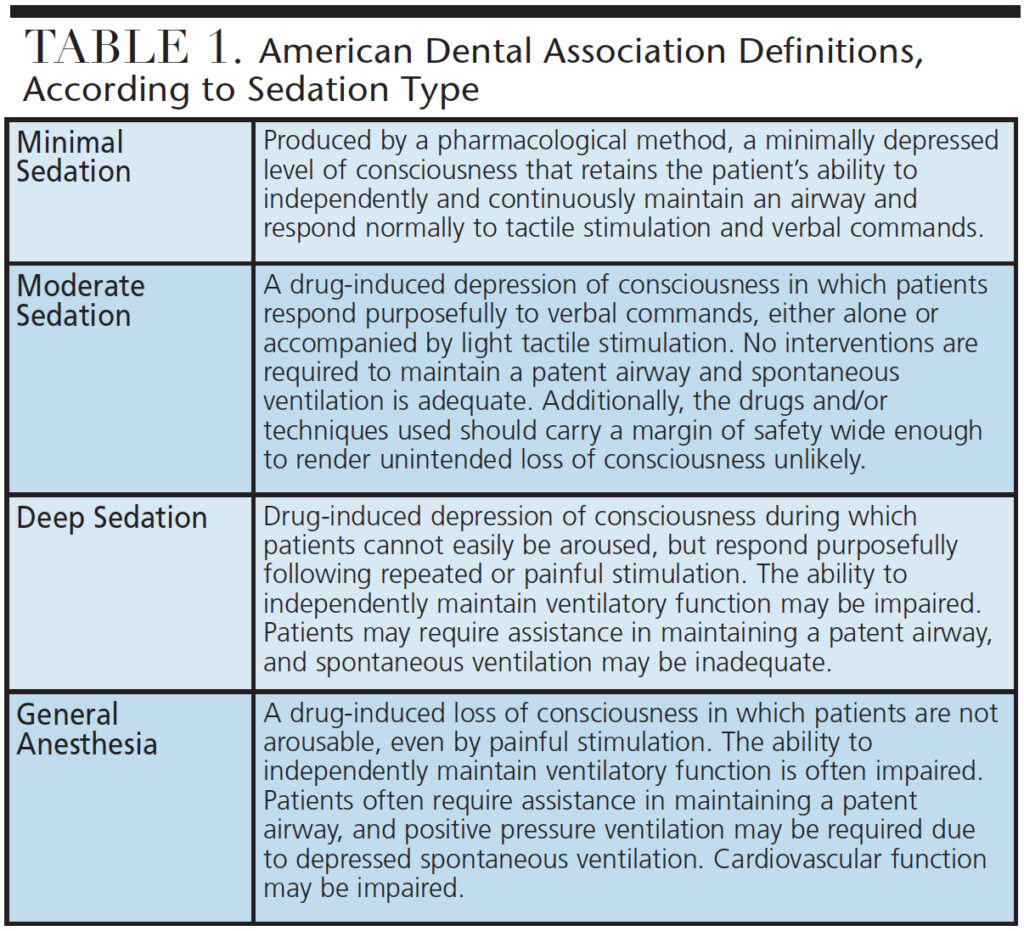
Sedation in dentistry is not a one-size-fits-all approach; rather, it exists on a continuum tailored to the patient’s anxiety levels, medical history, and the complexity of the dental procedure. Understanding the distinctions between minimal sedation (anxiolysis), moderate sedation, deep sedation, and general anesthesia is critical for both dental professionals and patients. Each level involves unique physiological responses, administration methods, and recovery protocols, ensuring patient safety and procedural efficiency. This section explores the four primary sedation levels, their clinical applications, and the collaborative role of the dental team in managing sedation transitions.
Physiological and Clinical Characteristics of Each Sedation Level
The American Society of Anesthesiologists (ASA) and the American Dental Association (ADA) classify sedation into four distinct levels based on depth, patient responsiveness, and vital sign stability. These classifications guide clinicians in selecting the appropriate sedation technique while minimizing risks. Below is a comparative analysis of the four levels, structured to highlight their physiological effects, patient responsiveness, monitoring requirements, and typical pharmacologic agents.
"Sedation depth must be carefully titrated to avoid unintended transitions between levels, particularly from moderate to deep sedation, where respiratory depression becomes a significant concern." — ASA Practice Guidelines for Sedation and Analgesia by Non-Anesthesiologists
| Level of Sedation | Patient Awareness and Responsiveness | Vital Signs Monitoring Required | Typical Drugs Used |
|---|---|---|---|
| Minimal (Anxiolysis) |
|
|
|
| Moderate (Conscious Sedation) |
|
|
|
| Deep Sedation |
|
|
|
| General Anesthesia |
|
|
|
The transition between these levels is fluid and depends on drug titration, patient physiology, and procedural demands. For instance, a patient initially under moderate sedation with propofol and nitrous oxide may progress to deep sedation if additional analgesics are administered without careful monitoring. Conversely, a patient under general anesthesia may emerge from unconsciousness to deep sedation during recovery before fully awakening.
Administration Methods and Pharmacokinetics of Sedation Agents
The route of sedation administration influences onset time, duration, and reversibility. Dental professionals must select methods based on patient needs, procedural complexity, and safety profiles. Below are the primary administration techniques and their implications:
-
Inhaled Sedation (Nitrous Oxide/Oxygen)
- Mechanism: Delivered via nasal mask; rapid onset (3–5 minutes) and offset (3–5 minutes post-discontinuation).
- Advantages: Reversible, minimal systemic effects, and patient remains cooperative. Ideal for minimal sedation and pediatric patients.
- Limitations: Requires patient cooperation to breathe through the mask; not suitable for deep sedation or general anesthesia.
- Clinical Use: Routine procedures (e.g., fillings, extractions) in patients with mild anxiety or children.
-
Oral Sedation
- Mechanism: Benzodiazepines or hypnotics ingested 30–60 minutes pre-procedure; peak effects at 1–2 hours.
- Advantages: Convenient, predictable pharmacokinetics; often combined with local anesthesia for moderate sedation.
- Limitations: Slower onset; risk of oversedation if dosage miscalculated. Not ideal for emergency procedures.
- Clinical Use: Complex procedures (e.g., multiple extractions, periodontal surgery) in adults with high anxiety.
-
Intravenous (IV) Sedation
Minimal Sedation (Anxiolysis) in Dentistry: Techniques, Applications, and Patient Considerations
Minimal sedation, also known as anxiolysis, serves as the foundational level of sedation in dentistry, designed to alleviate patient anxiety while preserving cognitive function and responsiveness. This approach enables individuals to undergo dental procedures with reduced stress, making it particularly valuable for those with mild to moderate dental phobia, pediatric patients, or medically complex individuals. Unlike deeper sedation levels, minimal sedation ensures patients remain cooperative, able to follow instructions, and maintain their airway independently. Its effectiveness lies in the careful selection of sedative agents and administration protocols tailored to individual needs, balancing safety with comfort. The primary objective of minimal sedation is to create a relaxed yet alert state, allowing dental professionals to perform treatments efficiently while prioritizing patient well-being. By understanding the pharmacodynamics of sedative drugs, patient suitability criteria, and procedural workflows, dental practitioners can optimize outcomes and minimize complications. This section explores the pharmacological agents used, their mechanisms of action, and the structured approach to administering minimal sedation in clinical settings.Pharmacological Agents for Minimal Sedation and Their Mechanisms
The selection of sedative agents for minimal sedation depends on factors such as the patient’s medical history, procedural complexity, and desired onset/duration of effects. Commonly used drugs fall into categories including inhaled gases, oral sedatives, and intravenous or injectable agents. Each class exhibits distinct pharmacokinetic profiles, influencing their suitability for specific patient populations. Below are the primary pharmacological options, categorized by administration route and mechanism.- Nitrous Oxide (Laughing Gas) Nitrous oxide, a colorless and odorless gas, acts as a central nervous system depressant by modulating neurotransmitter activity, particularly gamma-aminobutyric acid (GABA) receptors. Its primary advantage lies in its rapid onset (within 2–5 minutes) and quick elimination from the body upon discontinuation, making it ideal for short procedures. Nitrous oxide is administered via inhalation through a nasal mask, allowing precise titratability to achieve the desired level of sedation.
- Oral Sedatives Oral sedatives, such as benzodiazepines (e.g., diazepam, triazolam) and non-benzodiazepine alternatives (e.g., hydroxyzine), are prescribed pre-procedure to induce a calming effect. Benzodiazepines enhance GABAergic transmission, promoting sedation and amnesia, while non-benzodiazepine options like hydroxyzine exert antihistaminic effects to reduce anxiety. These agents are typically taken 30–60 minutes before the appointment to allow sufficient time for absorption and onset.
- Intravenous Benzodiazepines (e.g., Midazolam) Midazolam, a water-soluble benzodiazepine, is administered intravenously for immediate sedation effects, with onset occurring within 1–5 minutes. Its short half-life and reversible antagonism (via flumazenil) make it a versatile choice for procedures requiring rapid control of anxiety. However, its use in minimal sedation is less common due to the need for intravenous access and closer monitoring compared to oral or inhaled options.
- Non-Benzodiazepine Oral Agents (e.g., Hydroxyzine) Hydroxyzine, an antihistamine with sedative properties, is often preferred for patients who cannot tolerate benzodiazepines or require a milder sedative effect. It binds to histamine H1 receptors, inducing drowsiness without significant respiratory depression. This agent is particularly useful for pediatric patients or those with a history of benzodiazepine-related side effects.
Administration Process of Minimal Sedation in Dental Offices
The administration of minimal sedation follows a standardized protocol to ensure patient safety and procedural efficiency. This process begins with pre-procedure assessments, including medical history reviews and vital sign measurements, to identify contraindications or risks. Patients receive clear instructions regarding medication timing, dietary restrictions (e.g., avoiding heavy meals before oral sedatives), and transportation arrangements post-procedure. Below is a step-by-step overview of the procedural workflow:- Pre-Procedure Consultation The dentist or oral health professional conducts a detailed patient evaluation, screening for conditions such as sleep apnea, respiratory disorders, or substance abuse, which may contraindicate certain sedatives. Vital signs (blood pressure, heart rate, oxygen saturation) are recorded as baselines. For nitrous oxide, patients are instructed to remove contact lenses, jewelry, or loose clothing that could obstruct the nasal mask.
- Medication Administration For nitrous oxide, the patient inhales the gas through a nasal hood while wearing safety glasses to protect the eyes. The gas mixture (typically 30–50% nitrous oxide with oxygen) is titrated incrementally until the patient achieves a relaxed state. Oral sedatives are dispensed in capsule or tablet form, with specific instructions on dosage and timing (e.g., "Take one tablet 45 minutes before your appointment").
- Monitoring During Procedure Continuous monitoring includes assessing patient responsiveness, vital signs, and oxygen saturation. Dentists use verbal cues (e.g., "Can you open your eyes?") and physical stimuli (e.g., gentle touch) to evaluate cognitive function. For nitrous oxide, the gas flow is adjusted in real-time based on patient feedback, such as reports of lightheadedness or discomfort.
- Post-Procedure Recovery Upon completion, nitrous oxide is discontinued, and patients are observed for 5–10 minutes to ensure full recovery. Oral sedative patients may require 30–60 minutes of recovery time before discharge. Vital signs are rechecked, and patients are advised to avoid driving or operating machinery until fully alert. Follow-up instructions include hydration, rest, and reporting any adverse effects (e.g., persistent dizziness or nausea).
Comparative Analysis: Nitrous Oxide vs. Oral Sedatives in Minimal Sedation
The choice between nitrous oxide and oral sedatives hinges on procedural duration, patient preferences, and medical considerations. Below is a comparative table highlighting key differences in onset, duration, and suitability:Parameter Nitrous Oxide Oral Sedatives Onset Time 2–5 minutes (rapid titration) 30–60 minutes (peak effect) Duration of Effects Immediate cessation upon discontinuation; effects resolve within 3–5 minutes 4–8 hours (varies by drug half-life) Patient Suitability - Children (commonly used for pediatric dentistry)
- Adults with mild anxiety or short procedures
- Patients with respiratory conditions (if oxygen titrated carefully)
- Individuals requiring quick recovery (e.g., school or work commitments)
- Adults with moderate dental anxiety
- Patients undergoing longer procedures (e.g., multiple extractions)
- Individuals with contraindications to nitrous oxide (e.g., COPD, bowel obstruction)
- Medically compromised patients (e.g., cardiovascular conditions, with caution)
Advantages - No systemic absorption or metabolic processing
- Minimal risk of overdose with proper administration
- Patient remains fully cooperative and communicative
- Convenient for patients (no nasal mask required)
- Longer-lasting anxiolytic effects for extended procedures
- No need for specialized equipment
Disadvantages - Requires trained personnel for administration
- Not suitable for patients with claustrophobia or nasal congestion
- Limited effectiveness for severe anxiety
- Slower onset may prolong appointment times
- Potential for residual drowsiness post-procedure
The spectrum of sedation in dentistry reveals a delicate balance between comfort and control, where science meets patient-centered care. From minimal anxiolysis that keeps patients alert yet relaxed to general anesthesia that renders them entirely unconscious, each level serves a purpose in modern dental practice. As technology and techniques advance, so too does the ability to personalize sedation—ensuring that fear no longer dictates the dental experience. For those navigating treatment, knowledge of these distinctions empowers informed decisions, fostering trust between patients and their dental teams.
Leave a Comment
Comments are moderated before appearing. The data you submit is processed according to the Privacy Policy of Voltefac.