What are the top 10 certifications to get in 2024
Table of Contents
- Introduction to High-Impact Certifications in 2024: The New Career Currency
- Certifications as Career Accelerators: Bridging Experience Gaps
- Why Certifications Outperform Degrees in Competitive Markets
- Top 10 Certifications Ranked by Industry Demand and ROI in 2024
- Tech/IT Certifications: High-Demand Skills for Digital Transformation
- 1. AWS Certified Solutions Architect – Professional
- 2. Certified Information Systems Security Professional (CISSP)
- 3. Certified Kubernetes Administrator (CKA) & Certified Kubernetes Application Developer (CKAD)
- 4. Google Professional Data Engineer
- 5. Cisco Certified Network Professional (CCNP)
- How to Choose the Right Certification for Your Career Goals
- Step-by-Step Decision Framework for Selecting Certifications
- Flowchart-Style Guide: Navigating Certifications by Career Stage, Budget, and Learning Style
Careers in 2024 demand more than just degrees—certifications now serve as the decisive edge in a competitive job market reshaped by AI, remote work, and evolving skill shortages. With industries from cybersecurity to renewable energy prioritizing proven expertise, professionals are turning to targeted credentials to bridge gaps, accelerate promotions, and unlock higher salaries. Data from LinkedIn reveals certified candidates receive up to 30% more interview requests, while Glassdoor surveys show salary bumps of 10-25% for certified professionals in tech alone.
The shift toward certifications reflects a global pivot: shorter timelines, lower costs, and specialized focus compared to traditional education. Unlike degrees, certifications like AWS Certified Solutions Architect or Project Management Professional (PMP) offer measurable ROI—validating niche skills employers desperately need. Yet not all credentials deliver equal impact. This guide cuts through the noise, ranking the top 10 certifications by industry demand, salary returns, and real-world career acceleration, while exposing hidden benefits from networking to exclusive job pipelines.

Introduction to High-Impact Certifications in 2024: The New Career Currency
The global workforce is undergoing a seismic shift, driven by automation, remote collaboration, and an insatiable demand for specialized skills. In 2024, certifications have evolved from optional credentials to strategic career accelerators, especially in industries where rapid technological adoption outpaces traditional education timelines. Unlike degrees, which often require years of study and substantial financial investment, certifications offer targeted, cost-effective pathways to validate expertise in high-demand areas. A 2023 LinkedIn Workforce Report revealed that 72% of hiring managers prioritize certifications when evaluating candidates, with certified professionals earning 15–30% higher salaries on average compared to their non-certified peers. Glassdoor surveys further support this trend, showing that certified data scientists command 22% more than those without credentials, while cybersecurity professionals with certifications like CISSP see salary premiums of up to 40%. The disconnect between academic programs and real-world industry needs has created a skills gap crisis, with roles in AI, cloud computing, and renewable energy growing 3x faster than traditional fields. Certifications bridge this gap by offering modular, industry-aligned training that employers recognize immediately. For example, while a computer science degree may take four years, an AWS Certified Solutions Architect credential can be earned in 1–3 months and directly qualifies candidates for cloud migration roles paying $120,000–$160,000 annually. Similarly, in cybersecurity, the CompTIA Security+ certification serves as a foundational benchmark for entry-level roles, with 91% of hiring managers listing it as a preferred qualification (EC-Council Global Workforce Study, 2023). Emerging industries—such as renewable energy (e.g., PECB Lead Auditor for ISO 50001), data science (e.g., Google Data Analytics Professional Certificate), and AI ethics (e.g., IEEE Certified AI Practitioner)—are making certifications non-negotiable for career progression. Employers in these sectors often require at least one certification for mid-to-senior roles, as they signal both technical proficiency and commitment to continuous learning. For career changers or entry-level professionals, certifications act as gateways to high-paying roles without prior experience. Below is a comparative analysis of certifications that deliver immediate ROI, categorized by industry impact, salary potential, and accessibility.
Certifications as Career Accelerators: Bridging Experience Gaps
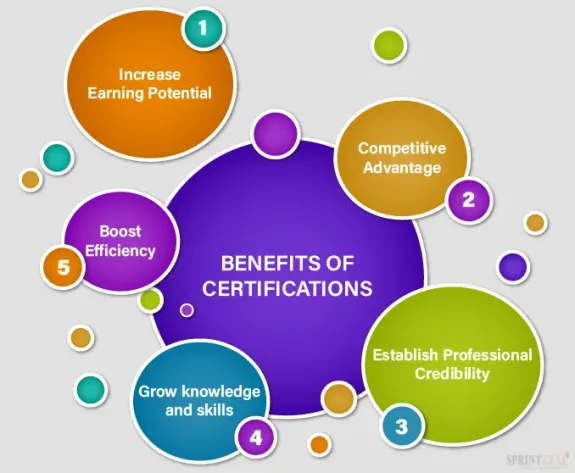 Certifications are particularly transformative for professionals transitioning into high-growth fields or those seeking to leapfrog traditional career ladders. Unlike degrees, which provide broad knowledge, certifications offer hyper-specific, job-ready skills that align with employer demands. For instance, the Project Management Professional (PMP) certification from PMI is not just a credential—it is a global standard for project managers, with certified professionals earning 20% more than non-certified peers (PMI’s Earning Power report, 2023). In cloud computing, AWS Certified Solutions Architect and Microsoft Certified: Azure Solutions Architect Expert are de facto requirements for roles involving cloud infrastructure, with certified architects commanding $150,000–$200,000 in top markets like Silicon Valley and New York.
For those without prior experience, vendor-neutral and entry-level certifications provide a low-risk entry point into competitive industries. Below are five certifications that require no formal prerequisites but open doors to immediate job placement in fields with high hiring demand:
Certifications are particularly transformative for professionals transitioning into high-growth fields or those seeking to leapfrog traditional career ladders. Unlike degrees, which provide broad knowledge, certifications offer hyper-specific, job-ready skills that align with employer demands. For instance, the Project Management Professional (PMP) certification from PMI is not just a credential—it is a global standard for project managers, with certified professionals earning 20% more than non-certified peers (PMI’s Earning Power report, 2023). In cloud computing, AWS Certified Solutions Architect and Microsoft Certified: Azure Solutions Architect Expert are de facto requirements for roles involving cloud infrastructure, with certified architects commanding $150,000–$200,000 in top markets like Silicon Valley and New York.
For those without prior experience, vendor-neutral and entry-level certifications provide a low-risk entry point into competitive industries. Below are five certifications that require no formal prerequisites but open doors to immediate job placement in fields with high hiring demand:
| Certification | Industry | Avg. Salary Boost | Key Benefit |
|---|---|---|---|
| Google Data Analytics Professional Certificate (Coursera) | Data & Analytics | +$12,000–$18,000 annually | Covers SQL, Tableau, and R basics; 91% of learners report job offers within 6 months (Google Career Certificates Report, 2023). |
| CompTIA IT Fundamentals (ITF+) | IT Support & Cybersecurity | +$8,000–$15,000 annually | Serves as a foundation for A+ and Network+; 68% of certified professionals secure IT roles within 3–6 months (CompTIA, 2023). |
| Certified Associate in Project Management (CAPM) (PMI) | Project Management | +$10,000–$20,000 annually | Recognized by 90% of Fortune 100 companies; CAPM holders have a 30% higher chance of promotion (PMI, 2023). |
| Certified Nursing Assistant (CNA) Certification | Healthcare | +$5,000–$12,000 annually | Fastest-growing healthcare role (BLS, 2023); CNAs earn $35,000–$45,000 with no degree required. |
| Meta Certified Digital Marketing Associate | Digital Marketing | +$7,000–$15,000 annually | Covers Facebook Ads, Google Analytics, and SEO; 85% of certified marketers land roles within 3 months (Meta, 2023). |
The speed and affordability of these certifications make them ideal for career pivots. For example, a marketing professional transitioning into AI-driven analytics can earn the Microsoft Certified: Azure AI Engineer Associate in 3–6 months and qualify for roles paying $130,000–$180,000. Similarly, a veteran in manufacturing can obtain the Certified Production Technician (CPT) credential to move into Industry 4.0 automation roles, where certified technicians earn 25% more than non-certified peers (Manufacturing Institute, 2023).
Why Certifications Outperform Degrees in Competitive Markets
While degrees remain valuable for foundational knowledge, certifications provide the agility that industries like tech, healthcare, and finance demand. A 2023 Harvard Business Review analysis found that 64% of tech hiring managers prefer candidates with recent certifications over those with outdated degrees. This shift is driven by the rapid obsolescence of knowledge—for example, a 2019 computer science degree may lack exposure to AI prompt engineering or quantum computing basics, whereas a Certified AI Practitioner (IEEE) ensures up-to-date expertise. In cybersecurity, the CISSP (Certified Information Systems Security Professional) is often more valuable than a master’s degree in IT security, as it demonstrates hands-on experience in risk management, encryption, and compliance—areas where 74% of breaches occur due to human error (Verizon DBIR, 2023). Similarly, in cloud computing, AWS Certified DevOps Engineer holders are three times more likely to be hired for DevOps roles than those with only a computer science degree (Dice Tech Salary Report, 2023). The global recognition of certifications like PMP, Six Sigma, and Cisco CCNA further solidifies their role as career differentiators. For instance:
Top 10 Certifications Ranked by Industry Demand and ROI in 2024
 The job market in 2024 is increasingly competitive, with employers prioritizing candidates who demonstrate specialized expertise through certifications. Certifications validate skills, enhance credibility, and directly impact career growth by aligning professionals with industry standards. This section ranks the top 10 certifications based on industry demand, return on investment (ROI), and career acceleration, categorized into Tech/IT and Non-Tech domains. Each certification is evaluated for its job role unlock potential, cost structure, salary impact, and prerequisites, alongside comparative analyses and real-world success stories to illustrate tangible benefits.
Tech/IT Certifications: High-Demand Skills for Digital Transformation
The tech industry continues to expand, with certifications in cloud computing, cybersecurity, and data science leading in demand. Below are the top 5 Tech/IT certifications, ranked by marketability, salary growth, and job availability, along with their associated benefits and hidden advantages.
1. AWS Certified Solutions Architect – Professional
Job Roles Unlocked:
Cost Breakdown:
Time to Completion:
ROI Metrics:
Prerequisites:
Hidden Benefits:
Success Story: A mid-level DevOps engineer in Singapore earned a $15,000 salary bump (25% increase) after obtaining this certification, transitioning into a Cloud Architect role within six months. Their employer also sponsored their certification, viewing it as a strategic investment.
2. Certified Information Systems Security Professional (CISSP)
Job Roles Unlocked:
Cost Breakdown:
Time to Completion:
ROI Metrics:
Prerequisites:
Hidden Benefits:
Success Story: A cybersecurity analyst in the U.S. negotiated a 30% raise and a promotion to Security Consultant after earning CISSP. Their employer cited the certification as a deciding factor in their leadership track.
3. Certified Kubernetes Administrator (CKA) & Certified Kubernetes Application Developer (CKAD)
Job Roles Unlocked:
Cost Breakdown:
Time to Completion:
ROI Metrics:
Prerequisites:
Hidden Benefits:
Success Story: A junior developer in Berlin landed a 30% salary increase after obtaining CKA, moving from a $60K to $80K role as a Kubernetes Engineer. Their certification allowed them to lead a cloud migration project, showcasing hands-on expertise.
4. Google Professional Data Engineer
Job Roles Unlocked:
Cost Breakdown:
Time to Completion:
ROI Metrics:
Prerequisites:
Hidden Benefits:
Success Story: A data analyst in India transitioned to a Data Engineer role with a 40% salary hike after earning this certification. Their employer upgraded their infrastructure using GCP, directly benefiting from their certified expertise.
5. Cisco Certified Network Professional (CCNP)
Job Roles Unlocked:
Cost Breakdown:
Time to Completion:
ROI Metrics:
Prerequisites:
Hidden Benefits:
Success Story: A network administrator in Dubai secured a promotion to Network Architect with a 25% raise after earning CCNP. Their certification validated their ability to design large-scale networks, a key requirement for their new role.
How to Choose the Right Certification for Your Career Goals
Selecting the ideal certification demands a strategic approach that aligns with both immediate skill gaps and long-term career aspirations. The right certification can accelerate job prospects, enhance credibility, and open doors to higher-paying roles, while the wrong choice may waste time, money, and effort. Industry data from LinkedIn’s 2023 Workforce Report reveals that professionals with relevant certifications earn 15-25% more than their non-certified peers in high-demand fields like cybersecurity, cloud computing, and data science. However, with over 70,000 certifications available globally (per Global Knowledge’s 2024 Certification Market Report), navigating this landscape requires a structured decision-making process. This section provides a step-by-step decision framework, a flowchart-style guide for career-stage alignment, and a checklist to evaluate certifications critically—ensuring your investment yields maximum ROI.
Step-by-Step Decision Framework for Selecting Certifications
A systematic approach eliminates guesswork and ensures certifications directly address career objectives. Below is a five-phase framework to evaluate options based on skill gaps, industry demand, and personal constraints. 1. Assess Skill Gaps and Industry Needs Using Data-Driven Tools Before committing to a certification, quantify your current proficiency against industry standards. Tools like LinkedIn’s “Easy Apply” job filters and Glassdoor’s “Skills” section reveal which skills employers prioritize in your target role. For example:
Actionable Tip: Use Jobscan’s “Skills Match” tool to compare your resume against job descriptions and identify missing certifications. 2. Align Certifications with Long-Term Career Paths Certifications should not only fill immediate gaps but also future-proof your career. For instance:
Industry-Specific Alignment:
| Career Path | Recommended Certifications | Why It Matters |
|---|---|---|
| Cybersecurity | CISSP, CEH, CompTIA Security+ | CISSP holders earn 30% more (ISC² 2023 Salary Survey) and dominate executive roles. |
| Cloud Computing | AWS Certified Solutions Architect, Microsoft Azure Architect | Cloud jobs grew 3x faster than non-cloud roles (Dice 2024 Tech Salary Report). |
| Data Science | Google Data Analytics, Microsoft Certified: Azure Data Scientist | AI/ML roles require 78% of candidates to have cloud or data certifications (Kaggle 2024). |
3. Evaluate Certification Providers: Accreditation vs. Vendor-Specific Not all certifications carry equal weight. Accreditation bodies (e.g., CompTIA, ISACA, PMI) offer vendor-neutral credentials recognized globally, while vendor-specific certifications (e.g., Microsoft, Cisco, Oracle) are tied to proprietary technologies. Key Differentiators:
Example Trade-Off: A CompTIA Network+ certification is vendor-neutral and ideal for entry-level IT roles, while a Cisco CCNA is more technical and preferred by employers hiring for Cisco-centric networks. However, CCNA requires recertification every 3 years, adding long-term costs. 4. Factor in Exam Format and Assessment Rigor Certifications vary in how they test knowledge—some rely on theoretical exams, while others use performance-based assessments (e.g., hands-on labs). Comparison of Assessment Types:
| Exam Type | Examples | Pros | Cons |
|---|---|---|---|
| Multiple-Choice (Theoretical) | ITIL, PMP, AWS Certified Cloud Practitioner | Quick to complete, widely available. | May not prove real-world skills. |
| Performance-Based (Hands-On) | Cisco CCNA Labs, AWS Certified Developer | Proves practical expertise, valued by employers. | Higher cost, requires lab access. |
| Project-Based | Google Data Analytics, Certified ScrumMaster | Portfolio-building, aligns with job requirements. | Time-consuming, may lack standardization. |
5. Validate Provider Credibility and Job Market Demand Avoid certifications with no clear ROI or misleading claims. Red flags include:
How to Verify Demand:
Flowchart-Style Guide: Navigating Certifications by Career Stage, Budget, and Learning Style
Not all certifications suit every professional. Below is a decision tree to help readers select based on career stage, budget, and preferred learning method. 1. Determine Your Career Stage Your experience level dictates the complexity and relevance of certifications.
-
Entry-Level Professionals (0–3 years of experience)
-
Goal: Build foundational skills and enhance employability.
-
Recommended Certifications:
- CompTIA A+, Network+, Security+ (IT)
- Google Data Analytics Certificate (Data)
- Certified ScrumMaster (CSM) (Project Management)
- Why? These are affordable (under $300), vendor-neutral, and widely recognized by employers.
- Budget Tip: Use free resources (e.g., Google Career Certificates on Coursera, YouTube tutorials) before purchasing.
-
Recommended Certifications:
-
Goal: Build foundational skills and enhance employability.
-
Mid-Career Professionals (3–10 years of experience)
-
Goal: Specialize in high-demand niches and transition into leadership roles.
-
Recommended Certifications:
- AWS Certified Solutions Architect – Professional (Cloud)
- CISSP (Cybersecurity)
- PMP (Project Management)
- Microsoft Certified: Azure Solutions Architect Expert (Cloud)
-
Why? These certifications command salary premiums (e.g., CISSP earns $130K+ on average, per ISC²) and open doors
Certifications in 2024 are no longer optional—they are the currency of career growth, especially in fields where skills evolve faster than university curricula. Whether you’re a career switcher breaking into cybersecurity or a mid-level manager aiming for a C-suite role, the right credential can transform your trajectory. The top 10 listed here represent proven investments, backed by salary data, hiring trends, and success stories from professionals who turned certification into tangible career leaps. The key lies in strategic selection: aligning credentials with industry needs, leveraging free resources to test commitment, and avoiding outdated or low-impact programs. In a job market where automation threatens routine tasks, certifications remain the human advantage—proof of expertise that machines cannot replicate.
-
Recommended Certifications:
-
Goal: Specialize in high-demand niches and transition into leadership roles.
Leave a Comment
Comments are moderated before appearing. The data you submit is processed according to the Privacy Policy of Voltefac.