Which states are the easiest to get a dental license in 2024
Table of Contents
- State-by-State Breakdown of Dental Licensing Requirements
- Top 5 States with Streamlined Dental Licensing Processes
- Reciprocity Agreements and Expedited Pathways
- Dental Licensure Compact: Simplifying Multi-State Practice
- Fastest Licensing Pathways: Exceptions and Special Programs for Dental Professionals
- Accelerated Licensing Programs for Military Dentists, Federal Employees, and Telehealth Providers
- Rural Health Clinics and Health Professional Shortage Areas as Licensing Accelerators
- Temporary and Emergency Dental Licenses for Critical Care Needs
Becoming a licensed dentist in the U.S. often involves navigating a labyrinth of exams, fees, and bureaucratic hurdles—but some states make the process significantly smoother. For aspiring dentists or professionals relocating, knowing which jurisdictions offer the fastest, most streamlined pathways can save months of waiting and thousands in costs. From compact agreements that waive redundant exams to military-specific fast tracks and rural health incentives, certain states prioritize accessibility without compromising patient safety. The difference between a 4-week approval and a 6-month backlog can hinge on location, professional background, or even a temporary emergency license.
Behind the scenes, state dental boards operate with varying levels of efficiency, influenced by funding, workforce shortages, and political priorities. For example, Alaska and Wyoming leverage interstate compacts to slash processing times, while Florida and Arizona cut red tape for veterans and federal employees. Meanwhile, rural states like Montana and Vermont actively recruit dentists by reducing exam requirements for those committing to underserved communities. The question is no longer just where to practice, but how to secure a license with minimal friction—and the answers may surprise even seasoned professionals.
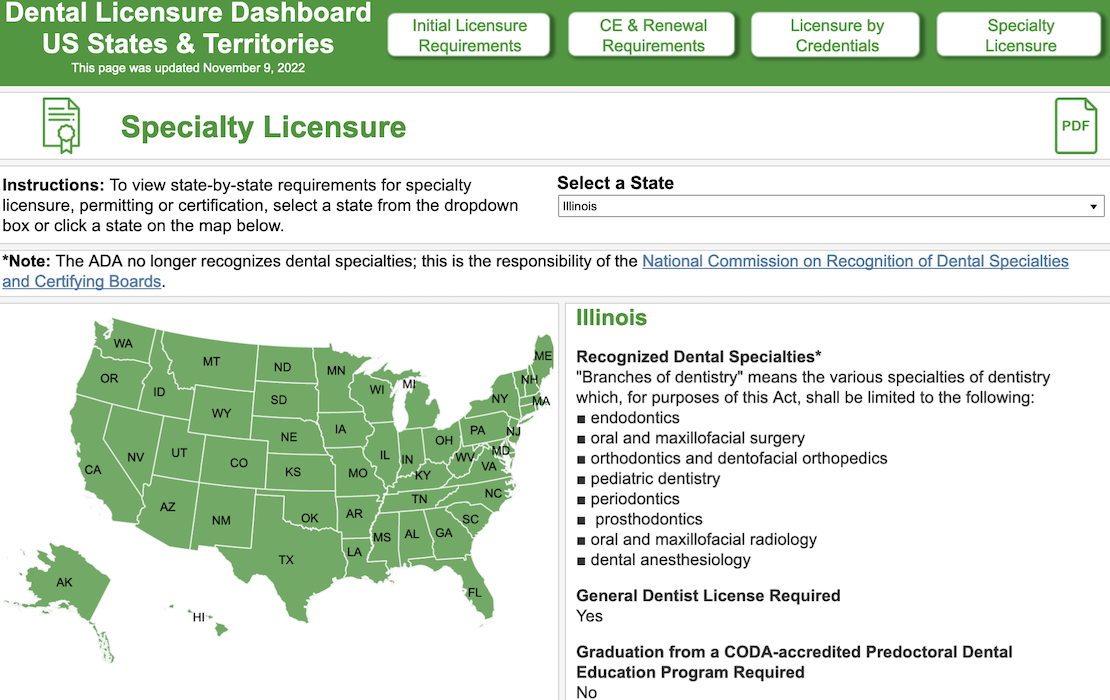
State-by-State Breakdown of Dental Licensing Requirements
The path to obtaining a dental license varies significantly across the United States, with some states offering expedited processes, reciprocity agreements, or simplified requirements for specific applicants. Understanding these variations is critical for dental professionals, particularly those relocating, practicing in rural areas, or serving in military roles. Below is a detailed analysis of the top five states with the most streamlined licensing processes, including exam requirements, background checks, processing times, and additional fees. States like Alaska, Wyoming, and North Dakota leverage interstate compacts to further simplify licensing, while others prioritize applicants with unique qualifications, such as military service or rural practice commitments.
Top 5 States with Streamlined Dental Licensing Processes
 The following states are recognized for their relatively straightforward dental licensing procedures, often due to lower regulatory burdens, reciprocity agreements, or participation in the Dental Licensure Compact. These states prioritize efficiency while maintaining compliance with national standards, such as those set by the American Dental Association (ADA) and the Commission on Dental Accreditation (CODA).
Dental professionals should note that even in these states, specific criteria—such as exam waivers, jurisprudence requirements, and background checks—can influence the approval timeline. Below is a comparative table outlining the key requirements for these states:
The following states are recognized for their relatively straightforward dental licensing procedures, often due to lower regulatory burdens, reciprocity agreements, or participation in the Dental Licensure Compact. These states prioritize efficiency while maintaining compliance with national standards, such as those set by the American Dental Association (ADA) and the Commission on Dental Accreditation (CODA).
Dental professionals should note that even in these states, specific criteria—such as exam waivers, jurisprudence requirements, and background checks—can influence the approval timeline. Below is a comparative table outlining the key requirements for these states:
| State Name | Exam Requirements | Background Check Process | Approximate Processing Time | Additional Fees |
|---|---|---|---|---|
| Alaska | INBDE or NBDE Part I & II; Clinical exam waived for compact participants. | Fingerprinting + FBI background check (required for all applicants). | 4-6 weeks (expedited for military applicants). |
|
| Wyoming | INBDE; Clinical exam required unless applicant holds an active license in a compact state. | Fingerprinting + State and FBI background check. | 6-8 weeks (priority processing for rural health providers). |

|
| North Dakota | INBDE or NBDE Part I & II; Clinical exam waived for compact participants. | Fingerprinting + FBI background check (mandatory for all). | 3-5 weeks (fastest processing in the compact). |
|
| New Hampshire | INBDE; Clinical exam required unless applicant is a military dentist or holds a compact license. | Fingerprinting + State and FBI background check. | 5-7 weeks (expedited for veterans and rural practitioners). |
|
| South Dakota | INBDE; Clinical exam waived for compact participants or applicants with 3+ years of practice in a compact state. | Fingerprinting + FBI background check. | 4-6 weeks (priority for Indian Health Service providers). |
|
Key Observations:
Reciprocity Agreements and Expedited Pathways
Several states offer reciprocity agreements, allowing out-of-state dentists to obtain licensure without retaking the INBDE or clinical exams, provided they meet specific criteria. These agreements are particularly beneficial for military dentists, telehealth practitioners, and those relocating for rural practice. Below are notable exceptions and pathways:
>
> "Texas allows licensure by endorsement for applicants from states with similar regulatory standards, provided they submit a verified license and pass a jurisprudence exam." >
For telehealth practitioners, states such as Alaska and Wyoming have streamlined processes for remote practice, provided the dentist holds a valid license in at least one compact state.
Dental Licensure Compact: Simplifying Multi-State Practice
The Dental Licensure Compact, administered by the Interstate Commission on Dental Licensure (ICDL), allows dentists to practice in multiple states through a single license. Currently, 11 states participate in the compact, including Alaska, Wyoming, North Dakota, South Dakota, New Hampshire, and others. This agreement eliminates the need for separate licensure in each state, reducing administrative burdens and costs for mobile practitioners. Step-by-Step Process for Compact Licensure: 1. Eligibility Verification Applicants must hold an active dental license in a participating compact state and meet the compact’s requirements, including:
2. Application Submission Applicants submit their primary state license and supporting documents to the ICDL portal. Fees vary but include a one-time compact enrollment fee (typically $450–$500). 3. Primary State Approval The applicant’s primary state dental board verifies credentials and forwards the application to the ICDL for processing. 4. Compact License Issuance Once approved, the dentist receives
Fastest Licensing Pathways: Exceptions and Special Programs for Dental Professionals
The dental licensing process typically requires rigorous exams, clinical hours, and documentation, but certain pathways offer expedited routes for qualified professionals. These exceptions—targeted at military personnel, federal employees, telehealth providers, and those serving in underserved areas—can reduce processing times from months to weeks or even days. States like Florida, Arizona, and Nevada have pioneered accelerated programs, while others such as California and Washington provide temporary licenses for emergency care. Understanding these pathways can significantly shorten the time to practice, especially for professionals already licensed in other states or those filling critical gaps in rural healthcare.
Accelerated Licensing Programs for Military Dentists, Federal Employees, and Telehealth Providers
States with high demand for dental professionals or strategic military presence have implemented specialized programs to streamline licensing for veterans, active-duty personnel, and federal employees. These programs often waive certain requirements, such as the Integrated National Board Dental Examination (INBDE) or clinical exams, if applicants meet specific criteria. Below is a comparative table of the most notable expedited pathways:
| Program Name | Eligibility Criteria | Required Documentation | Processing Time | Special Notes |
|---|---|---|---|---|
| Florida’s Military Dentist Licensing Fast Track | Active duty, retired military, or federal employees with a DDS/DMD from an accredited institution. | DD Form 214 (military discharge), state-specific affidavit, proof of licensure in another state (if applicable), and a completed Florida application. | 2–4 weeks | Waives INBDE requirement if applicant is licensed in another compact state (e.g., through the Dental Licensure Compact). |
| Arizona’s Veterans and Federal Employees Expedited Pathway | Veterans, active-duty military, or federal employees with a dental degree and at least 2 years of clinical experience. | VA Form DD-214, federal ID, proof of clinical experience, and a background check. | 3–5 weeks | Reduces clinical exam requirements by 50% for applicants with military experience in dental clinics. |
| Nevada’s Telehealth and Military Dentist Program | Military dentists or telehealth providers licensed in another state and offering services to Nevada residents. | Proof of licensure in another state, telehealth platform certification (if applicable), and a Nevada-specific practice agreement. | 1–2 weeks | Exempts telehealth providers from in-person patient visits for initial consultations. |
| Texas’ Federal Employee Dental Licensure Waiver | Federal employees (e.g., NIH, CDC, or VA staff) practicing within federal facilities in Texas. | Federal employment verification, dental degree, and a letter from the employing agency. | 2 weeks | No INBDE or clinical exam required if the dentist practices exclusively within federal healthcare systems. |
| Alaska’s Rural and Military Dental License Fast Track | Dentists serving in Alaska’s rural Health Professional Shortage Areas (HPSAs) or military bases. | HPSA designation letter, military affiliation proof, and a contract with an approved rural clinic. | 1–3 weeks | Partnerships with the University of Alaska allow for reduced clinical hour verification for military-affiliated applicants. |
These programs reflect a broader trend of states prioritizing access to dental care in underserved regions while recognizing the unique qualifications of military and federal dental professionals. For example, Florida’s program leverages its proximity to major military installations, while Arizona and Nevada focus on telehealth integration to attract out-of-state providers. The key to eligibility often lies in documentation—military discharge papers, federal employment verification, or proof of telehealth compliance—which can expedite the review process.
Rural Health Clinics and Health Professional Shortage Areas as Licensing Accelerators
States with persistent dental provider shortages, particularly in rural and frontier regions, have created incentives to attract licensed dentists by reducing bureaucratic hurdles. Montana and Vermont are prime examples, where partnerships between state dental boards, universities, and rural health clinics (RHCs) create streamlined licensing pathways. These programs often include reduced exam requirements, credit for prior experience, or expedited background checks for dentists willing to commit to long-term service in underserved areas. In Montana, the Rural Dentist Licensure Program allows dentists to practice in designated HPSAs with as few as 1,500 clinical hours (compared to the national average of 2,000–2,500). The Montana Board of Dentistry collaborates with the University of Montana’s School of Dentistry to verify clinical experience, fast-tracking approval for applicants who sign a 2-year service agreement with an approved RHC. Similarly, Vermont’s Dental Provider Loan Repayment Program offers license waivers for up to 1,000 clinical hours if the dentist agrees to practice in a HPSA for at least 3 years. The state’s compact with neighboring New Hampshire further simplifies cross-border practice for providers serving rural Vermont communities. The impact of these programs is measurable. In Vermont, the number of practicing dentists in HPSAs increased by 22% within 5 years of implementing the loan repayment initiative, while Montana’s RHCs reported a 30% reduction in patient wait times after the licensure program launched. These models demonstrate how targeted exceptions can address systemic shortages without compromising patient safety, provided applicants meet rigorous service commitments.
Temporary and Emergency Dental Licenses for Critical Care Needs
States facing acute dental provider shortages or public health emergencies—such as natural disasters or disease outbreaks—often issue temporary or emergency licenses to qualified out-of-state dentists. California and Washington are leaders in this space, with protocols allowing licensed dentists to practice within 72 hours of application, provided they meet urgent care needs. These licenses are typically valid for 30–90 days and can be renewed under specific conditions, such as ongoing demand or disaster declarations. The process for obtaining an emergency license varies slightly by state but generally follows a structured approach. Below are the standardized steps, as outlined by the California Dental Board and Washington State Department of Health:
1. Submit proof of licensure in another U.S. state, territory, or compact state (e.g., Dental Licensure Compact). 2. Provide a letter from a local health authority (e.g., county health department, state emergency management agency) confirming the need for dental services in the affected area. 3. Pay a non-refundable emergency fee, typically ranging from $200 to $500, depending on the state and license duration. 4. Complete a background check (often expedited for emergency applicants). 5. Sign a practice agreement outlining scope of work, patient limits, and compliance with state regulations.
California’s Emergency Dental License Program has been activated during wildfire seasons and the COVID-19 pandemic, allowing dentists from neighboring states to treat patients in fire-ravaged areas or provide telehealth consultations. Washington’s program, meanwhile, has been used to address meth crisis-related oral health emergencies, where temporary licenses enabled out-of-state dentists to treat patients in tribal clinics and rural hospitals. The key limitation of these licenses is their restricted scope: emergency dentists are typically limited to pain management, extractions, and urgent restorative care, with prohibitions on complex procedures like implants or oral surgery. The success of these programs hinges on real-time collaboration between state dental boards, public health agencies, and professional associations. For instance, during California’s 2018 Camp Fire disaster, the California Dental Association partnered with the state board
The path to a dental license doesn’t have to be a marathon of paperwork and delays. By strategically targeting states with expedited programs—whether through military affiliations, telehealth waivers, or rural practice commitments—dentists can shave years off their licensing timeline. From Alaska’s compact agreements to California’s 72-hour emergency licenses, the system is designed with flexibility in mind, especially for those serving critical needs. For applicants, the key lies in identifying the right state, assembling the correct documentation, and leveraging exceptions that align with their professional story. With the right approach, licensure isn’t just achievable—it can be efficient, cost-effective, and tailored to individual circumstances.
Leave a Comment
Comments are moderated before appearing. The data you submit is processed according to the Privacy Policy of Voltefac.