What Is An Atom Fundamentals Structure And Applications
Table of Contents
- Definition and Core Components of an Atom
- Basic Definition of an Atom and Its Role in Matter
- Subatomic Particles: Protons, Neutrons, and Electrons
- Comparison of Subatomic Particles
- Visualizing Atomic Structure Using the Bohr Model
- Historical Development of Atomic Theory
- Ancient and Early Modern Foundations
- Dalton’s Atomic Theory and Its Limitations
- Thomson’s Plum Pudding Model and the Discovery of the Electron
- Rutherford’s Nuclear Model and the Gold Foil Experiment
- Bohr’s Quantum Model and the Introduction of Electron Orbits
- Major Milestones in Atomic Theory: A Timeline
- Atomic Structure and Quantum Mechanics
- Principles Governing Electron Behavior in Quantum Mechanics
- Electron Orbitals and Their Classification
- Electron Configurations and the Aufbau Principle
- Isotopes, Ions, and Atomic Mass
- Variations in Atomic Composition: Isotopes, Isobars, and Isotones
- Calculation of Average Atomic Mass Using Isotopic Abundances
- Comparison of Uranium Isotopes: Mass Number, Neutron Count, and Stability
- Formation of Cations and Anions: Electron Transfer and Reactivity
- Atoms in Chemical Bonding and Periodic Trends
- Electron Configurations and Bond Formation in Sodium Chloride (NaCl)
- Predicting Bond Types and Multiplicity Using Valence Electrons and Lewis Structures
- Periodic Trends: Atomic Radius, Ionization Energy, and Electronegativity
- FAQ
- What exactly is the atomic number of an element?
- How does an atomic bomb work and what makes it so destructive?
- What is an atomic clock and why is it more accurate than regular clocks?
- What are the basic components that make up an atom?
- What defines the atomic radius of an element?
- What fundamental particles make up an atom?
The atom, the foundational building block of all matter, represents the convergence of ancient philosophical inquiry and modern scientific precision. From the indivisible particles theorized by Democritus to the quantized electron orbitals described by quantum mechanics, atoms govern the properties of elements, chemical reactions, and even the stability of cosmic structures. Understanding their composition—protons, neutrons, and electrons—unlocks insights into atomic behavior, from the formation of covalent bonds in organic molecules to the decay processes powering nuclear energy. This exploration delves into the core principles defining atoms, their historical evolution, and their pivotal role in shaping the physical world.
Atoms are not merely static entities but dynamic systems governed by quantum laws, where electron configurations dictate reactivity and bonding patterns. The interplay between subatomic particles, isotopic variations, and periodic trends reveals a structured yet adaptable framework underlying chemistry and physics. By examining atomic theory’s milestones—from Dalton’s solid spheres to Rutherford’s nuclear model—we trace how experimental evidence refined our comprehension of matter’s smallest units. This foundation is essential for advancing fields ranging from materials science to medical diagnostics, where atomic properties enable innovations from superconductors to radiotherapeutic treatments.

Definition and Core Components of an Atom
An atom represents the fundamental building block of matter, constituting all observable substances in the universe. As the smallest indivisible unit retaining the chemical properties of an element, atoms combine to form molecules, compounds, and complex structures essential for life and material science. Their composition and arrangement determine the physical and chemical behaviors of elements, influencing everything from the reactivity of gases to the structural integrity of solids.
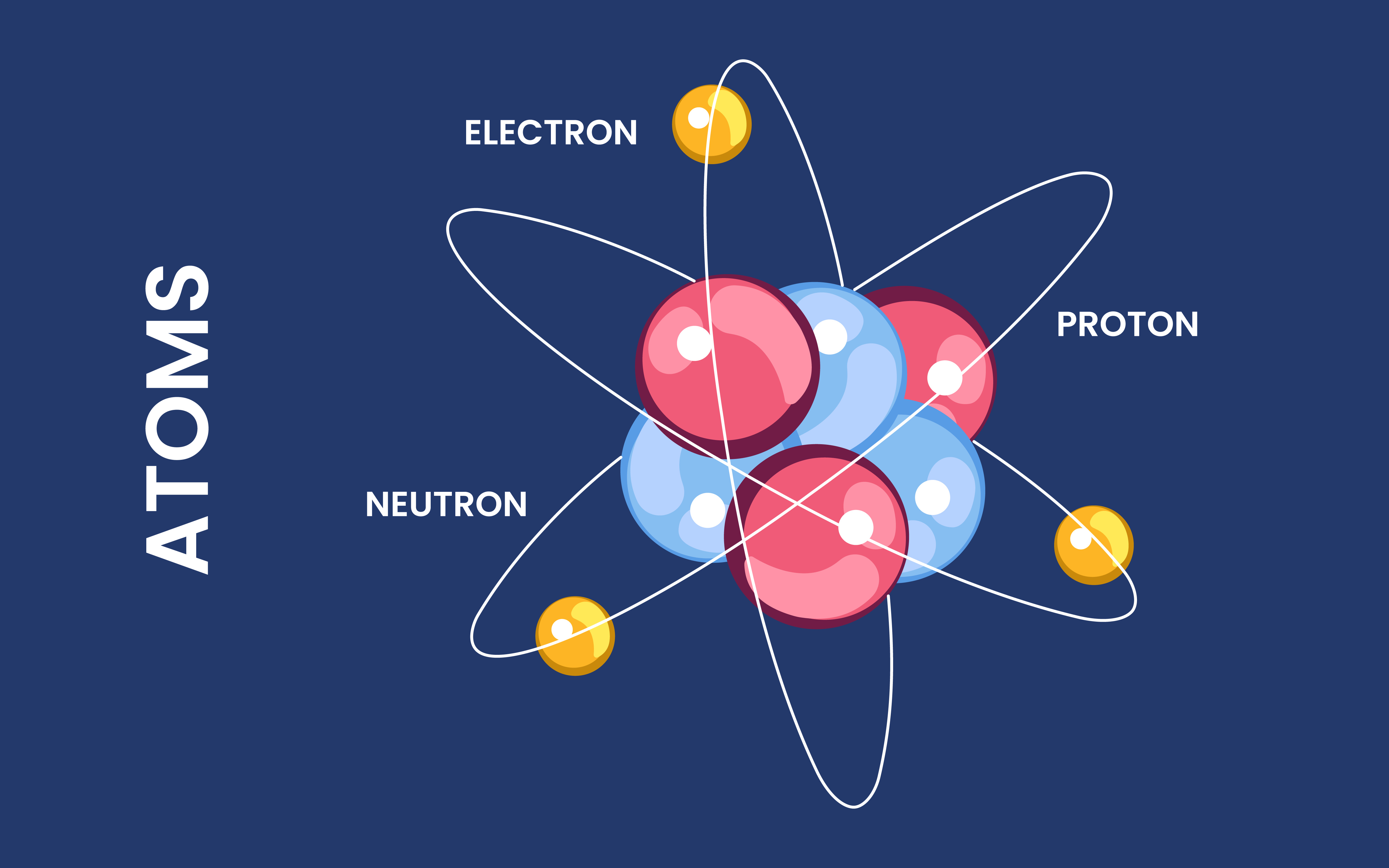
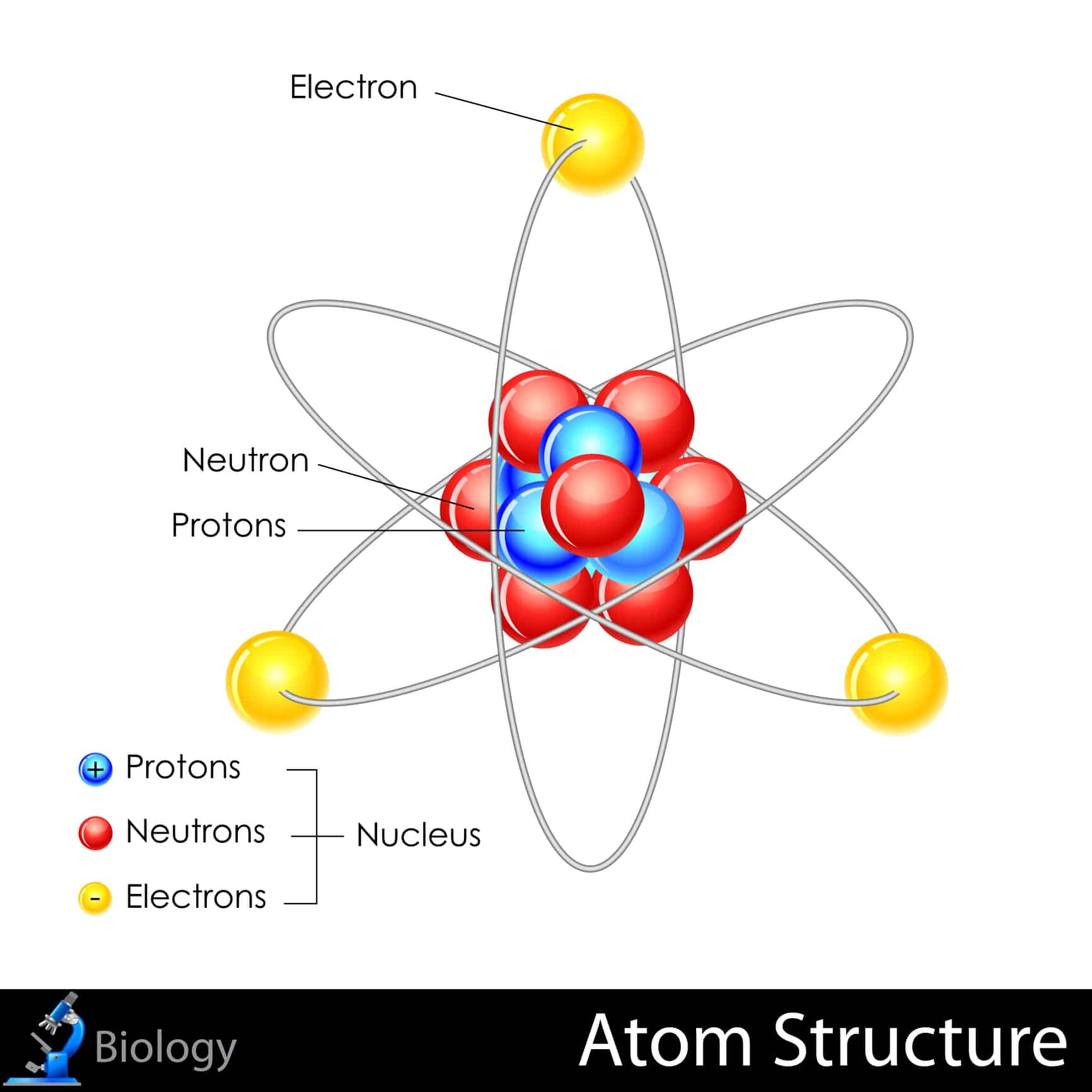
The atomic structure comprises three primary subatomic particles—protons, neutrons, and electrons—each contributing distinct properties to the atom. Protons and neutrons reside in the nucleus, defining the atom’s mass and identity, while electrons orbit the nucleus in defined energy levels, governing chemical bonding and reactivity. Understanding these components and their interactions is critical for fields ranging from quantum physics to biochemistry.
Basic Definition of an Atom and Its Role in Matter
An atom is the smallest discrete unit of an element that retains its unique chemical identity. Unlike subatomic particles (e.g., protons or electrons), which lack independent chemical behavior, atoms combine through covalent, ionic, or metallic bonds to form molecules, compounds, or extended lattices. For instance, two hydrogen atoms bond with one oxygen atom to create water (H₂O), demonstrating how atomic arrangement dictates molecular function. Elements, such as carbon or gold, are defined by their atomic number—the count of protons in their nuclei—while isotopes vary in neutron count, affecting mass without altering chemical properties.Atoms also exhibit quantifiable properties such as atomic mass (sum of protons and neutrons) and atomic radius (distance from nucleus to outermost electrons), which influence periodic trends. The periodic table organizes elements by increasing atomic number, revealing patterns in electron configuration that predict reactivity, bonding capacity, and phase states (solid, liquid, gas). These principles underpin modern chemistry, material science, and even technological applications like semiconductor design.
Subatomic Particles: Protons, Neutrons, and Electrons
The three primary subatomic particles—protons, neutrons, and electrons—define an atom’s structure, mass, and chemical behavior. Each particle possesses distinct physical properties, including charge, relative mass, and spatial location within the atom. Protons and neutrons, collectively termed nucleons, form the dense central nucleus, while electrons occupy orbital regions at significantly greater distances, governed by quantum mechanical principles.Key Properties of Subatomic Particles:The stability and reactivity of an atom depend on the balance between these particles. Protons determine the element’s identity (e.g., 6 protons define carbon), while neutrons stabilize the nucleus by counteracting proton repulsion via the strong nuclear force. Electrons, though lightweight, dictate chemical bonding and energy absorption/emission during reactions. For example, sodium (Na) has 11 protons and 11 electrons but varies in neutron count across isotopes (e.g., Na-23 or Na-24), illustrating how neutron variation does not alter chemical behavior but affects nuclear stability.
Protons: Positively charged (+1.602 × 10⁻¹⁹ C), mass ≈ 1.6726 × 10⁻²⁷ kg (1.0073 amu). Neutrons: Neutral (0 charge), mass ≈ 1.6749 × 10⁻²⁷ kg (1.0087 amu). Electrons: Negatively charged (−1.602 × 10⁻¹⁹ C), mass ≈ 9.1094 × 10⁻³¹ kg (0.000549 amu).
Comparison of Subatomic Particles
The following table summarizes the fundamental characteristics of protons, neutrons, and electrons, emphasizing their roles in atomic structure and behavior.| Particle | Charge | Relative Mass (amu) | Location | Function |
|---|---|---|---|---|
| Proton | +1 | 1.0073 | Nucleus | Defines atomic number; contributes to positive charge and mass. |
| Neutron | 0 | 1.0087 | Nucleus | Stabilizes nucleus via strong force; affects isotope mass. |
| Electron | −1 | 0.000549 | Orbitals (electron shells) | Determines chemical bonding; participates in energy transitions. |
Visualizing Atomic Structure Using the Bohr Model
The Bohr model, proposed by Niels Bohr in 1913, provides a foundational analogy for visualizing atomic structure by simplifying electron behavior into discrete, quantized orbits or "shells" around the nucleus. Though later refined by quantum mechanics, this model remains a practical tool for introductory understanding, particularly for elements with few electrons (e.g., hydrogen or helium).To construct a Bohr model representation, follow these steps:
1. Nucleus Formation
Begin by identifying the element’s atomic number (Z), which equals the number of protons. For example, lithium (Li) has Z = 3, so its nucleus contains 3 protons. Neutrons are determined by the isotope’s mass number (A) minus Z (e.g., Li-7 has 4 neutrons). The nucleus is depicted as a central sphere with protons (+) and neutrons (0) labeled.
2. Electron Shell Configuration
Electrons occupy shells (energy levels) at increasing distances from the nucleus, following the 2n² rule, where n is the shell number (n = 1, 2, 3...). The maximum electrons per shell are:
3. Orbital Representation
Draw concentric circles around the nucleus to represent shells. Place electrons in the innermost shell first, then proceed outward. Each electron is depicted as a dot or a negative (−) symbol, with arrows indicating spin direction if needed. For lithium, Shell 1 would show two paired electrons, while Shell 2 would have a single unpaired electron.
4. Energy Level Transitions
Electrons transition between shells by absorbing or emitting energy (e.g., photons). For instance, when an electron in lithium’s Shell 2 absorbs energy, it may jump to a higher shell (e.g., n=3), returning to Shell 2 upon energy release, emitting light—a principle used in neon signs or atomic spectroscopy.
5. Validation with Real-World Examples
The Bohr model accurately predicts the spectral lines of hydrogen (e.g., Balmer series), where electron transitions between discrete levels produce specific wavelengths of light. While it fails for multi-electron atoms due to electron-electron repulsion, it serves as a scaffold for understanding atomic orbitals and quantum numbers in advanced models.
This step-by-step approach demystifies atomic structure by translating abstract concepts into a tangible, shell-based framework, bridging classical physics with quantum principles.
Historical Development of Atomic Theory
The concept of the atom has evolved from philosophical speculation to a rigorously tested scientific framework, shaped by experimental evidence and theoretical breakthroughs. Ancient Greek philosophers first proposed the idea of indivisible particles, but it was not until the 19th and 20th centuries that systematic experiments and mathematical models transformed atomic theory into the foundation of modern chemistry and physics. Key milestones include the formulation of atomic laws, the discovery of subatomic particles, and the development of quantum mechanics, each stage refining the understanding of matter’s fundamental structure.
Ancient and Early Modern Foundations
The earliest recorded atomic theories emerged in 5th-century BCE Greece, where philosophers Leucippus and his student Democritus proposed that matter consists of tiny, indivisible particles (atomos, meaning "uncutable"). They argued that these particles varied in shape, size, and arrangement, determining the properties of different substances. However, their ideas lacked empirical validation and were largely philosophical, overshadowed by Aristotle’s influential but incorrect four-element theory (earth, water, air, fire).
By the 17th and 18th centuries, scientific inquiry began to challenge alchemical traditions. Robert Boyle (1661) rejected the four-element model, advocating for experimental chemistry based on observable properties. Antoine Lavoisier (1789) formalized the Law of Conservation of Mass, while Joseph Proust (1794) established the Law of Definite Proportions, both of which implied an underlying atomic structure. These laws laid the groundwork for John Dalton’s quantitative atomic theory in the early 1800s.
Dalton’s Atomic Theory and Its Limitations
John Dalton (1803) synthesized earlier observations into a cohesive atomic theory, proposing:Dalton’s model depicted atoms as solid, indestructible spheres, analogous to billiard balls. While revolutionary, it had critical limitations:
Experimental evidence soon demanded revisions. Michael Faraday’s work on electrolysis (1830s) suggested atoms carried electrical charge, while J.J. Thomson’s cathode ray tube experiments (1897) identified the electron, proving atoms were composite.
Thomson’s Plum Pudding Model and the Discovery of the Electron
J.J. Thomson’s experiments with cathode ray tubes revealed negatively charged particles (electrons) with a mass far smaller than hydrogen, the lightest known atom. This contradicted Dalton’s indivisible atom. Thomson proposed the "plum pudding" model (1904), where:Key experimental evidence:
Despite its elegance, the plum pudding model collapsed with Ernest Rutherford’s gold foil experiment (1911), which demonstrated that atoms contained a dense, positively charged nucleus.
Rutherford’s Nuclear Model and the Gold Foil Experiment
Rutherford and his colleagues Hans Geiger and Ernest Marsden bombarded a thin gold foil with alpha particles (helium nuclei). Observations revealed:Rutherford concluded:
Comparison of Dalton’s and Rutherford’s Models
Dalton’s Solid Sphere Model:
Assumptions: Atoms are indivisible, solid spheres; elements differ by atomic mass. Limitations: No subatomic structure; failed to explain chemical bonding or isotopes. Rutherford’s Nuclear Model:
Assumptions: Atoms have a dense nucleus with orbiting electrons; positive charge concentrated in the nucleus. Limitations: Could not explain electron stability (classical physics predicted spiraling electrons) or atomic spectra.
Bohr’s Quantum Model and the Introduction of Electron Orbits
Rutherford’s model left a critical gap: why don’t electrons collapse into the nucleus? Niels Bohr (1913) resolved this by integrating quantum theory, proposing:Bohr’s model successfully explained hydrogen’s spectral lines but failed for multi-electron atoms. It paved the way for quantum mechanics, where Erwin Schrödinger (1926) and Werner Heisenberg (1927) developed wavefunctions and uncertainty principles, replacing fixed orbits with probability clouds (orbitals).
Major Milestones in Atomic Theory: A Timeline
The progression of atomic theory reflects a interplay between theory and experiment. Below is a responsive table summarizing key milestones, ordered chronologically:| Year | Discovery/Contribution | Scientist(s) | Impact | |||||||||||||||||||||||||||||||||||||||||||||||||||||||||||||||||||||||||||||||||||||||||||||||
|---|---|---|---|---|---|---|---|---|---|---|---|---|---|---|---|---|---|---|---|---|---|---|---|---|---|---|---|---|---|---|---|---|---|---|---|---|---|---|---|---|---|---|---|---|---|---|---|---|---|---|---|---|---|---|---|---|---|---|---|---|---|---|---|---|---|---|---|---|---|---|---|---|---|---|---|---|---|---|---|---|---|---|---|---|---|---|---|---|---|---|---|---|---|---|---|---|---|---|
| ~450 BCE | Proposal of indivisible atoms (atomos) | Leucippus, Democritus | Philosophical foundation; no empirical basis. | |||||||||||||||||||||||||||||||||||||||||||||||||||||||||||||||||||||||||||||||||||||||||||||||
| 1661 | Rejection of four-element theory; emphasis on experimentation | Robert Boyle | Shift toward modern chemistry. | |||||||||||||||||||||||||||||||||||||||||||||||||||||||||||||||||||||||||||||||||||||||||||||||
| 1789 | Law of Conservation of Mass | Antoine Lavoisier | Quantitative basis for chemical reactions. | |||||||||||||||||||||||||||||||||||||||||||||||||||||||||||||||||||||||||||||||||||||||||||||||
| 1803 | Dalton’s Atomic Theory | John Dalton | First scientific atomic model; introduced atomic weights. | |||||||||||||||||||||||||||||||||||||||||||||||||||||||||||||||||||||||||||||||||||||||||||||||
| 1897 | Discovery of the electron; cathode ray experiments | J.J. Thomson | Proved atoms are divisible; plum pudding model. | |||||||||||||||||||||||||||||||||||||||||||||||||||||||||||||||||||||||||||||||||||||||||||||||
| 1909 | Oil drop experiment; electron charge measured | Robert Millikan | Confirmed electron’s discrete charge. | |||||||||||||||||||||||||||||||||||||||||||||||||||||||||||||||||||||||||||||||||||||||||||||||
| 1911 | Gold foil experiment; nuclear model | Ernest Rutherford | Discovered atomic nucleus; atom is mostly empty space. | |||||||||||||||||||||||||||||||||||||||||||||||||||||||||||||||||||||||||||||||||||||||||||||||
| 1913 | Bohr’s quantum model; discrete electron orbits | Niels Bohr | Explained atomic spectra; introduced quantization. | |||||||||||||||||||||||||||||||||||||||||||||||||||||||||||||||||||||||||||||||||||||||||||||||
| 1919 | Discovery of the proton | Ernest Rutherford | Identified hydrogen nucleus as a fundamental particle. | |||||||||||||||||||||||||||||||||||||||||||||||||||||||||||||||||||||||||||||||||||||||||||||||
| 1932 | Discovery of the neutron | James Chadwick | Completed the neutron-proton-electron triad; explained nuclear stability. | |||||||||||||||||||||||||||||||||||||||||||||||||||||||||||||||||||||||||||||||||||||||||||||||
| 19
Atomic Structure and Quantum MechanicsQuantum mechanics revolutionized the understanding of atomic structure by introducing principles that govern the behavior of electrons, replacing the deterministic models of classical physics. Unlike the rigid orbits proposed by the Bohr model, quantum theory describes electrons as probabilistic entities occupying regions of space called orbitals, governed by wave-like properties and discrete energy levels. This framework explains phenomena such as electron transitions, chemical bonding, and the periodic trends observed in the periodic table, forming the foundation for modern chemistry and physics.The behavior of electrons in an atom is dictated by quantum mechanical laws, which introduce fundamental concepts such as wave-particle duality, the uncertainty principle, and quantized energy states. These principles not only define the spatial distribution of electrons but also dictate how atoms interact with electromagnetic radiation, influencing spectroscopy, atomic spectra, and the stability of chemical compounds. Principles Governing Electron Behavior in Quantum MechanicsElectrons exhibit both particle-like and wave-like properties, a phenomenon known as wave-particle duality. This duality is mathematically formalized in quantum mechanics through the Schrödinger equation, which describes the wavefunction (ψ) of an electron, representing its probability distribution in space. The square of the wavefunction (|ψ|²) yields the probability density of finding an electron in a specific region, defining atomic orbitals—three-dimensional regions where electrons are most likely to be found.A critical limitation of classical physics is addressed by Heisenberg’s uncertainty principle, which states that it is impossible to simultaneously determine an electron’s exact position and momentum with absolute precision. This principle introduces inherent probabilistic constraints, reinforcing the idea that electrons do not follow fixed trajectories but occupy orbitals characterized by quantized energy levels. The quantum numbers—principal (n), azimuthal (l), magnetic (mₗ), and spin (mₛ)—further describe these orbitals, encoding information about their shape, orientation, and energy. Electron Orbitals and Their ClassificationAtomic orbitals are categorized based on their shape and energy, determined by the principal quantum number (n) and azimuthal quantum number (l). The principal quantum number (n) defines the energy level or shell (n = 1, 2, 3, ...), while the azimuthal quantum number (l) specifies the subshell or orbital type (s, p, d, f), corresponding to l = 0, 1, 2, 3, respectively. Each subshell contains a distinct number of orbitals, which accommodate electrons according to the Pauli exclusion principle (no two electrons in an atom can share the same set of quantum numbers) and Hund’s rule (electrons fill degenerate orbitals singly before pairing).The following table summarizes the electron orbitals, their quantum numbers, and maximum electron capacity:
Electron Configurations and the Aufbau PrincipleThe Aufbau principle dictates the order in which electrons fill atomic orbitals, following increasing energy levels. Electrons occupy the lowest available energy state, adhering to the Pauli exclusion principle (each orbital can hold a maximum of two electrons with opposite spins) and Hund’s rule (electrons in degenerate orbitals—same energy—occupy separate orbitals before pairing). This systematic filling results in the electron configuration of an atom, which determines its chemical properties.For the first 20 elements, electron configurations are derived as follows: General Rules for Electron Configuration:Examples of Electron Configurations (First 20 Elements): Isotopes, Ions, and Atomic MassVariations in Atomic Composition: Isotopes, Isobars, and IsotonesAtoms of the same element with identical proton numbers but differing neutron counts are classified as isotopes. This variation arises due to nuclear instability or neutron capture processes during nucleosynthesis. For instance, hydrogen’s isotopes—protium (¹H), deuterium (²H), and tritium (³H)—demonstrate how neutron addition increases atomic mass without altering chemical identity. Isobars represent atoms of different elements sharing the same mass number (e.g., argon-40 and calcium-40), while isotones share identical neutron numbers (e.g., nitrogen-14 and carbon-13). These distinctions arise from independent variations in proton and neutron compositions, influencing nuclear stability and decay pathways.The applications of these variations are profound: Key Relationships: Calculation of Average Atomic Mass Using Isotopic AbundancesThe average atomic mass of an element reflects the weighted contribution of its naturally occurring isotopes, calculated using their relative abundances and individual masses. For example, chlorine consists of two stable isotopes: chlorine-35 (75.77% abundance, mass 34.9689 u) and chlorine-37 (24.23% abundance, mass 36.9659 u). The formula for average atomic mass (M_avg) is:Average Atomic Mass Formula:Procedure for Chlorine: 1. Convert percentages to decimal fractions: This method ensures consistency between theoretical predictions and experimental measurements, critical for periodic table accuracy. Comparison of Uranium Isotopes: Mass Number, Neutron Count, and StabilityUranium’s isotopes exhibit significant differences in stability and neutron content, directly influencing their roles in nuclear fission and geochronology. Below is a comparative table of three key isotopes:
Formation of Cations and Anions: Electron Transfer and ReactivityIons form when atoms gain or lose electrons to achieve a stable electron configuration, typically adhering to the octet rule. Cations (positively charged ions) arise from electron loss, common in metals with low ionization energies, while anions (negatively charged ions) result from electron gain, prevalent in nonmetals with high electron affinities.Mechanism of Ion Formation: Electron Configuration Changes: Applications: Electronegativity and Ionization Trends:
Atoms in Chemical Bonding and Periodic TrendsAtomic structure fundamentally determines how elements interact, forming the basis for chemical bonding and periodic trends. The arrangement of electrons in an atom’s valence shell dictates its reactivity, while variations in nuclear charge and electron shielding influence properties such as ionization energy and atomic radius. Understanding these relationships allows chemists to predict molecular formations, bond types, and the behavior of elements across the periodic table.The formation of chemical bonds—whether ionic, covalent, or metallic—relies on the electron configurations of participating atoms. For instance, the transfer of electrons between sodium (Na) and chlorine (Cl) in sodium chloride (NaCl) exemplifies ionic bonding, while shared electrons in molecules like oxygen (O₂) or nitrogen (N₂) illustrate covalent bonding. Additionally, the distribution of valence electrons enables the prediction of bond multiplicity (single, double, or triple) using Lewis dot structures. Periodic trends, such as atomic radius, ionization energy, and electronegativity, further elucidate how atomic properties vary systematically across periods and groups, governed by factors like nuclear charge and electron shielding. Electron Configurations and Bond Formation in Sodium Chloride (NaCl)The ionic bond in sodium chloride (NaCl) arises from the complete transfer of an electron from sodium (Na) to chlorine (Cl), driven by their respective electron configurations. Sodium, with the electron configuration [Ne] 3s¹, has a single valence electron in its outermost shell (3s), making it highly reactive to achieve a stable noble gas configuration (Neon’s [Ne] 3s² 3p⁶). Chlorine, with [Ne] 3s² 3p⁵, lacks one electron to fill its valence shell and attain the stability of argon’s [Ar] 3s² 3p⁶ configuration.During bond formation: Key Factors Influencing Ionic Bonding: Predicting Bond Types and Multiplicity Using Valence Electrons and Lewis StructuresThe type and strength of covalent bonds—single, double, or triple—can be predicted by analyzing valence electrons and constructing Lewis dot structures. This method relies on the octet rule, which states that atoms tend to gain, lose, or share electrons to achieve eight valence electrons (or two for hydrogen).Steps to Determine Bond Multiplicity: Examples of Bond Multiplicity: Bond Order: 2 (double bond). - Nitrogen (N₂): Each nitrogen atom contributes 5 valence electrons, totaling 10 electrons. After forming a single bond (4 electrons), each nitrogen has 6 electrons. Converting two lone pairs into bonding pairs results in a triple bond (N≡N). - Hydrogen Chloride (HCl): Hydrogen (1 valence electron) and chlorine (7 valence electrons) share one electron each to form a single bond (H-Cl). Exceptions to the Octet Rule: Periodic Trends: Atomic Radius, Ionization Energy, and ElectronegativityPeriodic trends arise from systematic variations in atomic properties across groups (columns) and periods (rows) of the periodic table. These trends are governed by nuclear charge, electron shielding, and electron repulsion. Below is a responsive table summarizing key trends with explanations:
Magnesium (Group 2, Period 3) and aluminum (Group 13, Period 3) exhibit an anomaly in ionization energy trends due to electron shielding and subshell configurations. - Magnesium (Mg): - Aluminum (Al): From the earliest atomic hypotheses to the precision of quantum mechanics, the study of atoms exemplifies humanity’s relentless pursuit of understanding the universe’s fundamental constituents. Their structure, governed by protons, neutrons, and electrons, dictates the behavior of all observable matter, while isotopic variations and ionic formations expand their applications across industries. The periodic table, a testament to atomic organization, bridges theoretical models with practical chemistry, from predicting molecular interactions to designing new materials. As research progresses, atoms remain the cornerstone of scientific discovery, offering endless possibilities in energy, medicine, and technology. Their legacy—rooted in history yet evolving with each experiment—underscores their indispensable role in defining the natural world. FAQWhat exactly is the atomic number of an element?The atomic number is the number of protons in an atom’s nucleus, which defines the element’s identity on the periodic table. For example, carbon always has 6 protons, so its atomic number is 6. It also equals the number of electrons in a neutral atom. How does an atomic bomb work and what makes it so destructive?An atomic bomb releases energy through nuclear fission (splitting atoms like uranium or plutonium) or fusion (combining light atoms like hydrogen), creating a massive explosion. The energy released is millions of times greater than conventional explosives due to the conversion of mass into energy (E=mc²). What is an atomic clock and why is it more accurate than regular clocks?An atomic clock measures time by detecting the vibrational frequency of atoms (like cesium or rubidium) exposed to microwaves, which is extremely consistent. It’s accurate to within a second over billions of years, making it the standard for global timekeeping (e.g., GPS and scientific research). What are the basic components that make up an atom?An atom consists of protons (positively charged), neutrons (no charge), and electrons (negatively charged). Protons and neutrons form the nucleus at the center, while electrons orbit the nucleus in electron clouds or shells. What defines the atomic radius of an element?The atomic radius is half the distance between the nuclei of two bonded atoms of the same element, measured in picometers. It varies by element and bonding type (e.g., covalent radius for molecules) and generally increases down a group and decreases across a period on the periodic table. What fundamental particles make up an atom?An atom is made up of protons, neutrons (both in the nucleus), and electrons (surrounding the nucleus). Protons and neutrons are composed of even smaller particles called quarks, while electrons are fundamental (not known to be made of smaller parts). |
Leave a Comment
Comments are moderated before appearing. The data you submit is processed according to the Privacy Policy of Voltefac.