Can you share an editable document in WhatsApp and keep it fully functional
Table of Contents
WhatsApp has revolutionized communication but leaves users struggling with one critical task: sharing editable documents seamlessly. While the platform excels at instant messaging, its native file-sharing system imposes strict limitations on formats, sizes, and functionality. Millions attempt to exchange Word files, spreadsheets, or Google Docs daily—only to encounter corrupted versions, size restrictions, or lost formatting. This creates friction in professional collaborations, academic submissions, and even personal projects where real-time edits are essential.
The challenge extends beyond technical hurdles. Businesses lose productivity when contracts or reports arrive uneditable, while students and freelancers face delays due to manual reformatting. Yet, solutions exist beyond converting files to PDFs or resorting to email attachments. Third-party tools, cloud integrations, and automation methods can bridge WhatsApp’s gaps—offering workflows that preserve editability while leveraging the app’s ubiquity. Understanding these workarounds transforms a common frustration into a streamlined process, ensuring documents remain interactive exactly as intended.
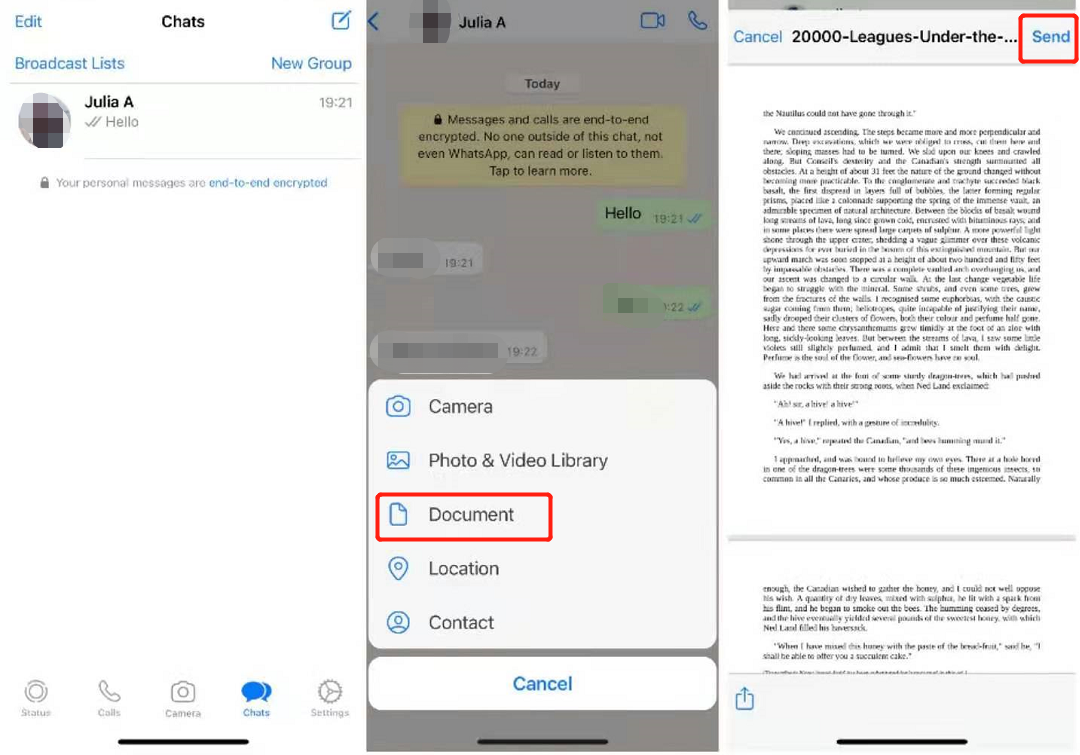
Understanding the Basics: Sharing Editable Documents via WhatsApp
WhatsApp’s native file-sharing capabilities simplify communication but impose critical limitations when sharing editable documents. Unlike messaging apps designed for professional collaboration, WhatsApp prioritizes speed and simplicity over functionality for formats like Microsoft Word (DOCX), Excel (XLSX), or Google Docs. These files often lose editability or compatibility when shared directly, forcing users into workarounds that compromise efficiency or security. Understanding these constraints—file format compatibility, size restrictions, and lack of real-time collaboration—is essential for optimizing document sharing via WhatsApp. The platform supports a broad range of file types, but editable documents face unique challenges. PDFs remain the most reliable format for sharing via WhatsApp, as they preserve content integrity while being universally compatible. However, PDFs are static; any edits require converting them back to their original format (e.g., DOCX or XLSX), which is impractical for collaborative workflows. DOCX and XLSX files may appear corrupted or uneditable after sharing, especially if sent as attachments rather than links. WhatsApp’s rendering of these files often strips metadata, formatting, or embedded objects (e.g., charts in Excel), leading to usability issues. Google Docs and Sheets links, while shareable, bypass WhatsApp’s native limitations by directing users to cloud-based editors, but this requires external tools or manual steps. WhatsApp enforces a 100MB file size limit for attachments, a constraint that disproportionately affects editable documents. Large spreadsheets (XLSX) or multi-page Word documents (DOCX) frequently exceed this limit, necessitating compression or conversion to PDF. This restriction also applies to media-rich files, such as those with embedded images, tables, or macros, which inflate file sizes. For context, a moderately complex Excel file with 500KB of data and 10 embedded images may reach 5–10MB, while a 50-page Word document with high-resolution graphics could exceed 30MB. Cloud storage services like Google Drive or Dropbox circumvent this limit by enabling users to share links (up to 250GB for Google Drive), but this introduces dependency on external platforms.
Limitations of WhatsApp’s Native File-Sharing System
 WhatsApp’s approach to file sharing prioritizes accessibility over functionality, creating friction for users reliant on editable documents. Key limitations include:
Comparison of File Formats and WhatsApp Compatibility
The compatibility of editable documents with WhatsApp hinges on file format, as demonstrated below. While PDFs and images are universally supported, editable formats require indirect methods to retain functionality.| File Format | WhatsApp Support | Editability After Sharing | Common Use Cases | Workaround Required |
|---|---|---|---|---|
| PDF (Portable Document Format) | ✅ Full support (preview and download) | ❌ No (static format) | Reports, presentations, signed contracts | Convert to DOCX/XLSX before editing |
| DOCX (Microsoft Word) | ⚠️ Limited (opens in read-only mode) | ❌ Often corrupted or uneditable | Proposals, essays, legal documents | Use Google Docs link or convert to PDF |
| XLSX (Microsoft Excel) | ⚠️ Limited (formulas/charts may break) | ❌ High risk of corruption | Financial models, data analysis | Share as Google Sheets link or compress |
| PPTX (Microsoft PowerPoint) | ⚠️ Partial (slides may misalign) | ❌ Formatting often lost | Presentations, training materials | Convert to PDF or use cloud link |
| ODT/ODS (OpenDocument) | ❌ Unsupported (no preview) | ❌ Uneditable | Open-source office suites | Convert to DOCX/XLSX or PDF |
| Google Docs/Sheets Links | ✅ Supported (via URL) | ✅ Fully editable (cloud-based) | Collaborative projects, real-time editing | Generate shareable link manually |
WhatsApp File Size Limits and Their Impact
 WhatsApp’s 100MB attachment limit is a double-edged sword: it ensures fast uploads for most users but creates bottlenecks for professionals handling large editable documents. This limit is enforced per file, meaning a 150MB Excel workbook cannot be shared directly and must be split or compressed. For context, common file sizes for editable documents include:
Step-by-Step Guide to Converting Editable Documents for WhatsApp
Converting editable documents to WhatsApp-compatible formats ensures usability without losing critical data. Below are procedures for Word to PDF, Excel to PDF, and Google Docs integration, the most common use cases. Converting a Word Document (DOCX) to PDF for WhatsApp 1. Open the DOCX file in Microsoft Word. 2. Click File > Export > Create PDF/XPS. 3. Select PDF/XPS Creator and choose Minimal or Standard for quality. 4. Click Publish to generate the PDF. 5. Compress the PDF (optional):Sharing editable documents via WhatsApp is not just about overcoming technical barriers—it’s about redefining how collaboration happens in an era where instant communication meets dynamic content. From manual conversions to automated bots and secure cloud alternatives, the methods outlined here empower users to maintain control over their files while harnessing WhatsApp’s global reach. The key lies in balancing convenience with functionality: whether through third-party tools, real-time cloud editing, or strategic platform shifts, the goal remains clear—preserve the editability of documents without sacrificing speed or accessibility. As messaging apps evolve, so too must our approaches to sharing, ensuring productivity thrives alongside connectivity.
Leave a Comment
Comments are moderated before appearing. The data you submit is processed according to the Privacy Policy of Voltefac.